Breast Augmentation with the Preserve Technique: A Complete Guide

Reviewed by Dr. Gustavo Sordo, plastic surgeon
Among them, the Preservé technique stands out, developed by the company Motiva, which focuses on prioritizing the preservation of natural breast tissue and offers excellent results with great naturalness and a significantly faster recovery period compared to traditional breast augmentation techniques.
Each case is assessed in consultation; the complete process, the cases and the price (€7.600 outpatient or €7.800 with day hospital, fixed price and all inclusive) are in the PRESERVÉ technique.
What is the Preserve technique for breast augmentation?

The Preserve technique is a breast augmentation procedure that is considered minimally invasive, and whose main objective is to preserve (as its name indicates) the anatomical structures and natural tissues of the patient's breast.
Traditional techniques often require dissecting the mammary muscle tissue to create the space for the implant. In contrast, the Preservé technique works in a subfascial plane , in front of the pectoral muscle, creating the space with specialized instruments that avoid cutting or damaging the muscles, glandular tissue, and nerve endings.
You may be interested in: round or anatomical implants.
Breast augmentation in Madrid: price and first consultation with Dr. Alejandro Mendieta
Origin
The Preservé technique was developed by the implant manufacturer Motiva. Preservé is presented as a solution for those seeking methods that reduce surgical trauma while providing exceptional results.
Preservé combines advancements in the surface of its implants (True Monobloc® SmoothSilk® Ergonomix2®), which integrate better with the tissues, with a focus on preserving natural tissues, following a standardized protocol that optimizes each step of the procedure. This tissue-preservation approach—with an inframammary fold approach, balloon dissection, and preservation of the circummammary ligament and Cooper's ligaments—already has published clinical series that support its safety and low complication rates (Randquist et al., 2026, Aesthet Surg J ; Pittman et al., 2026, Aesthet Surg J ).
Advantages
Muscle and nerve preservation
This technique does not involve dissection of the pectoral muscle, thus eliminating the risks of deformity or alterations in the shape of the breast due to muscle contraction, and furthermore, the preservation of nerve endings allows for the preservation and even improvement of breast and nipple sensitivity.
Faster and less painful recovery
Because the Preserve technique is minimally invasive and performed on an outpatient basis under local anesthesia and sedation, the postoperative period is much more comfortable than with other techniques. Patients report little pain and swelling, and the recovery time has been greatly reduced, as patients can expect to return to their daily activities in just 24 to 48 hours, whereas with traditional techniques this usually takes around two weeks.
natural results
The implant is placed in a position that respects the patient's natural anatomy, integrating harmoniously, resulting in a breast with a soft and natural appearance and feel, without the "ball effect" or excessive separation that sometimes occurs in other types of implants.
Minimal and hidden scar
The incision is minimal, measuring 2,5 to 3 cm, and is strategically located in the inframammary fold, so once healed, it is virtually invisible. Furthermore, the closure technique using special sutures allows for optimal healing.
Lower risk of complications
The possibility of complications such as hematomas, seromas or capsular contracture (hardening of the chest) is significantly reduced, as this technique minimizes surgical trauma.
How is a preservation breast augmentation performed?
Type of anesthesia and duration of surgery
At our clinic, this procedure is performed under local anesthesia and sedation , without the need for general anesthesia, which significantly reduces the fear some patients feel about surgery. The patient can move her arms normally that same day and, thanks to the minimally invasive nature of the technique, goes home the same day as the procedure. She may remain under observation in a day hospital before leaving, or may not be hospitalized at all. The surgery typically lasts between 45 and 60 minutes.
Step-by-step technique
Before the procedure, the surgeon makes precise markings on the skin. A small incision of 2,5 to 3 cm is then made in the natural crease under the breast, and the surgeon works in a subfascial plane , anterior to the pectoral muscle. Using an expander balloon included in the Preservé kit, the necessary space is created through gentle and controlled dissection, without cutting the muscle or damaging the circummammary ligament or Cooper's suspensory ligaments. This allows the implant to be nestled within the circummammary ligament itself, enabling its placement without being fixed or held in place by the pectoral muscle. It is essential to use Motiva ergonomic implants , which are the ones originally associated with this technique: their design allows them to slide very smoothly through the insertion funnel, enabling insertion through such a small space as 2,5 to 3 cm (Munhoz et al., 2021, Aesthet Surg J ). Finally, we always reconstruct the inframammary fold —even though in many cases we have left it practically intact—with a continuous suture as an internal bra, since this reconstruction is essential to stabilize the implant, especially when using ergonomic prostheses.
What type of implants are used?
Motiva's ergonomic implants (Ergonomix®) are used , renowned for their smooth surface (SmoothSilk® Ergonomix2®), which reduces friction and allows for proper integration with the tissues, and for their cohesive gel (ProgressiveGel Ultima™), which contributes to a natural result, avoiding the "operated on" look. Their ergonomic design—which adapts to the patient's body position and slides easily through the insertion funnel—is precisely what allows working through such a small incision, and is associated with a proven improvement in naturalness and tactile feel compared to previous generations of implants (Szychta, 2024, Aesthetic Plast Surg ).
Postoperative care and recovery
Immediate mobility and minimal disability
After the anesthesia, the patient can immediately perform light activities, without the "disability" period that is sometimes caused by other traditional techniques.
Wear a compression bra
A special bra must be worn for the first 4 to 6 weeks to aid in implant adaptation and healing. We will provide this bra at Dr. Sordo's clinic.
Pain management and medication
The pain is mild and manageable with common analgesics. Many patients report not needing medication in the first 24 to 48 hours.
Gradual reintegration
You can return to your social and work life within 24 to 48 hours, provided it's not physically demanding. On the day of surgery, I ask you to raise your arms overhead and bring your shoulder blades together for 30 seconds, once an hour. From the third day onward, I also recommend a 30-minute walk each day. From day seven, the weight limit is increased to 1 kg, and you have complete freedom of movement: you can move your arms whenever you want, without having to repeat the exercise every hour. Exercise is suspended for the first month ; after a month, you begin with gentle, progressive cardio and isometric exercises. And here's the specific advantage of Preservé: because the implant is placed in the subfascial plane and the pectoral muscle isn't touched, isometric exercises can be done as early as a month later , without waiting the six months I usually require when the implant is placed under the muscle.
What is the price of the Preserve technique: 2026 Update
At our clinic, breast augmentation with the Preserve technique costs €7.600 in outpatient mode and €7.800 with day hospital, with a fixed price and everything included.
Although the price is higher than that of a traditional technique, it is justified by the benefits in recovery, the results and the risk reduction of the Preservé technique.
Preserved vs Traditional Augmentation: Key Differences
| Feature | Preserved Technique | Traditional Augmentation (Dual Plane, Submuscular) |
|---|---|---|
| invasiveness | Minimally invasive, subfascial plane (in front of the pectoral muscle) | Invasive, with muscle dissection |
| Recovery | Fast (days) and not very painful | Slow (weeks) and more painful |
| Postoperative Mobility | Immediate and without restrictions | Limited for weeks |
| Sensitivity | Preserved or improved | Risk of temporary or permanent loss |
| Risk of complications | Minor | Greater |
| Aesthetic Result | Maximum naturalness | It can be more artificial if it is not planned well. |
| Scar | Minimal and well hidden (2,5-3 cm) | Similar, but the internal trauma is greater |
In what cases is breast preservation augmentation indicated?
Many of the patients who come to this technique aren't simply looking for "more breasts": they want to stop having to fill out a bra to look like they already have them. The difference with Preservé is that the result is equally noticeable with or without a bra, at rest and in motion, because the goal is for the breasts to look and feel natural, not added on.
The Preserve technique is an ideal option for women undergoing their first breast augmentation, those prioritizing a quick recovery or seeking natural-looking results, and for patients with mild breast ptosis (sagging)—grade 2-3 or higher sagging can benefit from a mastopexy, but not from this technique alone. Even so, only a small group of patients are candidates: it is essential to have a pinch of at least 1,5-2 cm of tissue in the upper pole, as below this measurement the implant will become noticeable over time (Lee et al., 2011, Aesthetic Plast Surg ). It is also necessary to start with a breast of normal morphology, without significant alterations in the development of glandular tissue, as occurs in tuberous breasts.
Regarding mild ptosis: the subfascial plane and the reconstruction of the inframammary fold with the internal suture provide support and fullness to the upper pole, which can conceal some minimal sagging. This does not correct the nipple position—only a mastopexy can address that—so if there is actual sagging, we continue to recommend combining it with or prioritizing it over breast augmentation alone.
At our clinic, all Preservé procedures are performed by Dr. Alejandro Mendieta, who has completed all of Motiva's official training for this technique, and we have been performing breast augmentation with Preservé for over a year. It is a relatively new technique on the market, but it has the backing and approval of Motiva, and we apply the same strict selection criteria you read about: if you don't meet these requirements during your consultation, we will tell you with the same frankness, because there are other augmentation techniques that may be a better fit for your anatomy.
Possible disadvantages or considerations
- It is not suitable for those with severe breast ptosis (sagging).
- It is necessary to find a surgeon specialized in the Preserve technique.
- The price is higher than traditional breast augmentation techniques.
- To maintain a natural appearance, the maximum implant size is limited to 330 cc, and there is also a lower limit on the volume that can be used.
- Not all patients are candidates: it is necessary to have a pinch of at least 1,5-2 cm of tissue from the upper pole.
- It is not the first option if there has already been previous breast surgery (augmentation, mastopexy or other intervention that has altered the original anatomy); in those cases we consider other alternatives.
Preserve Technique: smoothness, precision and natural results
In Plastic Surgery Clinic in Madrid by Dr. Gustavo Sordo, plastic surgeon in Madridwe have incorporated the technique I preserved as our minimally invasive option for breast augmentation. This technique is extremely respectful of the tissues, reduces inflammation, and allows for a much more comfortable recovery, without sacrificing surgical precision or the naturalness of the final result.
If you are considering breast augmentation surgery in Madrid and want to realistically visualize what your result could look like before taking the plunge, our clinic offers an online breast augmentation simulator where you can explore different volumes and projections adapted to your anatomy.
3D simulation with Crisalix vs. actual result
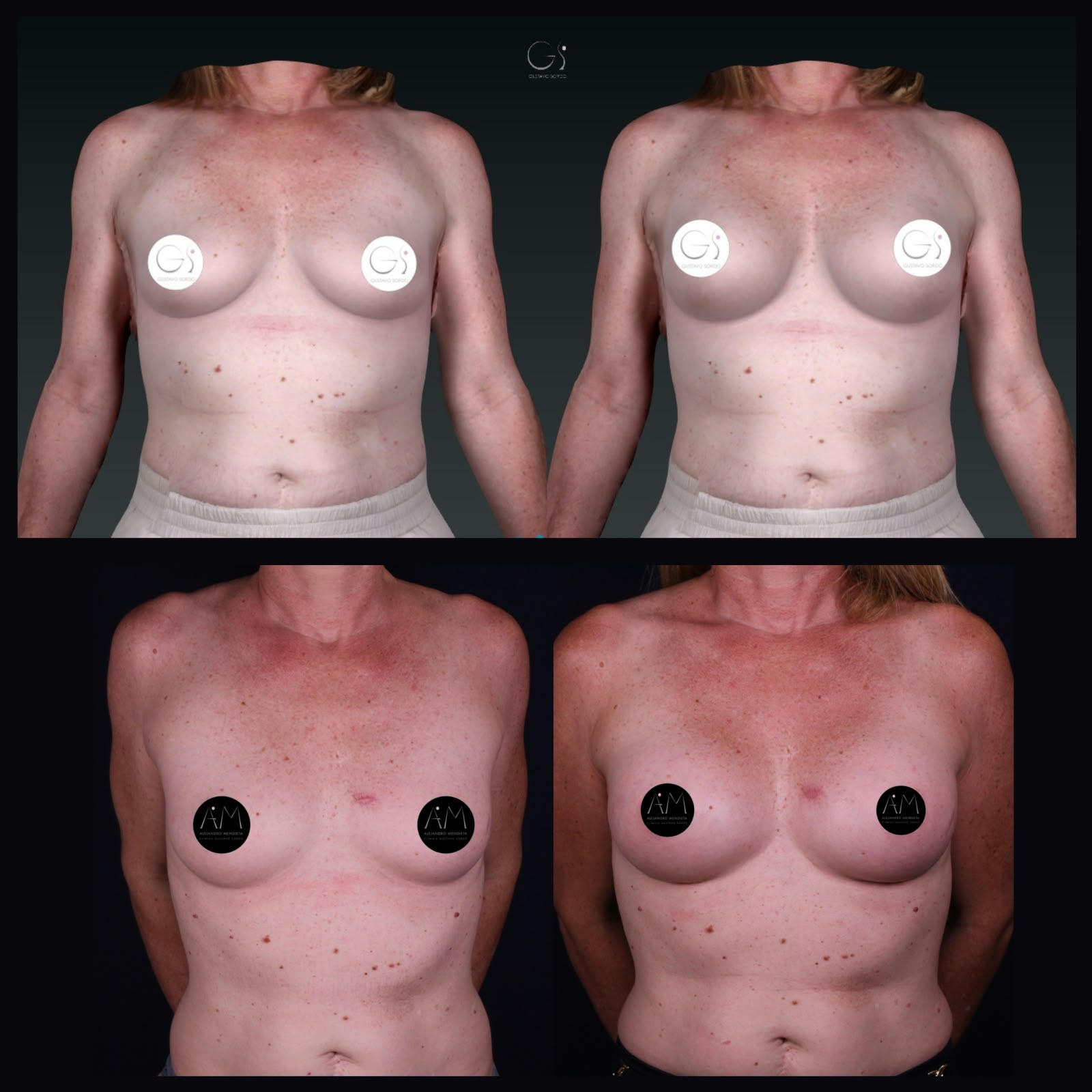
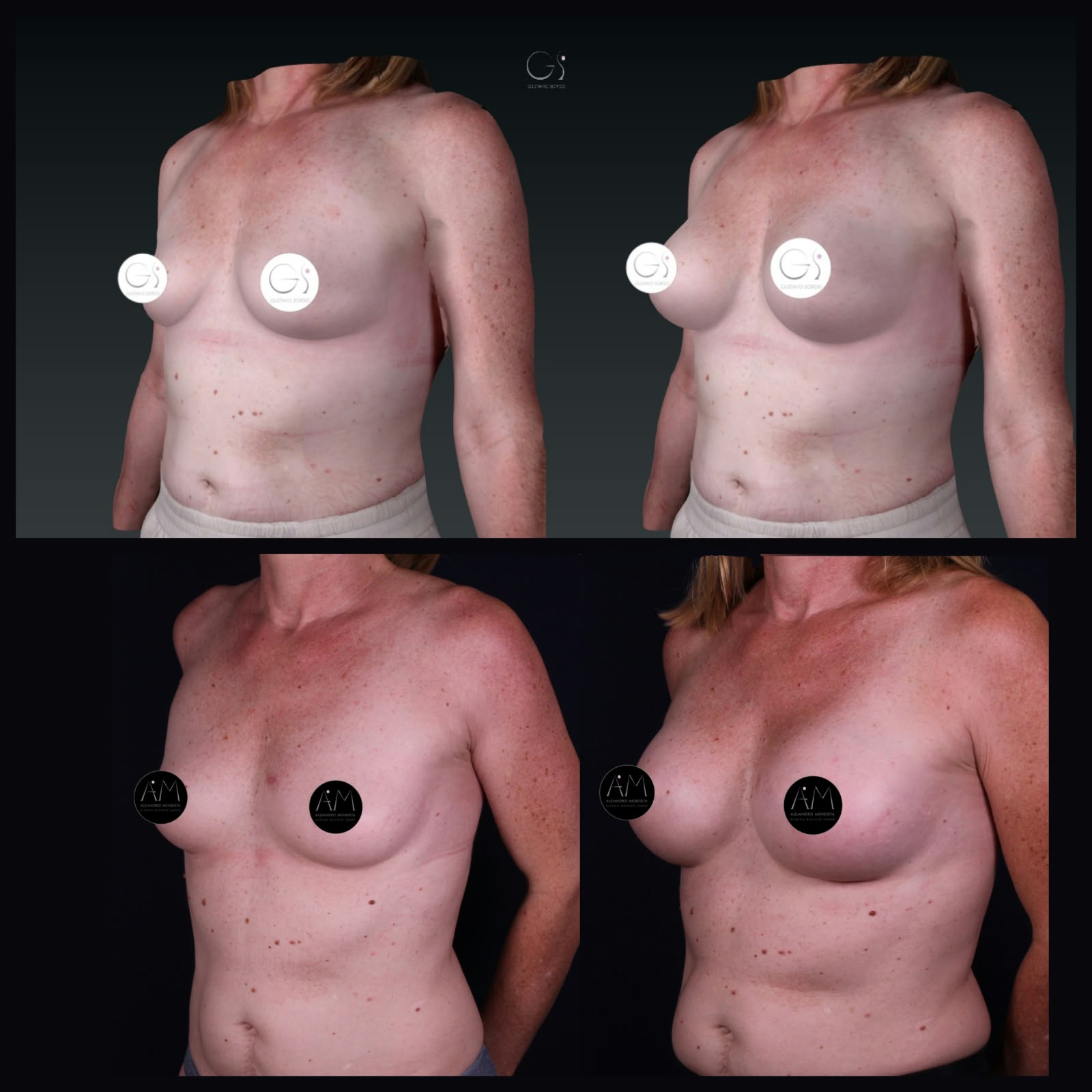
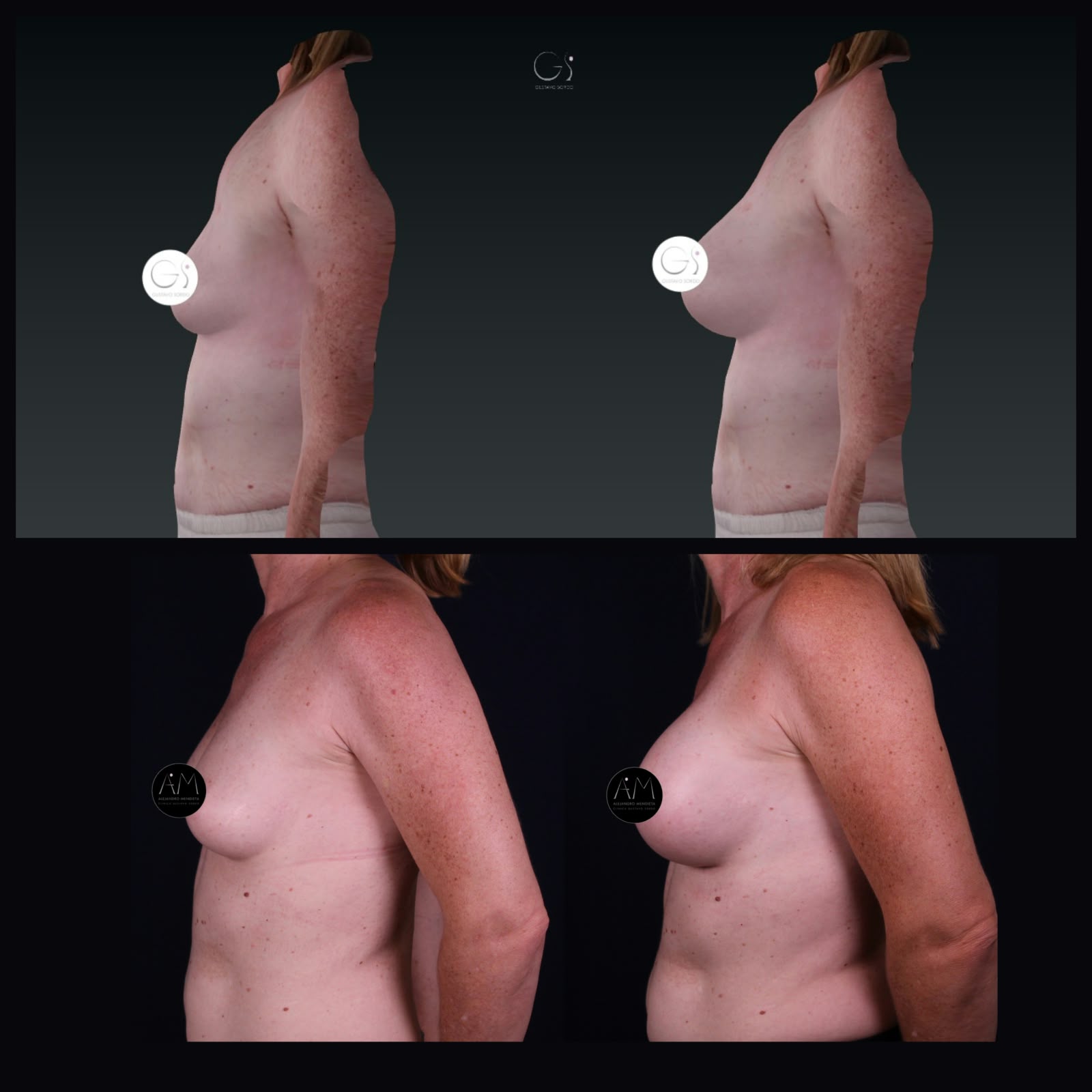
These comparisons show, in a real patient operated on with the Preserve technique, the 3D simulation performed with Crisalix (above) alongside the final healed result (below). As you can see, the simulator is quite accurate: the actual result closely resembles the preliminary projection, which helps patients arrive at the operating room with very realistic expectations of what they will ultimately achieve.
We recommend you take a look at our before and after breast augmentation cases.
Frequently Asked Questions (FAQs)
How many cc can be implanted using the Preserve technique?
You can opt for implants of up to 330 cc, to preserve body harmony and naturalness.
Is the scar noticeable?
No, because it is located in the natural fold under the breast, when the scar heals it remains hidden and practically invisible.
Is it more painful than Mia Femtech?
No, both techniques are minimally invasive with quick and relatively painless recoveries. While they differ in approach and the instruments used, in terms of pain and postoperative recovery, both are more comfortable options than traditional breast augmentation surgery.
Can I combine Preserve with other procedures?
Yes, it is often combined with a breast lift (mastopexy) in cases of more severe breast ptosis, or with other procedures such as liposuction or abdominoplasty, especially within more comprehensive programs such as the mommy makeover.
Is the recovery faster than with a traditional augmentation?
Yes, it's significantly less. With a traditional augmentation, recovery takes several weeks, whereas with the Preserve technique, patients report feeling well and can resume normal life in about 2 to 4 days.
Conclusion
Breast augmentation with the Preserve technique is a significant innovation within the world of breast cosmetic surgery.
Price and first consultation with Dr. Alejandro Mendieta
Continue reading
Dr. Gustavo Sordo
Specialist in Plastic, Aesthetic and Reconstructive Surgery. Member No. 282858125.
Content clinically reviewed by Dr. Gustavo Sordo. Last review: November 7, 2026.