Home » Breast Surgery » Tuberous Breast
Tuberous breast correction in Madrid
Tuberous breasts are not a size problem; they are a shape problem. The base of the breast is narrow, the lower pole is underdeveloped, and a ring of dense tissue keeps it constricted. Therefore, simply adding volume will not correct it.
We perform the procedure using a subfascial micropolyurethane implant , which is what transmits the necessary shape modification to the outside. Here's what it involves, the different levels, real cases, and the price.
Price: Tuberous breast surgery ranges from €6.752 to €10.400 , depending on your specific needs: polyurethane implant, mastopexy, or capsule removal. A breakdown is provided below.
The surgeons are Dr. Gustavo Sordo (registration number 282858125) and Dr. Alejandro Mendieta (registration number 282880327), at the HLA Moncloa University Hospital. The first consultation is €100 with Dr. Sordo and €50 with Dr. Mendieta, which will be deducted from the cost of the surgery.
- Own clinic at Alberto Aguilera 48, 1st floor left, Madrid
- Surgery at HLA Moncloa Hospital
- 20+ years of experience
- 3D simulation in the first consultation
What is a tuberous breast?
Tuberous breasts are a developmental abnormality of the breast , not a consequence of anything you have done. They appear during puberty, when the gland begins to grow and encounters a narrow base and a fibrous ring in the sulcus that prevents it from expanding downwards.
The result is a breast with a narrow base , a flat or underdeveloped lower pole , a large and sometimes bulging areola because the gland pushes towards the only place where it finds the least resistance, a high inframammary sulcus, and often asymmetry between the two sides.
It's more common than you might think, and many patients come to the clinic without even knowing it has a name. It's important to know this, because correcting tuberous breasts is not the same as a standard breast augmentation : the technique is different.
How to recognize tuberous breasts
These are the signs we look for in the consultation:
- Narrow breast base, with little distance from one side to the other.
- Flat lower pole or sunken: the breast does not fill the bottom part.
- Large areola and with a bulging appearance, with the gland herniated towards it.
- High inframammary fold or poorly defined.
- Separation between the two breasts larger than usual.
- AsymmetryIt is very common for one side to be more affected than the other.
Not all of these characteristics are necessary for it to be tuberous breasts, and not all tuberous breasts look alike. That's why the first step is always to measure.
Degrees of tuberous breast
Not all tuberous breasts require the same treatment. The classification we use, that of Grolleau ( Plast Reconstr Surg, 1999 ), orders the cases by the amount of the lower pole missing, and the technique is derived from this.
Grade I
The lower inner quadrant , the lower and central part, is missing. The breast appears to be "displaced" outwards, leaving the cleavage empty. This is the mildest degree and is sometimes mistaken for simply having small breasts.
Grade II
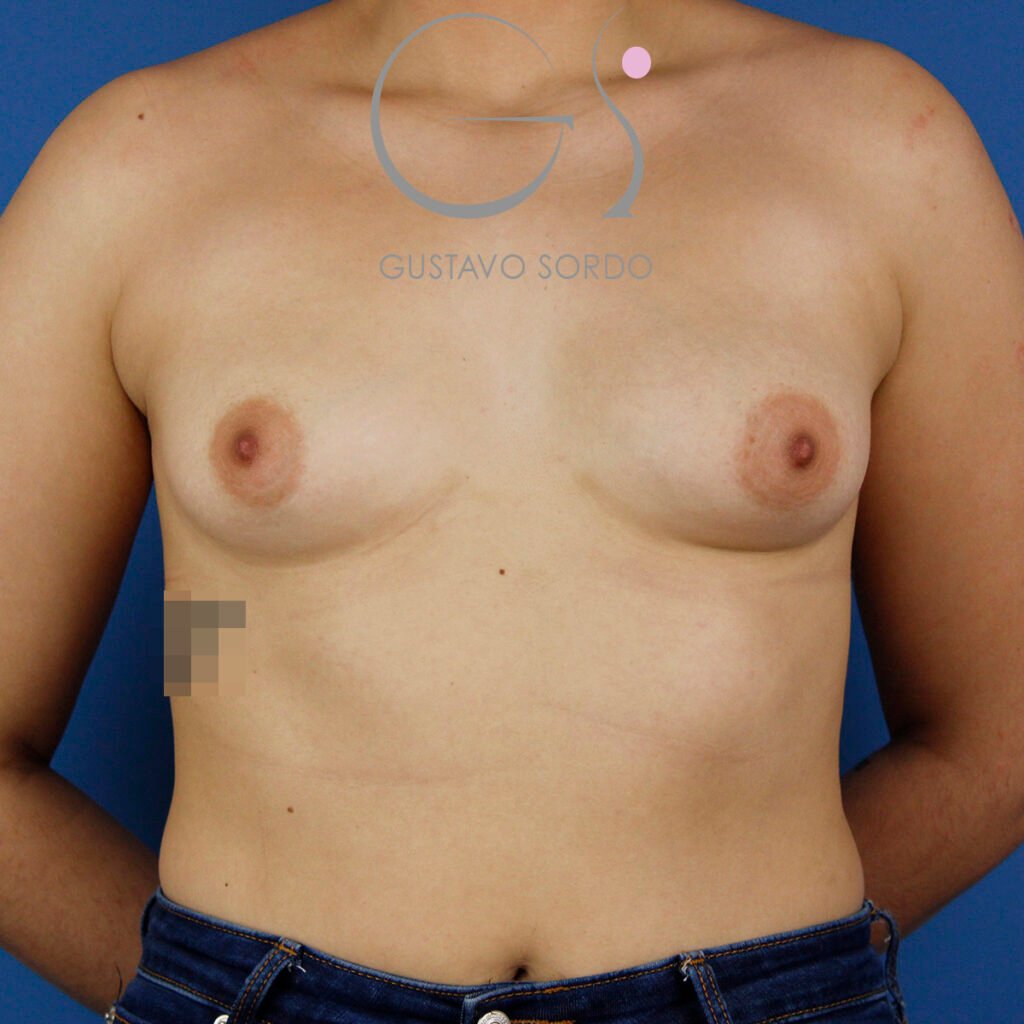
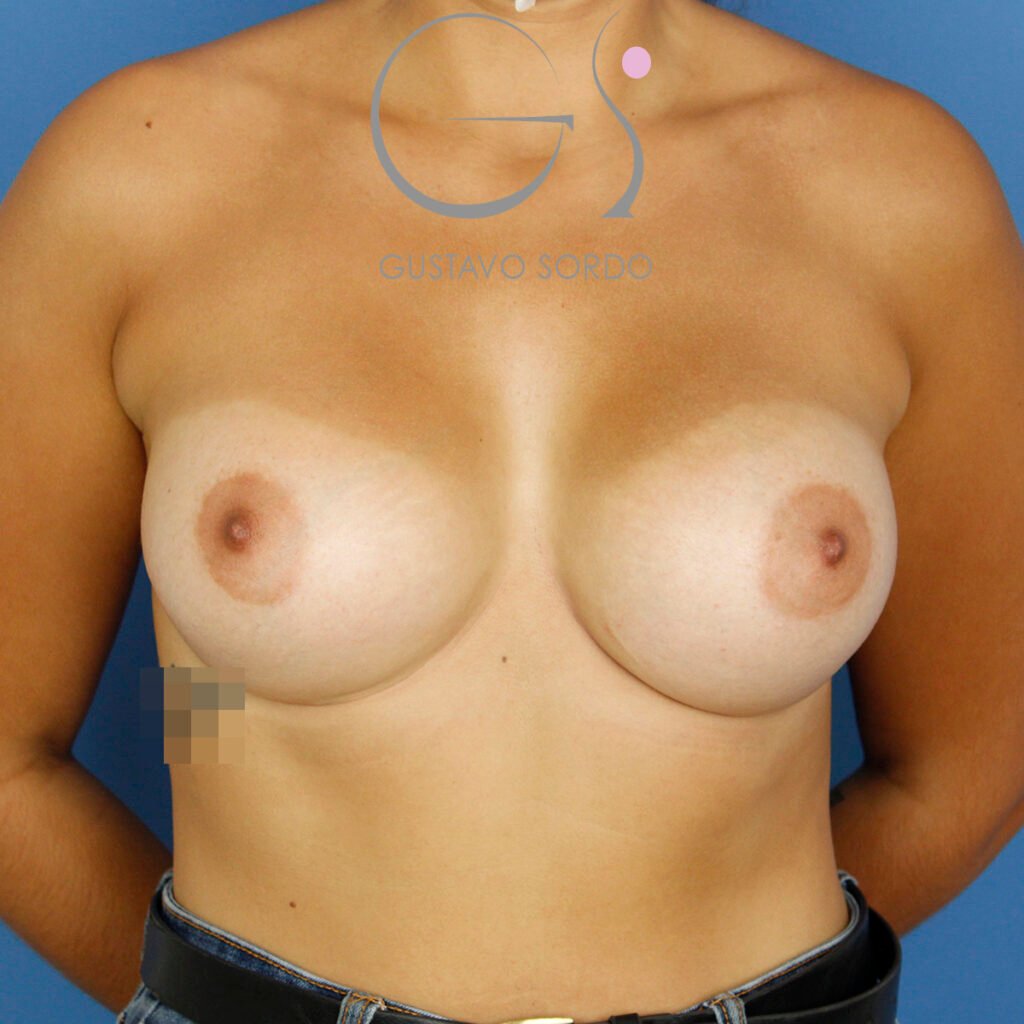
The entire lower pole is missing , both internally and externally. The inframammary fold is high, and the breast is concentrated at the top, with the areola pointing downwards. This is the grade we see most frequently in our practice. This case, with 375 cc anatomical implants in the subfascial plane , is a type II: the two lower quadrants were missing, the distance from the areola to the fold was very short, and there was significant frontal asymmetry. The anatomical implant fills the lower pole and lengthens that distance, which is precisely what is lacking in a tuberous breast.
Grade III
The base is very narrow in all directions , and the gland herniates into the areola, which bulges. The breast has a tubular shape, hence the name. Here, in addition to expanding the lower pole, the areola almost always needs to be addressed.
The technique: polyurethane implant in the subfascial plane
The correction process has three steps, and none of them can be skipped.
First, release the constricting ring. The bands at the lower pole are punctured from the inside so the gland can expand downwards. Without this step, any implant placed will remain "above" the problem area, and the breast will still be tuberous, only larger.
Second, lower the inframammary fold to the height that corresponds to that breast according to its measurements.
Third, the implant. This is where I use micropolyurethane in the subfascial plane , generally anatomical. The reason is simple: polyurethane adheres to the tissue like Velcro, and an implant that adheres fully transmits the shape change outwards , while an implant that moves within the pocket only transmits it partially. Furthermore, it doesn't rotate, and in a breast that we are reconstructing in its original shape, the fact that the implant doesn't rotate is crucial.
The implant I use is from Silimed , one of the few manufacturers that work with polyurethane foam.
This implant requires one thing in return: drainage for four or five days . It's part of the protocol, not a complication. I explain it all, with the evidence and what is known about BIA-ALCL, in the article on polyurethane implants.
When is an implant not necessary?
There are grade I tuberous breasts with sufficient volume where implants are unnecessary. In these cases, the constricting ring is released and the lower pole is filled with lipofilling , that is, with the patient's own fat. This avoids an implant, and the desired shape can still be achieved.
And when the areola is very protruding, the correction involves reducing its size and repositioning the tissue that has herniated into it. This leaves a scar around the areola that is well concealed at the edge of the pigment.
Which of the three things your case needs —or which ones at the same time— is exactly what is decided by measuring in the first consultation.
And there is a fourth scenario: tuberous breasts that have also sagged, with the areola below the inframammary fold and excess skin. In this case, an implant alone is not enough, and periareolar incisions fall short: the correction is an inverted-T mastopexy with an implant, as in this case of grade 2 tuberous breasts.
Price of tuberous breast correction in Madrid
In many cases of tuberous breasts, simply placing the implant is not enough: expanding the lower pole also requires reshaping the skin and areola, which is a mastopexy . That's why the price is given as an arc rather than a single figure.
In our clinic, the correction of a tuberous breast ranges from €6.752 to €10.400.
- 6.752 € — the case that is resolved by releasing the constrictive ring and placing the polyurethane implant, without needing to raise.
- 8.600 € — mastopexy with implants, when the breast also needs to be lifted.
- 9.000 € — mastopexy with polyurethane implant, which is the combination we use most frequently in tuberous breasts.
- 10.400 € — mastopexy with capsulectomy, in reoperations in which the capsule of a previous implant also has to be removed.
All options include the complete process, from the initial consultation and 3D simulation to the first year's checkups. If only lipofilling is needed, without implants, the price is different and will be calculated during the consultation.
The price, therefore, depends on the specific needs of your case, and this is determined through measurements. What remains constant is that the price quoted during the consultation is the final price: there are no extra charges for follow-up appointments or materials.
Before and after tuberous breast surgery
These are real cases operated on at the clinic. Each case includes two photos: first the before, then the after. Pay particular attention to the lower pole, which is what truly changes in tuberous breasts; volume is the least important factor.
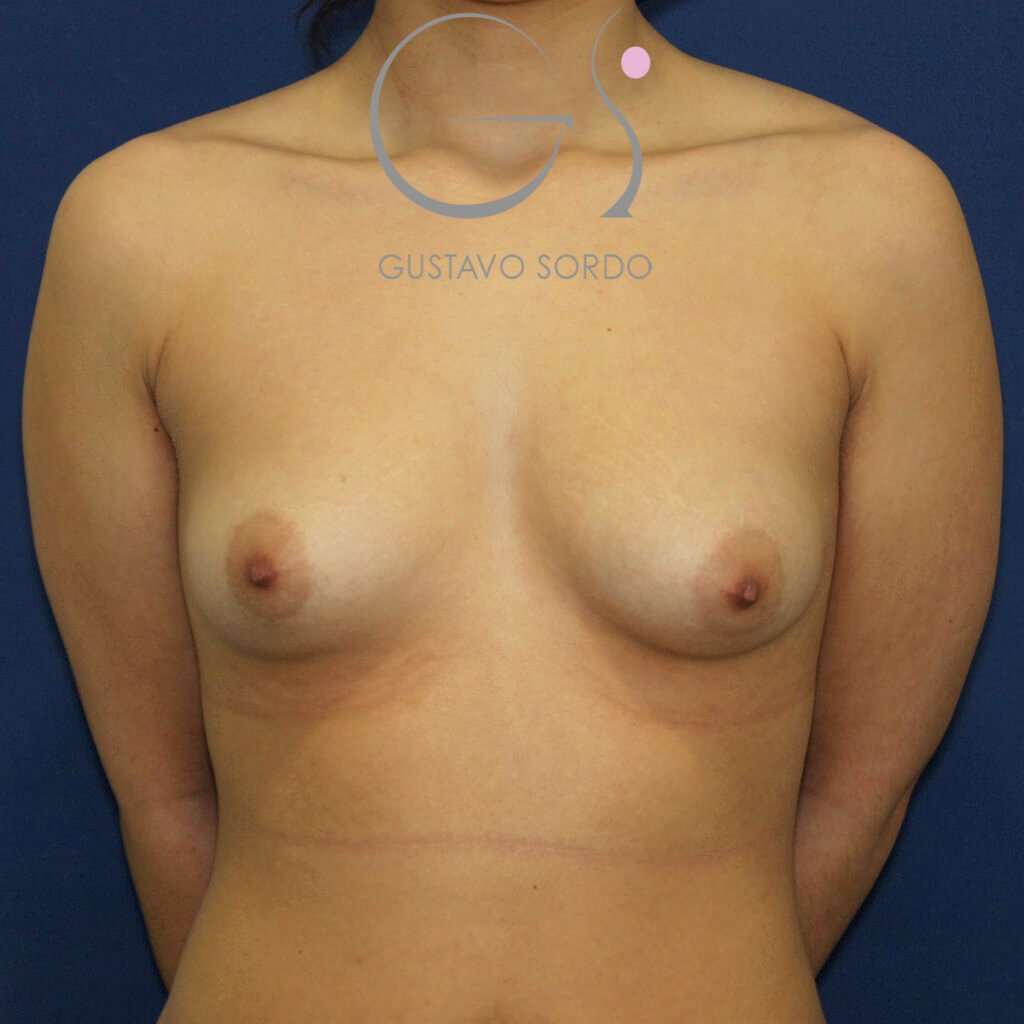
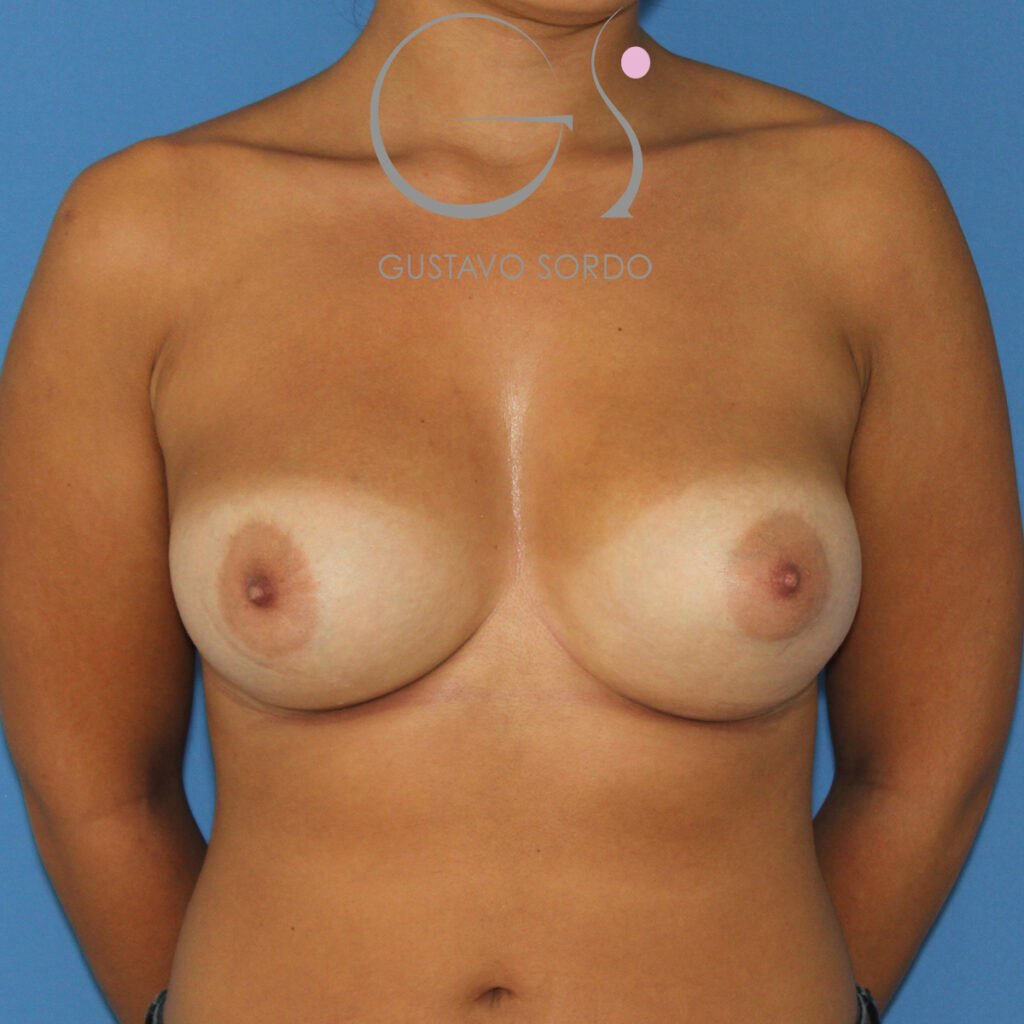


View all cases of tuberous breast
Patient Reviews and Testimonials
The complete process, step by step

The complete process of tuberous breast correction, from the first consultation to discharge.
First consultation and 3D simulation
During your first consultation at our clinic in Madrid, you will be greeted directly by the doctor, not by a commercial intermediary.
During this consultation, the doctor will examine your anatomy and listen to your wishes and expectations regarding the tuberous breast correction you have in mind.
As part of this consultation, we will offer you an on-site 3D simulation , which is included in the consultation price. This simulation will provide you with an honest and realistic representation of how your breasts will look after cosmetic surgery.
It is an important tool to give you confidence in your decision. In addition, you can view it later comfortably at home, on your mobile or computer, in a completely private manner.
During this initial consultation, our goal is to establish open and transparent communication with you, ensuring we understand your needs and desires, and providing you with the guidance necessary to make an informed decision about your cosmetic procedure.
Our goal is to achieve a natural result, but the most important thing for us is to listen to you, understand what you are looking for, and tell you frankly what part of that is achievable.
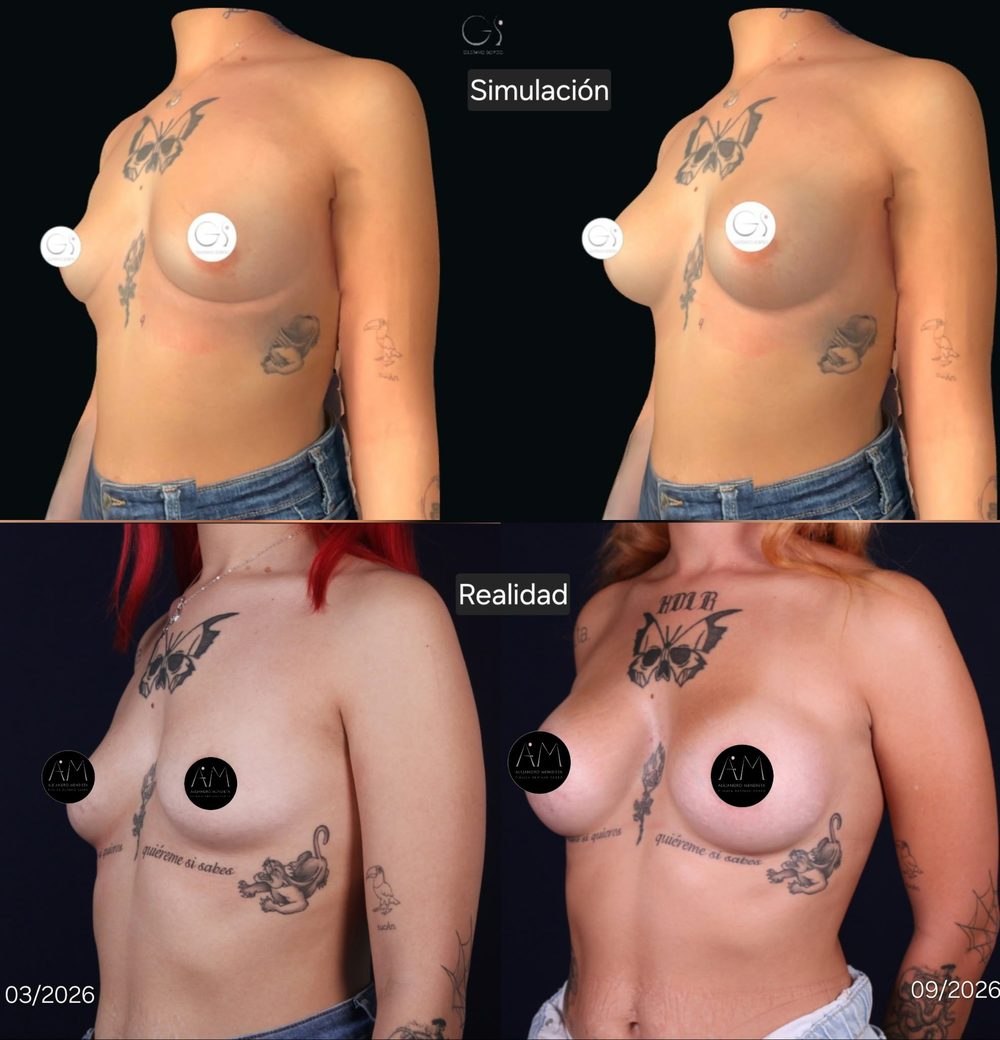

Preliminary simulation and actual result at six months
Preoperative
The pre-operative assessment serves to detect in time anything that increases the risk of the procedure.
Once you make the decision to undergo surgery, we will coordinate the date for the operation with you.
Before the appointed day, we will perform a series of preoperative tests.
These tests are essential to ensure that you are in optimal condition for the procedure and are included in the agreed budget.
We will provide you with a referral to our partner laboratory, where you can perform the necessary tests, and the results will be sent directly to us, you do not need to travel to collect them.
Preoperative tests include:
- Analysis to evaluate coagulation.
- An electrocardiogram to check heart health.
- A breast ultrasound to have a detailed analysis of the current state.
Once the results are ready, our anesthesiologist will review them thoroughly to ensure everything is in order. Additionally, we will meet with you again for a consultation before the surgery.
At this appointment, we will take photographs, go over the details of the procedure, and provide you with all necessary paperwork. This process ensures that we are fully prepared and that you feel calm and confident before entering the operating room.
Operation
Preparations at the Hospital
On the day of the operation, you must be admitted to the Moncloa Hospital in the morning.
Anesthesia
We use general anesthesia, specifically the "TIVA" (Total Intravenous Anesthesia) technique , which offers a more comfortable and safe experience for our patients.
During the procedure, you will feel as if you are in a restful sleep , which facilitates both the procedure and the subsequent recovery.
And what about anesthesia? Here's what kind of anesthesia is used in each surgery : local, sedation, or general, and why TIVA, without anesthetic gases, is used when general anesthesia is needed.
Moncloa Hospital
All our procedures are performed at the HLA University Hospital Moncloa.
For those seeking maximum discretion, our clinic offers an exclusive VIP service. This includes direct access to your private room from the garage and additional support for your companions during your hospital stay.
During the Operation
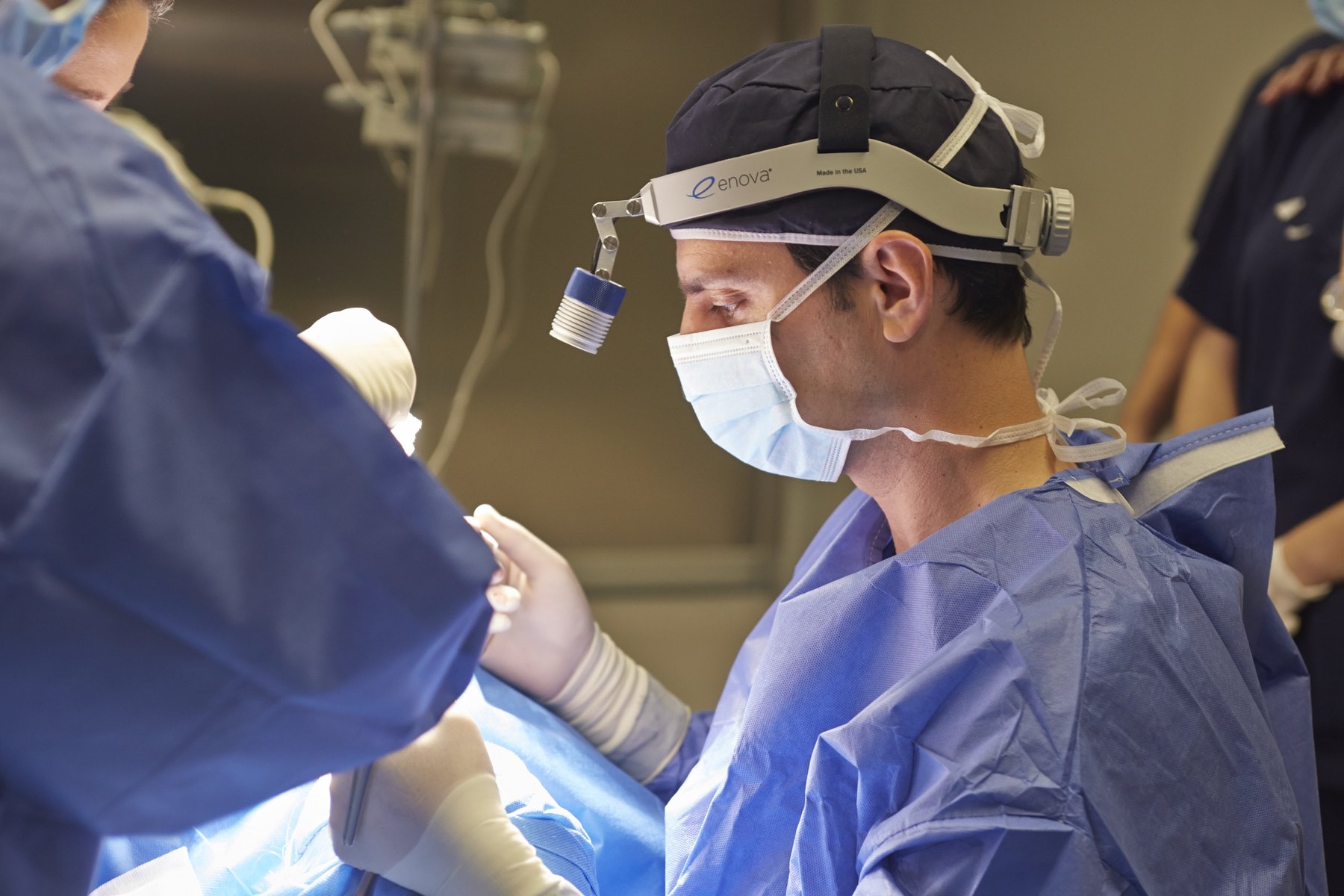
The correction of a tuberous breast typically takes between 1 and 2 hours . During this time, our medical team, led by Dr. Sordo, will release the constricting ring at the lower pole, lower the inframammary fold, and place the implant to the correct size.
Throughout the entire procedure, our anesthesiologist, Dr. Bourgeois, will continuously monitor you throughout the intervention.
Admission Night
After the operation, we will transfer you to the recovery room for 1 or 2 hours , before returning you to your private room for the night.
Spending the night in the hospital allows for monitoring during the first few hours, which are the most risky for bleeding.
Additionally, a companion may stay with you overnight to provide additional support.
This process is designed to ensure your comfort and safety at every stage of the operation.
Post-operative care for tuberous breast
You leave the operating room with a drain in each breast , which is removed on the fourth or fifth day. This is the only difference between this post-operative period and that of a normal breast augmentation.
My plan from then on, with specific dates: while the drain is in place, avoid forcing arm movement; when it's removed, on the fourth or fifth day , raise your arms fully overhead and bring your shoulder blades together for 30 seconds, once an hour. The 30-minute walk each day begins on the third day. From day 7, the weight limit is increased by 1 kg, and movement is unrestricted: move your arms whenever you want, without repeating the exercise every hour. The first month is for no sports. After a month , start gentle, progressive cardio and isometric exercises—and since the implant is subfascial, the pectoral isometric exercises can also begin after a month, not six.
It is not a rest plan: it is an early and scheduled mobilization plan.
Reviews
Our commitment to your well-being doesn't end with the surgery. During the first year, we'll provide ongoing monitoring to ensure everything progresses as expected . After this initial period, we recommend an annual ultrasound and scheduled regular checkups to assess your progress.
30 days after the operation
It's normal for some swelling to persist, but it will gradually decrease. Thanks to the laser treatment, the scarring will be less noticeable, and the stitches will have completely dissolved . At this stage, you can resume wearing any type of bra and begin gentle, progressive cardio —brisk walking, cycling, swimming, running, gradually increasing the intensity—along with isometric exercises that don't involve the pectoral muscles.
Six months after tuberous breast correction
The last restriction is lifted: the powerful isometric chest exercises —bench presses, dips, and weighted flyes—which are the only exercises that have to wait six months. If you opted for tuberous breast correction with implants, you'll notice that the texture of your breasts becomes more natural and that the swelling has decreased considerably; when the implant has been placed in the subfascial plane , chest exercises can be resumed as early as one month later.
Upon reaching the year of surgery
We will perform a complete review that includes a high-resolution ultrasound to ensure the perfect integration of the implant in cases of tuberous breasts with implants.
In addition, we will take some photographs so you can appreciate the change from the beginning of the treatment to the present moment.
After this final check-up, you will be discharged and encouraged to continue with annual ultrasounds to maintain ongoing monitoring of your breast health.
Other breast operations
These are other breast procedures we perform at the clinic, in case you are looking for something else or your case combines more than one.
Risks and limitations of tuberous breast surgery
Tuberous breast surgery is a surgical procedure and, like all surgeries, carries risks. We prefer that you be aware of these risks before making a decision, and that we discuss them during your consultation.
What can happen
In addition to the risks of any surgery performed under anesthesia (bleeding, hematoma, infection, seroma, scarring problems), there may be asymmetries, changes in nipple and areola sensitivity, and, with implants, capsular contracture or the need for a second surgery in the future. With polyurethane implants, a drain is left in place for a few days. Scheduled checkups help detect any complications early. If an adjustment is needed, we will schedule it with you and support you until you achieve the desired result.
What we cannot promise you
Tuberous breasts are a malformation and are not always corrected with a single procedure: in many cases, a breast lift is also necessary, which is why the treatment plan and price are finalized during the consultation. The scars improve over the months but do not disappear completely, and the final shape is visible once the swelling subsides.
Frequently asked questions about tuberous breasts
How much does tuberous breast surgery cost in Madrid?
From €6.752 to €10.400: €6.752 if only the constrictive ring is released and a polyurethane implant is placed; €8.600 or €9.000 if a breast lift is also required (mastopexy with implants or polyurethane); and €10.400 if the capsule also needs to be removed. The exact price is finalized at the first consultation (€100 with Dr. Sordo and €50 with Dr. Mendieta), which is deducted from the total cost of the surgery.
Is it noticeable that she had tuberous breasts?
It depends on the initial stage and the areola. In stages I and II, with the constricting ring properly released and the lower pole expanded, the breast retains a normal shape. In stage III, where the areola also needs to be reduced, a scar remains around the pigment, which fades well over time. What I can tell you in a consultation, with your photos in front of me, is the extent of the procedure that can be performed in your specific case.
Can it be corrected with a normal breast augmentation?
No, and it's the most common mistake. If an implant is placed without releasing the constrictive ring at the lower pole, the breast will be larger but with the same tuberous shape, and sometimes worse, because the implant pushes the gland even further toward the areola. Correction requires releasing the bands, lowering the inframammary fold, and choosing an implant that reflects the desired shape.
Do you use general anesthesia? Is it safe?
Yes. We use “TIVA” (Total Intravenous Anesthesia), a new technique that does not use anesthetic gases and will not cause headaches, vomiting, or nausea.
It is the safest anaesthetic technique currently available, with which you will be fully monitored and controlled. In addition, we have had our own anaesthetist on our team for over 10 years.
Why do you use polyurethane implants?
Because it adheres to the tissue and doesn't move. An adhered implant transmits all the shape modifications we made in the operating room outwards; one that shifts within the pocket only transmits them partially. And since it's anatomical, it doesn't rotate either. In return, it requires drainage for four or five days. We explain everything, including the evidence and what is known about BIA-ALCL, in our article on polyurethane implants.
Does the procedure require admission?
Yes. We do this for greater security because this way we can monitor you in the hours that follow. The next morning Dr. Sordo will visit you to check on your progress and, if everything is okay, he will discharge you from the hospital.
Will I be able to breastfeed afterwards?
Correction of tuberous breasts does not aim to damage the milk ducts, and in most cases, breastfeeding is possible. That said, it's important to be honest: in tuberous breasts, the gland is already underdeveloped, and some patients experience breastfeeding difficulties regardless of whether they have surgery or not. This is a conversation worth having beforehand.
Will I be able to have mammograms after the operation?
Yes. It is important that you inform the radiologist that you have breast implants, if applicable, so that the appropriate procedures can be performed.
Which implants are right for me?
These are the factors we consider when choosing one implant or another:
- If the patient is not thin and has a significant amount of skin and fat in the upper part of the breast, there will be no difference between the two prostheses. It will make no difference whether a round implant or an anatomical one, since they will look the same from the side.
- If the patient is thin, it will be noticeable from the side which type of implant she has chosen, since the round prosthesis will give a more marked transition at the beginning of the prosthesis, at the top.
- If the patient has an underlying abnormality in the shape of her breast (tuberous breasts, for example), it is recommended that she select an anatomical implant, with the aim of normalizing the shape of her breast as much as possible and giving it a more natural appearance.
- If the patient is looking for a natural result, it is advisable to opt for an anatomical implant, since the appearance will be more similar to that of a non-operated breast.
Of course, we take into account your personal preferences regarding size (without exceeding the maximum recommended) and a more natural or more pronounced neckline.
What is “TIVA” anesthesia?
“TIVA” (Total Intravenous Anesthesia) is a high-quality anesthesia. Its innovative technique avoids the use of anesthetic gases and the well-known headache, vomiting, nausea and discomfort that anesthetic gases can cause.
This is a type of anesthesia that requires more dedication from the professional than common anesthesia with gases, but it greatly increases the well-being and safety of the patient. In our clinic we have our own anesthesiologist and we take the utmost care of these types of details.
The patient is monitored throughout the intervention with the so-called BIS (Bi Spectral Index) that measures sleep constantly.
Even when it comes to general anesthesia, our patients' experience with TIVA anesthesia has been excellent thanks to Dr. Bourgeois, a highly experienced professional who has mastered the technique perfectly.
Can I have surgery if I'm still growing?
It's best to wait until the breasts have finished developing, because surgery beforehand can alter the outcome. In practice, this usually means waiting until the breasts haven't changed size for at least a year. A consultation can be scheduled beforehand to explain the plan and answer any questions.
Where are breast implants inserted?
In most cases, the approach to inserting breast implants will be via the inframammary fold (under the breast crease), with the incision size being 2,5 to 3 cm.
It can also be done on the areola. In any case, we will treat your scar with laser and reduce it by 30% so that no one will notice it.
What does the scar look like after tuberous breast correction?
At Dr. Sordo's clinic, we treat scars to minimize their appearance, regardless of the surgical approach. Once the tuberous breast correction is complete, and while you are still under general anesthesia, we will apply our laser treatment for scars.
It's a 1210 nm surgical laser applied to the already closed incision. In a randomized, double-blind trial of breast reduction surgery, where one breast was treated and the other served as a control, the treated scar was flatter and less rough after one year. It doesn't make the scar disappear; the goal is to make it as inconspicuous as possible.
Where are breast implants placed?
With few exceptions, the implant will be placed under the pectoral muscle.
This is the safest and most comfortable option for the implant and the patient.
When can I do sports after tuberous breast correction?
For the first month, you don't do any exercise, but that doesn't mean you have to be inactive: while the drain is in place, you don't force your arm movements; when it's removed, on the fourth or fifth day , you raise your arms fully overhead and bring your shoulder blades together for 30 seconds, once an hour. The 30-minute walk each day begins on the third day. From day 7 onwards , the weight limit is increased by 1 kg and you have free movement: you can move your arms whenever you want, without repeating the exercise every hour.
After a month, you can resume gentle, progressive cardio—running, swimming, cycling—and isometric exercises that don't involve the chest muscles. Only heavy isometric chest exercises are suspended for six months.
Plastic surgeon specializing in tuberous breasts in Madrid
Tuberous breasts are operated on by Dr. Gustavo Sordo and Dr. Alejandro Mendieta , plastic surgeons, at the HLA Moncloa University Hospital.
Tuberous breast surgery is one of the procedures that leaves the least margin for error: if the constricting ring isn't released and the implant and placement aren't carefully chosen, the result is a larger breast with the same shape. That's why we plan the procedure by taking measurements and using 3D simulation on your own body, and that's why we use subfascial polyurethane.
If you think this might be your case, we'll discuss it in a consultation and clearly explain what you need and what you don't.
 ×
Dr. Gustavo Sordo
Specialist in Plastic, Aesthetic and Reconstructive Surgery. Member No. 282858125.
Content clinically reviewed by Dr. Gustavo Sordo. Last review: October 2, 2026.
Real cases operated on in the clinic
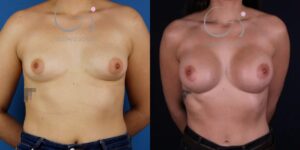 Tuberous breasts corrected with 375 cc anatomical implants
 Tuberous breast corrected with anatomical implants
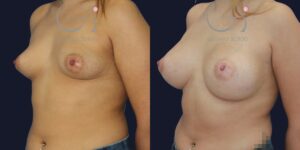 Grade II tuberous breasts resolved with breast augmentation
See all before and after cases
In cases of tuberous breasts, simulation is even more useful because what changes is the shape, not just the volume. During the consultation, we create a 3D simulation on your own body, and here we explain how closely it resembles the actual result. How does the simulation work?
Looking for the fine print? What happens if a revision is needed, what gets reviewed more often, and where to read opinions we don't control: we'll tell you here.