Updated on • Reviewed by Dr. Gustavo Sordo, plastic surgeon
Deep plane facial lift in Madrid
The deep plane facelift is the evolution of the classic facelift: instead of simply tightening the skin, it acts on the deep structures of the face to achieve a longer lasting, more natural and, above all, more honest result over time.
Dr. Gustavo Sordo also works with a preservation approach, taking care of the neck as much as the face.
- Own clinic at Alberto Aguilera 48, 1st floor left, Madrid
- Surgery at HLA Moncloa Hospital
- 20+ years of experience
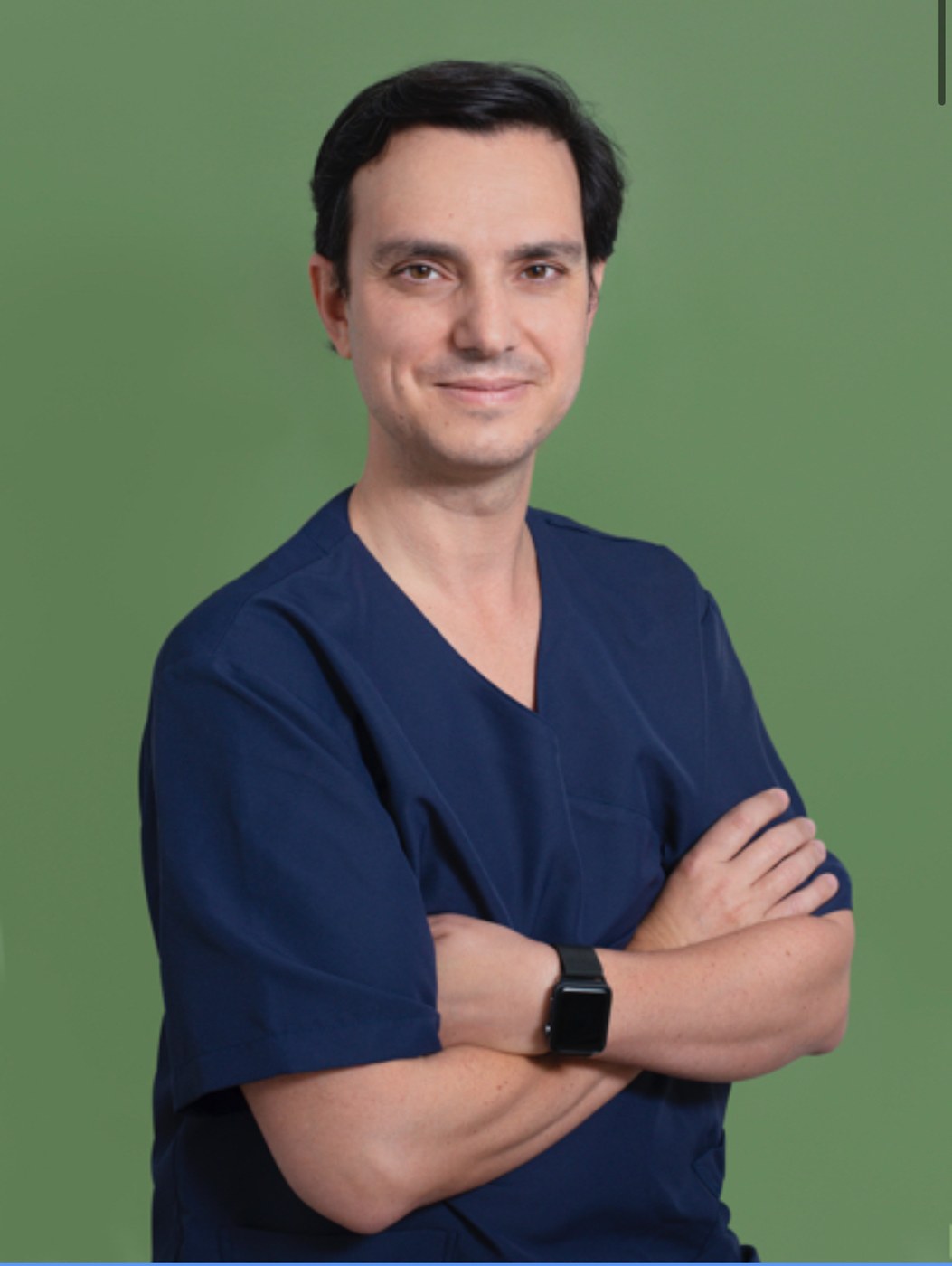
Price: The deep plane facelift costs between €15.000 and €22.000 , depending on the area to be treated: face and neck, or face, neck, and forehead. It is performed by Dr. Gustavo Sordo (registration number 282858125). The exact price is determined during the initial consultation, after he has seen your face; this consultation costs €100 and is deducted from the total cost of the surgery.
What is a deep plane facelift?
A poorly planned facelift is one that simply pulls the skin taut to conceal sagging. It holds for a while, but eventually sags; it's like making the buttons on a blazer smaller without losing weight: the garment stays put for a bit, but eventually feels tight and, sooner or later, bursts.
The deep plane facelift is based on a different idea: the problem of facial aging isn't just in the skin, it's beneath it. This technique acts directly under the SMAS (superficial musculoaponeurotic system), the layer of tissue that supports the structure of the face, anchoring this deep plane in a more favorable position and only then repositioning the skin on top, without tension.
The result is not "tighter skin", it is a face with a reconstructed internal architecture and that is why the effect lasts much longer than in a conventional facelift.
An approach that doesn't forget the neck
Modern aging is measured, above all, on the neck. We spend the day looking at our phones with our heads down, and it's in the chin and the oval of the neck where the passage of time is most noticeable. Much sooner than on the face, which can be disguised with hyaluronic acid or good skincare. The neck, on the other hand, sags, and no cream can compensate for that.
That's why, within the deep plane lifting procedure, we also work on the neck in depth: we clean the submaxillary gland and the structures that generate that heavy and undefined neck appearance, not just the skin that covers it.
The concept of preservation
Our approach also incorporates the concept of preservation : the skin is laminated less—that is, separated less from the underlying tissues—and only the strictly necessary tissue is detached. This results in a faster recovery with less inflammation, without compromising the depth of the procedure.
Advantages of a deep plane facelift
Plastic surgeon specializing in facelifts in Madrid
Longer lasting results
A facelift that only tightens the skin will sag sooner, because the skin stretches over time. By repositioning the deeper layers, the results of a deep plane procedure are more stable: long-term follow-up studies show between five and fifteen years of improvement compared to the starting point. It doesn't stop aging, but from then on, you age from a better position.
A natural, not "tight" result
By not relying on skin tension to support the result, the artificial or "frozen" appearance characteristic of poorly executed facelifts is avoided. The skin is repositioned without tension, because the true support comes from the deep tissues.
Faster recovery thanks to preservation
By separating less of the skin and only detaching the necessary tissue, the postoperative period involves less inflammation and a faster recovery than in a traditional deep approach, without sacrificing the solidity of the result.
Treat your neck, not just your face
It always includes specific work on the submaxillary gland and the deep structures of the neck, the area where visible aging is really concentrated today and where many traditional approaches do not reach.
It can be complemented with other treatments.
In the same surgical session, we can combine procedures tailored to each individual's needs: blepharoplasty for the eyelids; cheek lipofilling to restore lost volume (explained in our discussion of nasolabial folds ); chin fat removal , which is performed as part of the neck lift; eyebrow lift ; and a lip lift, a simple procedure that shortens the distance between the nose and upper lip. We will discuss these options together during your initial consultation.
Types of deep plane facelift
The deep plane facelift can be performed in different ways depending on the area to be treated and the patient's goals. These are the variations we most frequently use.
Lifting deep preservation plane
Our gold standard approach: we operate beneath the SMAS layer to the necessary depth, but we laminate and detach the minimum amount of tissue possible. The result is just as strong and long-lasting as a classic deep plane incision, with faster recovery and less inflammation.
Neck lift (deep neck lift)
Specifically focused on the neck: the submandibular gland is cleaned and the deep structures responsible for a heavy neck, double chin, and loss of definition in the facial oval are treated. Today, it is probably the most rejuvenating procedure of all facelifts.
Lip lift (as an add-on)
A simple procedure performed as part of a facelift, it slightly shortens the distance between the base of the nose and the upper lip. It improves the proportions of the lower third of the face and complements the results of a deep plane facelift very well.
During the initial consultation, Dr. Sordo will assess your face and neck to recommend the most suitable combination for your goals.
Endoscopic forehead lift and eyebrow suspension
When the forehead is heavy and the eyebrows have drooped, the deep plane procedure is completed in the same surgery with an endoscopic brow lift, through small incisions hidden in the scalp, or with direct suspension of the eyebrow tail (Fakih technique) when the eyelids are also operated on. We explain this in the articles on brow lifts and drooping eyebrows.
Price of a deep plane facelift
At our plastic surgery clinic in Madrid, each quote is personalized, reflecting the individuality of each case and the specific needs of the patient.
The price can vary significantly depending on several factors:
- Case complexity: Factors such as the extent of the desired lift, whether multiple areas of the face are addressed, and the need for special techniques can influence the price.
- Previous surgeries: Previous operations may complicate the procedure and require more advanced or lengthy techniques, which could increase the price.
The price of a deep plane facelift is around €15.000–€22.000 and includes everything necessary for your procedure. The final price is always personalized and tailored to each individual case, so an initial consultation is required to obtain an exact quote.
This amount includes:
- Preoperative and evaluation consultations: To determine the best surgical approach. During these consultations we will also evaluate the preoperative tests you need and these will be included in the price of the procedure.
- Surgery: It works on a deep plane, below the SMAS, instead of just tightening the skin.
- Postoperative care: Includes all the check-ups and treatments necessary for optimal recovery.
We understand the importance of price transparency, so we'll discuss all the details with you during your initial consultation, ensuring there are no surprises and that you're fully informed and comfortable with the process.
Commitment to quality and safety
Our commitment is to offer you not only a competitive price, but also the assurance of knowing why a deep plane costs what it does and how it differs from a conventional facelift.
Before and after a deep plane facelift

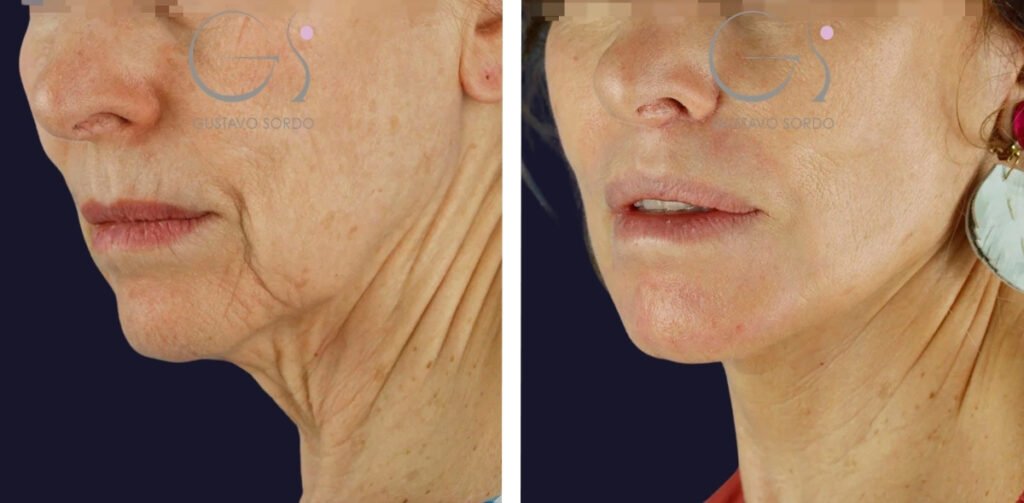
Cervicofacial lifting + lips + dermabrasion + lipofilling

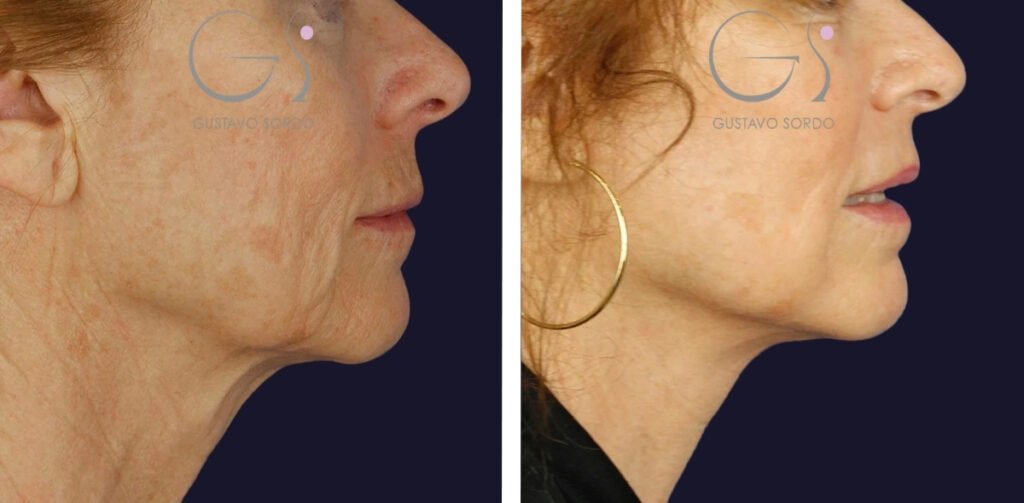
Face, neck, eyebrow lift and blepharoplasty

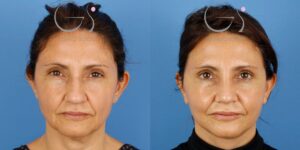
Facelift: before and after a case operated on in our clinic.
The complete process

First consultation
On your first visit to our clinic in Madrid, you will receive direct and personalized attention from Dr. Sordo. During this consultation, we will carefully analyze your facial anatomy and discuss your final goals.
From here, we will carry out a personalized aesthetic study and determine the specific areas that need intervention to achieve natural rejuvenation.
During this initial consultation, our goal is to establish open and transparent communication with you, ensuring we understand your needs and desires, and providing you with the guidance necessary to make an informed decision about your cosmetic procedure.
Pre-operative preparation for a deep plane facelift
Once you have made the decision to have surgery, we will coordinate the date for the operation with you and arrange the necessary pre-operative tests to verify that you are fit to have the surgery.
These tests include blood work and electrocardiograms . They help detect anything that increases risk early on and are included in the price.
At our clinic, we will provide you with a referral form to our partner laboratory, which will send the results directly to us, so you will not need to travel to collect them.
Our anesthesiologist will carefully review all of your test results to ensure that everything is in top condition.
In addition, we will meet with you again in consultation before the surgery to take pre-surgical photographs, discuss any additional details, answer any last-minute questions you may have, and give you all the necessary documentation.
Day of the facelift surgery
You will need to check into the HLA Moncloa Hospital in the morning, where our team will be waiting for you with everything ready.
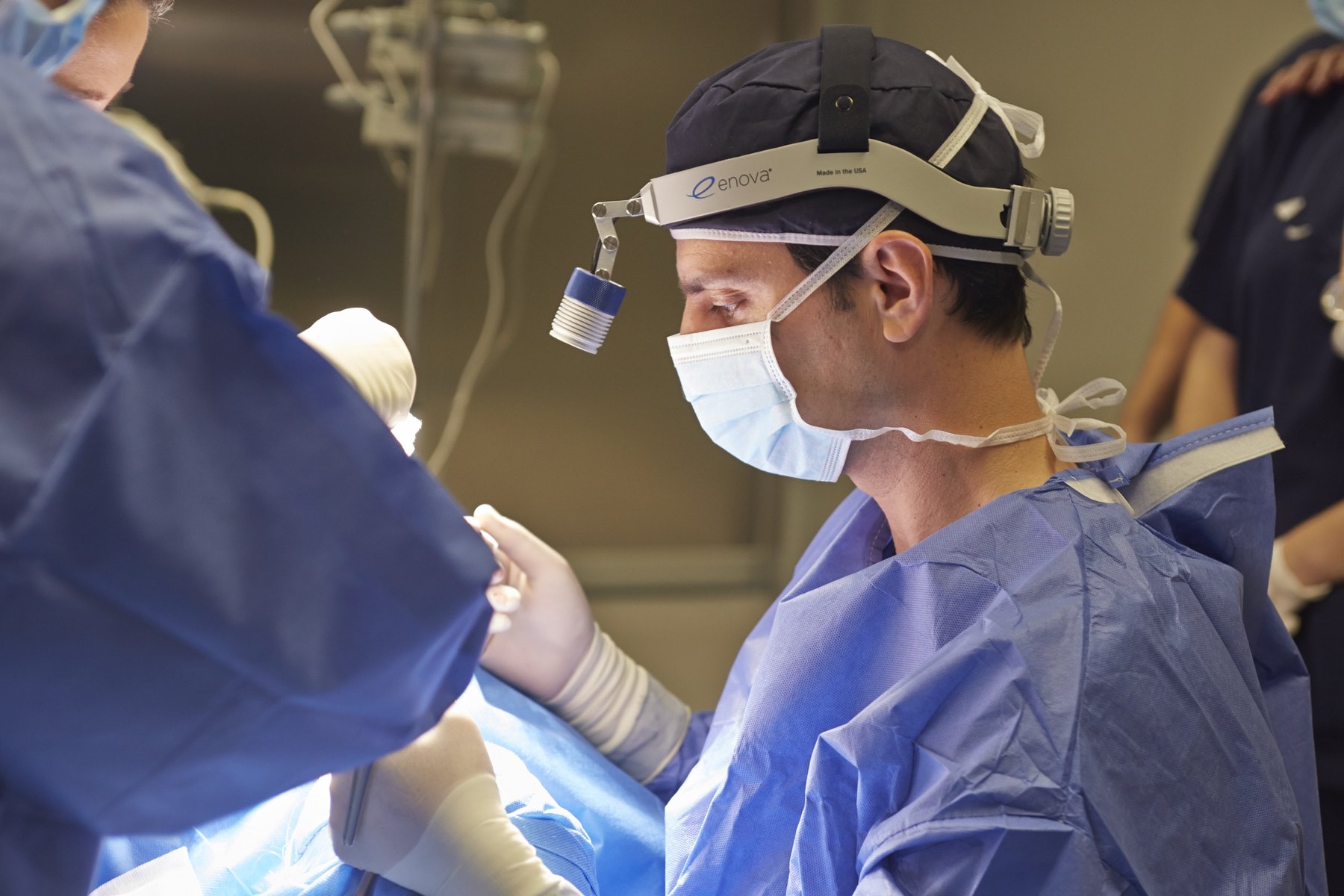
Depending on the areas to be treated, the procedure may require anything from local anesthesia with sedation to general anesthesia, always administered by our expert anesthesiologist, Dr. Bourgeois.
In the case of general anesthesia, we use the so-called TIVA (Total Intravenous Anesthesia) , a novel technique that does not use anesthetic gases and will make you feel much better.
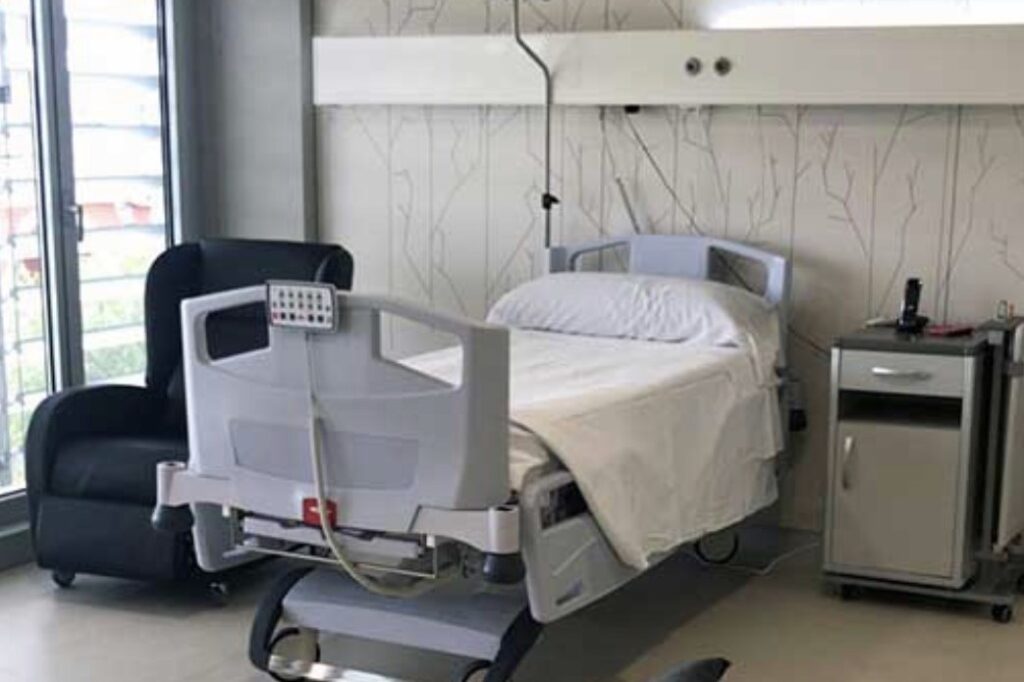
For those seeking maximum discretion, our clinic offers the option of hiring an exclusive VIP service at the hospital. With this service, you will have direct access to a private room from the garage and will receive special attention for your companions during your stay at the hospital.
And what about anesthesia? Here's what kind of anesthesia is used in each surgery : local, sedation, or general, and why TIVA, without anesthetic gases, is used when general anesthesia is needed.
Post-operative care after a deep plane facelift
After a facelift, it is normal to experience some discomfort and itching in the treated area, which should decrease significantly within the first five days.
Before leaving the hospital, you will receive a prescription for specific medication to control any discomfort. This prescription will include:
- Analgesics: To relieve any pain.
- Antibiotics: To prevent infections during the healing process.
At home
Once home, it is crucial to follow these recommendations to promote a good recovery:
- Care of the operated area: Avoid direct and excessive contact with the face.
- Sleeping position: Keep your head elevated and sleep on your back to reduce swelling.
- Ice application: Use cold compresses to reduce inflammation during the first 48 hours.
Follow-up appointments after a deep plane facelift
Post-operative follow-up is where long-term healing problems with the procedure are detected in time:The day after the operation
At your first post-operative appointment, we will review the treated area, assess your initial recovery, and remove any stitches if necessary.
15 days after the facelift
We will perform a thorough review, remove any remaining stitches, and evaluate the preliminary results of the operation.
At 6 months
This visit is to monitor progress over the medium term and make minor adjustments if necessary.
At 12 months
In this review, we will take before and after photos to document the changes and, if everything progresses correctly, we will give you final clearance.
Our team will be available to address any questions or concerns you may have throughout the recovery process and beyond. Your confidence and comfort are our priority.
Explore more facial surgery options
In addition to the deep plane facelift, our clinic offers a variety of procedures to enhance and rejuvenate your face. Each treatment is designed to meet your unique expectations and suit your specific needs.
⇒ Blepharoplasty : Corrects drooping eyelids and eliminates under-eye bags to give you a more rested and youthful look.
⇒ Rhinoplasty in Madrid : Reshape and redefine the structure of your nose to improve both breathing function and facial harmony. Ideal for patients seeking a significant aesthetic change or needing post-traumatic corrections.
⇒ Otoplasty : Indicated to correct ear deformities or reduce the size of ears that are too prominent.
You can see all the facial surgery procedures we perform at the clinic in Madrid.
Risks and limitations of facelifts
A facelift is major surgery and, like any surgery, carries risks. We prefer that you be aware of these risks before making a decision, and that we discuss them during your consultation.
What can happen
In addition to the risks of any surgery performed under anesthesia (bleeding, bruising, infection, scarring problems), it's normal to experience swelling, bruising, and a feeling of tightness or numbness in the face and ears for weeks or months after a facelift. Because the procedure is performed below the SMAS layer, there may also be, in some cases, temporary weakness in a facial muscle due to involvement of a branch of the facial nerve. And while the scars are hidden in the crease in front of and behind the ear, they require months to fully heal. Scheduled follow-up appointments allow us to detect any complications early. If an adjustment is needed, we'll schedule it with you and support you until you achieve the desired result.
What we cannot promise you
A facelift doesn't stop aging: the face continues to age, but from a more favorable position. It doesn't change your expression or features, and the final result is visible once the swelling subsides, months later, not weeks later.
Frequently asked questions about deep plane facelifts
How much does a deep plane facelift cost in Madrid?
From €15.000 to €22.000, depending on the area to be treated: face and neck, or face, neck, and forehead. The initial consultation with Dr. Sordo costs €100 and is deducted from the surgery price.
How does it differ from a "traditional" facelift?
Traditional facelifts typically focus on tightening the skin. Deep plane resurfacing works beneath the surface, on the SMAS layer, anchoring the deep tissues in a more favorable position and only then repositioning the skin without tension. This results in a more natural and longer-lasting outcome.
Why is so much importance given to the neck?
Because nowadays, the neck is where aging is most noticeable, much more so than on the face, which can be concealed with hyaluronic acid or skincare. The neck sags, and there is no non-surgical treatment that can permanently correct this.
What is the concept of "preservation"?
Our approach is to laminate and peel off the minimum amount of tissue possible during surgery, resulting in less inflammation and a faster recovery, while maintaining the same robust results as a classic deep plane.
Can it be combined with other procedures?
Yes. It is often combined with a lip lift to improve the proportion of the lower third of the face, and it can also be integrated with other facial features depending on what is assessed during the consultation.
Will the result be natural?
Yes. We will always strive to harmonize facial structures without creating an "operated" look. It's important to note that it's the internal tissues that must bear the tension of the facelift surgery, not the skin. This prevents unnatural results.
Can I lead a normal life after a facelift?
Yes. Two weeks after surgery you will be able to return to work and, after a month, you will be able to lead a normal life, including sports activities.
Can I put on makeup?
Yes, you will be able to put on makeup in 10 days.
In the case of general anesthesia, is it safe?
Yes. We do this for greater security because this way we can monitor you in the hours that follow. The next morning, Dr. Sordo will visit you to check on your progress and, if everything is okay, he will discharge you from the hospital.
Can I have another operation if I have already had a facelift?
Yes, it is possible if there is a good surgical indication and the conditions are met. It is essential that you go to a consultation for an assessment.
How much does a facelift cost in Madrid?
From €15.000 to €22.000 depending on whether it is a cervicofacial or frontocervicofacial facelift. The price includes the operating room, anesthesia, hospitalization when necessary, and follow-up appointments.
How long does the result last?
Long-term follow-up studies report between five and fifteen years of sustained improvement compared to baseline (Shtraks, 2019). Deep plane surgery does not stop aging: it repositions tissues, and from that point on, aging occurs from a more favorable position.
Is it riskier than a classic facelift?
The largest published series, with 10.784 patients operated on using the deep plane technique, describes a 6,6% complication rate and no permanent facial nerve damage (Koroma, 2026). It is major surgery and carries risks, but the deep plane technique does not multiply them.
Where do the scars end up?
In front of and behind the ear, following its folds, and on the scalp. With hair on, they become difficult to find after a few months.
Is admission required?
It's done under general anesthesia and, depending on the extent of the surgery and how you feel afterward, you may need to stay overnight. I'll give you the specifics before the surgery.
"Deep plane lifting in Madrid": why technique matters so much here
Dr. Gustavo Sordo approaches the deep plane facelift from a holistic perspective of facial aging. Each case is studied individually, analyzing the relationship between the deep planes of the face, neck, and jawline, to achieve a harmonious result that is consistent with the patient's identity.
Detailed planning, the choice of the appropriate technique, and postoperative follow-up are what most determine the duration of the result.
If you would like more information, request your first assessment and receive a personalized study of your case.
 ×
Dr. Gustavo Sordo
Specialist in Plastic, Aesthetic and Reconstructive Surgery. Member No. 282858125.
Content clinically reviewed by Dr. Gustavo Sordo. Last review: October 2, 2026.
Real cases operated on in the clinic
 Lifting and rhinoplasty: results after 15 days
 Facial rejuvenation in a 65-year-old woman
 Face, neck, eyebrow lift and blepharoplasty
See all before and after cases
Looking for the fine print? What happens if a revision is needed, what gets reviewed more often, and where to read opinions we don't control: we'll tell you here.