Updated on • Reviewed by Dr. Gustavo Sordo, plastic surgeon
Chin Surgery in Madrid
Chin surgery is a procedure specifically designed to balance facial proportions, correcting receding, prominent, or asymmetrical chins.
Unlike isolated treatments, mentoplasty is assessed within the complete profile, not in isolation.
- Own clinic at Alberto Aguilera 48, 1st floor left, Madrid
- Surgery at HLA Moncloa Hospital
- 20+ years of experience
- 3D simulation in the first consultation
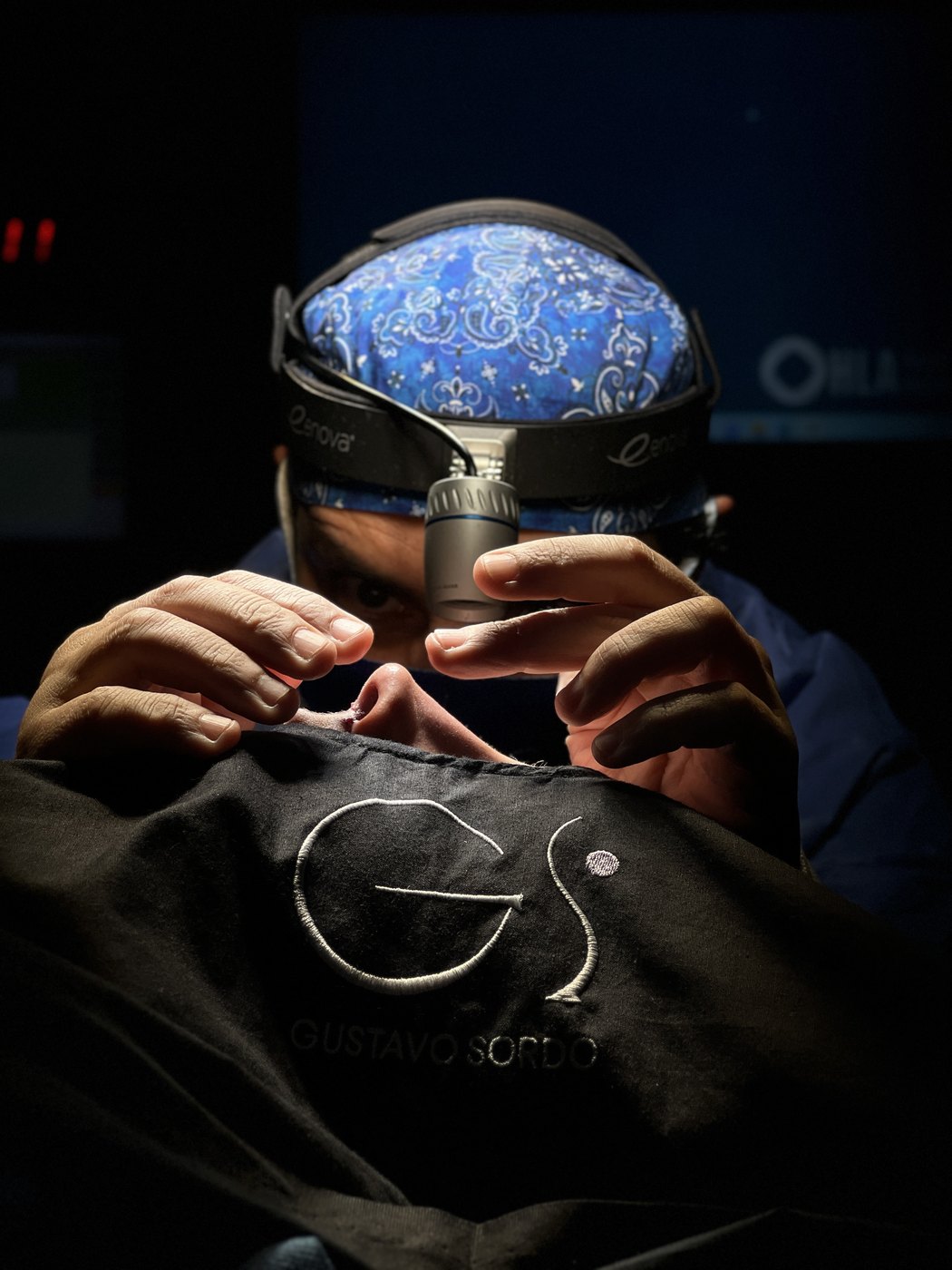
The procedure is performed by Dr. Gustavo Sordo (registration number 282858125). The first consultation costs €100, including a simulation, which will be deducted from the total cost of the surgery.
Plastic surgeon specializing in mentoplasty in Madrid
Mentoplasty is performed by Dr. Gustavo Sordo ( see his CV ), a plastic, aesthetic and reconstructive surgeon, specialist via MIR from the La Paz University Hospital and registered number 282858125. He operates at the HLA Moncloa University Hospital.
What is chin surgery (mentoplasty)?
A well-defined chin is considered to provide appropriate facial balance, creating harmony between the nose, lips, and forehead, and a more youthful appearance, as a cervicomandibular angle (between 90 and 110 degrees) can prevent the appearance of aging.
Mentoplasty is a surgical procedure specifically designed to modify both the bone structure and soft tissues of the chin. This surgery is performed according to the patient's needs, and therefore, there are three main types of mentoplasty:
Chin augmentation : This type of chin surgery is indicated for those with short or receding chins. Techniques such as chin implants are used, which can be made of materials like medical-grade silicone, which is soft and flexible. Our personal preference is to use silicone implants, as they are the best tolerated by patients. Furthermore, if necessary in the future, they can be easily removed.
Implants are accessed intraorally (without visible scarring) or submental, and implant replacement is usually not necessary. In our case, we prefer the submental approach, as it leaves minimal scarring and drastically reduces the rate of infection and implant intolerance, making it much safer for the patient.
The second technique used is genioplasty, a bone advancement technique in which the chin bone is cut and repositioned, then secured with mini-titanium plates. The results of this technique are permanent and, unlike implants, are not easily reversible. There is scientific evidence that this technique causes more sensory injuries in the mental nerve area than implant placement, which is why we generally opt for implant placement.
Mentoplasty : This procedure is used to correct overly prominent chins. It can be performed using a reduction osteotomy technique, such as controlled bone filing, or with a soft tissue recontouring technique. It is generally a technique with limited indications.
Mentoplasty for asymmetries : Asymmetries in the chin area often appear due to facial trauma, congenital defects, or can be the result of previous surgeries. The technique used to correct them is usually a combination of osteotomies or custom implants.
At Dr. Gustavo Sordo's clinic, we custom-design each mentoplasty to perfectly fit your features and aesthetic goals.
What is a profileplasty?
A profileplasty is a combined rhinoplasty plus chin augmentation with implant.
Often, patients come to our consultation because they want rhinoplasty, unaware that their chin is too short, making it impossible to harmonize their profile. During the first consultation, when we see them and analyze their case, we observe that their chin is too short, and we offer the patient both a profile enhancement through rhinoplasty and a chin enhancement through the placement of an implant.
Many of these patients find their faces unstable, but they don't know why. They don't realize that having this chin implant inserted during the same procedure as their rhinoplasty will give them the results they're looking for.
Once they've viewed the simulation we offer in the consultation, these patients appreciate the enormous advantage of taking advantage of anesthesia to place a small chin implant during the same procedure as the rhinoplasty surgery, so much so that they end up deciding to do both at the same time: rhinoplasty plus mentoplasty.
In this case, we also opted for the simplest and most reversible method, which is the extraoral placement, through a small, practically invisible submental incision, of a custom-made silicone implant. This implant generally does not need to be replaced throughout the patient's life.
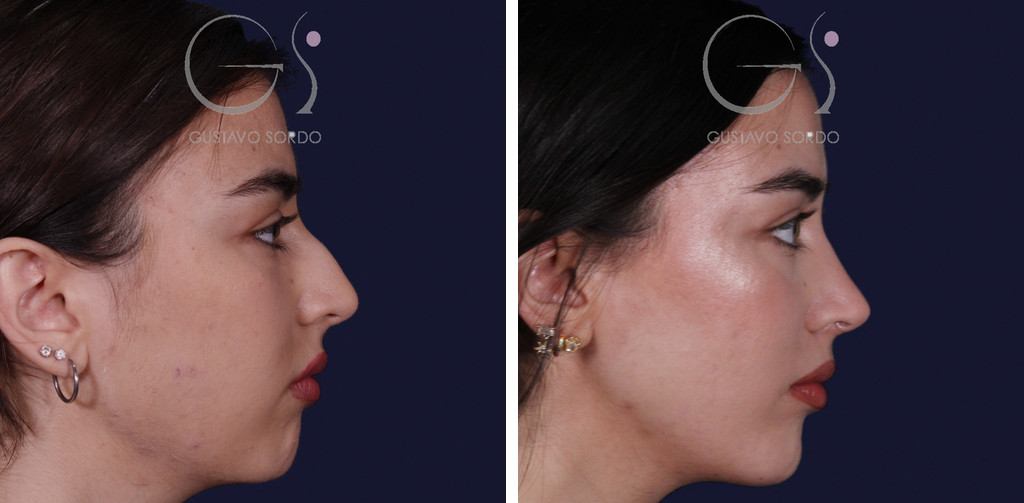
Rhinoplasty and mentoplasty in the same surgery: before and after.
Learn about the benefits of chin surgery
Firstly, there is the instant aesthetic effect it produces, such as the immediate improvement of the patient's facial profile, the harmonization of the lower third of the face, the correction of disproportions in the area of the nose and chin, and the elimination of the appearance of a "double chin".
In addition to the most obvious advantages, chin surgery provides the patient with very significant psychological benefits: increased self-esteem, greater confidence in social interactions, and a feeling of rejuvenation.
Before and After Chin Surgery
Before chin surgery, patients may present an unsatisfactory appearance due to factors such as an ill-defined jawline and a sharp transition between the neck and face, or an overly prominent chin and asymmetries. These malformations can also lead to difficulty biting, breathing, or other discomfort in that area.
After surgery, the patient can observe in the results a clear and well-defined jawline, with a smooth transition between the neck and face at a good angle, the disappearance of the double chin, and improved symmetry with a significant improvement in the definition of the facial oval.
These cases have been combined with ultrasonic rhinoplasty. The strategic combination of mentoplasty and ultrasonic rhinoplasty significantly enhances facial harmony, creating a better balance between your features.
✔ Coordinated recovery: A single postoperative period for both interventions
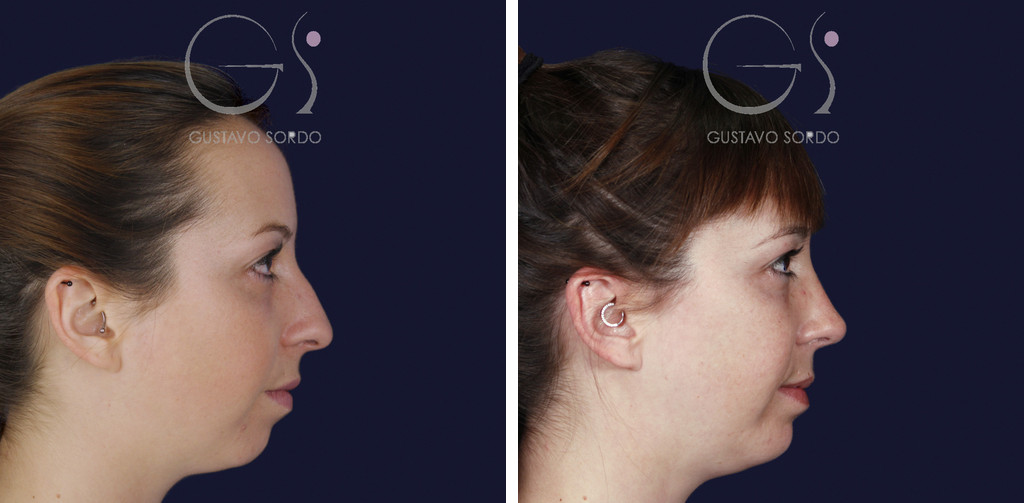

See more before and after cases of mentoplasty
At our clinic, we will ensure that we address and treat your specific needs in a personalized way, to address what truly bothers you about your profile.
Patient Reviews and Testimonials
The complete process of chin surgery

Preoperative
This first part of the process involves 2 or 3 pre-operative consultations in which we will perform a facial analysis, with digital photographs and computer simulations, in addition to a radiological study using a series of lateral skull x-rays and 3D CT scan in complex cases if necessary.
In addition, to assess your health before the operation, we will perform a complete medical examination. If you are taking anticoagulants or antiplatelet drugs, we will advise you on when and how to discontinue them, in accordance with the prescribing physician. We will also provide you with a detailed pre-operative protocol to follow, including oral hygiene, supplement intake, and other personalized instructions from Dr. Sordo based on your individual health status.
The day of the operation
This is a procedure that usually lasts between one hour (in the case of implants) and up to three hours (in more complex cases) and is performed on an outpatient basis in most cases (up to 3% of cases), which means you can go home the same day of surgery, without the need for hospitalization.
Chin implant surgery is generally simple and can be performed on an outpatient basis under local anesthesia. This surgery is usually performed in conjunction with a rhinoplasty, which we call a complete profiloplasty, and anesthesia is used for both the rhinoplasty and the chin implant augmentation, creating a much more harmonious result that improves and balances the patient's overall profile. In these cases, an overnight stay will be necessary.
Don't be afraid: you will be accompanied by a dedicated group of professionals, with a lot of experience behind them and with whom you will have direct contact throughout the entire process.
And what about anesthesia? Here's what kind of anesthesia is used in each surgery : local, sedation, or general, and why TIVA, without anesthetic gases, is used when general anesthesia is needed.
Postoperative
The final phase is the postoperative phase. For the first 48 hours, you will need to wear a compression bandage and follow a soft, cold diet. You will also need to rest with your head elevated. Therefore, it is recommended that you have assistance during this initial phase.
Afterward, we'll remove the stitches (if any) and the swelling will reduce by 50%. You can return to work in 7 to 10 days.
During the first month you can resume light exercise and 80% of the results will be visible.
Finally, full recovery and final results will be seen in about 3 to 6 months.

Reviews
Throughout your recovery period, you will need to return to our clinic for regular follow-up appointments where Dr. Sordo will assess your progress and development. We will also use these appointments to update any recommendations or prescribed medication, and nothing more.
Other complementary surgeries of interest
⇒ Rhinoplasty : This is nose surgery that, when combined with chin surgery, can completely harmonize the facial profile. It can be performed as a bridge reduction, tip refinement, or correction of a deviated septum.
⇒ Blepharoplasty: This is an eyelid surgery that achieves a younger and more rested look, with options for the upper eyelid where excess skin is removed, or for the lower eyelid where bags and dark circles are treated.
⇒ Facelift : This treatment is indicated for those with moderate or severe sagging, and can be performed with modern techniques such as SMAS (deep tissue repositioning) or MACS (mini facelift with less scarring) and lasts 8 to 10 years.
⇒ Otoplasty : It is known as ear surgery and can correct prominent ears, asymmetries or congenital malformations.
Risks and limitations of mentoplasty
Mentoplasty is a surgical procedure and, like all surgeries, carries risks. We prefer that you be aware of these risks before making a decision, and that we discuss them during your consultation.
What can happen
In addition to the risks inherent in any surgery (bleeding, infection, healing problems), it's normal to experience swelling and discomfort when chewing in the chin area for the first few days. There may also be temporary changes in the sensitivity of the lower lip and chin, slight asymmetries, or, in some cases, displacement or rejection of the implant, which would require its removal or repositioning. Scheduled checkups are essential for early detection. We will address any issues with you, providing the necessary follow-up until the end of the process.
What we cannot promise you
Mentoplasty improves the balance of the profile, but it doesn't change the rest of the face on its own, nor does it correct a misaligned bite. The final shape is visible once the swelling subsides, and a simulation is for guidance only, not a guarantee of the result.
What is the price of chin surgery in Madrid?
At the clinic, mentoplasty costs €3.300 , or €12.900 combined with rhinoplasty, with a fixed price and everything included.
The price includes the surgeon's and anesthesiologist's fees, the nursing team, hospital expenses, pre-operative consultations, and post-operative follow-up.
In the first consultation with Dr. Gustavo Sordo we assess your case and tell you if mentoplasty alone or combined with rhinoplasty is right for you.
Frequently Asked Questions (FAQ) About Chin Surgery
How much does a mentoplasty cost in Madrid?
Mentoplasty costs €3.300, and €12.900 if combined with rhinoplasty. The initial consultation with Dr. Sordo costs €100, includes a simulation, and is deducted from the total cost of the surgery.
At what age can a mentoplasty be performed?
The minimum recommended age is 18 to 20 years, once facial bone growth has completed.
Can I have surgery if I have thyroid problems?
Yes, but prior endocrinological monitoring will be required and medication adjustment may be necessary.
Can it be combined with orthodontics?
Yes, in fact in many cases it is required, collaborating with an orthodontist when the problem is also related to occlusion.
When will I be able to chew normally?
In the case of implants, after 3 to 5 days, but for an osteotomy, after 2 weeks.
Can a chin implant be rejected?
Yes, but it's very rare, accounting for less than 1% of cases. Infection is slightly more common, accounting for 2 to 3% of cases, although it's manageable with antibiotics, so it doesn't usually pose a serious risk.
What if I don't like the result?
Implants can be adjusted or removed, and in the case of an osteotomy, corrective surgery would be required, although this is rarely necessary.
Can a scar remain visible?
Intraoral incisions for implants leave no external scars, and the submental approach leaves only a minimal indentation that is hidden under the natural skin fold.
Is there a risk of dental damage?
It is not usually a risk factor if performed by an expert and trusted surgeon, such as Dr. Gustavo Sordo.
How much does a mentoplasty cost in Madrid?
€3.300 alone. Together with a rhinoplasty, €12.900 for both, because they share an operating room and anesthesia.
Bone implant or surgery?
In most cases, an implant is preferred: it's more predictable, more reversible, and recovery is shorter. The implant is fixed with a PDS suture to prevent movement. Osteotomy is reserved for cases where the chin needs to be moved in more than one plane.
Why is it so often combined with rhinoplasty?
Because the entire profile is taken into account. A short chin makes the nose appear larger than it is, and vice versa. That's why in the simulation we look at both features together before making a decision.
Does it leave a scar?
The incision is made inside the mouth or under the chin, in the crease, depending on the case. Inside, there is no visible scar; outside, a short line hidden in the shadow of the crease.
"Mentoplasty in Madrid": what almost no one explains in the first consultation
Dr. Gustavo Sordo approaches mentoplasty from a holistic perspective of the facial profile. Each case is studied individually, analyzing the relationship between the chin, nose, lips, and neck, to achieve a harmonious result that is consistent with the patient's identity.
Detailed planning, the choice of the appropriate technique, and postoperative follow-up are what most determine the duration of the result.
👉 If you want to find out more, request your first assessment and receive a personalized study of your case.
 ×
Dr. Gustavo Sordo
Specialist in Plastic, Aesthetic and Reconstructive Surgery. Member No. 282858125.
Content clinically reviewed by Dr. Gustavo Sordo. Last review: November 2, 2026.
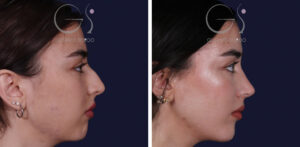
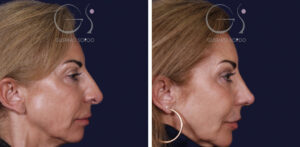
Real cases operated on in the clinic
See all before and after cases
Looking for the fine print? What happens if a revision is needed, what gets reviewed more often, and where to read opinions we don't control: we'll tell you here.