Updated on • Reviewed by Dr. Gustavo Sordo, plastic surgeon
Ethnic Rhinoplasty in Madrid
- + 1.000rhinoplasties performed
Data from the clinic's own surgical records and photographic archive. Updated to September 2026.
RHINOPLASTY FOR LATIN AND AFRO-DESCENDANT NOSES
A primary rhinoplasty protocol with costal cartilage grafting, specifically designed for noses with thick skin and weak cartilaginous structure—the most common profile among Latino and Afro-descendant patients, and generally among mixed-race noses—that seeks definition without losing its identity. If this is your first surgery, general information (techniques, price, and case studies) is available on our rhinoplasty page in Madrid.
The surgeon is Dr. Gustavo Sordo, a specialist rhinoplasty surgeon in Madrid (registration number 282858125), at the HLA Moncloa University Hospital. The initial consultation costs €100, which will be deducted from the total cost of the surgery.
- Own clinic at Alberto Aguilera 48, 1st floor left, Madrid
- Surgery at HLA Moncloa Hospital
- 20+ years of experience
- 3D simulation in the first consultation
What is ethnic rhinoplasty?
More and more Latino patients are looking for a surgeon who understands their type of nose — one who preserves some similarity to their features, not one who tries to turn it into something else.
Noses of Latin, African, or Afro-descendant profile often share a common structural challenge: thick, oily skin supported by a relatively weak cartilage framework. It's like a tent with a lot of fabric and very few poles to hold it up: the result is an undefined tip, soft angles, and a lack of projection that no cream or filler can correct.
The solution, paradoxical as it may seem, is not reduction. It's increasing the amount of cartilage relative to the overlying skin . A firmer, better-projected framework pushes the skin from within, and it is precisely this push that achieves what these patients seek: definition, a perceived slimness, sharp angles, and a feminine profile without losing the essence of their features.
It is also one of the nasal surgeries where the flawed approach is most apparent: if the size of a Latin, African, or mixed-race nose is reduced or the bridge is removed, as is done in a conventional approach, the result tends to look worse, not better. What truly works is lifting and reconstructing the entire structure so that the skin is embedded within a larger, better-defined framework.

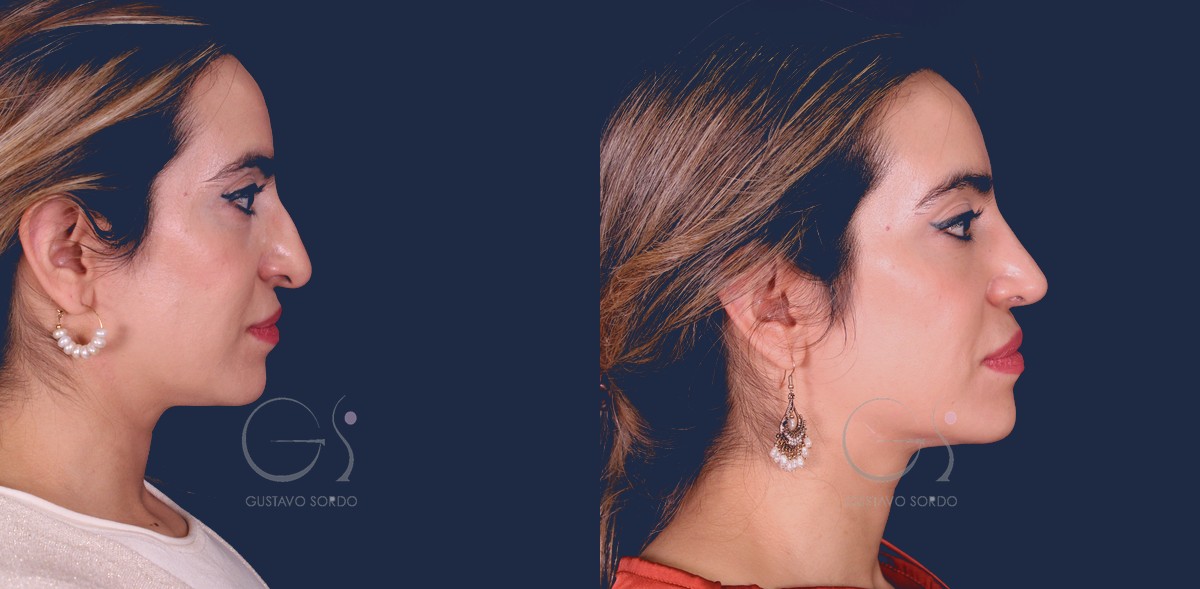
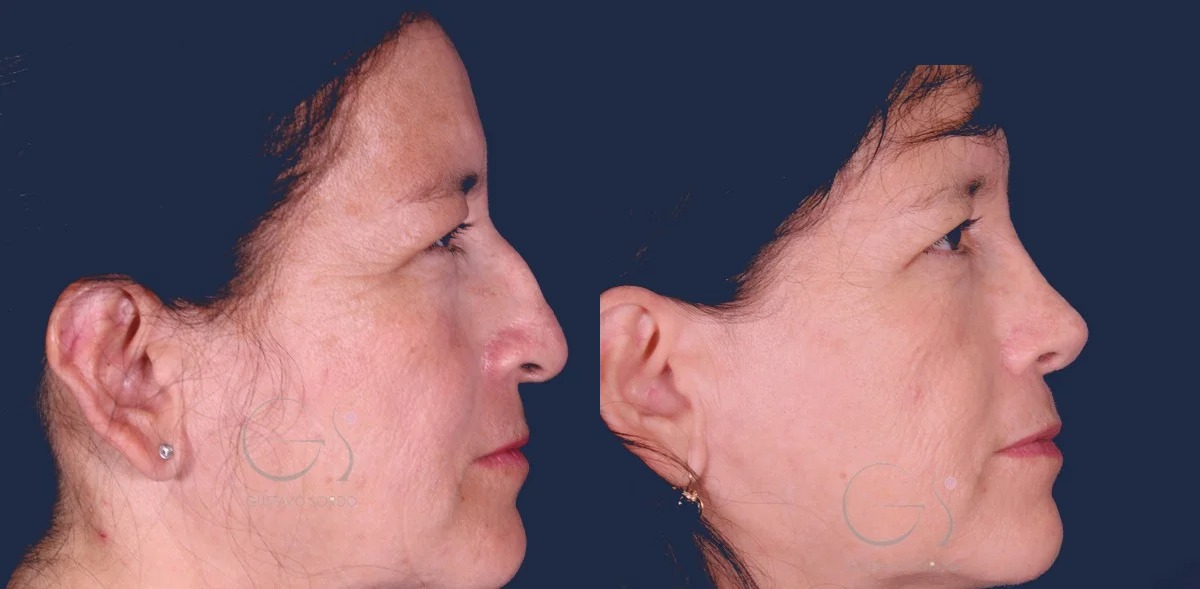
Latin nose: before and after.
So that you can continue to be yourself.
Advantages of ethnic rhinoplasty with rib graft
More structure, less apparent volume
The more cartilage we add to that tent-like structure, the tighter the skin will be, and the more defined the nose will appear. That's why, in patients with little of their own cartilage available, we resort to rib cartilage grafting: the only source capable of providing the volume and structural strength that this anatomy needs to achieve a defined, harmonious, and lasting result.
Take advantage of your skin's characteristics
Instead of trying to "slim down" a Latina, African, or mixed-race nose that naturally has a lot of skin and fat, we build a larger, more solid internal structure upon which that skin rests with greater definition. The result is in harmony with your anatomy, not a struggle against it.
Own material, no risk of rejection
By using the patient's own rib cartilage, there is no risk of rejection. It is living tissue that the body integrates, unlike a synthetic material.
You regain both form and function.
Rib graft reconstruction is not only about aesthetics; it also corrects the breathing problems that often accompany this type of nose. Everything is addressed in the same procedure.
Less pain and less visible scarring
An anesthetic catheter in the donor area prevents rib pain, one of the aspects that most worries patients traveling from outside Madrid, and the minimal incision, closed with laser, leaves a barely visible mark.
How are we different from other clinics?

We rebuild the infrastructure, we don't just cut the skin
Instead of reducing the nose, the most common mistake in these types of patients, we build a solid, L-shaped internal structure that anchors to the forehead and supports the entire nose from within. All the skin is lifted and embedded within this larger structure, gaining definition without losing a natural appearance.
Meticulous planning, not "adding more just for the sake of it"
It's not about adding cartilage haphazardly. We meticulously plan the exact amount of cartilage needed to achieve the perfect balance between structure and skin, calculating the framework your specific anatomy requires—no more, no less.
All with ultrasound
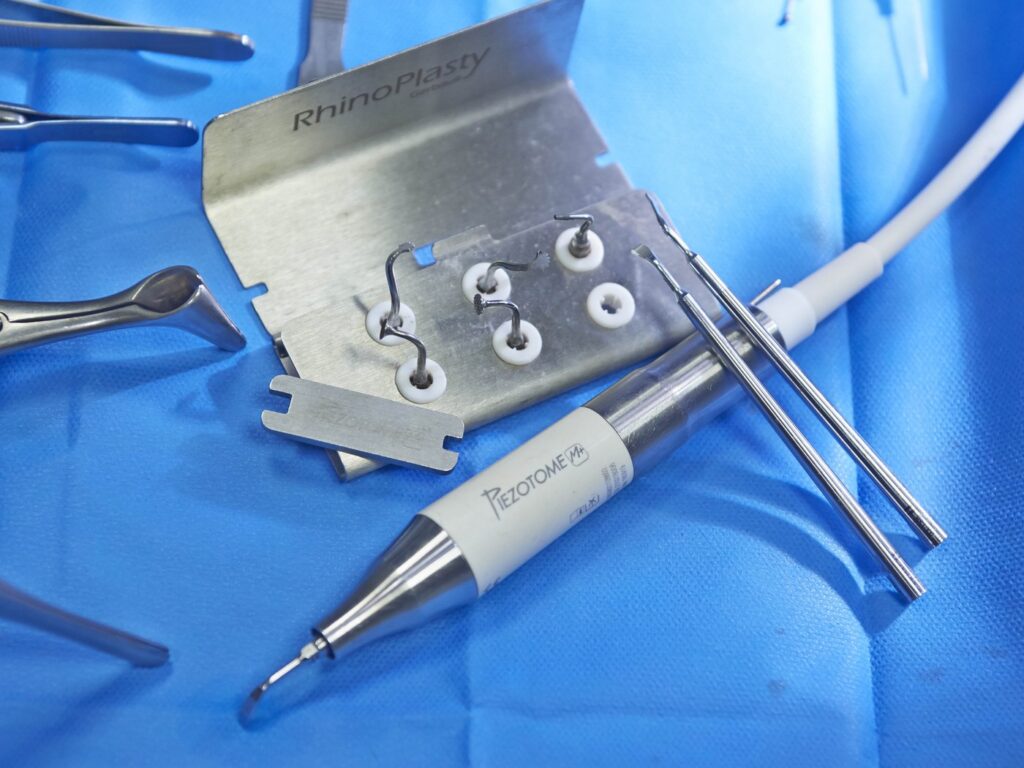
Both the obtaining of the graft and its shaping and placement are carried out with ultrasonic instruments (Piezotome), which allows for precision work with minimal trauma on thick and sensitive skin.
Specific protocol for thick and oily skin
Thick, oily skin is common in Latin noses and, in general, in ethnic rhinoplasty, and it is what most obscures the work done underneath. In cases that require it, we include a medical protocol of degreasing with oral isotretinoin in the months prior to surgery, with pre-operative blood tests and continuous follow-up, integrated into the rhinoplasty plan itself. This reduces the activity of the sebaceous glands and thins the skin, which helps to reveal the definition of the underlying structure. Recent literature describes better tip definition and less edema in the first few months; the benefit tends to even out after a year, so it is indicated on a case-by-case basis and does not replace the technique ( Ghazizadeh et al., 2025 ; Rammal and Mogharbel, 2025 ).
Keep cartilage alive
The main risk of a rib graft is devascularization: that the new tissue doesn't receive enough blood supply to integrate into the nose. Once harvested, the rib has no blood supply of its own; it survives by diffusion for the first few days until the body is able to nourish it. That's why we've developed our own three-stage protocol, specifically designed to maximize the graft's vascular survival.
Before: we prepare the skin's surface
- Defatting protocol with oral isotretinoinWhen appropriate, in thick and oily skin, with continuous medical monitoring and prior analysis, integrated within the rhinoplasty project itself.
- Millimeter-precise planning of the amount of cartilage needed to achieve the exact balance between structure and skin.
- Massages, oils and dilators from the date set: The patient performs daily massages of the columella and nasal skin, applies alternating ozone and St. John's wort oils, and wears nasal dilators. The goal is to arrive at the operating room with more elastic and better-perfused skin.
During: we built the framework, piece by piece
- We obtain the costal cartilage graft through a minimal incision, closed with laser to minimize scarring.
- From the very first moment, we placed an anesthetic catheter in the donor area, which prevents rib pain.
- The cartilage is laminated and carved into several pieces, which are fitted into the nose like a scale model, assembled with Piezotome, an ultrasonic scalpel that allows the new framework to be shaped with millimeter precision and minimal tissue trauma.
- Fibrin-rich plasma (PRF), a concentrate of the patient's own growth factors, is applied to improve the biological performance of the graft and its integration with the tissues.
Then: we secured integration from minute one
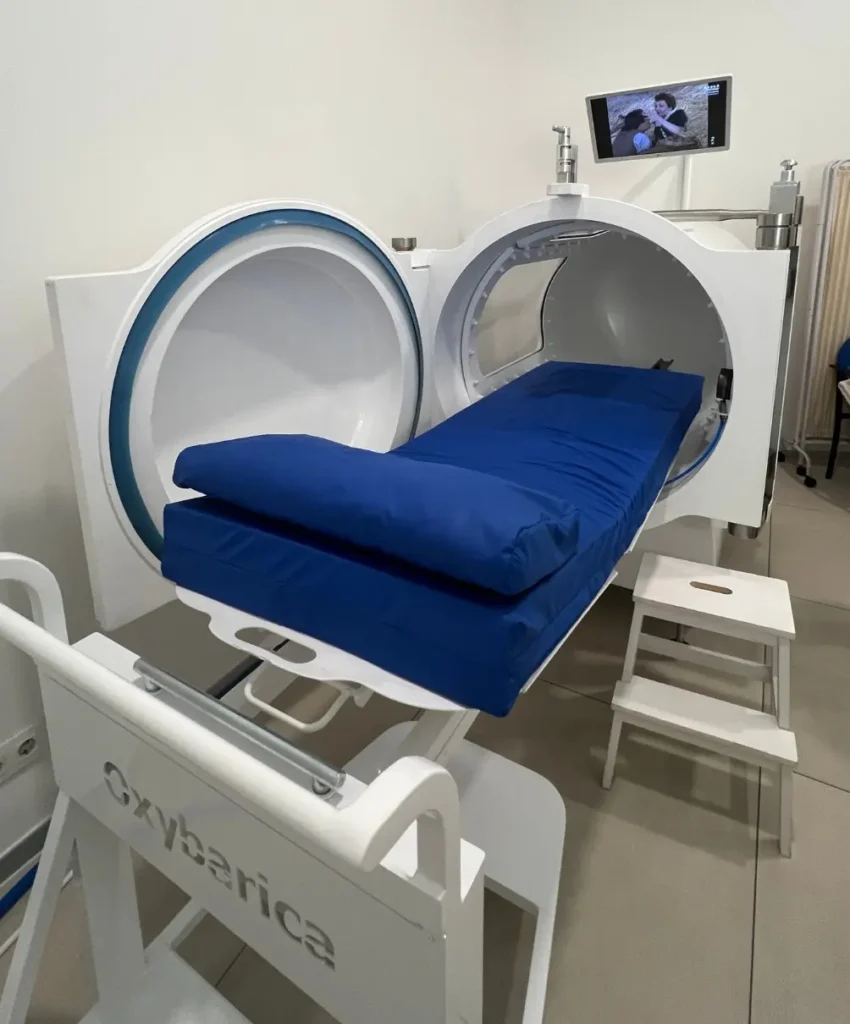
- When the procedure is performed at the Moncloa University Hospital, the patient is taken to a hyperbaric chamber on the same day as the surgery, receiving 100% oxygen at 2,5 atmospheres. This protocol consists of a minimum of five sessions, beginning on the day of surgery, and aims to promote vascular integration of the new rib cage. In cases of thick skin or fibrosis, the treatment period may be longer, and this is decided on a case-by-case basis.
- The anesthetic catheter in the donor area remains in place, with anesthesia administered by the ward nursing staff, so that the patient does not feel rib discomfort during recovery.
- On that same day, a prolonged course of antibiotics is also started, usually for about a month; the exact duration depends on each patient and what is found in the operating room.
Designed for you
More and more patients are traveling in search of a surgeon who understands their features and physiognomy.
We work with Latino patients, many of whom reside in Miami or have recently settled in Madrid, where a significant portion of this community has relocated in recent years. We understand what they seek: a defined, harmonious, and natural result, without sacrificing their heritage, and we have a protocol specifically designed to achieve this, incorporating all the technology and clinical follow-up that this surgery requires.
Before and after an ethnic rhinoplasty in Madrid
Our way of working consists of listening to your needs, studying your nose and proposing an improved version of the one you have, with which you feel much more comfortable.
Two published cases illustrate this approach in a Latin nose. In an ethnic rhinoplasty on a Latin nose with a short tip, the tip had very little projection and very little natural support, a characteristic pattern of the Latin nose. The key was a septal extension graft using the armadillo tip technique, because when the tip lacks support, sculpting alone is insufficient: it must be given a structure to rely on. In this ethnic rhinoplasty with alarplasty , the procedure also included narrowing the base of the nose.
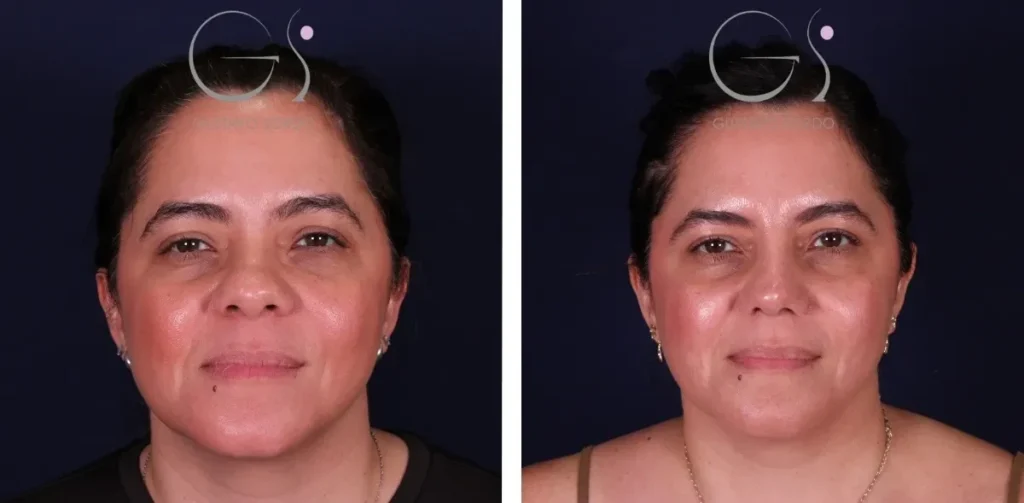
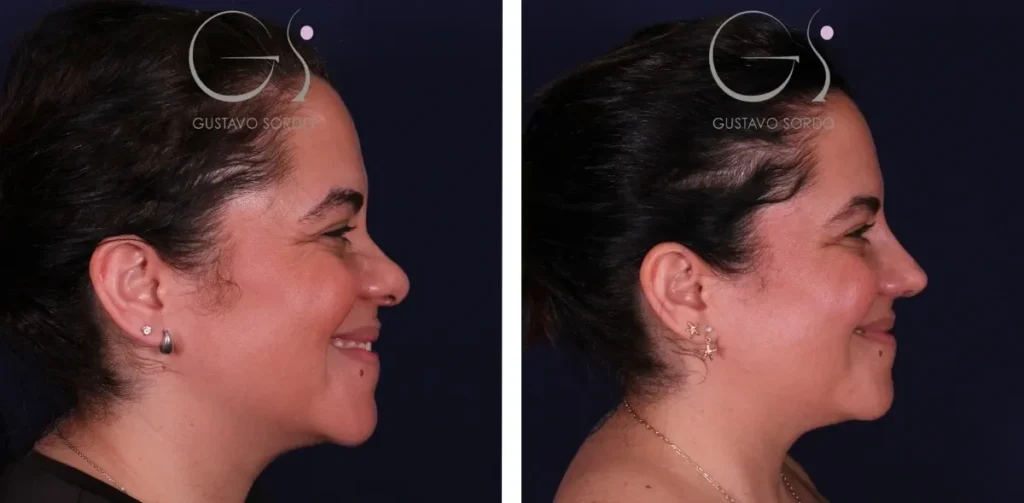
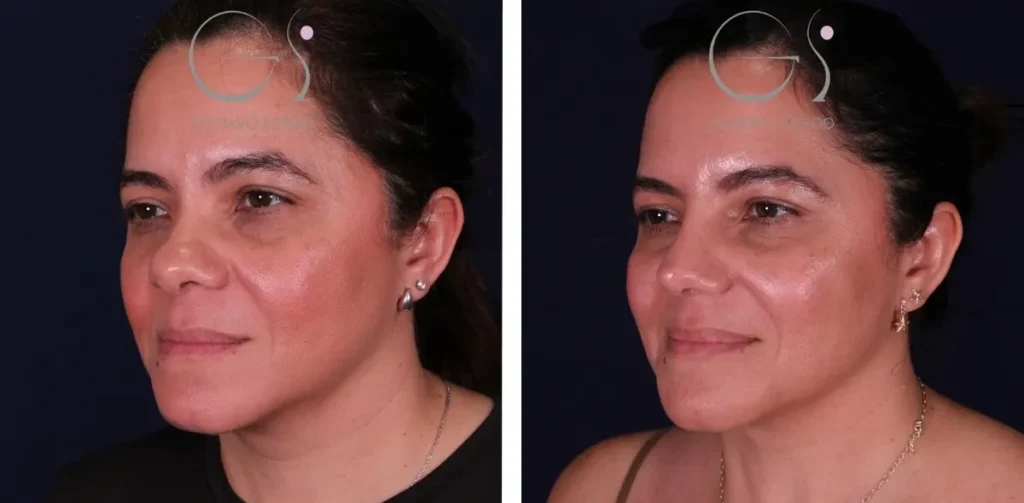
You have another case explained step by step in the record of this ethnic rhinoplasty with alarplasty : the before and after photos and why I chose that technique.
And a long-term result on a very wide Latin nose: in this rhinoplasty with allotomy, the most relevant factor was the width of the base, and the allotomy narrowed it. The after photos are from more than six years after the surgery.
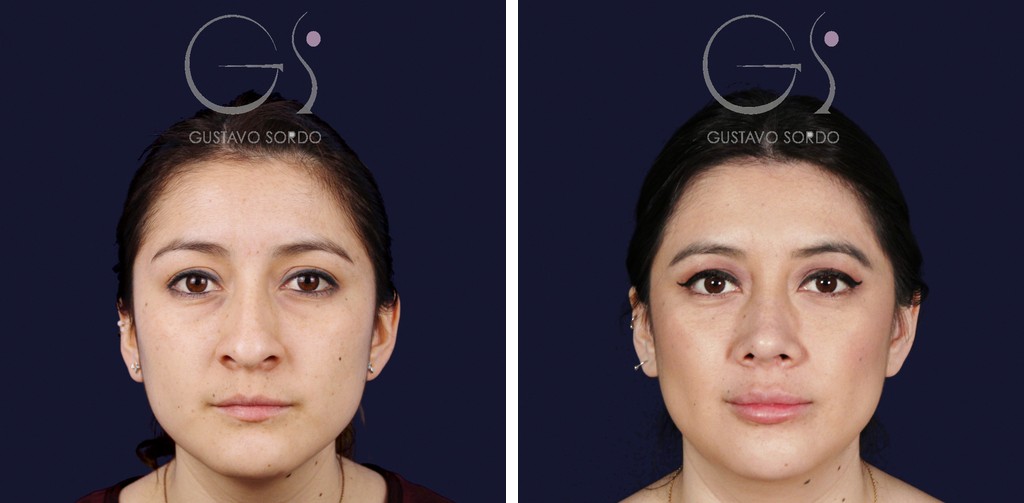
And here's another case with thick skin and low radix, resolved with dorsal preservation and armadillo tip , with its technical data sheet.
The complete process of an ethnic rhinoplasty

First consultation
Pre-operative preparation for an ethnic rhinoplasty
The day of the ethnic rhinoplasty surgery
On the day of your surgery, we will welcome you to the Hospital de la Moncloa in the morning. Our entire team will be ready to greet you and we will make sure you feel comfortable and at ease. You don't have to worry about a thing.
At our clinic, we rely on the Hospital de la Moncloa to perform all our surgical procedures. This hospital boasts cutting-edge technology and offers comprehensive medical care , enabling us to act quickly should any complications arise.
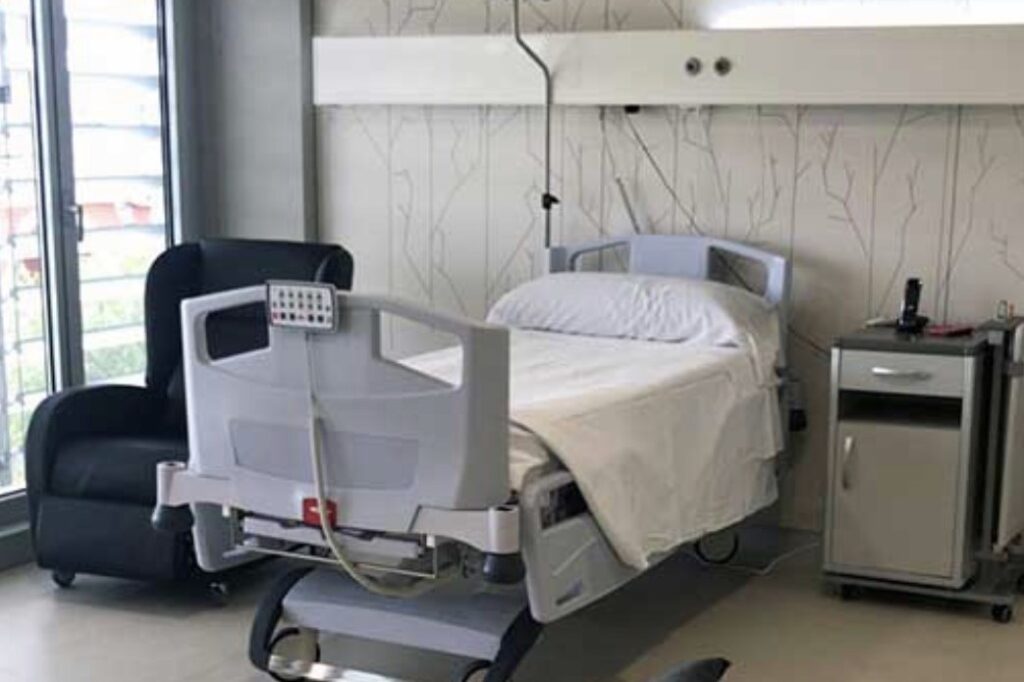
For patients seeking maximum discretion, we offer our exclusive VIP service . This service includes benefits such as direct access to your room from the garage, as well as special attention for your companions during your hospital stay.
Don't be afraid: you will be accompanied by a dedicated group of professionals, with a lot of experience behind them and with whom you will have direct contact throughout the entire process.
And what about anesthesia? Here's what kind of anesthesia is used in each surgery : local, sedation, or general, and why TIVA, without anesthetic gases, is used when general anesthesia is needed.

Post-operative period of ethnic rhinoplasty
The day after your surgery, Dr. Sordo, a plastic surgeon in Madrid , will visit you to check on your progress and ensure everything is healing perfectly. During this visit, we will perform the first dressing change, a simple and easily tolerated procedure. After breakfast, around 10:00 a.m., you will be able to return home.
One week after the operation, we will welcome you back to our clinic to remove the protective plastic. We know how eager you will be to see the results of your new nose, and we will be delighted to share that moment with you. Thanks to ultrasonic rhinoplasty, it is possible to see the changes in just 7 days. It is important to remember that during the first month after surgery, you should avoid wearing glasses. In addition, you will notice that the swelling will gradually decrease and that the results improve over time.
At home, we recommend that you follow these postoperative care instructions:
- Apply cold compresses to reduce swelling.
- Use a raised pillow while sleeping to facilitate breathing and reduce inflammation.
- Follow a skincare regimen recommended by our medical team.
- Take analgesics according to the instructions to monitor any postoperative discomfort.
- Take the prescribed antibiotic to prevent infections and reduce the risk of infection.
We encourage you to check out our blog for more detailed information about the post-operative recovery process after rhinoplasty.

Reviews
One month after rhinoplasty
You may experience sensations of stiffness and tenderness at the tip of your nose, which is completely normal and will disappear over time. The swelling will have decreased considerably, allowing for a better definition of your nose and a noticeable improvement in your breathing.
During this stage, we will take new photographs to document your progress and compare them with previous images. In addition, you will be able to resume wearing glasses and doing physical activities as normal.
6 months later
You will notice a significant improvement in the appearance of your nose, with a more pronounced definition and closer to its final shape.
During this check-up, we will compare your previous photos to see the changes you have made. Although the tip of your nose may still be somewhat firm and slightly swollen, you will continue to see improvements in its appearance over time.
Explore more facial surgery options
In addition to ultrasonic rhinoplasty, our clinic offers a variety of procedures to enhance and rejuvenate your face. Each treatment is designed to meet your unique expectations and fit your specific needs:
⇒ Blepharoplasty : Corrects drooping eyelids and eliminates under-eye bags to give you a more rested and youthful look.
⇒ Facelift : Ideal for those who want a complete rejuvenation, this procedure tightens the skin and reduces wrinkles, providing a firmer and younger appearance.
⇒ Otoplasty : Perfect for correcting ear deformities or reducing the size of ears that are too prominent.
You can see all the facial surgery procedures we perform at the clinic in Madrid.
Plastic surgeon specializing in ethnic rhinoplasty in Madrid
Ethnic rhinoplasty is performed by Dr. Gustavo Sordo, a rhinoplasty specialist surgeon in Madrid , at the HLA Moncloa University Hospital.
Risks and limitations of ethnic rhinoplasty
Ethnic rhinoplasty is surgery, and like all surgery, it carries risks. We prefer that you be aware of them before making a decision, and that we discuss them during your consultation.
What can happen
In addition to the risks of any surgery under general anesthesia (bleeding, infection, scarring problems), it's normal to experience swelling and bruising for weeks, and there may be temporary changes in sensation or breathing, as well as asymmetries that only become noticeable once the swelling subsides. In people with thicker skin, the nose takes longer to reduce swelling and become more defined. If rib cartilage is used, there will be additional discomfort and a scar in the area where it was taken. Scheduled checkups allow us to detect and treat these issues early. Our commitment doesn't end in the operating room: if a follow-up is needed, we'll work together until we achieve the desired result.
What we cannot promise you
The nose continues to reduce in swelling and become more defined for months, and may take longer for those with thicker skin. We cannot promise an exact result: the consultation simulation is for guidance only, not a guarantee.
What is the price of an ethnic rhinoplasty in Madrid?
An ethnic rhinoplasty—whether on a Latin, African, or mixed-race nose—includes rib grafting and the complete hyperbaric chamber protocol. At the clinic, it costs €15.000 , a fixed price, with the entire protocol included: skin assessment and protocol, surgery, PRF, and the five hyperbaric chamber sessions.
During your first consultation with Dr. Sordo, we will evaluate your specific case and provide you with a detailed quote.
"We don't transform your nose into something else. We give it the structure it always needed to show its full character."
Frequently asked questions about ethnic rhinoplasty
How much does an ethnic rhinoplasty cost in Madrid?
€15.000, fixed price, includes the complete protocol: skin assessment and protocol, surgery, PRF, and five hyperbaric chamber sessions. The exact price will be finalized during the initial consultation with Dr. Sordo (€100), which will be deducted from the cost of the surgery.
Why is rib grafting almost always necessary in a Latin, African, or mixed-race nose?
Because this type of nose typically has little of its own cartilage relative to the skin covering it—like a tent with lots of fabric and few poles. The costal cartilage allows for the construction of a solid framework capable of supporting and defining that skin from within.
Wouldn't it be better to simply reduce the size of the nose?
No, in most cases, no. Reducing the size or removing the bridge of a nose with these characteristics usually yields worse results because the thick, fatty skin doesn't adapt well to a smaller structure. What really works is augmenting and reinforcing the internal framework so that it pushes the skin out from within.
Does this surgery cause my feature to lose its identity or character?
That's not the goal. The approach aims to define and enhance your features while respecting their essence, not to transform your nose into something else entirely.
Why is the hyperbaric chamber so important in this type of surgery?
Because rib grafts lack their own blood supply, they survive by diffusion until the body provides sufficient oxygen. The extra oxygen provided during the initial post-surgery sessions directly influences graft take and the final outcome.
Does costal cartilage removal hurt?
We place an anesthetic catheter in the donor area from the day of surgery, which prevents rib pain — one of the aspects that most worries patients who travel from outside Madrid to have surgery.
Is the scar where the rib was removed noticeable?
The incision to obtain the graft is minimal and is closed with a laser, which makes the mark practically invisible.
When will the final result be visible?
The result continues to evolve for several months, and in this type of nose—with more skin and fat underneath—the definition process can take a little longer than in other noses. The final shape is usually visible after a year.
Dr. Gustavo Sordo, surgeon specializing in ethnic rhinoplasty in Madrid
When a patient searches for "ethnic rhinoplasty in Madrid", they usually don't want an obvious change, but something much more subtle: to improve the harmony of their nose while respecting their features and identity.
Dr. Gustavo Sordo approaches ethnic rhinoplasty from a holistic perspective of the facial profile. Each case is studied individually, analyzing the patient's unique anatomical structure and the relationship between the nose, lips, and chin, to achieve a harmonious result that aligns with the patient's identity.
Detailed planning, choosing the right technique, and postoperative follow-up are essential to achieving natural and stable results over time.
If you would like more information, request your first assessment and receive a personalized study of your case.
 ×
Dr. Gustavo Sordo
Specialist in Plastic, Aesthetic and Reconstructive Surgery. Member No. 282858125.
Content clinically reviewed by Dr. Gustavo Sordo. Last review: November 2, 2026.
Cases of ethnic rhinoplasty performed at the clinic
Real photographs of patients, in profile, taken in the office with the same lighting and angles, before and after. Each one links to its complete file.