Closed Rhinoplasty: Everything You Need to Know
Updated on • Reviewed by Dr. Gustavo Sordo, plastic surgeon
The nose is the centre of the face and its aesthetic importance is appreciated by everyone, hence the reason why plastic surgery of the nose is one of the most requested. It is a complex surgery, where the doctor applies technique and art, to obtain the best result.
Rhinoplasty is a surgical procedure that changes the structure of the nose and corrects functional problems. If you're considering it, here's how we perform it at our clinic, what it includes, and how much it costs: rhinoplasty in Madrid.
The choice between open or closed rhinoplasty is often one of the main concerns for patients interested in this surgery. However, beyond the technique, what truly matters is the surgeon performing it . Each method has its own particularities, but the key lies in the level of precision and craftsmanship the professional brings to each case.
What is closed rhinoplasty?
Rhinoplasty is a facial surgery that transforms the structure of the nose, correcting its shape, size , and proportions according to the patient's needs and facial features. It also repairs congenital problems and the aftereffects of trauma that impair breathing.
Rhinoplasty can be open or closed, as we've mentioned. You've probably read that closed rhinoplasty is a minimally invasive technique that preserves nerves, cartilage, ligaments, and nasal muscles, and treats the nasal bridge without the need for incision and subsequent reconstruction. But the truth is, there's no single superior technique. No study has demonstrated that one is generally better than the other. Each case is unique, and the choice should be based on the surgeon's experience and skill.
You may be interested in: ultrasonic rhinoplasty.
Difference between closed rhinoplasty and open rhinoplasty
The main difference between open and closed rhinoplasty lies in the technique used to access the inside of the nose . In closed rhinoplasty, the surgery is performed through the nostrils, while in open rhinoplasty, an incision is made in the columella (the lower part of the nose), allowing the surgeon a clearer and more direct view of the nasal structure. It is the recommended surgery for more complex corrections.
The choice between them depends on several factors, but the most important thing is not the technique itself, but the experience and precision of the surgeon who performs it. Below we detail the key differences:
1. Location of incisions
- Closed rhinoplasty: The incisions are made inside the nose, leaving the scars completely hidden.
- Open rhinoplasty: It involves a small external incision in the columella (the skin between the nostrils), providing full access to the nasal structure. The resulting scar is minimal, only 2-3 mm, and is usually barely visible once healed.
2. Access and visibility
- Closed rhinoplasty: It offers more limited access to the nasal structure, which may require greater skill to make certain internal adjustments.
- Open rhinoplasty: It allows a complete and direct view of the internal structures of the nose, facilitating precise and detailed corrections.
3. Application of advanced tools
In both techniques, it is possible to use tools such as the ultrasonic scalpel and the rhinomotor. However, in the open technique, the surgeon has more room to manipulate these tools, which can result in greater refinement, especially in areas such as the walls of the nose.
4. Healing and results
The healing process is similar in both techniques, as the incision size in open rhinoplasty is minimal. In expert hands, such as those of Dr. Sordo, there are no noticeable differences in the external appearance between one technique and the other.
It cannot be said that one technique is inherently better than the other, as both have advantages and challenges that are suited to different cases and needs . What truly matters is not the technique itself, but the technician performing it. Every nose is unique, and the success of the surgery will depend on the surgeon's skill, experience, and precision in adapting to each patient's individual characteristics.
Rhinoplasty is a highly artisanal surgery that requires a deep knowledge of nasal anatomy, a refined technique and a personalized approach.
What is the procedure for rhinoplasty?
Closed rhinoplasty has experienced a resurgence thanks to preservation techniques , and this is no coincidence: when the goal is to lower a prominent bridge while preserving the nasal roof, the closed approach is perfectly suited, because what we aim for is precisely to avoid disassembling the nose. Dorsal impaction (push-down or let-down) is performed through a closed approach, preserving ligaments and mucosa, resulting in a postoperative period with significantly less swelling and a nose that retains its natural aesthetic lines.
That said, the closed approach has its limitations, and it's important to be aware of them: in cases of highly asymmetrical tips, severely deformed cartilage, or secondary rhinoplasty , the direct visualization provided by the open approach is difficult to replace. We choose based on anatomy, not preference: if the nose can be repaired by preserving the existing structure, we opt for a closed approach; if structural reconstruction is necessary, we use an open approach with a well-executed tip reconstruction. In both cases, the bone work is performed using ultrasound guidance.
Preoperative consultation
In this first contact between the patient and the surgeon, the latter will evaluate the nasal structure, the proportion with the face, and will determine what is most suitable. The patient should take advantage of the opportunity to express his or her expectations, and it is important that they discuss them.
The doctor will complete a questionnaire about the patient's general health, including medical history, current medications, and other relevant information. The procedure will conclude with facial photographs, and the doctor will be able to show the potential results using a computerized rhinoplasty simulator.
Anesthesia
Prior to surgery, anesthesia is administered to ensure patient comfort during the procedure. It may be local or general anesthesia, depending on the complexity of the case and what has been agreed upon with the surgeon.
incisions
At this point, incisions are made inside the nostrils, a few millimeters from the edge of the nostrils, and the skin is separated from the bone and cartilage.
Nose modeling
Through the incisions, the surgeon will modify the bone and cartilage to achieve the desired shape. The bony hump is reduced with strong scraping and the cartilaginous hump is removed with scissors.
Incision closure
Once the modifications to the nasal structure are complete, the surgeon closes the incisions and applies bandages to protect the nose.
Recovery
The patient is monitored for a reasonable period of time before being taken to his or her room or discharged.
How do I know if I am a candidate for rhinoplasty?
You are an ideal candidate for this type of surgery if you require minor or moderate changes to your nasal structure . It is also recommended that you be over 18 years of age, as the nose continues to develop until that age.
On the other hand, you must be in good general health, without any illnesses that could hinder the surgical intervention or delay the recovery process, and your expectations about the results that can be achieved with the surgery must be realistic. The specialist doctor will guide you on this last point, explaining what is most convenient, according to your particular case.
You might be interested in: types of noses.
How much does it cost?
In general, at our clinic, a primary rhinoplasty starts at €10.040 . Please note that social security does not cover elective cosmetic surgery, so it is important to discuss prices with the surgeon during the initial consultation. In addition to price, consider the quality of care and the surgeon's experience, as these factors are fundamental to achieving satisfactory results.
Thinking about having a rhinoplasty?
If you are considering rhinoplasty, it is normal to have many questions, especially about which technique is best for you. In reality, there is no single answer, as the choice of technique – open or closed – must be adapted to the specific needs of each patient and, above all, to the experience and preference of the surgeon who will perform the procedure.
In Dr. Sordo's case , his preferred technique is open rhinoplasty. This preference stems from his extensive experience and the precise results he has achieved over more than 20 years of professional practice. The open technique allows him to have a clear and direct view of the internal structures of the nose, facilitating detailed and personalized adjustments for each patient.
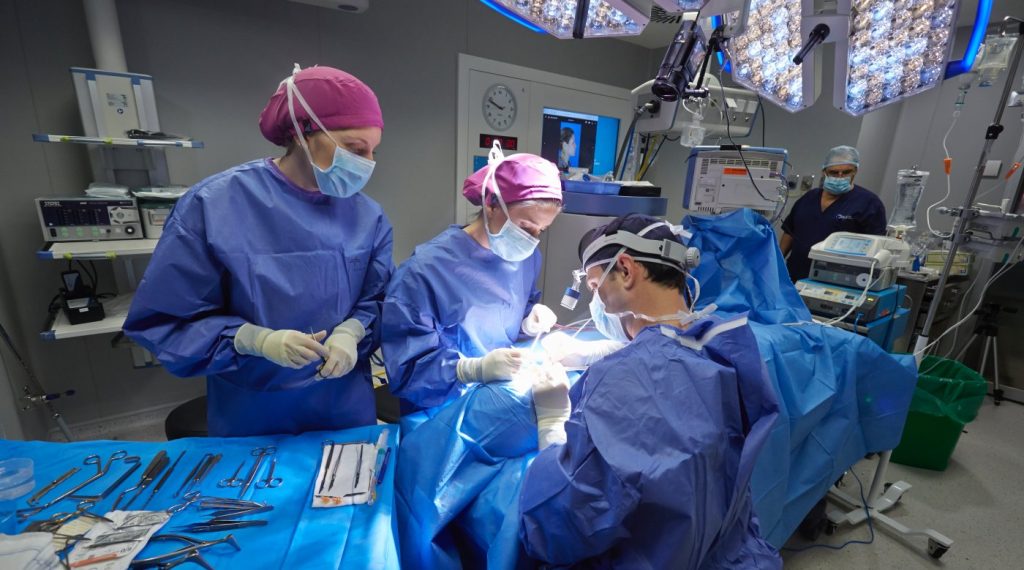
Dr. Sordo emphasizes that the open technique is especially useful when working on complex cases or making precise modifications to the nasal walls, which he achieves using advanced tools such as the ultrasonic scalpel and the rhinomotor. These instruments allow for the precise refinement and sculpting of nasal structures, guaranteeing natural and functional results.
It is important to remember that it is not just about the technique, but also the level of knowledge and skill of the surgeon. Choosing a professional who combines experience, skill and a personalized approach is key to achieving the best possible results in rhinoplasty.
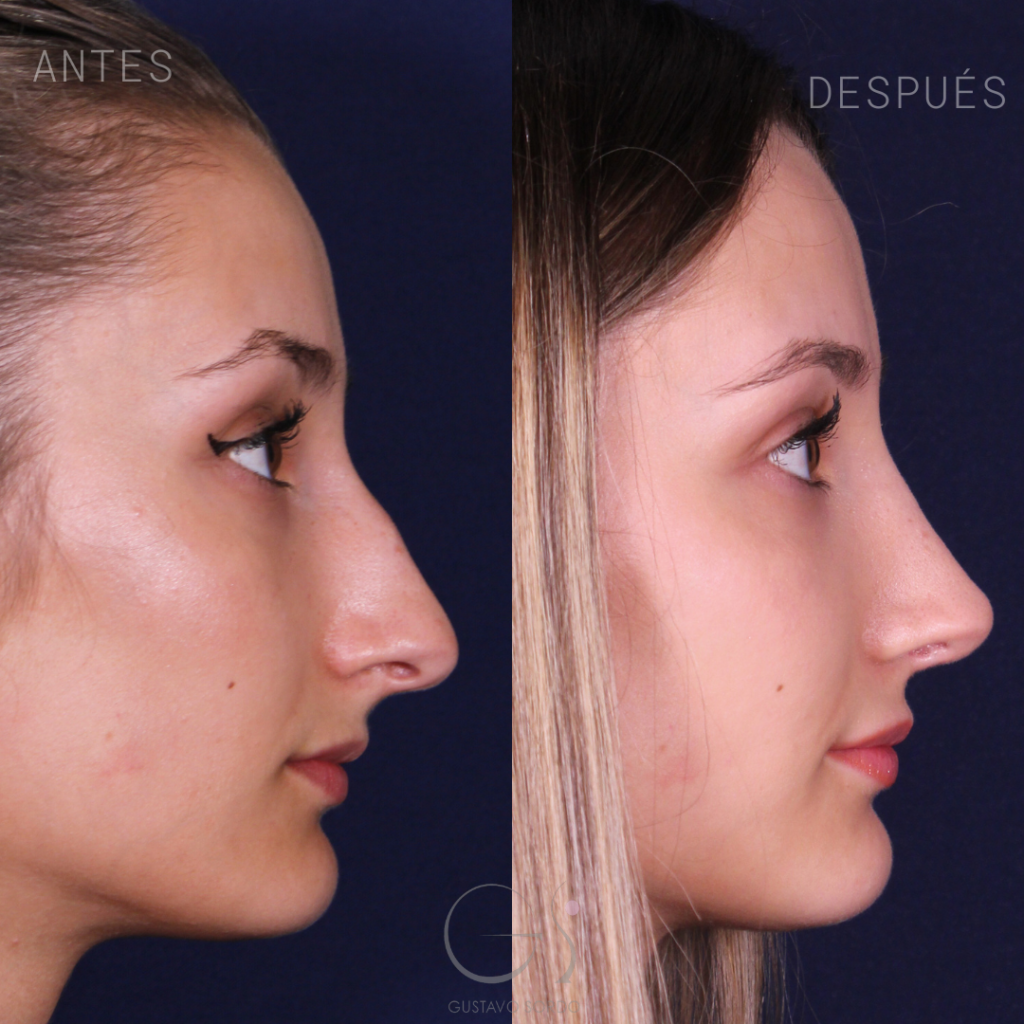
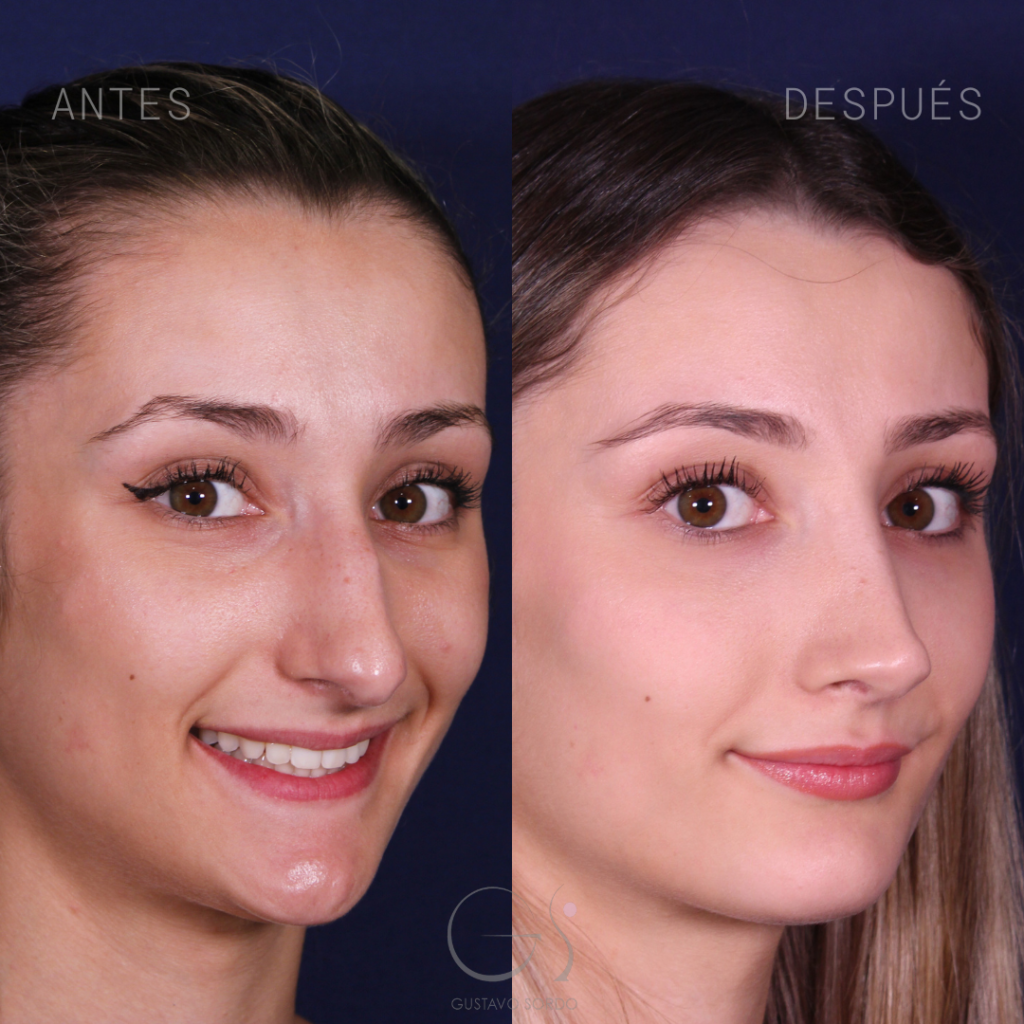
Our Plastic Surgery Clinic in Madrid welcomes you. Dr. Gustavo Sordo , a plastic surgeon in Madrid specializing in rhinoplasty , has over 20 years of experience as a specialist in ultrasonic rhinoplasty and rhinoplasty in Madrid . He is dedicated to providing you with exceptional service, guaranteeing natural results that enhance your beauty and perfectly complement your facial contours. We encourage you to view his before-and-after rhinoplasty cases.
Rhinoplasty surgery photos
Risks of closed rhinoplasty
Closed rhinoseptoplasty , while less invasive than other nose surgeries, still carries some risks. These include wound infection and internal bleeding , though these can be easily managed. As with any surgical procedure, the use of anesthesia can cause adverse reactions.
You may also experience temporary changes in nasal sensitivity ; poor healing or an unexpected outcome are other risks to consider. It is essential to discuss all these possibilities with your surgeon before the operation so you can make an informed decision.
Postoperative care of a closed rhinoplasty
After any surgery, postoperative care should not be skimped on, as the success of the surgical procedure depends on it. Here are some recommendations to follow after closed rhinoplasty:
Resting Time
Initially, you will have to rest completely for 48 hours after leaving the operating room. You will be able to return to work a week later, but intense physical activities will have to wait at least three weeks.
Apply cold compresses
Following medical instructions, you can apply cold compresses to the affected area to reduce discomfort and swelling.
Medicines
The doctor will prescribe the necessary medications (antibiotics, painkillers and anti-inflammatories) seeking to minimize risks and control pain.
Postoperative control
After surgery, your doctor will schedule a few appointments to monitor your recovery progress.
What should I avoid doing after a closed rhinoplasty?
After closed rhinoplasty, it is essential to avoid certain activities that may compromise recovery:
Zero intense exercises
For at least a month, you will not be able to do sports or intense physical exercise that could raise your blood pressure. You can take short walks that do not require great physical effort.
Avoid sun exposure
Try to avoid sun exposure as much as possible, and use sunscreen until the bruises have disappeared, to prevent the skin from becoming pigmented in the bruised area.
Don't wear glasses
Do not wear glasses for the first month to avoid putting pressure on your nasal bones and moving them; these bones will take a month to heal. For more information on this topic, we invite you to read our article: When Can I Wear Glasses After Rhinoplasty?
Do not smoke
Did you know that tobacco can interfere with the healing process? Yes, that's why it is advisable to stop smoking even before surgery.
Can closed rhinoplasty leave me with visible scars?
No, the scars won't be visible because the incisions are internal, inside the nostrils. This is one of the biggest advantages of this procedure.
Does closed rhinoplasty correct functional problems?
Yes, closed rhinoplasty is not only used for cosmetic purposes, but can also correct functional problems . This includes correcting deviated septums, which improves the patient's breathing.
How to choose the right surgeon for this surgery?
When deciding to undergo surgery to improve the appearance of your nose and your face in general, you should look for a competent plastic surgeon who inspires empathy and trust, with whom you can feel comfortable and safe. Here are some guidelines for you to take into account:
Experience and training
Make sure the surgeon is specialized in rhinoplasty and has experience with the closed technique.
Initial consultation
In this first meeting you will be able to ask all the necessary questions and evaluate the communication and confidence that the surgeon inspires in you.
Previous Results
During the consultation you will have the opportunity to review their portfolio of previous cases and thus evaluate the quality of their work.
Patient opinions
Research reviews and testimonials from other patients on their website or social media, and you will learn about different opinions.
Conclusion
If you are considering closed rhinoplasty, it is essential that you conduct thorough research and choose a qualified plastic surgeon who can guide you through the process.
Continue reading
Dr. Gustavo Sordo
Specialist in Plastic, Aesthetic and Reconstructive Surgery. Member No. 282858125.
Content clinically reviewed by Dr. Gustavo Sordo. Last review: October 7, 2026.