Dr. Gustavo Sordo · Plastic surgeon specializing in rhinoplasty
I am Gustavo Sordo, a plastic, aesthetic, and reconstructive surgeon, registration number 282858125. I completed my residency at La Paz University Hospital, have been performing surgery for over 20 years, and have run my own clinic in Madrid since 2014. The majority of my work involves the nose: primary, ultrasonic , preservation, and secondary rhinoplasty using rib cartilage . The other half is breast surgery , and I also perform deep plane facelifts.
I operate at the HLA Moncloa University Hospital and see patients at my clinic in Chamberí. Prior to this, I earned a degree in Medicine from the University of Alcalá (1996-2002), completed a residency in Plastic Surgery at La Paz Hospital (2004-2009), spent five years at Corporación Dermoestética, and two years as the second surgeon to Dr. Antonio de la Fuente at the Ruber International Hospital (2009-2011). Since then, I have continued to travel to Istanbul and Izmir to learn rhinoplasty, and I lead rhinoplasty courses at the SECPRE and AECEP.
- + 1.000rhinoplasty
- + 1.350breast surgeries
- + 2.500interventions since 2016
- + 20years of experience
Data from the clinic's own surgical records and photographic archive. Updated to September 2026.
- Collegiate 282858125 at the Illustrious Official College of Physicians of Madrid.
- Member of the Rhinoplasty Society of Europe, the SECPRE, the AECEP, the EASAPS and the ASAPS.
- Director from the SECPRE Rhino 360º course (2026) and the AECEP Rhinoplasty Hands-on & Video course (2023).
- opera at the HLA Universitario Moncloa Hospital and I hold consultations at Alberto Aguilera 48, in Chamberí.

How to choose a surgeon for rhinoplasty
It's the question I get asked most often during the initial consultation, and there's no short answer. What I can give you are the five points I would consider if I were to have rhinoplasty, and what to check in each one.
1. That he/she be a plastic surgeon, with the degree obtained through the MIR (Medical Residency) route
"Cosmetic surgeon" is not a medical specialty. In Spain, the specialty is called Plastic, Aesthetic, and Reconstructive Surgery, and it's obtained through the MIR (Medical Residency Exam), five years after medical school. I explain this in detail in the section on the difference between a plastic surgeon and a cosmetic surgeon . I completed my residency at La Paz University Hospital between 2004 and 2009.
2. That he is a registered professional, and verify it yourself.
Every practicing doctor has a professional registration number, and anyone can verify it at the Medical Association of their province. Mine is 282858125 , from the Madrid Medical Association.
3. That he show his own cases, and from various angles.
Photos taken with the same lighting and framing, before and after, and from various angles: from the front, you can't see a nose. Mine are here, before and after rhinoplasty cases.
4. That he performs the surgery you need
A primary rhinoplasty is not the same as a second operation on a nose that has already been operated on. Secondary rhinoplasty , especially if it requires reconstruction with rib cartilage, is a different surgery altogether: longer, more difficult, and with a different plan. Ask how many are performed annually and request to see examples of that specific type of rhinoplasty.
5. So you can see where you're going
During the consultation, we create a simulation on your own face. It's not a guarantee of the final result, because your nose is shaped by your anatomy, not a computer, but it allows us to discuss the procedure and rule out any concerns you might have before surgery.
And something that is not usually said: all surgery has risks, and an honest consultation begins by explaining them to you.
Three types of rhinoplasty, with real cases
Ultrasonic rhinoplasty
The bone is reshaped with ultrasound instead of a chisel and hammer. What it is and when I use it in ultrasonic rhinoplasty ; a case study, on this aquiline nose.
Preservation rhinoplasty
The nose is lowered while preserving its natural roof instead of opening and reconstructing it. Before and after cases of preservation rhinoplasty.
Secondary rhinoplasty
Second or third operation on a previously operated nose, often with rib cartilage grafting. Before and after cases of secondary rhinoplasty.
Where does my eye come from?
I am the son of visual artists and designers, and my great-grandfather, Arturo Sordo y Álvarez , was a sculptor and architect in Asturias. He spent his life making busts and reliefs: looking at faces and deciding where there was too much material and where there was not enough.
I don't mention it as a personal achievement, because it isn't. I mention it because it describes quite well what a rhinoplasty involves. A large part of the work isn't surgical: it's deciding how much bone to reduce, how much cartilage to add, and what proportions will fit with the rest of the face. You can't measure that with a ruler. You see it, and seeing it takes practice. I was drawn to medicine from a young age, and plastic surgery was the way I combined the two things I grew up with: science and a sense of form.
Specialist training and qualification
- 2002Graduated in Medicine and Surgery from the University of Alcalá, with Honors in Medical Pathology I.
- 2003Undergraduate internship at Stanford Hospital & Clinics (United States). I didn't go to perform surgery, but to see firsthand how a hospital of that caliber operates and how it treats its patients. It set a high bar for me before starting my residency.
- 2004–2009Resident Physician at La Paz University Hospital (Madrid). Specialist in Plastic, Aesthetic and Reconstructive Surgery, having completed the official five-year program. I have been performing surgeries ever since.
- LanguagesSpanish, native language. Professional English: presentations at international conferences and stays in the United Kingdom, Sweden, South Korea, China and Turkey.
Career path
- Since 2009Private practice as a specialist in Madrid, without interruption since I finished my residency.
- 2009–2011Second surgeon to Dr. Antonio de la Fuente at the Ruber International Hospital (Madrid): four days of operating room per week and more than 500 facial and breast cosmetic surgery procedures.
- 2011–2018Assistant Doctor of Plastic Surgery at the Central Hospital of the Red Cross San José and Santa Adela, a public hospital of the Madrid Health Service, on a part-time basis.
- Since 2014Director of the Dr. Gustavo Sordo Clinic, in Chamberí, where I work with the Dr. Alejandro Mendieta.
- TodayI operate at the HLA Universitario Moncloa Hospital, a teaching hospital of the European University.
My time at the Red Cross gave me something that private practice doesn't: dealing with illnesses you don't choose, working closely with other departments, and a constant need for documentation and clinical sessions that stays with you forever. Much of my obsession with recording and measuring everything I do stems from those years.
How much I have operated
Throughout my career I have performed over 1.000 rhinoplasties and over 1.350 breast surgeries: augmentation, reduction and mastopexy, gynecomastia, areola-nipple complex and reconstruction.
Since 2016, I've been recording everything in my own surgical log: more than 2.500 procedures, of which over 550 are breast augmentations, over 450 reductions and mastopexies, over 90 blepharoplasties , over 60 liposuction procedures, over 60 abdominoplasties, over 60 otoplasties , over 50 mentoplasties, and over 45 lipofillings. And today, I also measure the results from the patient's perspective, using internationally validated questionnaires (BREAST-Q, FACE-Q, EAR-Q, NOSE, and ROE) that they complete before and after surgery.
Data from the clinic's own surgical records and photographic archive. Updated to September 2026.
Rhinoplasty training with international experts
I've traveled to observe the operating rooms of some of the surgeons who have shaped modern rhinoplasty. I don't see this as simply a collection of names, but rather as the origin of what I do today when I operate on a nose. In chronological order:
Prof. Nazim Çerkes · Jinemed Hospital, Istanbul (2020)
One of the world's leading authorities on nasal surgery. I spent a full day in his operating room, focusing on structural rhinoplasty with a highly refined technique for using spreader flaps and columellar struts. I went when he had already incorporated ultrasonic technology and preservation techniques were not yet so widespread: that day was above all confirmation that I was on the right track. What impressed me most was his concept of aesthetics and the precision with which he resolved each case.

Dr. Ahmet Alp · Avrasya Hospital, Istanbul (2024)
Of all my residencies, the week with Ahmet Alp has most changed my surgical technique. He is a world-renowned expert in high-definition rhinoplasty, and I was with him daily in the operating room. From that experience, I learned something that is now fundamental to my ultrasonic rhinoplasty : platelet-rich fibrin (PRP), which I use to accelerate healing and, above all, as a vehicle for cartilage powder, which I use to smooth surfaces in thin or damaged skin.
I also incorporated his techniques for rib grafts in secondary surgery, working with thick skin, controlling the resting angle of the alar cartilages, placing septal extension grafts, and his method for photographing the results. Some time later, we both spoke at an AECEP congress, and I showed him a nose I had operated on during my stay. He said, "Looks like I did the case." Coming from him, it's probably the best compliment I've ever received. One of those cases is shown in the before-and-after photos of rhinoplasty on thick skin.

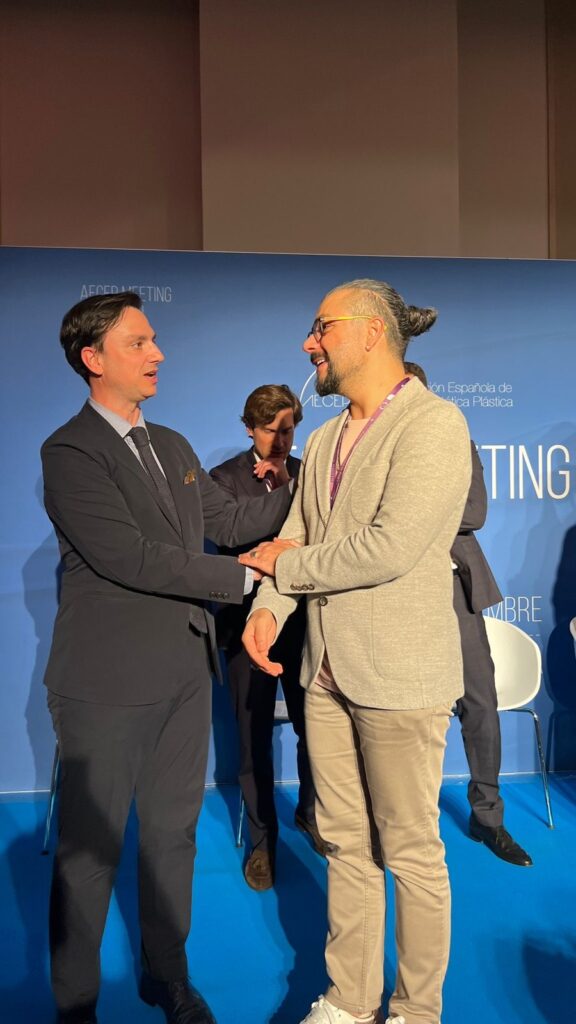
Dr. Selim Turan · Yeditepe Üniversitesi Hospital, Istanbul (2024)
I already knew him from his presentations at the SECPRE (Spanish Society of Plastic, Reconstructive and Aesthetic Surgery) and took advantage of the same trip to spend a week in his operating room. He specializes in high-definition rhinoplasty on thick skin, and I learned from him, above all, his method of fixing septal extension grafts to the anterior nasal spine, a very solid and reproducible technique.
This training in thick skin, with Turan and Alp, is the origin of my ethnic rhinoplasty . In Turkey, this anatomy is typical of the patient, and when I operate on a Latin nose, I apply criteria I learned there, not an improvised adaptation of European technique.

Dr. Sercan Göde · Özel Sağlık Hospital, Izmir (2024)
A full week with a world-renowned expert in revision rhinoplasty. He rescues noses that have undergone multiple surgeries and suffered previous infections, using closed structural rhinoplasty and endoscopic flaps—cases that in most hands would be considered lost causes. Beyond the operating room, we had long conversations about how to approach secondary cases and, above all, how to prevent them from arising in the first place. That's what I took away most: a preventative approach. Today, I routinely perform secondary rhinoplasties , and when a case requires closure of a septal perforation, I collaborate with endoscopic ENT specialists.
Breast surgery training
Dr. Antonio de la Fuente · Ruber International Hospital, Madrid (2009–2011)
My mentor. As soon as I finished my residency, I joined his team as a second surgeon. It was two years at a very intense pace, four days a week in the operating room, performing rhinoplasty, facelifts, and breast surgery. From him, I learned things you can't learn in a course: a concept of beauty based on respecting natural anatomy and a refined, methodical, and clean surgical technique. I co-authored my two papers on otoplasty with him. I owe him a great deal of who I am as a surgeon.

Dr. Per Hedén · Akademikliniken, Stockholm (2012)
A world leader in cohesive gel anatomical implants. I was at his clinic, washing alongside him in the operating room, not just watching, and attending his implant calculation and selection sessions. From there, I adopted his planning method: calculating the position of the areola-nipple complex with the implant in place, choosing the base, projection, and height according to each patient's measurements, and the "hand-in-glove" pocket technique. But what impressed me most was the system: a clinic where everything, from the initial consultation to discharge, ran like clockwork. That methodical approach is what I've tried to bring to breast augmentation in my own practice.

McIndoe Surgical Centre and Queen Victoria Hospital · East Grinstead, United Kingdom (2006)
I spent almost five months at a complex that combines a private cosmetic surgery center with a leading public hospital specializing in reconstructive surgery. In cosmetic surgery, I performed abdominoplasty, liposuction, and breast surgery. In reconstructive surgery, I trained with three renowned surgeons: Marc Pickford in hand surgery and microsurgery; Raman Malhotra in oculoplastic surgery, from whom I learned to correct ptosis in the same procedure as blepharoplasty; and TC Teo in flap reconstruction. I no longer operate on hands, but microsurgery instilled in me the most important surgical habit: absolute respect for tissue, which applies equally to a nose and a breast.
Other training placements
- 2006Niño Jesús University Children's HospitalMadrid. Rotation in pediatric plastic surgery: congenital malformations, sequelae of burns and facial trauma in children.
- 2010Ars Medica ClinicRome, with Dr. Marco Gasparotti. Tumescent superficial liposuction and lipotransfer with the patient's own fat.
- 2010 and 2019Shanghai East International Hospital (China) and Bio Plastic SurgerySeoul, South Korea, with Dr. Kim Yong-kyo. Facial surgery on an Asian patient: eyelid surgery, rhinoplasty, and facial implants. From this experience come two things I use today: treating the nose and chin as a unit in the mentoplastyAnd a warning I often repeat: silicone nasal implants, very common in Asia, cause problems over time. When these noses need to be reconstructed, I use the patient's own tissue, usually rib cartilage.
- Nov. 2026Madrid Deep Plane Facelift MasterclassFrom November 11th to 13th, I will be attending, with Dr. Alejandro Mendieta, three days of live surgery and anatomical dissection dedicated to... deep face lift, the technique I use in facial rejuvenation.


Teaching
- 2015–2019Professor of the Degree in Medicine at the Alfonso X el Sabio University, with a university contract, for four years. Subject: General Medical-Surgical Procedures, taught at the Central Red Cross Hospital: theoretical classes of the surgical block, the seminar "Patient with burns and wounds", exam questions and tutoring of the students who rotated through the service.
- 2012–2013Collaborating Professor of the Continuing Education Course in Facial Aesthetic Surgery at the Complutense University of Madrid, with two of his own presentations: "Principles of clinical photography" and "Principles of open rhinoplasty".
- FacultyAECEP Open Rhinoplasty Course, at the Autonomous University of Madrid.
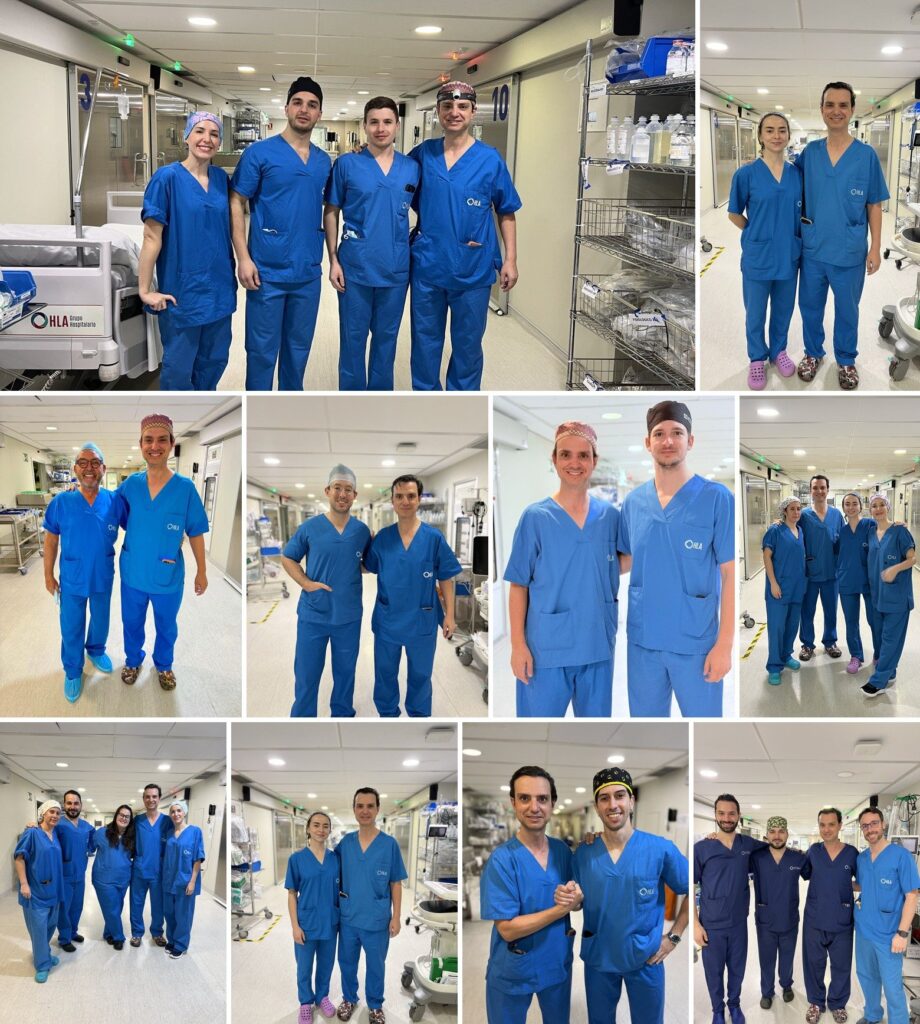
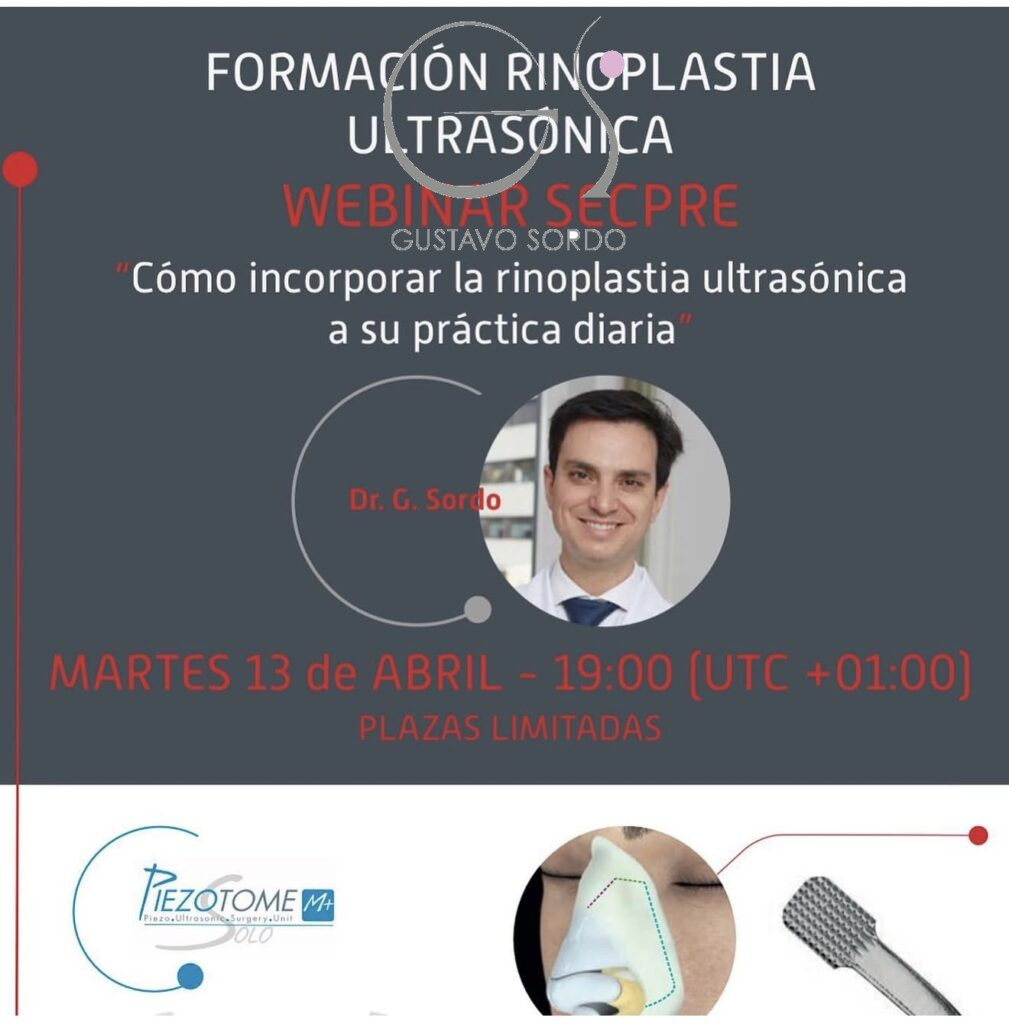
- TodayI receive plastic surgery residents from all over Spain in the operating room, as well as trained plastic surgeons who come to observe the technique, especially ultrasonic rhinoplasty and breast surgery. I have also given a webinar for the SECPRE (Spanish Society of Plastic, Reconstructive and Aesthetic Surgery) on how to incorporate ultrasonic rhinoplasty into daily practice.
Teaching requires explaining why you do each thing, not just how. It's the same exercise I do in therapy when you ask me why I recommend one technique and not another.
Courses I have taught
Rhino 360º · SECPRE, Madrid (September 18, 2026)
I directed and organized the Rhino 360º course of the Spanish Society of Plastic, Reconstructive and Aesthetic Surgery at the El Beatriz Auditorium. I designed the scientific program and selected the eleven speakers, including Dr. Werner Heppt, former president of the Rhinoplasty Society of Europe, and Dr. Salvatore Taglialatela. It was a full day covering preservation, hybrid surgery, structural surgery, tip reconstruction, and rib grafting rhinoplasty, with accreditation requested from the Continuing Education Commission for Healthcare Professionals of the Community of Madrid.
My presentation was "Hybrid Preservation: Simplified Algorithm and Tip Assemblies." I explained Robotti and Furtado's dorsal split preservation, which is the natural pathway for a structural surgeon to transition to preservation, and the Ferreira and Nakamura technique, a low-strip approach with subdorsal osteotomies that respects the radix height. I also showed hybrid cases: preservation in the dorsum and structural reinforcement at the tip, which is exactly what I do in my practice.
Rhinoplasty Hands-on & Video · AECEP, Valencia (February 17 and 18, 2023)
A course on video surgery and anatomical dissection of cadavers was held at the Faculty of Medicine in Valencia, organized in conjunction with its Department of Anatomy, which provided the room and specimens. Directing such a course requires transforming surgical criteria into a method that others can replicate.
AECEP International Meeting (2017)
Member of the Scientific Committee.
Presentations at conferences
Taken together, they tell how my understanding of rhinoplasty has evolved: from discussing the evidence to ultrasonic osteotomies, reconstruction, and today, preservation and hybrid surgery.
- 2026Rhino 360º (SECPRE), Madrid. «Hybrid preservation: simplified algorithm and cutting-edge mounts».
- 2026AECEP Meeting. "Hybrid preservation with 365 vector tip mounting."
- 2025AECEP Meeting. "Hybrid rhinoplasty: how to get started?".
- 2024AECEP Meeting. “Model T-Plasty for Tip Surgery”, in the Rhinoplasty and Tip Surgery Overview session.
- 2023AECEP International Meeting. "Leveled strategy in the treatment of dorsal humps", in a panel on the nasal dorsum with Sercan Göde, Selim Turan and Hüseyin Balikci.
- 2022AECEP Meeting. "Nasal dorsum reconstruction with DCF".
- 2021AECEP Meeting, Ibiza. "Supraciliary lifting: Pelle-Ceravolo technique."
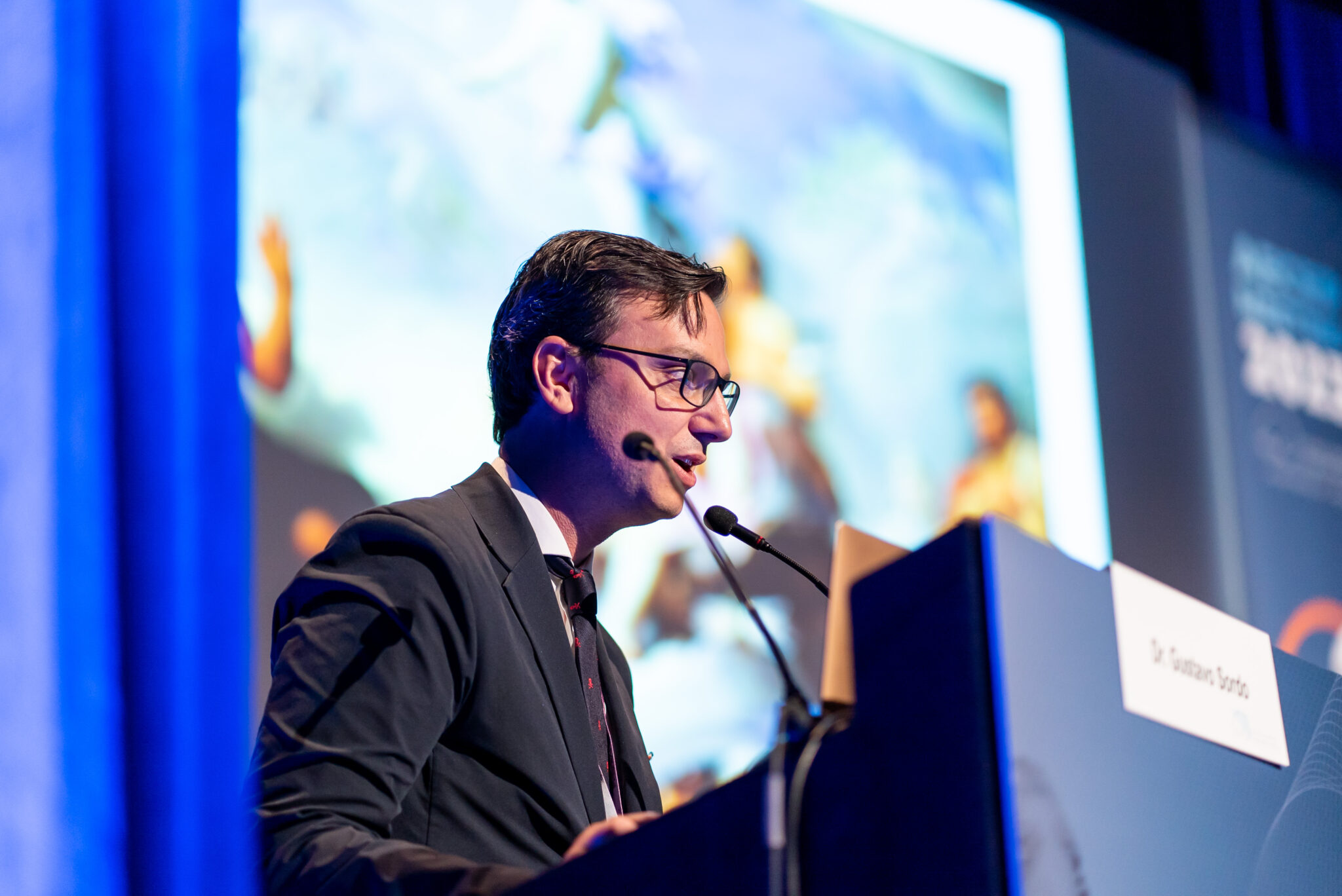
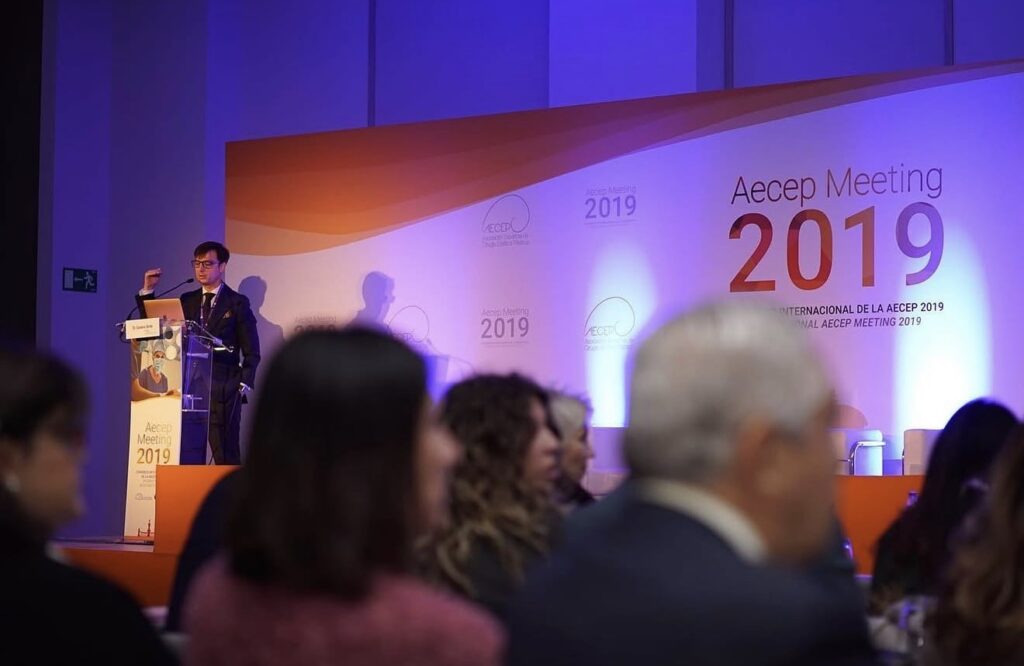
- 2019AECEP Meeting. "Ultrasonic Osteotomies".
- 2017AECEP International Meeting. "Controversies and recent studies in rhinoplasty", in the rhinoplasty panel with Nazim Çerkes and Yves Saban.
- 2016AECEP Meeting. "Controversies and recent studies in rhinoplasty", in a session with Olivier Gerbault and Barış Çakır.
- 2014AECEP Breast Surgery Course, Cuenca. "Personal criteria in the selection of breast implants", in the difficult primary breast session.
- 2013Congress of Surgical and Minimally Invasive Facial Rejuvenation Techniques (AECEP), Vigo. "Upper and Lower Blepharoplasty".
- 2013Continuing Education Course in Facial Aesthetic Surgery, Complutense University of Madrid. "Principles of clinical photography" and "Principles of open rhinoplasty".
- 2010Course on Breast Augmentation in Difficult Cases, Cuenca. "Aesthetic correction of tuberous breasts."
- 2010VI Theoretical-Practical Course on Anatomical Dissection and I Course on Facial Remodeling (AECEP), Madrid. «Closed Rhinoplasty: General Principles».
- 2010XLV National Congress of the SECPRE, Girona. "Augmentation Mastopexy: Is it a safe and predictable intervention?".
- 2010A day of complications and poor results in cosmetic surgery, Palma de Mallorca. "Anomalous finding after breast augmentation."
- 2006–2007National Congresses of the SECPRE, Pamplona and Valencia. Seven presentations on reconstructive surgery: hand, microsurgery, pressure ulcers and syndactyly.
Scientific Publications
- 2013De la Fuente A, Sordo G. Advanced Cosmetic OtoplastySpringer. Book chapter.
- 2012De la Fuente A, Sordo G. Minimally invasive otoplasty: technical details and long-term results. Aesthetic Plastic Surgery.
- 2008Sordo-Miralles G, et al. Satisfaction with and psychological impact of immediate and deferred breast reconstruction. Annals of Oncology.
- 2008Sordo G, et al. The usefulness of ultrasonography in the diagnosis of carpal tunnel syndrome. Journal of Hand Surgery (European Volume).
- 2008Miralles G, Rodríguez-Urcelay P. A useful dressing for ear surgery. European Journal of Plastic Surgery 2008;31:91-92. DOI 10.1007/s00238-008-0231-5. Signed with my second surname.
- 2007Sordo G, et al. Complications and sequelae after nasal trauma. Pediatric surgery.
- 2007Sordo G, et al. Reconstruction of the areola-nipple complex: review of 60 cases. Ibero-Latin American Plastic Surgery.
I am also a reviewer for Aesthetic Plastic Surgery , the official journal of the International Society of Aesthetic Plastic Surgery (ISAPS), published by Springer. Reviewing the work of others before it is published requires me to read the literature with a different level of rigor.
Scientific societies
- SECRETFull member of the Spanish Society of Plastic, Reconstructive and Aesthetic Surgery. Member of its Board of Directors between 2012 and 2014, heading the Media and Internet Committee: I directed the competition to choose the society's communications agency, which was won by Cícero Comunicación, and I later coordinated their work with the IMOP Insights institute to disseminate the national study "The reality of cosmetic surgery in Spain".
- AECEPFull member of the Spanish Association of Aesthetic Plastic Surgery. Treasurer and later member of its Board of Directors between 2013 and 2017.
- CSRMember of the Rhinoplasty Society of Europe.
- EASAPSMember of the European Association of Societies of Aesthetic Plastic Surgery.
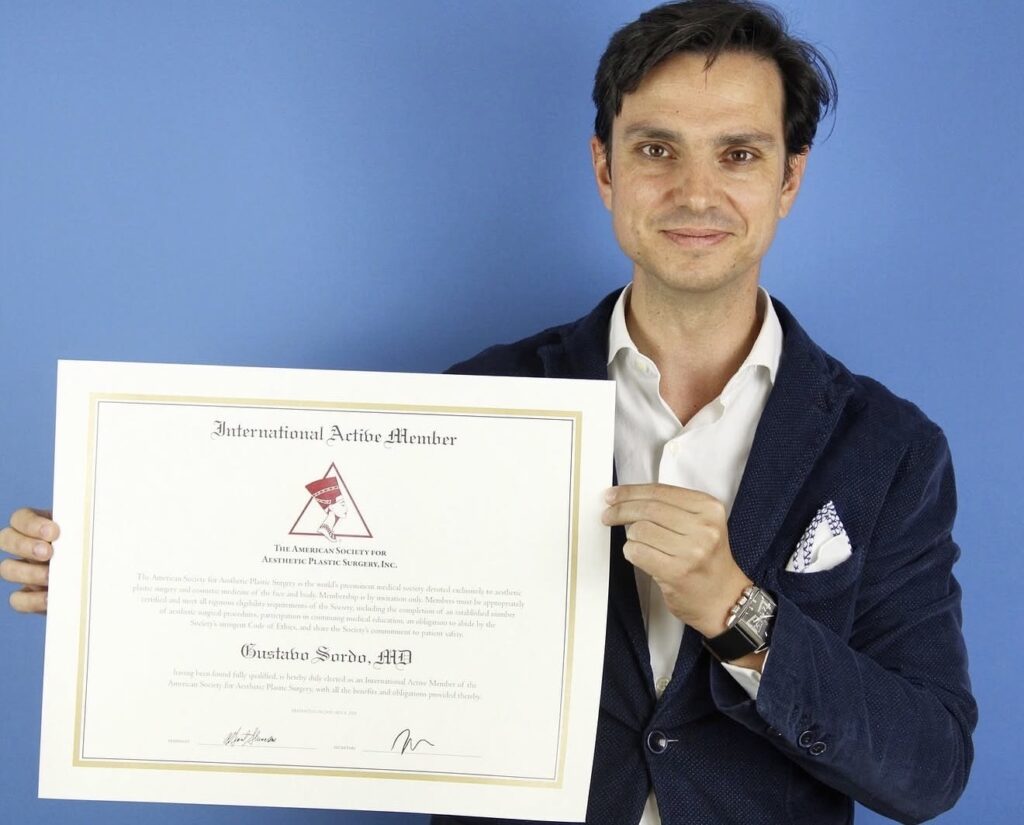
- ASAPActive international member of the American Society for Aesthetic Plastic Surgery.
Cooperation
From November 20th to December 1st, 2013, I was part of the volunteer medical team, as a surgeon, for the XIII Children's Surgery Campaign at the San Juan de Dios Clinic in Chiclayo, Peru, promoted by SECPRE and Juan Ciudad NGO, along with Dr. Beatriz González Meli. We operated on and trained children and young people from low-income families for conditions such as cleft lip, cleft palate, burn sequelae, syndactyly, and polydactyly.
In the media
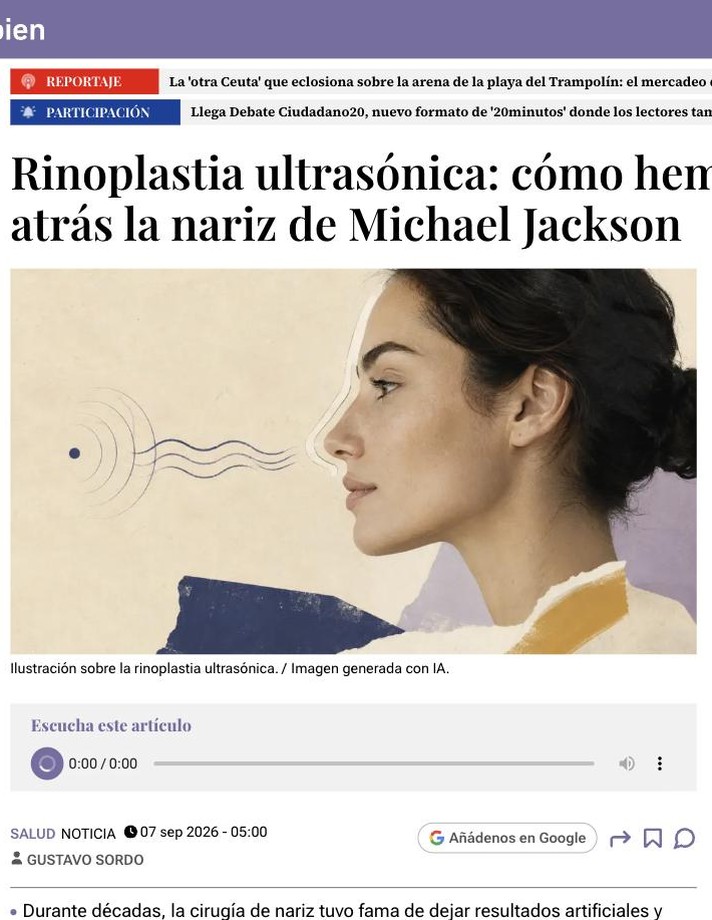
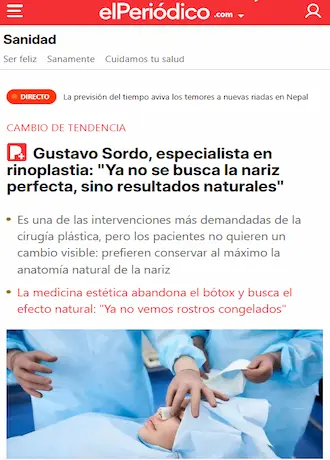
Since September 2026, I've written a health column for 20minutos , in which I explain, without technical jargon, how plastic surgery has changed. The first column was about ultrasonic rhinoplasty and why we've moved beyond the days of noticeably surgically altered noses . I've been featured as a specialist in ultrasonic rhinoplasty and breast surgery in publications such as El Mundo, ABC, QUO, and VOGUE, among others, and I contribute to television programs and medical journals. These appearances are documented in the press.
What I've learned from over 20 years of surgery
After years of traveling, learning from other surgeons, operating, and teaching, one thing has become increasingly clear to me: there is no perfect technique. In rhinoplasty, I can use structural techniques, preservation techniques, hybrid surgery, ultrasound, septal grafts, or rib cartilage. In breast surgery, I can choose between different implants, planes, projections, and approaches. None of these tools makes sense on its own: the important thing is knowing which one each patient needs and why.
If you'd like us to assess your case, please schedule an initial consultation . Every nose and every breast is different, and the only reliable way to provide an answer is to examine you and listen to you.
Do you want to know if this can be done in your case?
The first consultation is with Dr. Sordo, either at the Chamberí clinic or via video consultation. You'll leave knowing if you're a candidate, which technique is right for you, and how much it costs.
Dr. Gustavo Sordo · Member No. 282858125 · Plastic, Aesthetic and Reconstructive Surgery · Madrid