Secondary rhinoplasty or second nose job
Updated on • Reviewed by Dr. Gustavo Sordo, plastic surgeon

NOSE
Secondary rhinoplasty or second nose job
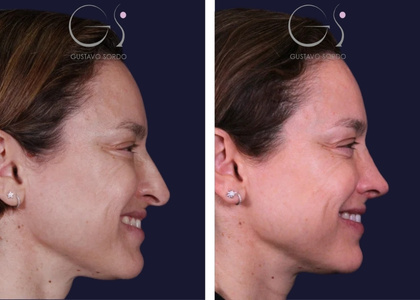
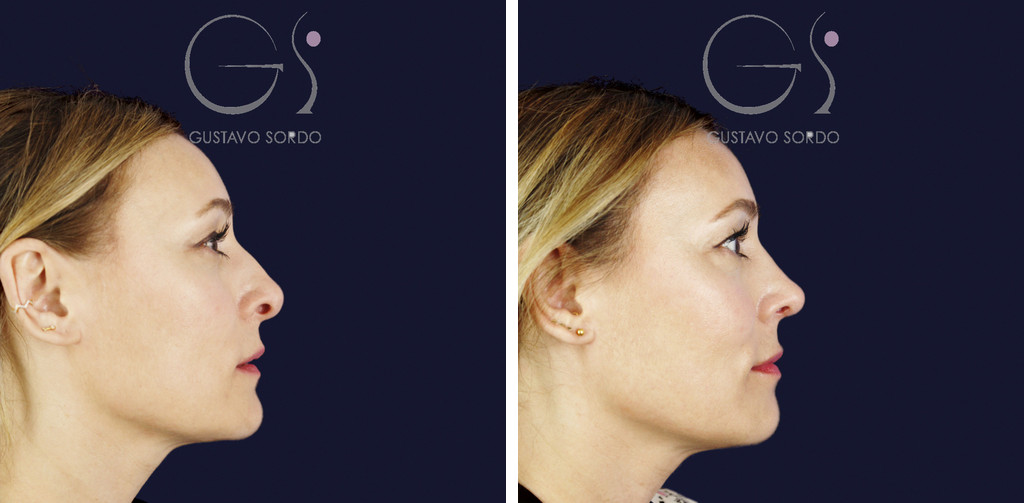
Sometimes, the result of a rhinoplasty isn't what we hoped for. This can be because the surgeon didn't conduct a thorough assessment to determine the most suitable type of rhinoplasty for our face . It's also possible that the procedure focused solely on removing cartilage and bone from both the tip and bridge of the nose, without considering other factors. In this latter case, the operation will have been rudimentary and inefficient, and the final result will likely become distorted over time. In either case, the person must undergo a secondary rhinoplasty, or a second nose surgery . This return to the operating room always raises concerns for those who are dissatisfied with the previous result.
Secondary rhinoplasty or second nose operation at Dr. Gustavo Sordo's clinic
When the nose has already been operated on, here we explain secondary rhinoplasty with rib cartilage.
At Dr. Gustavo Sordo's clinic, rhinoplasties (both primary and secondary) are performed following the same protocol: structural rhinoplasty using ultrasonic technology . This process involves various studies of the patient's face , analyzing all its parameters and the characteristics of the respiratory system, with the understanding that the result must achieve facial harmony. The analysis performed by the plastic surgeon during the initial consultation includes a simulation . This allows the patient to visualize the expected result of the ultrasonic rhinoplasty. This way, we avoid results that may not satisfy the patient. Thanks to the advanced simulation software, after entering the patient's facial parameters, anatomy, and skin thickness, they can see the expected outcome on their own face on a computer screen.
Secondary rhinoplasty technique
With this structural technique, the doctor focuses on adding bone in strategically necessary areas and removing excess. In this way, the doctor aims to provide strength and build a new support structure for the patient's nose. This is achieved through grafts and sutures strategically placed on the face. All of this is performed using the most advanced technology: ultrasonic technology . This is the only technique that utilizes a special piezoelectric scalpel capable of reshaping bone with maximum precision without damaging soft tissues. This contrasts with techniques that use chisels and hammers, which can produce uncontrolled fractures.
This technique also allows the surgeon to avoid stereotypical results , adapting the nose to each individual undergoing ultrasonic rhinoplasty and reinforcing all nasal structures (such as the septum ), prioritizing balance among the elements that make up its unique architecture. These aspects result in a natural-looking outcome for the operated nose.
To learn more about this technique and its details, visit Dr. Gustavo Sordo 's clinic and schedule an appointment to discuss your case. This is especially relevant if you weren't satisfied with the results of your first rhinoplasty and are considering a secondary rhinoplasty.
Secondary rhinoplasty is a completely different surgery from primary rhinoplasty, and it's important to be clear: there are no shortcuts. The problem isn't just aesthetic; it's that there's insufficient tissue and excessive scarring . The tissues are poorly vascularized, the planes are no longer clean, and the septal cartilage is often exhausted from the previous surgery. Therefore, in most of these cases, we use laminated costal cartilage grafts , integrated using the oblique split technique described by Taştan, which reduces the risk of the graft warping over time (Taştan et al., 2013, JAMA Facial Plast Surg ).
When the nose has become deviated after the first surgery, we use structural techniques and high radix spreader grafts to restore its axis. We also use hyperbaric oxygen therapy post-operatively: because the tissues have poor perfusion and the grafts need to integrate, improving oxygenation helps everything heal better. Another important piece of advice: at least a year should pass after the previous surgery before undergoing a second operation, because the fibrosis needs to mature before we can work on it safely.
Continue reading
Dr. Gustavo Sordo
Specialist in Plastic, Aesthetic and Reconstructive Surgery. Member No. 282858125.
Content clinically reviewed by Dr. Gustavo Sordo. Last review: October 2, 2026.