Roman Nose: What it is and How to Correct It
Updated on • Reviewed by Dr. Gustavo Sordo, plastic surgeon
The nose is an important facial feature that influences the aesthetics and functionality of the face. We all want it to look good and perfectly fulfill its respiratory function. Among the various nose shapes, the "Roman nose" is characterized by its curved and prominent profile. Although some consider this nose shape a symbol of distinction, most wish to correct it and achieve a more harmonious face. If this is your case, continue reading. In this article, we will explore the Roman nose in depth, its characteristics, causes, and the options available for those seeking to modify it through cosmetic surgery.
The nose simulator has real cases sorted by nose type and before, simulation and after examples.
What is the Roman nose?
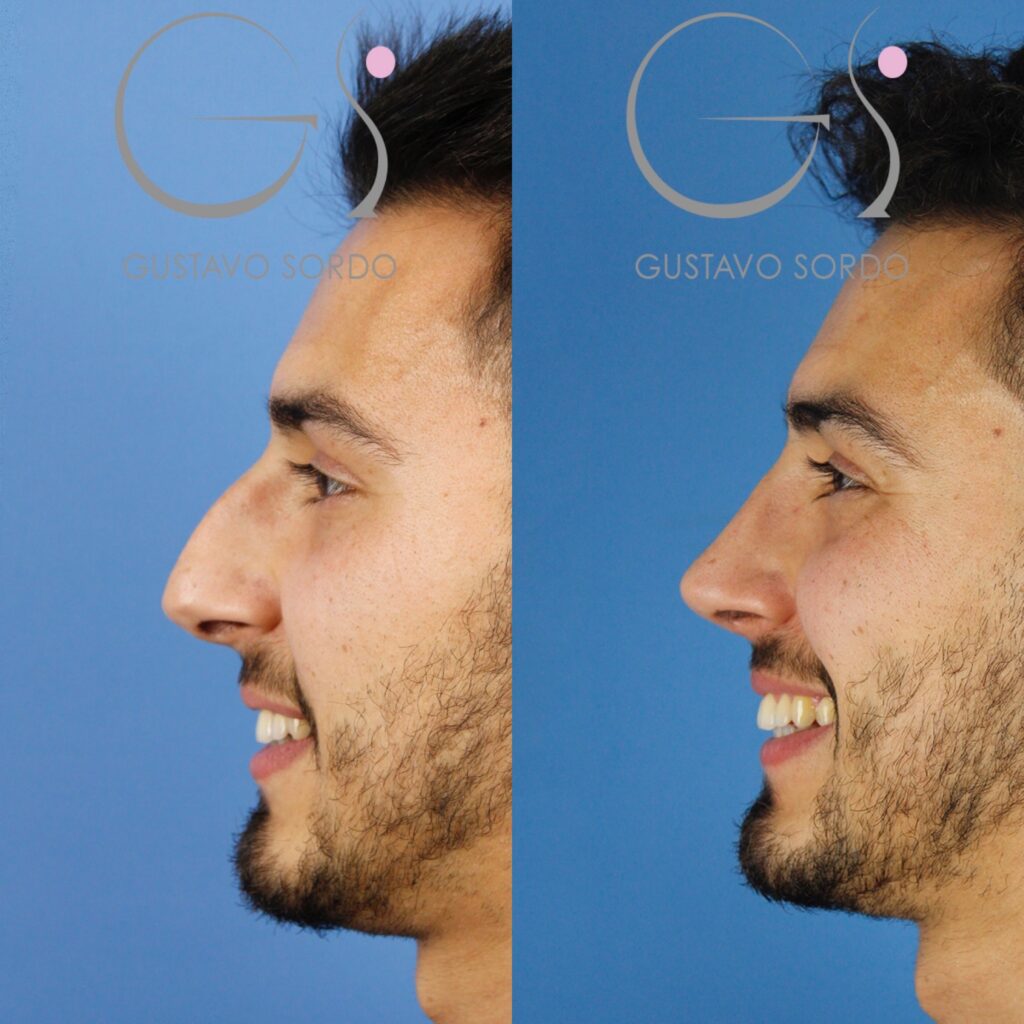
The Roman nose is a long nose with a long bridge and septum, equally elongated bones, and a downward-pointing tip; a prominent nose compared to other nose types. It stands out for its strong presence, which is why many people prefer to soften its shape through cosmetic surgery.
It is called the Roman nose because it gives a powerful and dominant appearance, reminiscent of historical figures such as emperors and military leaders.
You may also be interested in: rhinoseptoplasty.
Key features
The most outstanding characteristics of the Roman nose include:
- High and curved bridge: The curvature of the nasal bridge is the most distinctive feature of the Roman nose.
- Defined tip: The tip of the Roman nose is generally sharp and well-defined, which contributes to its elegant appearance. It also has slightly enlarged nostrils.
- Convex profile: the tip of the nose drops towards the lips, creating a convex profile.
- Nostrils: slightly enlarged
You might be interested in: types of noses.
Causes of Roman nose
The shape of the Roman nose can be the result of several factors, including:
- GeneticsHeredity plays a fundamental role in the shape of the nose, as well as in other physical characteristics. If parents and grandparents have a Roman nose, their children are likely to have it as well.
- Injuries: Bumps or injuries from falls or accidents that lead to a broken nose can alter its shape, resulting in a Roman-like appearance. People who play contact sports have witnessed this.
- Severe infections: although they are not very common, There are certain severe infections that change the structure and appearance of the nose.
Can a Roman nose affect breathing?
It's important to note that the shape of the nose influences our ability to breathe; the shape of the nostrils affects the structure of the nasal passage, influencing airflow when we inhale and exhale.
In many cases, a Roman nose does not affect breathing, unless there is a deviated septum or another structural problem in the nose. If the curvature of the nasal bridge is excessive, it can obstruct the airways, causing difficulty breathing, especially during exercise or sleep. These cases require medical attention, and rhinoplasty is the most effective solution, helping to improve the quality of life for those affected.
How do you correct a Roman nose?
The Roman or aquiline nose is one of the most frequently corrected with rhinoplasty, which improves its appearance and modifies the deviated septum.
It usually involves reshaping the bones and cartilage to change the shape and size of the nose. There are different methods for performing this procedure, depending on each individual case.
open rhinoplasty
This procedure involves an incision in the columella (the lower part of the nose) to lift the skin and gain a better view and access to the nasal structure. It is useful for more complex corrections and is often used in cases of a pronounced Roman nose.
The Roman nose, with its distinctive bridge, is probably the best example of why preservation techniques are worthwhile . In traditional rhinoplasty, the bridge was removed: the roof of the nose was taken out and then reconstructed with spreader grafts, which is where noses with sunken bridges, broken aesthetic lines, or the infamous "inverted V sign" appeared years later. With preservation techniques, we don't remove the bridge: we lower it as a unit using impaction (push-down or let-down), leaving the nasal roof, mucosa, and ligaments intact.
All bone work is done using ultrasound (piezo) , without a hammer or chisel, which greatly reduces bruising and swelling. In cases where the bone is straight but the deviation is concentrated in the keystone area, or in already small noses with a low radix where further reduction is not desired, we use the Ferreira-Nakamura technique , which combines subdorsal osteotomies with low-strip osteotomy (described by Fernando Nakamura at the Global Masters of Rhinoplasty, Rio de Janeiro, 2025).
Revision rhinoplasty
It's a second surgical procedure performed on patients who have already had a previous rhinoplasty and were not satisfied with the results. It can be more complicated and requires an experienced surgeon.
Ultrasonic rhinoplasty
Any type of rhinoplasty can be performed using the traditional method, employing classic rhinoplasty tools such as chisels and hammers, or using an instrument that operates via ultrasound, as is the case with ultrasonic rhinoplasty , which achieves high precision and less trauma during the surgical procedure and the postoperative period.
What should I keep in mind for the procedures?
Before undergoing rhinoplasty, it is essential to consider several factors:
Choose a certified surgeon
Rhinoplasty for a Roman nose should be performed by expert hands, by a board-certified plastic surgeon with extensive experience in cosmetic surgery. At our Plastic Surgery Clinic in Madrid, you'll find Dr. Gustavo Sordo, a plastic surgeon in Madrid specializing in rhinoplasty . He has over 20 years of experience as a rhinoplasty specialist in Madrid , including ultrasonic rhinoplasty , and is dedicated to providing personalized solutions for each patient, with both an aesthetic and functional focus. Contact us, book an appointment, and we'll be happy to assist you.
Prior consultation
During this appointment, a board-certified plastic surgeon will evaluate the structure of your nose and discuss your expectations. A good surgeon will take the time to answer all your questions and concerns.
General health
Be sure to inform your doctor about any pre-existing medical conditions, such as nasal obstructions, surgeries, and medications you are taking. Your physical exam will also determine how rhinoplasty will affect your breathing.
Financial planning
Rhinoplasty can be a significant investment, so proper planning is essential. Review the cost of the surgery and your payment options.
How much does it cost to correct a Roman nose?
At our clinic, a primary rhinoplasty starts at €10.040 , and the exact price, which depends on the complexity of your nose, is finalized during the initial consultation. You can find the complete breakdown on our rhinoplasty page in Madrid.
Before and after procedure
Before surgery, photographs of your nose will be taken to compare the subsequent results. It's important to follow the preoperative instructions given to you by your surgeon, which may include avoiding certain medications and quitting smoking.


After surgery, it's normal to experience swelling and bruising, which will subside over time. Final results may take several months to become visible, as nasal tissues require time to settle.
We recommend you take a look at all the before and after rhinoplasty cases.
Postoperative care and recovery
Rhinoplasty recovery is a gradual process, requiring time and patience. Here are some guidelines to follow:
rest properly
It's important to follow the rest guidelines prescribed by your doctor and take the necessary time before returning to work. Also, suspend strenuous physical activity for several weeks.
Use cold compresses
Ice is a great aid in the postoperative period following any facial surgery, such as rhinoplasty. Among its benefits, it reduces edema and inflammation and acts as a local anesthetic. Furthermore, gently applying it to the area provides a mild lymphatic massage.
Avoid blowing your nose
You should avoid blowing your nose and sneezing for the first few weeks, as this can cause bleeding. Since it's almost impossible to avoid sneezing, do it with your mouth open.
keep your head up
When you go to bed, use pillows to keep your head elevated. You should sleep on your back for a while to avoid any impact or pressure on your nose.
Follow medical instructions
It's essential to follow all your surgeon's instructions, adhere to the treatment that will help you control pain and prevent infection, and attend follow-up appointments to monitor your recovery.
Splint placement
After the surgery, a splint will be placed to maintain the shape and protect your nose during recovery. Sometimes, a dressing is placed inside the nostrils to control bleeding.
Are there any risks in surgery to modify the Roman nose?
As with any surgical procedure, rhinoplasty to modify a Roman nose carries risks, although they are minimal and manageable. Some of the possible situations include anesthesia complications, poor healing, infection, bleeding, or temporary changes in nasal sensation. In all cases, the greatest risk is an unsatisfactory outcome for the patient.
Does rhinoplasty for a Roman nose leave a scar?
Yes, rhinoplasty leaves minimal, hidden scars. These vary from person to person, depending on their skin type, as well as the complexity of the procedure and the surgeon's technique.
Keep in mind that scarring is a natural healing process; over time, scars tend to become less visible. It's important to follow postoperative instructions to minimize the formation of scars. Protecting yourself from the sun after surgery, using sunscreen, and engaging in regular, moderate activity to improve blood circulation will help with this process.
Conclusion
Rhinoplasty offers an effective solution for those with a Roman nose seeking to improve their facial aesthetics and, in some cases, nasal function. If you are considering rhinoplasty, I encourage you to schedule an initial consultation to explore your options and make informed decisions that align with your aesthetic expectations and desires. The beauty and functionality of your nose are just a step away.
Continue reading
Dr. Gustavo Sordo
Specialist in Plastic, Aesthetic and Reconstructive Surgery. Member No. 282858125.
Content clinically reviewed by Dr. Gustavo Sordo. Last review: October 7, 2026.