Otoplasty: What it is, how it is performed, and prices

Updated on • Reviewed by Dr. Gustavo Sordo, plastic surgeon
Otoplasty is one of the most requested surgical procedures within cosmetic and reconstructive surgery, designed to correct alterations in the shape, size, or position of the ears. This procedure not only seeks to improve the physical appearance but also contributes to the emotional well-being of those who, since childhood or in adulthood, have experienced insecurities due to the shape of their ears.
Prominent ears, asymmetries, or congenital malformations can significantly affect self-esteem, especially in children, who are often victims of bullying at school. For adults, otoplasty represents an opportunity to correct these features that have caused discomfort for years.
If you are considering this operation, at otoplasty in Madrid you can find out how we work, real cases and the price (€3.800).
In this article, you'll find everything you need to know about the otoplasty procedure. This comprehensive guide covers everything from its benefits and techniques to postoperative care and associated risks. If you're considering this surgery, here you'll find all the information you need to make an informed decision.
What is otoplasty?
Otoplasty, also known as ear surgery, is a procedure that corrects deformities of the ear. The most common alterations include prominent or "lop" ears, which are ears that protrude excessively from the head; microtia, which occurs due to underdeveloped ears; and deformities of the earlobe or cartilage, which can result from trauma or genetics.
This surgery can be performed starting at age 6 or 7, when the ears have almost reached full development. However, it is also very common in adults.
Benefits of this procedure
Otoplasty is not just a cosmetic surgery; its benefits go beyond the physical and have a positive impact on the patient's quality of life and emotional health. Among the main benefits are improved self-esteem and self-confidence, as in children, it helps reduce the risk of bullying or social rejection. And in adults, it can eliminate complexes that may have persisted for years.
The results of the surgery are natural and permanent. The ears take on a shape that blends seamlessly with the rest of the face, and the changes are permanent, provided the postoperative instructions are followed.
The procedure is minimally invasive and safe, performed under local anesthesia (in adults) or general anesthesia (in children), and the complication rate is low when the surgeon is experienced.
Recovery is quick and painless. Most patients return to their normal activities within a few days, and postoperative discomfort is mild and manageable with pain relievers.
In addition, this surgery provides solutions to functional problems. In cases of severe malformations, it can improve hearing when the ear structure is compromised, and it can also correct deformities caused by trauma or previous surgeries.
Types of otoplasty
There are different otoplasty techniques, each adapted to the type of correction required.
Otoplasty for prominent or protruding ears
The goal of this surgery is to bring the ears closer to the head to reduce their prominence. A technique is used in which an incision is made behind the ear, the cartilage is reshaped, and secured with internal sutures.
Otoplasty to correct cartilage deformities
Cases for which this surgery is used include "cup ears," which are overly rounded, or "Stahl ears," which occur when there are abnormal folds in the cartilage. In this technique, the cartilage is sculpted to create a more natural shape.
Reconstructive otoplasty
This type of otoplasty is indicated in cases of microtia, which is a congenital underdevelopment of the ear, and in cases of partial or total loss of the auricle due to accidents or burns. The technique may require cartilage grafts or prostheses.
Reduction of elongated or torn lobes
Common reasons for this surgery include excessive use of heavy earrings or trauma. This technique removes excess tissue and reconstructs the earlobe.
Otoplasty without surgery (in very mild cases)
This method uses molds or temporary sutures to correct babies' posture. It only works during the first few months of life.
In which cases is it recommended?
Otoplasty is recommended in various situations, which can be both aesthetic and medical. These include when there are prominent or protruding ears, which affect 5% of the population, when there is a noticeable asymmetry between the ears, and in cases of congenital malformations (such as microtia, protruding ears, or pointed ears).
Otoplasty is also used to treat the after-effects of trauma such as accidents, contact sports, or injuries from previous surgeries, or to correct torn or stretched earlobes caused by piercings or aging.
Otoplasty can be performed on children as young as 6 or 7 years old, when the cartilage is sufficiently developed. And in adults, there is no upper age limit for this surgery, as long as the patient is healthy.
How it is performed?
Previous evaluation
The surgeon evaluates the structure of the ears, takes photographs, and reviews the medical history to rule out contraindications.
Procedure Details
The surgery is performed under local anesthesia or sedation (in adults) or general anesthesia (in children). The incision is made behind the ear so the scar is invisible. The technique varies depending on the case; the cartilage may be reshaped or sutures may be used to reposition the ear. The procedure usually takes between 1 and 2 hours.
Recovery time
For the first 48 hours, you should wear an elastic band to reduce swelling. In the first week, the stitches are removed and the swelling is reduced. Contact sports should be avoided for four weeks.
Can it be done on both ears at the same time?
Yes, in fact the most common practice is to operate on both ears at the same time, especially to maintain proper symmetry.
How much does otoplasty cost?
The prices you see vary considerably, because they depend on the country, the surgeon, and the complexity of the case. Here's ours directly: at our clinic, an otoplasty costs €3.800 , and that includes the surgeon's fees, anesthesia, and the operating room.
Otoplasty: Before and After
Before surgery, the patient may have ears that are too protruding, giving them the appearance of being too large, or they may have ears that are deformed or have developmental problems.
The results of an otoplasty are visible from the first moment, although the final shape is not seen after several months.
Immediate changes include the ears assuming a more natural position and the disappearance of excessive prominence.
The postoperative period, during the first few weeks, includes swelling and bruising, which is normal. After 3 months, the cartilage stabilizes and the ears take their final shape. The scar is hidden behind the ear and is barely visible.
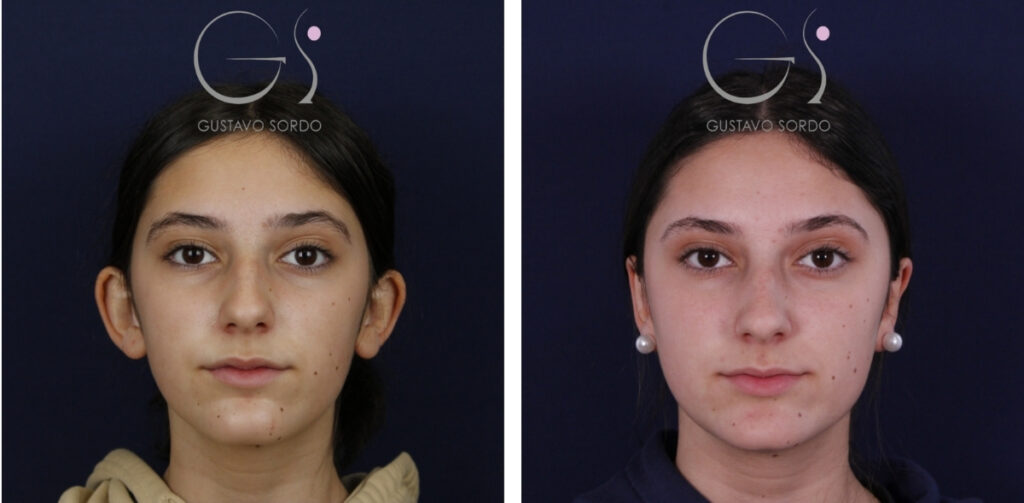
We recommend you take a look at all our before and after otoplasty cases.
Recovery and postoperative care
The success of otoplasty depends largely on following medical instructions after surgery.
First week (critical phase)
An elastic band must be worn for 24 hours a day. Relative rest is required, avoiding bending or straining, and pain is usually managed with prescription pain relievers.
First month (active recovery)
During this period, you should continue to wear the elastic band at night. Contact sports or those that may cause injury should be avoided, and your ears should not be exposed to the sun without protection.
long term care
Sunscreen should be used regularly to prevent hyperpigmentation of scars. Medical checkups are also essential to ensure proper healing.
My own published series of 100 otoplasties
When I give a recurrence or satisfaction rate figure in a consultation, it doesn't come from a brochure: it comes from having documented my cases and published them for others to review. Together with Dr. Antonio de la Fuente , with whom I trained for two years at the Ruber International Hospital, we published a series of 100 otoplasties performed between 2005 and 2009 in the journal Aesthetic Plastic Surgery , including technical descriptions and long-term results.
The technique we described is the one I still use: separate incisions for each deformity instead of a single approach, conservative dissection , no permanent sutures , and—this is often overlooked—correction of the disproportion between the height of the cartilage and the overlying skin by scaphoid reduction. In this series, the procedures combined conchomastoid sutures (81% of cases), scaphoid reduction (76%), antihelix plication (70%), conchal reduction (53%), and lobule correction (19%). The mean age was 23,2 years: otoplasty isn't just for children.
And the results with the full numbers, including those that didn't go well , because that's what I would want to read if I were the patient. With a mean follow-up of 12,4 months: three patients had a partial recurrence and required further correction; one patient developed partial necrosis of the upper pole due to an excessively tight dressing, which also required correction; and three had mild skin discoloration that resolved in less than ten days. 84% reported being very satisfied and 15% satisfied.
According to PubMed: de la Fuente A, Sordo G. Minimally invasive otoplasty: technical details and long-term results . Aesthetic Plast Surg. 2012;36(1):77-82. DOI 10.1007/s00266-011-9754-4.
Complications and risks
Although otoplasty is safe, like any surgery, it carries potential risks.
Infection
It is very rare, but it can be treated with antibiotics.
Bruising
Bruising or bleeding may occur, which may require drainage for treatment.
recurrence
The ears may become detached again if not cared for.
Mild asymmetries
The result of the surgery may present some differences between both ears, which may require adjustments.
hypertrophic scars
This is a risk that is more common in people who are prone to keloids.
To minimize risks, always choose a board-certified plastic surgeon, strictly follow postoperative instructions, and avoid smoking before and after surgery, as smoking affects healing.
Operations that are combined with otoplasty
Otoplasty, or cosmetic ear surgery, can be performed on its own or as part of a comprehensive facial harmonization approach. In some cases, it is combined with other procedures such as rhinoplasty , facelift, or blepharoplasty , always carefully assessing each patient's individual needs. The goal is to achieve a natural balance between the different facial structures, respecting the unique character of each expression.
Frequently Asked Questions (FAQs)
Do ears become loose after otoplasty?
It is rare if the postoperative period is followed correctly.
How painful is otoplasty?
Mild discomfort may occur, but can be controlled with painkillers.
Can children's ears be operated on?
Yes, this surgery can be performed from the age of 6 or 7.
How long does full recovery take?
Full recovery can occur within 4 to 6 weeks.
Is the otoplasty scar visible?
No, because the scar is hidden behind the ear.
Otoplasty surgery in Madrid with Dr. Gustavo Sordo
In our Plastic Surgery Clinic in Madrid, you will find Dr. Gustavo Sordo, plastic surgeon in Madrid, with more than 20 years of experience and a solid track record in facial cosmetic surgery.
Your surgery Otoplasty in Madrid It combines technical precision and aesthetic sensitivity, offering personalized solutions that correct the shape and position of the ears, always with harmonious and natural results.
Conclusion
Otoplasty is a safe and effective surgery to correct ear deformities, helping to improve the patient's aesthetics and confidence. With a quick recovery and natural results, it is an excellent option for both children and adults.
In otoplasty, the outcome depends on accurately identifying the cause of the protruding ear , because there are two distinct problems that often coexist: a lack of antihelix fold—the ear lacks its natural crease—and an excess of the concha, which pushes the entire ear outward. Treating only one of these is the most common cause of asymmetrical results or recurrence within a few months.
We work with techniques that combine cartilage reshaping with fixation sutures, avoiding excessive tension: an ear too close to the head, a "telephone ear," looks just as artificial as one that sticks out. It's a surgery we perform under local anesthesia in adults, requiring continuous bandaging afterward and then a nighttime headband for a few weeks, because cartilage has a memory and this period is what consolidates the result.
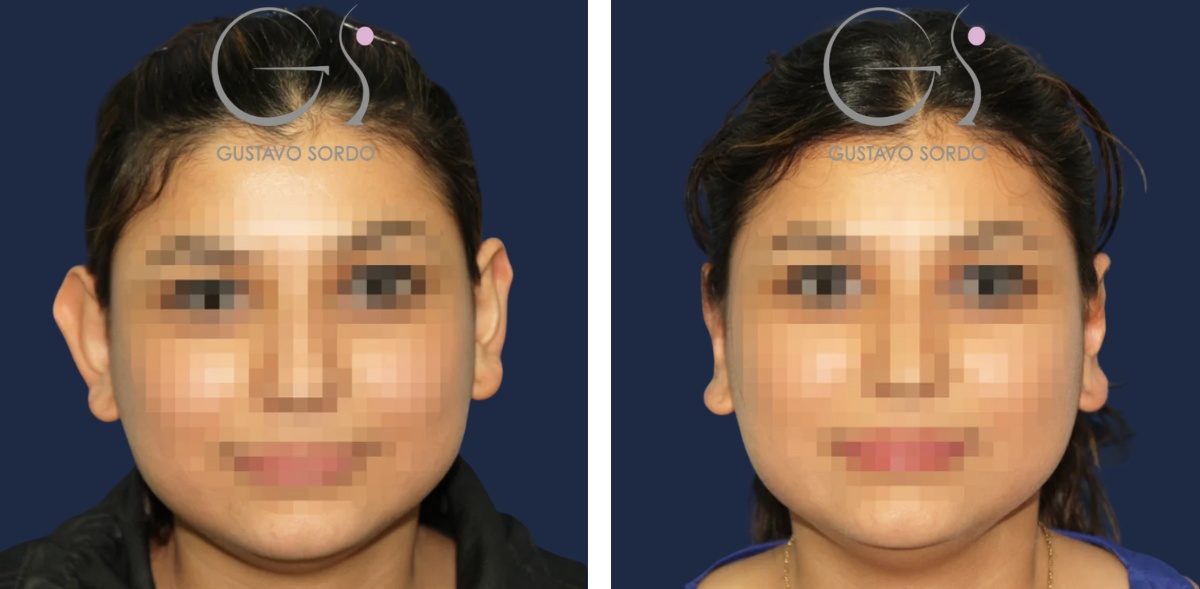

Are you considering it? Book an appointment for otoplasty in Madrid and we'll assess it in a consultation.
Dr. Gustavo Sordo
Specialist in Plastic, Aesthetic and Reconstructive Surgery. Member No. 282858125.
Content clinically reviewed by Dr. Gustavo Sordo. Last review: October 20, 2026.
Do you want to know if this can be done in your case?
The first consultation is with Dr. Sordo, either at the Chamberí clinic or via video consultation. You'll leave knowing if you're a candidate, which technique is right for you, and how much it costs.
Dr. Gustavo Sordo · Member No. 282858125 · Plastic, Aesthetic and Reconstructive Surgery · Madrid