Hyperbaric Chamber: Everything You Need to Know

Reviewed by Dr. Gustavo Sordo, plastic surgeon
It's becoming increasingly common to hear about hyperbaric oxygen therapy, both in the context of established medical treatments and in recovery after certain surgeries. However, it's not always clear what exactly it is, what it's actually indicated for, and in which cases its use is supported by solid scientific evidence.
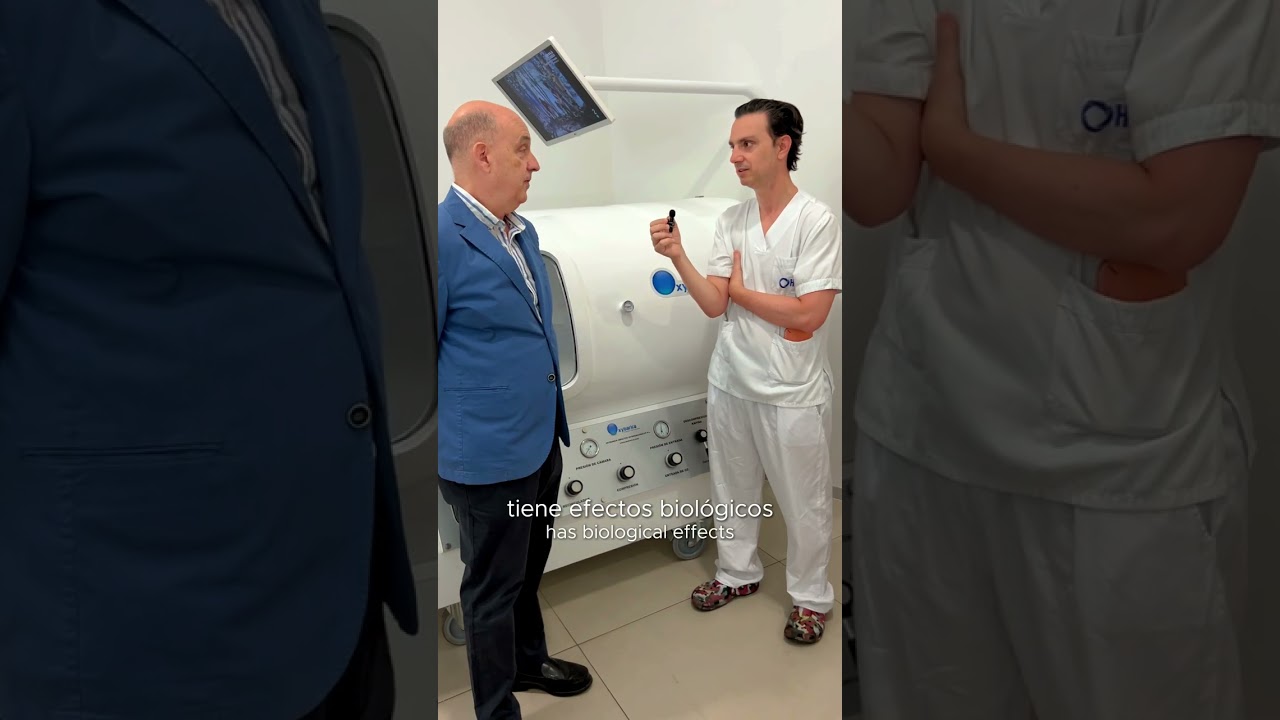
What do we use the hyperbaric chamber for in recovery?
What is a hyperbaric chamber?
A hyperbaric chamber is a closed medical device in which the patient breathes oxygen at a pressure higher than atmospheric pressure, with the aim of increasing the amount of oxygen available in the blood and tissues.
hyperbaric oxygen therapy
Hyperbaric oxygen therapy is the medical treatment administered using this device, employed as a complementary therapy in various pathologies and recovery processes.
Breathe medical oxygen
During the session, the patient breathes medical oxygen at a much higher concentration than that of ambient air, which constitutes the therapeutic basis of this treatment.
Receive pressurized oxygen
The increased pressure inside the chamber allows oxygen to dissolve in greater quantities in the blood plasma, facilitating its arrival to tissues with difficulty in regular blood flow.
Low pressure chambers
There are also low or medium pressure chambers, used in certain contexts for less intensive purposes than high pressure medical treatments supervised in the hospital setting.
How the hyperbaric chamber works
Increase in dissolved oxygen in the plasma
When breathing oxygen at high pressure, a much greater amount of oxygen dissolves directly into the plasma, beyond what is usually carried by red blood cells.
Tissue oxygenation with reduced blood flow
This mechanism allows oxygen to reach areas of the body with compromised blood flow more easily, something especially relevant in wounds that are difficult to heal.
Formation of new blood vessels and tissue repair
Hyperbaric oxygen therapy stimulates processes such as the formation of new blood vessels and the production of collagen, promoting the repair of damaged tissues.
Effect on inflammation and immune response
An effect on inflammation and certain aspects of the immune response has also been described, which contributes to the benefits observed in various pathologies.
What is it for
In our clinic, the hyperbaric chamber is not a mere comfort extra: we use it for specific reasons , when tissues need oxygen to heal properly. Typical cases include rhinoplasties with costal cartilage grafts —for flat, secondary, or post-traumatic noses—where the graft must integrate into a bed that is often poorly vascularized, and revision surgeries on previously operated areas, where perfusion is compromised by prior fibrosis.
The goal is twofold: to promote graft take and to accelerate hematoma reabsorption and swelling reduction. We also consider it useful in thick, poorly perfused skin and in patients with risk factors for poor wound healing. It's important to clarify that this is not a shortcut to compensate for poor technique, nor is it a necessary component of standard, uncomplicated surgery. It's a supportive tool, indicated when there is a clinical reason to use it.
Decompression sickness and gas embolism
The treatment of decompression sickness in divers and gas embolism is one of the historical and best-established uses of the hyperbaric chamber.
Carbon monoxide poisoning
Carbon monoxide poisoning is another recognized medical indication, since pressurized oxygen accelerates the elimination of this gas from the body.
Slow-healing wounds and diabetic foot
Chronic wounds, such as those associated with diabetic foot, benefit from the improved tissue oxygenation provided by this treatment.
Injuries caused by radiotherapy
Certain tissue injuries resulting from previous radiotherapy treatments are also among the recognized indications for hyperbaric oxygen therapy.
Severe infections and tissue damage
Some serious soft tissue infections, in which a lack of oxygen promotes bacterial growth, may benefit from this treatment as a complement to the usual medical and surgical approach.
Compromised grafts and flaps
In reconstructive surgery, hyperbaric oxygen therapy can be used to improve the viability of grafts or flaps with compromised blood supply. This is the best-documented indication. In my practice, I also use it in rhinoplasties with costal cartilage grafts, such as ethnic rhinoplasty for Latin noses or revision of previous nasal surgery, to promote graft integration in the nasal tip or dorsum. This specific use is based on my clinical judgment and what I observe in my patients, not on an indication established in the literature.
Main benefits
Improved tissue oxygenation
The main benefit is the improvement of oxygenation in tissues with poor blood flow, promoting their recovery.
Wound healing support
The greater availability of oxygen favors the biological processes involved in the healing of complex wounds.
Reduction of edema and inflammation
In certain contexts, treatment can help reduce edema and inflammation of the affected tissues.
Stimulation of collagen and blood vessel formation
Stimulating the production of collagen and new blood vessels promotes tissue repair in the medium term.
Support against certain infections
In specific infections, especially those related to bacteria that thrive in low-oxygen environments, the treatment can act as support to the main medical treatment.
Use in plastic surgery
How it can complement post-operative recovery
The hyperbaric chamber can be considered as an additional support in certain postoperative recovery processes, especially when there is a risk to tissue viability.
Before and after cosmetic surgery
Its use can be assessed both before and after certain interventions, always under medical guidance and depending on the specific characteristics of each case.
Recovery of grafts and flaps at risk
In procedures involving grafts or flaps with a risk of vascular compromise, hyperbaric oxygen therapy can help improve their viability. This is the documented application, and it's important to define it clearly: compromised skin, flaps, composite grafts, and revision surgery on previously operated areas where prior fibrosis limits perfusion. This is what Toriumi's review (2026) and the Kerolus and Nassif protocol (2019) cover . My approach with costal cartilage grafts is different: I also use it there to promote graft integration in the dorsum or the tip of the rib. This is based on my own observational criteria, not an established indication, because the literature focuses on skin and flaps, not cartilage grafts.
Scarring, fibrosis and scar quality
A different objective is scar quality and the prevention of excessive fibrosis, for example, in the donor area of the rib graft. Here, it's important to distinguish between the two: the evidence on hyperbaric oxygen therapy has been built on tissues with compromised perfusion—at-risk skin, flaps, composite grafts—not on improving the appearance of a scar that would heal well on its own. When I prescribe it with the scar also in mind, it's always in patients who already had an indication for it for another reason, and I present it as a possible benefit I've observed, not as the reason for administering it.
Use after rhinoplasty
Not all rhinoplasties require hyperbaric oxygen therapy, and it's important to clarify this. I don't recommend it for primary, uncomplicated ultrasonic rhinoplasties : the tissues are well-vascularized, and there's nothing to salvage. The documented indication appears when there is compromised skin, flaps, or composite grafts at risk, and in revision surgery on a previously operated nose, where pre-existing fibrosis limits perfusion. To this, I add, based on my own judgment, rhinoplasties with rib cartilage grafts—flat, secondary, post-traumatic, or ethnic—seeking to promote graft integration. This second part is my own decision, based on what I observe in my patients, and not an established practice in the literature.
What benefits are supported
The benefits best supported by scientific evidence are those related to the oxygenation of compromised tissues, the healing of complex wounds, and the viability of high-risk grafts or flaps. The most recent review is that of Toriumi (2026) , dedicated precisely to hyperbaric oxygen therapy in secondary rhinoplasty: complex defects, compromised vascularization, flaps, composite grafts, and cases with prior infection. The protocol by Kerolus and Nassif (2019) also incorporates it into the management of compromised nasal skin. And there is one point where I am ahead of what has been published: I also indicate it to promote the integration of the costal cartilage graft. This is not demonstrated in the literature, which focuses on skin and flaps, not on the graft. It is my own criterion, based on what I observe in my patients over the years, and I prefer to state it this way rather than present it as an established fact. Dr. Gustavo Sordo · Member No. 282858125
Which benefits need more evidence?
Other uses, such as the aesthetic improvement of scars in uncomplicated surgeries or the general acceleration of any post-operative period, still have more limited scientific evidence.
Types of hyperbaric chambers
single-seat hyperbaric chamber
The single-seat chamber is designed to treat a single patient, who breathes oxygen directly from the pressurized environment inside the chamber.
Multiplace hyperbaric chamber
The multiplace chamber allows several patients to be treated simultaneously, breathing oxygen through a mask or helmet, while the general environment of the chamber is maintained with pressurized air.
What is a session in a hyperbaric chamber like?
Prior medical assessment
Before starting treatment, a medical assessment is necessary to confirm the indication and rule out possible contraindications.
Preparation before entering the chamber
It is recommended to avoid using certain flammable or electronic products, and to follow the center's specific instructions before entering the chamber.
Pressurization, treatment and depressurization
The session includes a phase of gradual pressurization, the treatment period at the indicated pressure, and a final phase of progressive depressurization before leaving the chamber.
What does it feel like during the session?
During pressurization and depressurization, sensations similar to a change in altitude in an airplane may be felt, while during treatment the experience is usually calm and well tolerated.
How long does a session last?
A session usually lasts between 60 and 90 minutes, depending on the protocol indicated for each case.
How many sessions might be needed
The number of sessions varies considerably depending on the medical indication. In the specific case of secondary rhinoplasty , the usual protocol in my practice is five sessions, starting on the same day as the surgery . This isn't an arbitrary number: the window in which the graft depends on oxygen supplied by diffusion, before its own vascularization is established, is short, and that's when intervention makes sense. It's a minimum, not a maximum: in noses that have undergone extensive surgery, with extensive fibrosis, or a history of infection, it may be necessary to extend the session, and this is decided on a case-by-case basis.
The hyperbaric chamber is one part of the protocol, not the entire protocol. When I schedule a secondary rhinoplasty, the hyperbaric chamber is one piece of a larger package that begins long before the operating room. From the moment we set the date, the patient performs daily massages on the skin of the nose—pulling on the columella, compressing laterally, lifting the skin forward—applies alternating ozone and St. John's wort oils, and wears nasal dilators. All of this aims to achieve the same goal: to arrive at the operating room with more elastic and better-perfused skin. After surgery, on the same day the chamber sessions begin, a prolonged course of antibiotics is also started, usually for about a month, although the exact duration depends on each patient and what is found in the operating room. A secondary nose is not resolved solely by what happens inside the operating room.
Contraindications
Untreated pneumothorax
Untreated pneumothorax is an absolute contraindication, as the change in pressure can seriously aggravate this condition.
Respiratory diseases and ear problems
Certain respiratory diseases and ear problems that make it difficult to equalize pressure require special assessment before starting treatment.
Pregnancy and other situations that require individual assessment
Pregnancy and other specific clinical situations require individualized assessment by a specialist physician before prescribing therapy.
Medications incompatible with hyperbaric oxygen therapy
Some medications, such as certain chemotherapy drugs, may be incompatible with hyperbaric oxygen therapy, so it is essential to inform the specialist about all usual drug treatment.
Claustrophobia and anxiety
Claustrophobia or anxiety in enclosed spaces can make it difficult to tolerate the treatment, although in many cases it can be addressed with appropriate support during the session.
Risks and side effects
Ear discomfort and barotrauma
Ear discomfort due to difficulty equalizing pressure, known as barotrauma, is one of the most frequent side effects.
Temporary changes in vision
Some patients experience temporary changes in vision, especially after several consecutive sessions, which usually reverse once the treatment is finished.
Oxygen toxicity and seizures
In very rare cases, prolonged exposure to high concentrations of oxygen can cause toxicity, with a risk of seizures, making proper medical supervision essential.
Changes in blood glucose
In diabetic patients, treatment can influence blood glucose levels, so specific monitoring is advisable during the sessions.
Fire risk and safety measures
The oxygen-enriched environment carries a fire risk that requires extreme safety measures in any hyperbaric medicine facility.
Is hyperbaric oxygen therapy safe and effective?
Importance of an appropriate medical indication
The safety and effectiveness of the treatment depend largely on having an appropriate medical indication and follow-up by specialized professionals.
Complementary, not a substitute treatment
Hyperbaric oxygen therapy should be understood as a complementary treatment, never as a substitute for other necessary medical or surgical interventions.
Unproven uses
There are promoted uses for multiple conditions without sufficient scientific backing, so it is advisable to be wary of promises of results not supported by available evidence.
How to choose a safe hyperbaric medicine center
Supervision by a specialist physician
A safe center must always have the supervision of a doctor specializing in hyperbaric medicine, both in the indication and in the follow-up of the treatment.
Pressure and concentration of oxygen used
It is important to check what pressure and concentration of oxygen are being used, as these parameters must be adjusted to the specific medical indication of each patient.
Safety and maintenance protocols
The center must have clear safety and equipment maintenance protocols, given the risk associated with oxygen-enriched environments.
Coordination with the surgeon or responsible physician
When the treatment is considered as a complement to surgery, it is essential that there is good coordination between the hyperbaric medicine center and the surgeon or doctor responsible for the case.

Price of a hyperbaric chamber in Spain
How much does a session cost?
The price of a session usually ranges approximately between 50 and 135 euros, depending on the center, the duration and whether it is contracted individually or through a voucher for several sessions.
Factors influencing the price
The type of camera, the location of the center, the duration of the session, and the included medical supervision are some of the factors that influence the final price.
Vouchers, number of sessions and insurance coverage
Many centers offer multi-session packages at a reduced price per session, and in certain medically justified cases the treatment may be fully or partially covered by some health insurance policies.
Frequently Asked Questions (FAQs)
How long does a session in a hyperbaric chamber last?
Usually between 60 and 90 minutes, depending on the protocol indicated for each patient.
How many sessions are needed to see results?
It depends on the medical indication: some procedures require few sessions, while others need a greater number over several weeks.
Is it painful to enter a hyperbaric chamber?
It shouldn't be; the most common sensation is similar to that experienced when taking off or landing in an airplane, due to the change in pressure.
Does hyperbaric oxygen therapy accelerate recovery from surgery?
It may contribute in certain cases with risk to tissues, although not all post-operative patients benefit in the same way, so its indication must be assessed by the responsible surgeon.
Who cannot enter a hyperbaric chamber?
People with untreated pneumothorax, certain serious respiratory diseases, or those undergoing treatment with certain incompatible medications, among other contraindications that must be assessed by the specialist.
What clothing is worn during the session?
It is generally recommended to wear cotton clothing without synthetic materials or electronic elements, following the specific safety regulations of each center.
Personalized recovery after plastic surgery
Hyperbaric oxygen therapy can be considered as a complementary treatment in certain wound healing processes or when there is a risk to tissues, grafts, or flaps. However, it is not automatically part of all postoperative care, does not replace follow-up appointments with the surgeon, and must be prescribed by a hyperbaric medicine specialist after verifying any potential contraindications.
At Dr. Gustavo Sordo's Plastic Surgery Clinic in Madrid , every procedure and recovery is individually planned. Dr. Sordo specializes in rhinoplasty , and his experience in rhinoplasty , ultrasonic rhinoplasty , and facial surgery in Madrid , combined with the use of techniques designed to minimize surgical trauma, allows him to tailor the follow-up care to each patient's specific needs. If, during the initial assessment, it is deemed necessary to incorporate complementary measures such as hyperbaric oxygen therapy, these must be coordinated with specialized professionals and included as part of a safe postoperative plan. Request a consultation to learn about the most appropriate care for your case.
Conclusion
Hyperbaric oxygen therapy is a therapeutic tool with well-established medical indications, particularly for improving oxygenation of compromised tissues, healing complex wounds, and aiding the recovery of high-risk grafts or flaps. Its role in plastic surgery can be useful in specific cases, although it should not be considered an automatic treatment or a substitute for proper surgical follow-up. Having an individualized medical indication and a center that guarantees the safety of the treatment is the best way to reap its benefits without assuming unnecessary risks.
Do you want to know if this can be done in your case?
The first consultation is with Dr. Sordo, either at the Chamberí clinic or via video consultation. You'll leave knowing if you're a candidate, which technique is right for you, and how much it costs.
Dr. Gustavo Sordo · Member No. 282858125 · Plastic, Aesthetic and Reconstructive Surgery · Madrid