Lip Lift: A Complete Guide

Reviewed by Dr. Gustavo Sordo, plastic surgeon
When people talk about rejuvenating or enhancing the mouth area, many think only of lip fillers with hyaluronic acid. However, there is another procedure, the lip lift or upper lip lift, which addresses a different problem: the distance between the nose and the upper lip, and the amount of visible red lip at rest and when smiling.
What is a lip lift?
This is a surgical technique, not an injectable treatment: through a small incision under the nose, the surgeon permanently raises the upper lip to correct its proportion with the rest of the face.
Which area does an upper lip lift modify?
A lip lift is a surgical procedure that reduces the distance between the base of the nose and the upper lip, known as the subnasal area, shortening this area to modify the proportions of the lower third of the face. This area, although small, has a disproportionate visual impact on the overall face, as it marks the transition between the nose and the mouth and significantly influences the perception of youthfulness in that area.
How the distance between the nose and the lip changes
By removing a small strip of skin under the nose and lifting the upper lip, this distance is reduced, bringing the upper lip closer to the base of the nose and giving it more projection. Although the change is measured in millimeters, it is usually very noticeable because it directly alters the proportions between the nose, the philtrum, and the upper lip itself—three elements that the eye compares almost automatically when looking at a face.
What results are you looking for?
The main objective is to increase the amount of visible vermilion, that is, the red part of the lip, and improve tooth exposure when smiling, achieving a more youthful and balanced appearance. This is not an isolated change: modifying this proportion also transforms how the smile is perceived and the overall expressiveness of the lower half of the face, so the desired result is always evaluated as a whole and not just as a specific measure to be achieved.
Anatomy of the upper lip
Philtrum and subnasal distance
The philtrum is the vertical groove located between the base of the nose and the upper lip, and its length, known as the subnasal distance, is one of the key parameters assessed before a lip lift. Its measurement varies from person to person and tends to lengthen naturally with age, which explains why this area is so important in both corrective surgery and facial rejuvenation procedures.
Vermilion or visible part of the lip
The vermilion border is the red, visible part of the lip, and its proportion relative to the rest of the face largely determines the perception of youth or aging in that area. A barely visible vermilion border is often associated with thin lips or a tired-looking face, while a good proportion between the vermilion border and the surrounding skin conveys freshness and facial balance.
Cupid's Bow
The Cupid's bow is the characteristic "M"-shaped curve at the upper lip border, an anatomical detail that is carefully preserved and enhanced during the procedure. Its definition directly influences the naturalness of the result, so the surgeon pays special attention to maintaining its original shape when planning the incision and closure.
Tooth exposure when smiling
The amount of tooth visible when smiling is another relevant factor, as minimal tooth exposure is often associated with elongated or poorly defined upper lips. This detail, carefully considered in cosmetic dentistry, is also part of the facial analysis prior to a lip lift, since a smile that reveals more teeth is generally perceived as younger and more expressive.
Importance of assessing the face as a whole
No element of the lip should be evaluated in isolation: the nose, chin, and overall facial proportions all influence the final result of the procedure. The same change in the subnasal distance can be harmonious in one face and excessive in another, so planning always begins with a complete facial analysis and not just an examination of the lip area.
Who is a lip lift suitable for?
Elongated upper lip
It is especially indicated for people with an unusually long upper lip, where the subnasal distance is disproportionate to the rest of the face. This characteristic can be congenital or develop over time, and often creates the impression of a "hidden" or barely noticeable lip within the overall facial structure.
Little exposure of the vermilion
It is also suitable for those who show very little red lip at rest, which is often perceived as thin or poorly defined lips. In these cases, a lip lift allows the naturally existing vermilion border to be exposed, instead of resorting to artificial volume enhancement with fillers.
Poor visibility of teeth when smiling
People who barely show their upper teeth when they smile can benefit from this technique to achieve a wider, more visible smile. This trait is especially common in older patients, whose upper lip has gradually covered their teeth over time.
Changes associated with aging
Over time, the upper lip tends to lengthen and lose volume, so a lip lift can be part of a comprehensive facial rejuvenation approach. In many cases, it is combined with other procedures, such as lip fillers or treatments of the perioral area, to achieve a more complete result.
Patients seeking a lasting result
Unlike hyaluronic acid treatments, whose effect is temporary, a lip lift offers stable, long-term results by surgically modifying the anatomy. This durability makes it the preferred option for patients tired of maintaining periodic fillers to achieve a similar effect.
Who is not a good candidate
A lip lift addresses a problem that fillers can't: the distance between the base of the nose and the edge of the upper lip . This distance lengthens with age, making the lip appear thinner and obscuring the teeth when speaking. Filling a lip with a long subnasal distance only projects it forward, creating that characteristic puffy appearance. Shortening this distance, on the other hand, exposes the vermilion border and naturally rejuvenates the smile.
The key lies in the scar , which is hidden in the crease at the base of the nose: it must be designed following the anatomy of the nostrils and columella, and closed without tension. It's a short surgery, performed under local anesthesia, but its indications are very precise; it's contraindicated in patients with a short subnasal distance, because shortening it further produces an unnatural result. And one precaution: if there have been previous lip fillers, it's advisable to dissolve them with hyaluronidase before the surgery to properly assess the actual anatomy.
Short subnasal distance
People who already have a reduced subnasal distance are not suitable candidates, as the procedure could create an unnatural proportion, with an excessively short upper lip or a smile that shows too much gum.
Tendency towards hypertrophic or keloid scars
Patients with a history of abnormal scarring, with a tendency towards hypertrophic or keloid scars, require particularly careful evaluation before considering surgery, as the subnasal area is visible and any unfavorable scar would have a significant aesthetic impact.
Active smoking and wound healing problems
Active smoking hinders healing and increases the risk of complications, so it is usually recommended to stop before and after the procedure, following a specific timeframe indicated by the surgeon.
Uncontrolled diseases
Certain uncontrolled diseases may make surgery inadvisable until the patient's overall health is stabilized, since any surgical intervention requires minimum medical safety conditions.
Unrealistic expectations
It is essential that the patient understands the true scope of the procedure, avoiding expectations of a radical change that is not compatible with their initial anatomy. A detailed preliminary consultation, with simulations or visual references, helps align what the patient expects with what the procedure can realistically offer.
Types of lip lift
Subnasal or bullhorn lip lift
This is the most common technique, involving a bull's horn-shaped incision located just below the base of the nose, which allows for a uniform lift of the entire upper lip. Its name comes from the shape of the incision, similar to a bull's horns, and it offers the greatest overall lip lift.
Italian lip lift
This procedure involves two small incisions on either side of the nostrils, leaving a less visible scar, although with a somewhat more limited lifting effect than the subnasal technique. It is usually chosen by patients who prioritize minimizing scarring, accepting a more subtle lifting effect.
Corner lip lift or corner lift
It focuses on the corners of the mouth, slightly lifting the corners of the lip to correct a sad or tired expression in that specific area. Unlike previous techniques, it doesn't affect the central area of the lip, so it can be combined with other lip lift variations if a more comprehensive result is desired.
Direct lip lift on the vermilion border
It consists of removing skin just above the vermilion border, more directly increasing the amount of visible red lip, although with a potentially more noticeable scar as it is located in an area of greater visual exposure and color transition between the skin and the lip.
Deep plane lip lift and corner lift
The latest version of this surgery doesn't stop at the skin. In a deep lip lift, the lift is performed below the dermis, so the tension is placed on the supporting tissues, not on the scar. It's the same principle I use in a deep facelift.
Talei and Pearlman described this design—they call it CUPID—on a series of more than 2.400 consecutive lip lifts, and added something that matters a lot in practice: when to add a corner lift , a small elevation of the corners, so that the lip is not unbalanced on the sides when shortening it in the center.
Two technical details are crucial to the outcome and are consistent throughout the literature: the tension must be deep and not just on the skin, and the orbicularis oris muscle must not be injured. This is essential for the scar to be discreet and for the lip to continue moving naturally.
How to choose the most appropriate technique
The choice depends on individual anatomy, the desired outcome, and the surgeon's assessment of which technique offers the best balance between results and scarring for each patient. During the initial consultation, photographs, facial measurements, and sometimes digital simulations are analyzed to jointly decide on the most suitable option.
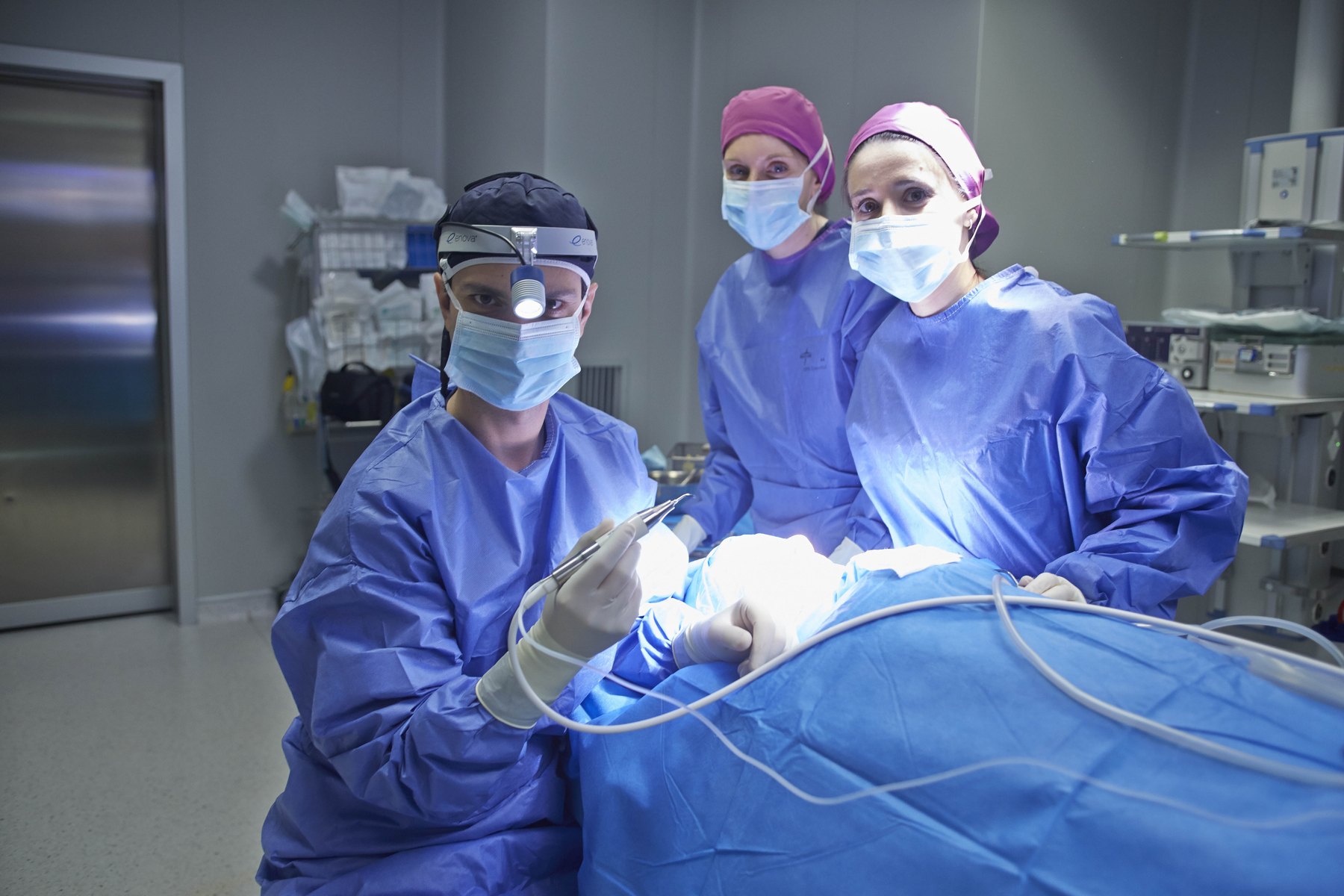
How the surgery is performed
Planning and personalized marking
Before the procedure, precise markings are made on the patient's face, calculating with millimeter accuracy the amount of skin to be removed according to their proportions. These markings are checked with the patient standing upright and making different facial expressions, as the result must function both at rest and when smiling.
Type of anesthesia
The procedure is usually performed under local anesthesia, sometimes combined with sedation, depending on the chosen technique and the preferences of the patient and surgeon. This allows, in most cases, the avoidance of general anesthesia and reduces both the associated risks and recovery time.
Precise removal of a small strip of skin
A strip of skin is removed from the subnasal area, the width of which is calculated beforehand to achieve the desired lift without compromising the naturalness of the result. Excessive calculation of this measurement is one of the most common causes of unnatural results, hence the importance of meticulous planning.
Elevation and closure by plans
After removing the skin, the lip is lifted and sutured in layers, taking special care around the Cupid's bow to preserve its characteristic shape. Suturing in layers, that is, closing layer by layer, results in a thinner scar and better tissue alignment.
Duration and outpatient discharge
The procedure usually lasts between one and two hours, and is usually performed on an outpatient basis, allowing the patient to return home the same day, without the need for hospital admission or prolonged medical follow-up after surgery.
Lip lift, lip fillers and cheiloplasty: differences
What does hyaluronic acid achieve?
Lip augmentation with hyaluronic acid adds volume through injection, with a temporary effect that requires periodic maintenance, without altering the subnasal distance. It is a reversible option with almost immediate recovery, but its results fade over time and require maintenance sessions every few months.
What does a lip lift change?
A lip lift, on the other hand, doesn't add volume but rather reduces the distance between the nose and the lip, permanently increasing the exposure of the existing vermilion border. Therefore, in patients with naturally thin lips, it can be combined afterward with a small volume augmentation to achieve the desired result.
What does cheiloplasty involve?
Cheiloplasty is a broader term that encompasses various lip surgery techniques, including both lip lift and other lip reshaping procedures, such as lip reduction or repositioning in other clinical or aesthetic contexts.
When can treatments be combined?
In certain cases, the lip lift can be combined later with hyaluronic acid to adjust the final volume, always respecting the healing times of the surgery, so that both procedures complement each other without interfering with the result of the other.
Treatments and surgeries that can be combined with a lip lift
The lip lift acts exclusively on the subnasal space, so it is often integrated into a broader facial harmonization plan. Depending on each patient's goals, it can be complemented with other procedures, both non-surgical and surgical.
Lip augmentation with hyaluronic acid. A lip lift exposes more of the vermilion border, but doesn't add volume. In patients with naturally thin lips, hyaluronic acid can be used once healing is complete to provide the volume that surgery alone cannot create. Both procedures are planned independently and with their corresponding recovery times.
Lip flip. The lip flip , an injection of neuromodulator into the orbicularis oculi muscle, can be used as a complement to refine the result in the Cupid's bow area, as it affects the position of the upper lip without adding volume. However, since a lip lift already permanently raises the lip, the combination should be carefully considered to avoid excessive lifting.
If you are also considering nose surgery, here we explain nose surgery in Madrid at our clinic.
Rhinoplasty. The nose and upper lip form a direct visual unit. If there is an alteration in the nasolabial angle or in the projection of the nasal tip, correcting only the lip can disrupt this relationship. When the patient is indicated for both procedures, it is usual to perform rhinoplasty or ultrasonic rhinoplasty first and evaluate the lip lift in a second phase.
Mentoplasty. The balance of the lower third of the face depends not only on the lip: the chin defines the profile and influences how the mouth is perceived as a whole. Combining a lip lift with mentoplasty allows for comprehensive treatment of this area when there is a lack of jaw projection.
Facelift. In more comprehensive rejuvenation plans, the lip lift can be integrated with the facelift to simultaneously address skin laxity and loss of proportion in the perioral area, two distinct manifestations of aging that require different techniques.
Lip blushing. Lip micropigmentation can be added once the lip lift has healed to enhance the color and definition of the vermilion border, complementing the structural change with a more uniform visual result.
Results that can be achieved
Greater visibility of the red lip
The most obvious result is a greater amount of visible vermilion, both at rest and when speaking, which usually immediately conveys a feeling of more defined and prominent lips on the face.
Better dental exposure
The smile gains in width by showing a larger portion of the upper teeth after the procedure, a change that many patients describe as one of the most noticeable improvements in their smile.
Perioral area rejuvenation
Shortening the subnasal distance contributes to a more youthful appearance of the entire area surrounding the mouth, which is why this procedure is often included in comprehensive facial rejuvenation plans.
Balance between nose, lips and chin
By modifying this proportion, a lip lift can improve the aesthetic balance between the nose, lips, and chin within the overall facial structure, helping to prevent any one element from visually dominating the others.
Naturalness and preservation of expression
A good result should preserve the patient's natural expressiveness, without creating a rigid or artificial appearance when speaking or smiling, an aspect that depends largely on the surgeon's experience and a plan tailored to each individual's anatomy.
Where is the scar located?
Location below the base of the nose
The main scar is located just below the base of the nose, following its natural contour to conceal it as much as possible, taking advantage of the folds and shadows of that area of the face.
Evolution during the first months
During the first few months the scar may appear more visible or reddened, gradually fading over time until it blends almost completely with the rest of the skin in the area.
Factors that influence healing
Skin type, post-operative care, and individual factors such as smoking directly influence the final evolution of the scar, so two patients with the same technique may show different scarring results.
Care to promote a good recovery
Following the surgeon's instructions regarding sun protection, hydration, and, where applicable, specific scar treatments promotes a more discreet evolution, especially during the first months after the procedure.
Recovery
Initial inflammation and tightness
It is common to experience swelling and a feeling of tightness in the area during the first few days after the procedure, especially when speaking or moving the lip widely.
Wound care
The wound requires careful cleaning following the instructions of the medical team, to promote proper healing and reduce the risk of local complications.
Nutrition, hygiene, and facial expressions
During the first few days, it is advisable to adjust your diet and moderate large facial expressions, such as exaggerated smiling, so as not to strain the treated area or compromise the initial healing process.
When to remove the points
The stitches are usually removed in the first week after surgery, as indicated by the surgeon at the corresponding check-up, at which time the overall evolution of the wound is also assessed.
Back to work and exercise
Most patients can resume their work activities within a few days, while intense physical exercise is usually postponed for several weeks to avoid increased inflammation or excessive strain on the area.
When is the final result noticeable?
The final result, once the initial inflammation has subsided, is usually fully appreciated several weeks after the procedure, when the scar has already begun its natural maturation process.
Risks and possible complications
Bleeding, infection, or wound reopening
As with any surgery, there is a risk, albeit low, of bleeding, infection, or wound opening during the healing process, so specific care is indicated to minimize it.
Visible or irregular scar
In some cases, the scar may be more visible or irregular than expected, especially if there are previous risk factors such as very thick skin or a history of poor healing.
Asymmetry and changes in the smile
Some asymmetry or a temporary alteration of the smile may occur while the tissues are healing, something that usually improves naturally as recovery progresses.
Sensitivity disturbances
It is possible to experience temporary, and in rare cases permanent, changes in the sensitivity of the operated area, something that should be discussed during the consultation prior to surgery.
Insufficient or excessive result
A result that falls below or exceeds expectations, in terms of the achieved elevation, is a possible complication that should be discussed with the surgeon once the healing process is complete.
Retouching needed
In certain cases, a small touch-up may be considered to adjust the final result once healing is complete, always after waiting the necessary time to assess the final result.
How much does a lip lift cost?
Personalized assessment and case complexity
The price depends on the individual assessment of each patient and the technical complexity of their specific case, since not all faces require the same degree of correction.
Technique and type of anesthesia
The chosen technique and the type of anesthesia used also directly influence the final price of the procedure, especially if it is combined with sedation or other facial procedures.
Operating room, medical team and follow-up
The use of the operating room, the medical team involved, and post-operative follow-up are all part of the total budget for the procedure, an aspect that should be clear before comparing prices between different centers.
Why choosing based solely on price is not advisable
Choosing based solely on price, without considering the surgeon's experience and the center's guarantees, can compromise both safety and the final aesthetic result, especially in an area as visible and delicate as the upper lip.
Facial surgery and lip treatments in Madrid
The balance between the upper lip, nose, and the rest of the face requires precise and personalized planning. At the Plastic Surgery Clinic in Madrid of Dr. Gustavo Sordo, a plastic surgeon in Madrid , each case is studied with a focus on naturalness, facial harmony, and the preservation of expression.
If you are considering options to improve the proportions of the lower third of your face, whether through hyaluronic acid lip fillers, a lip flip, or any other facial surgery procedure, you can request a personalized assessment with us. We will ensure that you feel safe and well-supported at every stage of your decision.
Frequently Asked Questions (FAQs)
How long does the effect of a lip lift last?
The result is permanent, since it is a surgical modification of the anatomy, although natural aging may introduce gradual changes over the years.
Does the procedure increase lip volume?
It does not add volume as such, but rather increases the exposure of the existing red lip by shortening the distance between the nose and the lip.
Is the scar visible?
The scar is located following the natural contour under the nose and is usually barely noticeable once its evolution is complete.
At what age can it be performed?
It is performed on adult patients with completed facial development, with no upper age limit beyond individual health conditions.
When can we go back to work?
Most patients resume their work activity around one week after the procedure, depending on individual progress.
Is it possible to combine it with hyaluronic acid filler?
Yes, in certain cases it can be combined later to adjust the final volume, always respecting the healing times.
What is the difference between a lip lift and cheiloplasty?
The lip lift is one of the techniques included within the broader term of cheiloplasty, which encompasses various lip surgery procedures.
Conclusion
A lip lift is a surgical procedure that permanently corrects the proportion between the nose and upper lip, enhancing the vermilion border and the smile without the need for temporary fillers. Understanding the different techniques available, the recovery process, and potential risks allows you to make this decision with complete information. Having an experienced surgeon who considers the face as a whole and prioritizes a natural-looking result is essential for achieving a harmonious and lasting change.
The lip lift also changes the nose
This is rarely discussed, but it matters to me especially because I operate on many noses: shortening the upper lip doesn't leave the nose the same.
In a published series of 55 patients who underwent subnasal lip lift without associated rhinoplasty , the lip shortened by 21,5%, the visible red lip increased by 31,5%, and tooth exposure increased by 1,52 mm. Furthermore, the nasolabial angle closed by 4,56° , the base of the alae widened by 2,2%, and the tip appeared more projected.
The tip hasn't grown; the surrounding structure has changed. Therefore, when a patient brings up both issues, the discussion needs to address them together. In a nose that already lacks projection, or with a closed nasolabial angle, a lip lift can accentuate precisely what was intended to be corrected.
What the published data says
So that this isn't just my opinion, these are the figures found in the medical literature. These aren't my results; they're from published studies.
- A recent systematic review brought together seven studies and 1.754 patients: the filter went from 14,0-14,5 mm to 10,8-12,0 mm, the vermilion height from 5,0-6,0 mm to 7,0-9,0 mm and the incisor exposure from 1,5-2,0 mm to 3,5-5,0 mm.
- The average satisfaction was 4,4 5 onand revision rates ranged between 0,6% and 6,7%.
- Another systematic review found that the 92,4% of the published cases are women, with an average age of 36,6 years, that the bull loop technique was used in 75% of the studies, and that the result remained stable in the follow-ups, from 12 to 59 months.
It is advisable to read those revision rates with the same caution with which I read them: a surgeon who performs revisions on those who need them shows a higher percentage, not a lower one.

Highlighted
- Talei B, Pearlman SJ. CUPID Lip Lift: Advanced Lip Design Using the Deep Plane Upper Lip Lift and Simplified Corner Lift. Aesthet Surg J. 2022;42(12):1357-1373. doi:10.1093/asj/sjac126
- Komisarek O, Banasiak Ł, Olichwer V, Burduk P. The Bullhorn and Beyond: Evidence-Based Review and Clinical Recommendations for Lip Lift Techniques. J Cosmet Dermatol. 2026; 25 (3): e70703. doi:10.1111/jocd.70703
- Marechek A, Perenack J, Christensen BJ. Subnasal Lip Lift and Its Effect on Nasal Esthetics. J Oral Maxillofac Surg. 2021;79(4):895-901. doi:10.1016/j.joms.2020.12.007
- Alves Júnior LC, da Silva Cruz NT, Vasconcelos Gurgel BC, Aquino Martins ARL, Lins RDAU. Impact of subnasal lip lift on lip aesthetics: a systematic review. Oral Maxillofacial Surgery. 2023;27(1):9-15. doi: 10.1007 / s10006-022-01049-y
- Sturm A. Lip Lift. Otolaryngol Clin North Am. 2022;55(4):835-847. doi:10.1016/j.otc.2022.04.013
- Patel AA, Schreiber JE, Gordon AR, et al. Three-Dimensional Perioral Assessment Following Subnasal Lip Lift. Aesthet Surg J. 2022;42(7):733-739. doi:10.1093/asj/sjac070
References located in PubMed.
Continue reading
Dr. Gustavo Sordo
Specialist in Plastic, Aesthetic and Reconstructive Surgery. Member No. 282858125.
Content clinically reviewed by Dr. Gustavo Sordo. Last review: October 2, 2026.
Do you want to know if this can be done in your case?
The first consultation is with Dr. Sordo, either at the Chamberí clinic or via video consultation. You'll leave knowing if you're a candidate, which technique is right for you, and how much it costs.
Dr. Gustavo Sordo · Member No. 282858125 · Plastic, Aesthetic and Reconstructive Surgery · Madrid