Lip Augmentation with Hyaluronic Acid: Pros and Cons
Reviewed by Dr. Gustavo Sordo, plastic surgeon
The lips are one of the facial features that have gained the most prominence in recent years within aesthetic medicine. It's no longer just about achieving greater volume, but also about improving symmetry, defining the contour, or simply restoring the hydration lost over time. Lip augmentation with hyaluronic acid has become one of the most requested treatments in facial aesthetic medicine clinics precisely because it allows for visible results from the very first session, with a minimally invasive technique and without the need for surgery.
What is lip augmentation with hyaluronic acid?
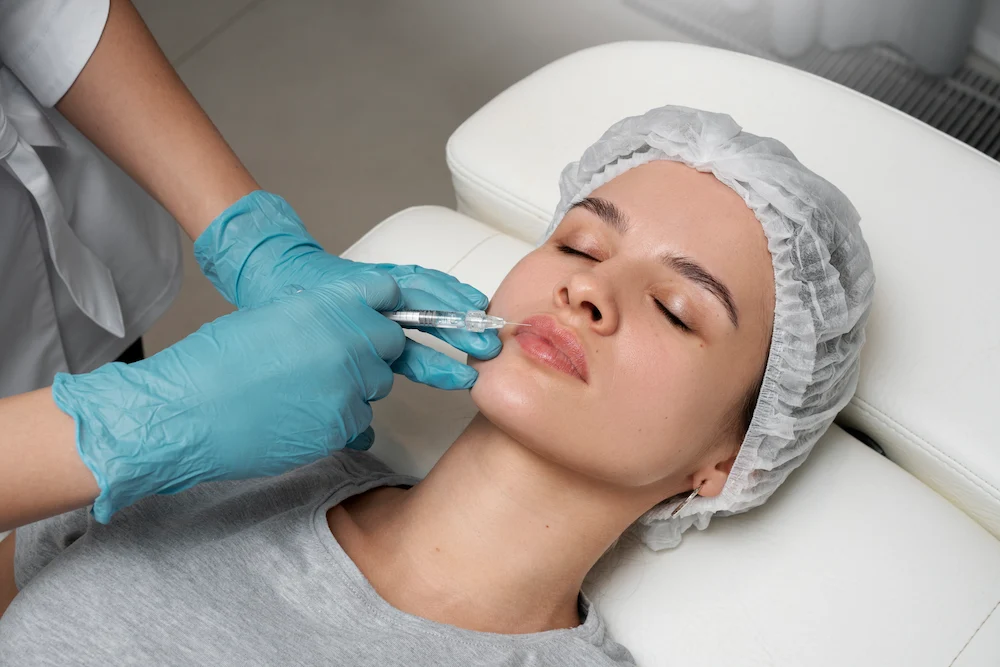
It is a non-surgical cosmetic treatment that involves injecting this component, using a very fine needle or microcannula, into various points of the lips to add volume, define their contour, and improve hydration. The goal is not always to "increase" in the literal sense of the word: in many cases, it is used to correct minor asymmetries, enhance the Cupid's bow, or simply restore the firmness that lips lose with age.
This is an outpatient procedure, short in duration, that does not require hospitalization or a prolonged recovery period. The patient (or male patient, as it is increasingly common among men) can resume their daily routine almost immediately, with some precautions that we will discuss later.
Why is it used so much in facial aesthetic medicine?
Hyaluronic acid has become the go-to filler in facial aesthetic medicine for several reasons. First, it's a substance the body produces naturally, so its compatibility and tolerance are very high, and the risk of serious adverse reactions is low. Second, its ability to retain water allows it to achieve a hydrating and plumping effect that other materials don't offer with the same naturalness.
Furthermore, since it is a resorbable product, the result is not permanent, which provides a significant safety margin: if the result is not satisfactory, the effect fades over time, and in certain cases, it can even be reversed sooner with hyaluronidase. This reversibility, combined with the speed of the procedure and the absence of surgery, explains why lip augmentation with hyaluronic acid has become one of the most popular treatments for the lower face.
Is filling lips the same as moisturizing them?
No, and this is one of the most common misconceptions among those new to this treatment. Lip augmentation involves noticeably increasing their volume using hyaluronic acid with greater density and projection capacity. The goal is to add fullness, redefine the contour, and, in many cases, visibly modify the proportion between the upper and lower lips.
Lip hydration, on the other hand, aims for a much more subtle effect. It uses a less cross-linked hyaluronic acid, designed to treat dryness, the fine vertical lines that appear with age, and loss of radiance, without noticeably changing volume. It's a common option for those who simply want to improve the appearance of their lips without it being obvious they've undergone any treatment.
How does hyaluronic acid work in the lips?
Hyaluronic acid acts like a molecular sponge: its chains have the ability to attract and retain large amounts of water, resulting in increased volume and improved hydration of the tissues where it is injected. When injected into the lips, the product fills the space between the collagen and elastin fibers, providing body, definition, and radiance.
Over time, the body gradually breaks down the hyaluronic acid molecules until they are almost completely reabsorbed, which is why the effect is not permanent and requires periodic maintenance if you want to preserve the result.
How to apply the product
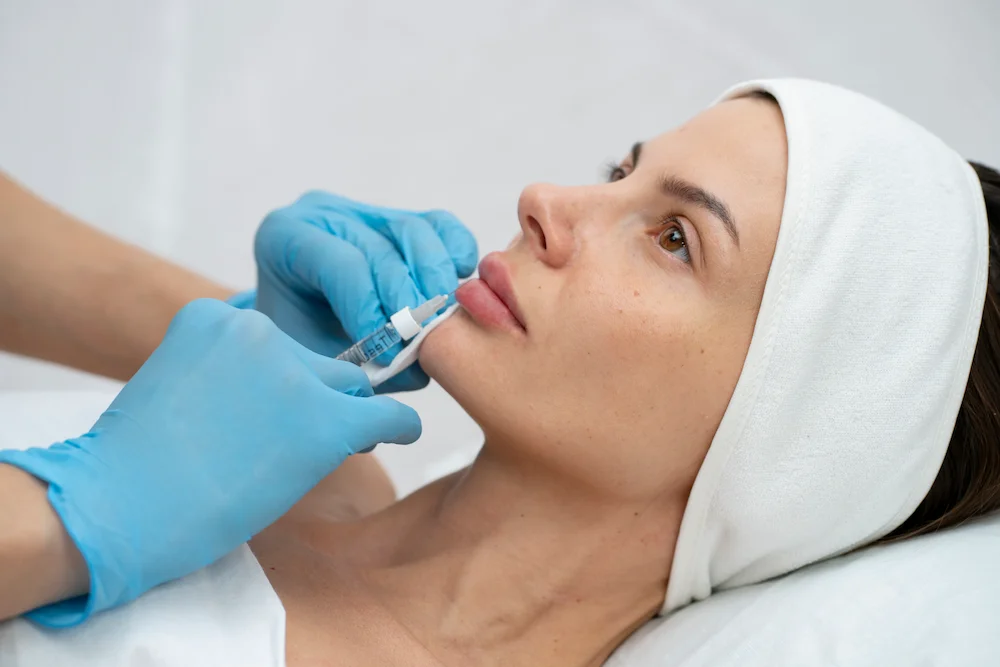
The application is performed using small injections, following a map of points previously marked on the lip. The practitioner distributes the product progressively, assessing the volume and symmetry as they work, in order to adjust the exact amount needed for each area. Most of the products used already contain lidocaine, which significantly reduces discomfort during the session. In some cases, a topical anesthetic is also applied beforehand for greater comfort. The entire procedure usually lasts between 15 and 30 minutes.
Two criteria we apply to lips that prevent most poor results. The first: respecting proportion . The classic reference is approximately one-third upper lip to two-thirds lower lip; inverting this is what produces those lips that are noticeable from a distance. The second: evaluating the lip within the complete profile —nose, lips, and chin work together—because sometimes what throws off the profile is not the lip but a receding chin.
And one warning we always give, because we see it frequently in our practice: hyaluronic acid accumulates . With repeated injections over years, some of the material isn't reabsorbed, and the lip gradually becomes deformed. When that happens, the solution is to dissolve it with hyaluronidase and start from scratch, not to keep adding product. In patients with a long upper lip, moreover, what's often needed isn't filler but a lip lift.
Which areas of the lip can be improved
This treatment allows different areas to be addressed independently, according to the needs of each patient:
- El body of the upper and lower lip, to gain overall volume.
- El cupid's bow, to mark and define that characteristic area of the upper lip.
- corners of the mouth, when they are droopy and give the face a sad or tired appearance.
- El vermilion or lip borderto define the contour and prevent the lipstick from running.
- vertical lines or "barcode", which appear around the mouth over the years.
Most commonly used techniques
There are different injection techniques, each designed to achieve a specific effect. These are the most commonly used in aesthetic medicine clinics today:
- Classical techniqueThis technique focuses on lip contouring, redefining the vermilion border and Cupid's bow, and providing a moderate projection that respects the natural proportion between the upper and lower lips. It is the most common option for those seeking subtle rejuvenation.
- Russian LipsThis technique aims for a fuller, more prominent lip line with a sharply defined contour and a flatter base. The result is visibly more defined lips, with the characteristic "heart-shaped" upper lip.
- French kiss: technique aimed at achieving a generous but harmonious increase in volume, working on deeper planes of the lip to achieve a natural projection without losing the softness of the curves.
- Natural contouringIt prioritizes subtlety. It focuses on correcting small asymmetries, hydrating, and defining the contour without a noticeable change in volume, making it ideal for those new to this type of treatment.
The choice of technique depends on the patient's initial anatomy, facial proportions, and, above all, the desired outcome. An experienced professional will be able to recommend the most suitable combination after individually assessing each face.
Pros and cons of the treatment
Like any cosmetic procedure, lip augmentation with hyaluronic acid has obvious advantages, but also some drawbacks that should be considered before making a decision.
| Advantages | Drawbacks |
|---|---|
| Visible results from the first session | The effect is not permanent and requires maintenance. |
| Quick procedure, between 15 and 30 minutes | Swelling may appear during the first few days. |
| It does not require hospitalization or general anesthesia. | Risk of asymmetry if the technique is not precise |
| Reversible effect with hyaluronidase if necessary | Recurring prices due to the need for periodic touch-ups |
| Improves hydration, volume and contour all at once | There is a risk of vascular complications if it is not performed by a qualified professional. |
| Minimum recovery time | The final result takes a few days to fully appreciate. |
Generally speaking, it's a safe treatment when performed by experts, but its success depends largely on the training and experience of the practitioner. Choosing the right place and with whom to have the treatment is probably the most important decision in the entire process.
How long does it last?
Average duration of the result
The results typically last between six and twelve months, although in some cases they can last up to eighteen months. This variability depends on the type of product used, the amount injected, and the individual characteristics of each patient.
Influential factors
Several factors influence how long the treatment's effects last. Each person's metabolism is crucial, as hyaluronic acid is reabsorbed at different rates depending on each individual's cellular activity. Muscle activity in the area also plays a role: the lips are a highly mobile area, which can slightly accelerate the product's breakdown. The type of hyaluronic acid used—whether more or less cross-linked—and the amount injected in the first session also significantly affect the final duration of the results.
When is it appropriate to have a touch-up?
Typically, a first follow-up appointment is scheduled 15 days after the initial session to assess how the product has developed once the swelling has subsided and to correct any minor asymmetry if necessary. Afterward, a maintenance touch-up is recommended between eight and twelve months, before the effect fades completely, as it is easier and requires less product to maintain existing volume than to create it from scratch.
When we can see the resultes?
Immediate result vs. final result
One of the great advantages of hyaluronic acid is that the effect is visible immediately after the session. However, this initial result is not the final one: over the following days, the product settles into the tissues and the initial swelling subsides, revealing the true shape the lips will maintain in the medium term.
Why the final result isn't visible on the first day
The injection process itself triggers a natural inflammatory response in the tissue, in addition to the fluid retention that hyaluronic acid produces immediately after application. This means that, in the first few hours, the lips appear fuller than they will be once the product has fully settled. That's why it's so important not to judge the results on the day of the treatment and to wait the recommended period before drawing any conclusions.
Inflammation during the first few days
It is completely normal to experience some swelling during the first 48-72 hours, which may be accompanied by a feeling of tightness or, in some cases, small bruises. This swelling usually subsides gradually and, in most patients, is barely noticeable after the first week.
Final result
The final result is usually visible between 10 and 15 days after the session, once the swelling has completely subsided and the product has integrated seamlessly into the lip tissue. It is at this point that a follow-up appointment is recommended to assess whether any adjustments are necessary.
What results to expect
natural results
When the treatment is performed judiciously, respecting facial proportions and using the appropriate amount of product, the result should blend harmoniously with the rest of the face. A well-executed lip augmentation should not be the sole focus, but rather complement existing features, enhancing volume, hydration, and definition without appearing artificial.
Overtreated lips
The so-called "duck effect," or overtreated lips, is one of the main concerns for those considering this treatment for the first time. It usually occurs when an excessive amount of product is injected relative to the patient's anatomy, when several sessions are performed without allowing sufficient absorption time, or when the technique doesn't properly distribute the volume across the different areas of the lip. An experienced professional knows how to recognize the anatomical limits of each face to avoid this result.
How to choose the right amount of product
The amount of product should not be decided in a standard way, but rather based on each patient's starting point, the proportion between the upper and lower lip, and the desired effect. It is common practice to start with moderate amounts, especially in the first sessions, and gradually increase the volume in subsequent follow-up appointments if the patient so desires. This gradual approach allows for monitoring the evolution of the result without compromising its natural appearance.
Importance of respecting facial harmony
Lips cannot be evaluated in isolation: they are part of a whole that also includes the nose, chin, and the overall proportions of the lower third of the face. Therefore, before deciding how much volume to add, it's advisable to analyze the entire face, not just the mouth, to achieve a result that respects facial harmony rather than creating an artificial contrast with the rest of the features.
How much does lip augmentation with hyaluronic acid cost?
Price per vial
The price of this treatment varies depending on the clinic, the city, and the product used, but as a general guideline, it usually ranges between €300 and €500 per vial, which is sufficient for most single-session treatments. Some clinics include a follow-up appointment in the price, while others charge for this visit separately.
Technique and experience of the professional
The price depends not only on the product but also on the training and experience of the specialist performing the injection. Professionals with more experience and specific training in facial anatomy tend to charge higher fees, but they also offer greater guarantees of safety and results, especially in more complex techniques such as Russian Lips or the French Kiss.
Why not choose a clinic based solely on price?
Choosing a clinic solely based on price is one of the most common and riskiest mistakes. Lip augmentation is a medical procedure that requires precise knowledge of the vascular anatomy of the area, as poor technique can lead to serious complications, such as blood vessel occlusion. An abnormally low price is often an indication of products of dubious origin, unqualified staff, or inadequate safety protocols.
What should a professional assessment include?
A thorough consultation should always include a preliminary analysis of the face and lip anatomy, a clear explanation of the technique and product to be used, information on risks and contraindications, and a detailed estimate that avoids surprises. Being wary of clinics that don't offer this initial consultation, or that downplay the risks of the treatment, is a good way to avoid unpleasant experiences.
For those seeking lip augmentation with hyaluronic acid under medical supervision, our Plastic Surgery Clinic in Madrid, led by Dr. Gustavo Sordo, offers a personalized assessment that goes beyond the specific treatment. With over 20 years of experience in facial surgery and a focus on natural-looking results, Dr. Sordo's team evaluates each case considering the overall facial structure. This is especially important in treatments like lip fillers, where balance with the rest of the facial features makes all the difference between a harmonious and an artificial result.
Who are good candidates?
People looking for subtle volume
Those who want a subtle change that improves the proportion of their lips without being obvious are ideal candidates for this treatment, especially if they opt for natural contouring techniques with moderate amounts of product.
People with thin or dehydrated lips
Hyaluronic acid is especially effective on lips that have lost volume and firmness with age, or that appear dull and dehydrated. In these cases, the treatment not only adds volume but also restores radiance and smoothness to the area.
Patients with mild asymmetries
Small differences in volume between the upper and lower lip, or between both sides of the mouth, can be corrected very precisely with this type of injection, achieving a much more balanced symmetry without the need for surgery.
Cases in which treatment is not recommended
There are situations in which treatment should be postponed or avoided. Pregnant or breastfeeding women should avoid it, as well as people with active infections in the area to be treated, such as cold sores. It is also not recommended for patients with certain autoimmune diseases or known allergies to the product's components. If you have any concerns about your health, it is best to discuss them openly with the professional before scheduling your appointment.
Risks and side effects
Normal side effects
Most side effects associated with this treatment are mild and temporary. It is common to experience swelling, redness, and a slight feeling of tightness in the hours following the injection. Small bruises may also appear at the injection site, especially in people taking blood thinners or anti-inflammatory medications. These symptoms usually disappear on their own within a few days without any further treatment.
Warning signs after treatment
Although rare, some signs require immediate medical attention: intense and disproportionate pain, changes in skin color to whitish or bluish tones, or swelling that worsens over time instead of subsiding. These symptoms could indicate a vascular complication and should be discussed without delay with the healthcare professional who performed the treatment or with an emergency department.
Care after lip augmentation
What to do during the first 24 hours
For the first few hours, it is recommended to avoid putting pressure on the treated area and to refrain from strenuous physical exercise to reduce the risk of further swelling. It is also advisable to avoid alcohol and limit exposure to extreme temperatures, both hot and cold.
Hygiene, hydration and sun protection
Keeping your lips well-hydrated with specific products, such as petroleum jelly or fragrance-free lip balms, helps make the recovery process more comfortable. It's also recommended to drink plenty of water during the first few days and apply sunscreen to the area whenever you're exposed to the sun, as the treated skin may be more sensitive during this period.
When to start wearing makeup again
It is usual to wait between two and twenty-four hours before applying makeup to the lips, depending on the specific instructions of each clinic. This time frame allows the injection sites to heal properly and reduces the risk of irritation or infection.
How to prolong the results
To prolong the duration of the result, it is recommended to maintain a good daily hydration routine, avoid habits that accelerate the degradation of hyaluronic acid, such as smoking or unprotected sun exposure, and attend the periodic check-ups recommended by the specialist to assess whether a maintenance touch-up is necessary before the volume disappears completely.

Treatments that combine well with lip fillers
Lip augmentation with hyaluronic acid is usually considered part of a more comprehensive facial approach, since the lips don't exist in isolation: their appearance is directly influenced by the nose, chin, cheekbones, and overall facial contours. Therefore, it's frequently combined with other procedures to achieve a more harmonious and proportionate result.
If you are also considering nose surgery, here we explain rhinoplasty in Madrid at our clinic.
Rhinoplasty. The relationship between the nose and the upper lip is one of the most important in facial aesthetic analysis. A more defined upper lip achieved through filler can appear disproportionate if the nose has excessive projection or if the nasolabial angle is not balanced. In patients considering both procedures, it is common practice to perform rhinoplasty or ultrasonic rhinoplasty first and, once the results are established, consider lip filler as a complement.
Mentoplasty. The balance of the lower third of the face depends on the relationship between the lips and chin. When there is a lack of jaw projection, adding volume to the lips without correcting the chin can create a visually unbalanced result. Combining both treatments—lip augmentation and mentoplasty— allows for a comprehensive approach to the facial profile.
Facelift. In facial rejuvenation plans, lip fillers are frequently combined with a facelift to restore volume lost due to age in the perioral area, providing hydration and definition in an area that tightening surgery does not directly address.
Lip flip. As already mentioned, the lip flip and lip filler are complementary: the former improves the shape and position of the upper lip, while the latter adds volume. Combining them allows for a more complete result without resorting to excessive amounts of hyaluronic acid.
Lip blushing. Lip micropigmentation can be combined with filler to enhance the visual effect: while the filler works on volume and contour, lip blushing provides color and uniformity, reducing the need for daily makeup.
Frequently Asked Questions (FAQs)
When does the inflammation subside after treatment?
The initial swelling usually decreases significantly in the first three or four days, and disappears almost completely around a week or ten days after treatment, at which point the real result can be assessed.
Is it possible to achieve a natural result?
Yes. In fact, that's the goal of any qualified professional. By using the appropriate technique, respecting facial proportions, and adjusting the amount of product to each patient's starting point, it's perfectly possible to achieve a result that improves the appearance of the lips without it being obvious that a treatment has been performed.
What if I don't like the result?
One of the major advantages of hyaluronic acid over other fillers is that its effect is not permanent and, furthermore, it can be dissolved prematurely by an enzyme called hyaluronidase if the result is not as expected. This offers an extra layer of safety and peace of mind compared to other, more permanent treatments.
How much does lip augmentation with hyaluronic acid cost?
The approximate price ranges from €300 to €500 per session, depending on the clinic, the city, the product used, and the practitioner's experience. It is always advisable to request a personalized quote after a preliminary assessment.
What should I not do after getting hyaluronic acid injections?
During the first few days, it is advisable to avoid intense physical exercise, prolonged exposure to the sun or heat sources, alcohol consumption, pressing or massaging the treated area without medical advice, and undergoing other aesthetic treatments in the same area until authorized by the specialist.
Conclusion
Lip augmentation with hyaluronic acid has become one of the leading treatments in facial aesthetic medicine thanks to its safety, speed, and the natural-looking results when performed with the right technique and by the right professional. However, like any medical procedure, it requires prior information, a personalized assessment, and the selection of a specialist with proven experience in facial anatomy.
Knowing the pros and cons, understanding how long the results last, when the final effect is visible, and what aftercare is necessary allows you to approach the treatment with realistic expectations and minimize risks. With the right information, lip augmentation with hyaluronic acid can be a very effective tool for safely and reversibly improving facial harmony.
Dr. Gustavo Sordo
Specialist in Plastic, Aesthetic and Reconstructive Surgery. Member No. 282858125.
Content clinically reviewed by Dr. Gustavo Sordo. Last review: October 2, 2026.
Do you want to know if this can be done in your case?
The first consultation is with Dr. Sordo, either at the Chamberí clinic or via video consultation. You'll leave knowing if you're a candidate, which technique is right for you, and how much it costs.
Dr. Gustavo Sordo · Member No. 282858125 · Plastic, Aesthetic and Reconstructive Surgery · Madrid