False myths about breast implants

Updated on • Reviewed by Dr. Gustavo Sordo, plastic surgeon
The use of breast implants to increase breast volume has been, since the beginning of this type of operation, the subject of false myths that tried to dissuade women who wanted to undergo these procedures with breast prostheses.
To see what the actual process is like, with pricing and case studies, visit our breast augmentation page.
Before the consultation, you can see real cases according to your breast type and compare the simulation with the result obtained.
Although many of them could fill a book of tasteless jokes today, the truth is they've sparked all sorts of debates between patients and doctors. So you're not caught off guard—especially if you're considering breast augmentation—let's review the common myths surrounding breast implants:
“Prosthetics explode on planes”
This myth was based on the idea that the pressure changes inside an airplane affected the implants, causing them to expand. This supposedly led to women who had undergone these surgeries experiencing what appeared to be their breasts literally exploding.
To date, there is no evidence that this has happened. In fact, many surgeons point out that prostheses are usually sent to the recipient countries via airmail, and that if this were true, the implants would explode during their journey before being placed in a woman's body. In addition, the plane is pressurized to 0,9 atmospheres of pressure, which means that the passenger compartment has almost the same atmospheric pressure as when we are on land. Therefore, if the pressure conditions in the plane are the same as on land, it makes no sense to think that the implants will be damaged.
It is possible that some patients may experience mild discomfort in their breasts if they fly during the first few months after surgery. Some patients (not all) from outside Madrid have reported sensations of slight pressure , tenderness, or some temporary discomfort during flights. All of these patients had their surgery two months prior or less, and it is normal for this discomfort to disappear over time as the implant settles, allowing the patient to travel by plane without any unpleasant sensations whatsoever.
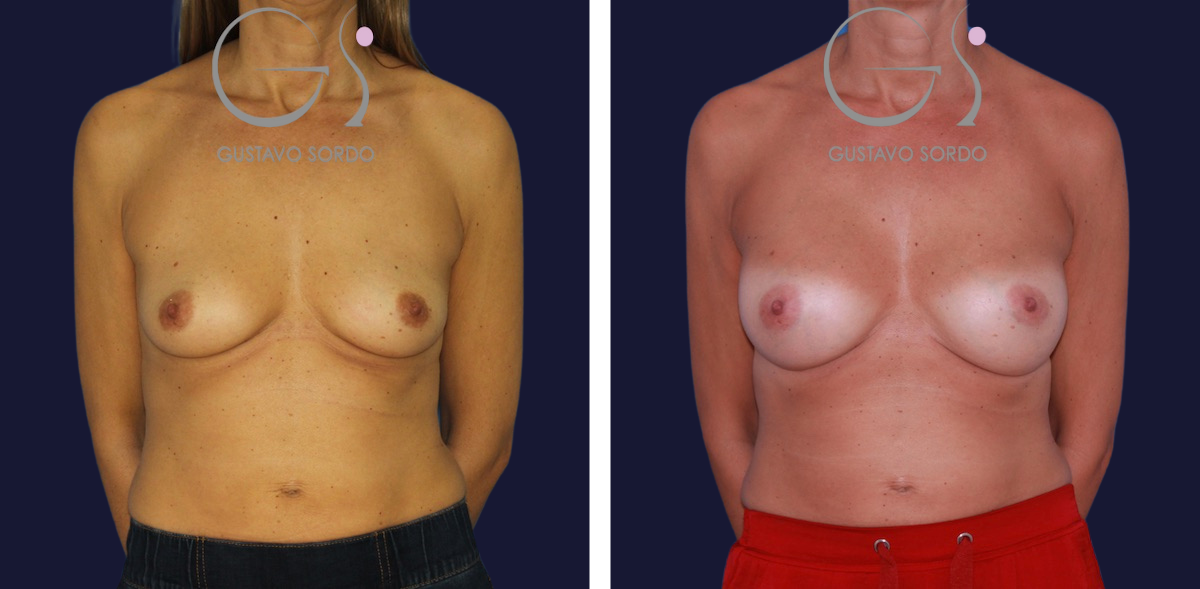
“Implants must be changed every 10 years”
This is also not true . A few years ago, it was thought that after 10 years, the risk of implant rupture increased exponentially, so replacement was recommended. Today, this is unthinkable, since procedures use prostheses made with highly cohesive gel, a material with a lifespan of 25 or even 30 years.
However, if the patient feels any discomfort with her implants, she should go for a check-up with her plastic surgeon, regardless of how many years have passed since her operation.
“With breast implants, X-rays of the area cannot be taken”
This belief was based on the idea that X-rays could affect the composition of the implants . Therefore, women who had undergone breast augmentation were not allowed to have X-rays, ultrasounds , mammograms, or MRIs. Today we know this is completely false. What these women should do is inform the radiologist before undergoing the test so they can monitor the pressure the machine will apply to the area and take the necessary precautions.
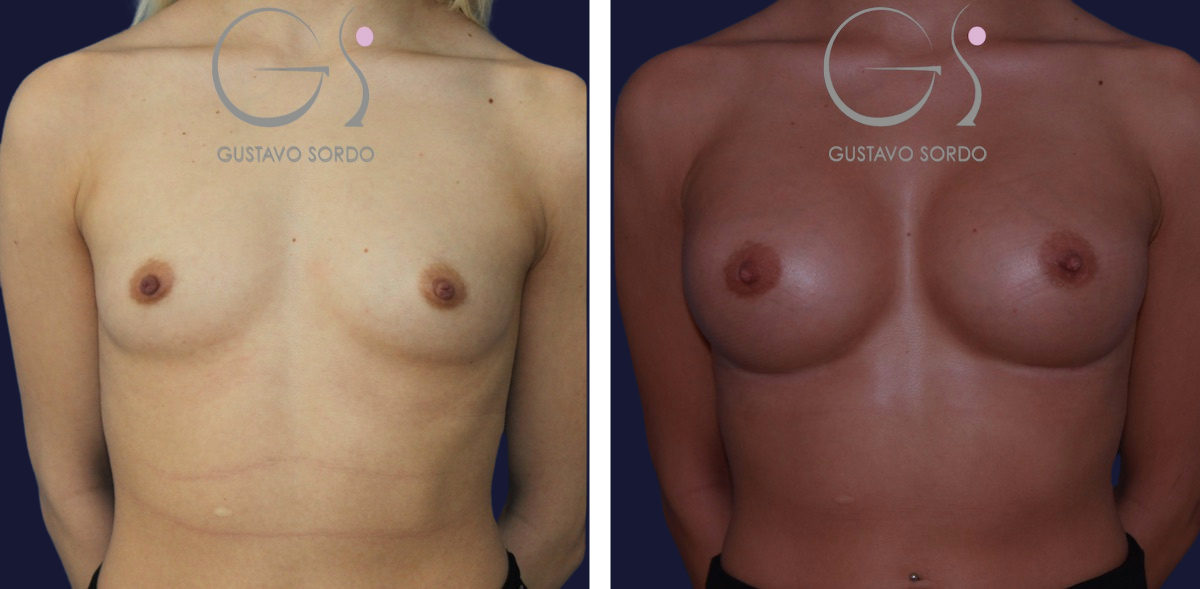
“Women with breast implants cannot breastfeed”
This is completely false . Breast augmentation, like breast reduction, is not incompatible with breastfeeding . It is true that if the surgery is performed through the areola, there is a possibility of cysts forming in the ducts that carry milk from the mammary gland to the nipples. For this reason, at Dr. Sordo's clinic, we avoid manipulating the mammary gland by making the incision in the inframammary fold to insert the implant. This breast augmentation technique is perfectly compatible with breastfeeding.
So, if you are thinking about undergoing breast augmentation, do not hesitate and go to a health centre that offers you all the guarantees and where the best professionals in the sector work. Only in this way will you be sure of having quality breast implants and the most appropriate placement of them.
We've added three myths we hear almost daily in our practice. The first: "They need to be replaced every ten years ." False; implants don't expire. They're replaced for a reason—rupture, symptomatic capsular contracture, sagging, or a desire for a change—and until that happens, follow-up with a check-up and imaging test is necessary. The second: "The body can reject them ." There's no immune rejection like in a transplant; what exists is a capsule of tissue around the implant, normal and generally thin, which only causes problems if it contracts.
And the third, perhaps the most widespread, misconception: "You can't breastfeed with implants ." You can, and the surgical approach matters: the inframammary fold incision , which is the one we prefer, doesn't penetrate the mammary gland or ducts. One more point, since we're discussing common misconceptions: it's also not true that implants prevent radiological monitoring. Placed in the subfascial or submuscular plane, they lie behind the gland, and the breast can be examined normally using displacement maneuvers, ultrasound, or MRI.
Continue reading
Dr. Gustavo Sordo
Specialist in Plastic, Aesthetic and Reconstructive Surgery. Member No. 282858125.
Content clinically reviewed by Dr. Gustavo Sordo. Last review: October 7, 2026.