Home » Before and After Cosmetic Surgery » Before and After Rhinoplasty
When the nose has already been operated on, here we explain secondary rhinoplasty with rib cartilage.

A second operation on a nose that has already been operated on is another surgery: longer, more difficult and with a different plan.
Secondary rhinoplasty
Before and after
Secondary rhinoplasty (or revision rhinoplasty) is surgery performed on a nose that has already been operated on previously, when the result did not meet the patient's expectations, a deformity appeared over time, or a functional problem arose in breathing.
It's a different type of surgery than primary rhinoplasty because it starts from a different premise: the nose has already been altered, and the patient's own cartilage is usually weakened, poorly positioned, or simply no longer exists because it was used in the first procedure. In primary rhinoplasty, it's usually enough to reshape the cartilage the patient already has. In revision rhinoplasty, that cartilage is almost never sufficient.
Therefore, in the vast majority of secondary rhinoplasty cases, the most reliable and lasting solution involves reconstructing the nose with a cartilage graft from the patient's own body. The surgeon can take cartilage from a rib to use as a reinforcing material: a new framework to restore both the shape and breathing function of the nose.
All photos are of real patients who underwent surgery at the clinic. They are unretouched and shown in profile, which best displays the back and tip of the ear. Each case link to its full profile, including other views and the surgeon's commentary.
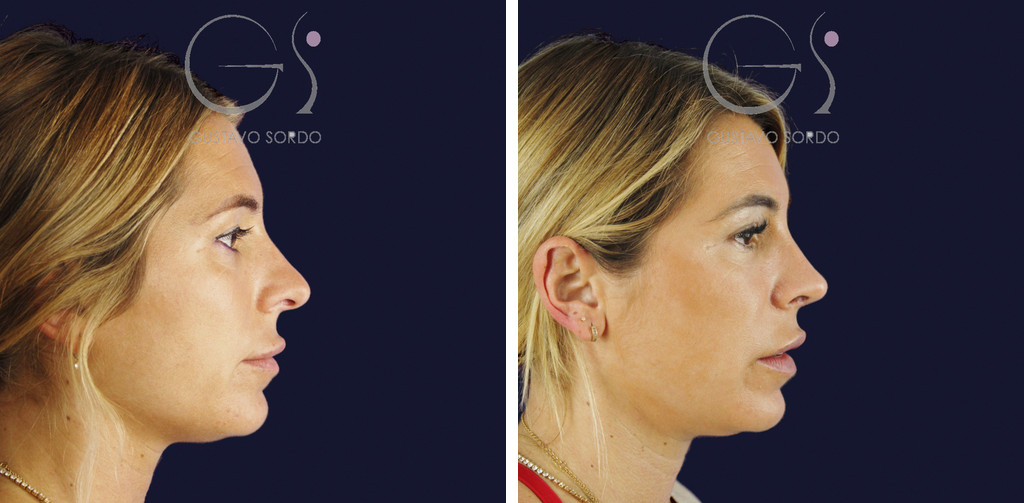
Secondary tip rhinoplasty without rib

Secondary rhinoplasty with rib graft
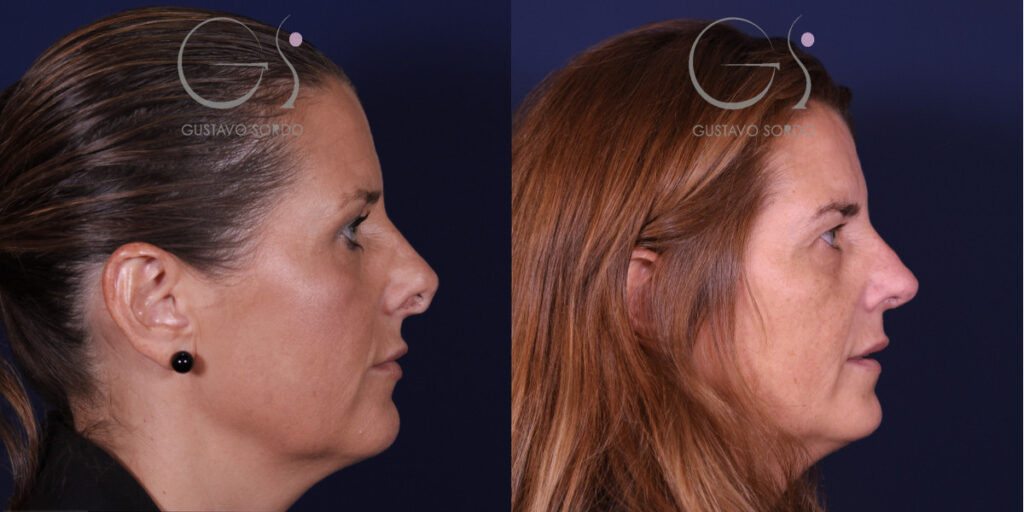
Result of a secondary rhinoplasty
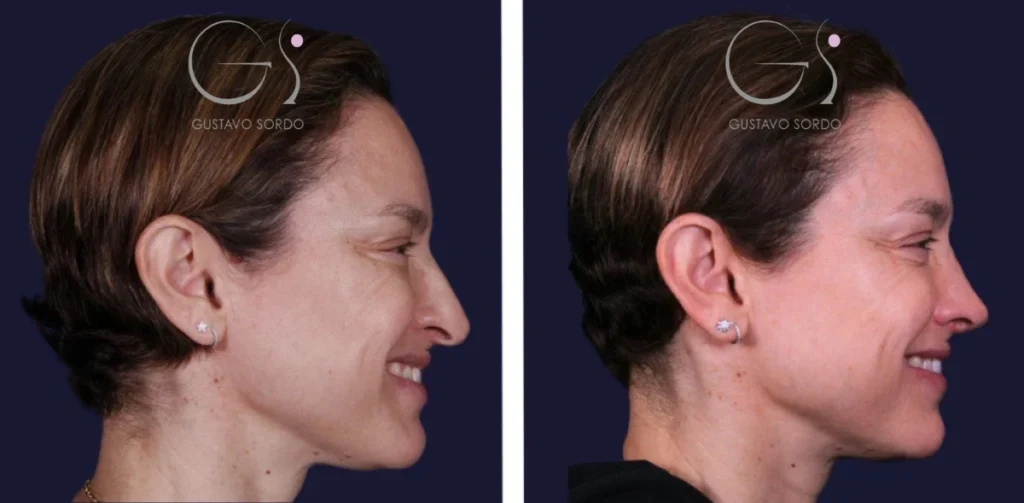
Secondary rhinoplasty
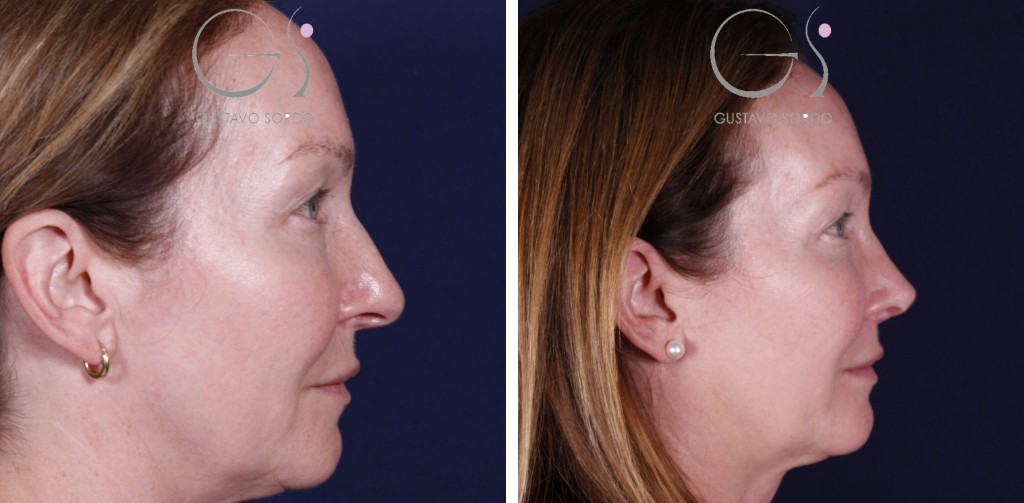
Frequently asked questions about secondary rhinoplasty
Why is rib grafting almost always needed in secondary rhinoplasty?
Because the nose is already devoid of cartilage. In the vast majority of secondary rhinoplasties, the patient has previously undergone a septoplasty, so the septal cartilage—the one best suited to shape the tip—was already used or removed in the first surgery.
In addition, the bridge has also been operated on before, which makes preservation rhinoplasty very difficult or simply unfeasible: in a revision, reconstruction is necessary, and reconstruction requires material.
The best material is costal cartilage, as it is the only one that provides both sufficient quantity and structural quality. We work with the oblique split method described by Dr. Eren Taştan, which allows us to obtain abundant, long, straight, and laminated grafts that are easier to shape; published series using this technique have not reported any warping problems in medium-term follow-up. With these grafts, we reconstruct the septum support, build up the apex, and restore the definition of the dorsum.
It's the same concept as in an ethnic or Latin rhinoplasty, or in any augmentation rhinoplasty: when you have to add, you need material, and that material is what gives definition, support and structure.
How long do you have to wait after the first surgery before you can have another operation?
It depends on each individual case: it's necessary that the inflammation and tissues from the first procedure have fully stabilized. We assess this during a consultation, reviewing your medical history and the current condition of your nose.
When will the final result be visible?
As with any rhinoplasty, the result continues to evolve for several months. In secondary surgery, using previously operated tissue, the refinement process may be somewhat slower, but the final shape is usually visible after a year.
Is the scar where the rib was removed noticeable?
The incision to obtain the graft is minimal and is closed with a laser, which makes the mark practically invisible.
Other before and afters that may interest you

Straight / Natural

Columbine
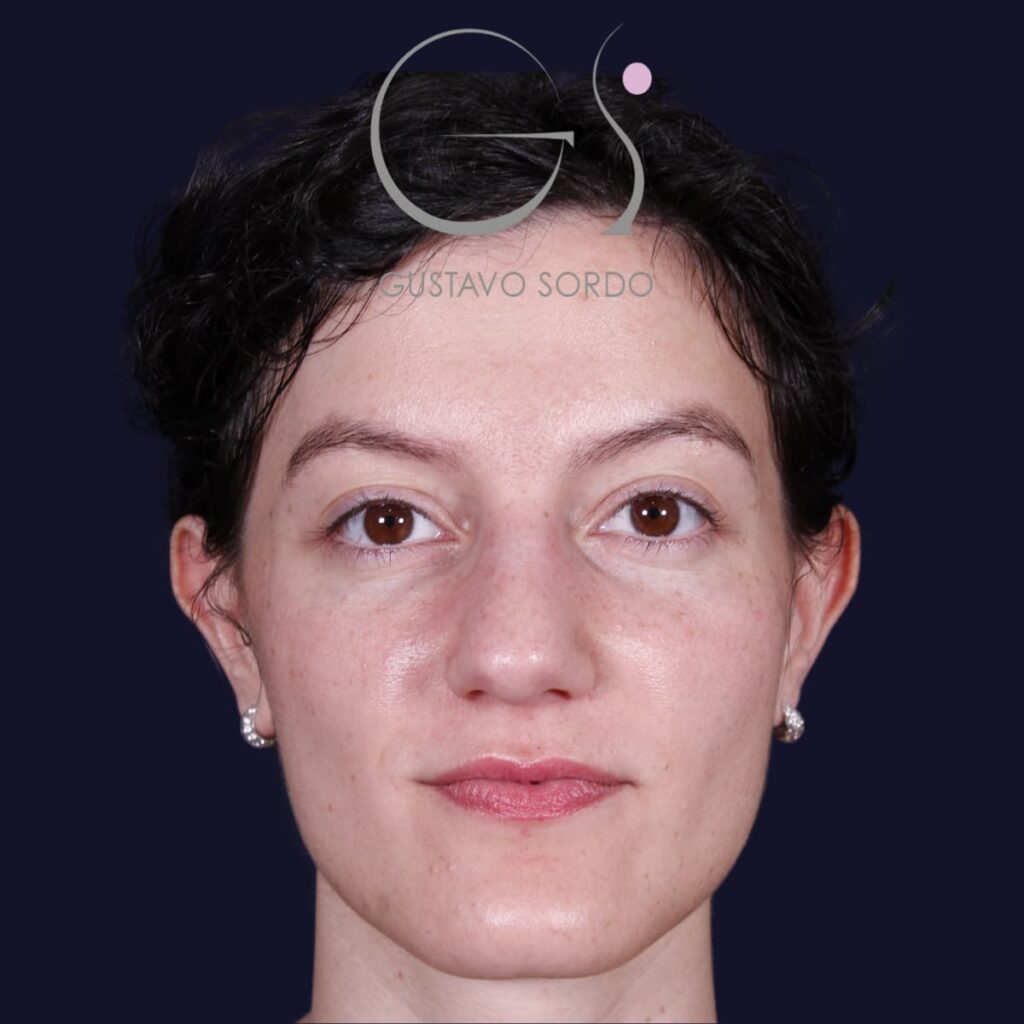
Bulbous

Deviated Septum
Before you compare yourself to this photo
Re-operating on a nose is not simply repeating the first surgery: it involves working on previously operated tissue, and often requires replacing cartilage for added support. This is called secondary rhinoplasty.
Do you want to know if this can be done in your case?
The first consultation is with Dr. Sordo, either at the Chamberí clinic or via video consultation. You'll leave knowing if you're a candidate, which technique is right for you, and how much it costs.
Dr. Gustavo Sordo · Member No. 282858125 · Plastic, Aesthetic and Reconstructive Surgery · Madrid