PIP Prostheses: Are They Ideal? Pros and Cons

Updated on • Reviewed by Dr. Gustavo Sordo, plastic surgeon
What are pip prostheses?
PIP (Poly Implant Prothèse) prostheses were breast implants made with industrial-grade silicone, instead of medical-grade silicone, resulting in substandard products and considerable risks for patients. This case, which affected thousands of women around the world, highlighted the serious consequences of choosing low-quality implants.
To see what the surgery is like step by step, with cases and price (from €4.500), visit second breast surgery.
The MHRA, similar to the Spanish AEMPS, has analysed the composition of PIP prostheses and reached a series of conclusions:
PIP implants were a case of industrial fraud—the gel was unsuitable for medical use and rupture rates were far higher than normal—and the recommendation remains the same: if you have PIP implants, they should be removed even if you don't notice anything, and it's advisable to have an imaging test to assess the condition of the implant and the axillary lymph nodes. This is precisely why we insist that every patient keep the implant card with the brand, model, and serial number.
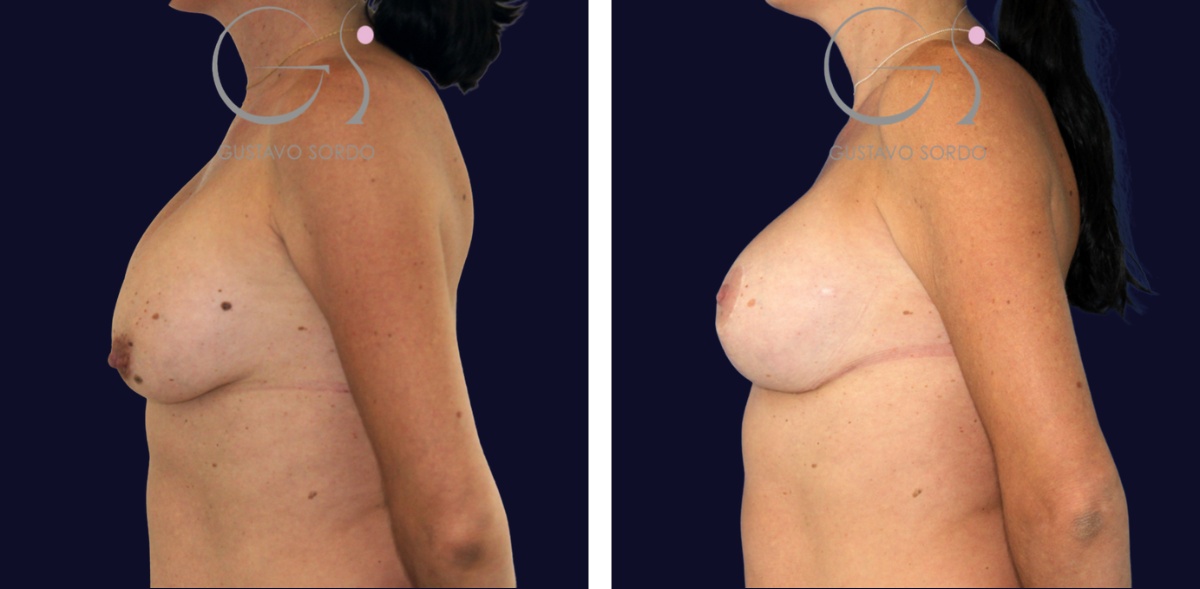
When we perform the replacement, we take the opportunity to reassess the entire procedure: evaluating the plane according to the pinch test, choosing the appropriate shell—micropolyurethane if there has been capsular contracture—and reconstructing the inframammary fold if it has descended. And if the patient prefers not to have implants again, we create an autologous prosthesis using the Ribeiro technique and a prepectoral absorbable Vicryl mesh, with a small amount of lipofilling to prevent the upper pole from being left empty.
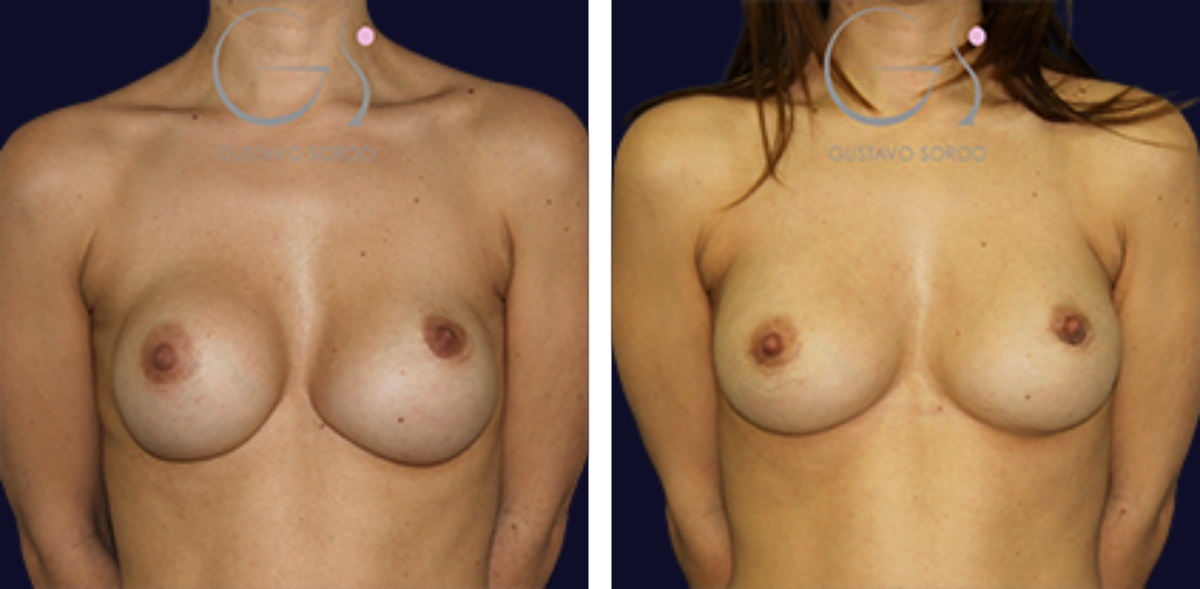
Problems associated with PIP prostheses
The PIP scandal led to an in-depth investigation by health agencies such as the UK's MHRA and Spain's AEMPS . These are the most relevant findings regarding its risks:
- increased risk of extracapsular rupture:
PIP prostheses have 2 to 6 times more likely to break compared to other quality brands. - High breakage rate:
Its breakage percentage is 3,1% in 10 years, in front of 0,5-1,1% high-end implants. - Common local problems:
Patients with PIP implants are 3 to 5 times more likely to experience inflammation, redness and local discomfort. - No increase in serious risks:
Fortunately, these prostheses have not been shown to increase the risk of serious problems such as hematomas, capsular contracture or cancer.
The breast simulator has real cases sorted by breast type and examples of simulation versus real result.
Conclusion
In summary: these fraudulent implants don't appear to cause more harm than their high rupture rate. Fortunately, they don't seem to cause illness in patients, although they do exhibit unacceptable quality with rupture rates 2 to 6 times higher. Finally, we would like to point out that we have NEVER used PIP implants , limiting ourselves to the brands Mentor and Natrelle, both approved by the FDA and the European Union (CE marking), and both well-established and prestigious in the field of cosmetic surgery. We would also like to emphasize that cutting costs by selecting an implant of dubious quality is clearly a mistake.
For more information about breast augmentation in Madrid, contact Dr. Gustavo Sordo, a plastic surgeon in Madrid.
Continue reading
Dr. Gustavo Sordo
Specialist in Plastic, Aesthetic and Reconstructive Surgery. Member No. 282858125.
Content clinically reviewed by Dr. Gustavo Sordo. Last review: October 7, 2026.