What anesthesia is used in the “24h Recovery” breast augmentation operation?

Updated on • Reviewed by Dr. Gustavo Sordo, plastic surgeon
The type of anesthesia used in breast augmentation surgery with the "24h Recovery" technique is TIVA general anesthesia . This choice is due to the greater comfort and safety it provides for the patient.
Each case is assessed in consultation; the complete process, the cases and the price (from €6.400) are on the breast augmentation page.
We use it because it is the safest for our patients. In contrast, techniques using local anesthesia and sedation do not guarantee a secure airway and endanger the patient's safety and health (they are generally chosen to reduce costs).
Before the consultation, you can see real cases according to your breast type and compare the simulation with the result obtained.
Where does the 24h Recovery protocol come from?
The "24h Recovery" is not a trade name of the clinic: it is a protocol published by surgeon John B. Tebbetts in Plastic and Reconstructive Surgery in 2002, in two consecutive articles.
In their prospective series of 627 patients , 96% returned to their normal activities in less than 24 hours : raising their arms above their heads, carrying normal weight, and driving. And they did so without strong painkillers, drains, bandages, or special bras.
What makes this postoperative period possible is not a device or the anesthesia alone, but six requirements within the operating room that Tebbetts explicitly lists: zero tolerance for bleeding, however slight; a no-touch technique on the periosteum; elimination of all blind dissection; dissection always performed under direct vision; specific instruments; and precise management of muscle relaxation. Total Intravenous Anesthesia (TIVA) fits precisely into this framework: it allows for the surgical control that the protocol demands and a clean awakening, without nausea or anesthetic hangover.
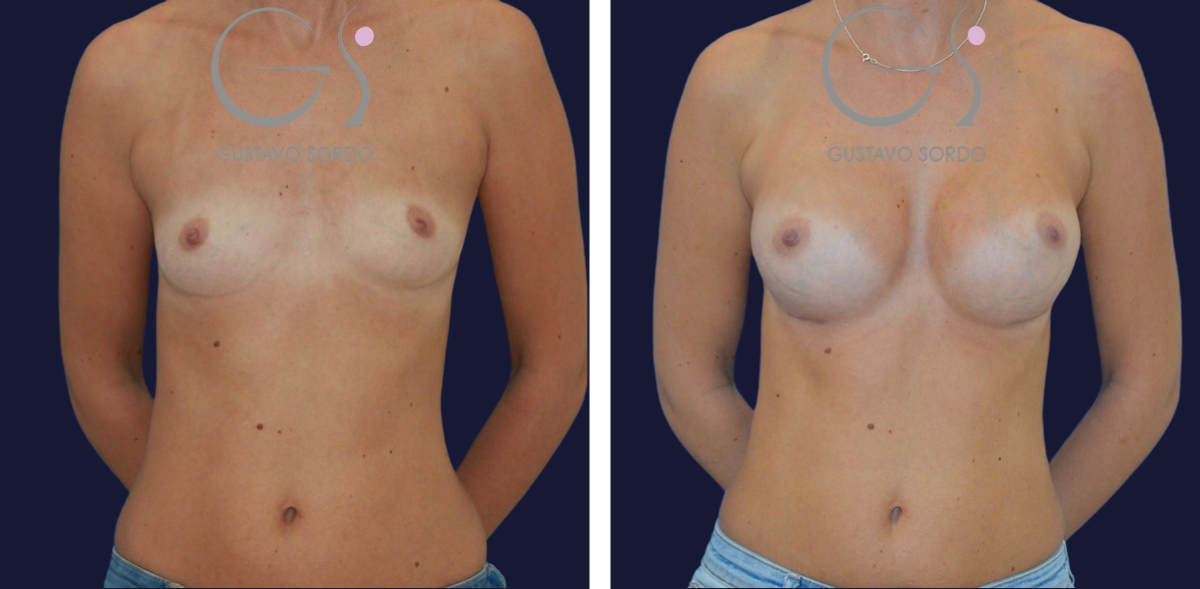
Why do we use general anesthesia for breast augmentation?
General anesthesia aims to ensure the patient is completely asleep and remains so throughout the entire procedure . For this to be successful, it is advisable that the clinic have an anesthesiologist dedicated to the patient in the operating room during breast augmentation surgery.
The anesthesiologist is a medical professional who has received specialized training in this type of activity.
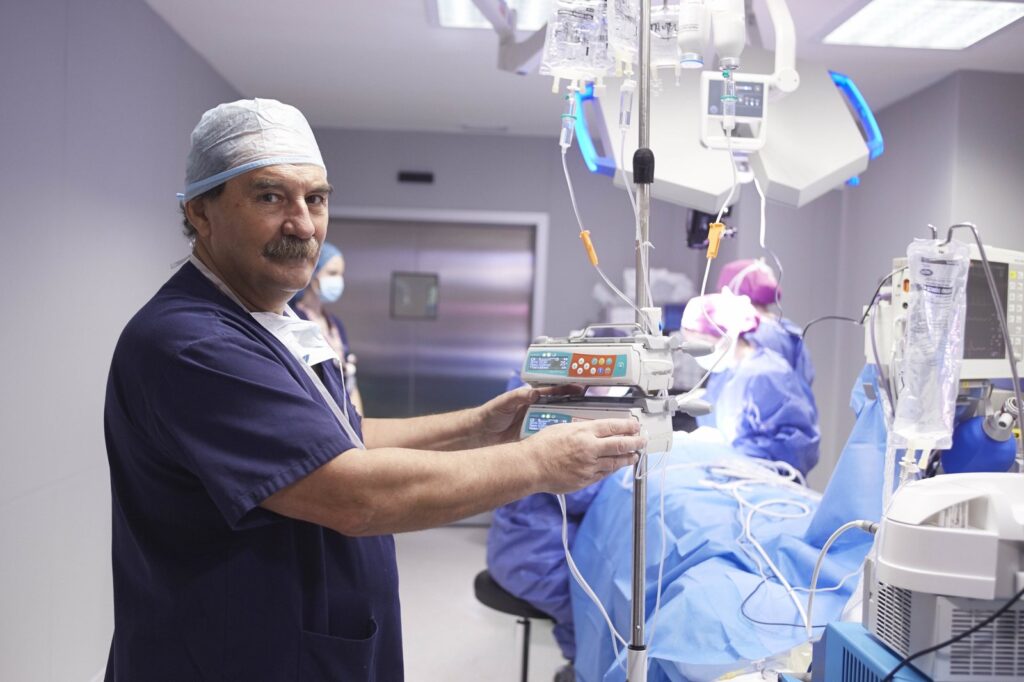
The main advantage of using general anesthesia is that the person undergoing the procedure has no awareness or memory of the surgical intervention , the patient's airway is secured, and work can be done on the tissues with the muscles relaxed.
The triad known as the “ABCs” of anesthesia refers to the importance of keeping the three words in mind:
“A”: Air: quality of the air breathed by the patient.
“B”: Breath: breathing, quantity, frequency and depth of breathing.
“C”: Circulation: maintain blood circulation in perfect conditions (blood pressure, etc.).
The best way to maintain the “ABC” is through general anesthesia.
It's worth explaining what's behind the concept of 24h recovery , because it's not just a slogan: it's the result of operating with a technique that respects the tissue. If the implant is placed without cutting the pectoral muscle and without destroying the breast ligaments, postoperative pain is significantly less, and the patient can move her arms the same day. This is where the Preservé technique comes in , which we perform under local anesthesia and sedation . The space is created with a balloon, preserving the circummammary ligament and Cooper's ligaments (Pittman et al., 2026, Aesthet Surg J ).
With this approach, the patient goes home the same day and has two options: stay in a day hospital room until she feels comfortable, or go directly home without being admitted. In augmentations where we do use a submuscular plane—because the pinch of the upper pole is fine and coverage is necessary—general anesthesia remains the usual option, and the immediate postoperative period is somewhat more uncomfortable, precisely because of the work on the muscle.
Anesthesia in breast augmentation: composition and objectives
By using general anesthesia, medical personnel primarily pursue the following objectives:
- Minimize pain that a person may suffer during breast augmentation surgery.
- Relieve anxiety that is caused by undergoing a surgical operation.
- relax muscles, which allows the medical team to work better.
Anesthesia is administered before, during, and after the "24h Recovery" breast augmentation surgery . In addition to general anesthesia, the patient receives local anesthesia in the breast incision area , so that upon waking and for the following hours, the area will be numb for the first few hours.
Thus, before a person enters the operating room, multiple studies are performed on their anatomy and health status. Only in this way can professionals like Dr. Gustavo Sordo – a pioneer of this type of breast augmentation surgery in Spain – ensure that the patient remains within normal parameters while undergoing this procedure.
If you have any questions about the “24h Recovery” breast enlargement operation, please contact Dr. Gustavo Sordo, who will assist you personally without obligation.
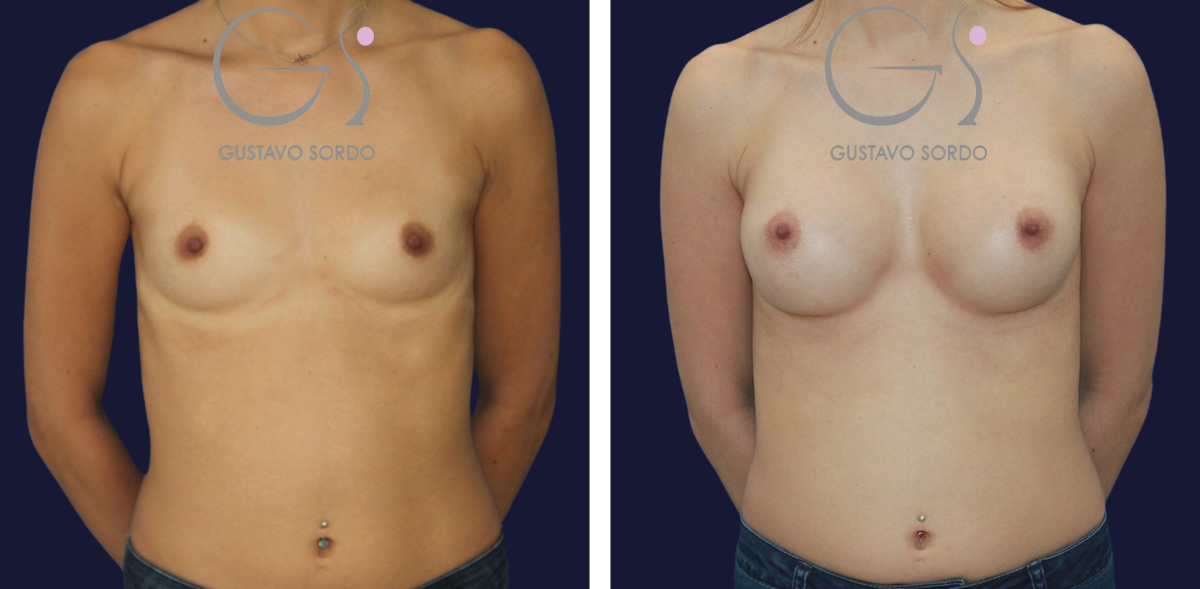
Continue reading
Dr. Gustavo Sordo
Specialist in Plastic, Aesthetic and Reconstructive Surgery. Member No. 282858125.
Content clinically reviewed by Dr. Gustavo Sordo. Last review: October 12, 2026.