Is there a chance of rejection of breast implants?

Updated on • Reviewed by Dr. Gustavo Sordo, plastic surgeon
The probability of breast implant rejection is very low . It's a highly unlikely situation, but if it does occur, it can be resolved.
If this affects you, you can see how we address it and how much it costs on the breast augmentation page (from €6.400).
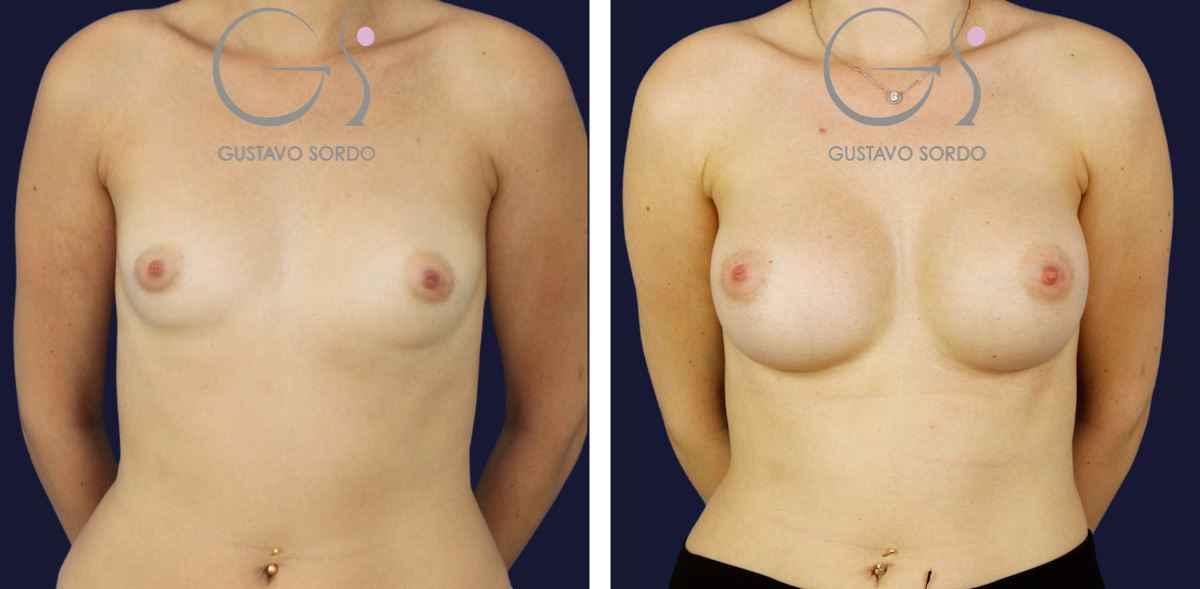
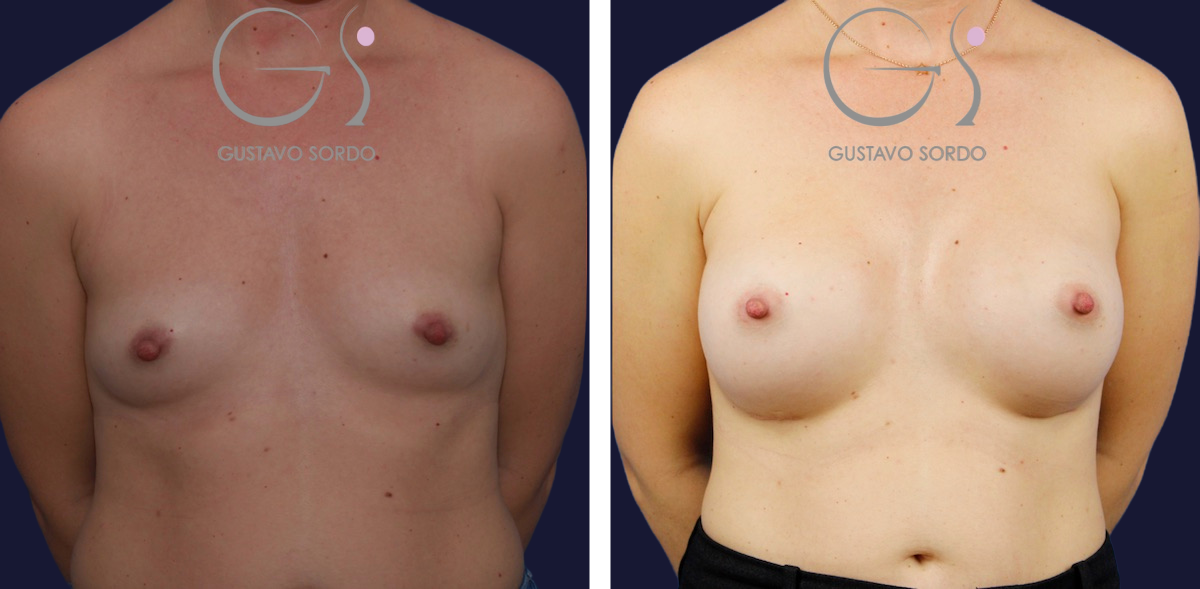
Before the consultation, you can see real cases according to your breast type and compare the simulation with the result obtained.
Under what circumstances do we talk about breast implant rejection?
Basically, we consider two circumstances when we talk about breast implant rejection:
1- That the patient develops an infection after the breast implant is placed. This is an extremely rare occurrence , but if it were to happen, the implant would be removed for a sufficient time to allow the tissues to heal and regenerate.
This forces the patient to remain without breast implants for a few months, until the germ that was causing the infection has been eliminated, at which point we can replace the breast implants.
If due diligence is exercised and the removal of the implant is not delayed, there will be no aesthetic consequences for the patient, who will have the same aesthetic result as the first time the implant was placed.
2- The patient presents with a seroma . A seroma is a collection of fluid around the prosthesis. Sometimes, the implant shell irritates the patient's tissues , and the tissues respond by producing fluid that accumulates around the implant. Often, this fluid can be drained in the office with a needle using ultrasound guidance, that is, puncturing the seroma while assisted by ultrasound.
This would eliminate the fluid, which is uncommon but can occur in rare cases. If, after these punctures and drainage, the seroma recurs several times and the patient experiences discomfort —which is highly unlikely —we would be forced, in an extreme case , to remove the implant for a period of time , similar to what happens when an infection develops, and then reinsert it once the problem has resolved.
Both are very rare situations that would force us to make temporary removals of the implants , until tissue regeneration occurs.
Therefore, the probability of breast implant rejection is very low , but even in unlikely cases, there is a solution.
Dr. Gustavo Sordo uses the highest quality breast implants available on the market. These are cohesive silicone gel implants , a material that guarantees that even if the implant is divided in two, its contents will not spill.
For more information about breast implants and breast augmentation surgery in Madrid , do not hesitate to contact Dr. Sordo.
It's important to clarify the term, because it generates a lot of anxiety: silicone implants aren't rejected like a transplanted organ; there's no immune reaction of that kind. What does occur is the body's natural response to a foreign material, which consists of forming a tissue capsule around it. This capsule is normal and in most cases is thin and flexible; the problem only arises when it thickens and contracts, which is what we call capsular contracture.
To reduce this risk, we carefully manage the technique—meticulous hemostasis, minimal implant manipulation, and a funnel insertion—and, in patients with a history of capsular contracture, we choose micropolyurethane shells , which prevent the capsule from forming a circular shape. And if, despite all these precautions, a contracture does occur, there is a surgical solution: capsulectomy with replacement and repositioning, or removal of the implant and creation of an autologous prosthesis using the Ribeiro technique and Vicryl mesh.
Continue reading
Dr. Gustavo Sordo
Specialist in Plastic, Aesthetic and Reconstructive Surgery. Member No. 282858125.
Content clinically reviewed by Dr. Gustavo Sordo. Last review: October 7, 2026.