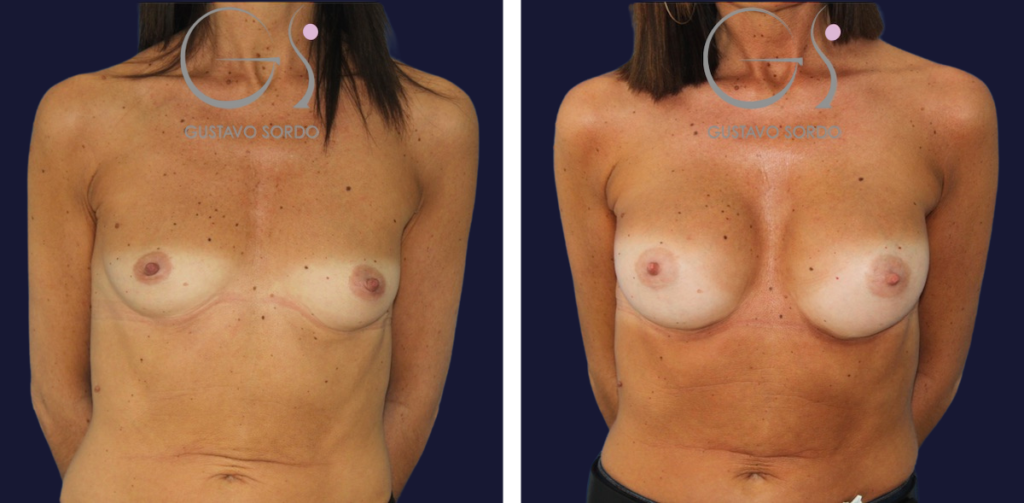
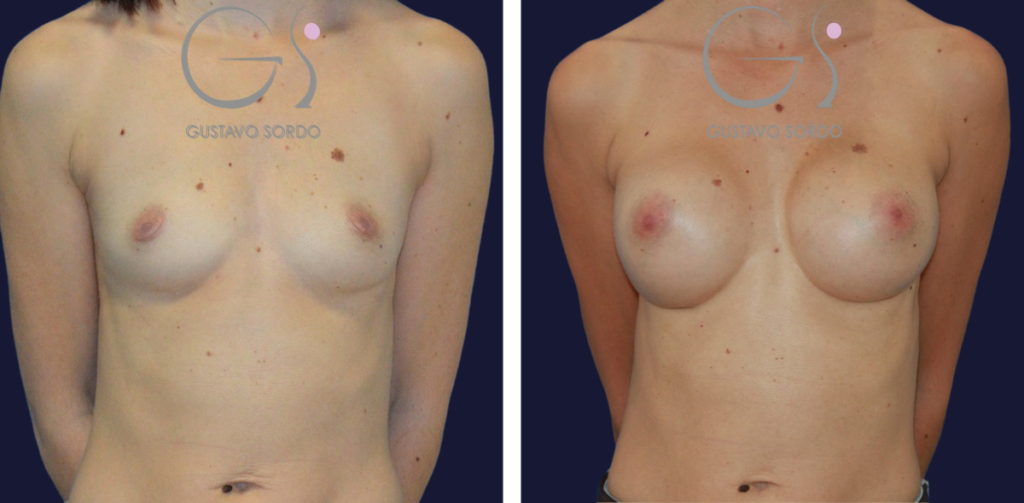
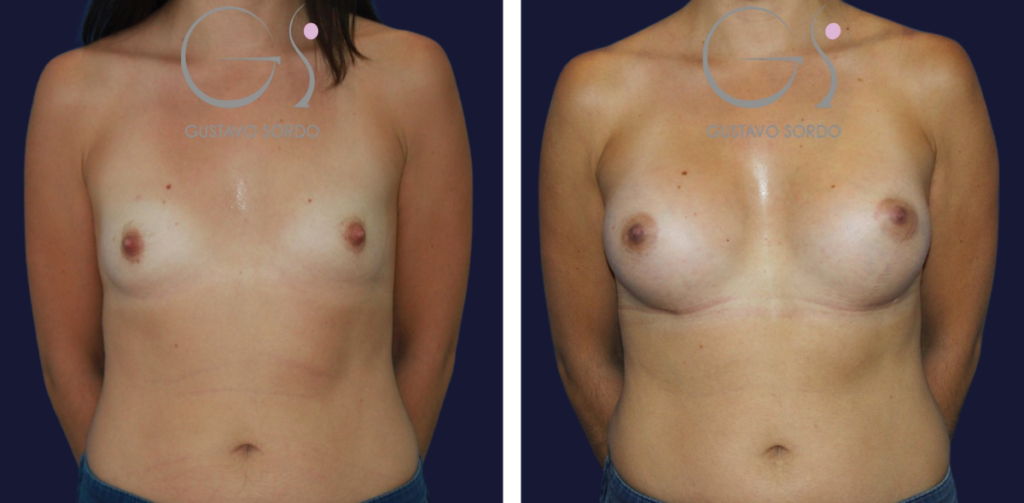
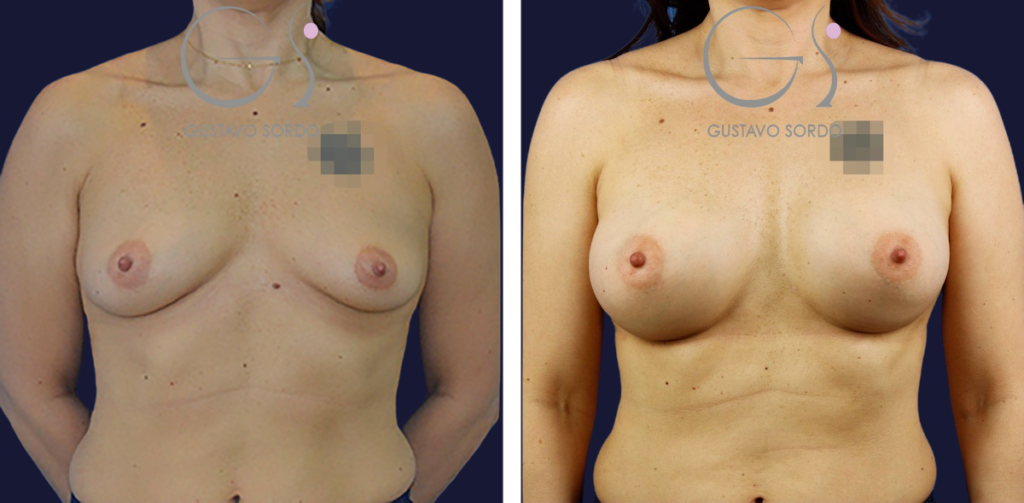
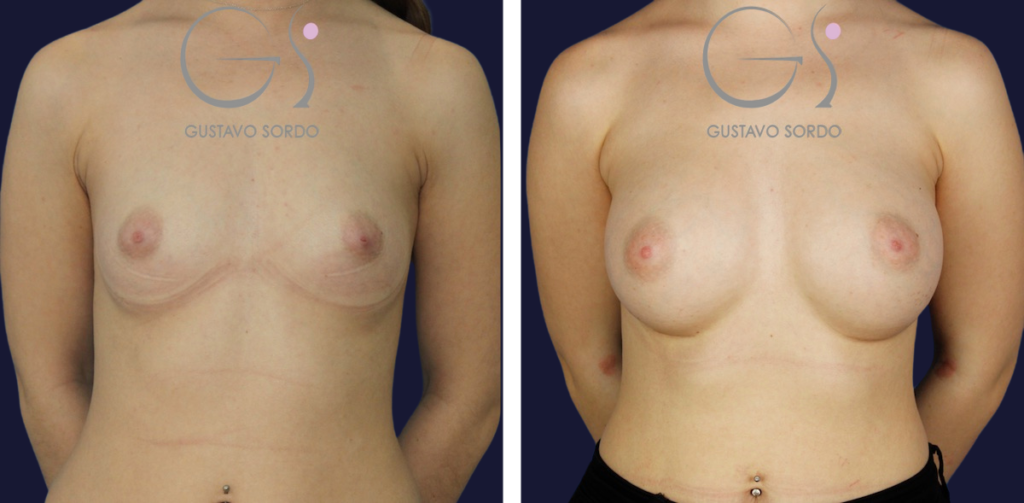
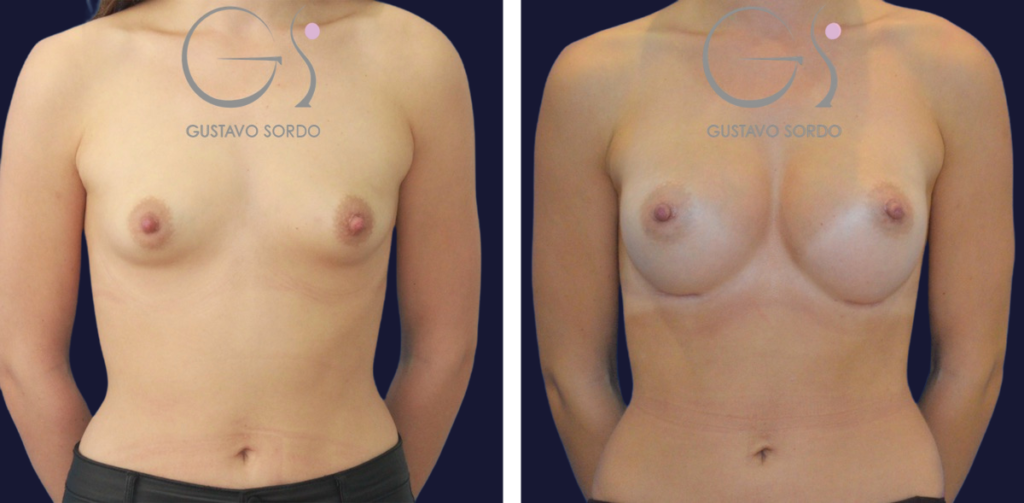
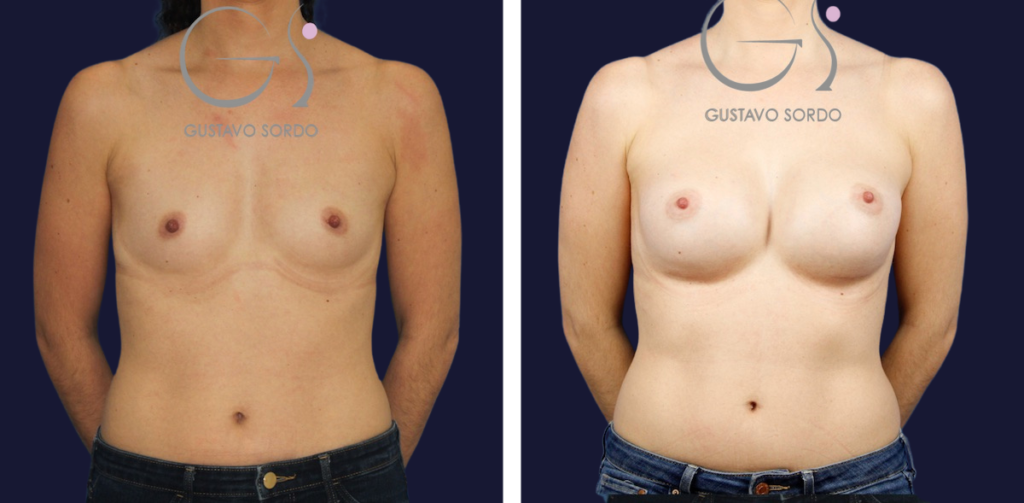
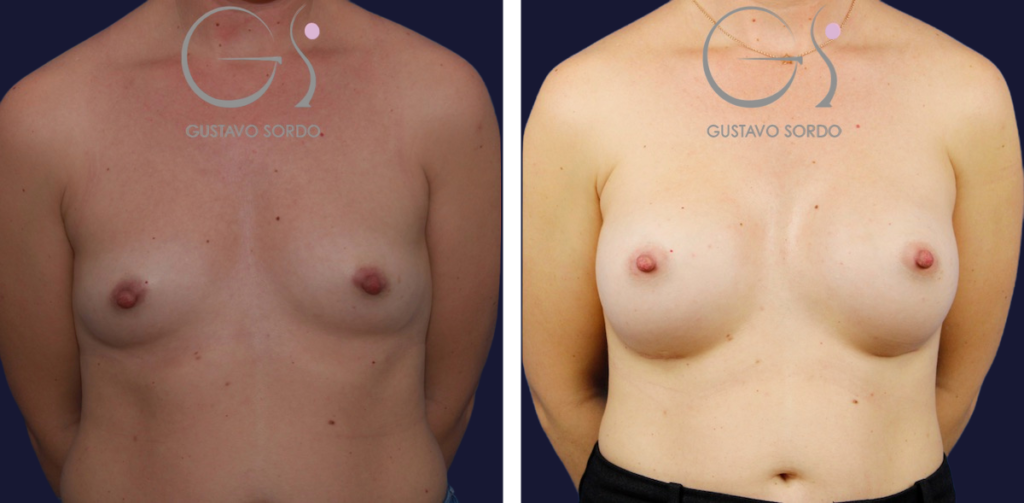
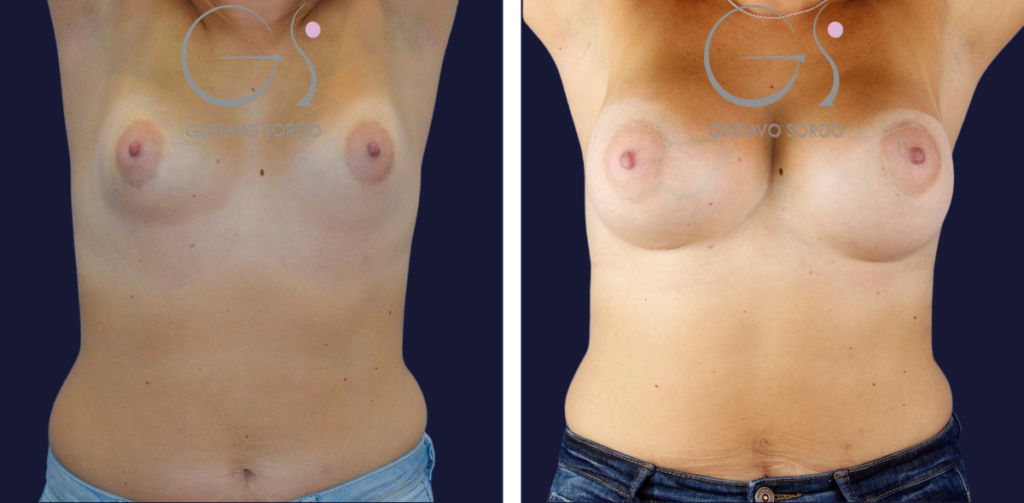
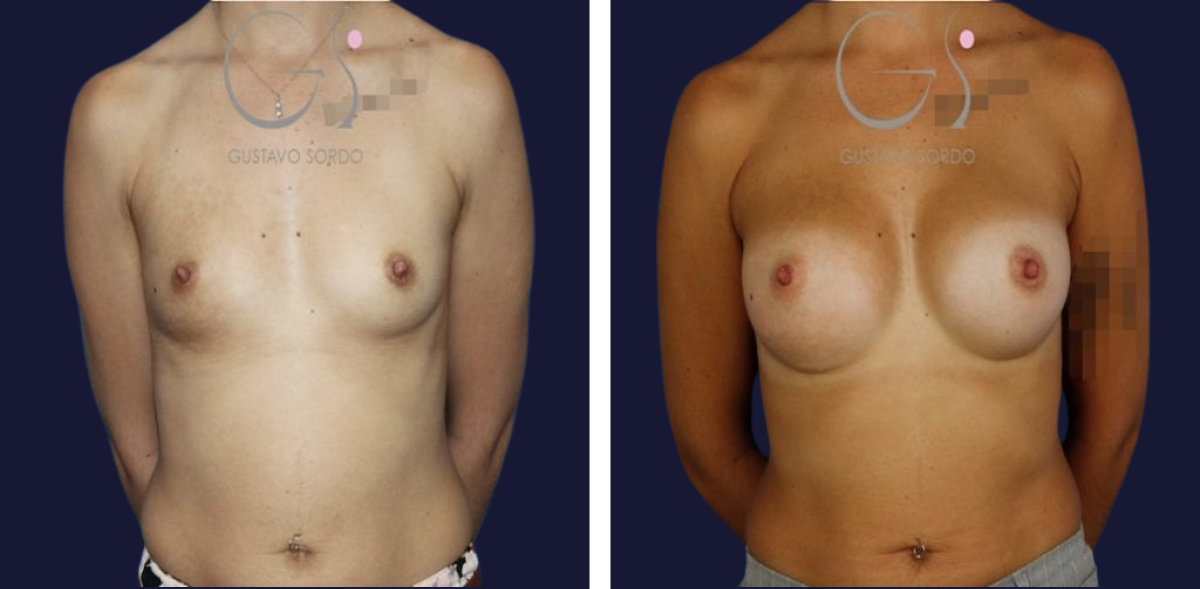
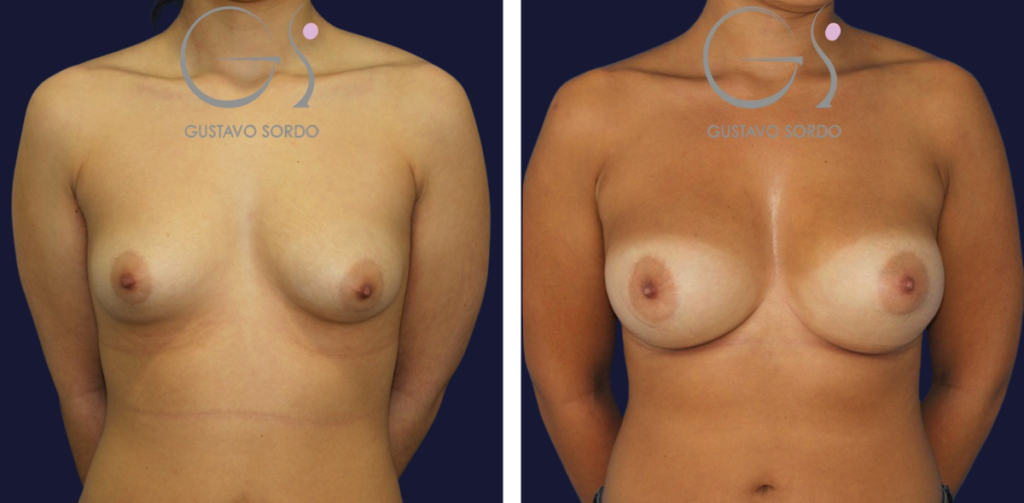
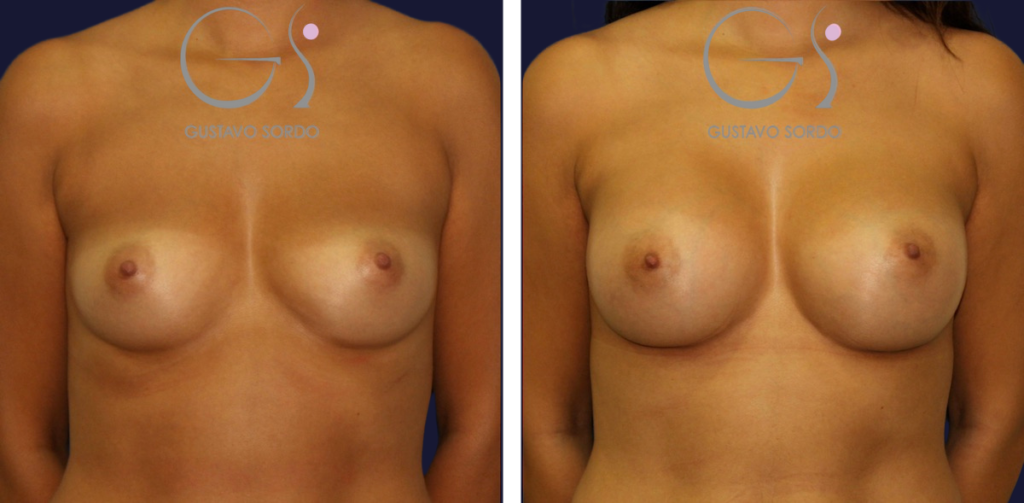
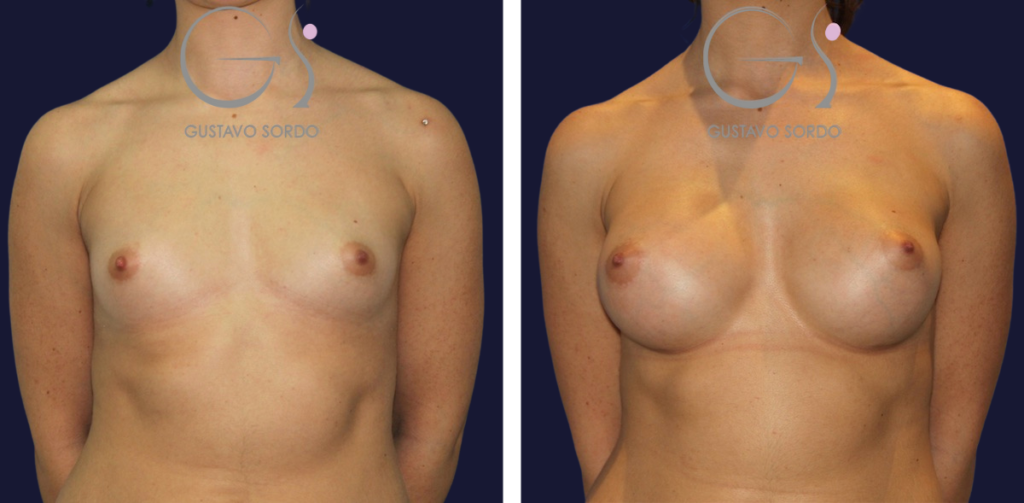
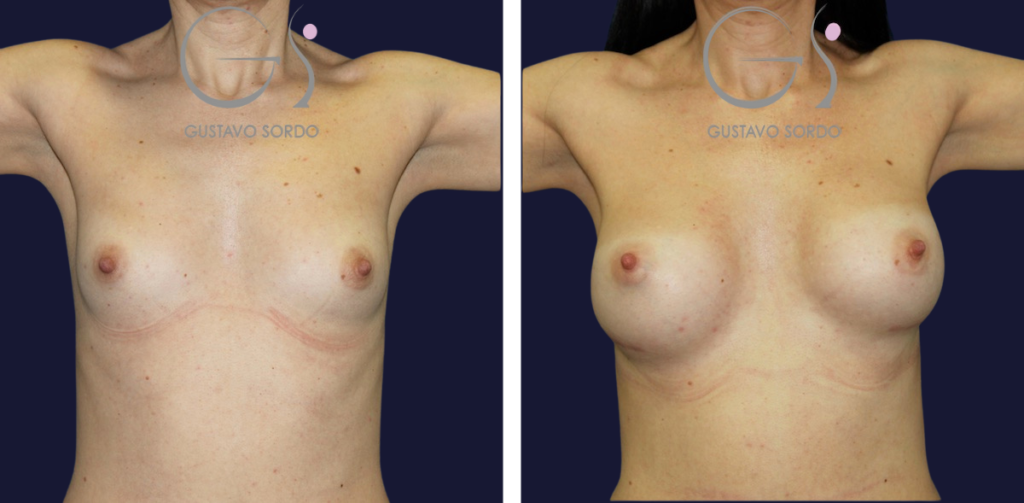
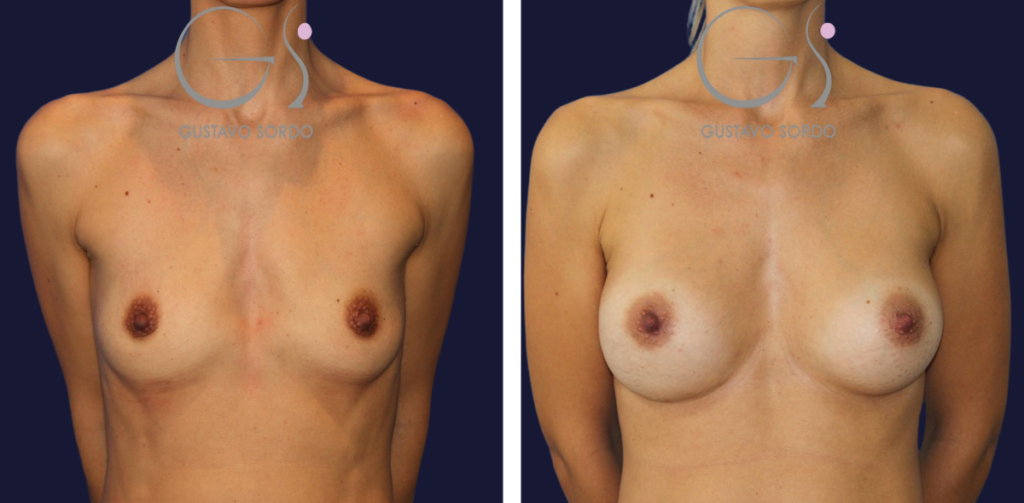
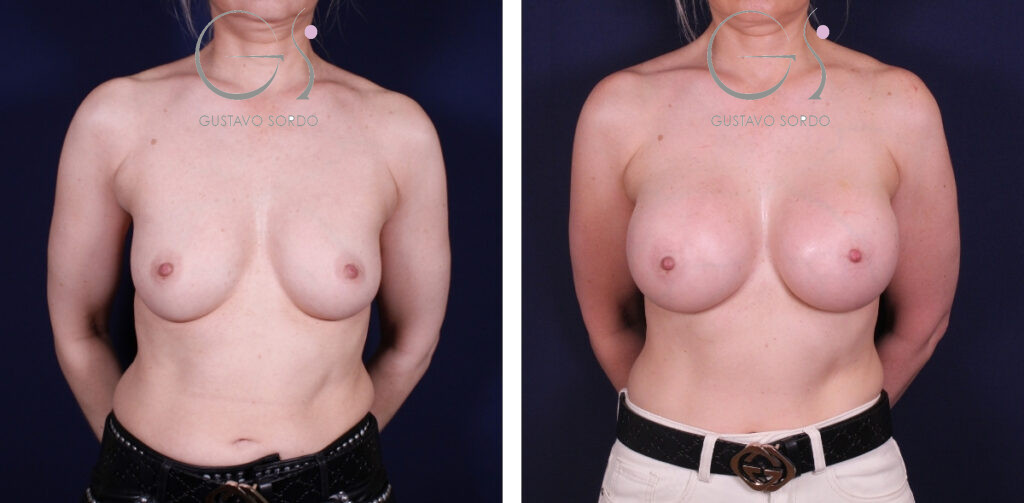
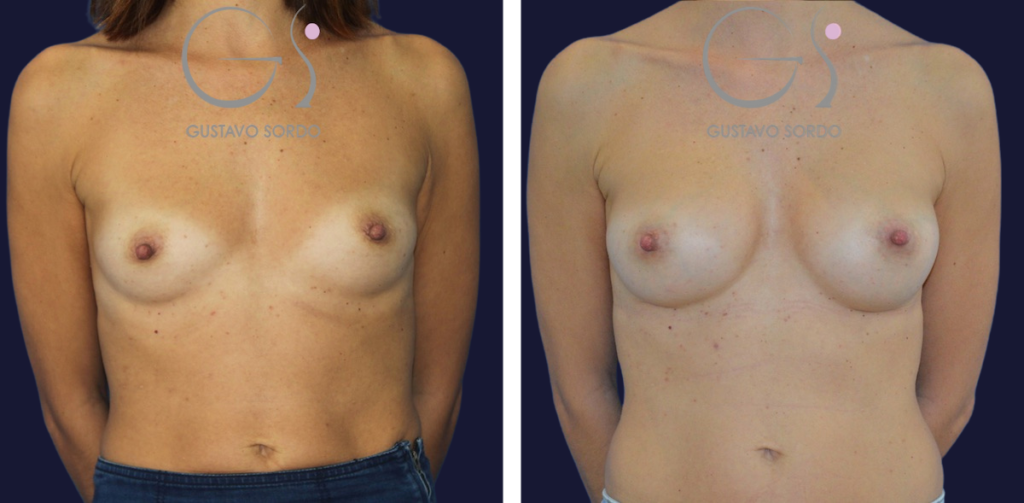
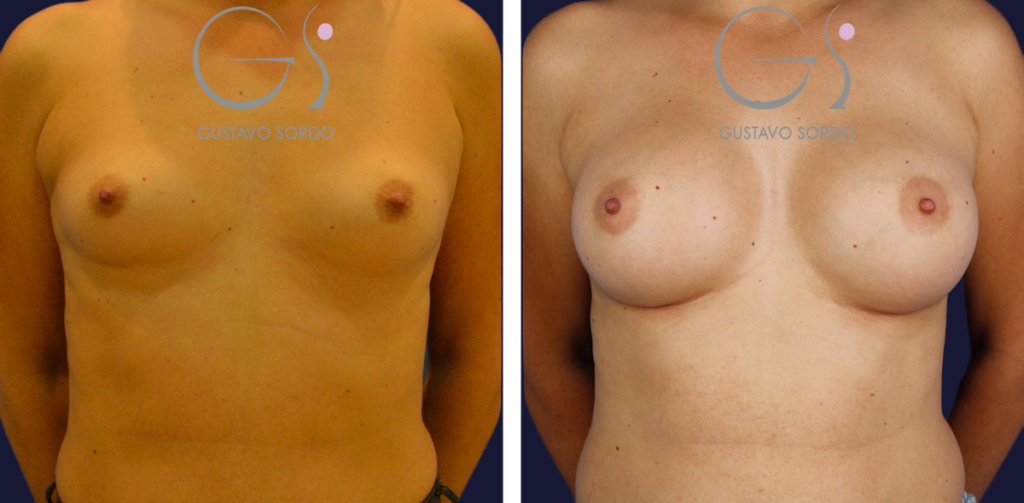
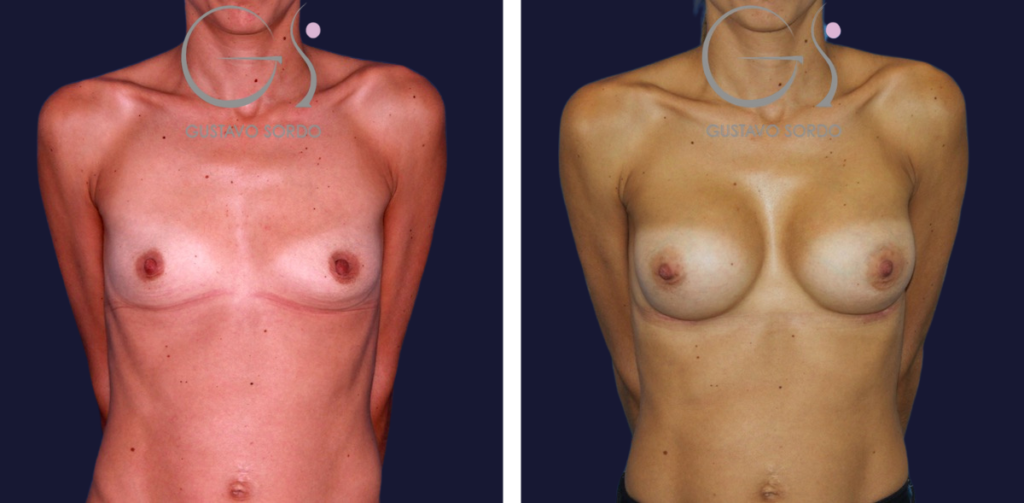
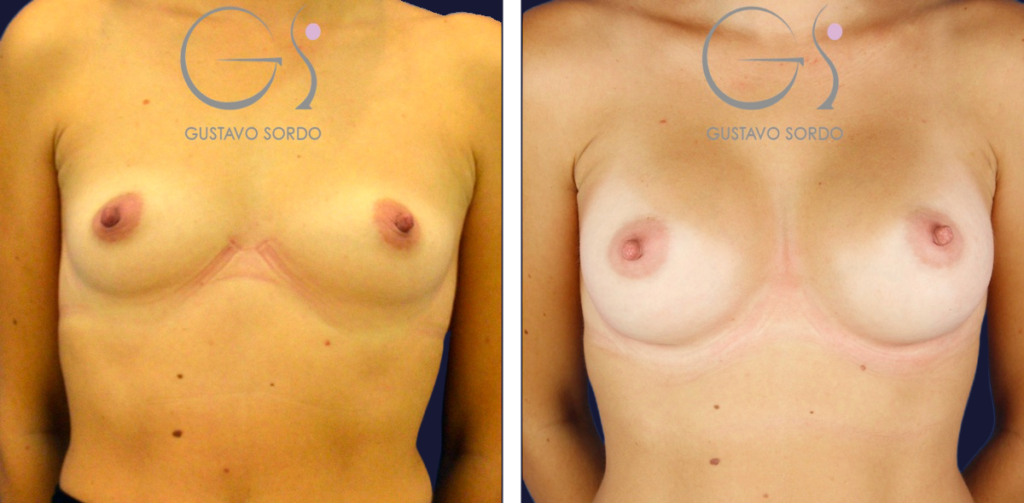
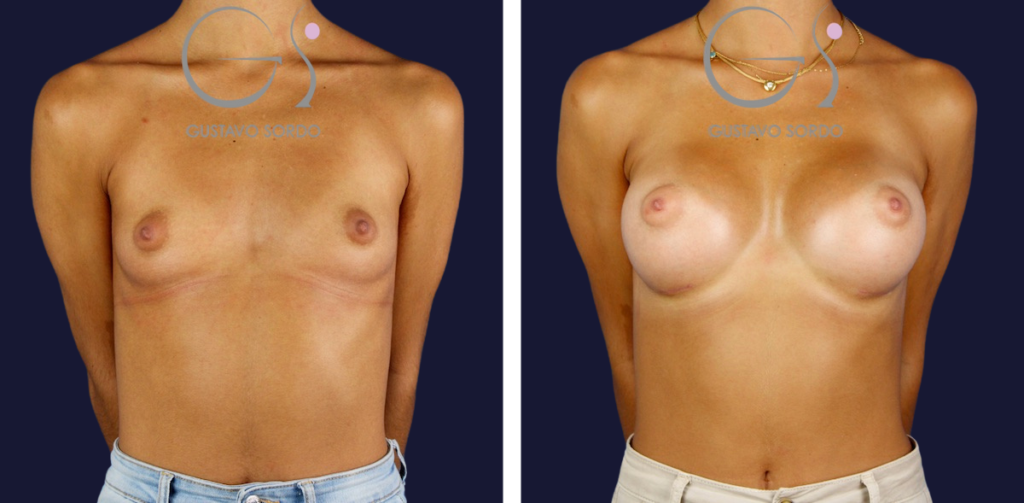
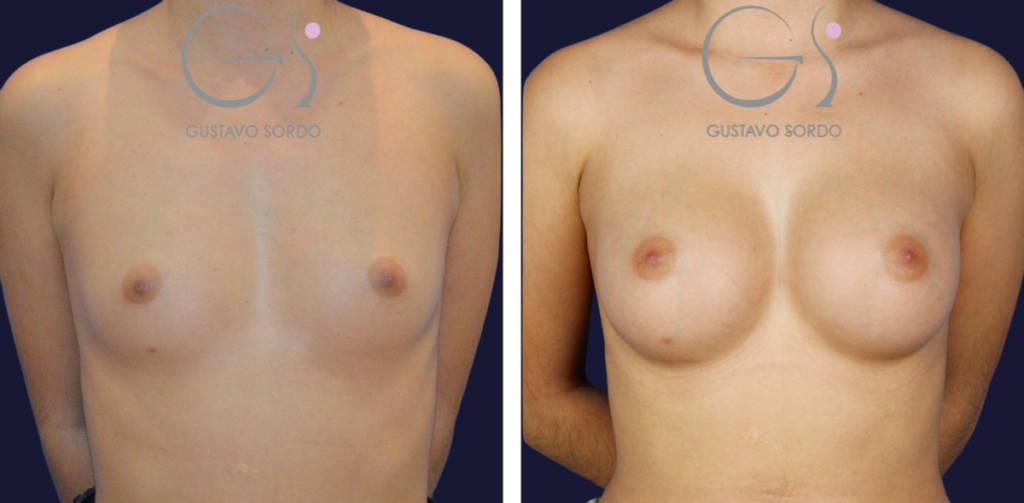
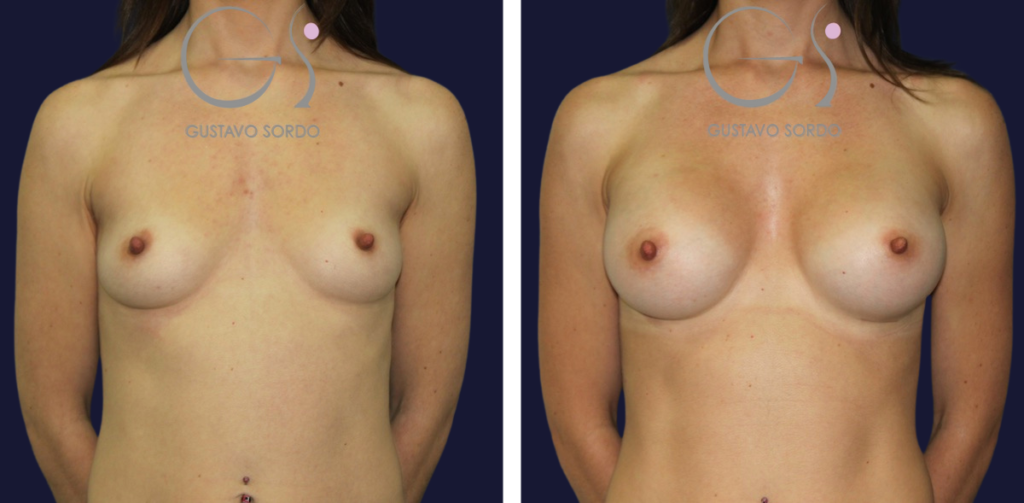
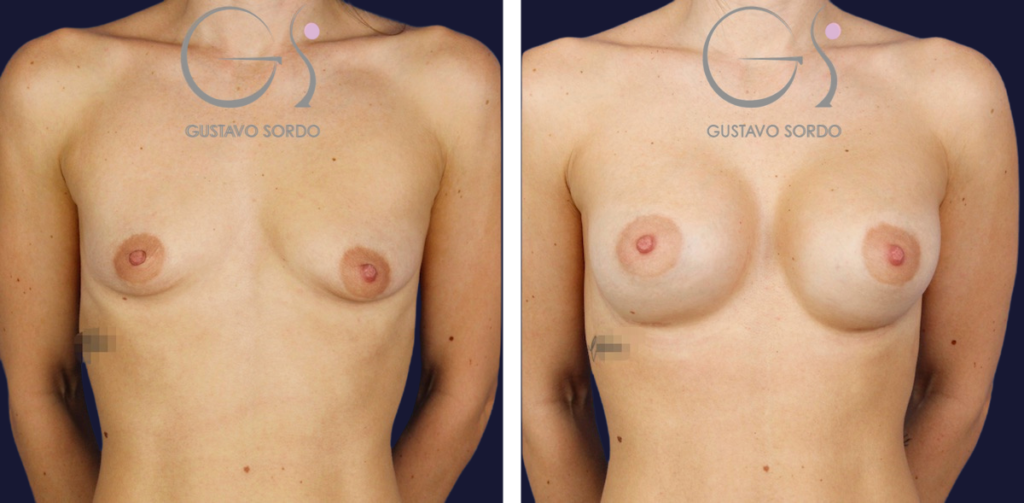
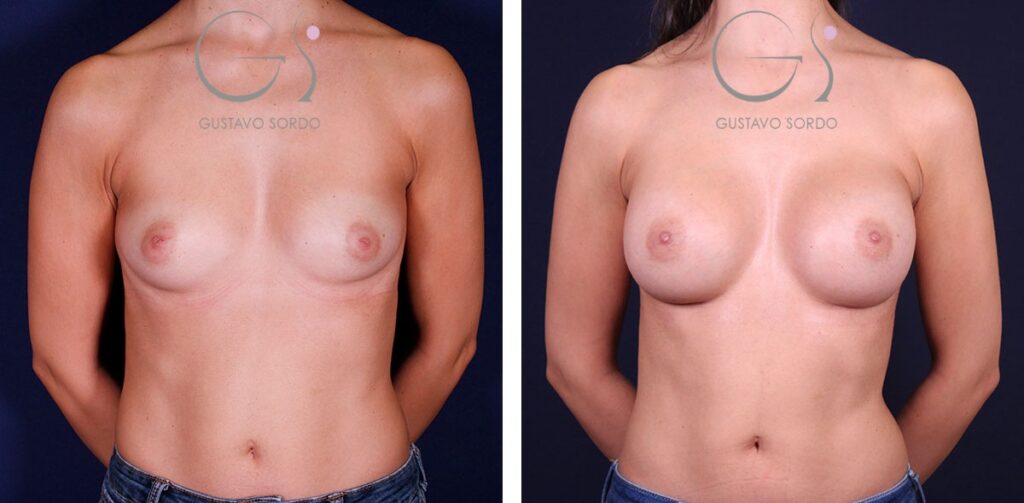
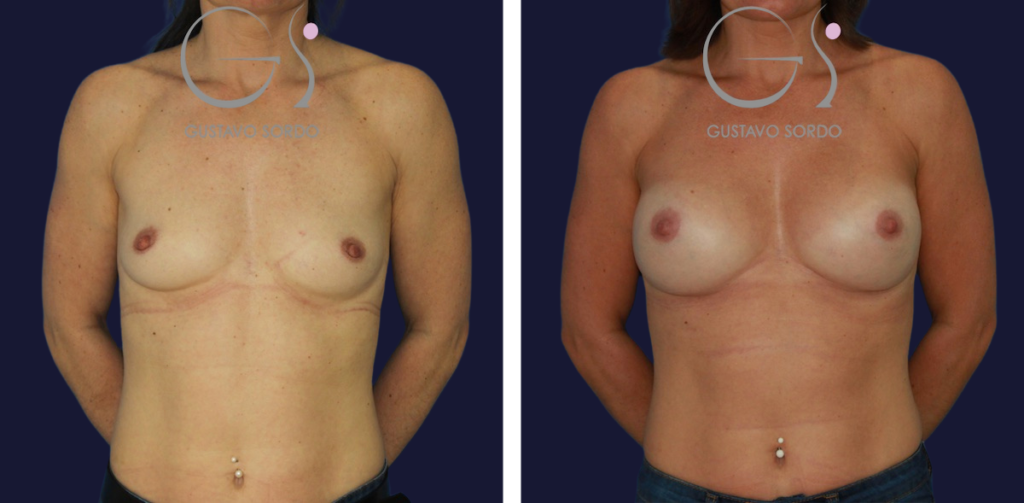
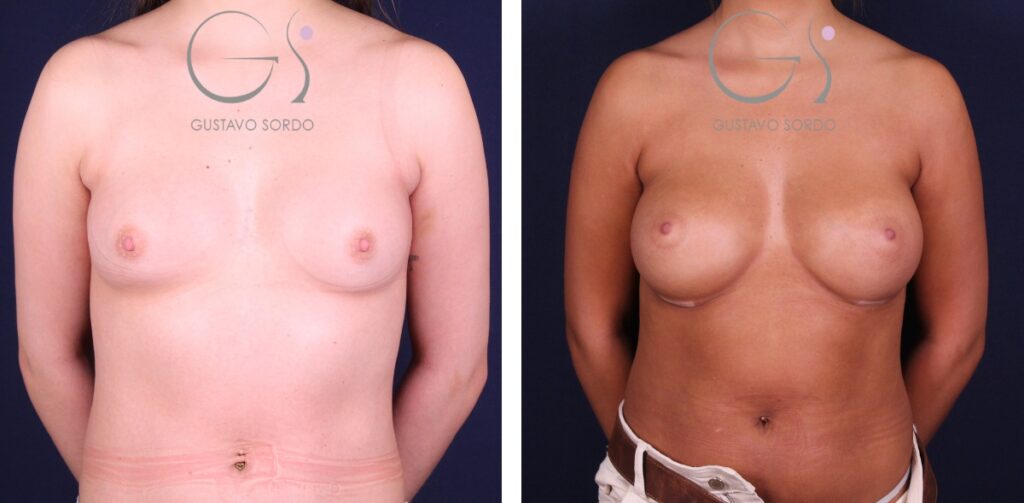
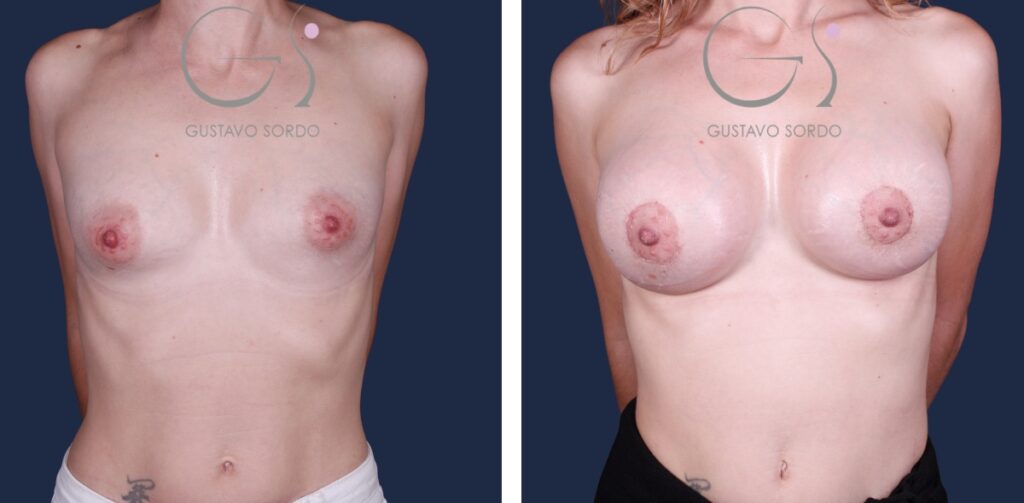
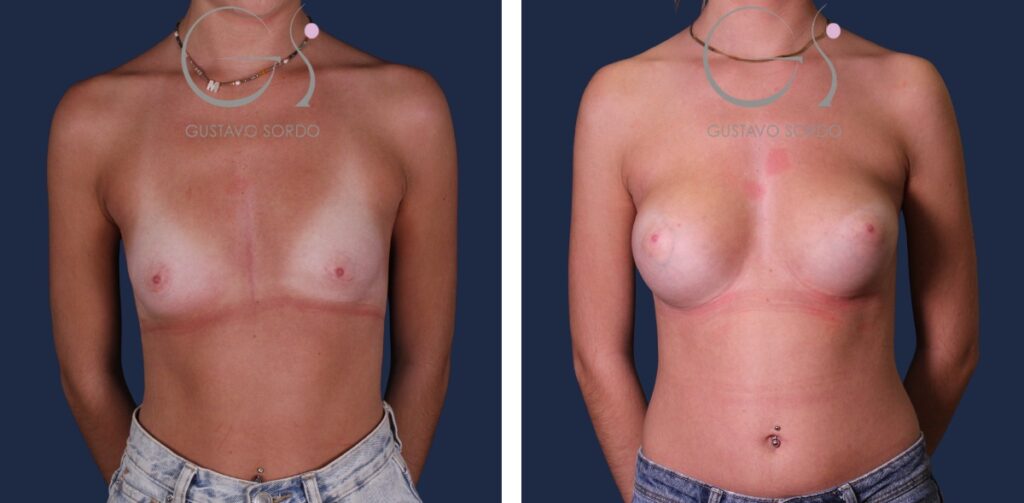
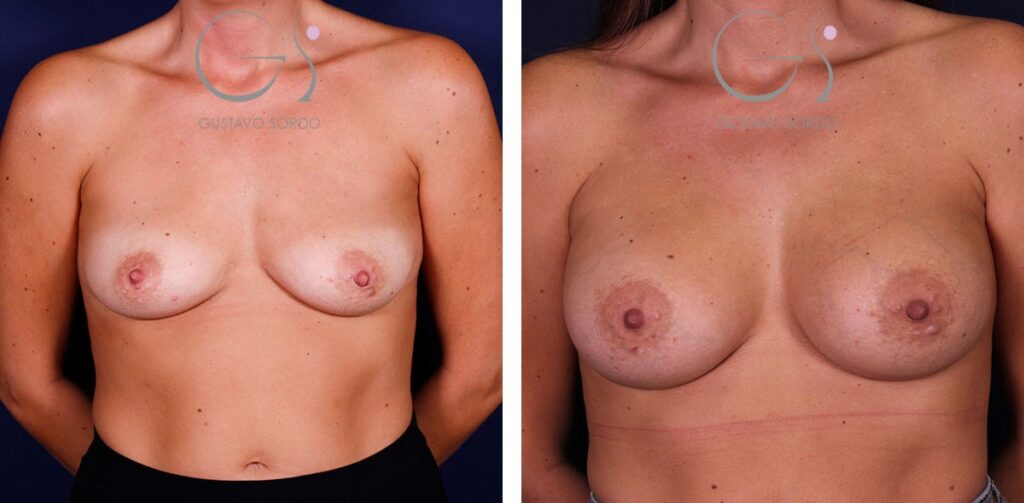
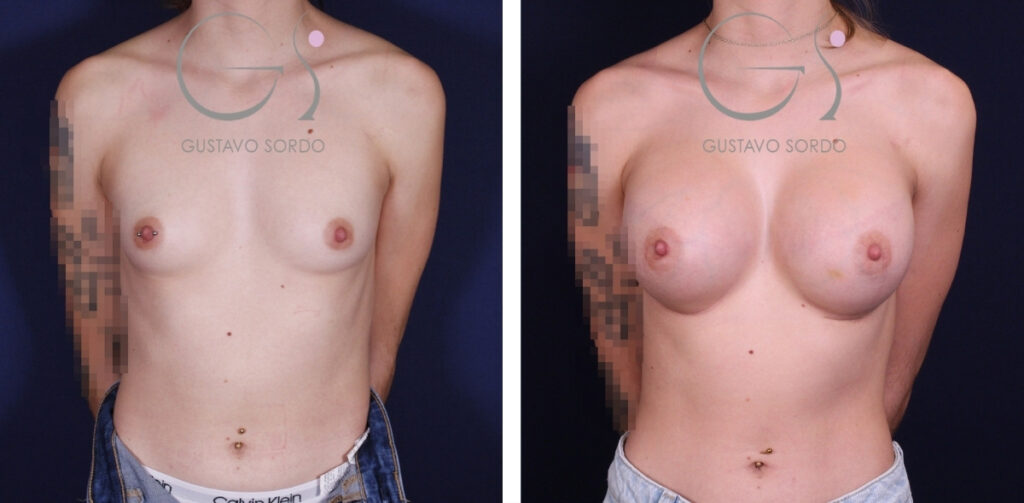
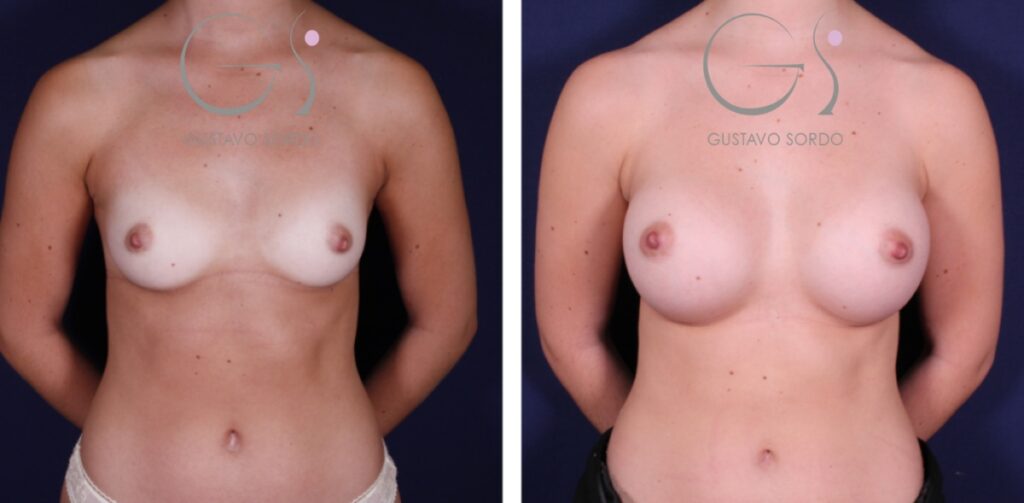
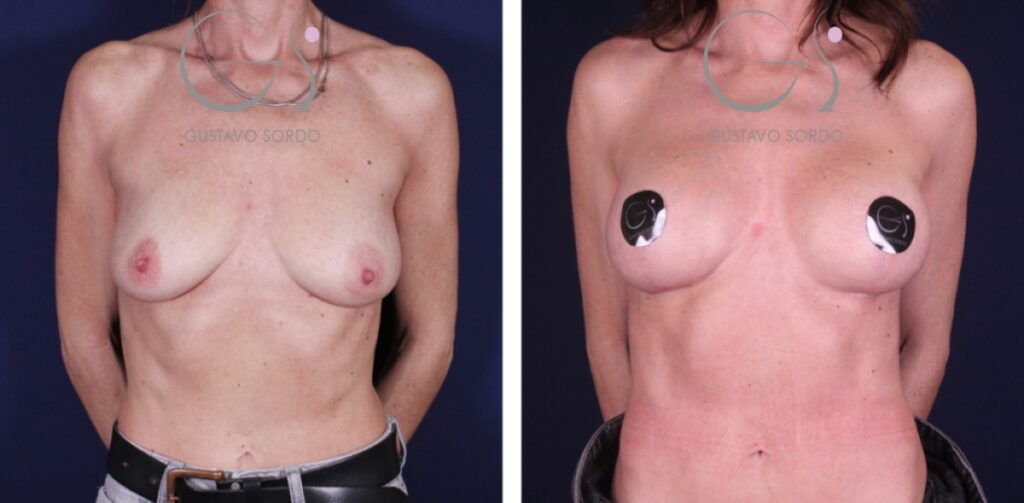
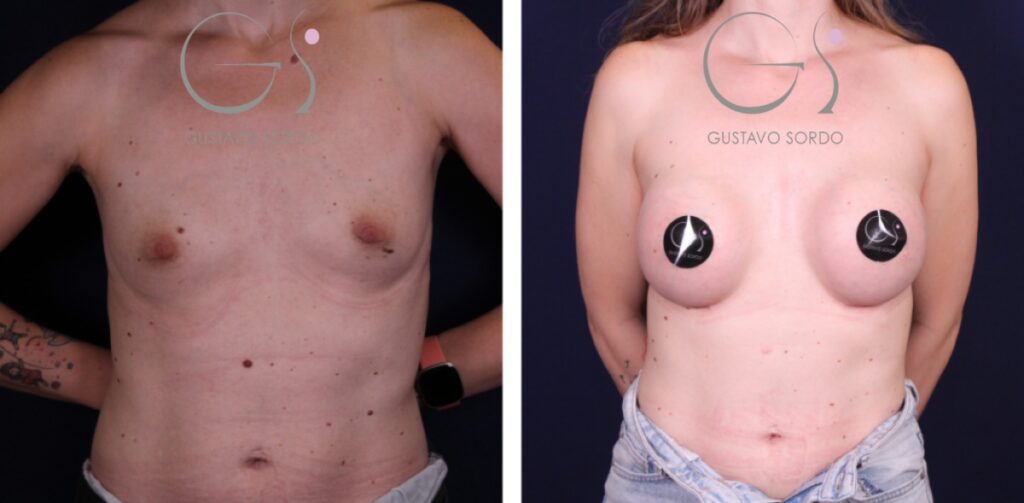
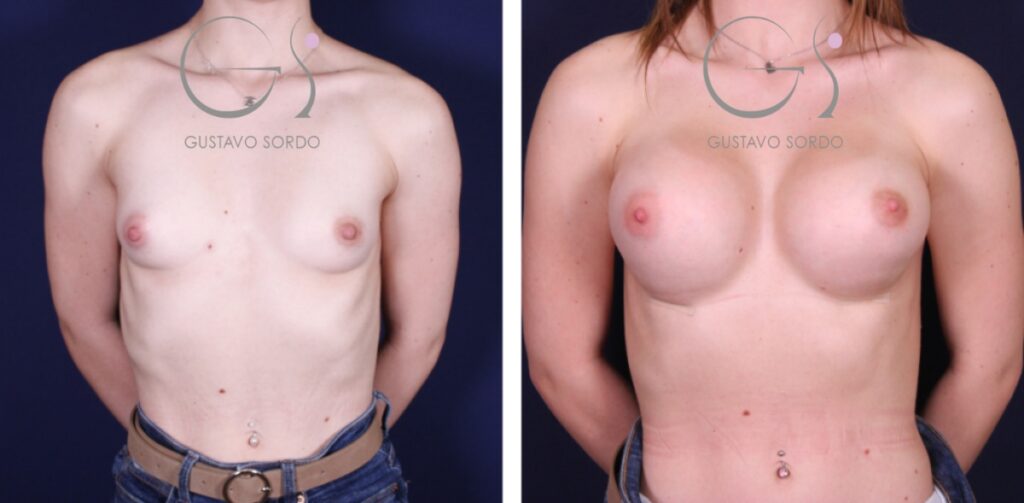
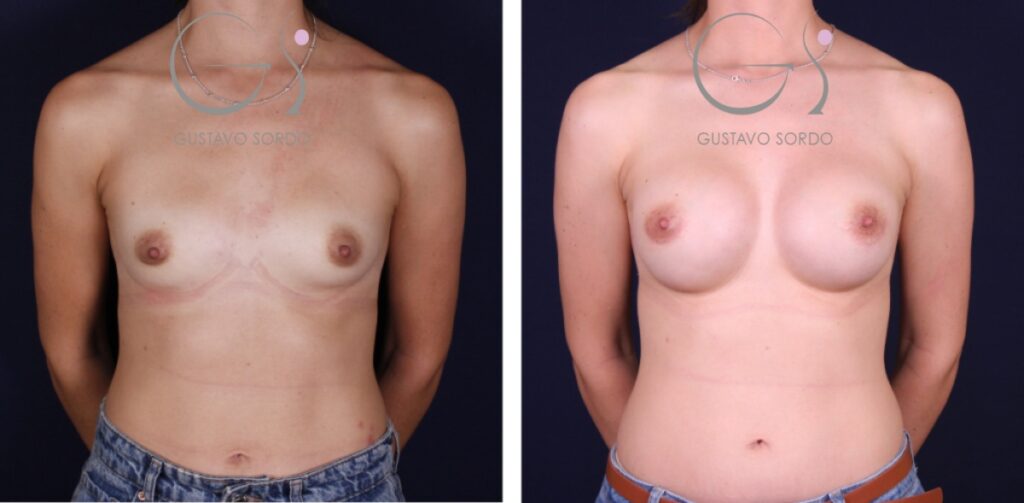
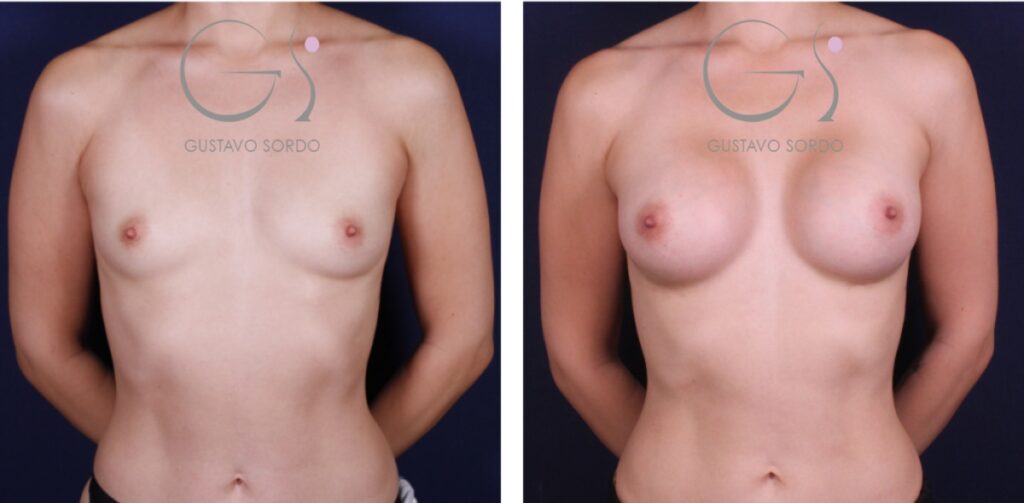
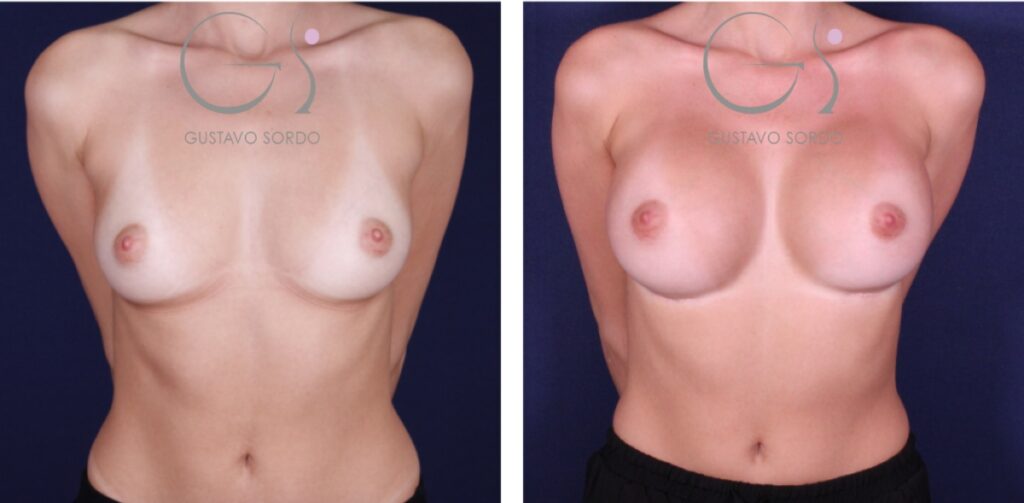
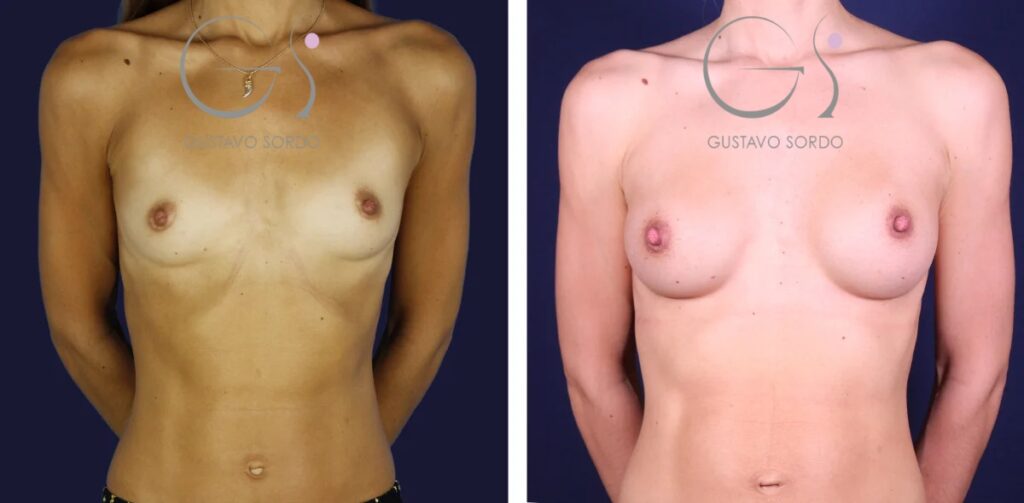
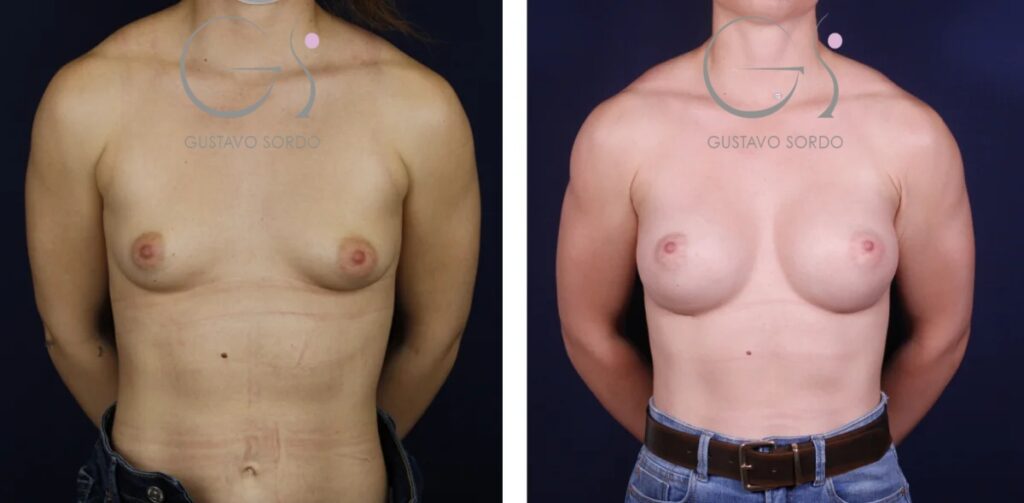
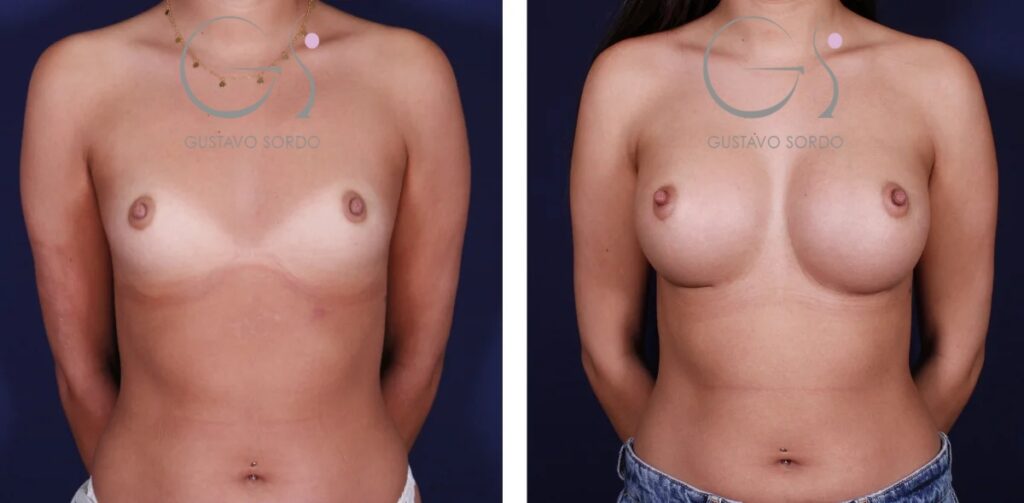
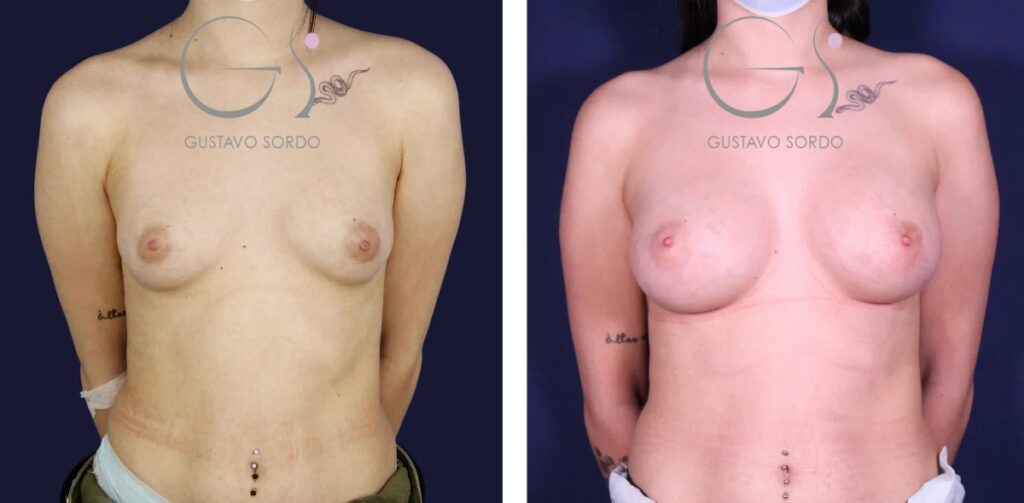
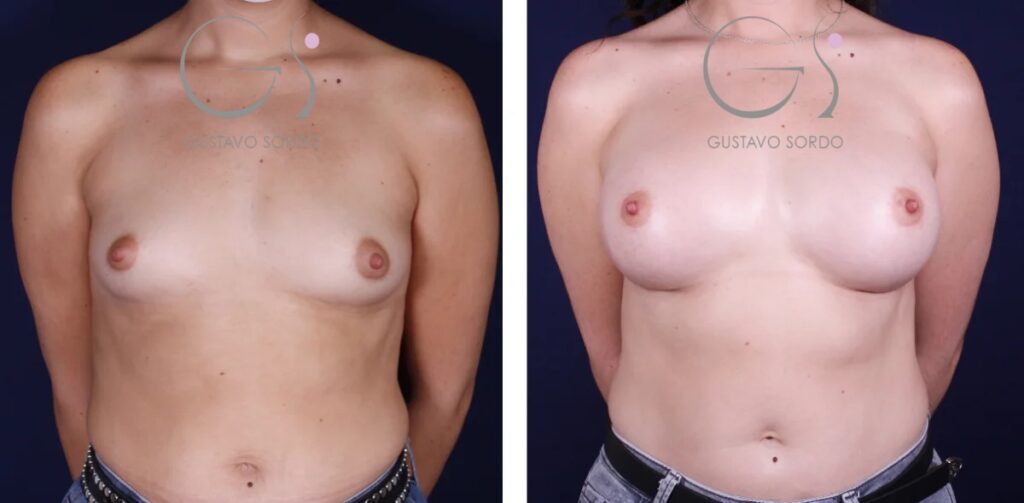
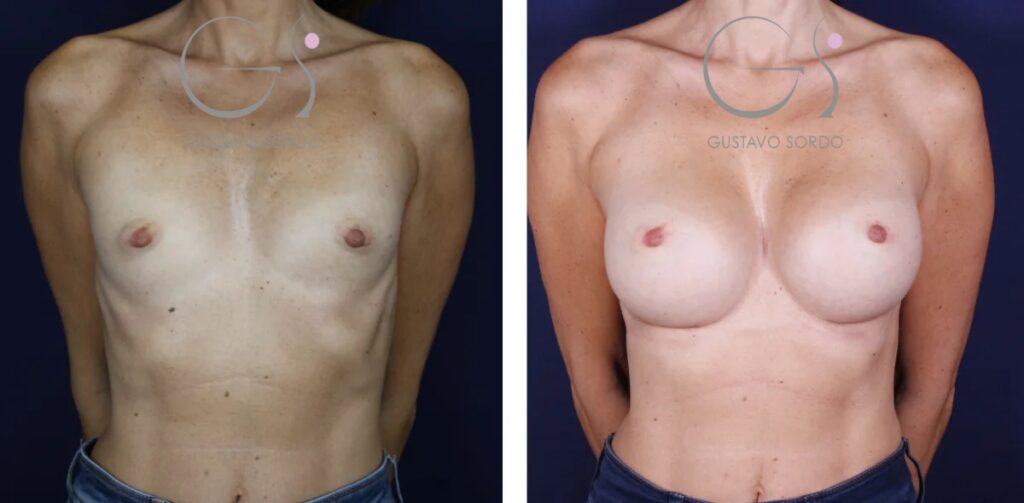
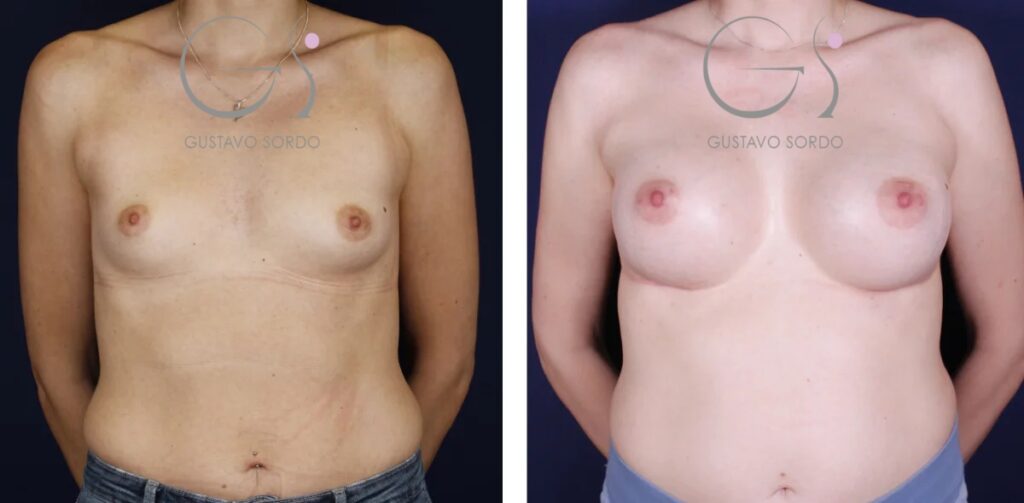
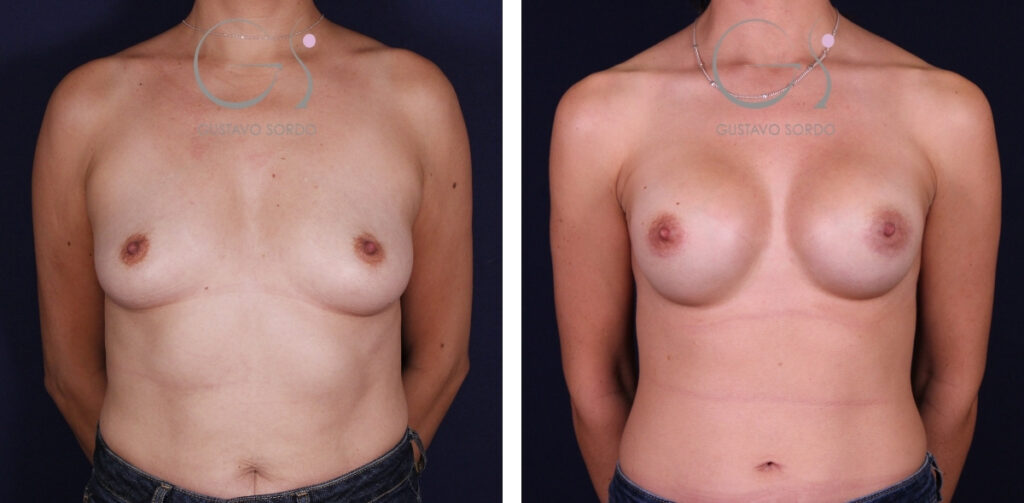
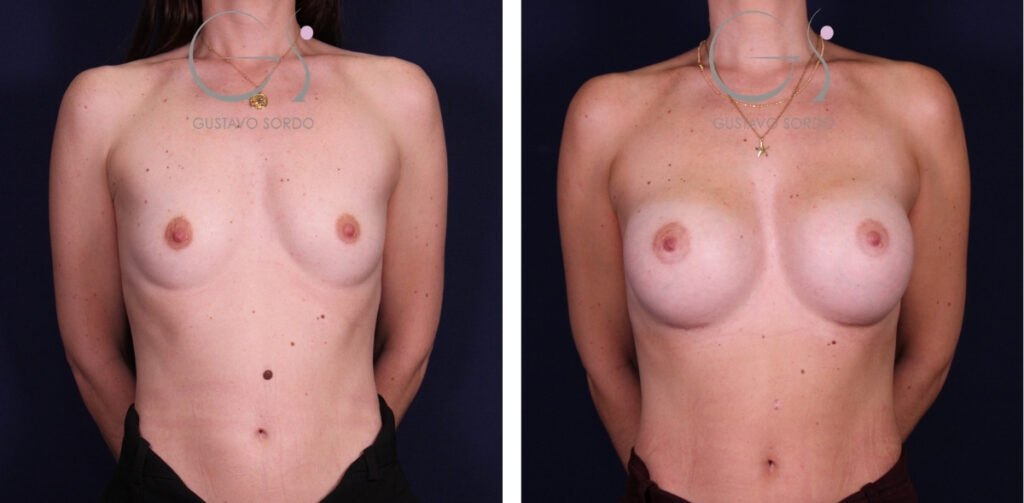
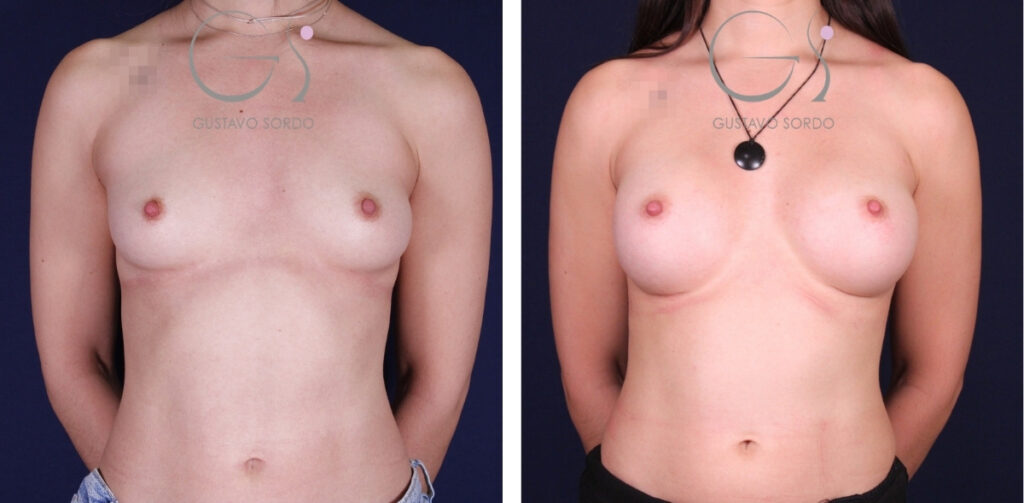
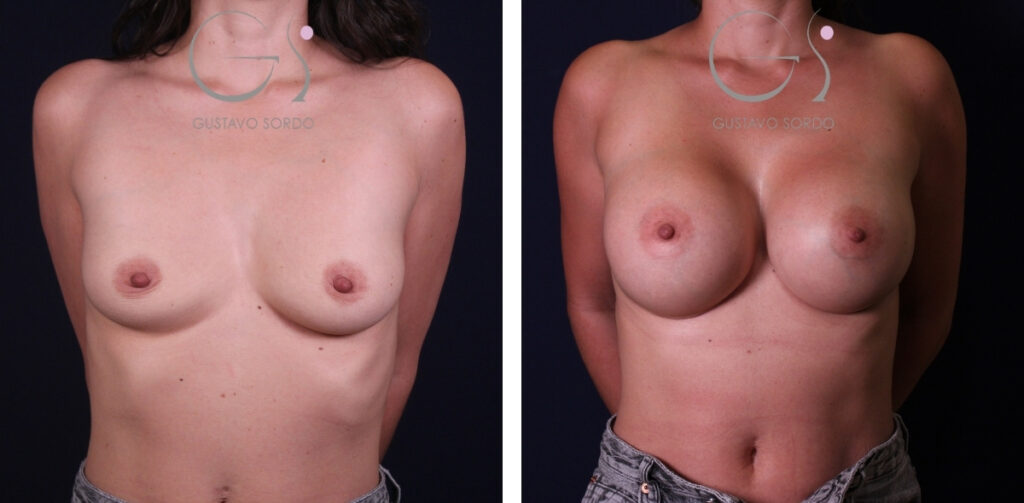
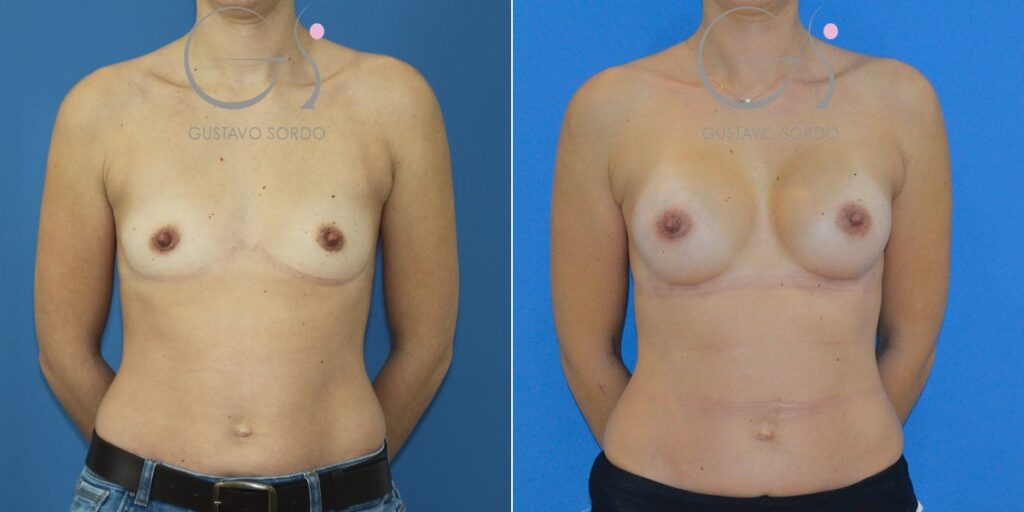
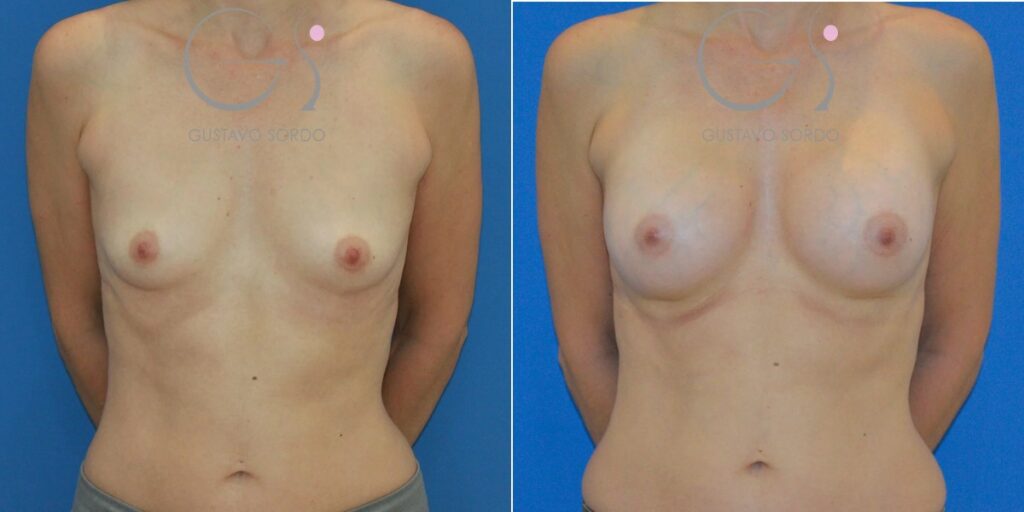
How we perform the "24h Recovery Laser" augmentation: five steps that are repeated in all cases
The name appears on all our breast augmentation information sheets, but until now we haven't explained what's behind it. It's the same technique for all patients, regardless of the implant they choose. What changes from case to case is the implant and the type of dual plane; what doesn't change are these five steps.
- Incision in the inframammary fold. This approach allows for more precise preparation of the pocket and placement of the implant without penetrating the gland. The scar is hidden in the crease under the breast.
- Subpectoral plane, in dual plane. The implant is placed beneath the pectoral muscle at the top and beneath the gland at the bottom: the muscle covers the upper pole, where the implant's edge would be most noticeable, and the gland adapts to the implant at the lower pole. There are three types of dual-plane implants, described by Tebbetts (I, II, and III), depending on the degree of muscle release; in most of our patients, we use type I, and in some, type II (Tebbetts JB). Plast Reconstr Surg. 2001, DOI).
- Internal bra: the groove reconstructed from within. A 3/0 polydioxanone suture anchors Scarpa's fascia to the anterior rectus fascia and reconstructs the inframammary fold, acting as an internal support. The goal is twofold: to prevent the implant from descending over time and to ensure that the scar, anchored to the fold, does not shift.
- The lateral fascial triangle, intact. Between the serratus anterior, the border of the rectus abdominis, and the lateral border of the pectoralis major, there is a triangle of fascia that remains untouched. Preserving this triangle is what creates the push-up effect: the breasts are held in the center instead of sagging to the sides.
- UrgoTouch laser on the incision, at the end. It's the "Laser" in the name. Before leaving the operating room, with the wound already closed, a laser is applied to the suture line to modulate healing from the very beginning. The technique is known as LASH (laser-assisted skin healing) and has been described since 2001; in the comparative trial that evaluated it, the treated half of each incision was flatter and better rated at one year than the untreated half, in a small series and with a dose that must be carefully adjusted (Capon A et al. Aesthetic Plast Surg. 2010, DOIIt doesn't make the scar disappear: it helps to make it more discreet.
From that point on, the postoperative period follows the clinic's protocol. And the implant, round or anatomical, is chosen by each patient during a consultation, comparing the two options in a 3D simulation.
Have you ever been in this situation?
Every nose and every breast is different. The best way to find out what can be achieved in your case is through an evaluation with Dr. Sordo.
If you're looking at this case for a specific reason.
A beautiful breast isn't the biggest, but the one that fits comfortably on your chest without stretching the skin or sagging with age. ( Breast augmentation .)


 Clinic chat