Enlarged Breasts: What it is, Causes and Treatment

Updated on • Reviewed by Dr. Gustavo Sordo, plastic surgeon
Breast size is a physical characteristic that varies among women and can have both aesthetic and functional implications in daily life. While some people feel comfortable and confident with a large chest, for others it can become a source of physical discomfort, limit their routine, and even affect their self-esteem.
If you are considering this operation, at breast reduction in Madrid you can find out how we work, real cases and the price (€8.100-€8.500).
Large breasts, beyond being a matter of appearance, can lead to significant health problems, such as chronic back pain, difficulty performing physical activities, and skin irritations. Furthermore, they can influence a person's clothing choices, sports practices, or even their willingness to socialize. For this reason, many women seek information on how to reduce their breast size, either through noninvasive methods or surgery.
In this article, we will explore in depth what constitutes large breasts, the factors that influence their development, the physical and emotional consequences they can have, and the different treatment options available. From conservative approaches, such as the use of support garments and physical therapy, to surgical procedures like breast reduction, we will analyze the advantages, risks, and costs associated with each alternative.
What is considered a large chest?

Defining what constitutes a large breast isn't a matter of exact measurements, but rather depends on individual factors such as body type, height, weight, and body proportions. However, there are some medical and social parameters that help determine when breast size can be considered abnormal and begin to cause discomfort or health problems.
Generally speaking, a woman is considered to have a large breast when her bra cup size is D or larger. Beyond these sizes, breast volume can put a significant strain on the back and shoulders, leading to postural discomfort. Many women with E, F, or larger cups seek reduction options due to difficulties they face in their daily lives, such as finding suitable clothing or bras that provide sufficient support.
In addition to bra sizes, the perception of having a large bust is also related to body shape. Some women may feel their breasts are too large compared to their slimmer build, while others, with a wider body structure, may feel comfortable with a generous bust.
Causes
Hormonal factors
Estrogen plays a key role in breast development. During puberty, pregnancy, or menopause, hormonal changes can cause breast size to increase.
Diet and exercise
Weight gain can increase breast volume due to fat accumulation. However, exercise does not directly reduce breast size, as breasts are primarily composed of glandular and fatty tissue, not muscle.
Age
As we age, our skin loses elasticity and our Cooper's ligaments (which support our breasts) weaken, which can make our breasts appear larger and sagging.
Medications or medical conditions
Some hormonal medications (such as birth control pills or hormone replacement therapies) can increase breast size. Additionally, conditions such as gynecomastia (male breast enlargement) may be related to hormonal imbalances or steroid use.
What are the consequences of having large breasts?
musculoskeletal problems
The additional weight of breasts puts a constant strain on the spine, shoulders, and neck, which can lead to chronic back pain, especially in the lumbar and dorsal regions, poor posture with forward leaning and muscle spasms, and, in extreme cases, herniated discs due to prolonged strain.
Skin changes
Constant friction and accumulated moisture under the breasts can cause dermatitis and chafing, especially in warm climates, fungal infections (such as intertriginous candidiasis), and darkening of the skin in the folds due to chronic irritation.
Difficulties in daily life
Having large breasts can lead to problems such as limitations when playing sports, as many women avoid activities such as running or jumping due to discomfort and excessive breast movement; problems finding suitable clothing, as tight-fitting garments tend to be loose at the waist, making dressing difficult; and even uncomfortable sleep, as sleeping on your stomach or side can be uncomfortable without a supportive bra.
Psychological impact and self-esteem
Having overly large breasts can cause insecurity and complexes, as some women even receive unwanted comments or feel overly sexualized, difficulty socializing due to fear of attracting attention, and frustration due to the lack of practical solutions, as the constant search for comfortable bras or effective treatments can generate stress.
Non-surgical treatments to reduce large breasts
It's important to emphasize that breast hypertrophy is not merely an aesthetic problem, but a functional one : neck and back pain, creases from bra straps, dermatitis in the inframammary fold, and a real limitation on playing sports. That's why breast reduction is one of the surgeries with the highest satisfaction rate we perform: the patient not only changes her appearance, but also her daily life.
The surgical approach depends on the volume to be removed and how much the areola-nipple complex needs to be elevated: vertically in moderate reductions, in an inverted T shape in larger ones. Two conditions we require before surgery are a stable weight and smoking cessation for a few weeks, because the nipple is supported by a vascular pedicle and smoking is the main risk factor for necrosis. We always reconstruct the inframammary fold as an internal bra to prevent the breast from sagging again.
Use of specialized bras
Wearing a well-fitting bra is essential for proper weight distribution, so bras with wide straps and reinforced underwires for greater support, made of breathable materials to prevent moisture under the bust, and from brands specializing in plus sizes are recommended.
Physiotherapy and postural exercises
Exercises such as rowing, Pilates, or yoga help strengthen the back and support weight better, while neck and shoulder stretches help relieve accumulated muscle tension. Seeing a physical therapist is also helpful for designing personalized postural correction therapy routines.
Controlled weight loss
If breast enlargement is related to body fat, a balanced diet and exercise can reduce volume. However, breasts don't always decrease proportionally, as they contain glandular tissue.
Non-invasive aesthetic therapies
Radiofrequency helps stimulate collagen production to improve firmness, cryolipolysis can eliminate localized fat, although it is not as effective on breast tissue, and laser can be useful in cases of mild sagging to tighten the skin.
Surgical treatments to reduce breast size
When non-surgical methods are not sufficient, surgery becomes the most effective solution for reducing breast size.
If you want to see how your breasts will look after surgery , in our simulator you choose the type of breast most similar to yours and you can access real cases operated on in the clinic, including reductions.
Reduction mammoplasty
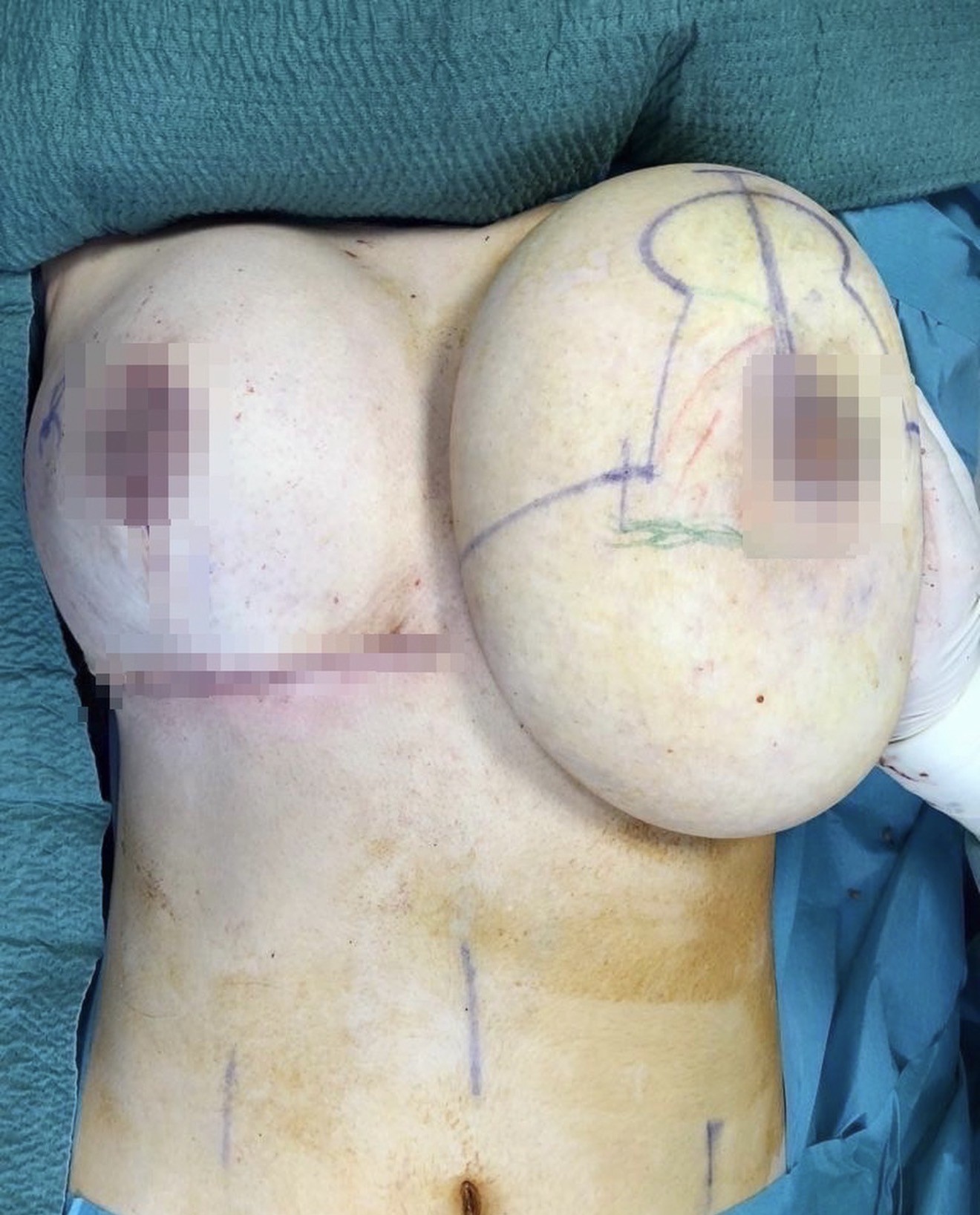
Breast reduction is the most commonly used surgical technique, which consists of removing excess breast tissue, fat and skin to achieve a more proportionate size, repositioning the nipple and areola to maintain a natural appearance, and repairing the pectoral muscles if there is severe sagging.
Recovery involves wearing a post-surgical bra, but not bed rest: 24 hours after surgery , you should raise your arms overhead and bring your shoulder blades together for 30 seconds, once an hour. From the third day onward , you should also walk for 30 minutes a day. From day 7, the weight limit is increased to 1 kg, and you can move freely: your arms can be moved as desired, without repeating the exercise every hour. Sports should be avoided for the first month, and gentle, progressive cardio can be resumed after one month . The scars mature and fade between six months and one year.

We invite you to take a look at all our breast reduction before and after cases.
Gynecomastia
This surgery is performed in cases of male breast growth, using liposuction if the increase is primarily due to fat, or glandular excision when there is developed breast tissue.
Breast reduction and gynecomastia at Dr. Gustavo Sordo's clinic
If you need to undergo breast reduction or gynecomastia surgery in Madrid , at our Plastic Surgery Clinic in Madrid , you will find Dr. Gustavo Sordo , a plastic surgeon in Madrid with more than 20 years of experience in cosmetic surgery.
How much does a breast reduction cost?
The price varies depending on the country and clinic, but at our clinic, the price is around €8,100 to €8,500, depending on the technique and the specifics of each case. Therefore, the final price is always personalized and tailored to each individual case, so an initial consultation is necessary. This price includes the surgeon's fees, anesthesia, and hospitalization.
What are the risks of breast reduction?
Visible scars
The incisions may leave marks, usually located around the areola and in the lower crease. In some cases, they may develop into keloids (thick, raised scars).
Loss of sensation in the nipple
It can be a temporary or permanent symptom, depending on the surgical technique.
Asymmetries or irregularities
In some cases, the signs are slightly uneven, so touch-ups are required.
Postoperative complications
Hematomas or seromas may occur due to the accumulation of blood or fluid, infections, in rare cases, but requiring treatment with antibiotics, and, in extreme cases, tissue necrosis, loss of part of the breast tissue.
Breastfeeding difficulties
Depending on the technique used, the ability to breastfeed may be affected.
You may be interested in: Can I breastfeed after a breast reduction?
Frequently Asked Questions (FAQs)
What is the ideal breast size?
There is no "ideal" size, but it should be proportional to the body and not cause discomfort.
How do you measure breast size?
Using a tape measure: the underbust circumference determines the size (e.g. 85 cm) and the difference with the bust circumference determines the cup (e.g. 10 cm = cup B).
Is it possible to reduce breast size without surgery?
Yes, with weight loss, physical therapy, and proper bras, but significant weight loss often requires surgery.
Does breast reduction leave scars?
Yes, but they are usually discreet and located in the lower fold of the breast or around the areola.
How long does recovery from a breast reduction take?
Between 2 and 6 weeks for normal activities, and up to 6 months to see the final result.
Can I breastfeed after a breast reduction?
It depends on the surgical technique. Some women continue to breastfeed, but there is a certain risk of adverse effects.
Conclusion
Having large breasts can affect your quality of life, but there are solutions. From noninvasive treatments to surgery, it's important to consult with a specialist to choose the best option for your case.
What if the problem is size?
If the size of your breasts is causing you back or shoulder pain, leaving marks from your bra, or limiting your ability to exercise, it's no longer just a cosmetic issue. The appropriate procedure is a breast reduction : we explain when it's indicated, what kind of scar it leaves, and what the price includes.
Continue reading
Dr. Gustavo Sordo
Specialist in Plastic, Aesthetic and Reconstructive Surgery. Member No. 282858125.
Content clinically reviewed by Dr. Gustavo Sordo. Last review: October 7, 2026.