Rhinoplasty on a hyperprojected and tension nose: before and after
Case fact sheet
- Patient: Female, 25 years old
- Reason: aesthetic
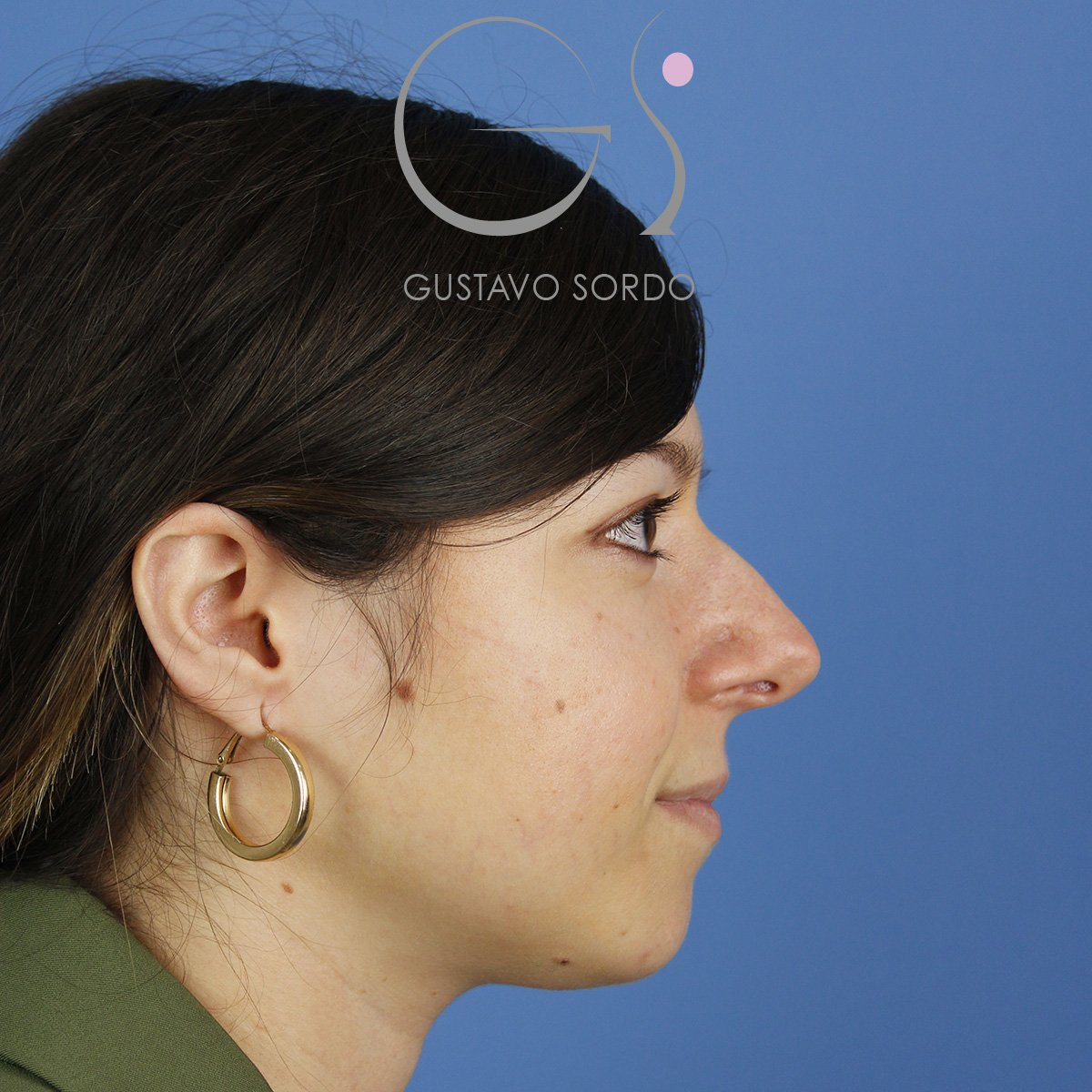
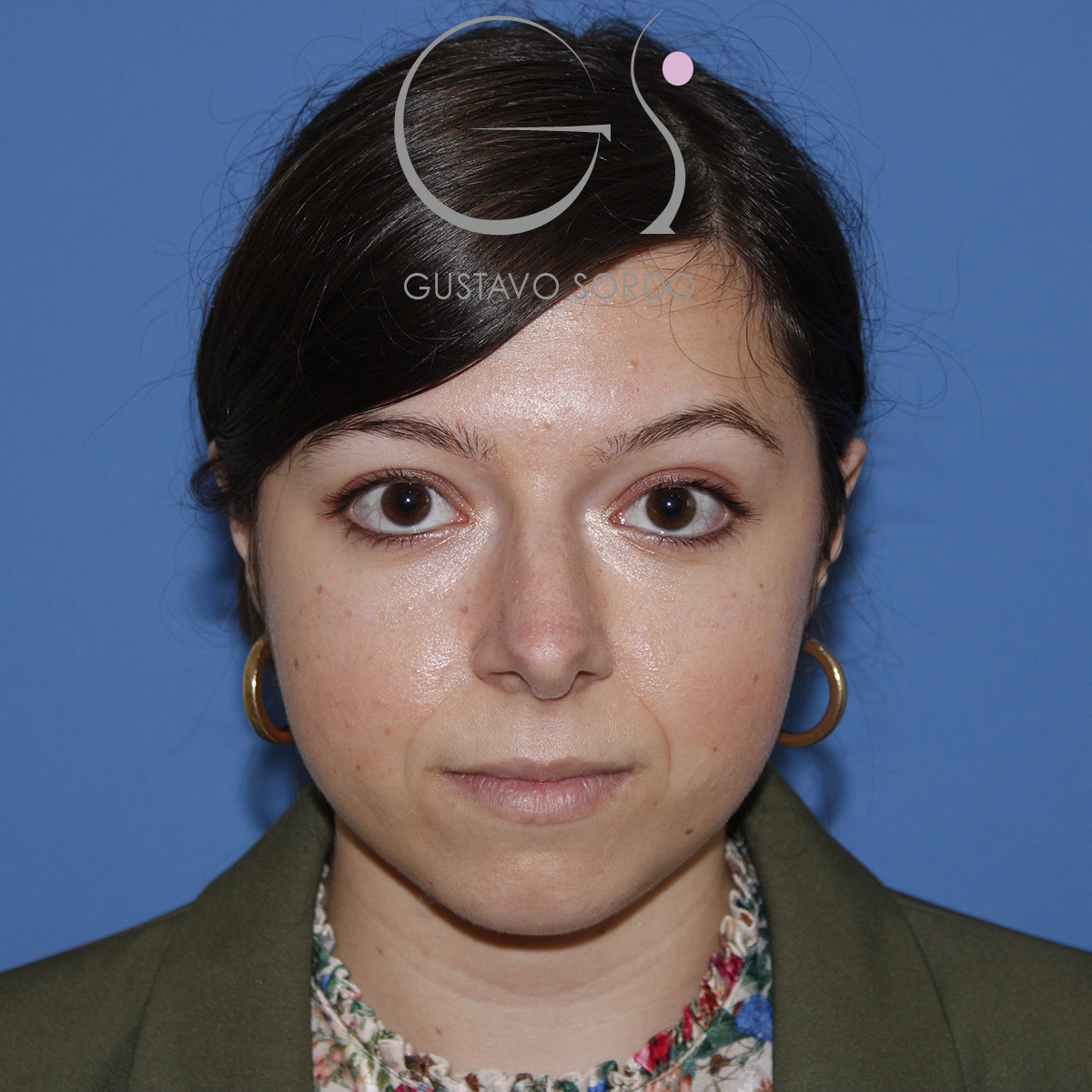
- Starting nose: Hyperprojected nose already under tension, with external valvular collapse due to lack of support (seen in the basal view)
- Technique: ultrasonic rhinoplasty structural: tip projection with lateral crura theft (lateral crural steal), spacer grafts (spreader grafts), septal extension graft and wing reduction (allotomy)
- Septum and turbinates: septoplasty and turbinates in the same surgery
- Approach: Remove projection from the tip, release tension, and give the wings the support they lacked.
- Entry: 1 night
- Anesthesia: general type TIVA
- Duration: 3 hours long.
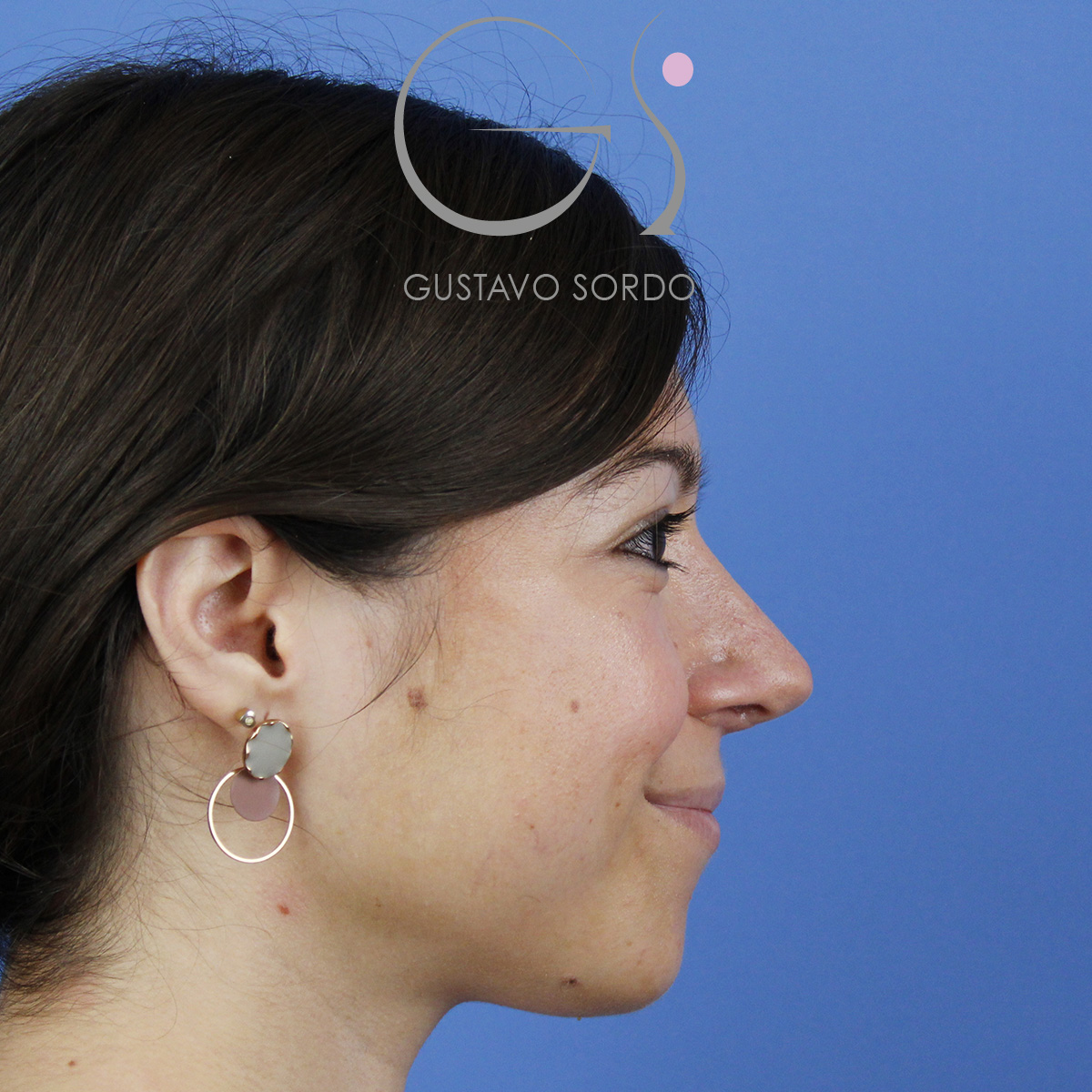
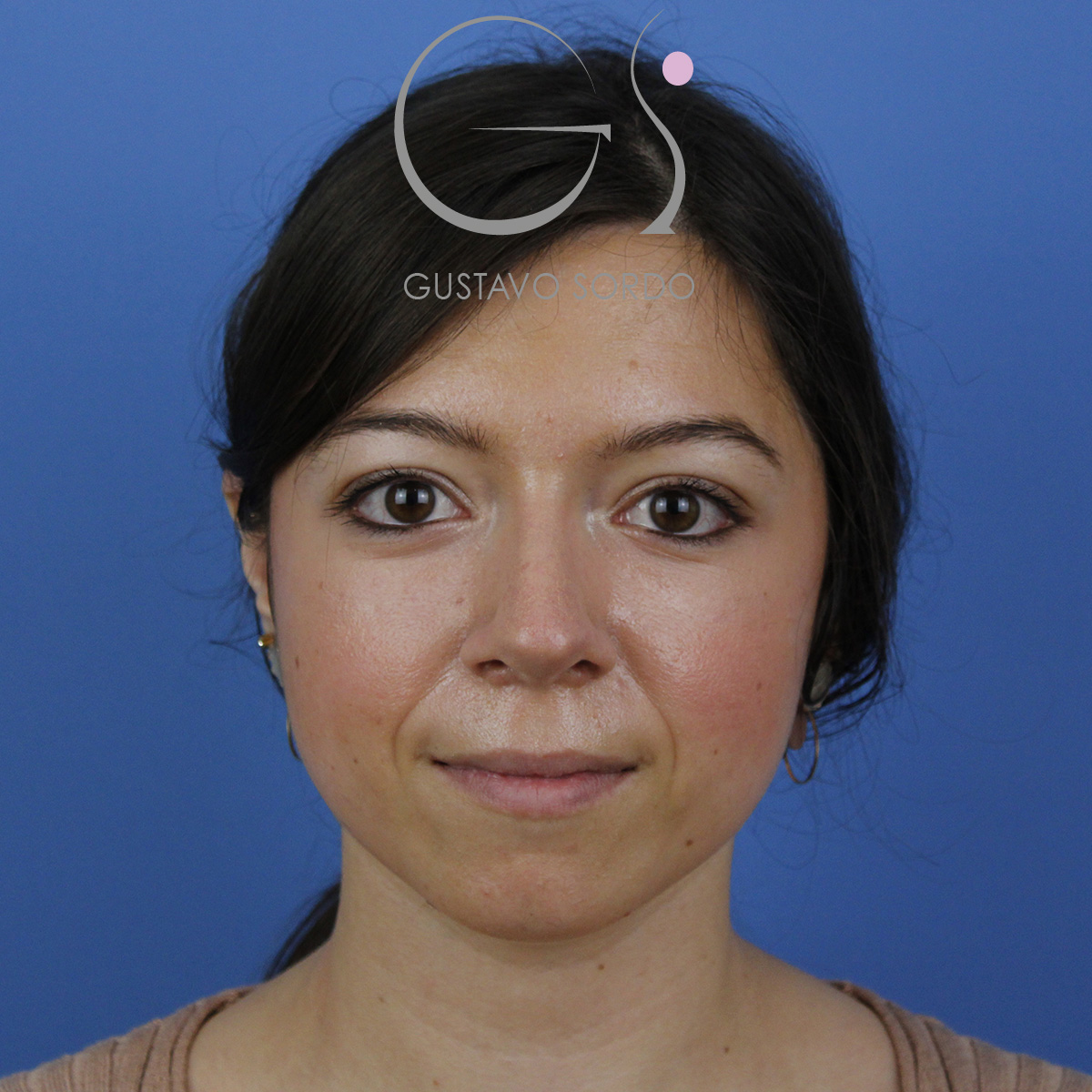
A 25-year-old woman presented with a very interesting nose to operate on: it was overprojected and tense. I reduced the projection with a lateral crura graft, reconstructed the dorsum with spacer grafts, supported the tip with a septal extension graft, and reduced the alae with an alar resection, a common procedure after such extensive deprojection. The external valvular collapse visible at the base was corrected.
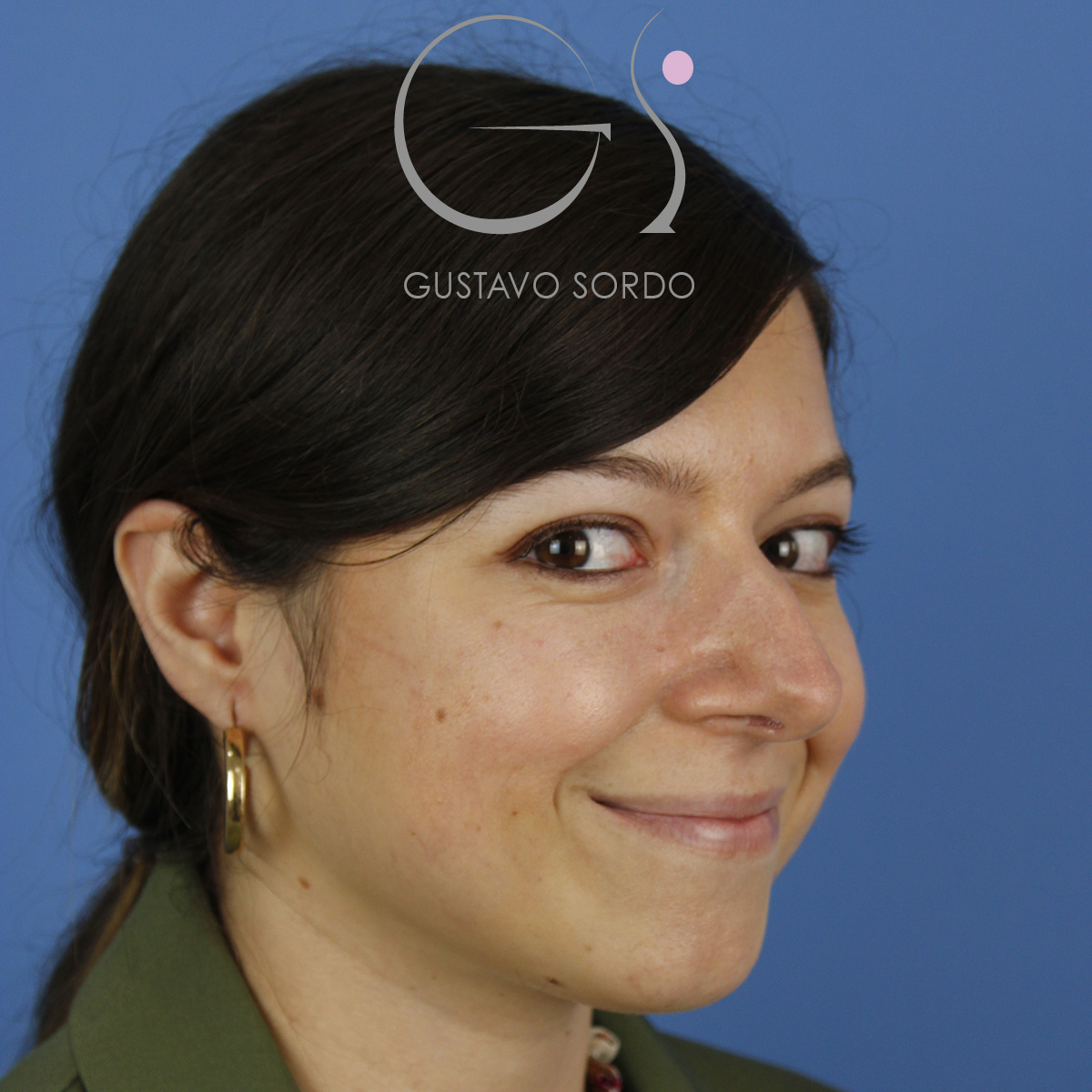
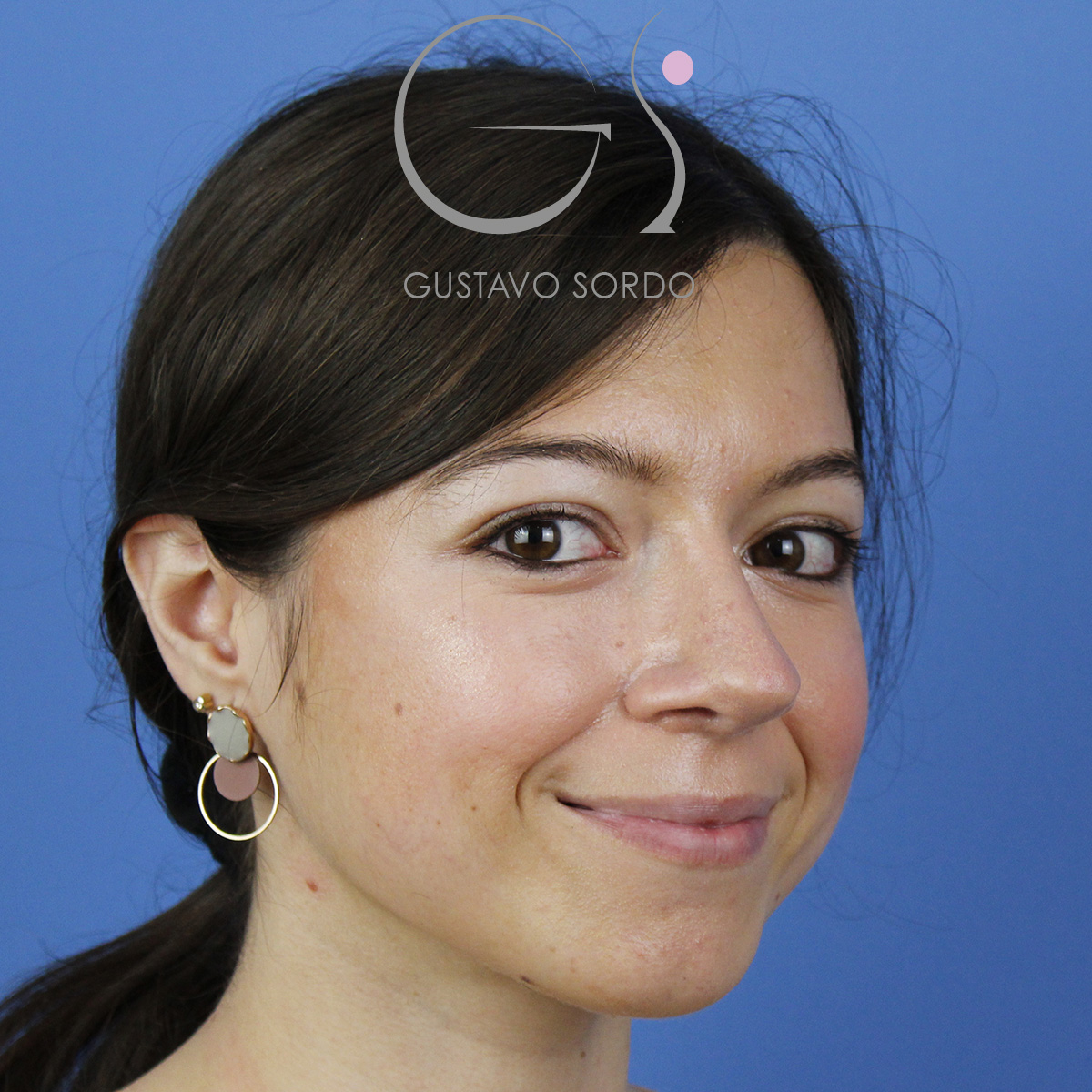
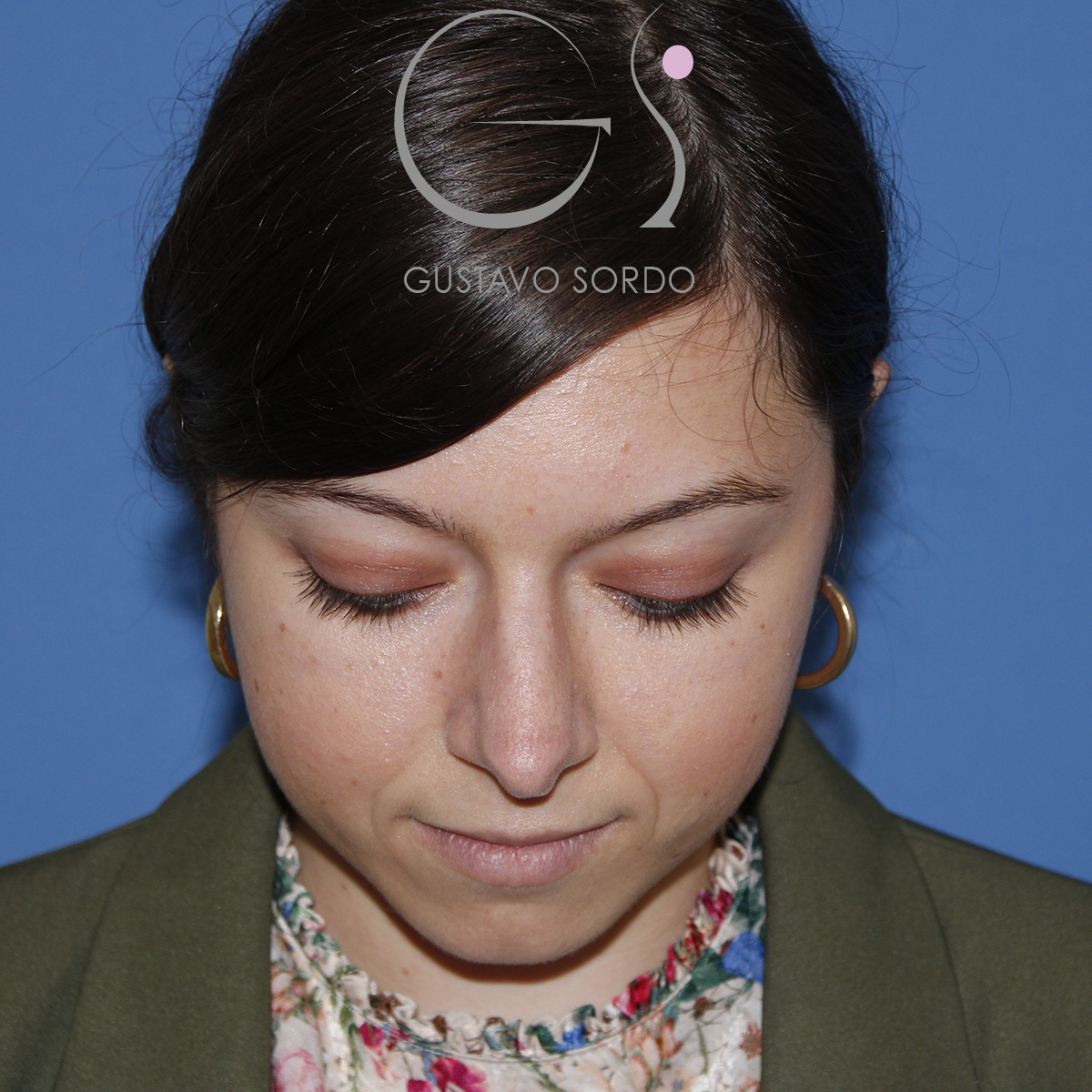
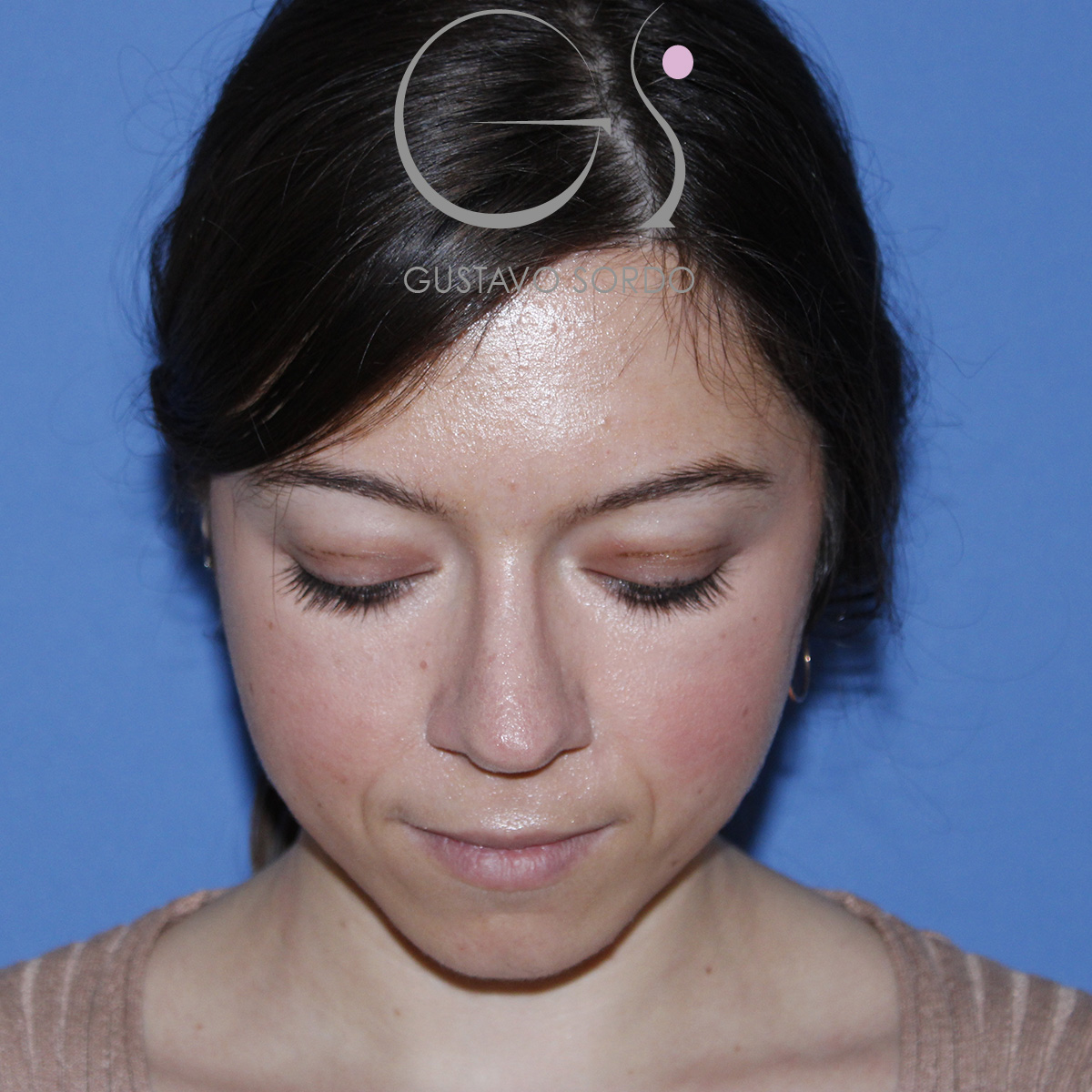
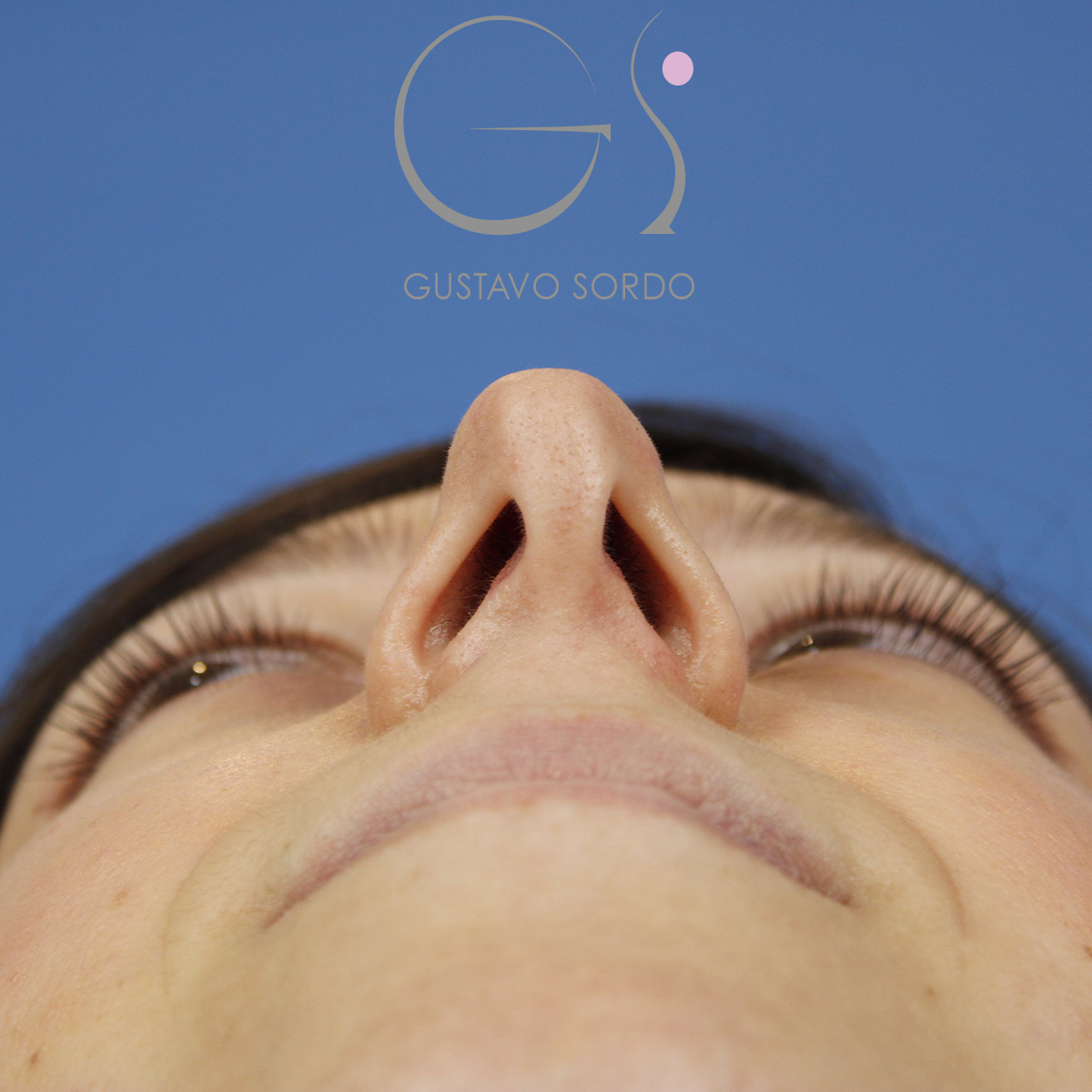
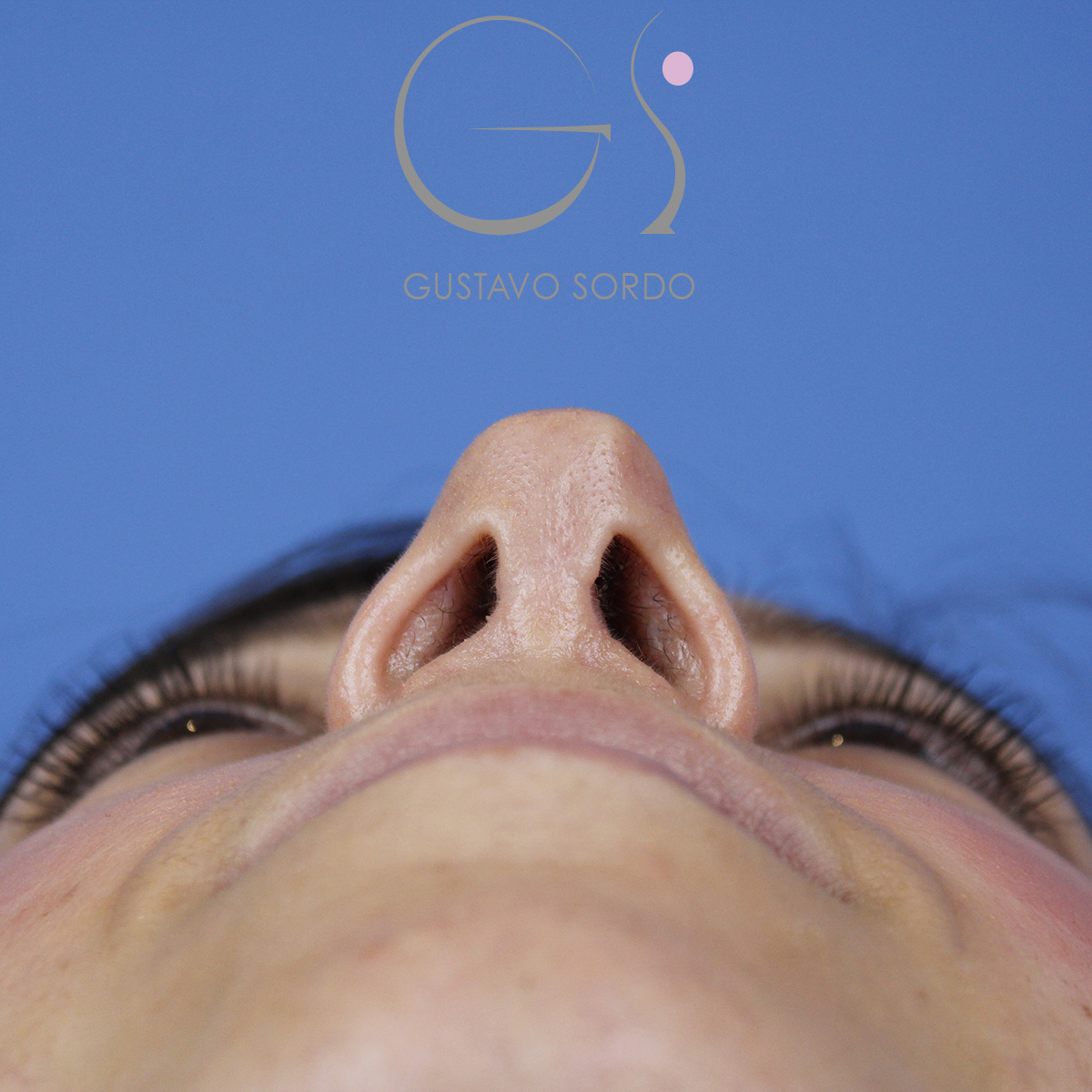
Comment by Dr. Gustavo Sordo
Reason for consultation
He inquired about the shape of her nose, which was very prominent.
What I observed when evaluating it
A highly projected nose, already showing tension: a very prominent tip, pushing against the skin. The basal view also revealed external valvular collapse due to a lack of support from the alae.
What was important to preserve
Breathing and support. Projecting a tip cannot leave the wings unsupported, because valve collapse would worsen.
My surgical approach
Structural ultrasonic rhinoplasty. To deproject, lateral crura steal; spacer grafts on the dorsum and septal extension graft to fix the new position of the tip, and allotomy to adjust the alae.
Why I chose this technique
Lateral crural steal involves taking part of the lateral crura to lengthen the medial and intermediate crura: the tip is broken and loses projection in a controlled manner. Because of this significant reduction in projection, the alae become relatively large and often require reduction via an allotomy. The septal extension graft provides the support the nose previously lacked.
What I did during surgery
Using ultrasonic instrumentation, I worked on the dorsum and placed spacer grafts. At the tip, I performed lateral crura resection and fixed the new position on a septal extension graft, and reduced the alae with an allotomy. In the same surgery, I performed the septoplasty and turbinate reduction.
What is observed in the result
A less projected and tension-free nose, with the wings in proportion, and in the basal view the external valvular collapse corrected.
Another case of a tense nose . Regarding alar reduction, see the article "Can the nostrils be made smaller?" and how I perform rhinoplasty in Madrid , on his website.
Case operated on by Dr. Gustavo Sordo
Specialist in Plastic, Aesthetic and Reconstructive Surgery. Member No. 282858125.
If you're looking at this case for a specific reason.
The ultrasonic scalpel allows for more precise bone work and typically leaves less bruising. It truly makes a difference in ultrasonic rhinoplasty.
Do you want to know if this can be done in your case?
The first consultation is with Dr. Sordo, either at the Chamberí clinic or via video consultation. You'll leave knowing if you're a candidate, which technique is right for you, and how much it costs.
Dr. Gustavo Sordo · Member No. 282858125 · Plastic, Aesthetic and Reconstructive Surgery · Madrid