Rhinoplasty on a tension nose: before and after
Case fact sheet
- Patient: Female, 31 years old
- Reason: aesthetic
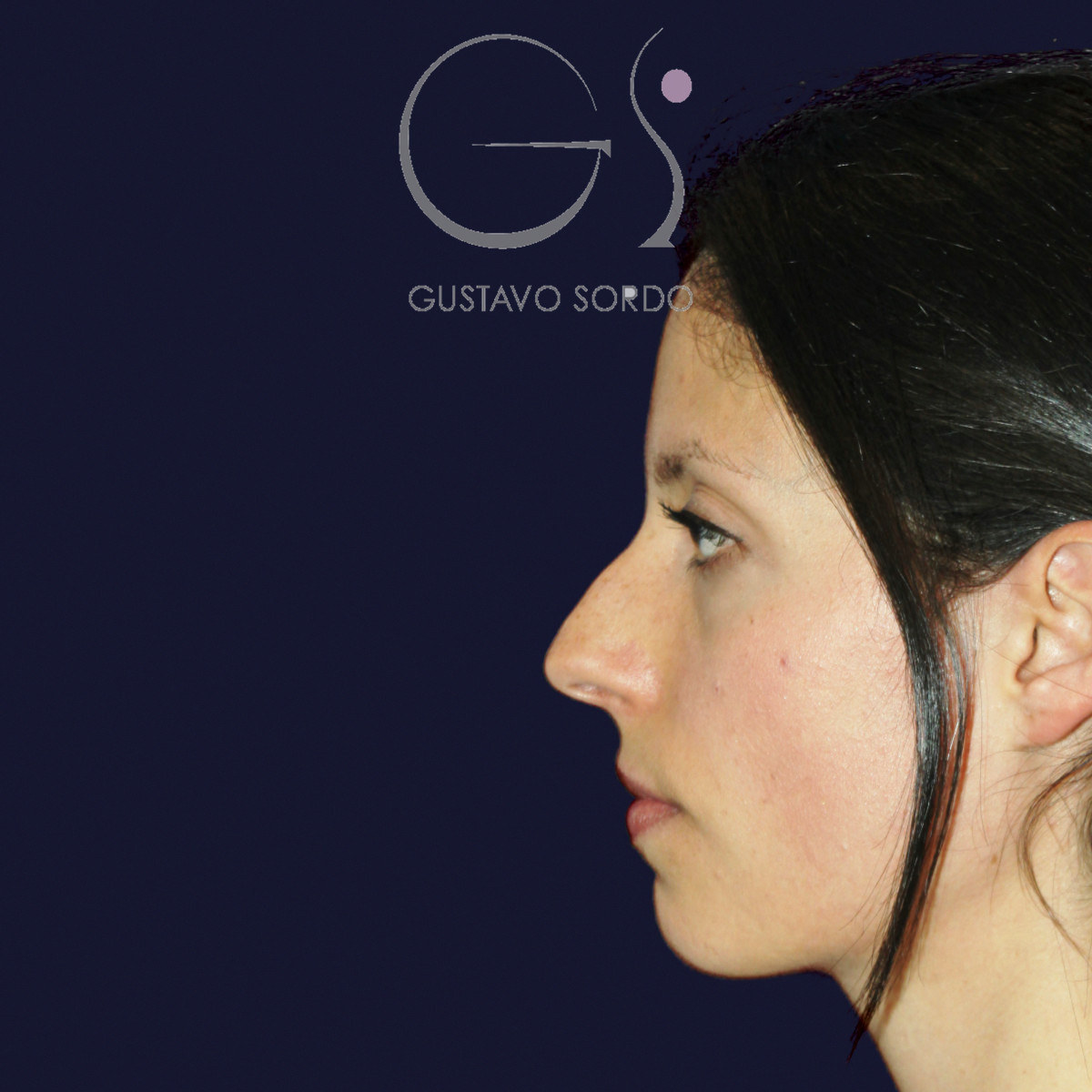
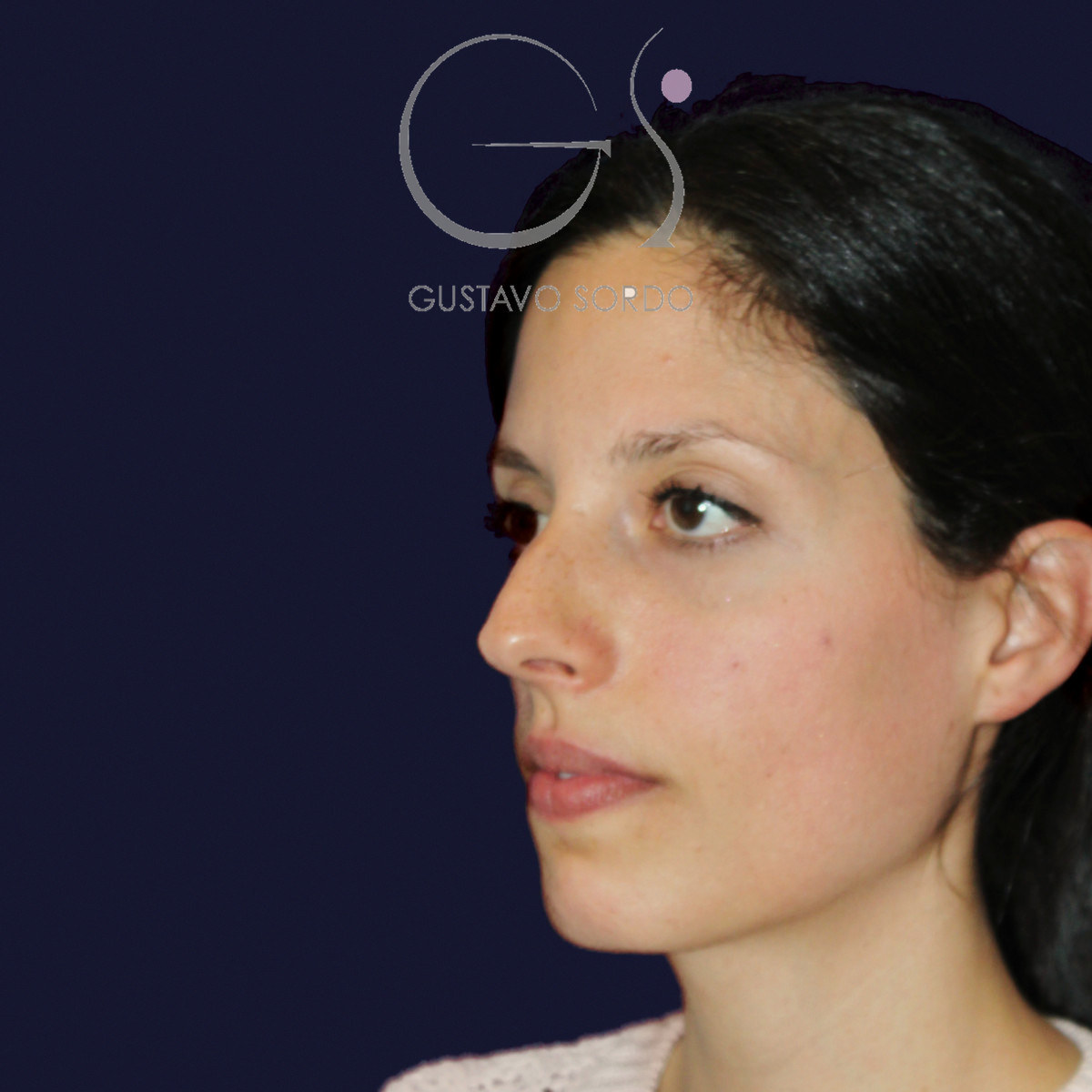
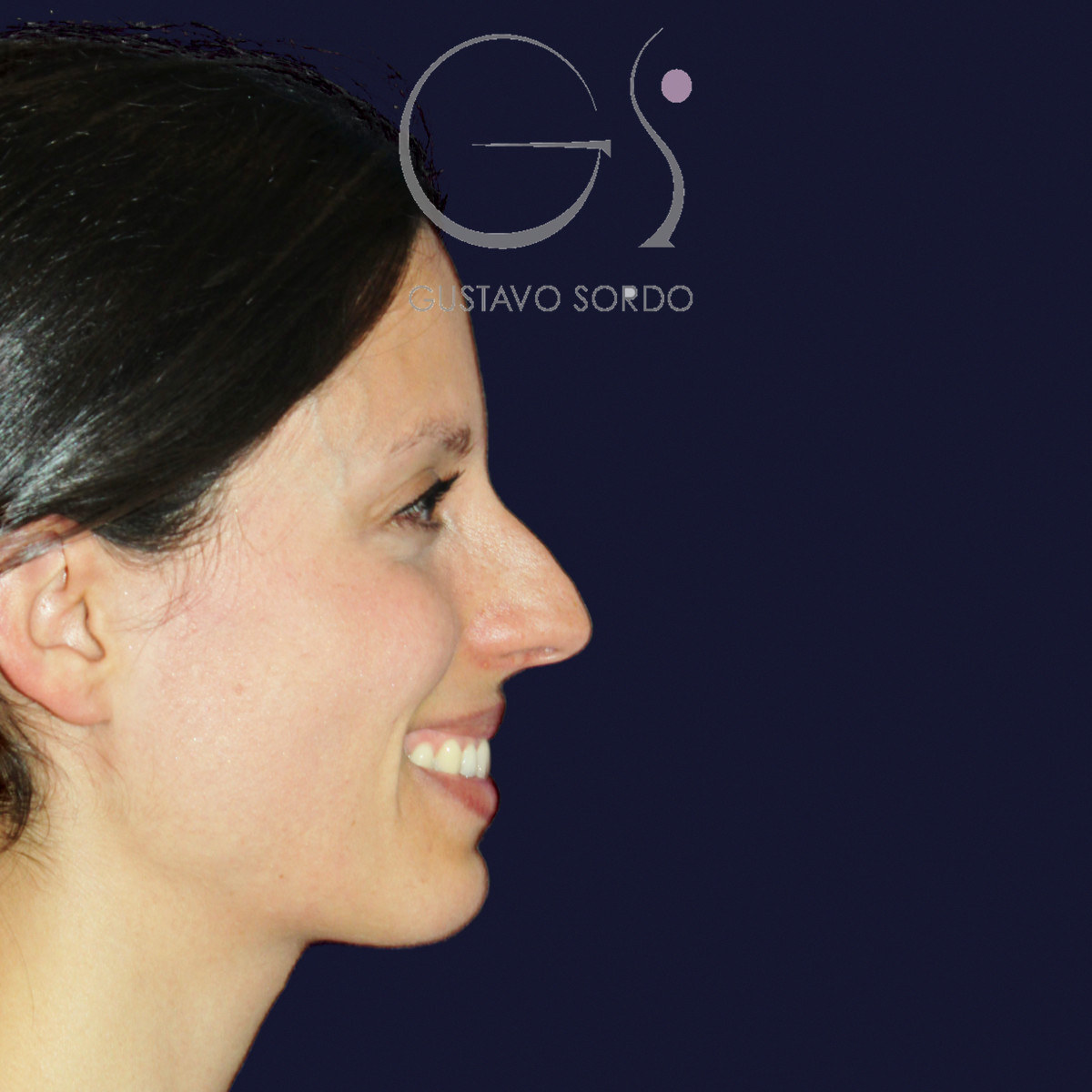
- Starting nose: tense aquiline nose (tension nose), with a V-shaped back and thin skin: too much cartilage for the skin covering it, with areas of tension on the lip and hump
- Technique: structural rhinoplasty with ultrasonic instrumentation: hump reduced with ultrasound and dorsum reconstructed with spacer flaps (spreader flaps) of its own cartilages; tip with tongue-in-groove and a 2 mm lateral crura graft to rotate it and reduce its projection, without a septal extension graft
- Septum and turbinates: Septoplasty and turbinate reduction in the same surgery, as part of structural rhinoplasty
- Approach: Reduce the internal framework proportionately, utilizing your own cartilage, without leaving unbalanced areas or creating new tensions
- Combined surgery: During the same operation, she also had a breast augmentation.
- Result: one year after the operation
- Entry: 1 night
- Anesthesia: general type TIVA
- Duration: 4 and a half hours in total, including breast surgery
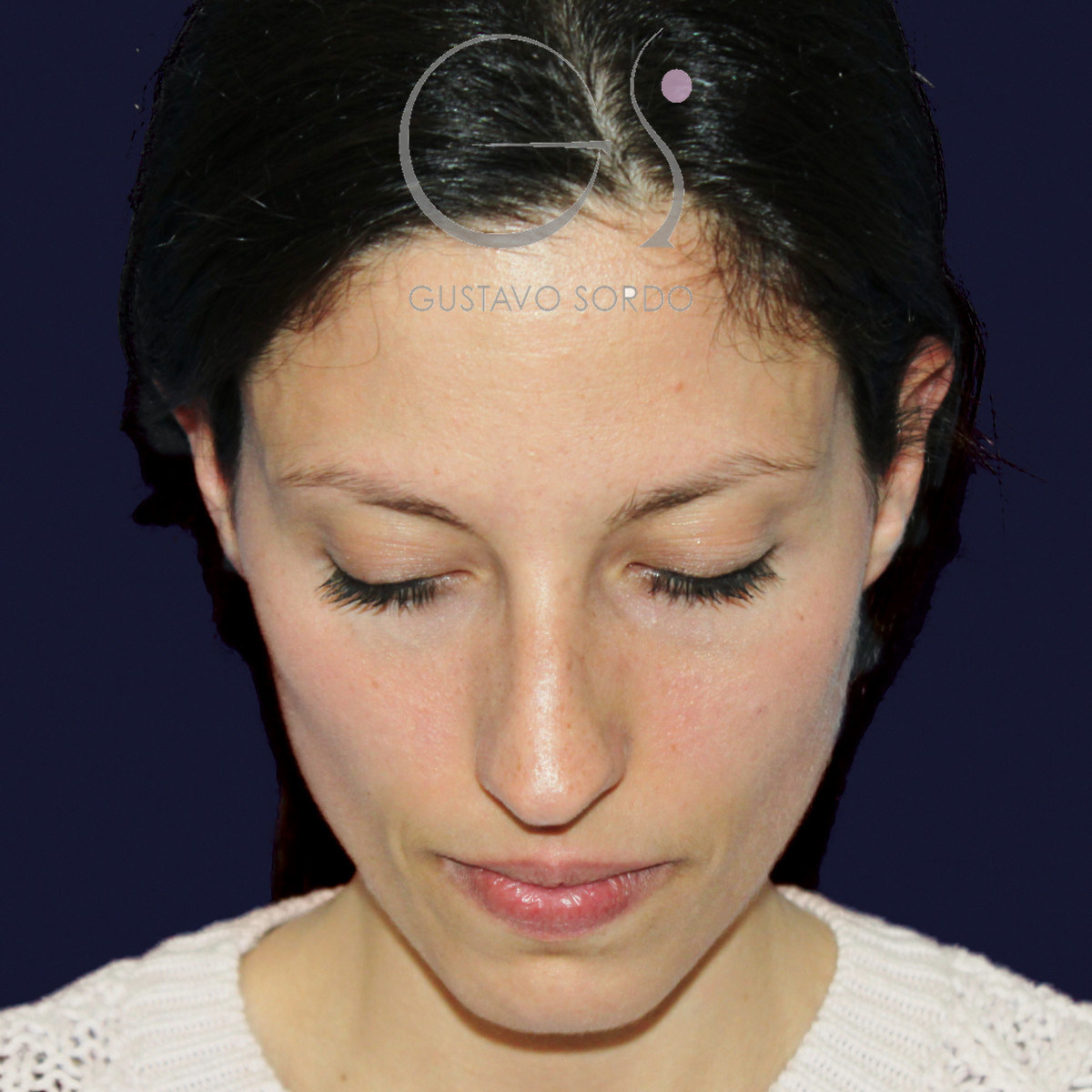
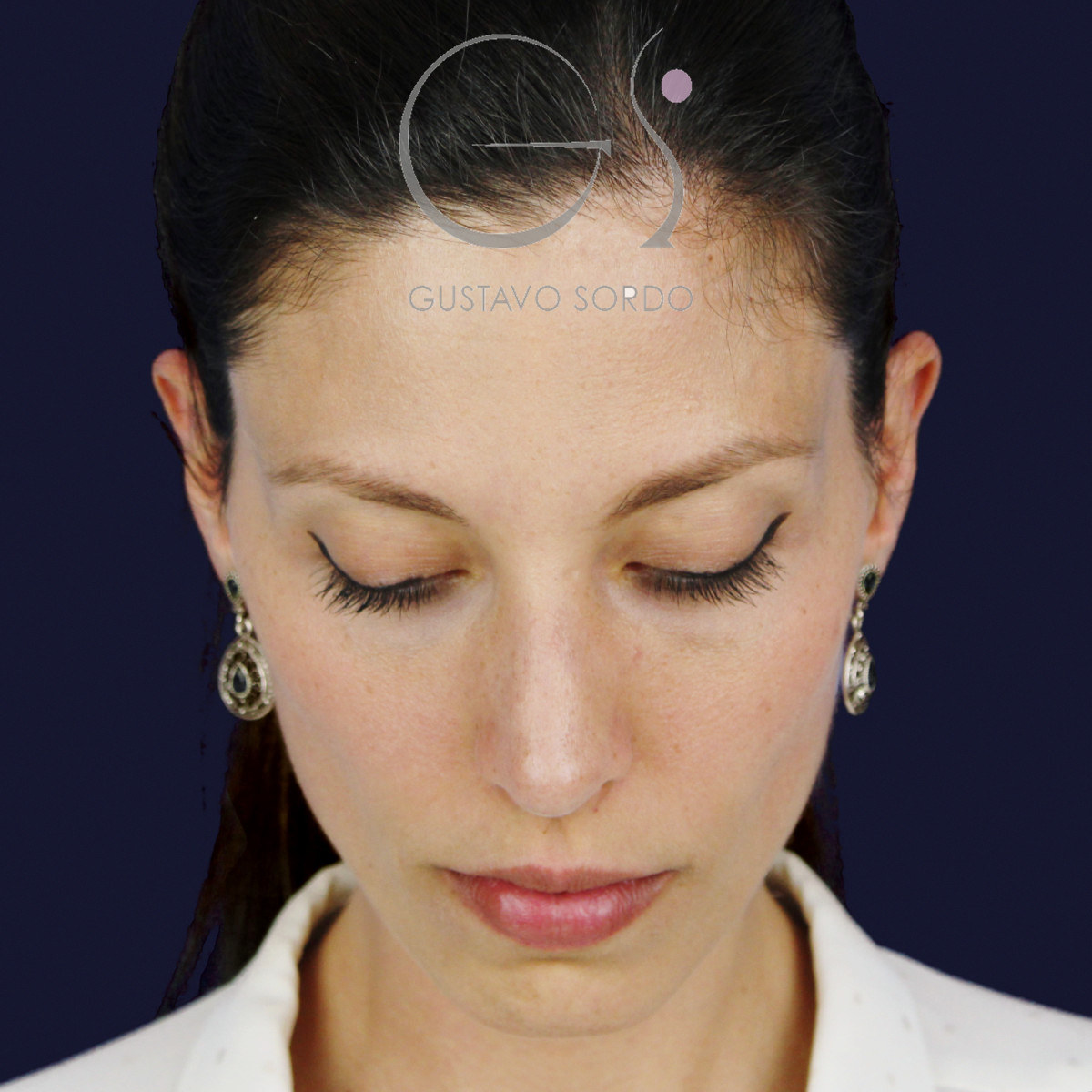
A hooked nose under tension: more cartilage than its thin skin could cover, with a tight lip and dorsal hump. Ultrasonic structural rhinoplasty using the patient's own cartilage: spacer flaps on the bridge and a tongue-in-groove at the tip, without added grafts.
Photos one year after the operation
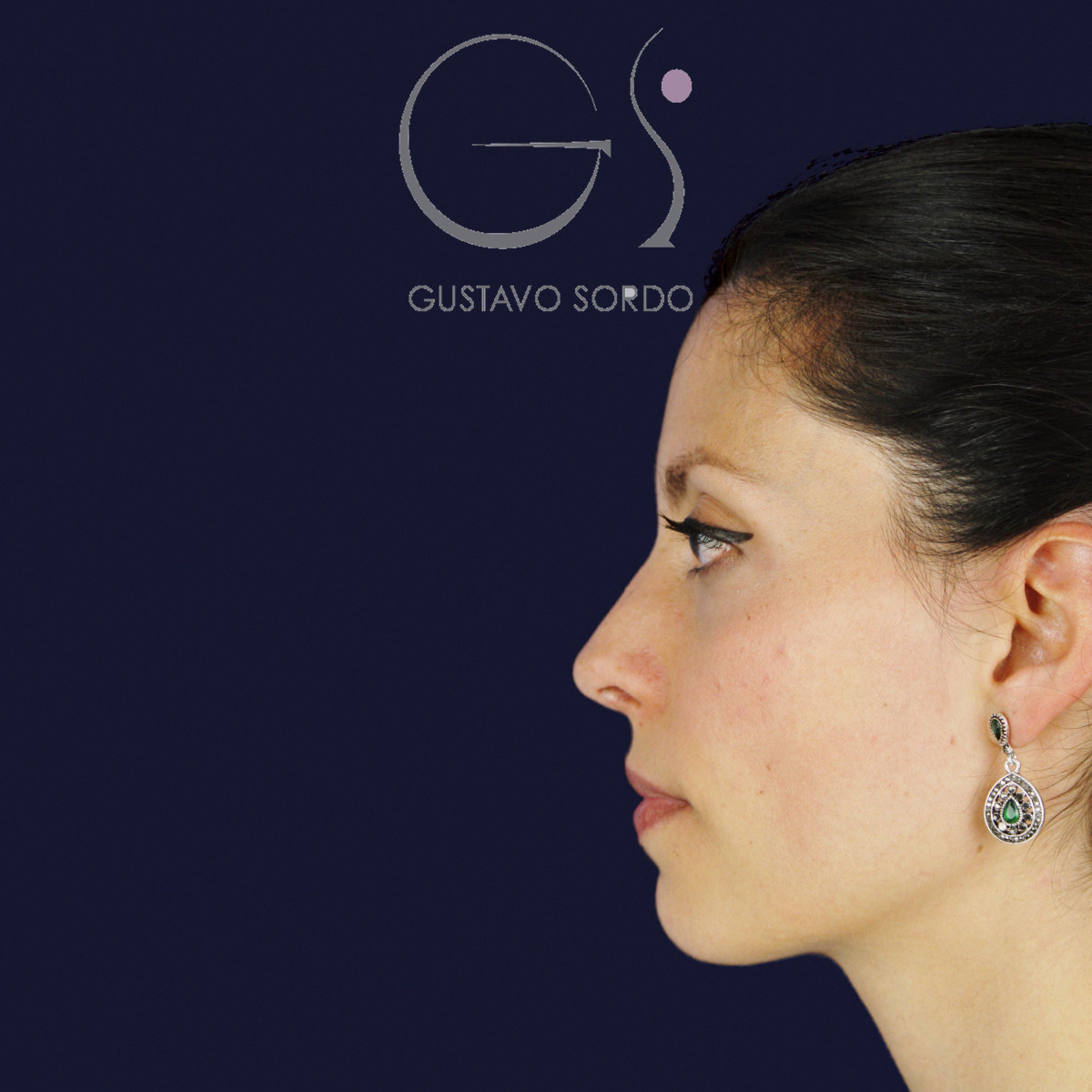
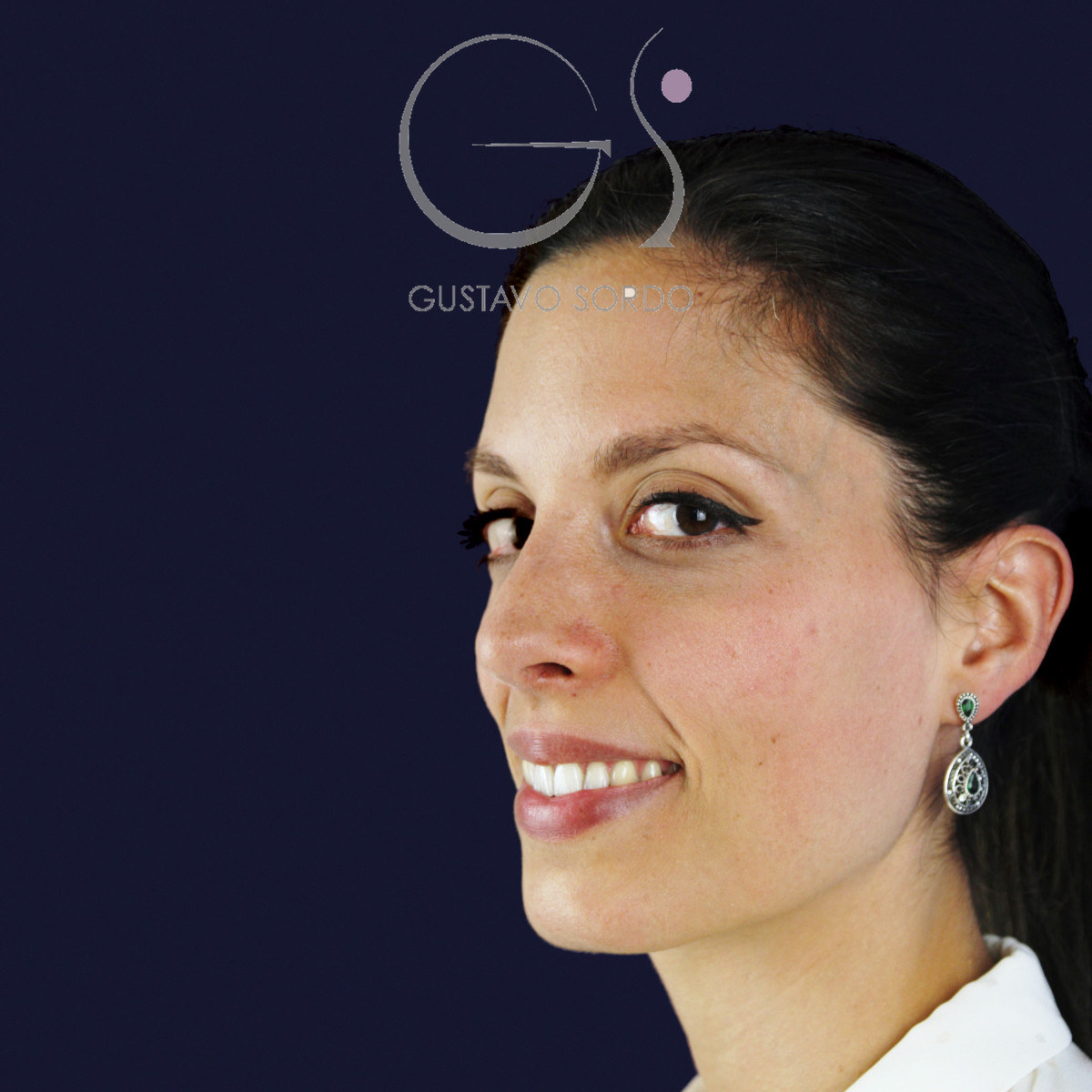
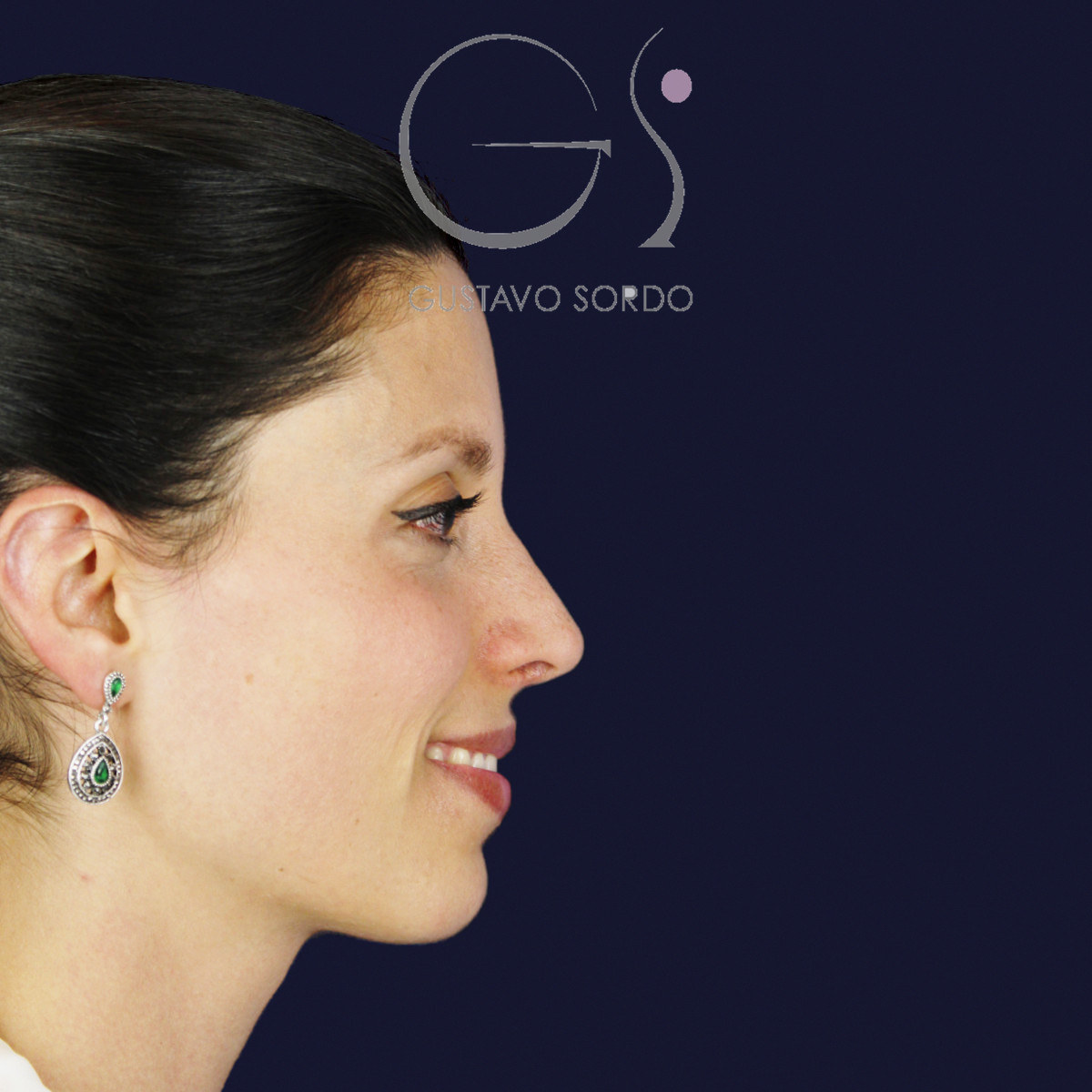
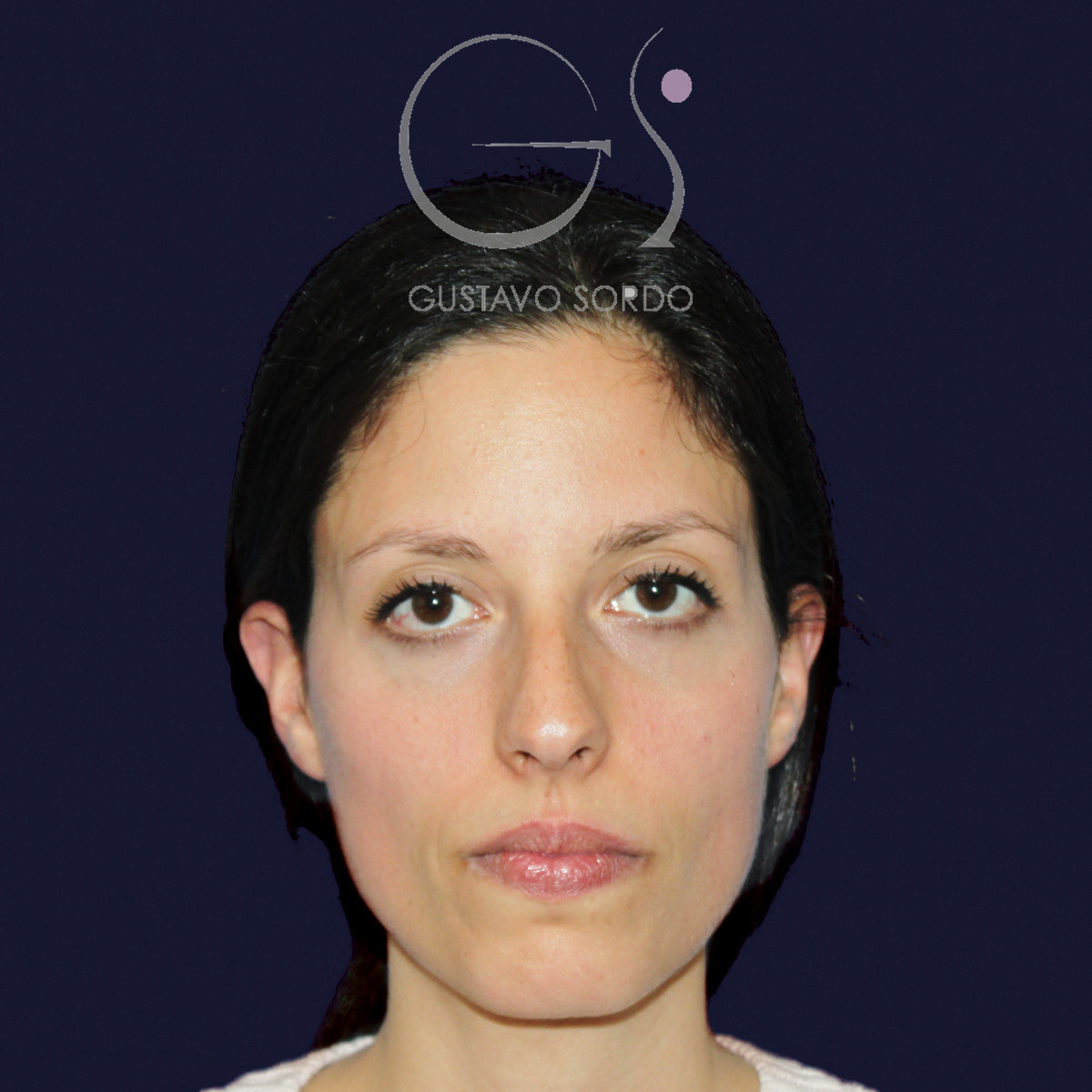
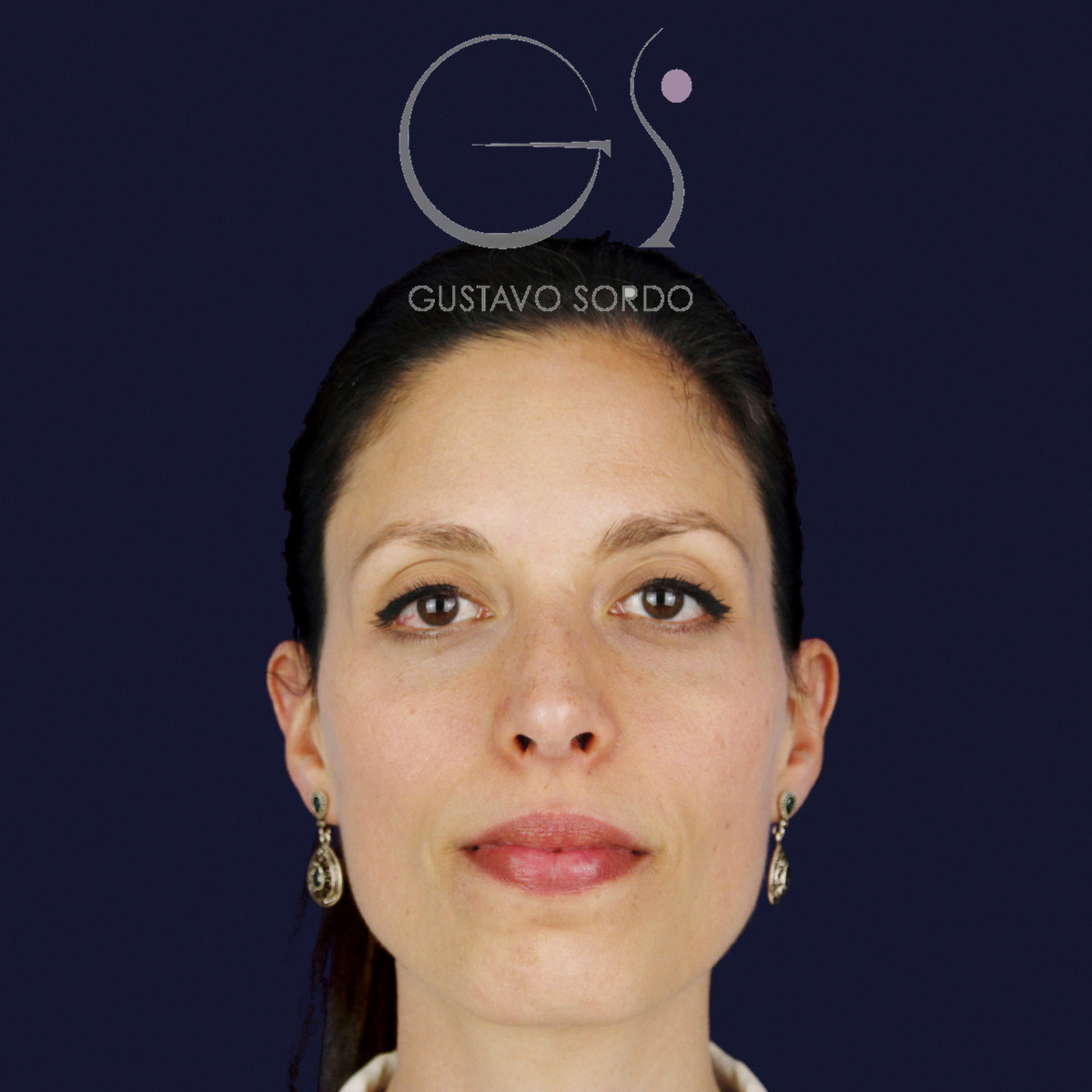
The "after" photos are from her one-year check-up in June 2019, the last session available. In profile, the bridge is straight, without the hump, and the tip is slightly more rotated and less projected; the comparison with her smile shows how the tip looks when her lip moves.
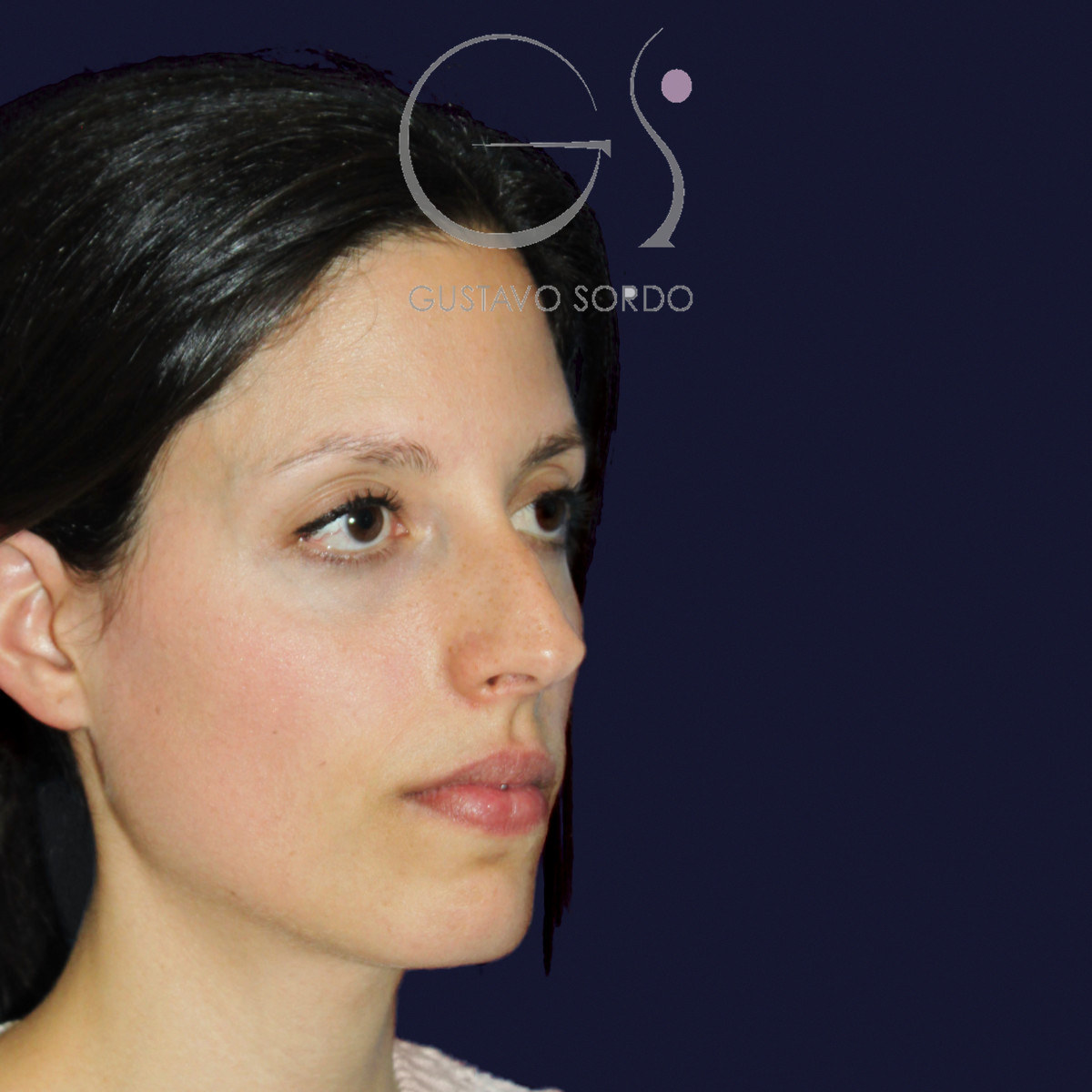
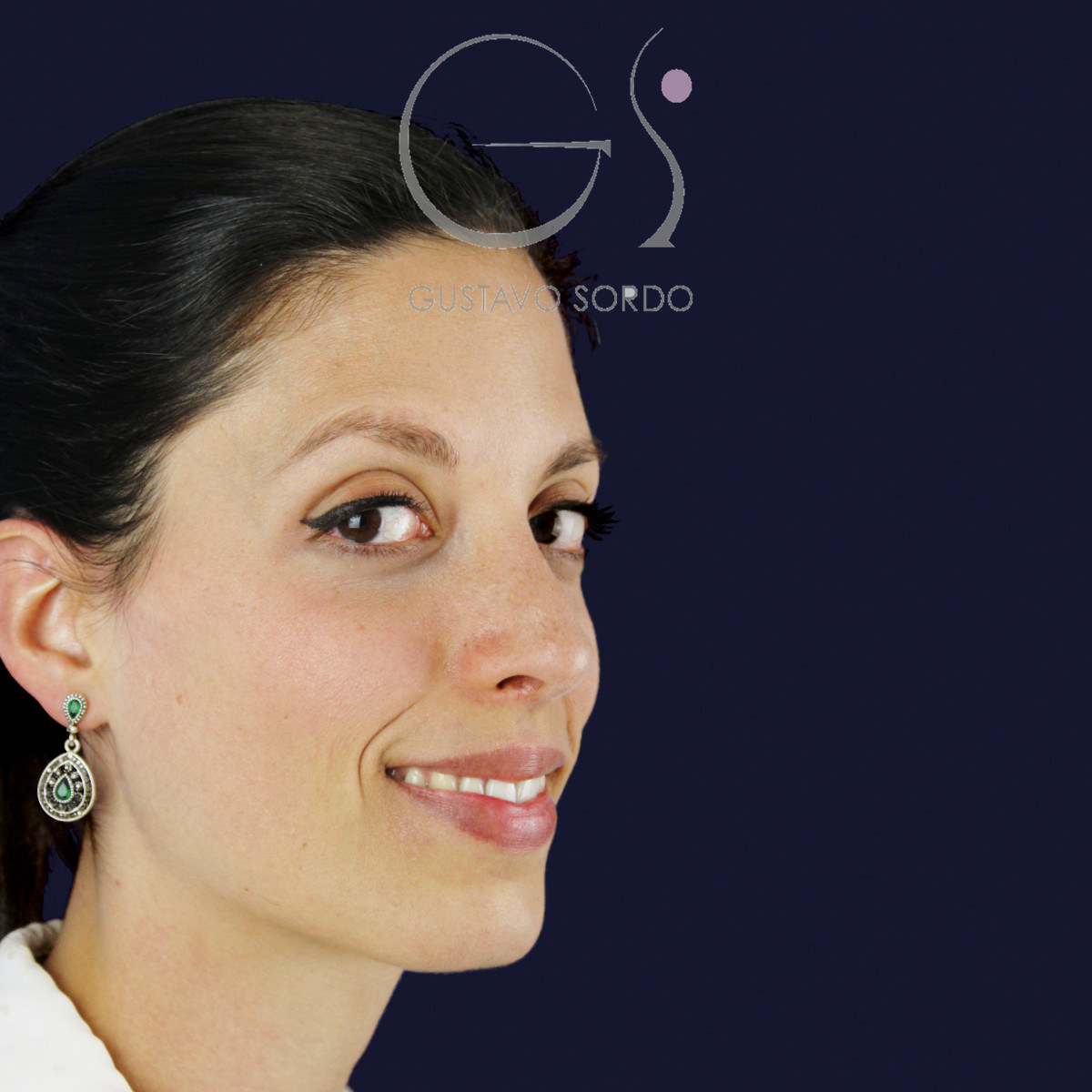
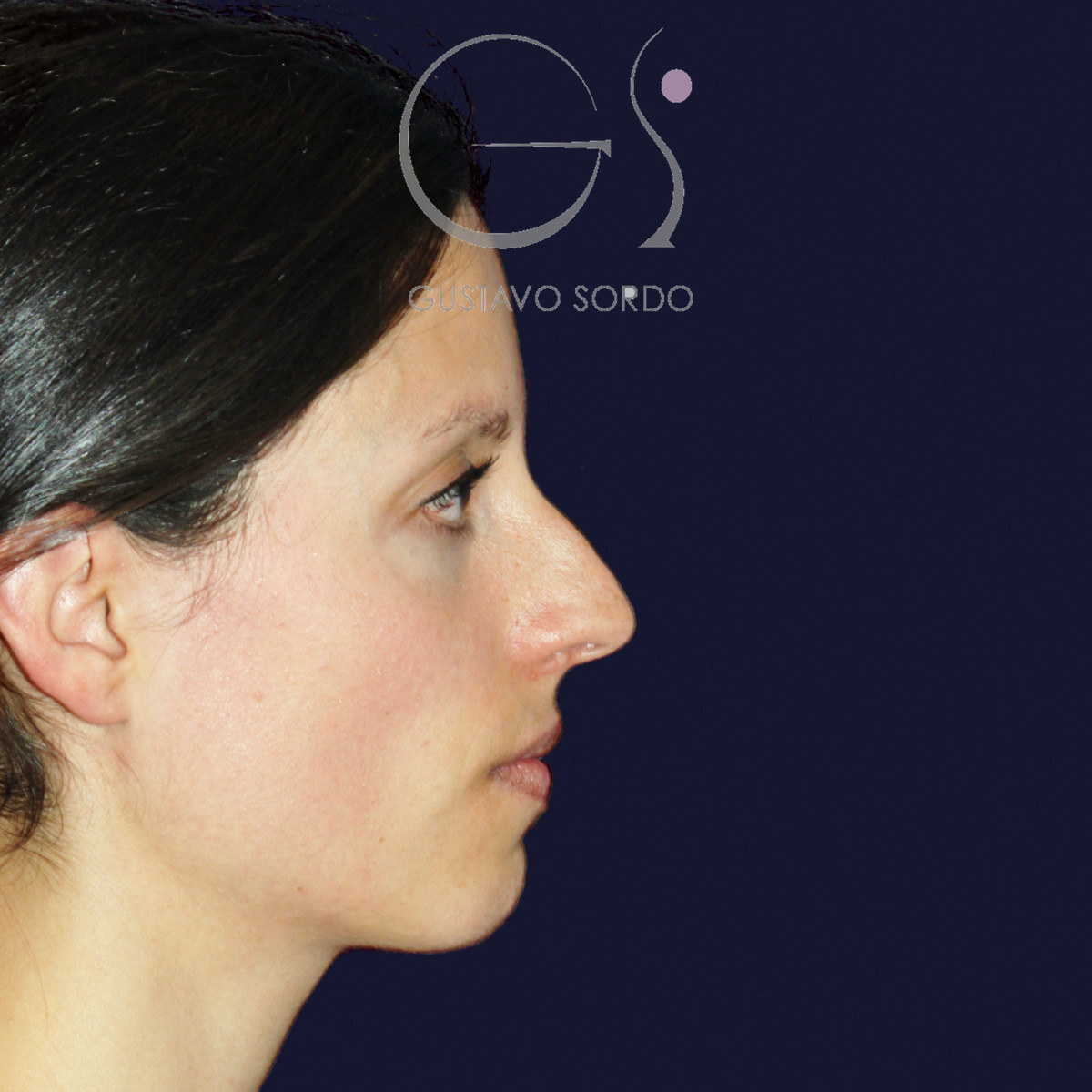
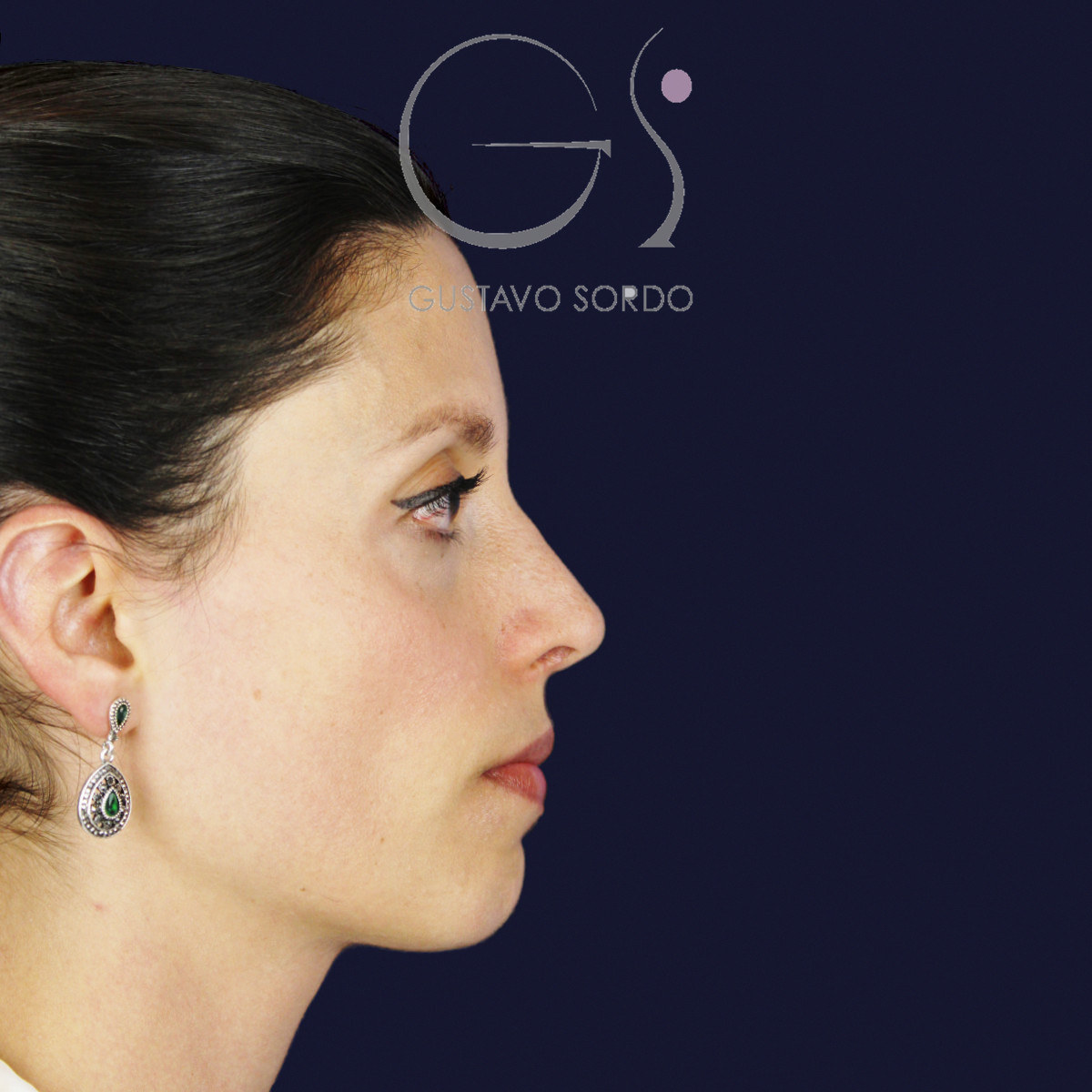
Comment by Dr. Gustavo Sordo
Reason for consultation
Aesthetic.
What I observed when evaluating it
A very clear case of tension nose in an aquiline nose with a V-shaped bridge: the amount of cartilage, of the internal framework, was too large for the thin skin. This was visible as areas of tension on the lip and the dorsal hump.
What was important to preserve
Balance. In a tense nose, the goal is to reduce the internal structure proportionately, without creating unbalanced areas or new tensions by modifying the structure. And with thin skin, the bridge should be smooth and well-supported.
My surgical approach
The procedure involved aligning all the structures, reducing the overall size of the nose, and supporting the already reduced framework with its own cartilage. Since there was ample cartilage, a septal extension graft for the tip was not required.
Why I chose this technique
Ultrasonic rhinoplasty allows for great precision in reducing and aligning an excessive nasal framework, a particularly delicate procedure in a nose under tension. The tongue-in-groove technique fixes the medial crura to the septal margin with sutures: it controls the rotation and projection of the tip and its relationship to the alae without the need for grafts, as the septum itself provides support. And the spacer flaps reconstruct the dorsum by folding the upper lateral cartilages inward.
What I did during surgery
I reduced the hump using ultrasonic instrumentation and reconstructed the dorsum with spreader flaps . At the tip, I performed a tongue-in-groove procedure and a 2 mm lateral crura resection to rotate it and reduce projection, relieving tension on the lip. The septum and turbinates were also addressed in the same surgery. A breast augmentation was also performed during the same operation: combining the two surgeries is perfectly feasible. The procedure was performed under TIVA general anesthesia, lasting four and a half hours in total, with an overnight hospital stay.
What is observed in the result
After a year, the nose no longer has the areas of tension it once did: the bridge is straight, the tip is more rotated and less projected, and the reduction is harmonious with the face.
Another case of a tense nose, with an aquiline and projecting nose ; more cases of noses with a hump and an explanation of the technique, on the nose surgery page in Madrid . Why a V-shaped dorsum is operated on differently than an S-shaped one is explained in the V-shaped and S-shaped dorsums sections.
Case operated on by Dr. Gustavo Sordo
Specialist in Plastic, Aesthetic and Reconstructive Surgery. Member No. 282858125.
Before you compare yourself to this photo
Not all noses need ultrasound, nor do they all benefit equally. In our ultrasonic rhinoplasty guide, we explain in which cases the outcome varies.
Do you want to know if this can be done in your case?
The first consultation is with Dr. Sordo, either at the Chamberí clinic or via video consultation. You'll leave knowing if you're a candidate, which technique is right for you, and how much it costs.
Dr. Gustavo Sordo · Member No. 282858125 · Plastic, Aesthetic and Reconstructive Surgery · Madrid