Rhinoplasty on a long nose with thick skin: before and after one year
Case fact sheet
- Patient: Female, 38 years old
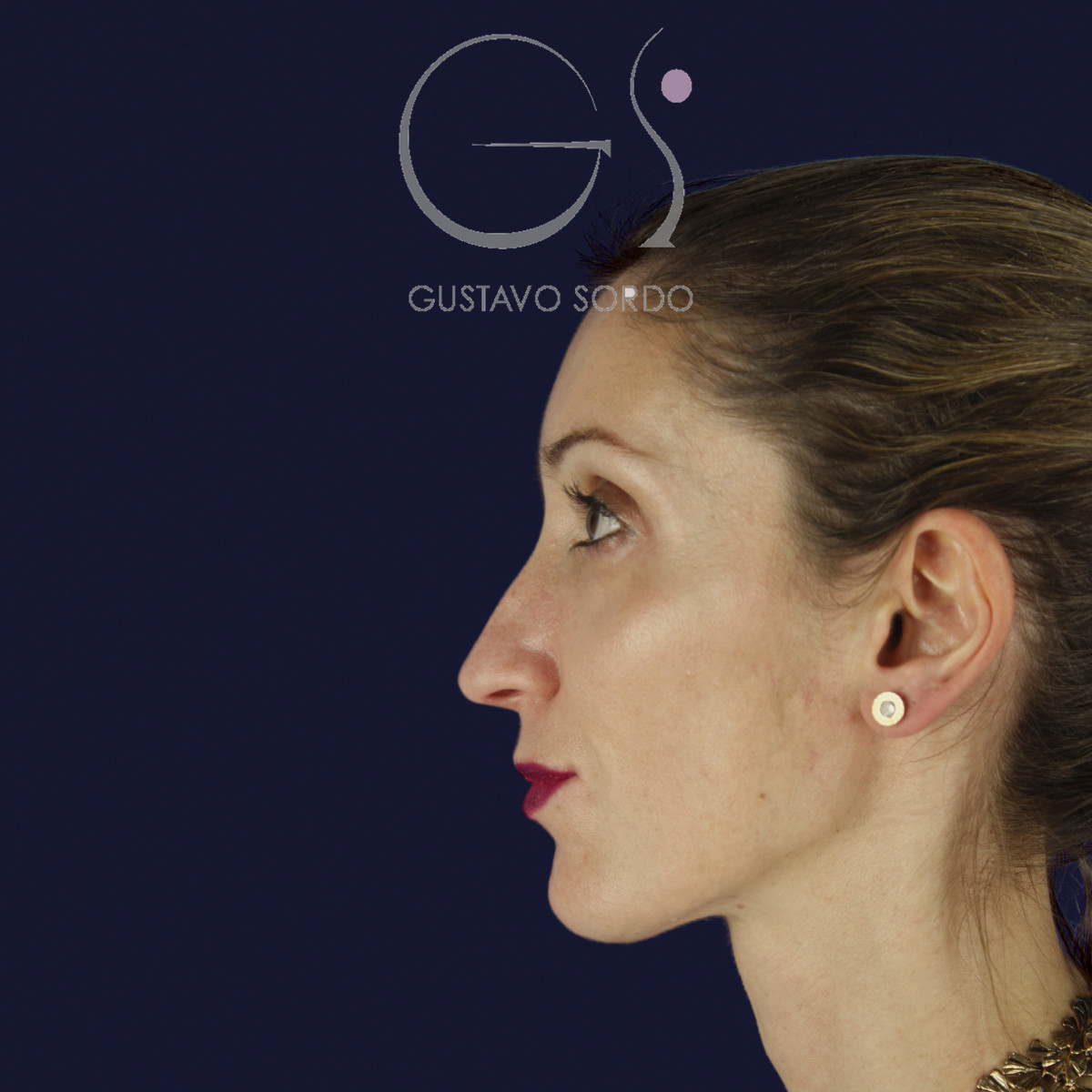
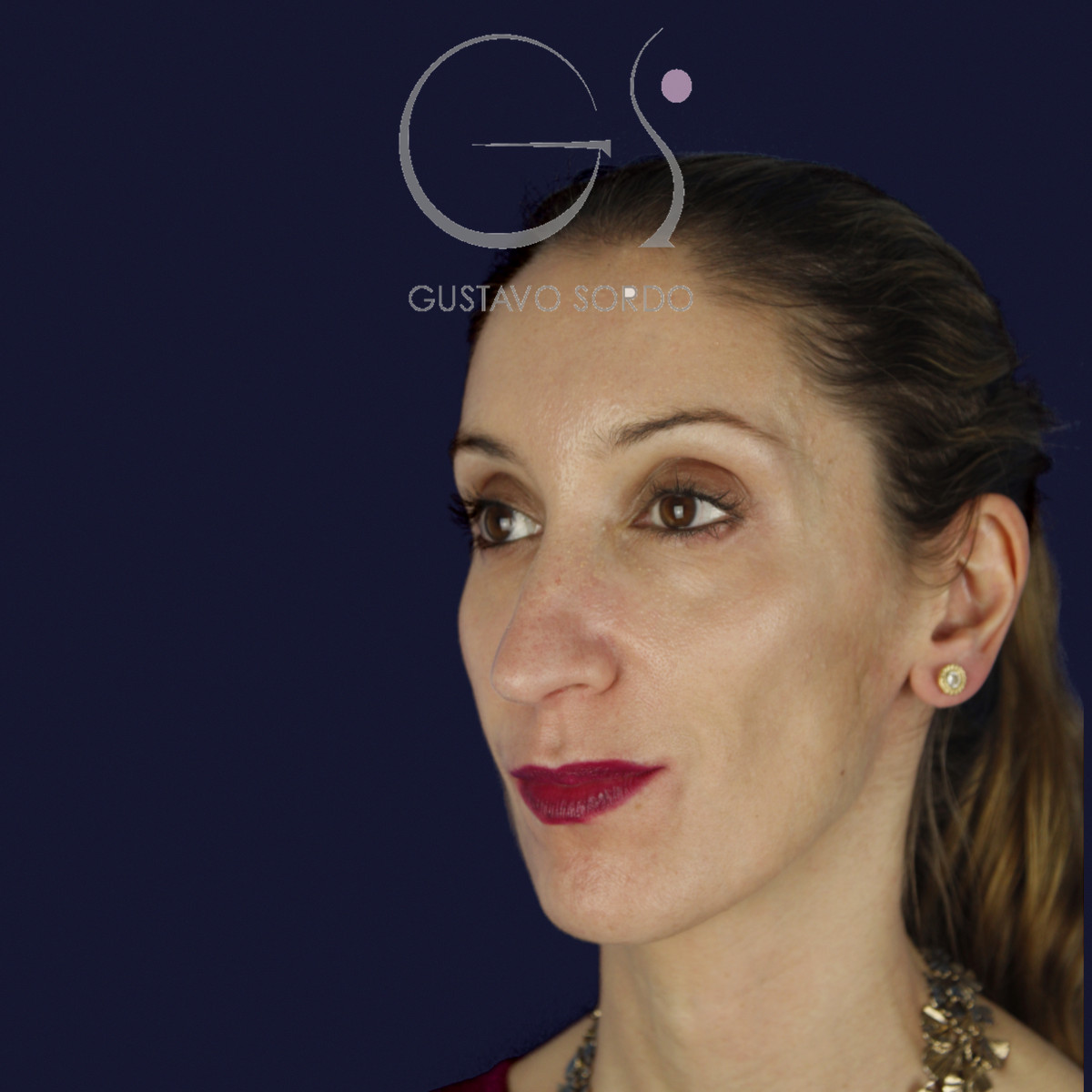
- Starting nose: long nose without a high bridge: the length was given by the nasolabial angle and a tip with a lot of cartilage, which drooped when smiling; elongated face and thick, rather oily skin
- Technique: Structural rhinoplasty with ultrasonic instrumentation: dorsum reduced just enough and reconstructed with spacer grafts (spreader grafts), tip mounted with sutures over a septal extension graft and closure of the dead spaces of the supratip and scroll ligaments
- Septum and turbinates: Septoplasty and turbinate reduction in the same surgery, as part of structural rhinoplasty
- Approach: Position the tip at the correct angle and length, lowering the bridge only slightly and without over-shortening a nose that must complement an elongated face.
- Skin: Low-dose oral isotretinoin for one year after surgery, prescribed and monitored by a doctor.
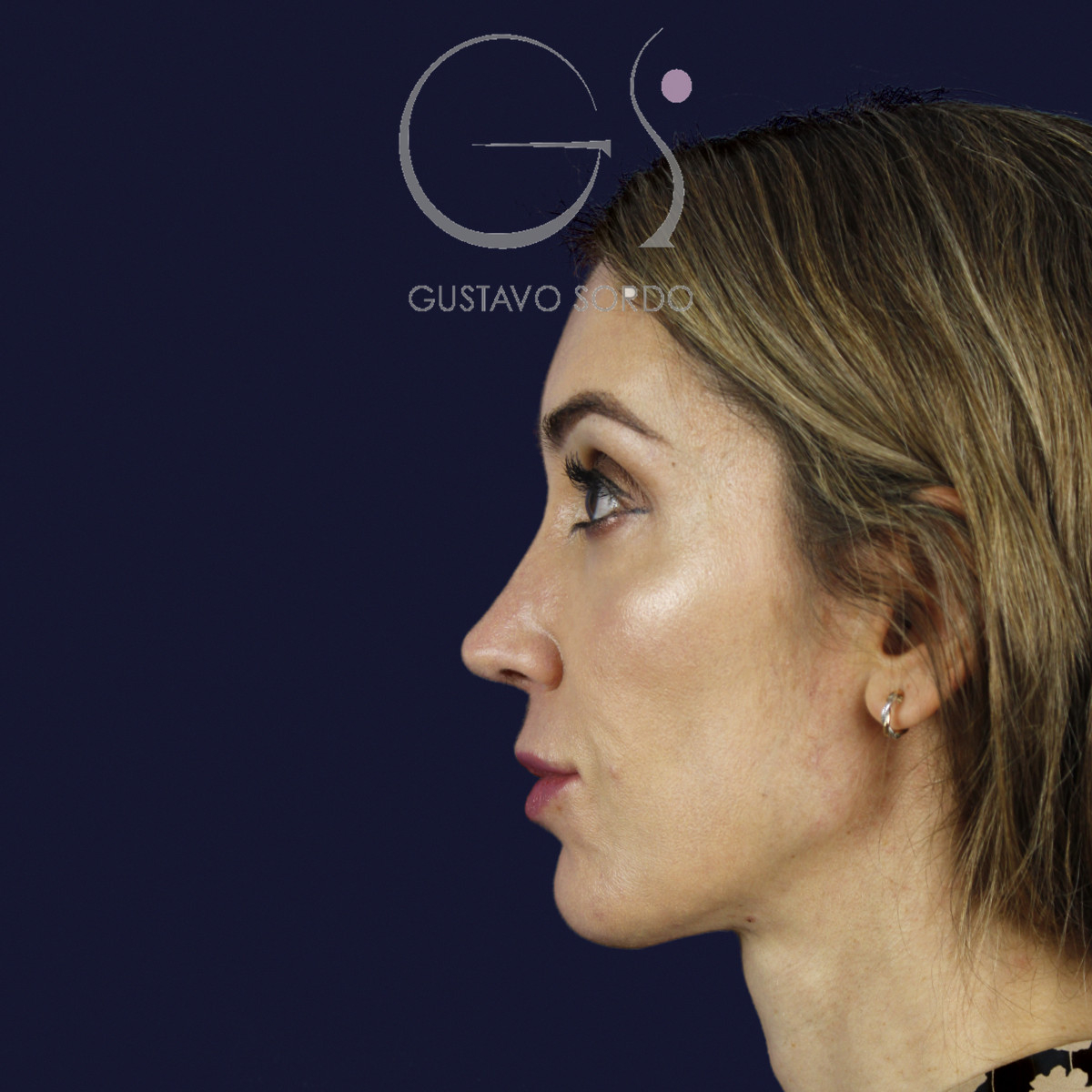
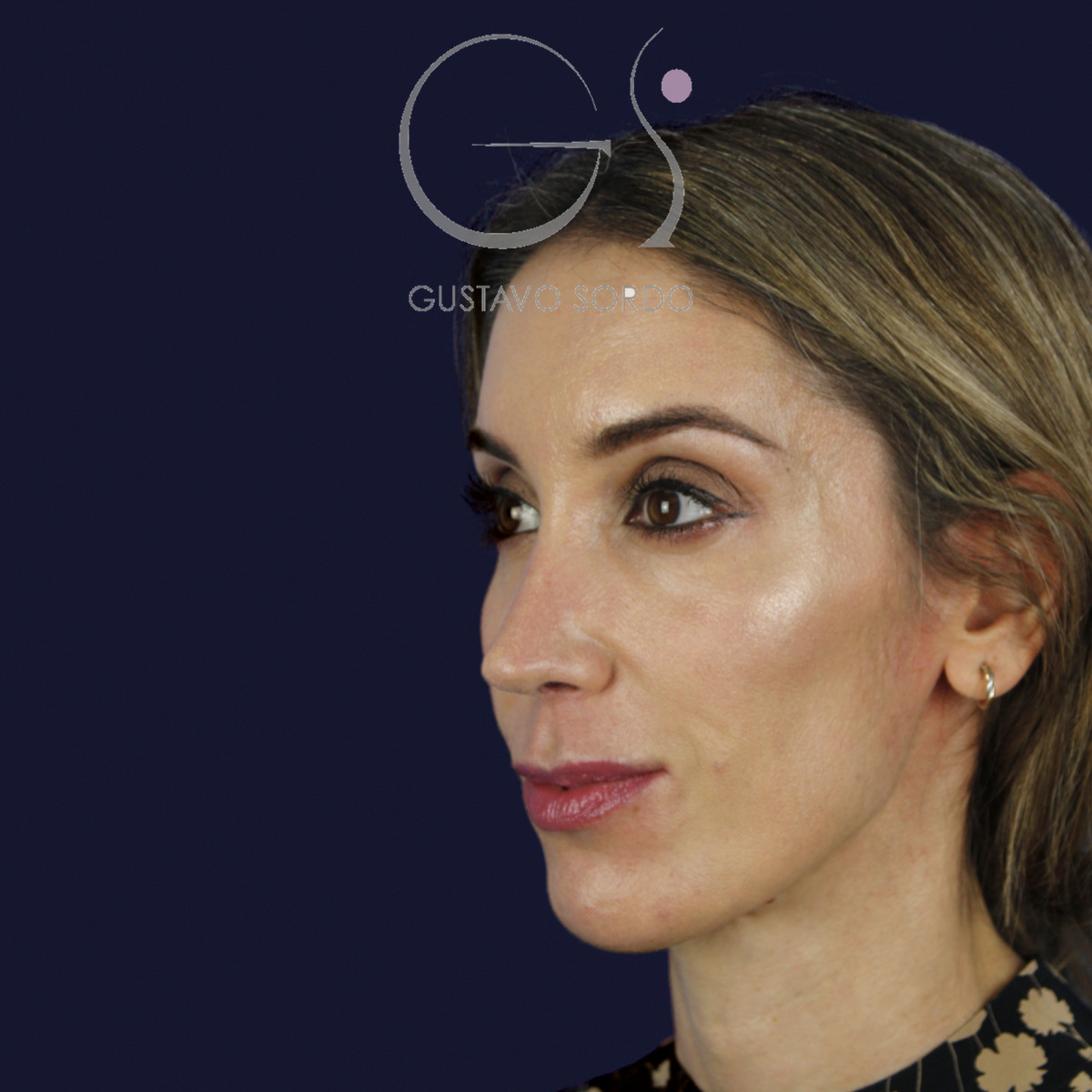
- Result: one year after the operation
- Entry: 1 night
- Anesthesia: general type TIVA
- Duration: 2,5 hours long.
A long nose on an elongated face with thick skin. It wasn't a problem with a high bridge, but rather a tip that drooped and lengthened the profile. Structural rhinoplasty with ultrasonic instrumentation: the tip, in place and supported; the bridge, barely reduced; and the length, as her face required. And a year of oral isotretinoin after the operation greatly improved her skin.
Photos one year after the operation
One-year follow-up. With thick skin like in this case, waiting until the one-year mark is even more important than with other noses: the swelling in the area above the tip takes the longest to subside, and the definition continues to improve for months. Therefore, a photo taken in the operating room or in the first few weeks is useless for making any decisions. Before and after, with identical views, lighting, and framing, are essential.
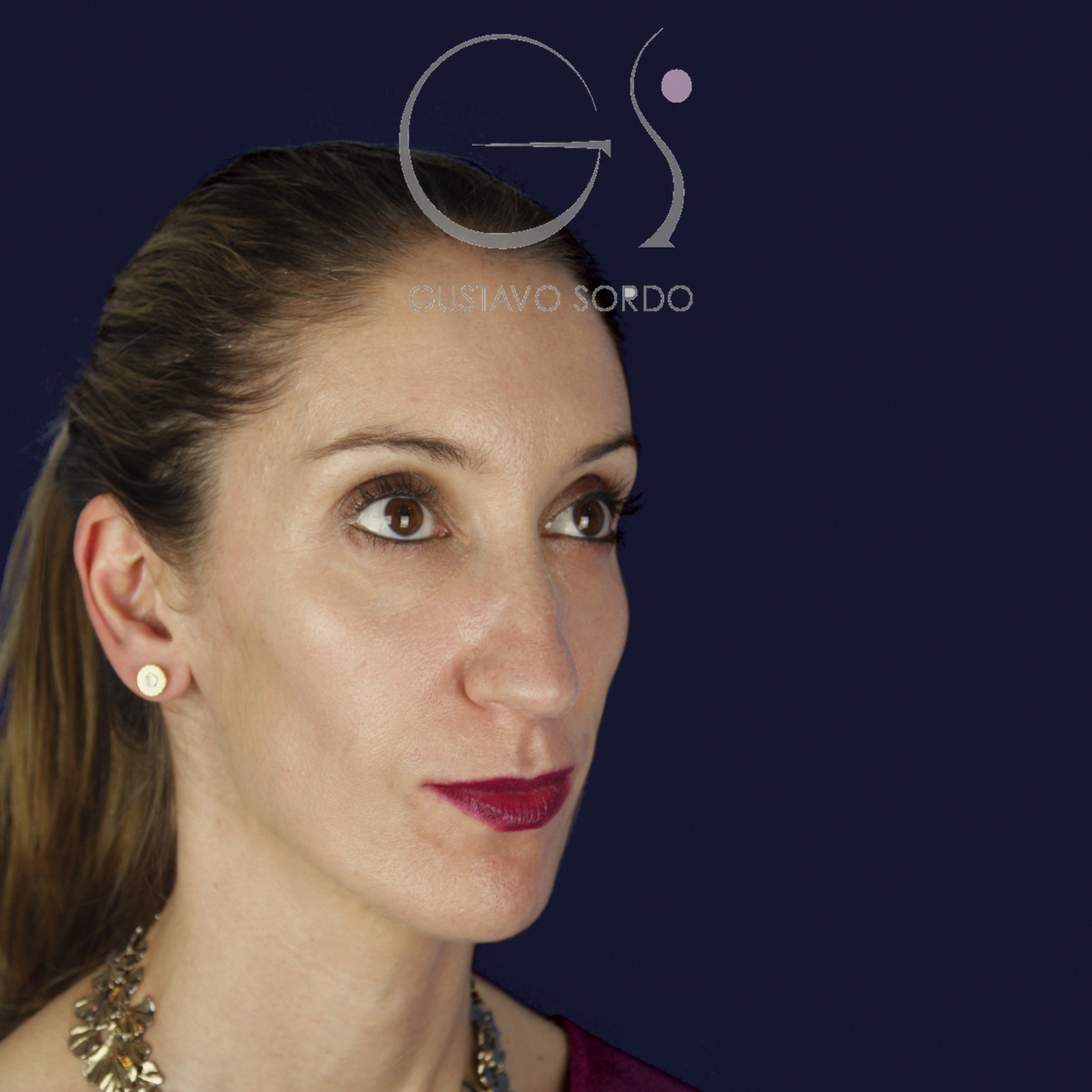
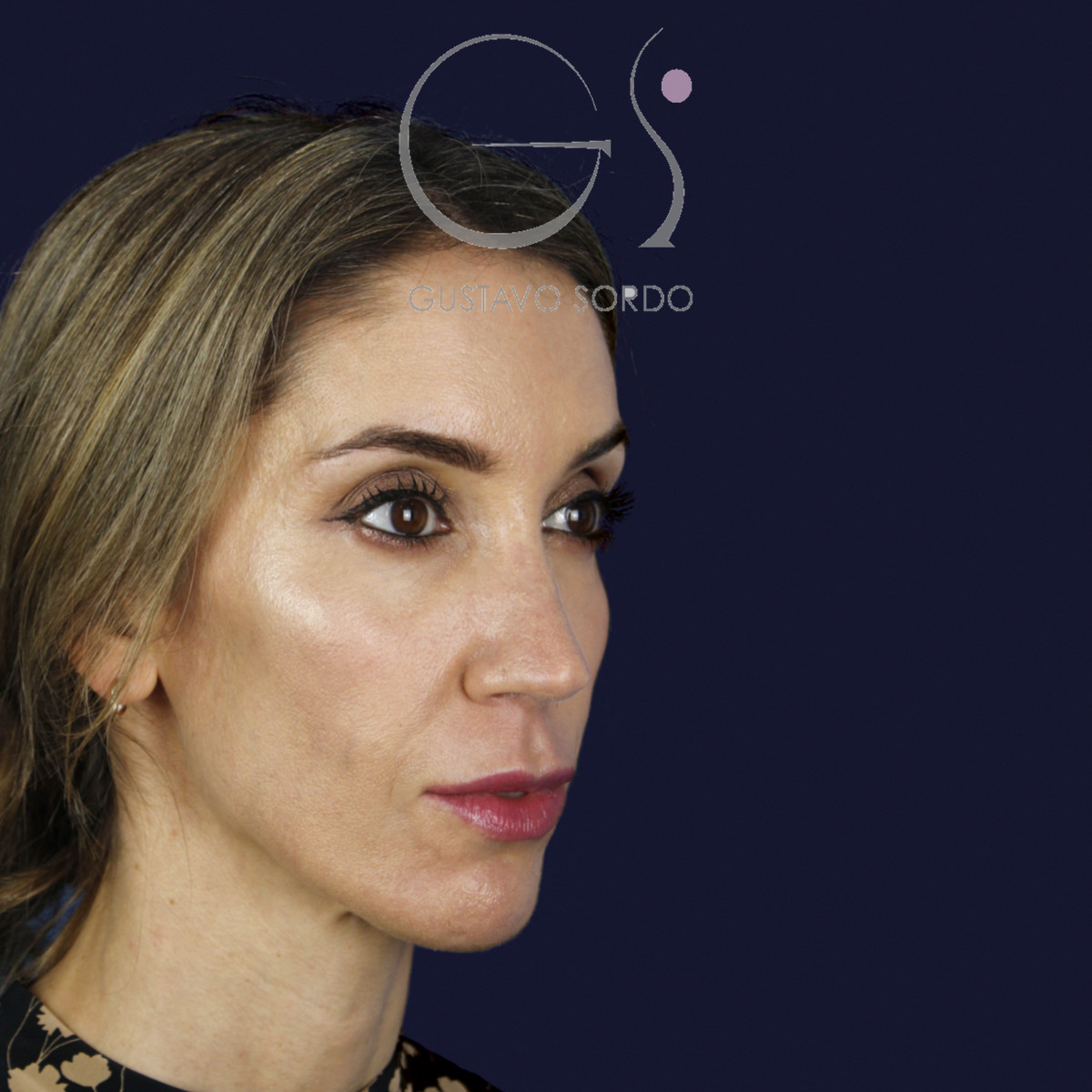
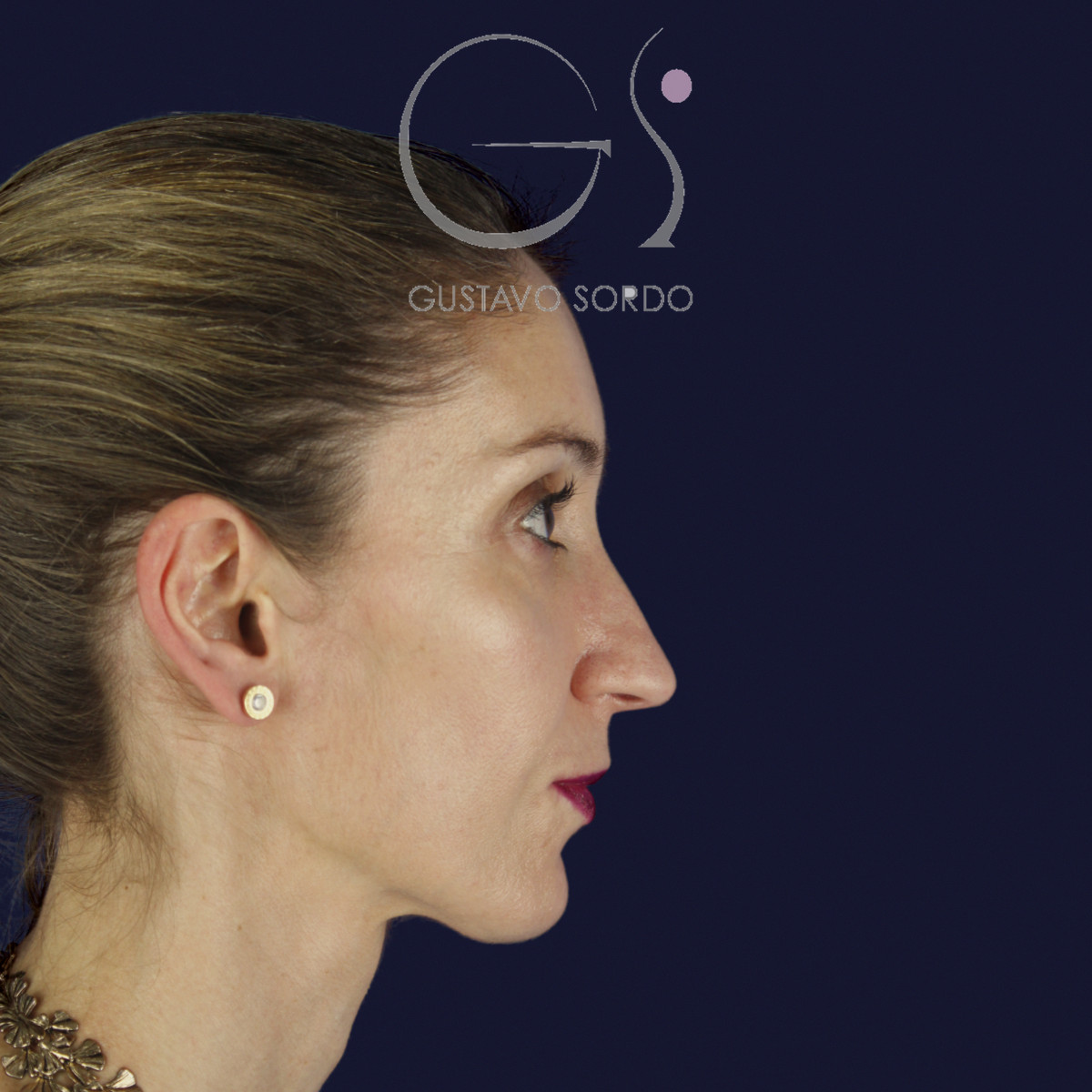
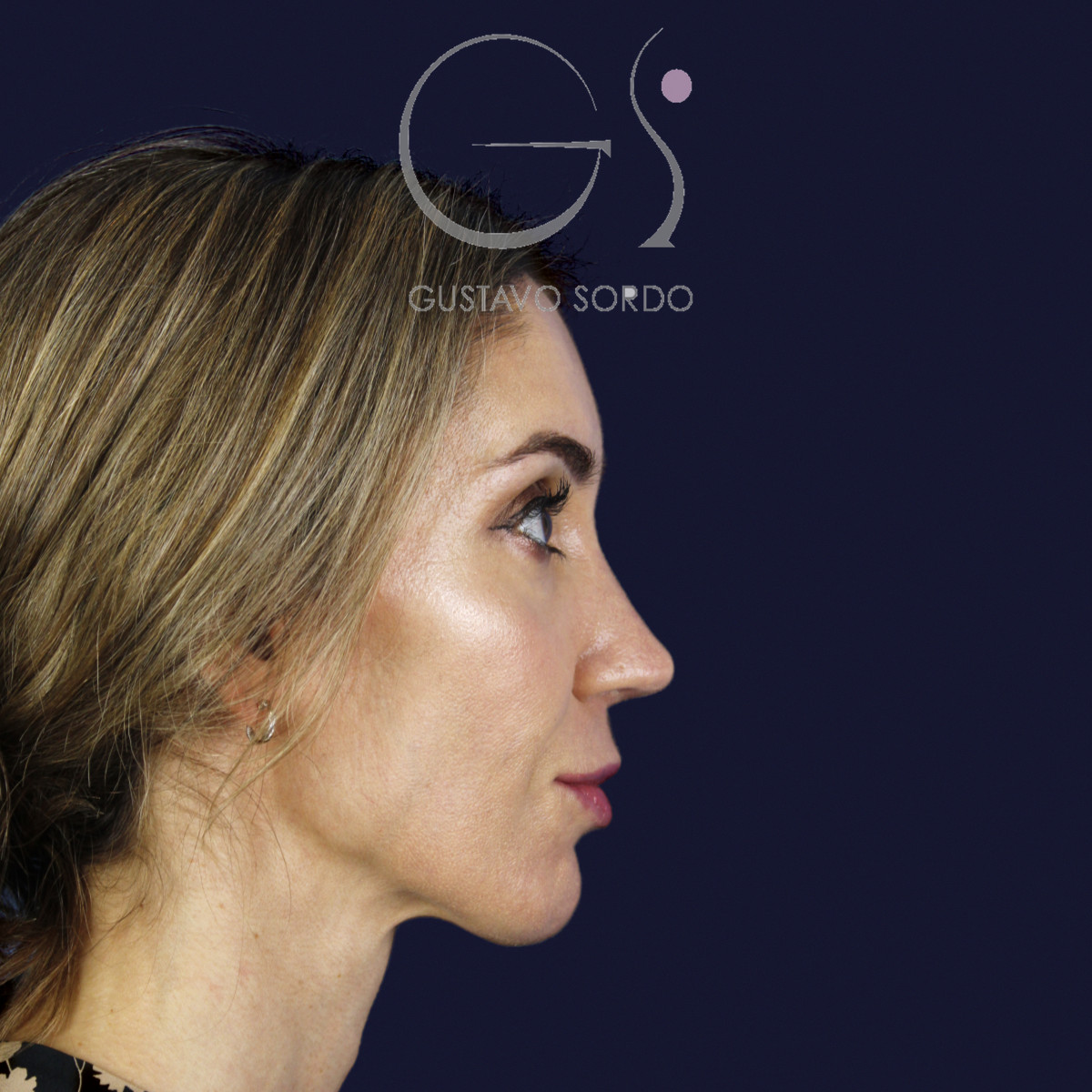
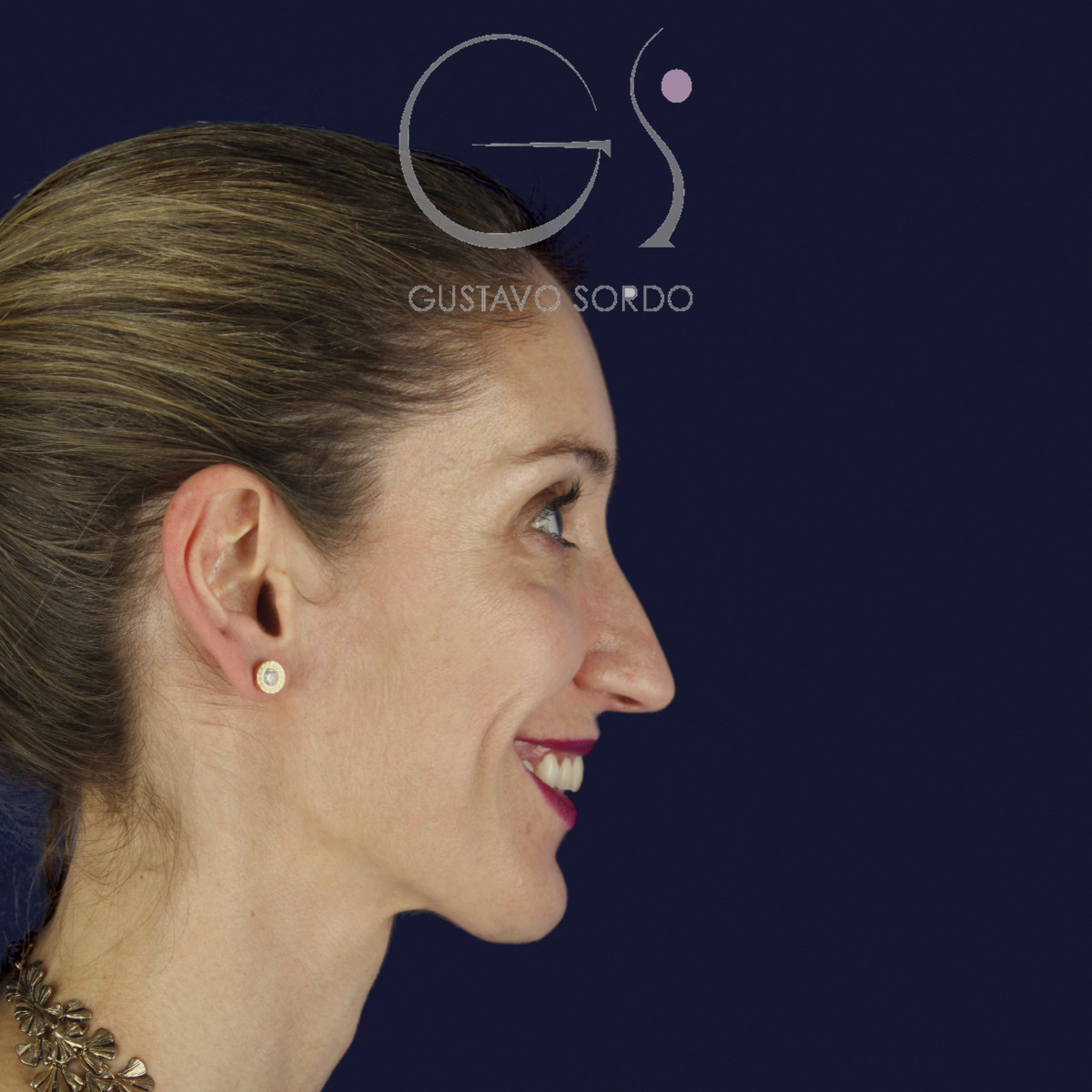
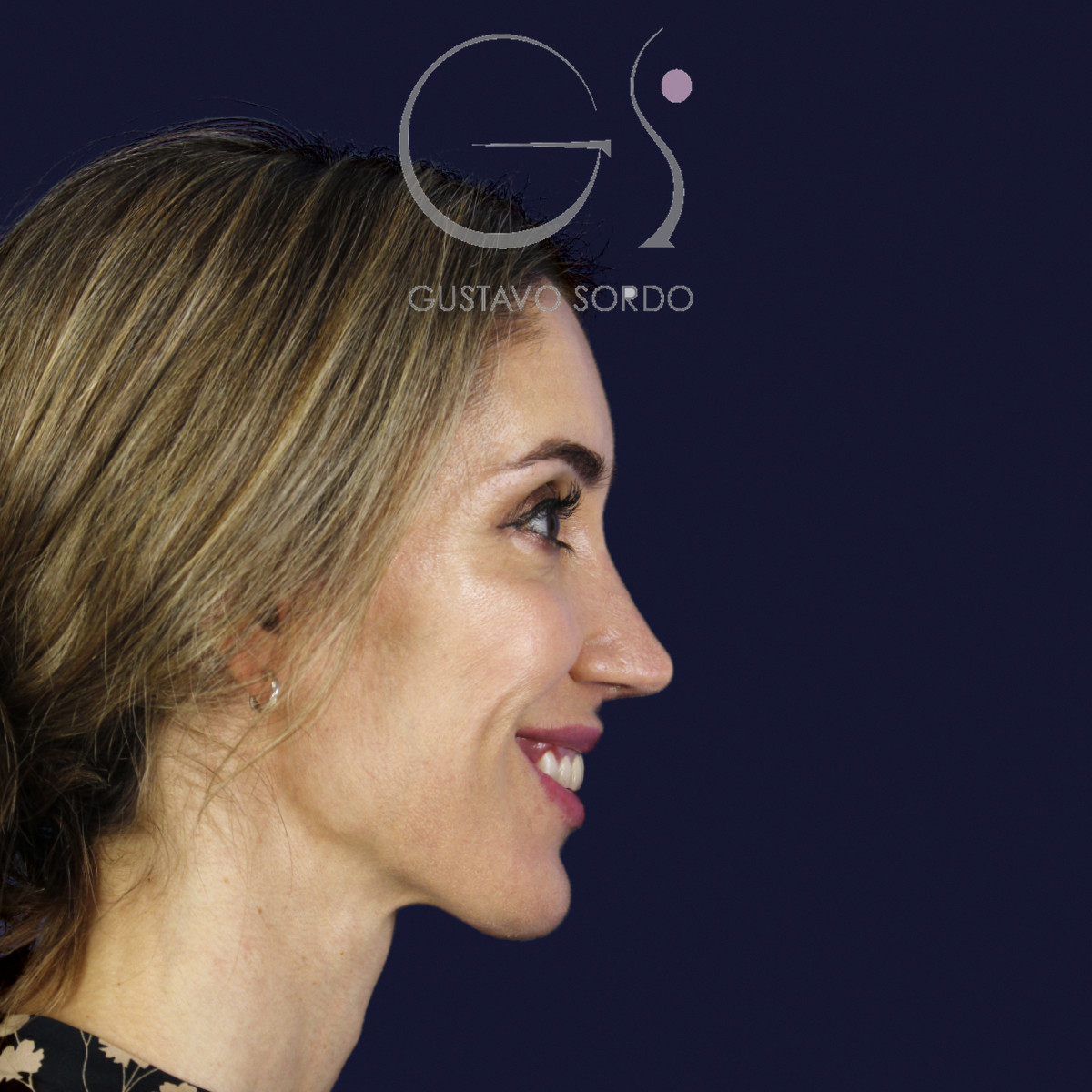
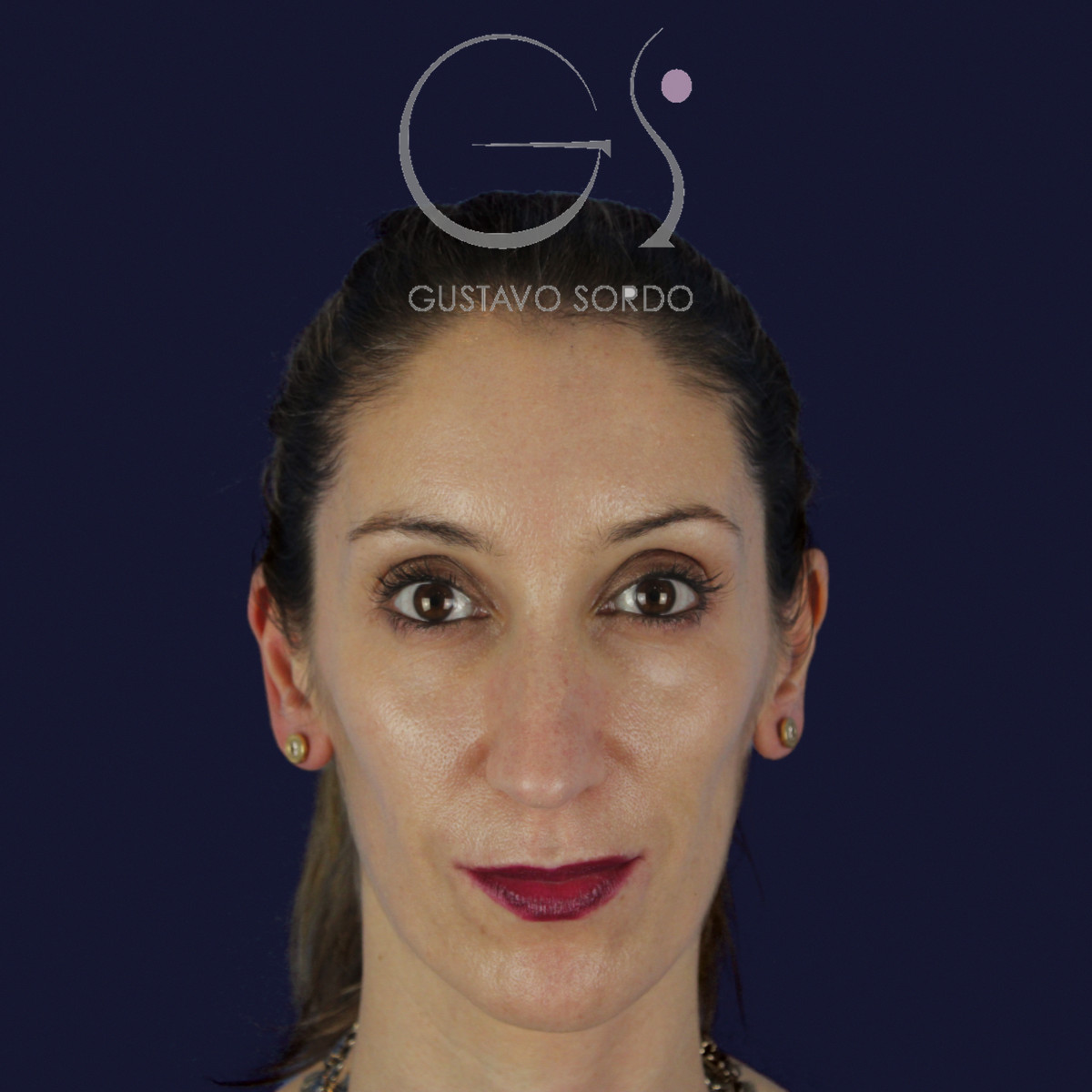
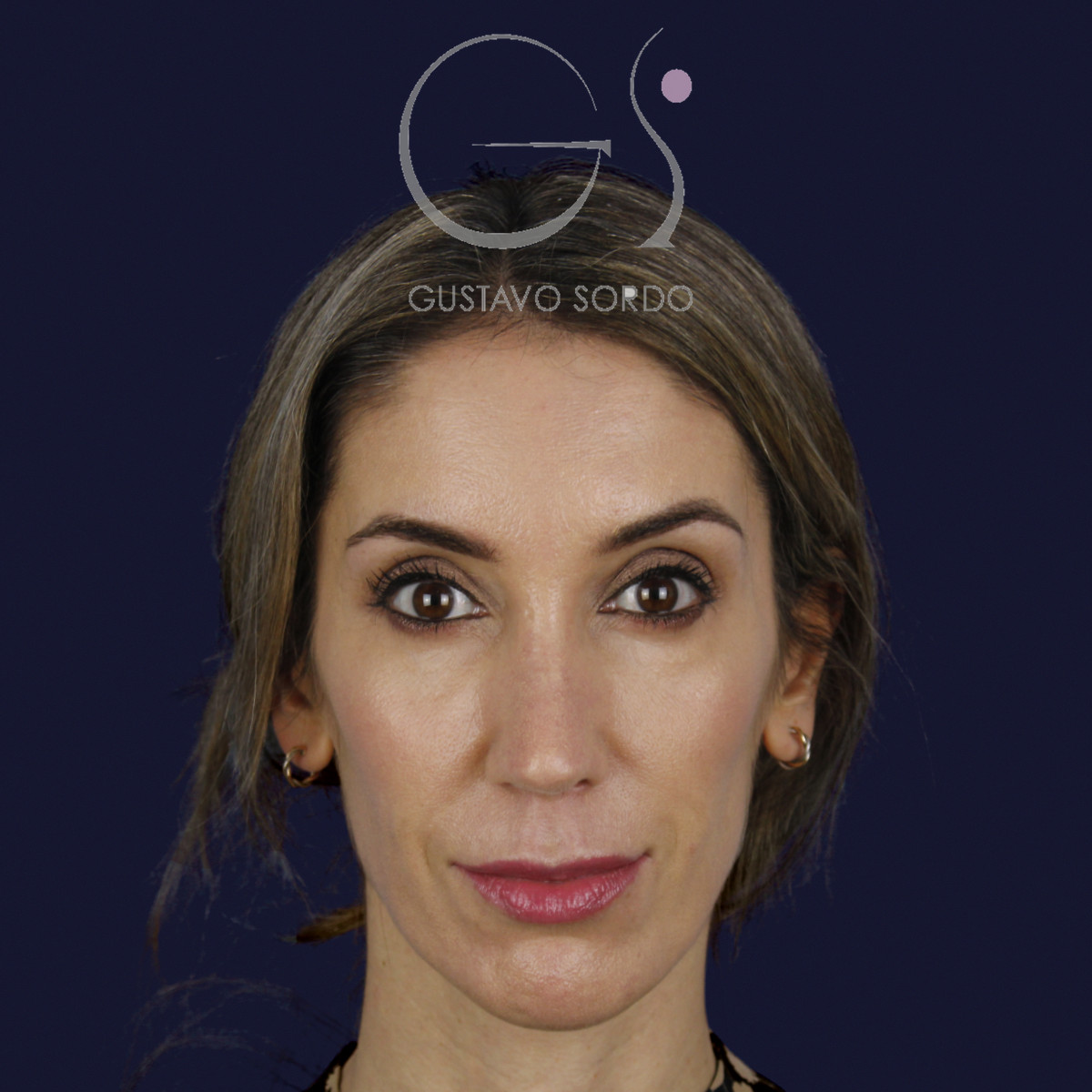
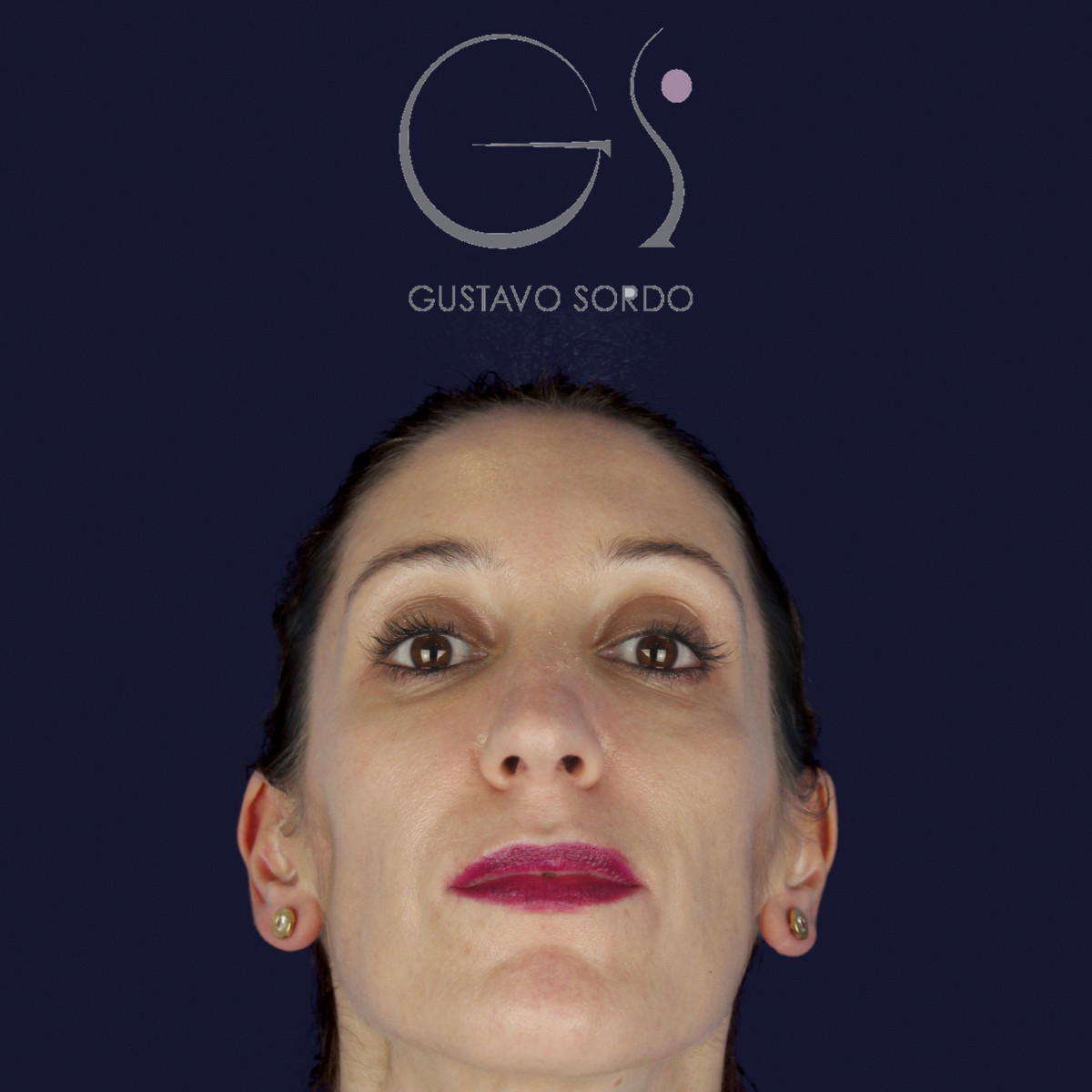
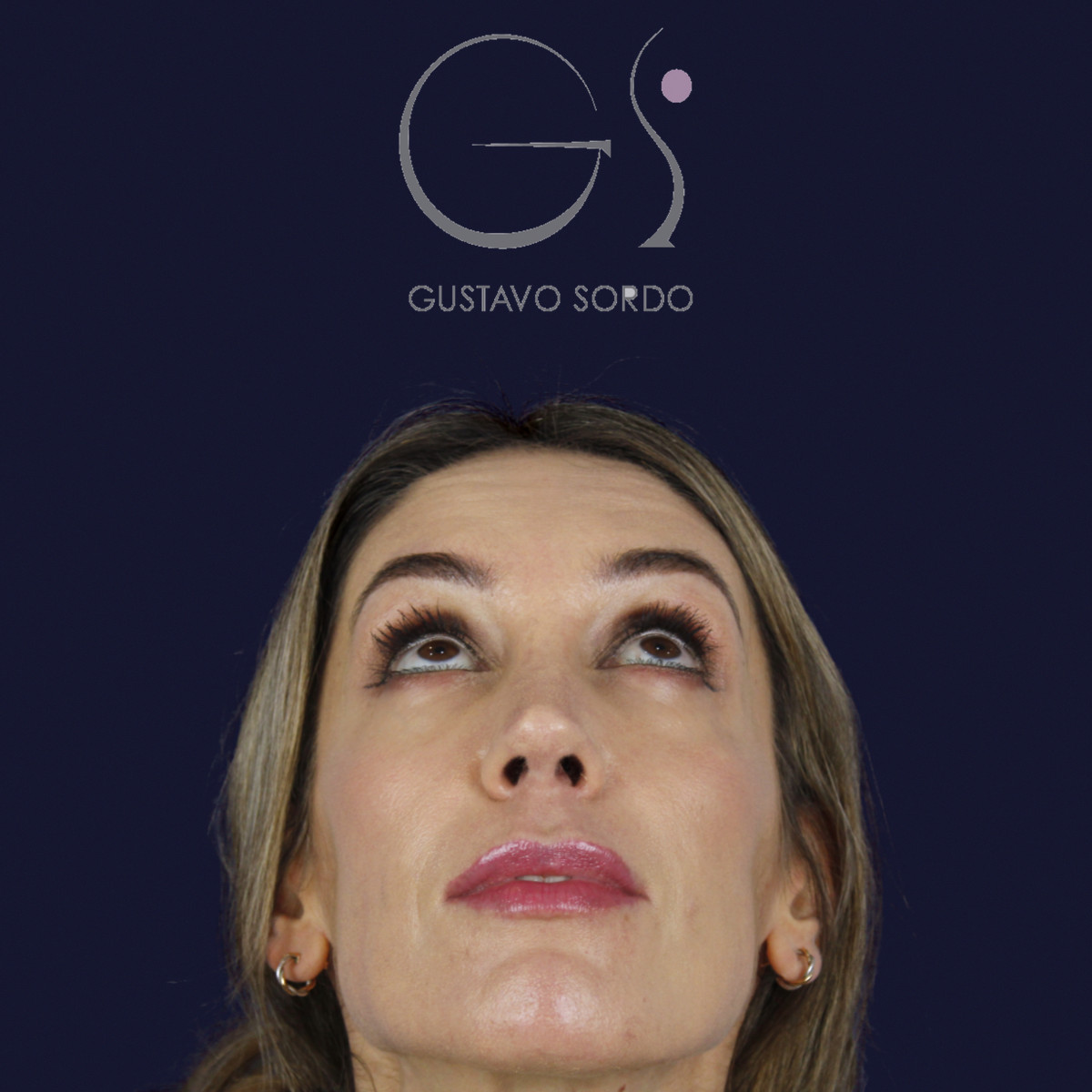
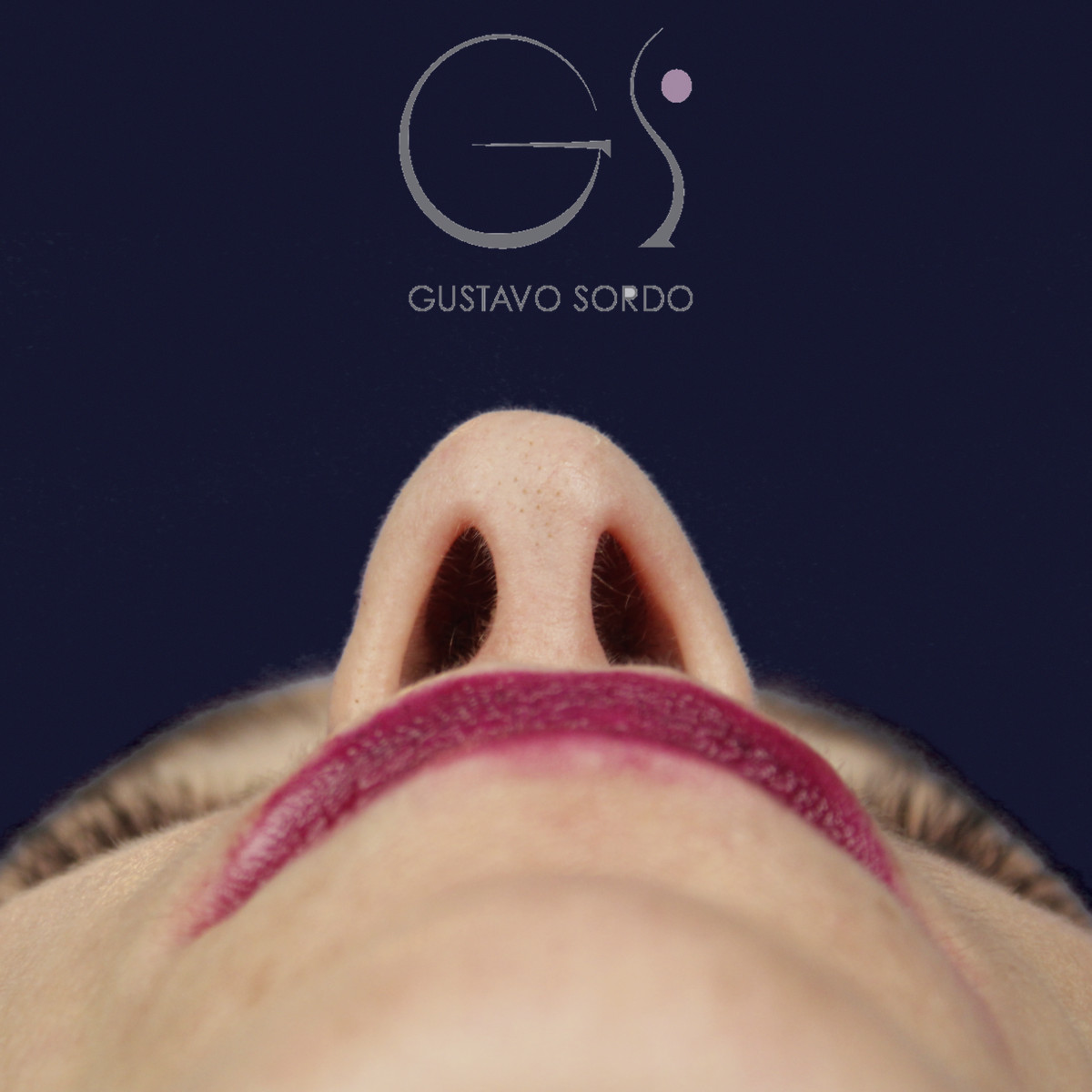
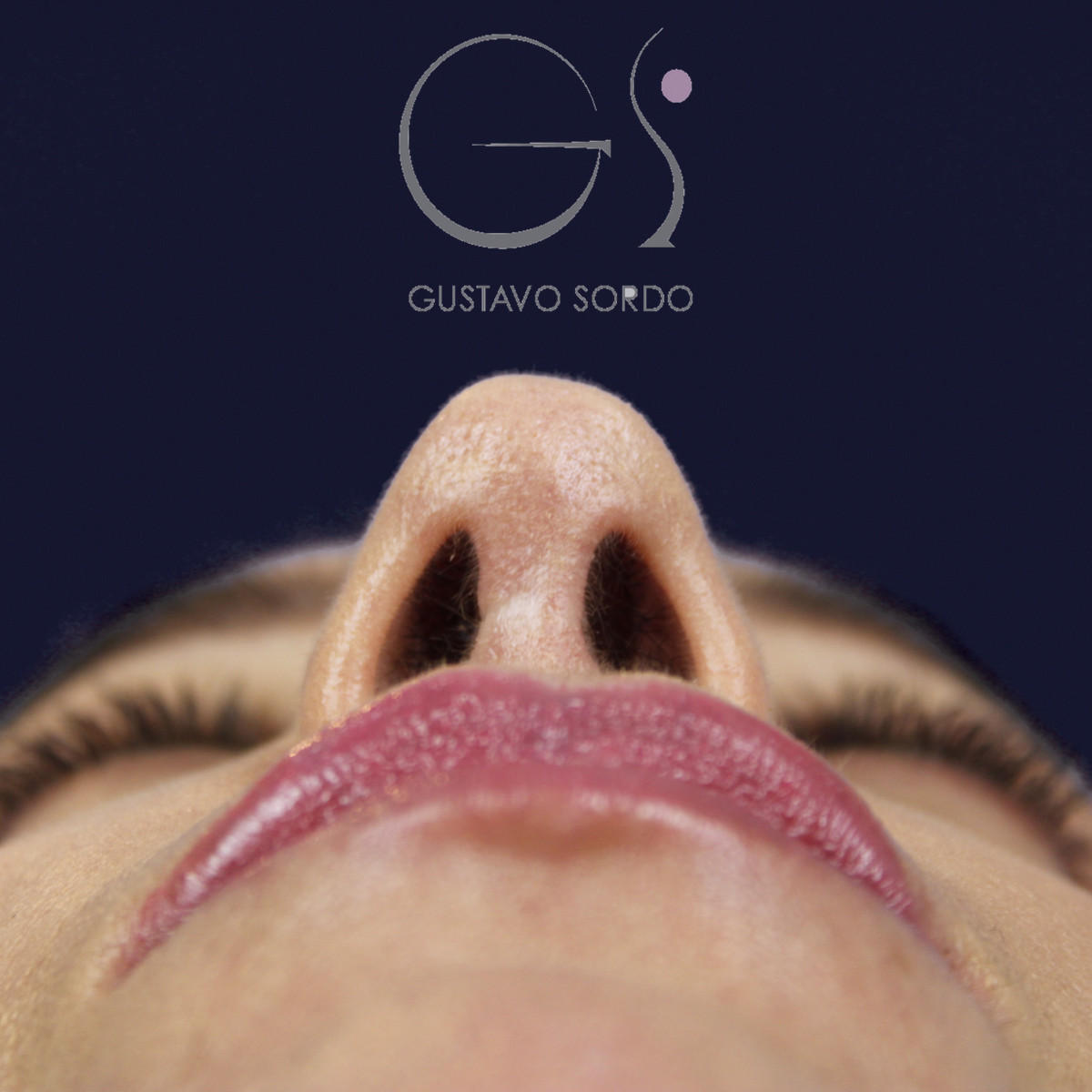
Comment by Dr. Gustavo Sordo
Reason for consultation
An aesthetic reason: she didn't like her nose, which looked long.
What I observed when evaluating it
A very long nose. Not because of the bridge, which wasn't that high, but because of the nasolabial angle, which wasn't right and gave the impression of a very long face. There was a lot of cartilage at the tip, which drooped even further when she smiled. And the skin was thick, quite oily.
What was important to preserve
The proportions of her face. It's an elongated face, and the nose has to complement its vertical lengths, not clash with them. That's why it shouldn't be shortened too much: on an elongated face, a short nose is disproportionate.
My surgical approach
Remove just enough of the dorsum, lowering it only slightly, and reconstruct it with spacer grafts; then, attach the tip with sutures over a septal extension graft, with the correct angle and length. With so much cartilage in the tip, if the dorsum had also been reduced too much, the dorsum and tip would have been disproportionate.
Why I chose this technique
In thick skin, the shape must be provided by a firm framework: spacer grafts reconstruct the dorsal surface, and the septal extensor supports the tip in its position. Ultrasonic instruments allow for precise and accurate reduction of the dorsal surface. I always close the dead space in the supratip and scroll ligament area, but in thick skin, it's crucial: if gaps remain, they fill with scar tissue, and the tip loses definition.
What I did during surgery
A structural ultrasonic rhinoplasty , with septoplasty and turbinate reduction: I reduced the dorsum just enough and reconstructed it with spacer grafts, attached the tip with sutures over a septal extension graft, and closed the dead spaces of the supratip and scroll ligaments. It lasted two and a half hours, under TIVA general anesthesia, and she spent one night in the hospital.
What is observed in the result
After a year, the nose no longer looks long: the tip is higher, the nasolabial angle is corrected, and the tip no longer droops when smiling. The bridge retains almost its original height, and in the baseline photo, the base appears symmetrical. After the surgery, she took low-dose oral isotretinoin, 20 mg daily for a year, and her skin improved significantly: the result is much more defined than it would have been without it. In thick, oily skin, when indicated, it is a great help; it is a prescription medication that requires medical supervision.
More cases and an explanation of the technique can be found on the rhinoplasty page in Madrid.
Case operated on by Dr. Gustavo Sordo
Specialist in Plastic, Aesthetic and Reconstructive Surgery. Member No. 282858125.
Before you compare yourself to this photo
If you're comparing results to get an idea, keep in mind that the starting point is just as important as the technique. How is a nose studied before surgery, in rhinoplasty in Madrid.
Do you want to know if this can be done in your case?
The first consultation is with Dr. Sordo, either at the Chamberí clinic or via video consultation. You'll leave knowing if you're a candidate, which technique is right for you, and how much it costs.
Dr. Gustavo Sordo · Member No. 282858125 · Plastic, Aesthetic and Reconstructive Surgery · Madrid