Rhinoplasty for bulbous tip and large nostrils: before and after
Case fact sheet
- Patient: Female, 55 years old
- Starting nose: small nose with minimal hump, very narrow and thin dorsum, thin skin, bulbous and projecting tip, large nostrils and unfavorable alar-columellar ratio
- Technique: ultrasonic rhinoplasty Open structural repair: spreader grafts, septal extension grafting, and wing reduction (allotomy)
- Septum and turbinates: septoplasty and turbinates in the same surgery
- Approach: To support the narrow dorsum, reduce projection at the tip by rotating it slightly, and greatly reduce the nostrils, without making a nose that was already small any smaller.
- Result: Significant improvement in the alar-columellar relationship, much smaller orifices and less projected tip; it has greatly rejuvenated his face
- Entry: 1 night
- Anesthesia: general type TIVA
- Duration: 3 hours long.
A 55-year-old woman presented with a small nose, a bulbous tip, large nostrils, a very narrow and thin bridge, and thin skin. I performed an open ultrasonic rhinoplasty with spacer grafts, septal extension, and alar reduction. The nostrils are now much smaller, and the tip has less projection and slightly more rotation. The change has significantly rejuvenated her face.
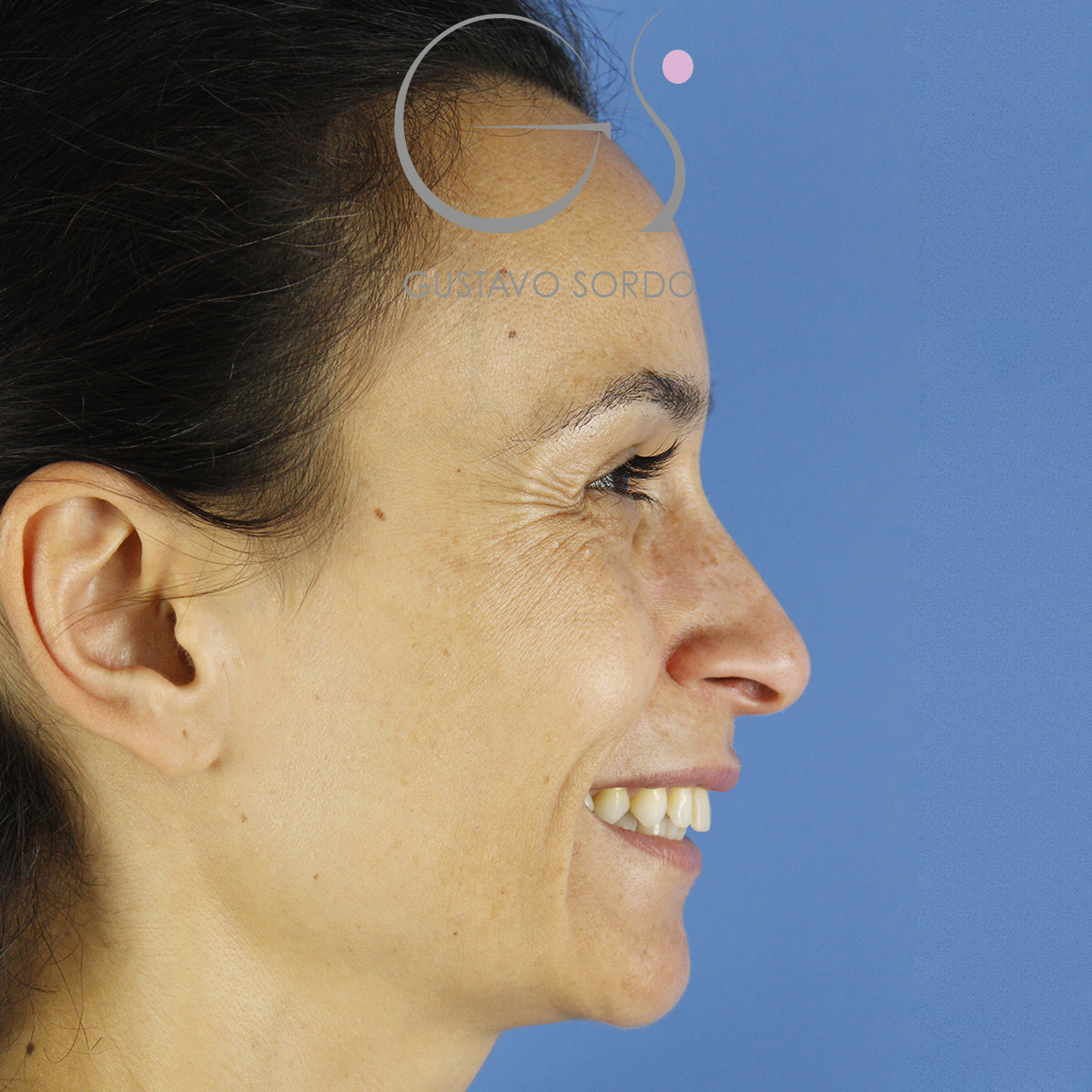
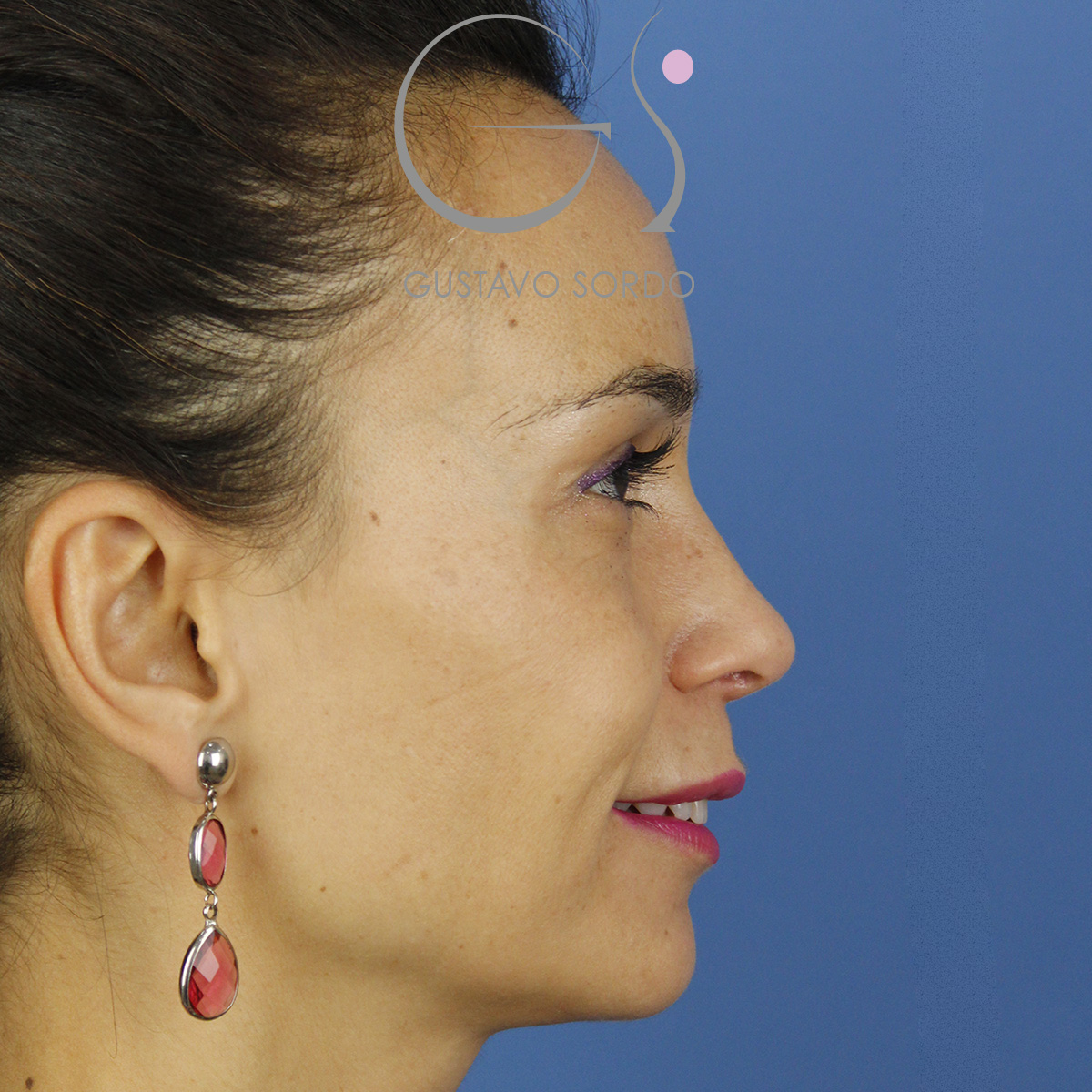


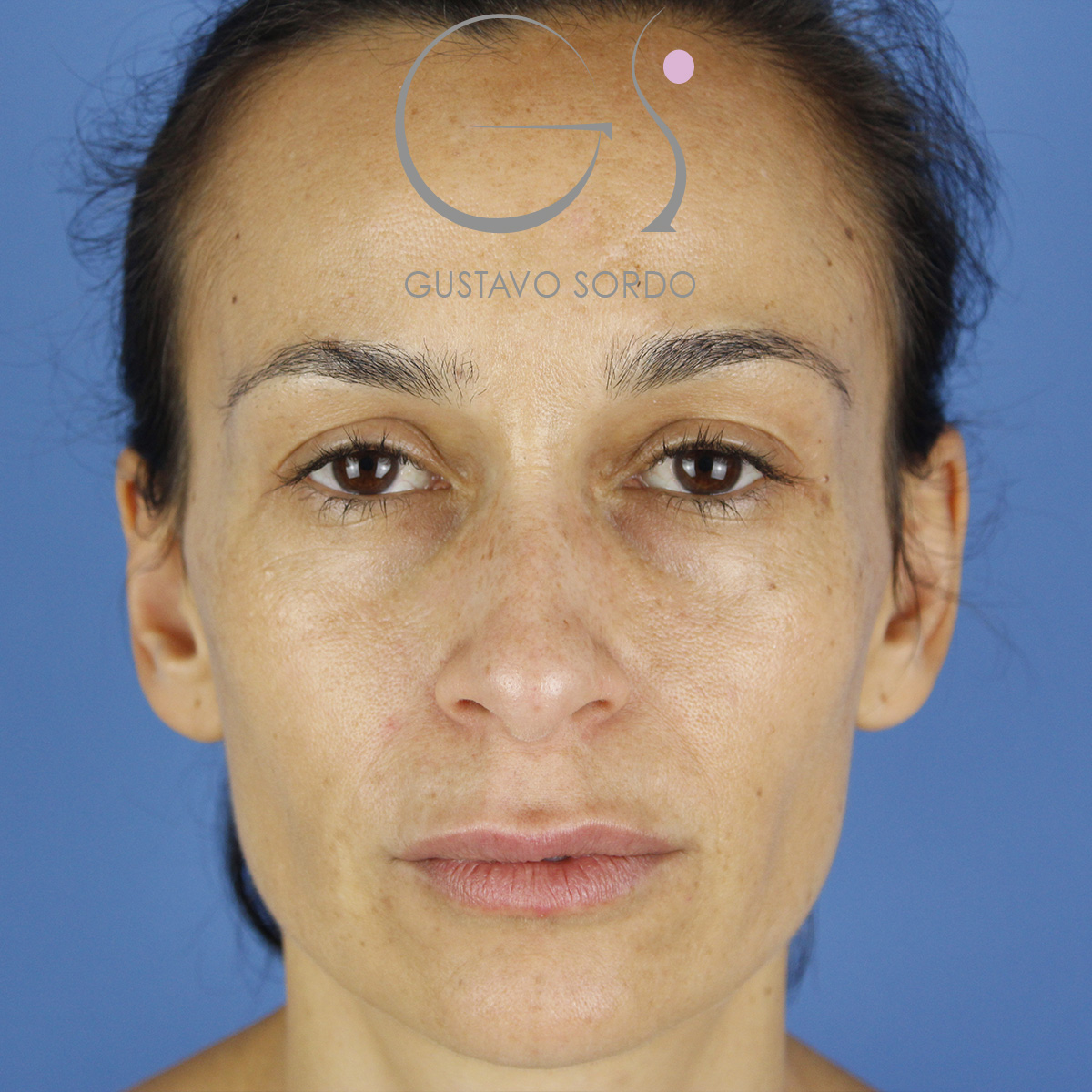

Comment by Dr. Gustavo Sordo
Reason for consultation
He inquired about the shape of her nose, especially the tip and some nostrils that looked large.
What I observed when evaluating it
A small nose, with a minimal hump and a very narrow and thin bridge, on thin skin. The tip was bulbous and projecting, the nostrils large, and the ratio between the ala and the columella unfavorable.
What was important to preserve
The size. It was a small nose: it didn't need to be reduced any further, but rather tidied up.
My surgical approach
Provide support to the narrow back, reduce projection at the tip by rotating it slightly, and greatly reduce the number of holes.
Why I chose this technique
On such a narrow dorsum with thin skin, spreader grafts provide support and width to the mid-face, preventing it from becoming more prominent or closed. A septal extension graft allows the tip to be positioned where desired, with less projection and slightly more rotation. Large orifices are reduced with an allotomy, with the incision made precisely at the junction of the wing and the face so that the scar remains hidden.
What I did during surgery
Using open surgery and ultrasonic instrumentation, I placed spacer grafts, a septal extension graft to reduce projection and slightly rotate the tip, and reduced the alae (allotomy). In the same surgery, I performed septoplasty and turbinate reduction.
What is observed in the result
A significant improvement in the alar-columellar ratio, much smaller nostrils, and a less projected and slightly more rotated tip. The change has greatly rejuvenated her face.
More cases of rhinoplasty with bulbous tips . How I perform rhinoplasty in Madrid and, regarding the nostrils, the article "Can the nostrils be made smaller?"
Case operated on by Dr. Gustavo Sordo
Specialist in Plastic, Aesthetic and Reconstructive Surgery. Member No. 282858125.
If you're looking at this case for a specific reason.
Not all noses need ultrasound, nor do they all benefit equally. In our ultrasonic rhinoplasty guide, we explain in which cases the outcome varies.
Do you want to know if this can be done in your case?
The first consultation is with Dr. Sordo, either at the Chamberí clinic or via video consultation. You'll leave knowing if you're a candidate, which technique is right for you, and how much it costs.
Dr. Gustavo Sordo · Member No. 282858125 · Plastic, Aesthetic and Reconstructive Surgery · Madrid