Otoplasty in women: before and after
Case fact sheet
- Patient: 32 year old woman
- Technique: Mustardé and Furnas sutures, posterior excision of Darwin's tubercles, and dermal covering flap
- Entry: Day hospital
- Duration: 1,5 hours long.
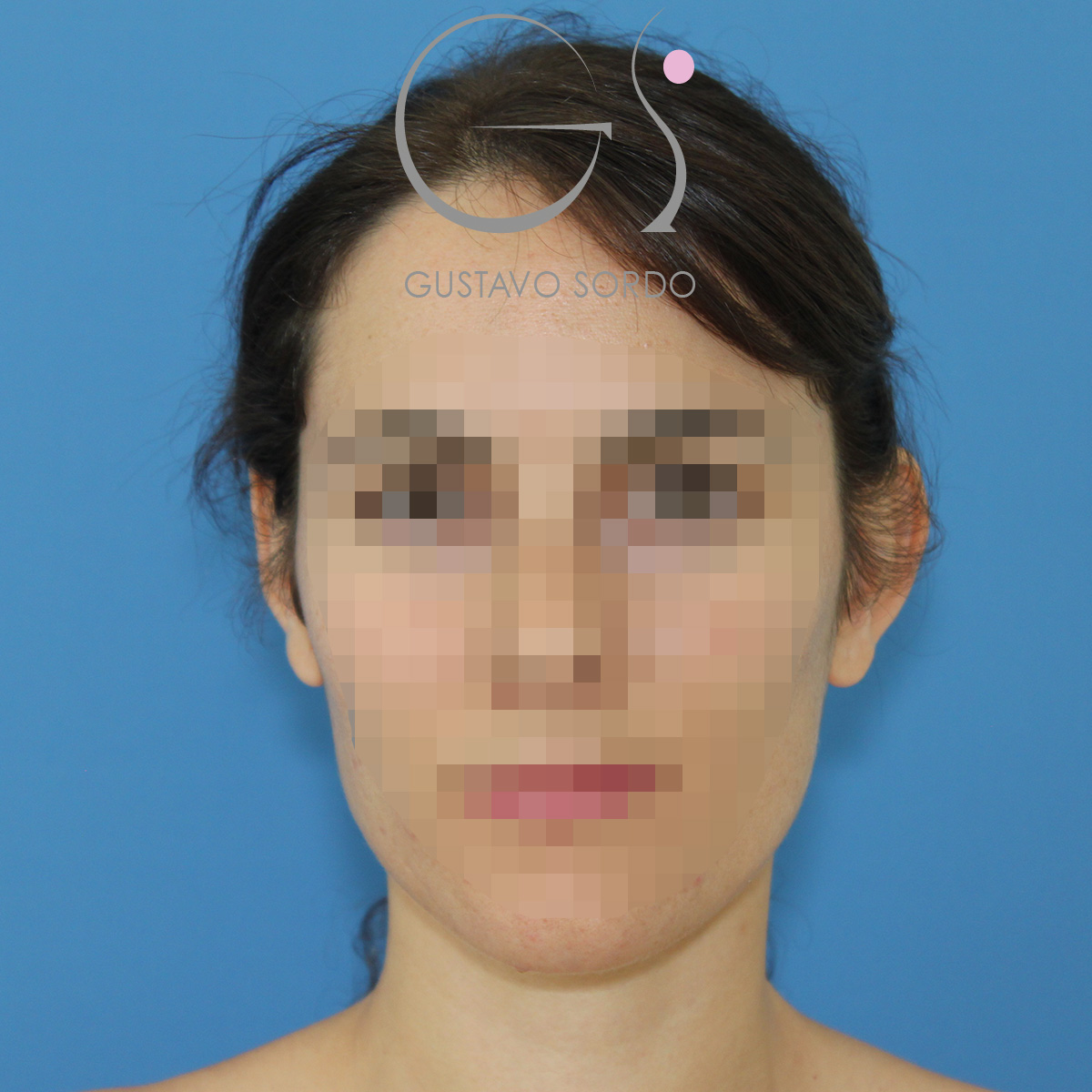
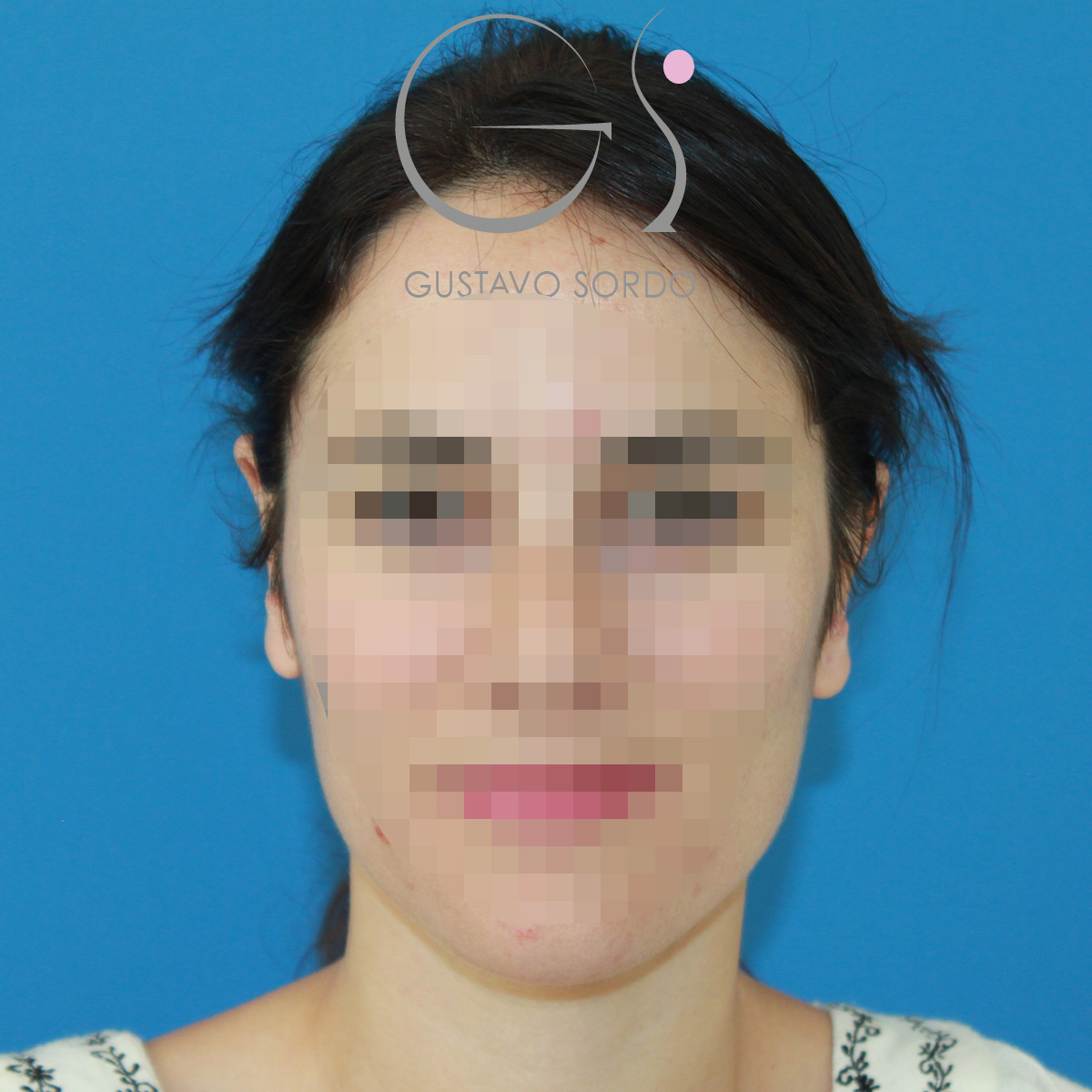
A 32-year-old woman wanted her ears to appear closer to her head when viewed from the front. In addition, there was significant asymmetry between the ears, and she had Darwin's tubercles on the edges of her ears.
If you'd like to know how we perform otoplasty and what the recovery process is like, I explain it on their website. More similar cases can be found in the otoplasty section.
How do we fix it?
With such an asymmetry, each ear needs its own correction so that in the end they both look similar.
The antihelix was drawn with Mustardé sutures, of braided permanent thread mounted on a semicircular needle, and the concha was fixed to the mastoid with Furnas sutures.
Darwin's tubercles, the small projections on the edge of the ear (the helix), were removed by a direct excision from the back, taking great care not to alter the curve of the edge.
The sutures are covered by a dermal flap prepared at the beginning of the procedure, which acts as a cushion between the stitches and the skin.
Case operated on by Dr. Gustavo Sordo
Specialist in Plastic, Aesthetic and Reconstructive Surgery. Member No. 282858125.
If you're looking at this case for a specific reason.
The goal isn't a perfect ear, but one that no longer draws attention. In otoplasty, we explain the technique and the resulting scar.
Do you want to know if this can be done in your case?
The first consultation is with Dr. Sordo, either at the Chamberí clinic or via video consultation. You'll leave knowing if you're a candidate, which technique is right for you, and how much it costs.
Dr. Gustavo Sordo · Member No. 282858125 · Plastic, Aesthetic and Reconstructive Surgery · Madrid