Ultrasonic rhinoplasty and mentoplasty in a deviated nose: before and after
Case fact sheet
- Patient: Woman, 30 years old (32 at the time of mentoplasty)
- Starting nose: nose pivoted and deviated to the left, with tension in the septum, bridge and deviated tip; short chin (chin hypoplasia)
- Technique: structural rhinoplasty with ultrasonic instrumentation, septal extension graft and spacer grafts (spreader grafts); in a second stage, augmentation mentoplasty with anatomical Implant M prosthesis
- Partition: deviation corrected in the same surgery
- Approach: Straighten the axis of the nose and remove the bridge; then, give the chin the projection it lacked to balance the profile
- Result: 30 months after rhinoplasty and 12 months after mentoplasty, with intermediate photos at 14 months (nose only)
- Entry: One night for rhinoplasty; mentoplasty, outpatient procedure
- Anesthesia: general TIVA type in rhinoplasty; general in mentoplasty
- Duration: Rhinoplasty takes 2,5 hours; mentoplasty takes 30-45 minutes
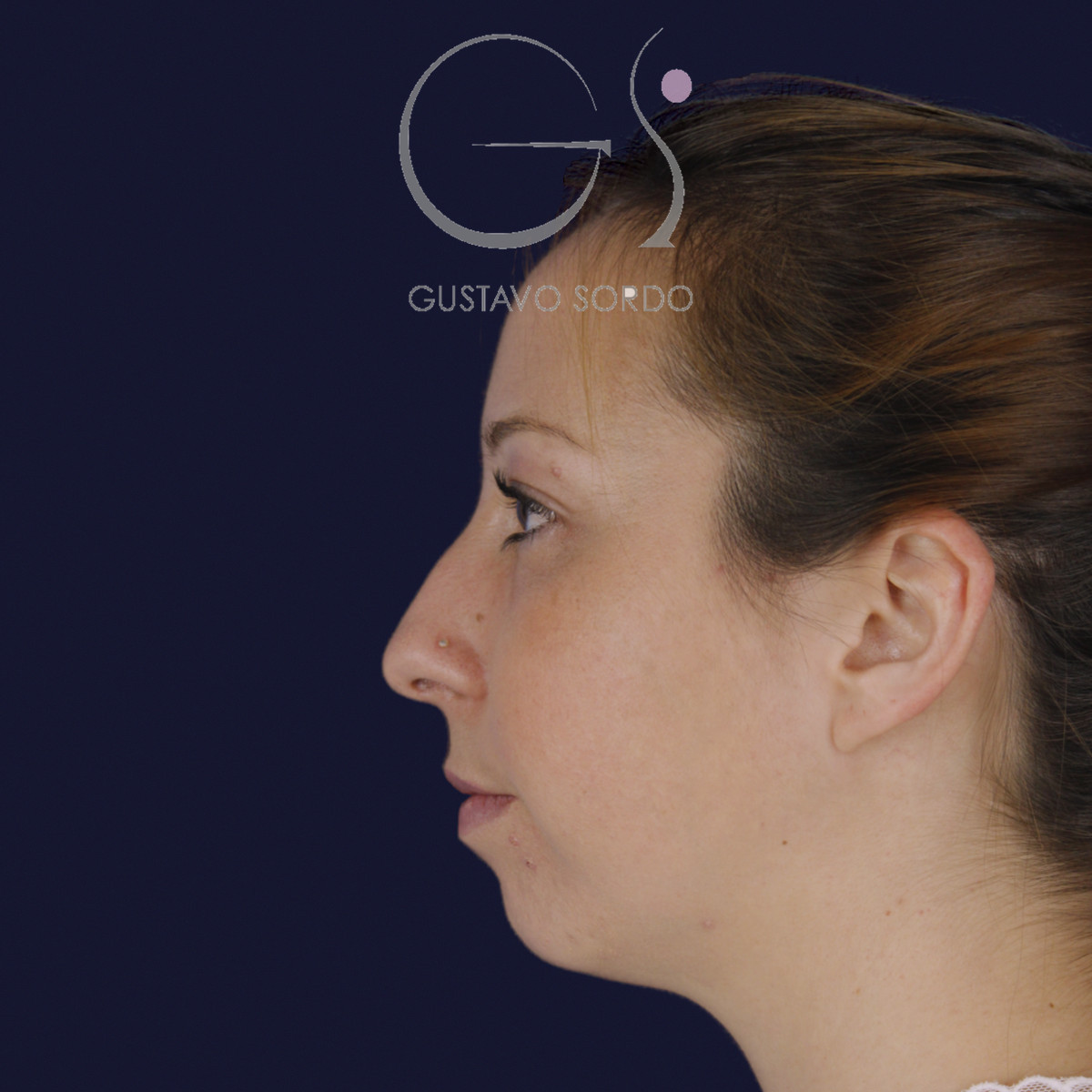
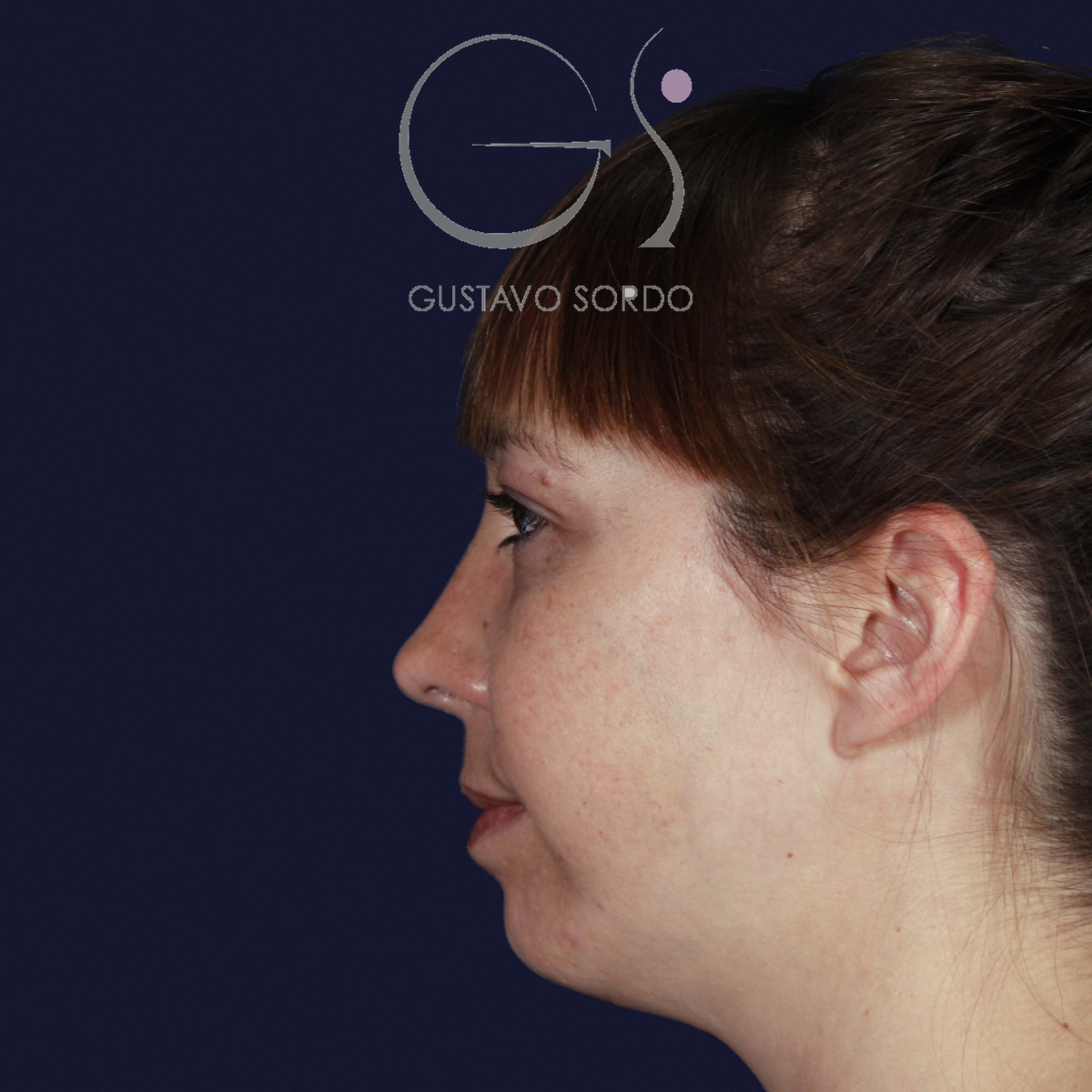
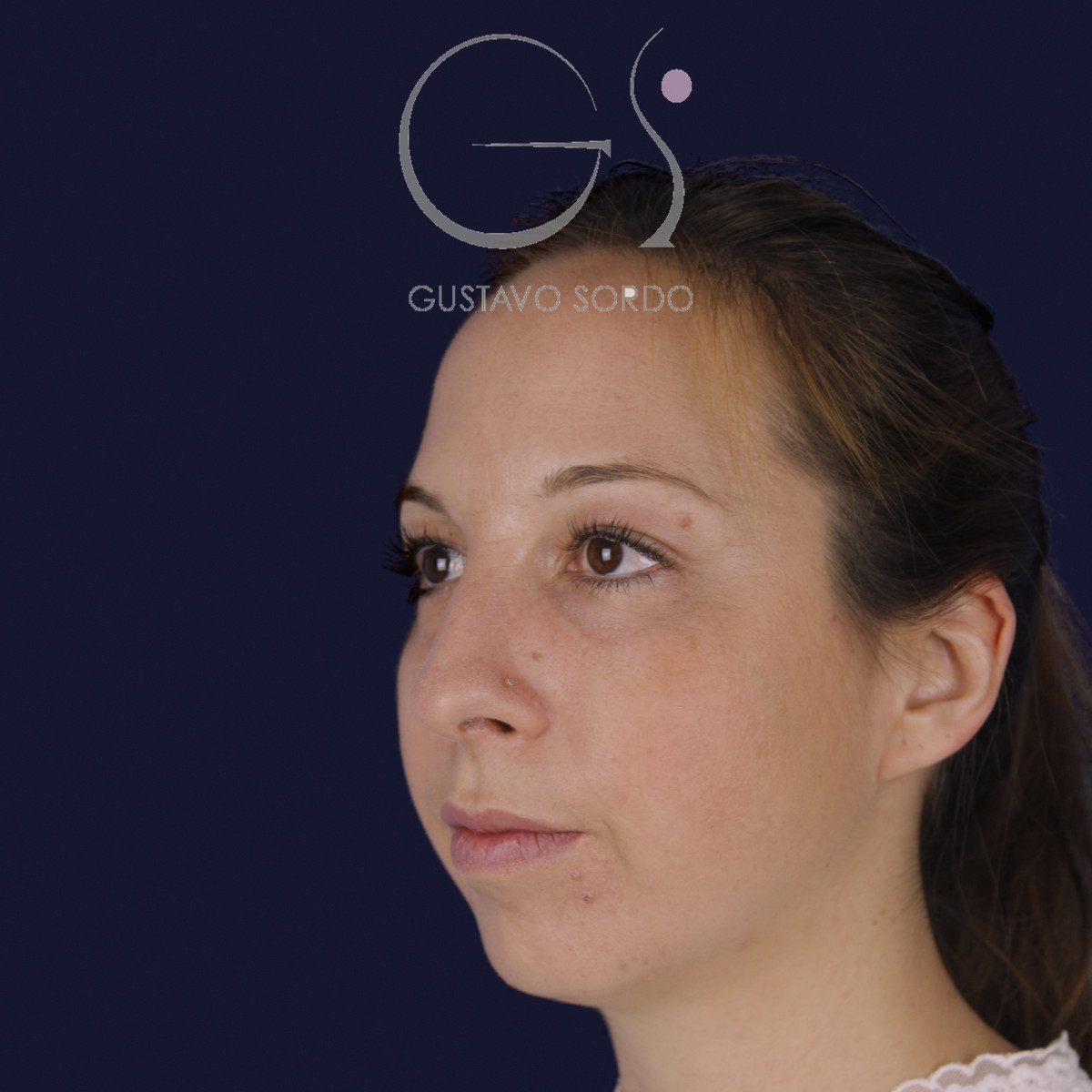
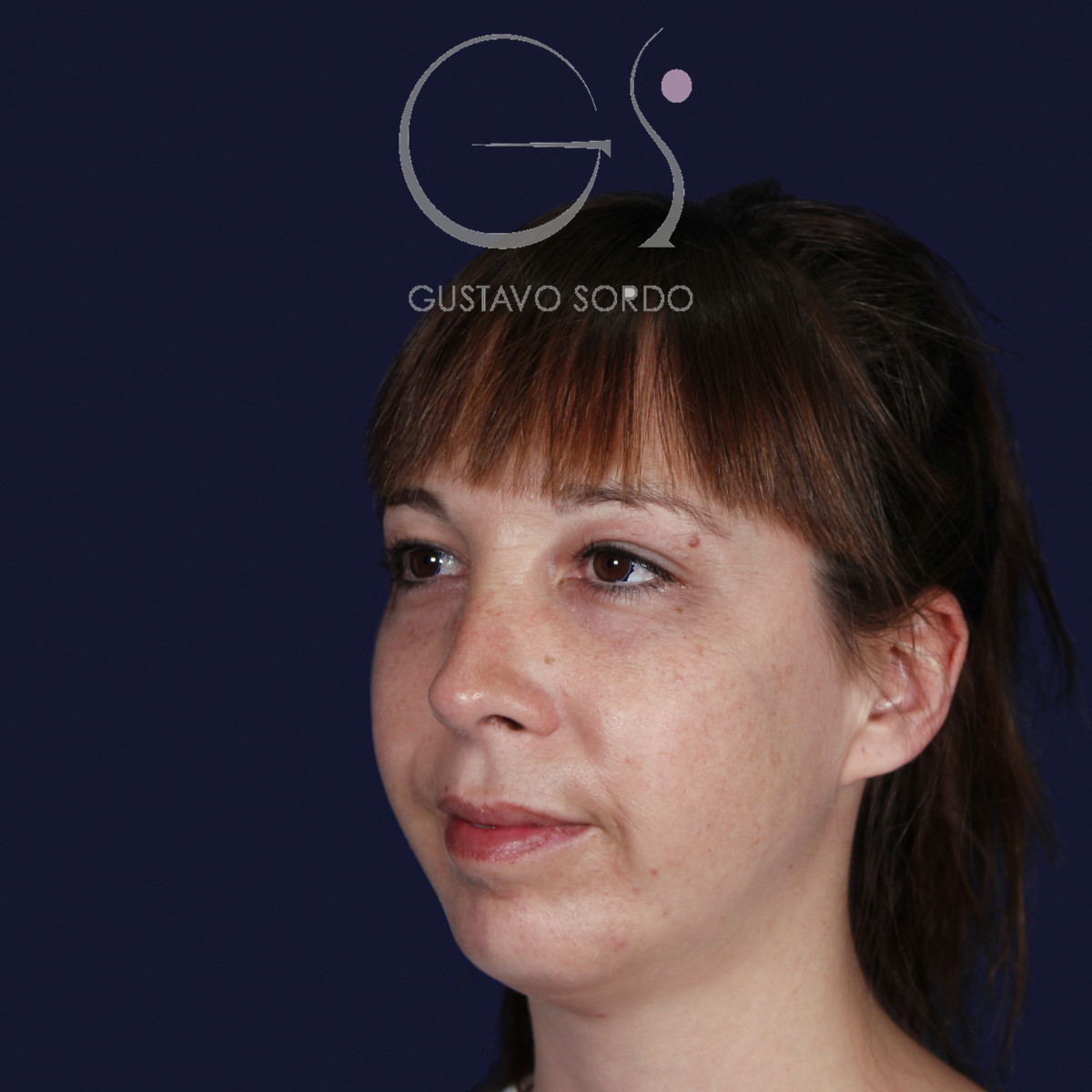
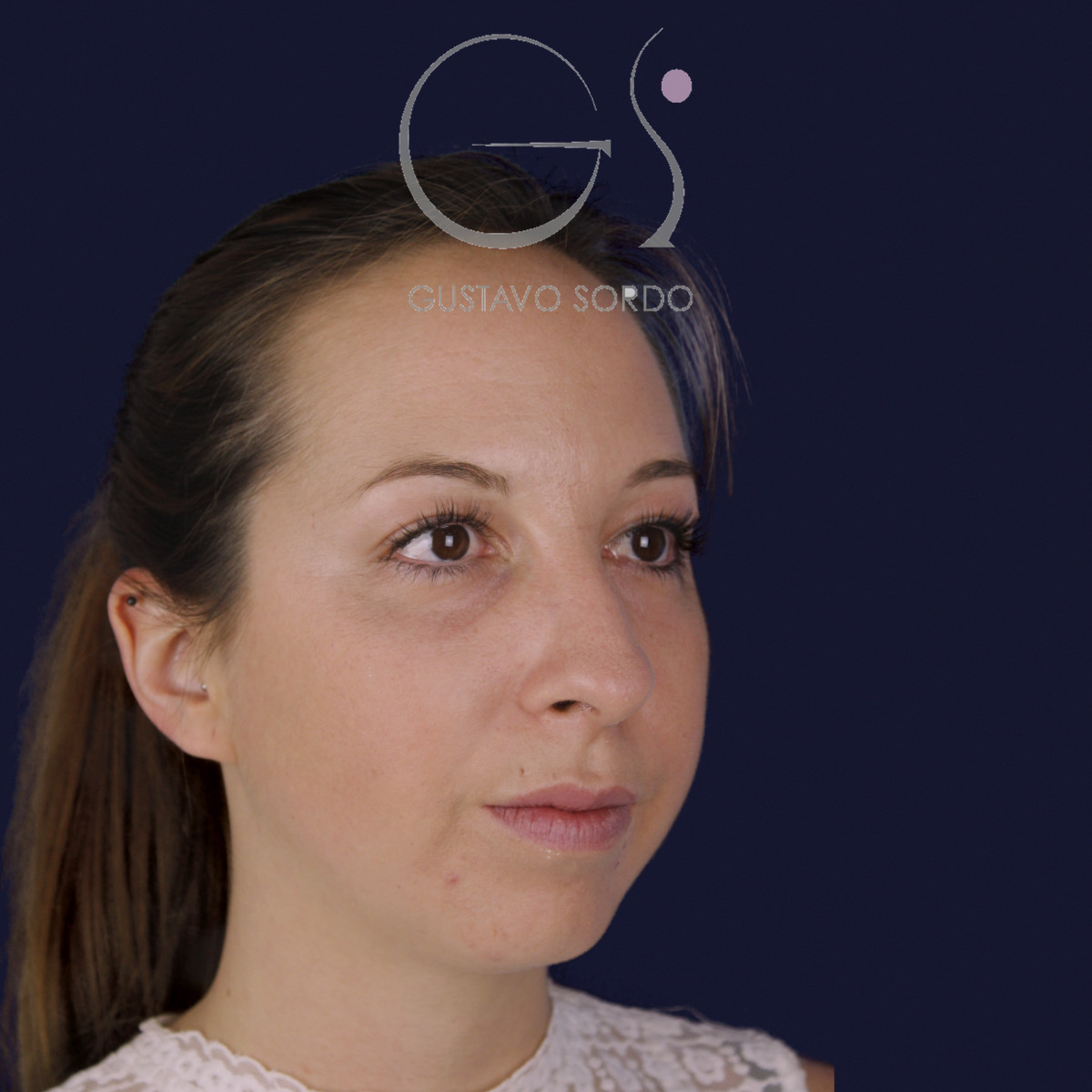
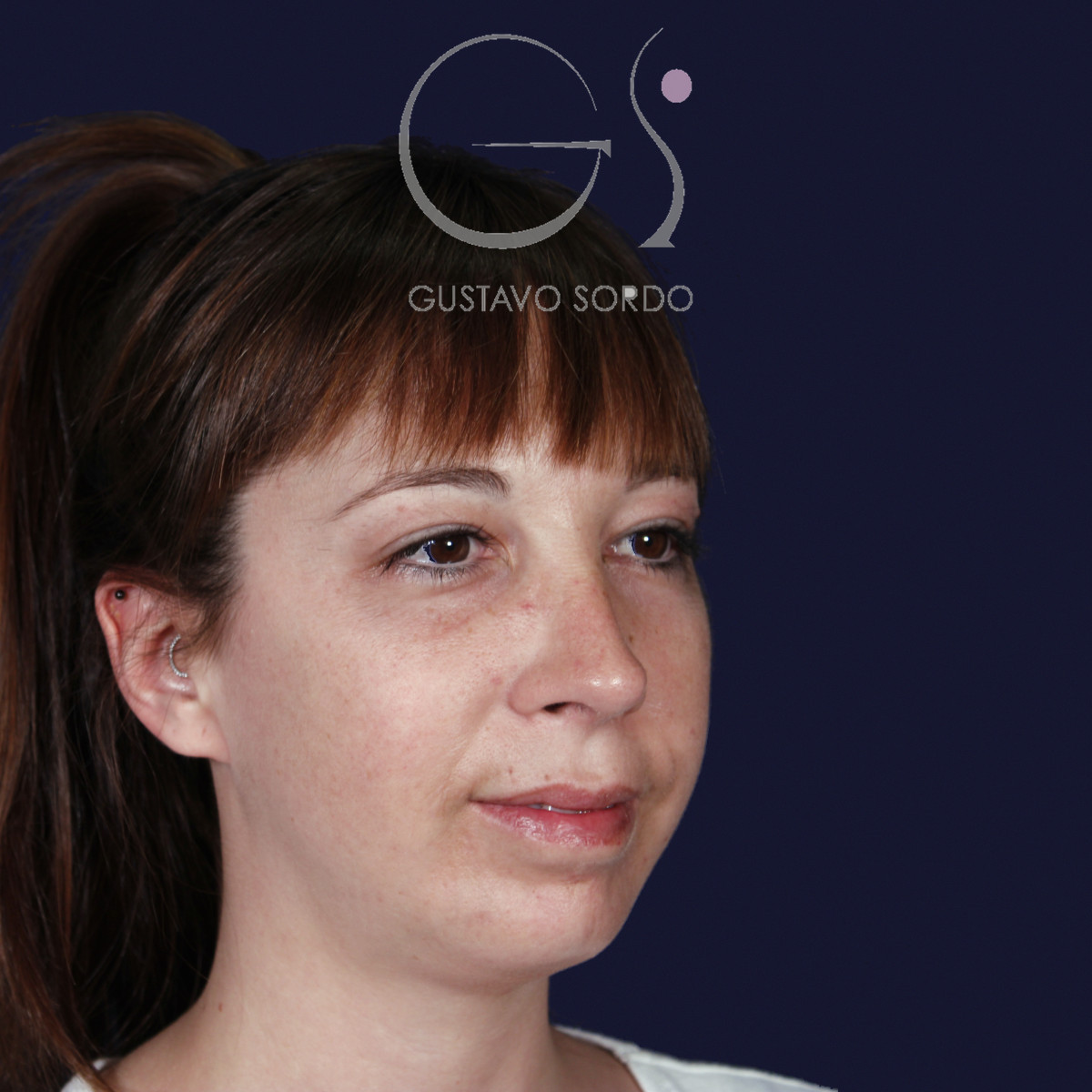
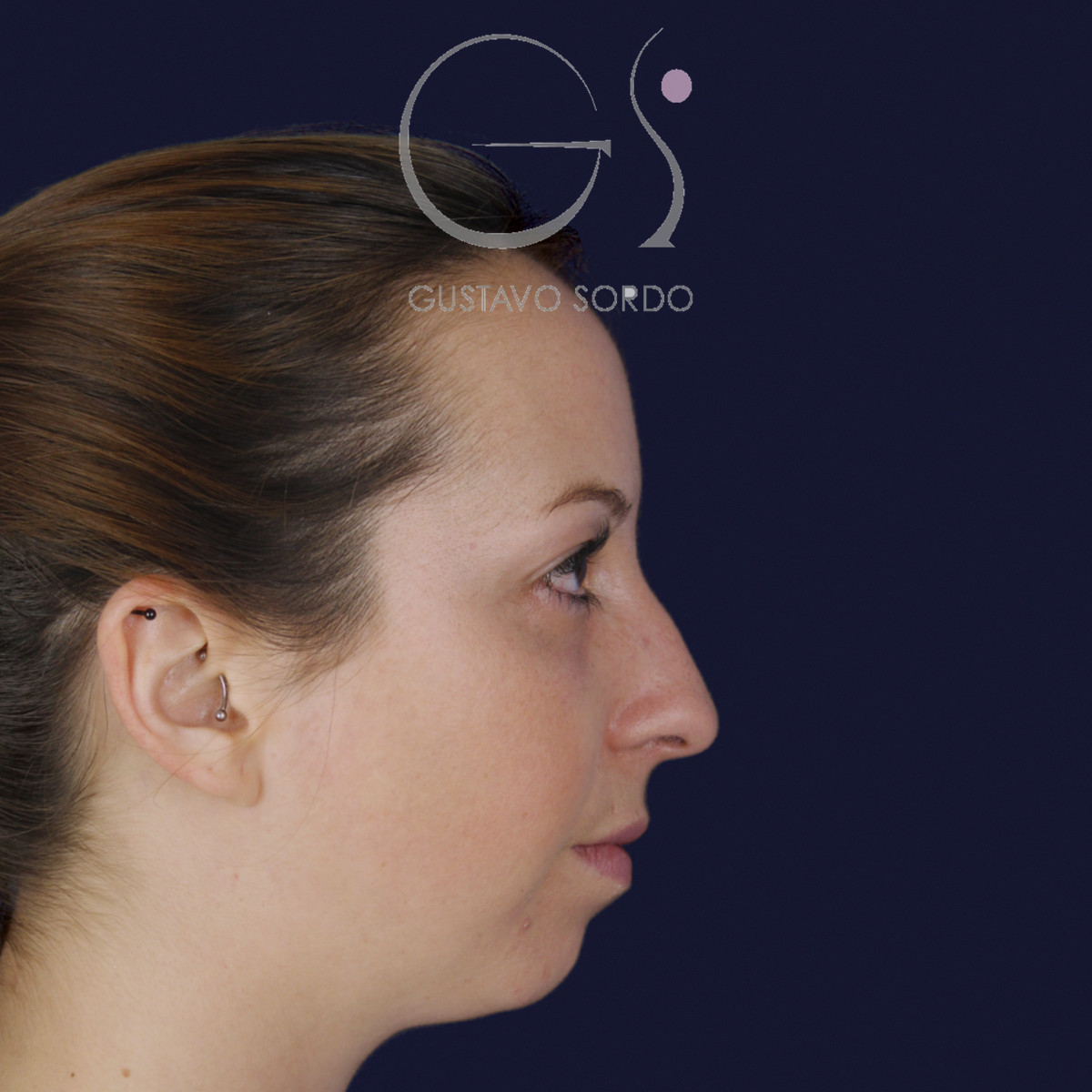
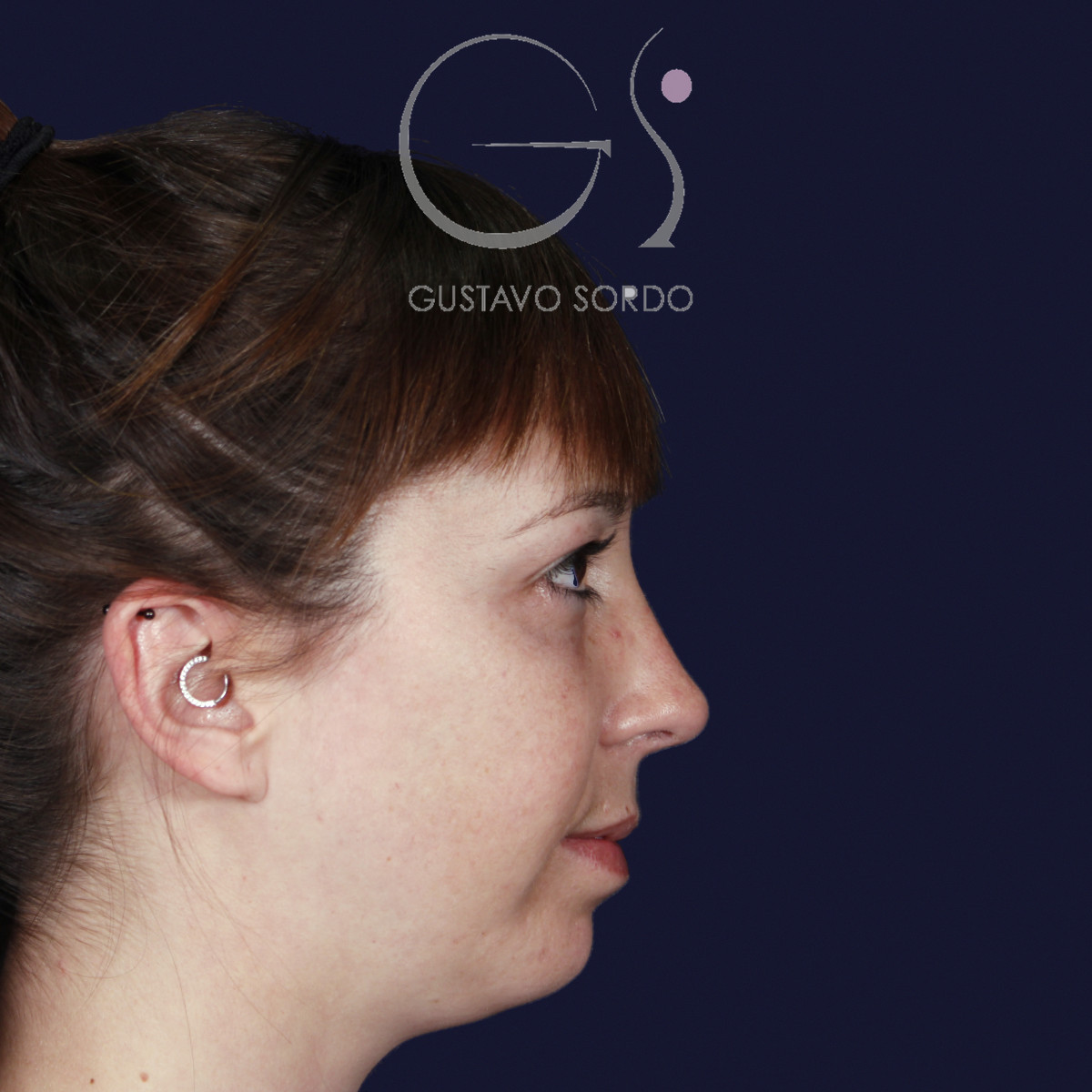
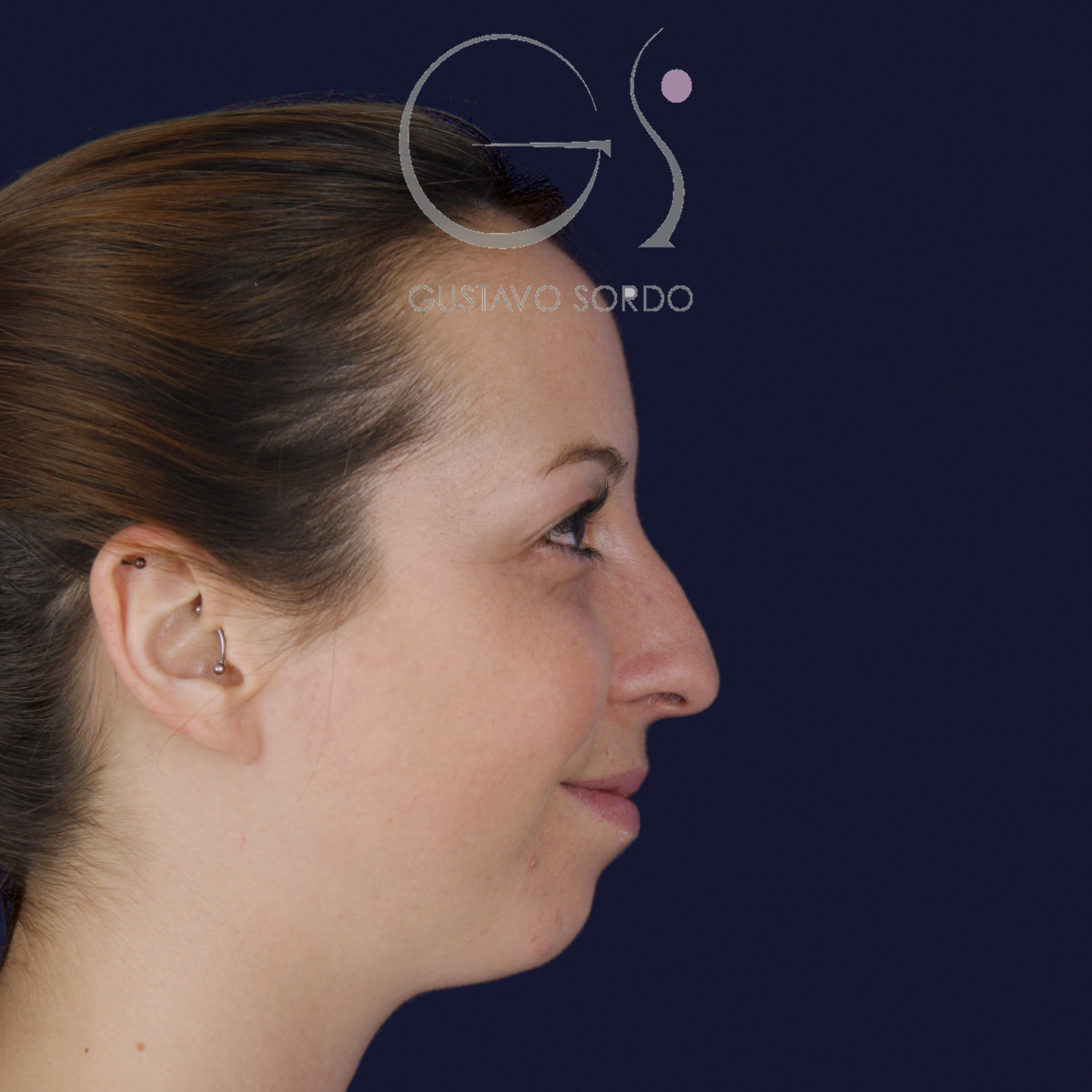
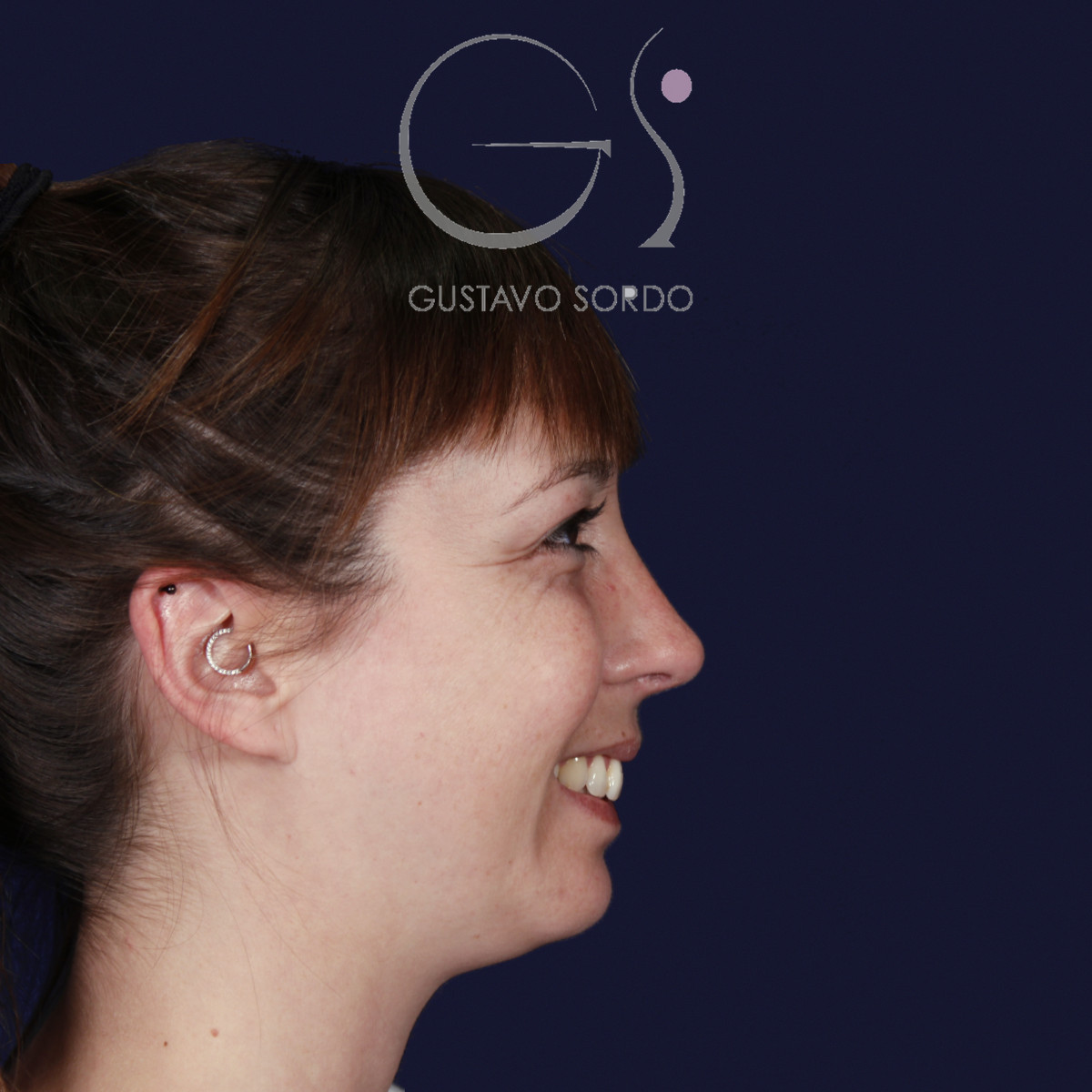
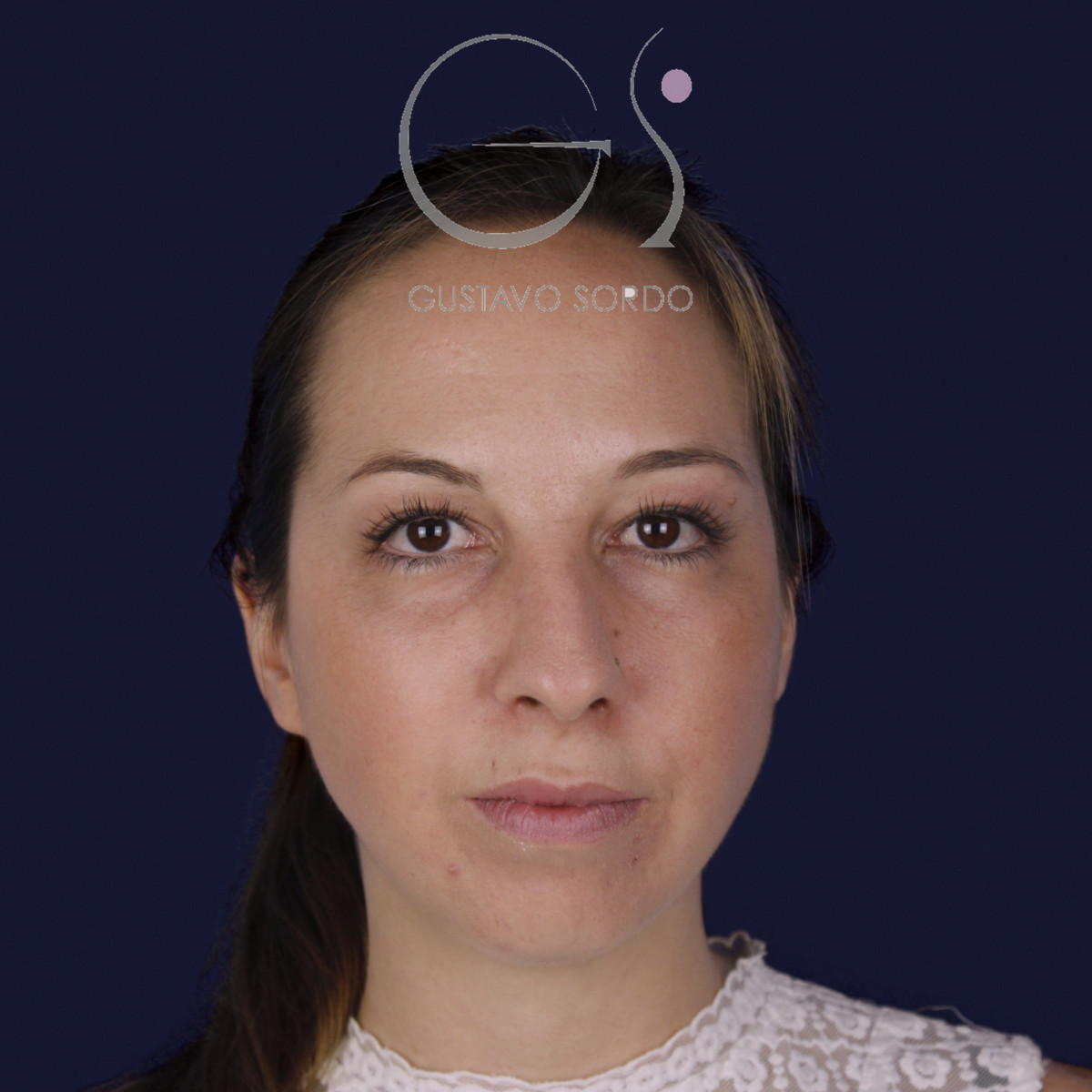
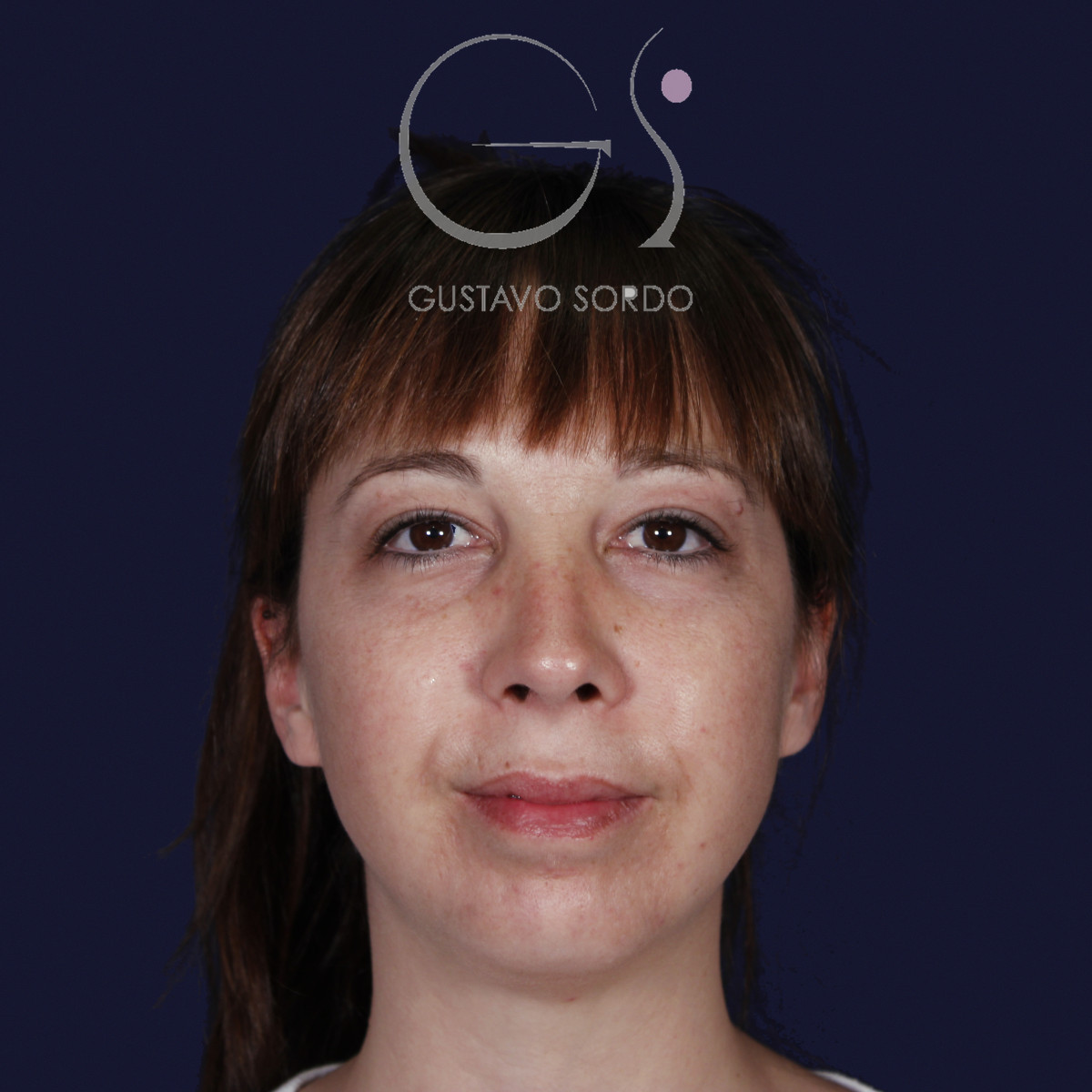
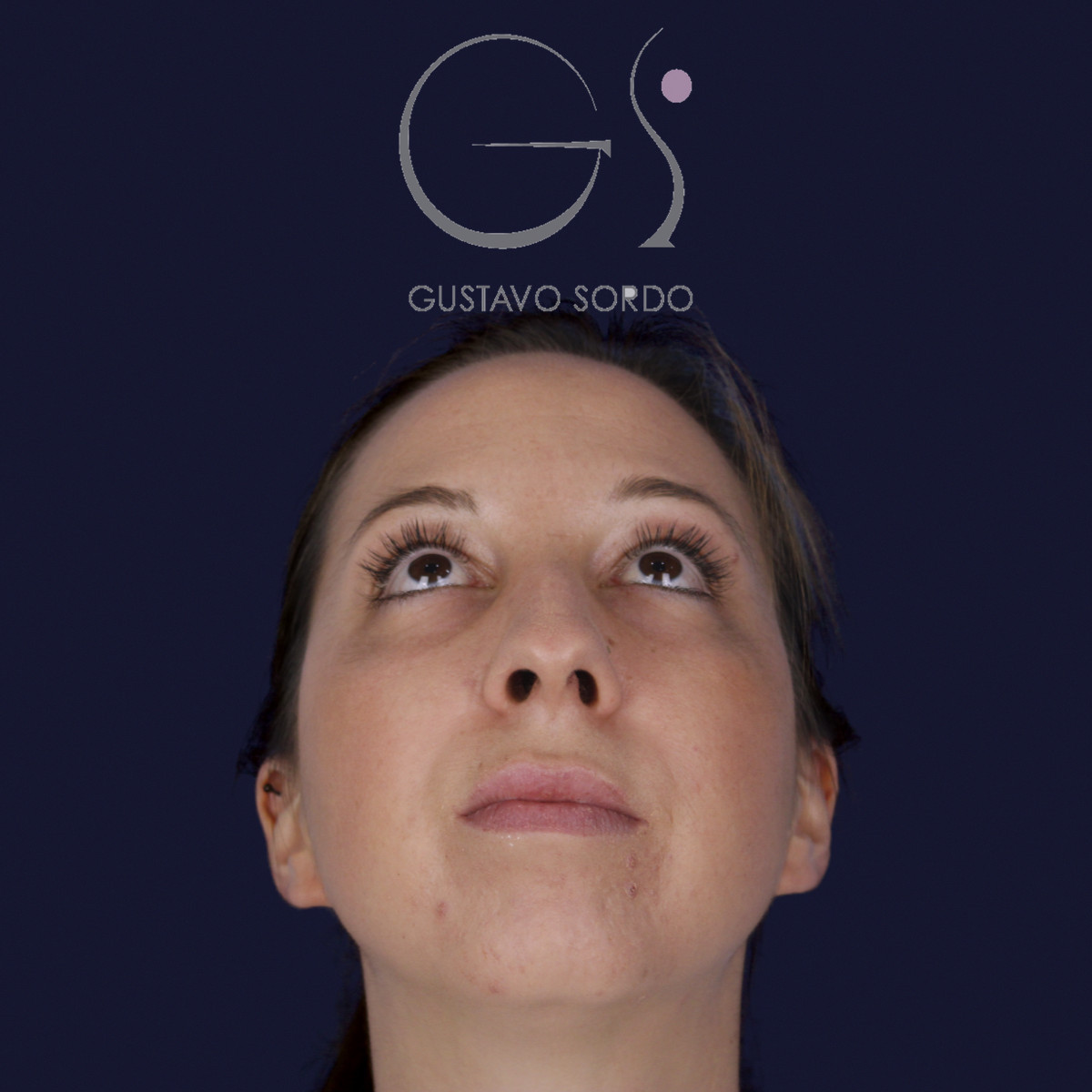
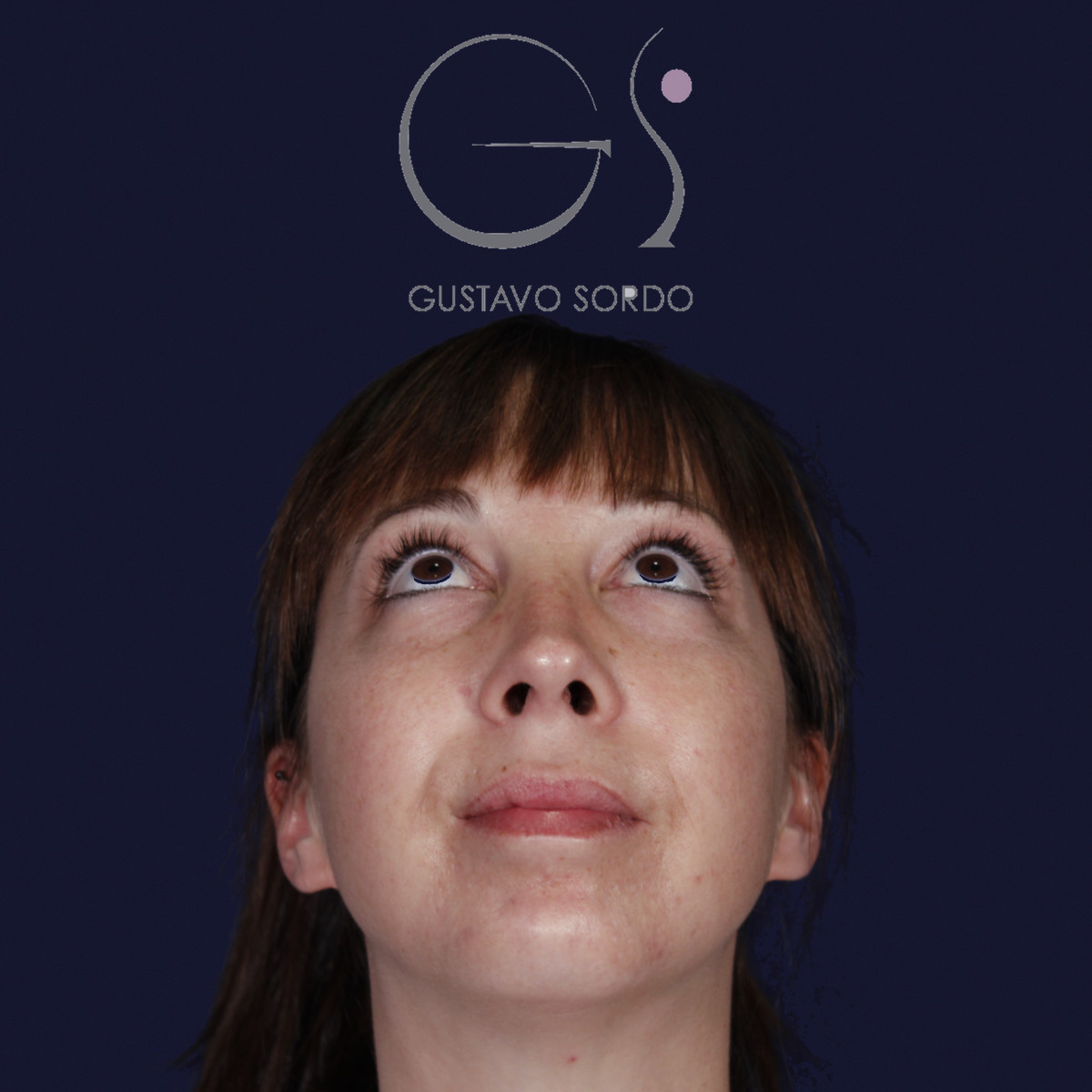
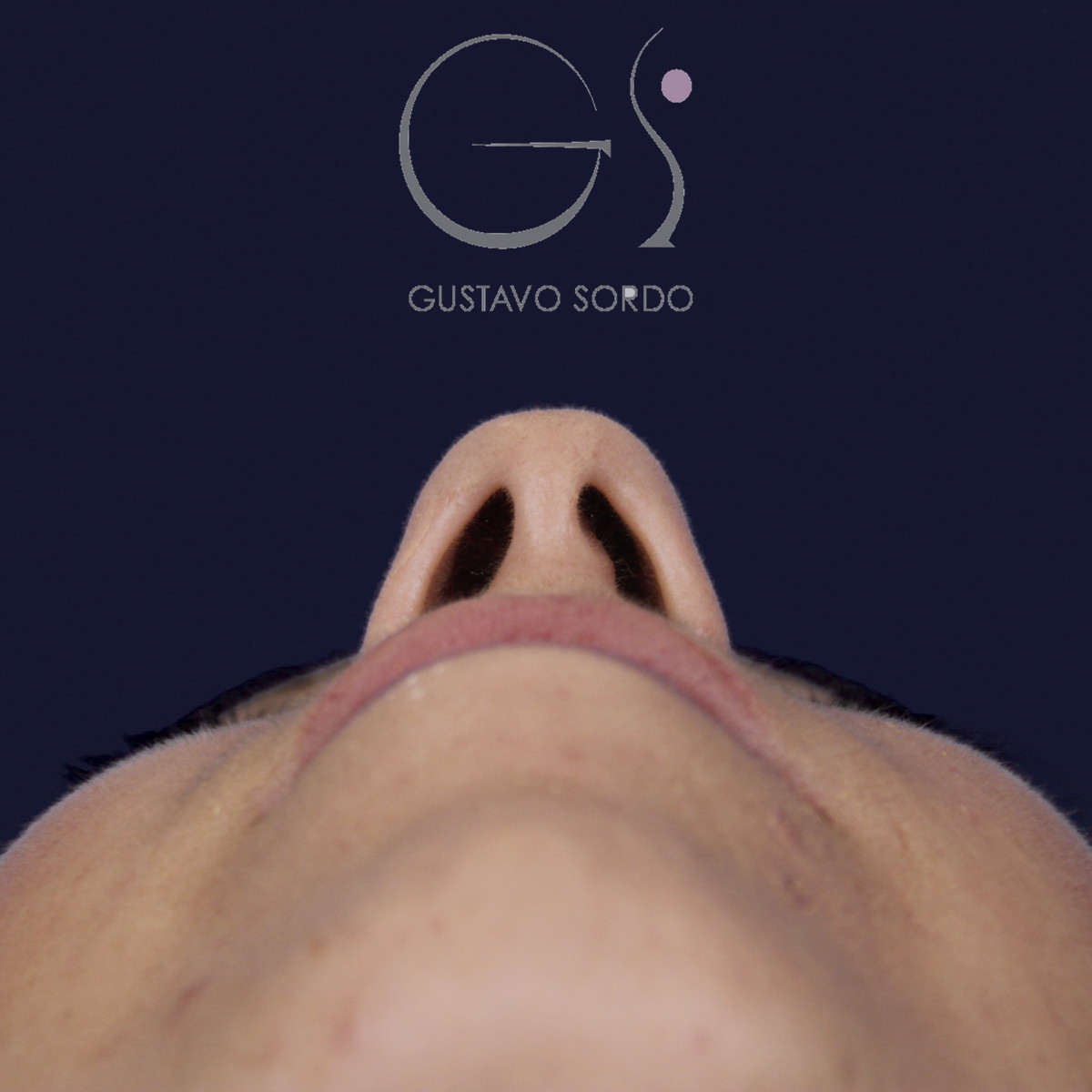
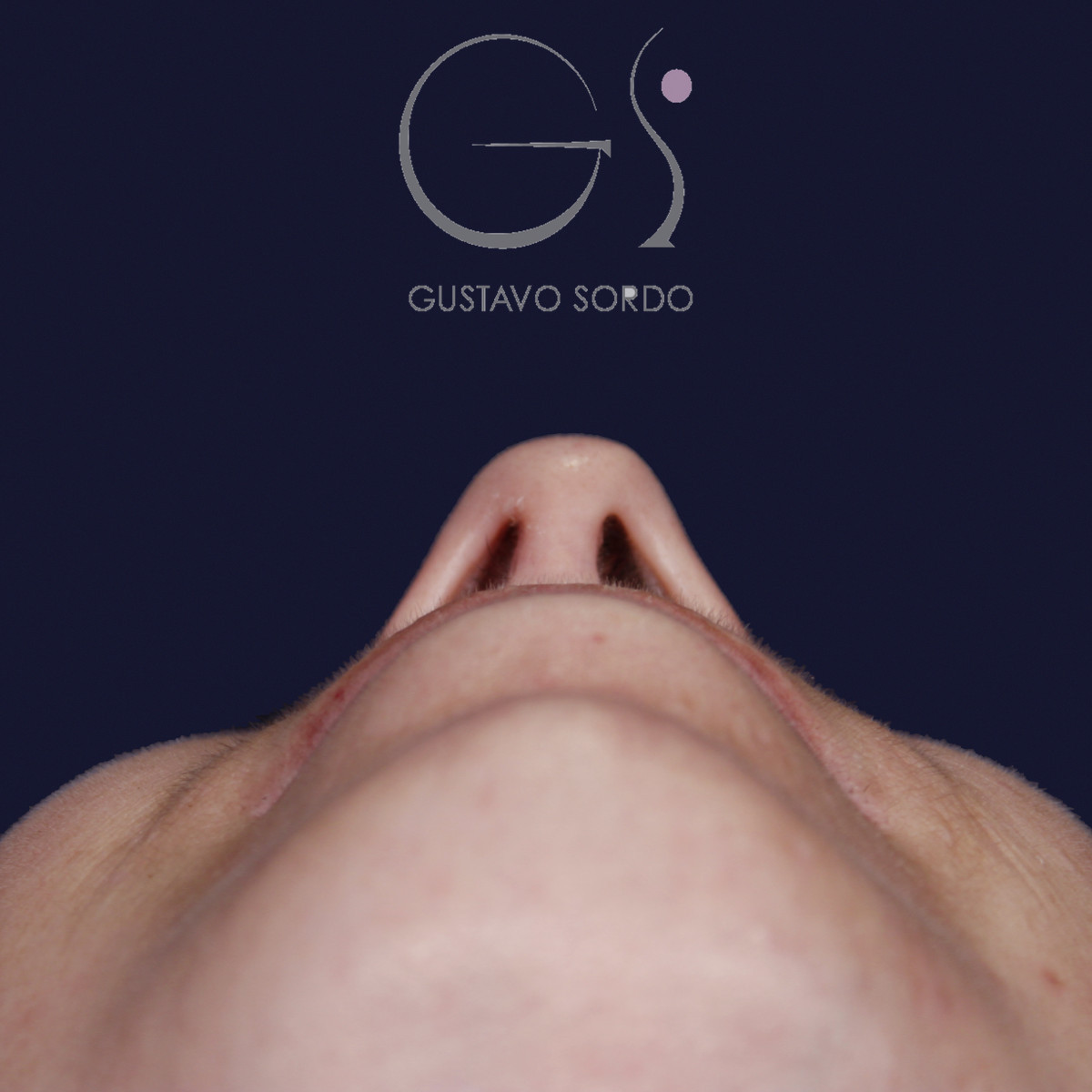
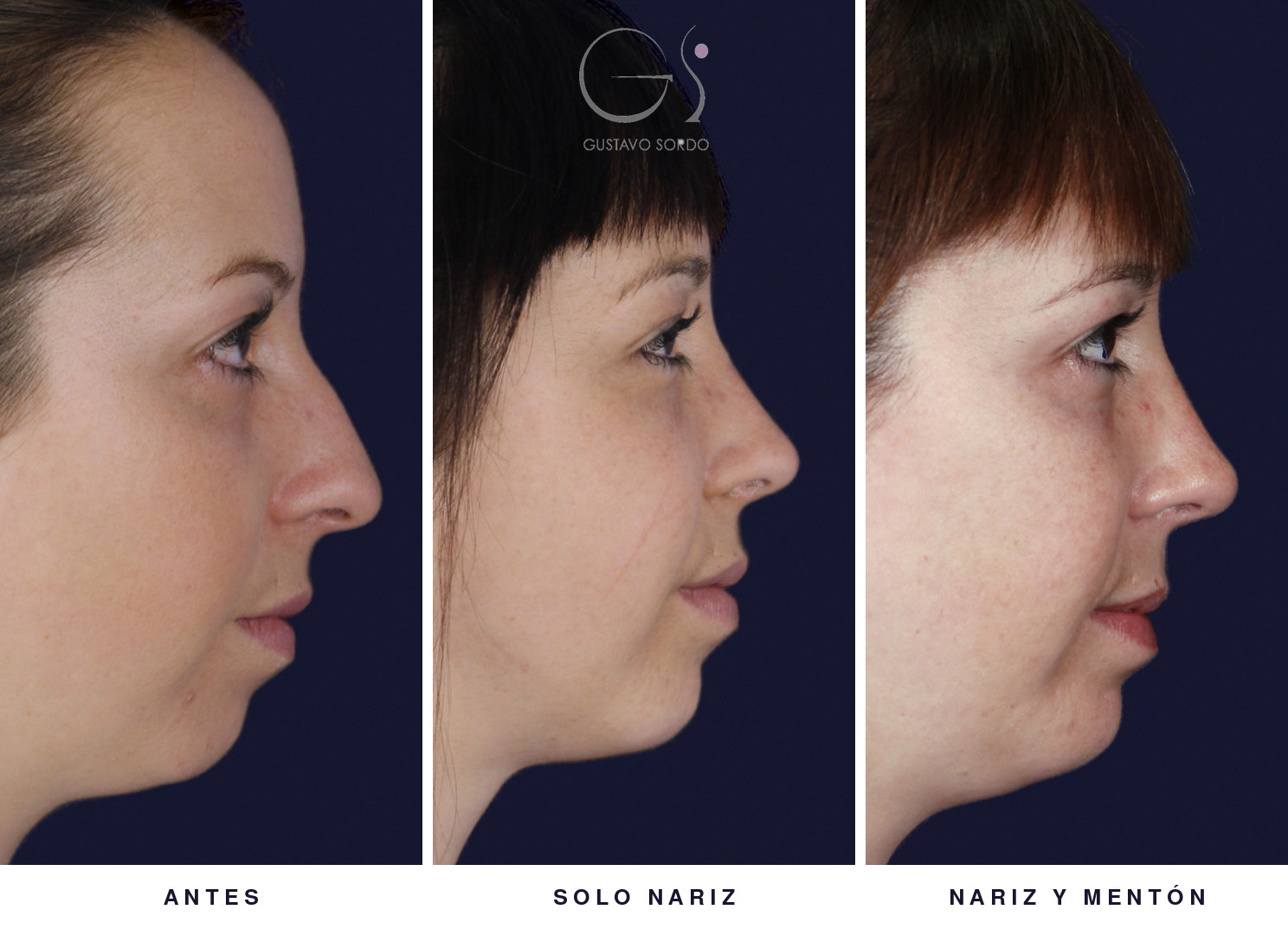
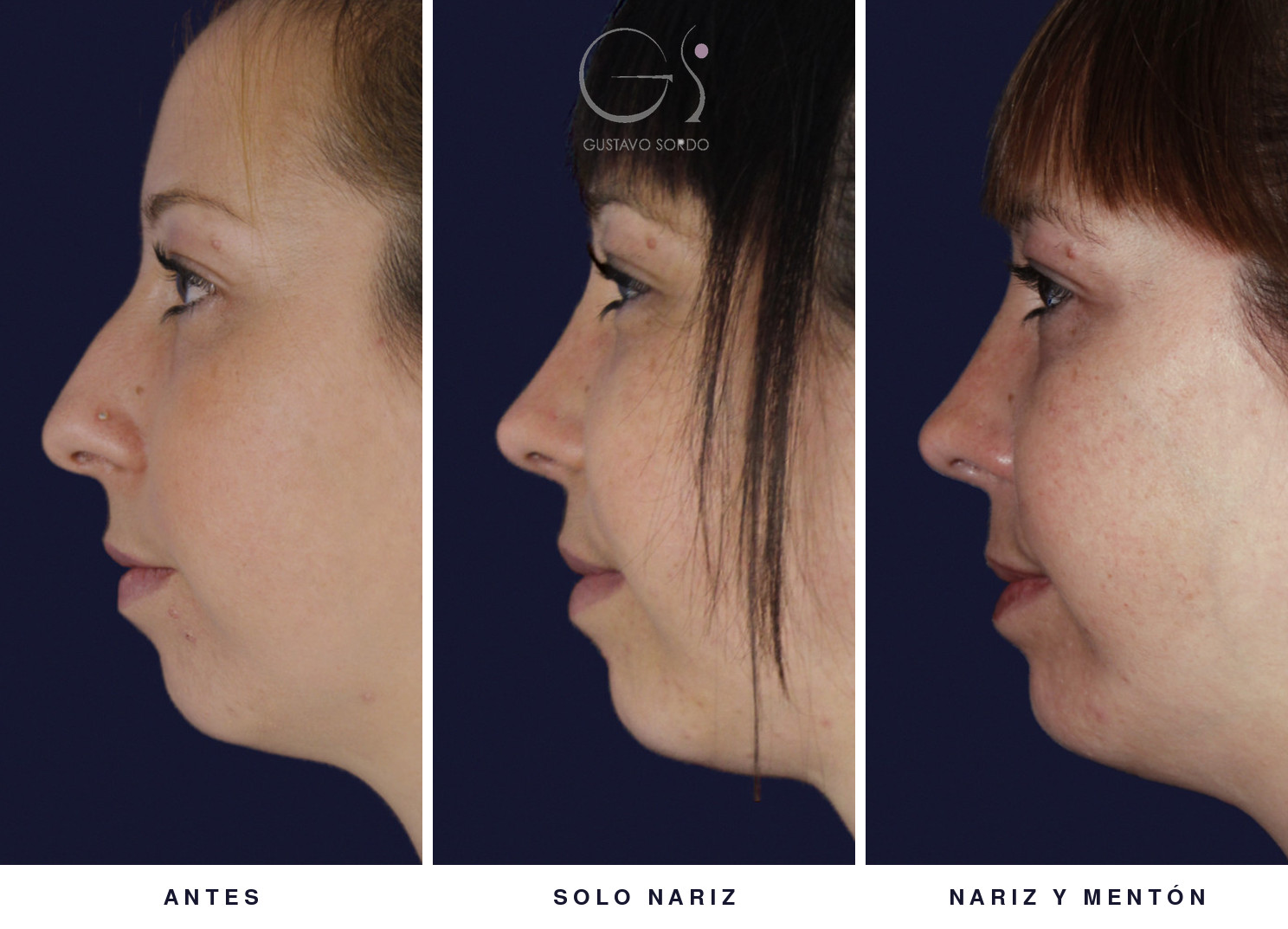
A nose deviated to the left, with a prominent bridge and a crooked tip, in a patient with a short chin. First, structural rhinoplasty with ultrasonic instrumentation; nineteen months later, mentoplasty with a prosthesis. The photos show the two stages: the nose alone at 14 months and the complete profile one year after the mentoplasty.
Photos taken 30 months after rhinoplasty
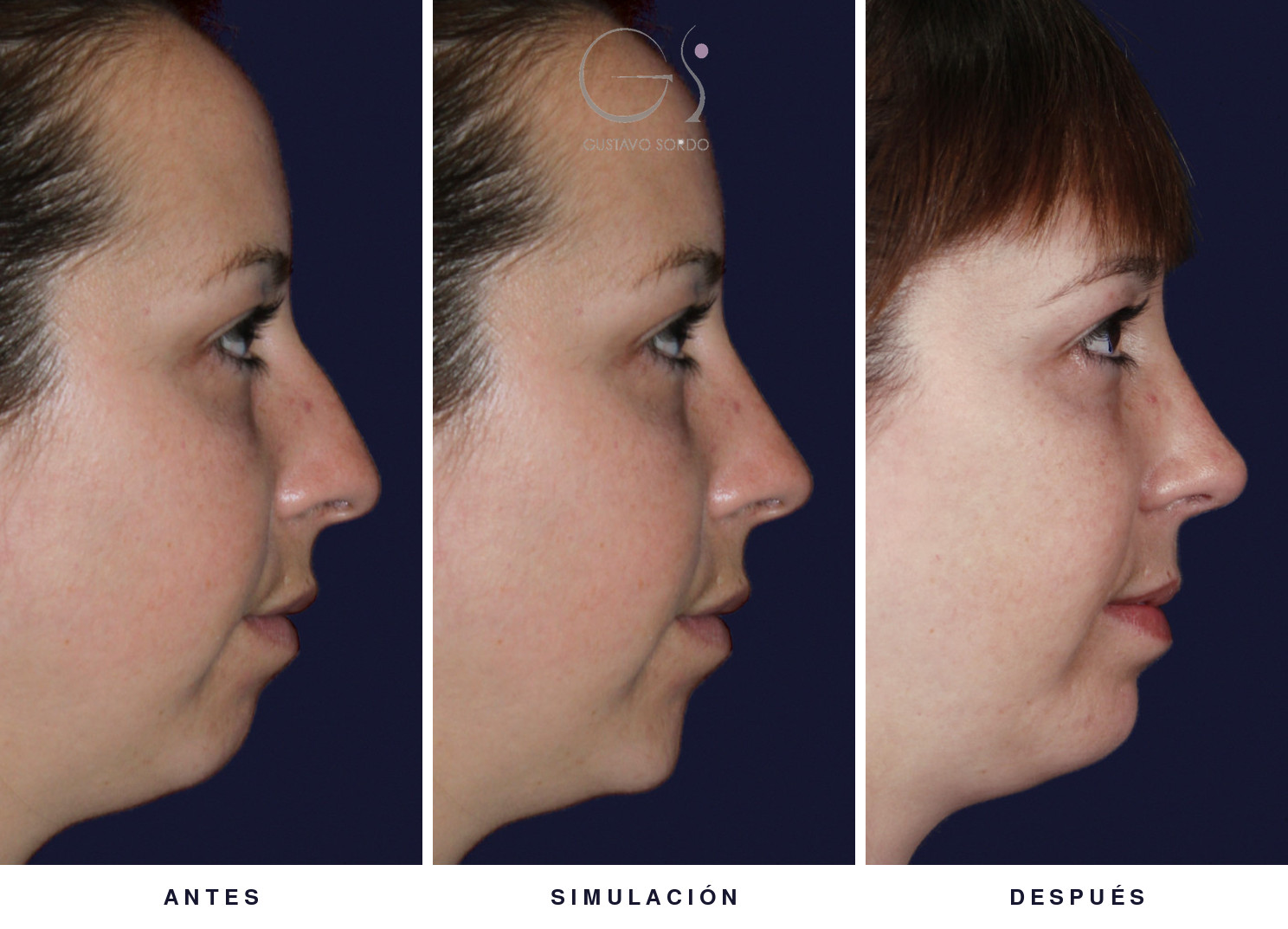
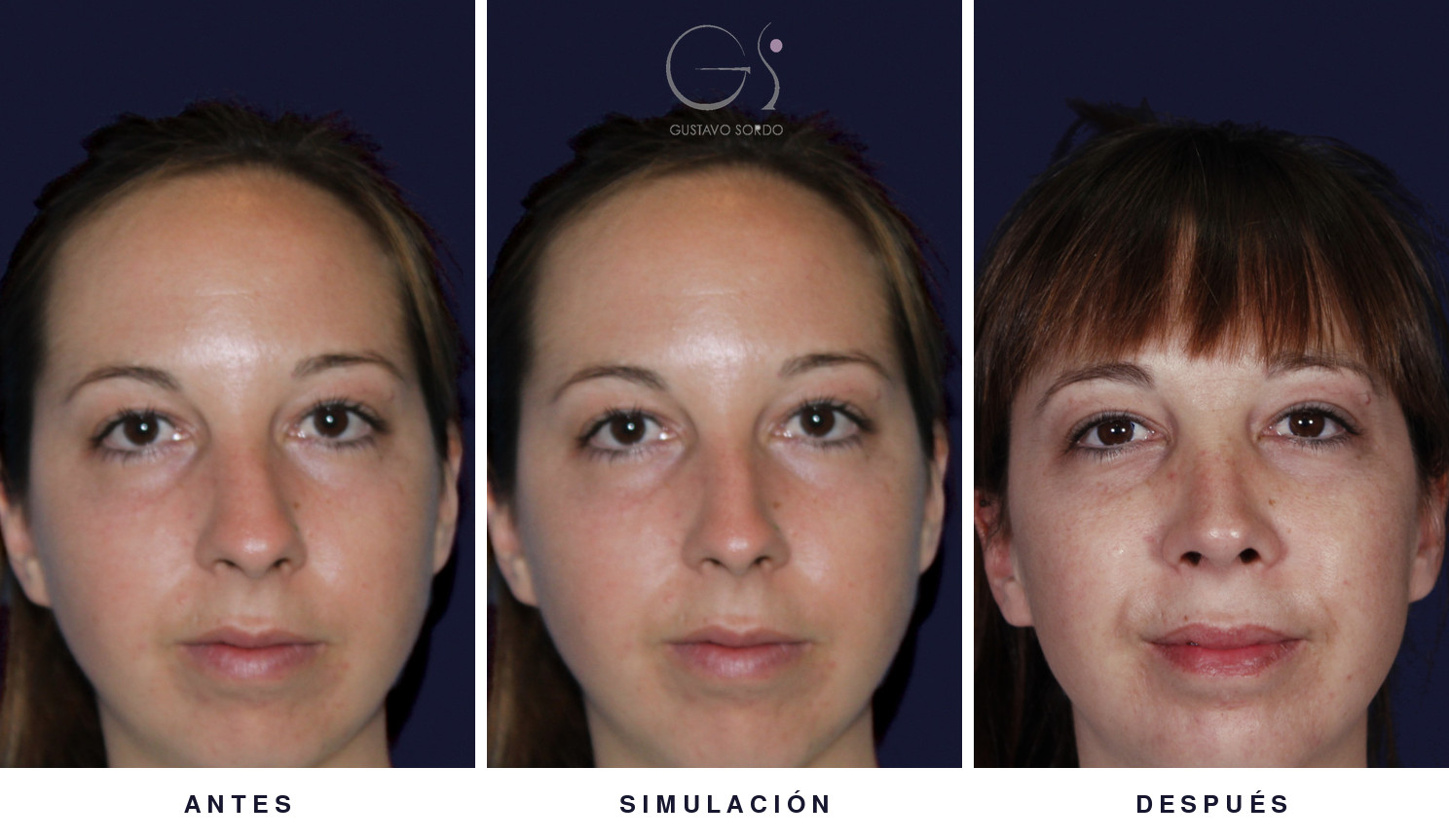
The final photos are from the 30-month follow-up of the rhinoplasty, which is also the one-year follow-up of the mentoplasty. Since this is a two-stage profiloplasty, each procedure is shown at its respective timeframe: the nose, well past the one-year mark, and the chin, twelve months after placement. This way, no results are judged just a few weeks later, when there is still swelling. At all stages, the same views, the same lighting, and the same framing are used.
Two-stage chin augmentation: what it adds
Nineteen months passed between the two surgeries, and there are photos from each stage with the same views. In the center, the operated nose and the untouched chin are shown at the one-year follow-up after the rhinoplasty; on the right, the one-year follow-up after the mentoplasty. The straight nose already changes the profile, but with the short chin, the lower third of the face still lagged behind. When mentoplasty is properly indicated, giving projection to the chin balances the nose, lips, and neck: this is what we call profiloplasty.
The simulation and the result
At the very beginning, before the rhinoplasty, we prepared a two-dimensional simulation based on her photos, retouching her nose and chin. At that time, she didn't dare to have her chin done as well, for fear of changing too much; she decided to go ahead with it at her one-year follow-up appointment. The simulation serves to discuss the objective and ensure we're aiming for the same thing; it's not a promise of the final result. In the center is the simulation; on the right, the final result, taken from the same angle and with the same framing.
Comment by Dr. Gustavo Sordo
Reason for consultation
He came for two reasons: he had trouble breathing and he didn't like his nose, which was crooked to the left and had a bridge.
What I observed when evaluating it
The nose was tilted and deviated to the left, with an area of tension in the septum that needed to be relieved, a prominent bridge, and a deviated tip. In addition, she had a short chin, a chin hypoplasia that accentuated the imbalance in her profile: treating only the nose would leave the result incomplete.
What was important to preserve
The character of his features: a straight and proportionate nose, not a different nose, and a profile in which the nose and chin were in proportion.
My surgical approach
Straightening the nasal axis by releasing tension in the septum, repositioning asymmetrical bone walls, removing the bridge, and stabilizing the new axis and tip with grafts. To complete the profile, chin augmentation was also necessary, as we saw in the simulation; however, she preferred to start with just the nose.
Why I chose this technique
The structural technique allows for the release of the deviated cartilage and the reconstruction of the nasal support; using ultrasonic instruments, the asymmetrical bone walls are precisely repositioned. Spacer grafts and a septal extension graft maintain the septum straight and provide firm support to the tip. For the chin, I chose an anatomical prosthesis, placed externally through the submental fold, in a supraperiosteal position.
What I did during surgery
During the rhinoplasty, I relieved the tension in the septum, repositioned the bony walls with ultrasonic instruments, removed the nasal bridge, and placed spacer grafts and a septal extension graft to fix the new axis and tip. It lasted two and a half hours, under TIVA general anesthesia, and she spent one night in the hospital. Nineteen months later, I performed a mentoplasty with an Implantech anatomical prosthesis, size M: between 30 and 45 minutes, under general anesthesia, and without hospitalization.
What is observed in the result
One year after rhinoplasty, with only the operated nose, the axis is already straight and the bridge is smooth. One year after mentoplasty, the chin projects more and the profile is balanced: nose, lips, and chin in proportion.
More cases and an explanation of the technique can be found on the rhinoplasty page in Madrid.
Case operated on by Dr. Gustavo Sordo
Specialist in Plastic, Aesthetic and Reconstructive Surgery. Member No. 282858125.
If you're looking at this case for a specific reason.
The ultrasonic scalpel allows for more precise bone work and typically leaves less bruising. It truly makes a difference in ultrasonic rhinoplasty.
Do you want to know if this can be done in your case?
The first consultation is with Dr. Sordo, either at the Chamberí clinic or via video consultation. You'll leave knowing if you're a candidate, which technique is right for you, and how much it costs.
Dr. Gustavo Sordo · Member No. 282858125 · Plastic, Aesthetic and Reconstructive Surgery · Madrid