Protruding Ears: What They Are, How to Correct Them and at What Age

Updated on • Reviewed by Dr. Gustavo Sordo, plastic surgeon
Prominent ears , medically known as prominent ears, are a physical characteristic that affects many people, both in childhood and adulthood. Although they don't usually have consequences for physical health, these ears can be a significant source of insecurity, especially during childhood. In this article, we will discuss in detail what prominent ears are, their causes, the available correction methods, and the most recommended ages for treating this condition.
Want to go beyond theory? At Otoplasty in Madrid we explain the technique, the cases and the price (€3.800).
What are protruding ears?
Protruding ears are a type of cosmetic deformity in which the ears stick out further than normal from the skull, giving a prominent appearance. This condition occurs due to a lack of natural folds in the auricular cartilage or due to an excess of cartilage in the auricular concha, which causes the ears to lean outwards. Although they do not pose a medical risk, prominent ears can affect the self-esteem of those who have them, especially during school years.
Causes of protruding ears
- Genetic factors: In most cases, protruding ears are hereditary. If one or both parents have this trait, their children are more likely to develop it as well.
- Development of auricular cartilage: In some cases, the ear cartilage does not develop evenly, resulting in a more prominent appearance.
- Environmental factors:Although rare, constant pressure on the ears in the first months of life can contribute to this condition.
Symptoms and Associated Problems
Although protruding ears do not cause pain or affect hearing, they can have a significant psychological impact. The main associated problems include:
- Emotional and psychological impact: Children with prominent ears are often the target of teasing, which can lead to low self-esteem, social anxiety and difficulty integrating into school environments.
- Self-perception problems:Both children and adults can feel uncomfortable with the appearance of their ears, which can influence how they interact with others.
- Interference with accessories: In some cases, prominent ears can make it difficult to wear glasses, headphones, or other accessories.
Correction Methods: Non-Surgical Options
Using Conformers in Babies
In babies under one year old, protruding ears can be corrected without surgery using external conformers . These devices, made of soft silicone, are placed over the ears to gradually shape them and bring them closer to the skull. This method requires neither anesthesia nor surgery and is effective due to the flexibility of the cartilage at this early stage.
Advantages of conformers:
- Non-invasive.
- They can be used from the first month of life.
- They do not require anesthesia.
- Visible results in a few weeks or months.
Limitations:
- Effective only during the first year of life.
- Medical supervision is required for proper use.
Correction Methods: Otoplasty in Children
If conformers are not used during early childhood, protruding ears are usually corrected through a surgical procedure called otoplasty . This procedure is especially common in children from the age of 5 or 6 , when the cartilage has developed sufficiently and anesthetic safety is greater.

We recommend you take a look at all our before and after otoplasty cases.
The reference point we give in consultations is from 6-7 years old , and there are two reasons for this. The anatomical reason: at that age, the ear has practically reached its final size, so the result is not distorted by growth. And the personal reason, which is equally important to us: it is the age when school begins, a time when teasing can have a real impact, and starting before that point avoids unnecessary emotional strain.
In children, the procedure is performed under sedation or general anesthesia, and in adolescents and adults, usually with local anesthesia . There is no upper age limit: we frequently operate on adults who have spent their entire lives hiding their ears with their hair. In all cases, the postoperative period is what consolidates the result: continuous bandaging for the first few days and a nighttime headband for a few weeks, because the cartilage has a memory and tends to return to its original position.
Why operate at this age?
- Softer cartilage: At 5 or 6 years of age, the auricular cartilage is flexible enough to be molded, facilitating a simpler and more lasting correction.
- Preventing emotional problems: Performing otoplasty before a child faces teasing or problems at school can protect his or her self-esteem.
- ease of recovery: Children tend to recover more quickly from surgery compared to adults.
Otoplasty procedure in children:
- AnesthesiaGeneral anesthesia is usually used to ensure the child's comfort.
- Incision and remodeling: The surgeon makes a small incision behind the ear to access the cartilage, which is shaped or folded to achieve the desired look.
- Closing: The incision is carefully sutured, leaving a minimal, barely visible scar.
Results:
In most cases, the results of otoplasty are permanent and significantly improve the appearance of the ears, giving the child greater confidence.
Otoplasty in Adults
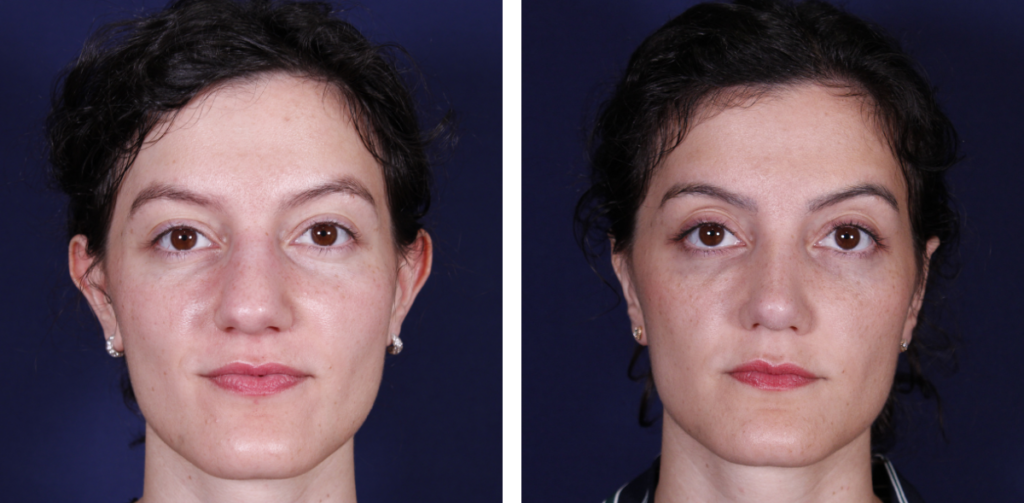
Although otoplasty is more common in children, adults can also undergo this procedure to correct protruding ears. However, the procedure presents some additional challenges due to the increased rigidity of the cartilage at this stage of life.
Specific techniques for adults
At Dr. Sordo's clinic, a specialized technique is used to weaken hardened cartilage and make it more malleable. This allows the ears to be effectively reshaped, creating folds and forms that resemble those of a child's ear cartilage.
Procedure steps:
- Local or general anesthesia: According to the patient's preferences and needs.
- Weakening of cartilage: Specific tools are used to soften the cartilage before shaping it.
- Remodeling and suturing: The surgeon shapes the ears and sutures them to secure them in their new position.
Results:
Although the results in adults are equally satisfactory, recovery may be a little slower compared to that of children.

Postoperative Otoplasty
Recovery after otoplasty is generally quick and painless. The following are the usual recommendations:
- Use of bandages: After surgery, a bandage is placed around the head to protect the ears and keep them in their new position. This bandage is usually removed after one week.
- Avoid intense physical activities: During the first few weeks, it is recommended to avoid sports or activities that may cause impacts to the ears.
- Scar care: Scars should be kept clean and protected from the sun to promote proper healing.
- Medical check: It is important to attend follow-up appointments to ensure that recovery is progressing properly.
How much does otoplasty cost?
The cost of an otoplasty can vary depending on several factors:
- The patient's age: Surgeries in adults are usually more expensive due to the additional techniques required.
- The complexity of the case: If the ears require more extensive reshaping, the price may increase.
- The location of the clinic: Prices may vary between cities or countries.
At Dr. Sordo's clinic, patients receive a personalized quote after an initial consultation.
Myths and Facts about Protruding Ears
- "Prominent ears disappear with age": False. Without intervention, protruding ears do not change significantly over time.
- "Otoplasty is painful": False. The surgery is performed under anesthesia and the postoperative period is usually not very painful.
- "Prominent ears affect hearing": False. This condition is purely cosmetic and does not interfere with hearing function.
Conclusion
Protruding ears are a common condition that can be effectively addressed in both children and adults. From non-surgical methods such as conformers in babies to otoplasty at different ages, there are multiple options to improve the appearance of the ears and, with it, the self-esteem of those who have them.
If you are considering correcting this feature, we invite you to contact Dr. Sordo's plastic surgery clinic in Madrid , a plastic surgeon in Madrid , for an otoplasty operation in Madrid.
Continue reading
Dr. Gustavo Sordo
Specialist in Plastic, Aesthetic and Reconstructive Surgery. Member No. 282858125.
Content clinically reviewed by Dr. Gustavo Sordo. Last review: October 20, 2026.