Blepharoplasty Aftercare: A Complete Guide

Updated on • Reviewed by Dr. Gustavo Sordo, plastic surgeon
Before and after undergoing surgery, it's essential to follow a series of care instructions to ensure the operation's success. In the case of blepharoplasty using the "No Touch" technique performed by Dr. Sordo, these are the recommendations :
Essential care before blepharoplasty:
Before undergoing blepharoplasty in Madrid , we recommend that our patients prepare their skin to minimize bruising. We typically use arnica montana, vitamin K, and other topical products applied to the area to be treated.
It is also important that the patient who is going to undergo surgery to remove the bags , stop taking anti-inflammatories, herbal products and other medicines that can generate more profuse bleeding, such as vitamin supplements, evening primrose oil, ginkgo biloba and many other alternative medicines.
As a general precaution, at Dr. Sordo's clinic , we remove all over-the-counter products, herbal remedies, and dietary or vitamin supplements fifteen days before the procedure . It is also important that the patient not take aspirin and that we review any medications they are currently taking, in case they are on anticoagulants or any other medication that could cause increased bleeding.
Another essential care before blepharoplasty is to avoid ultraviolet radiation and sun exposure before surgery. In this regard, it is advisable that the skin is not pigmented or has responded to sun exposure, since blepharoplasty scars could become pigmented, thus leaving the area marked.
Two aspects of blepharoplasty care make a significant difference. First, applying cold compresses correctly for the first 48-72 hours and sleeping with your head elevated: the eyelid is a lax tissue that swells easily, and this greatly improves comfort during the first week. Second, using artificial tears for eye lubrication , because for a few days blinking is incomplete and dryness is the most common complaint among patients.
Before surgery, it's essential to stop taking anti-inflammatories and supplements that promote bleeding in the days leading up to the procedure, and if possible, quit smoking. In the postoperative period, two rules apply: no strenuous activity or bending over with your head down for the first week—this increases venous pressure and, consequently, bruising—and strict sun protection for the scars during the first year. While scars on the eyelid are hidden in the crease, they still require care.
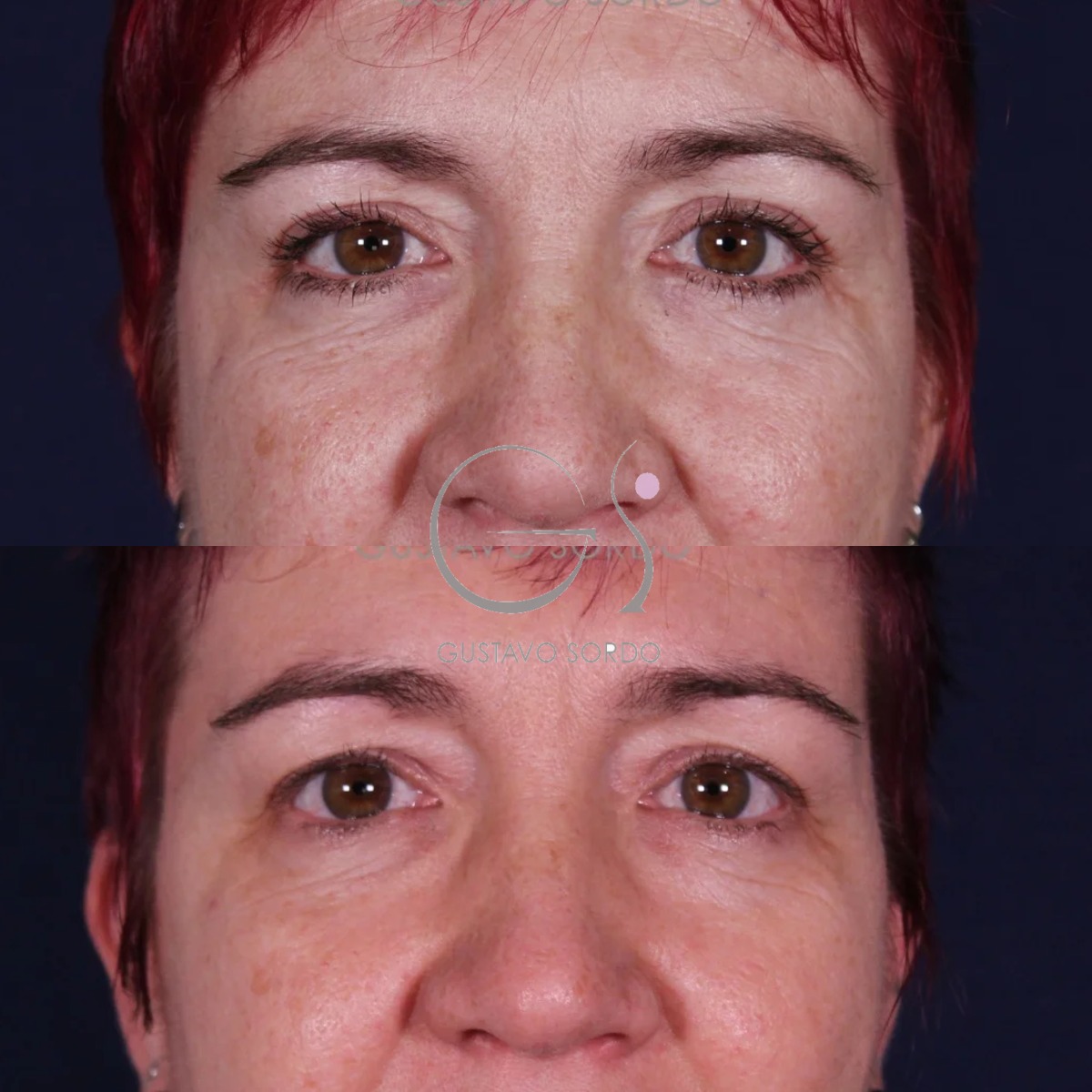
Once we have performed the intervention, these are the precautions to take into account after blepharoplasty:
- The most important thing is the local application of cold in the treated areaTo do this, we will place ice or some cooling glasses that are placed in the freezer and can then be placed as a mask on the eyelids.
- Another fundamental recommendation is Raise the head of the bed so that when we lie down our head is not in the same line as the rest of the body. To do this, placing a couple of pillows will be enough.
- In case the patient suffers discomfort In the postoperative period, even if it is not a very uncomfortable surgery, you can take some type of painkiller such as paracetamol or Nolotil.
- It is also important Clean eyelashes and small secretions with a cotton swab soaked in serum that can accumulate around the dressings and eyelids to keep them clean.
- Finally, the most important thing is, if the patient has undergone a transconjunctival blepharoplasty, put on some drops usually with tobramycin and dexamethasone all with prevent inflammation of the conjunctiva This occurs when performing the transconjunctival approach, which is what gives us access to the lower fat pads using the “No Touch” technique. The only technique that respects the eyelid muscles and therefore does not generate mechanical complications in the postoperative period.
These are the essential care guidelines before and after blepharoplasty . As you will see, they are simple recommendations that patients wishing to undergo surgery to remove under-eye bags should follow to ensure optimal results.
Continue reading
Dr. Gustavo Sordo
Specialist in Plastic, Aesthetic and Reconstructive Surgery. Member No. 282858125.
Content clinically reviewed by Dr. Gustavo Sordo. Last review: September 27, 2026.