Rhinoplasty to reduce the bridge and define the tip: before and after
Case fact sheet
- Patient: Female, 26 years old
- Reason: aesthetic improvement
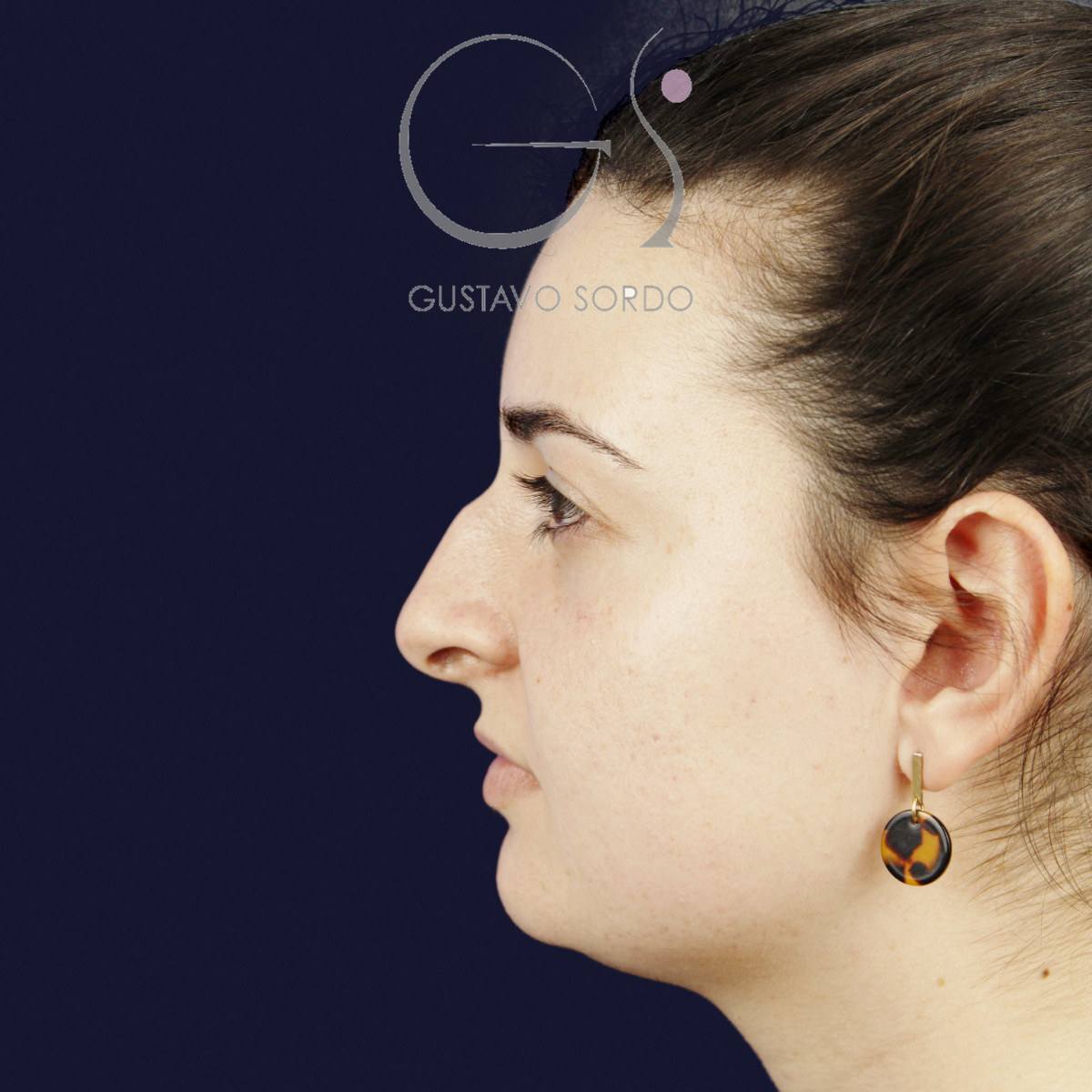
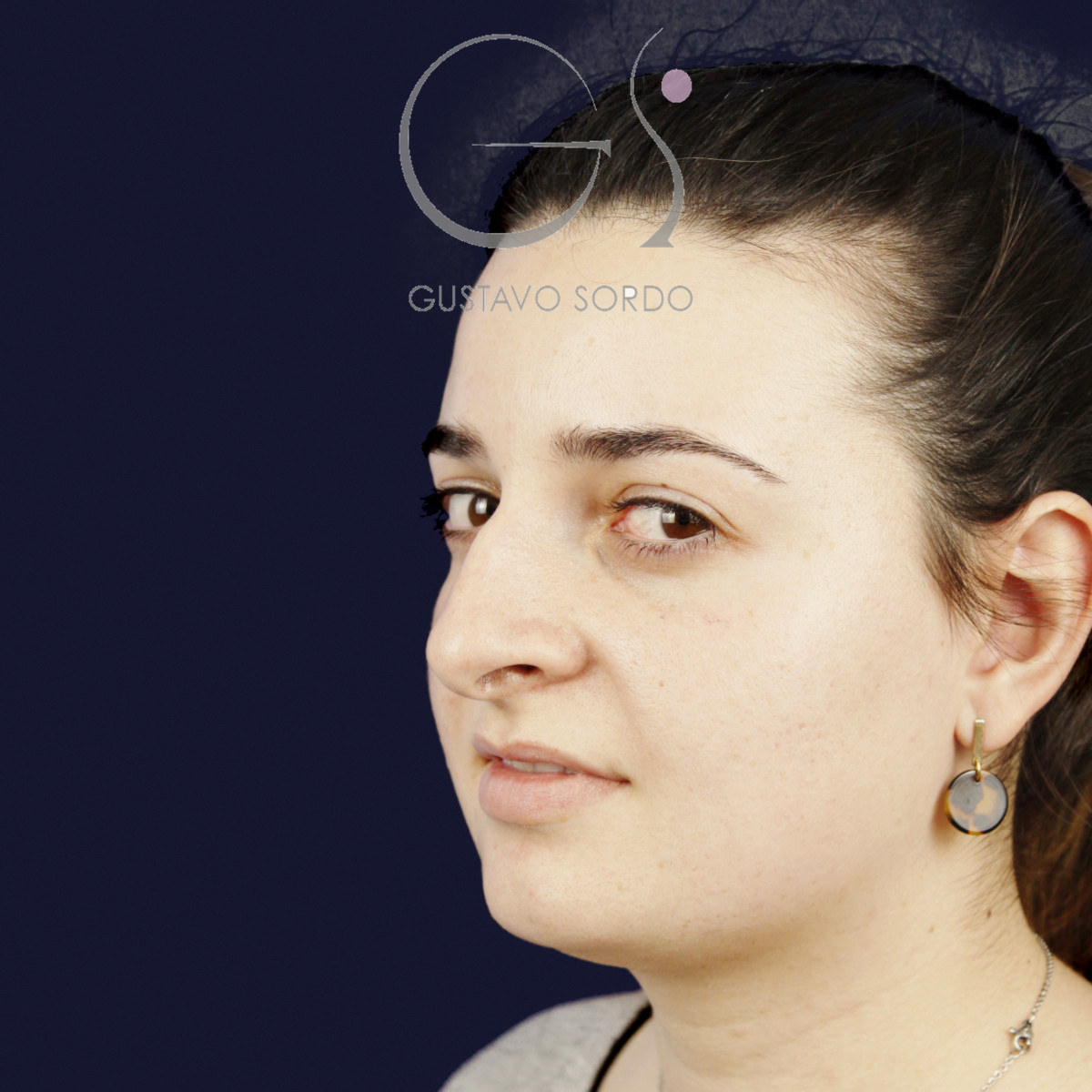
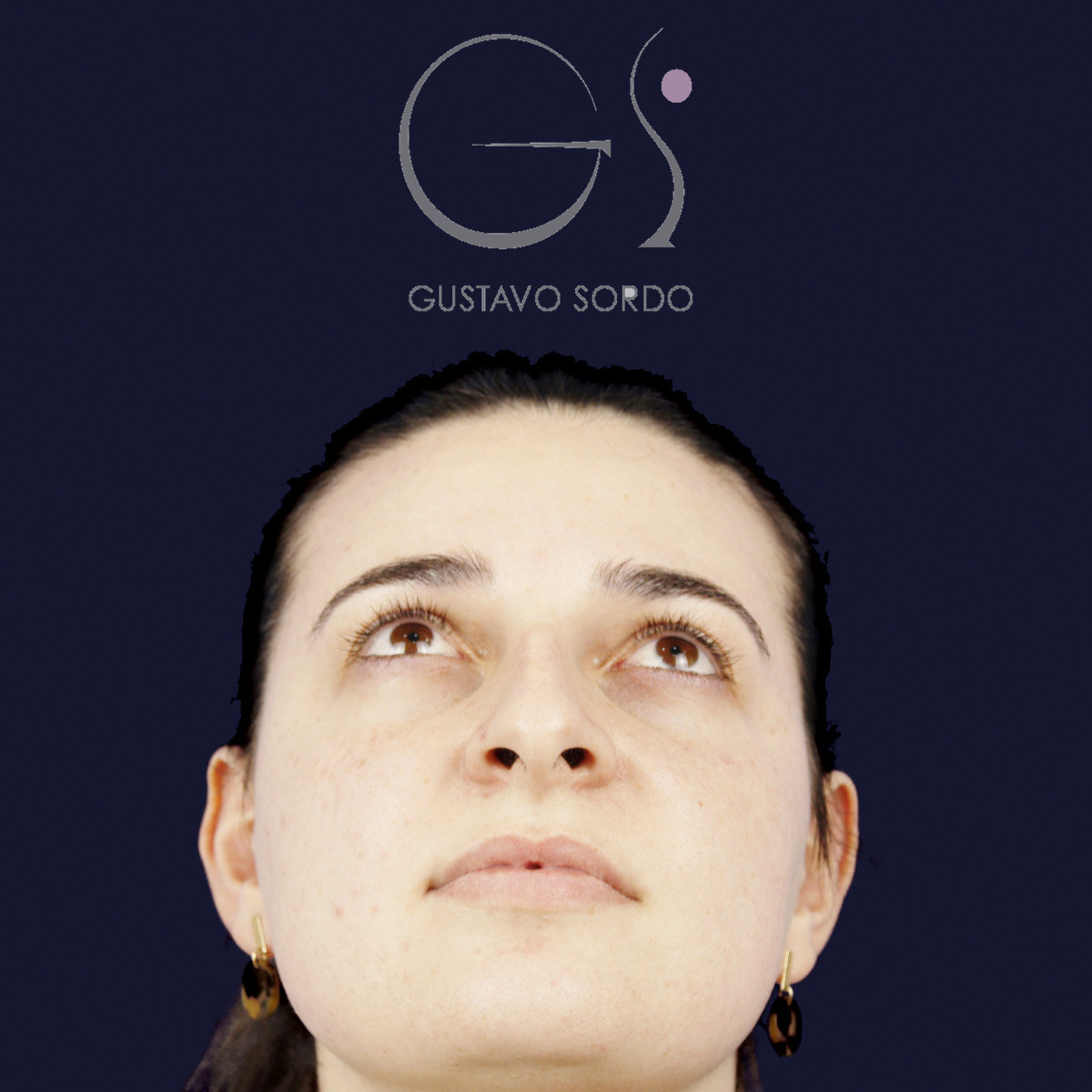
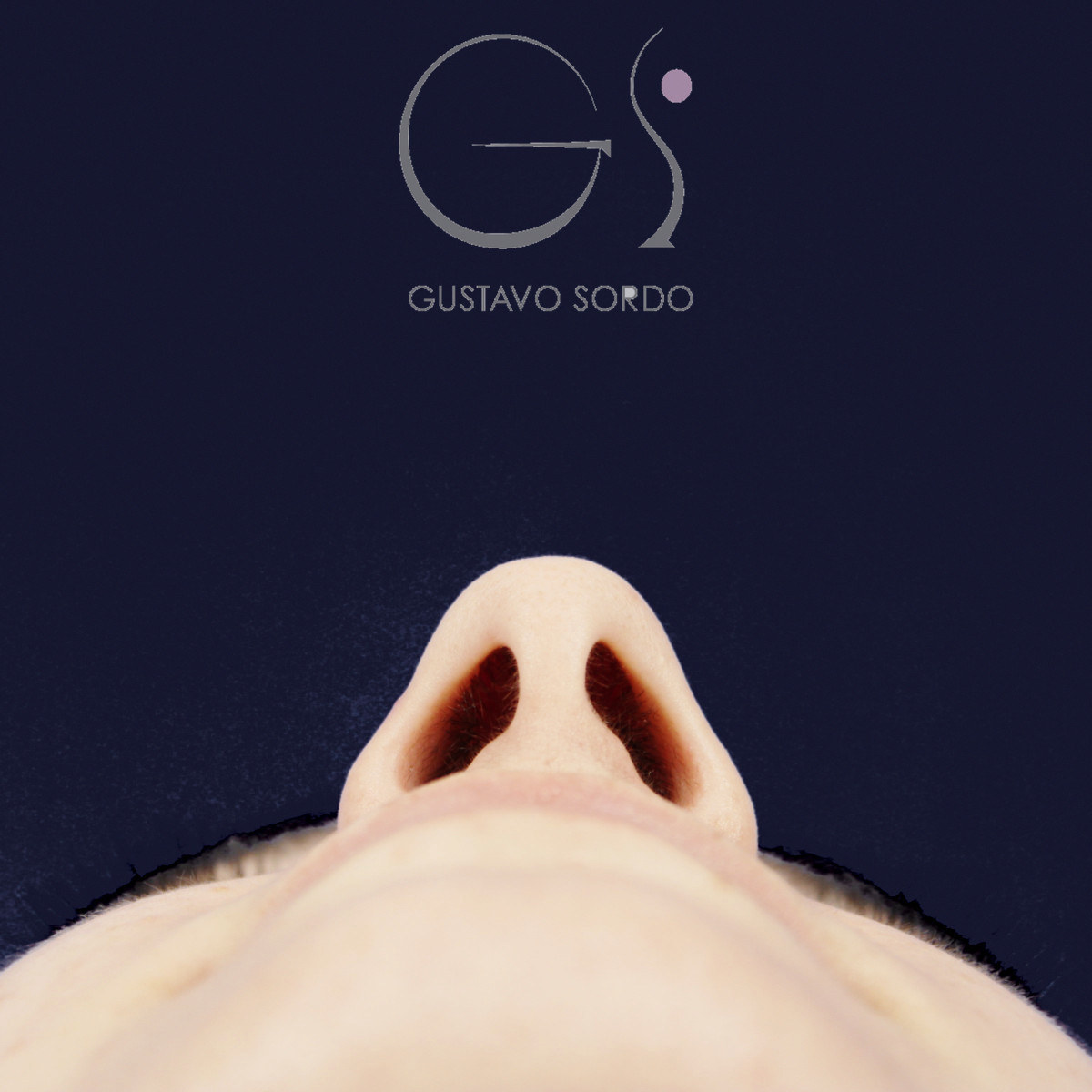
- Starting nose: Very typical S-shaped back, with a very pronounced ridge on thin skin; projecting and poorly defined tip, large wings and holes
- Technique: Structural rhinoplasty with ultrasonic instrumentation: lowered bridge, spreader grafts on the dorsum, septal extension graft to reduce tip projection and correct alar-columellar relationship, and allotomy to reduce the alae and the size of the nostrils
- Septum and turbinates: septoplasty and turbinates in the same surgery
- Approach: A smaller nose: lowering the bridge and reducing the projection of the tip and wings, with a natural result.
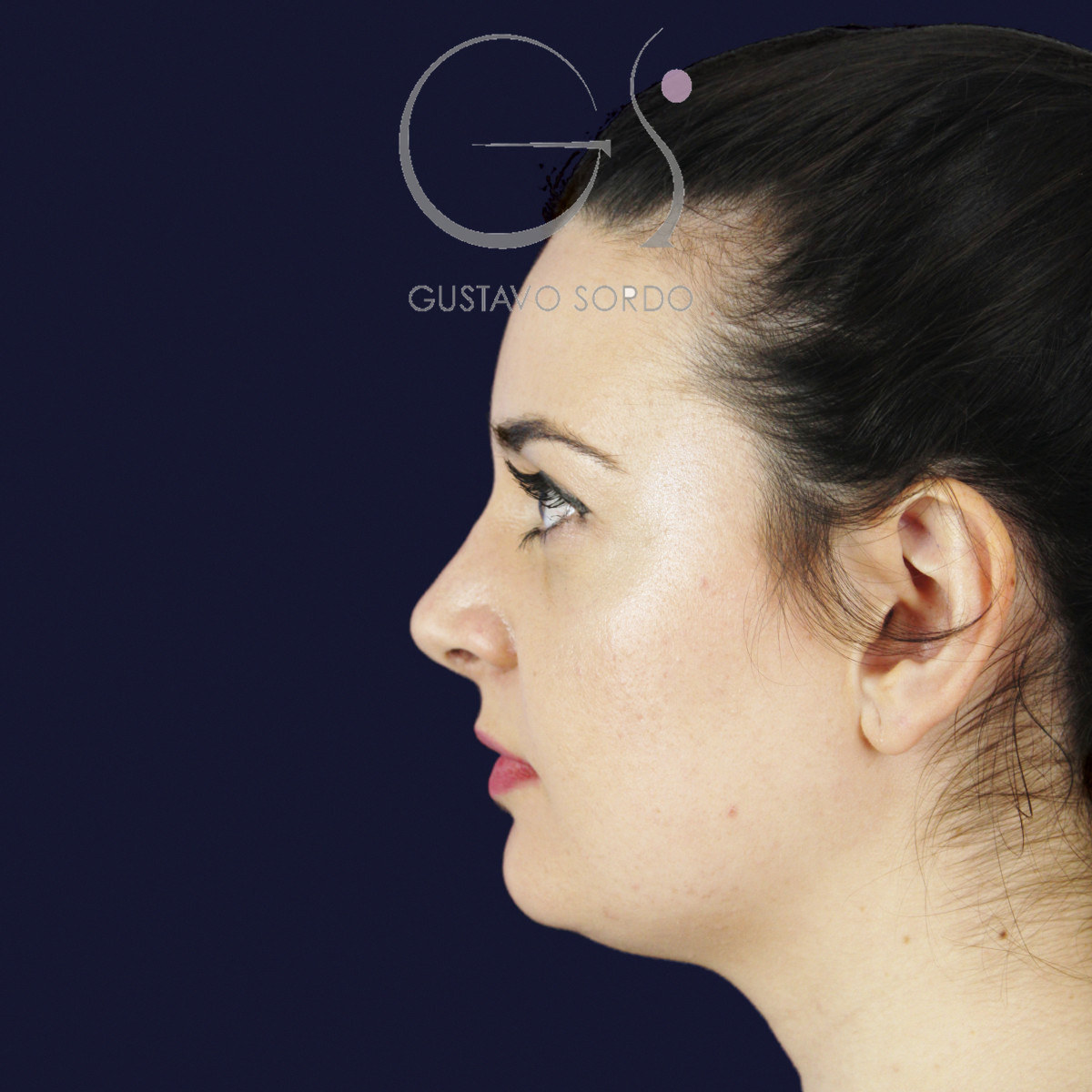
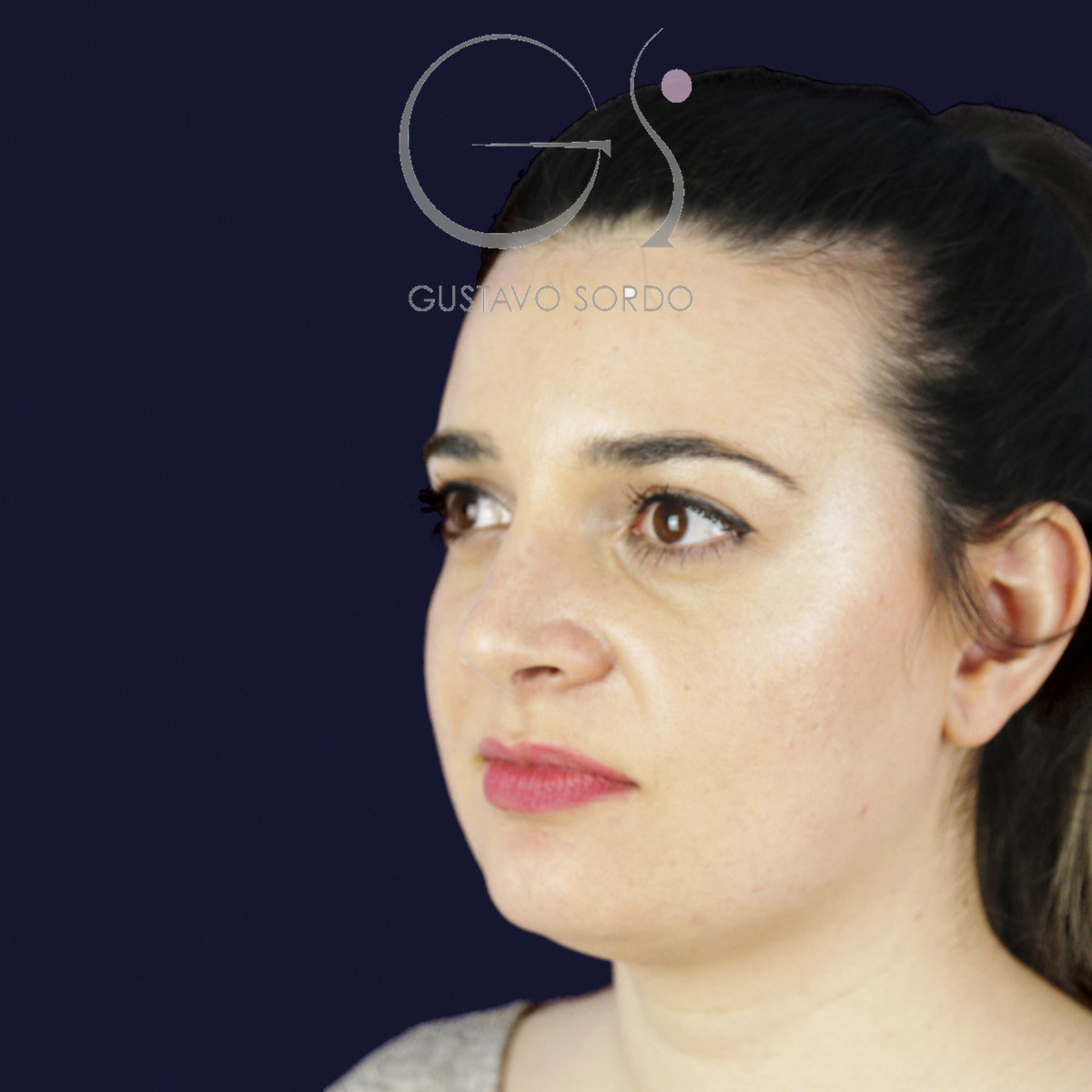
- Result: ten months after the operation
- Entry: 1 night
- Anesthesia: general type TIVA
- Duration: 3 hours long.
An S-shaped dorsum with a very pronounced bridge over thin skin, with a projected tip and large alae. Structural rhinoplasty with ultrasonic instrumentation, spacer grafts, septal extension graft and allotomy, with photos at ten months.
Photos taken ten months after the operation
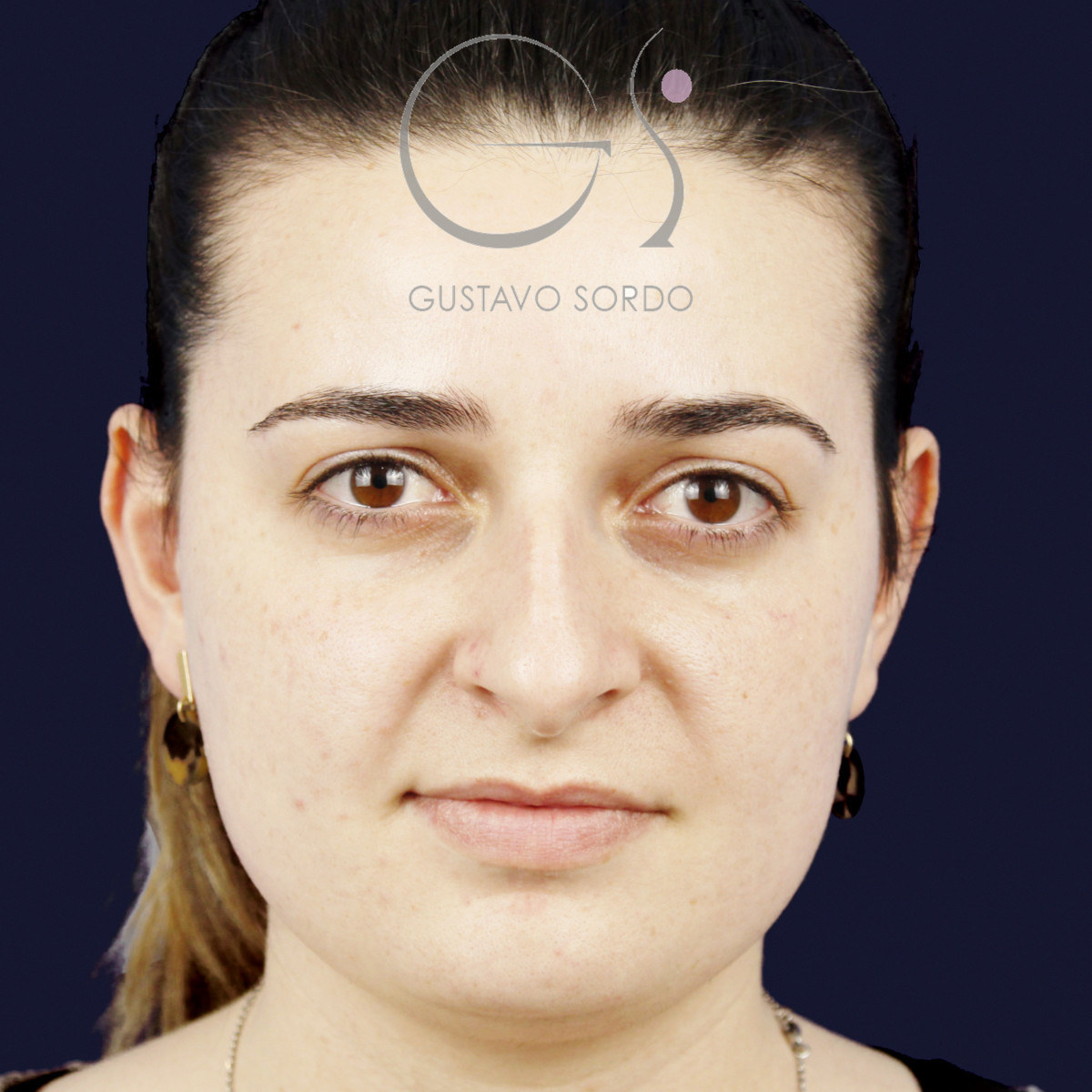
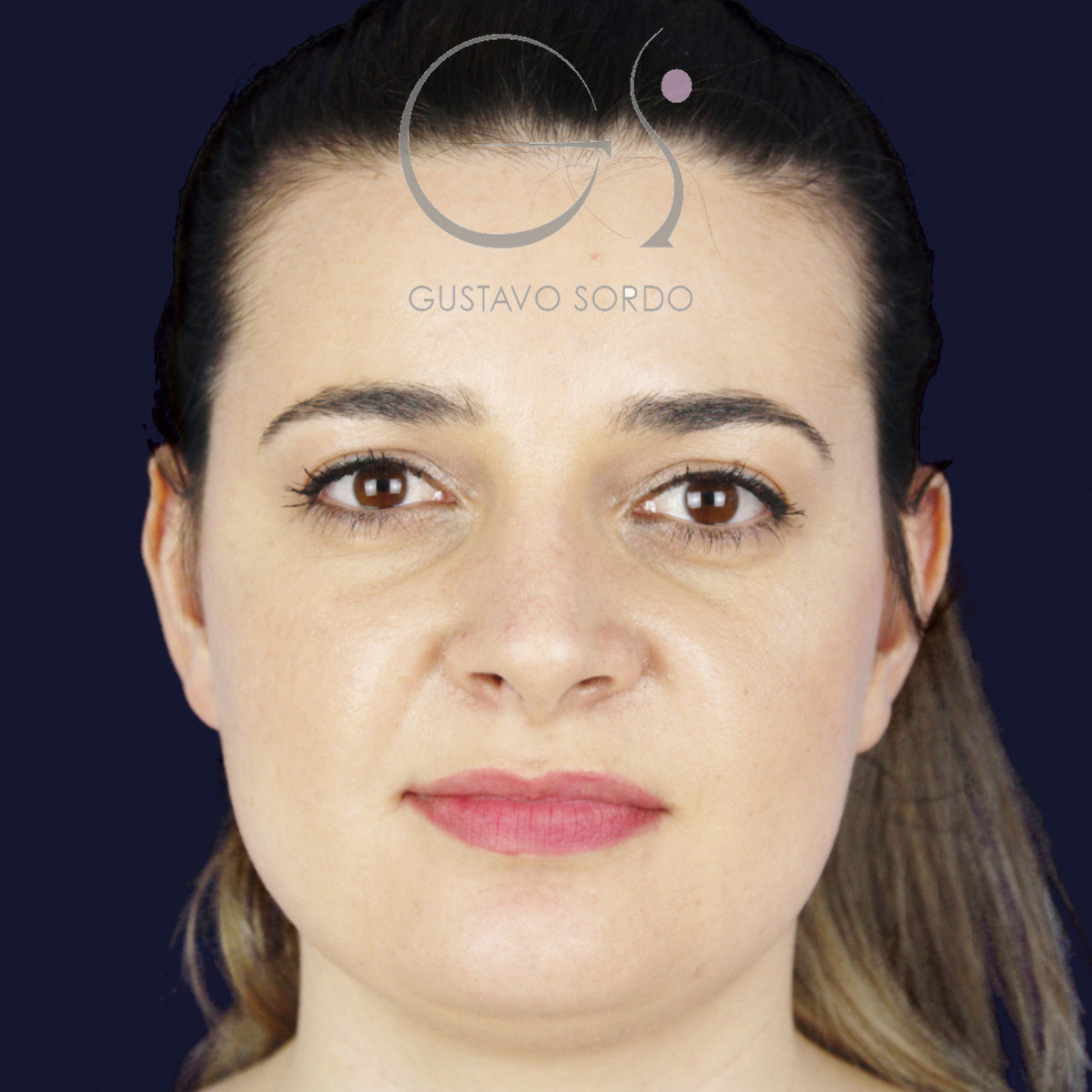
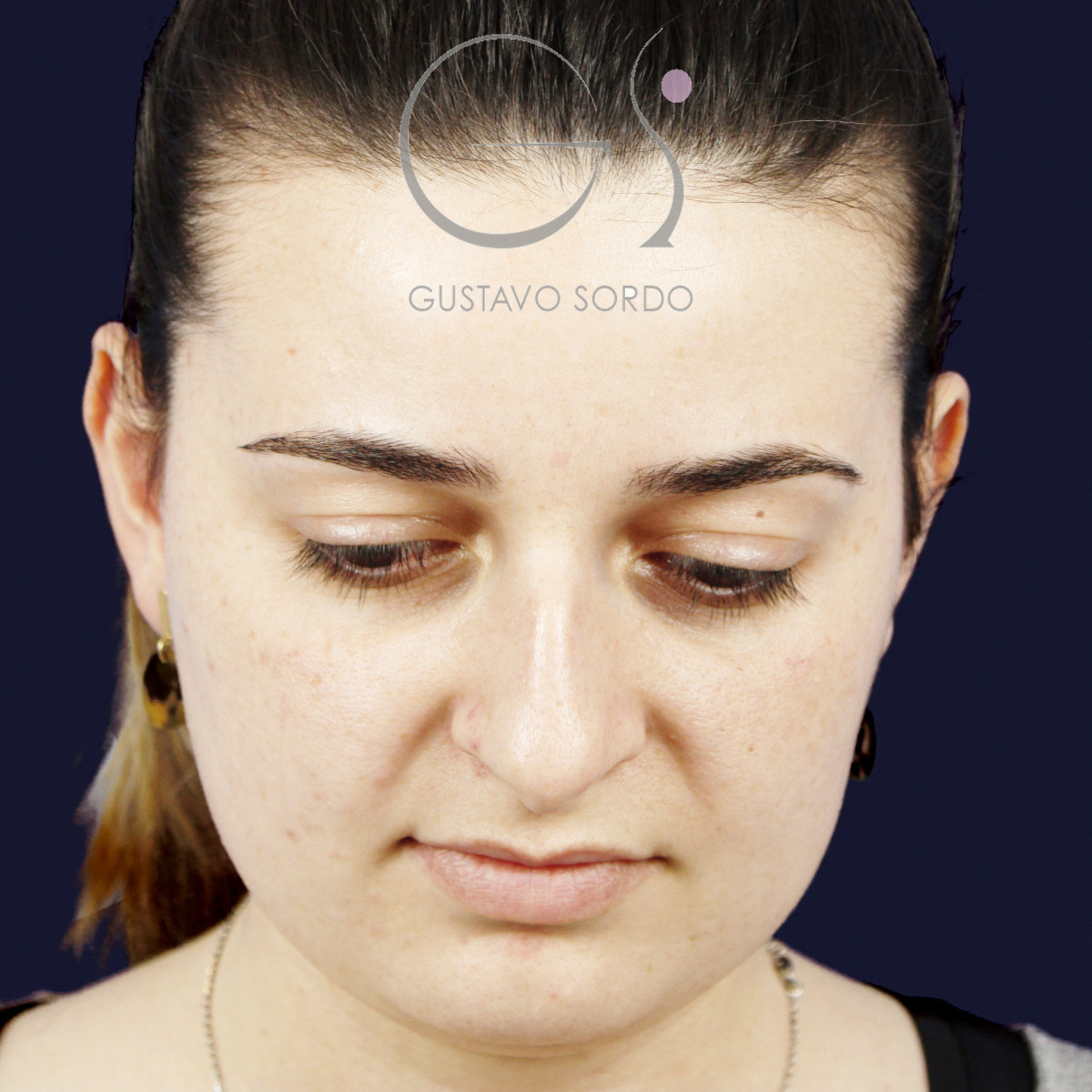
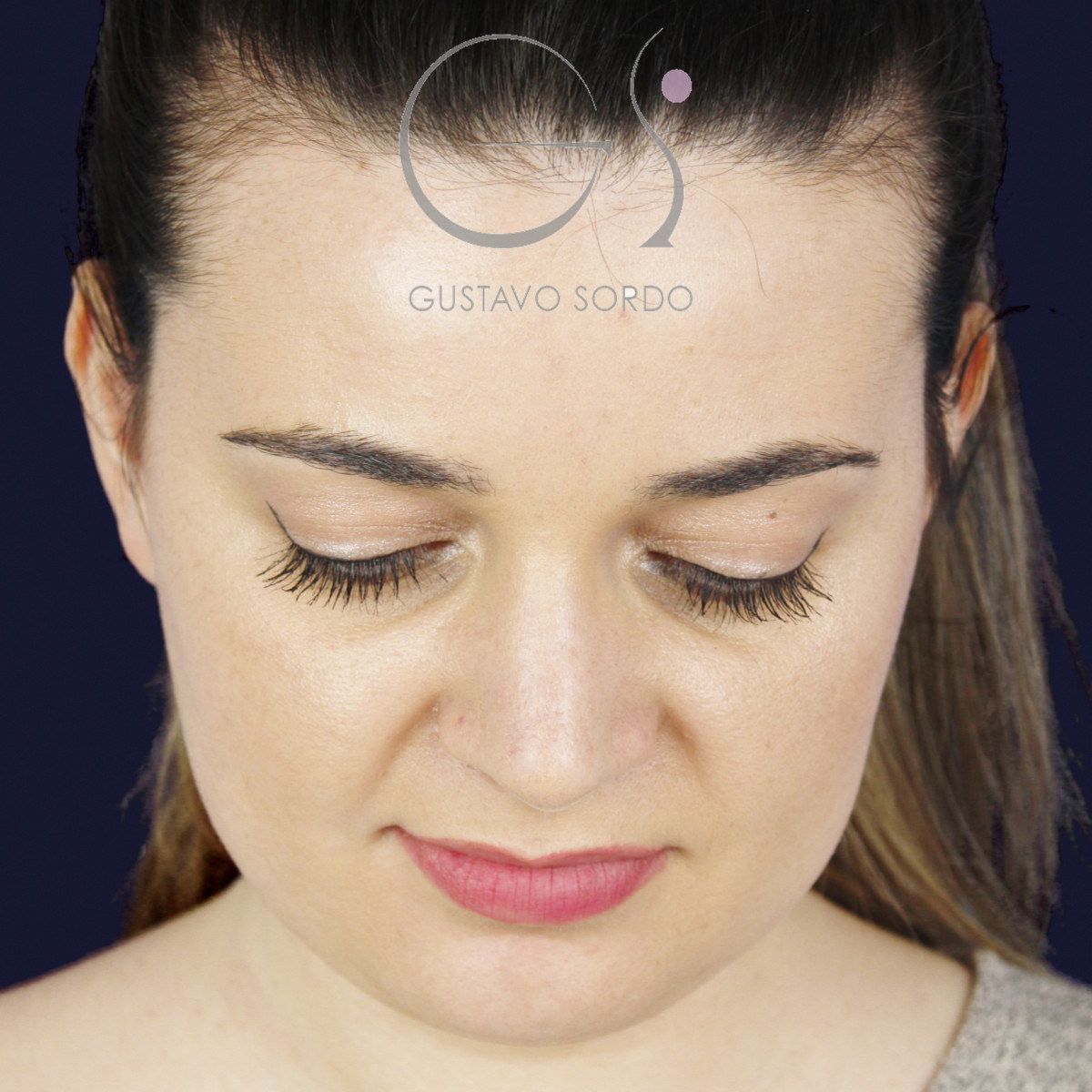
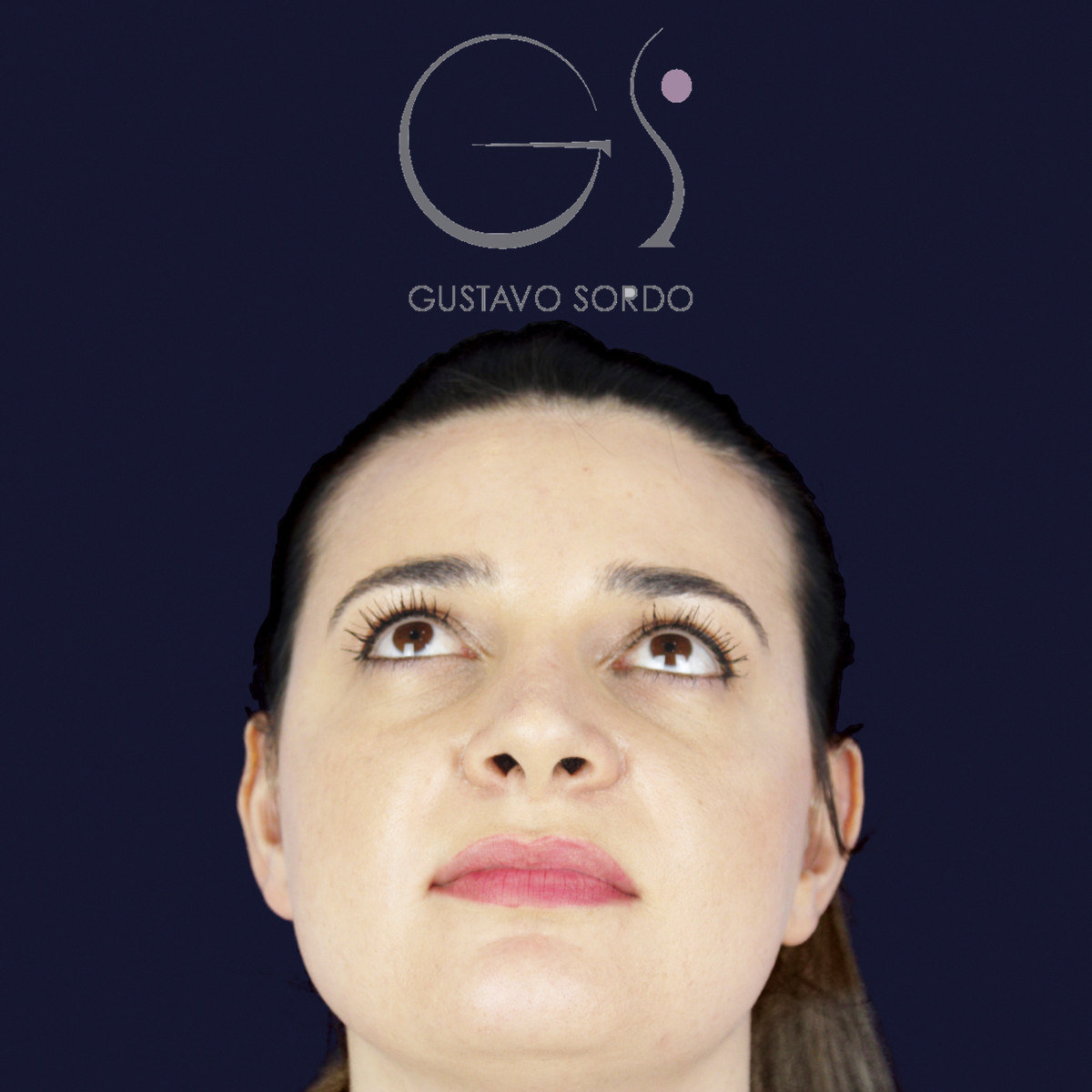
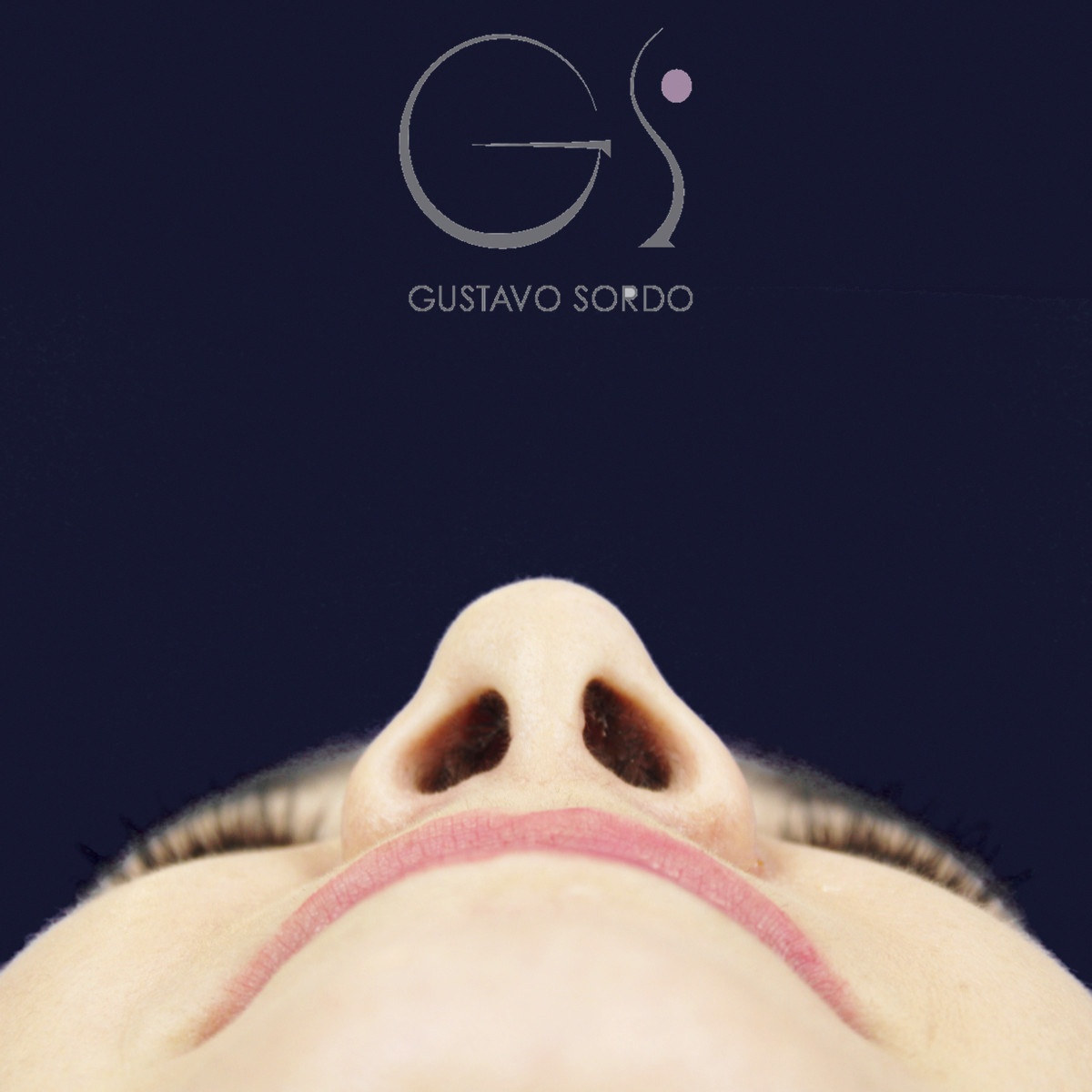
The "after" photos are from her February 2020 follow-up, ten months after the surgery. In profile, the bridge of her nose has disappeared; the basal view clearly shows the reduction of the nostrils; and the nose, overall, is smaller.
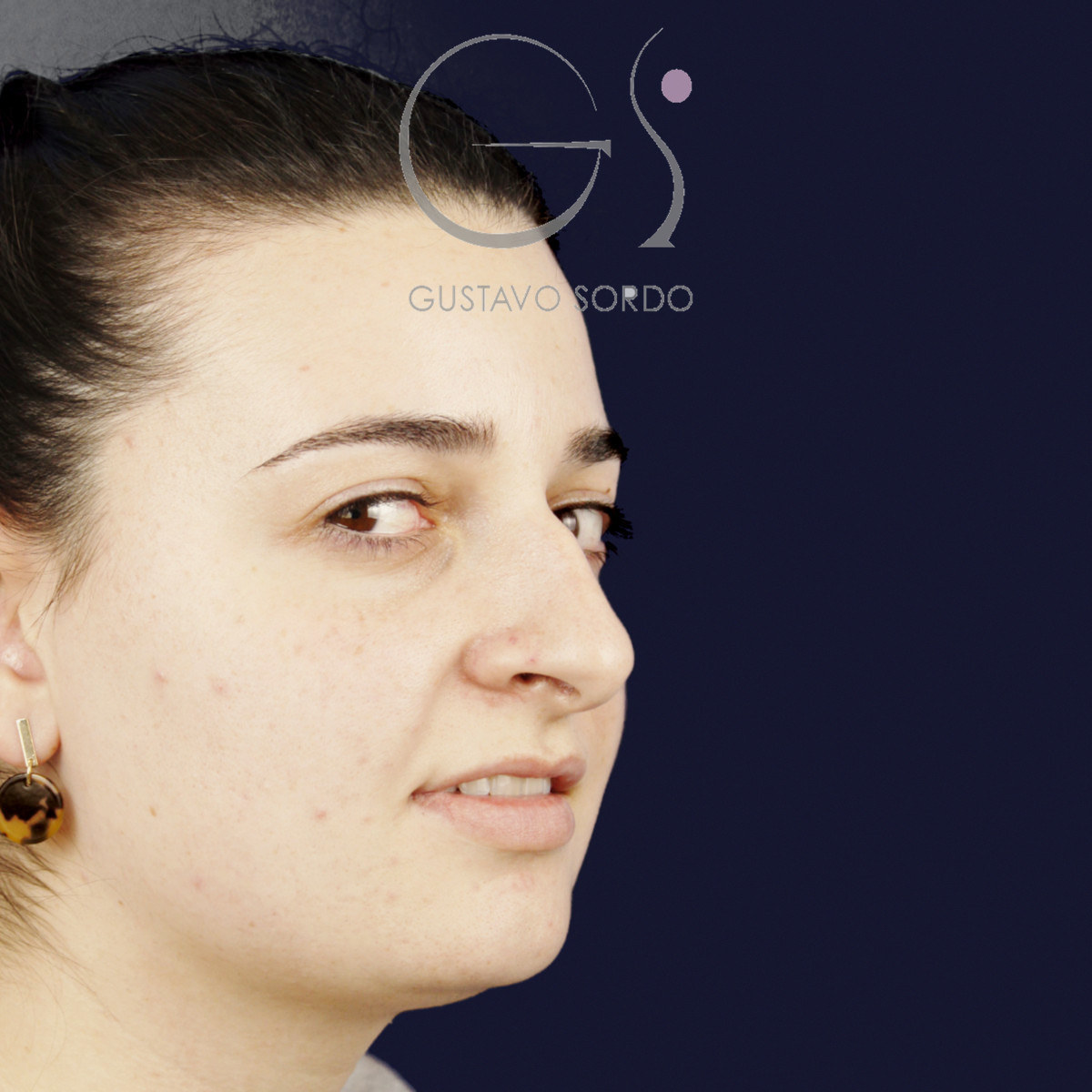
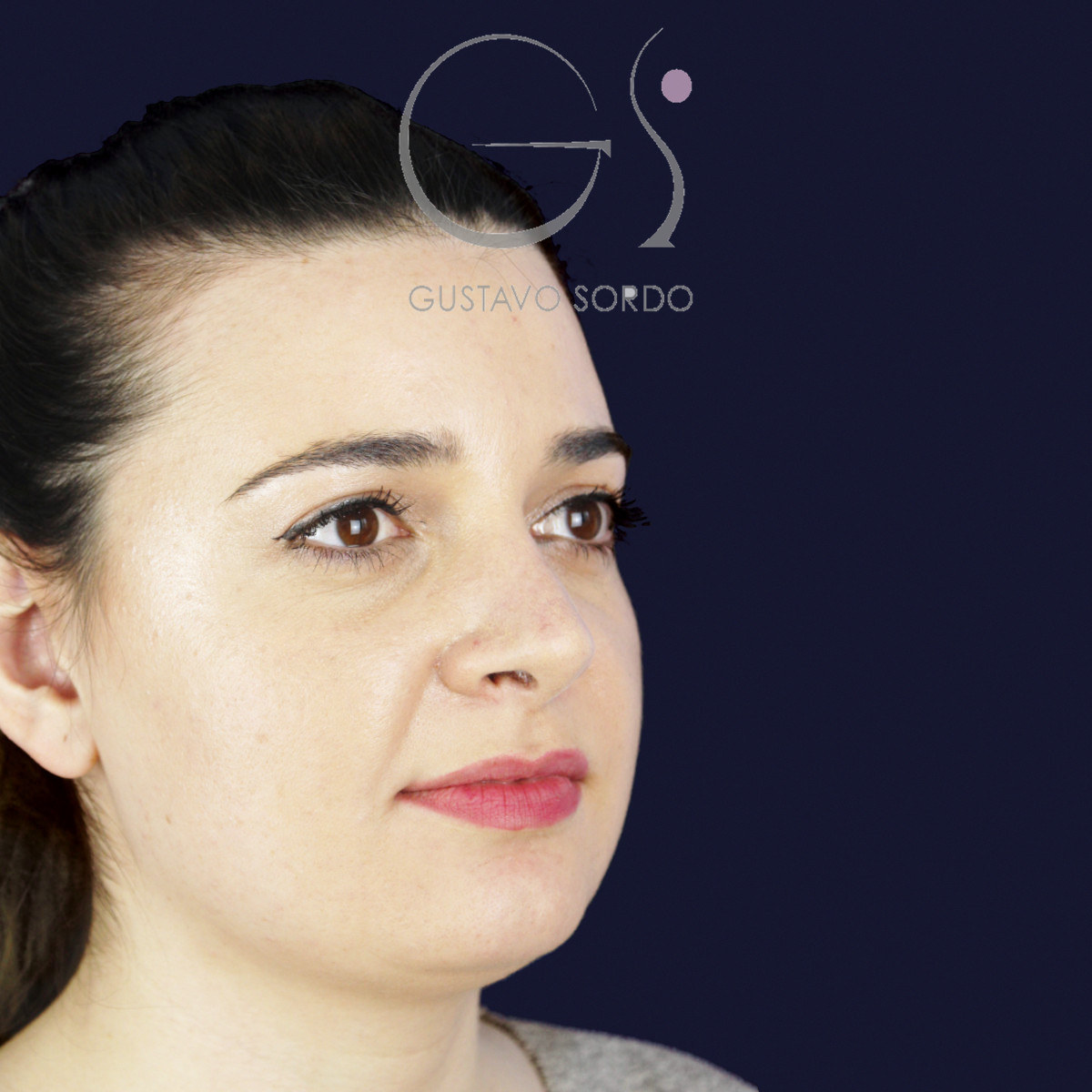
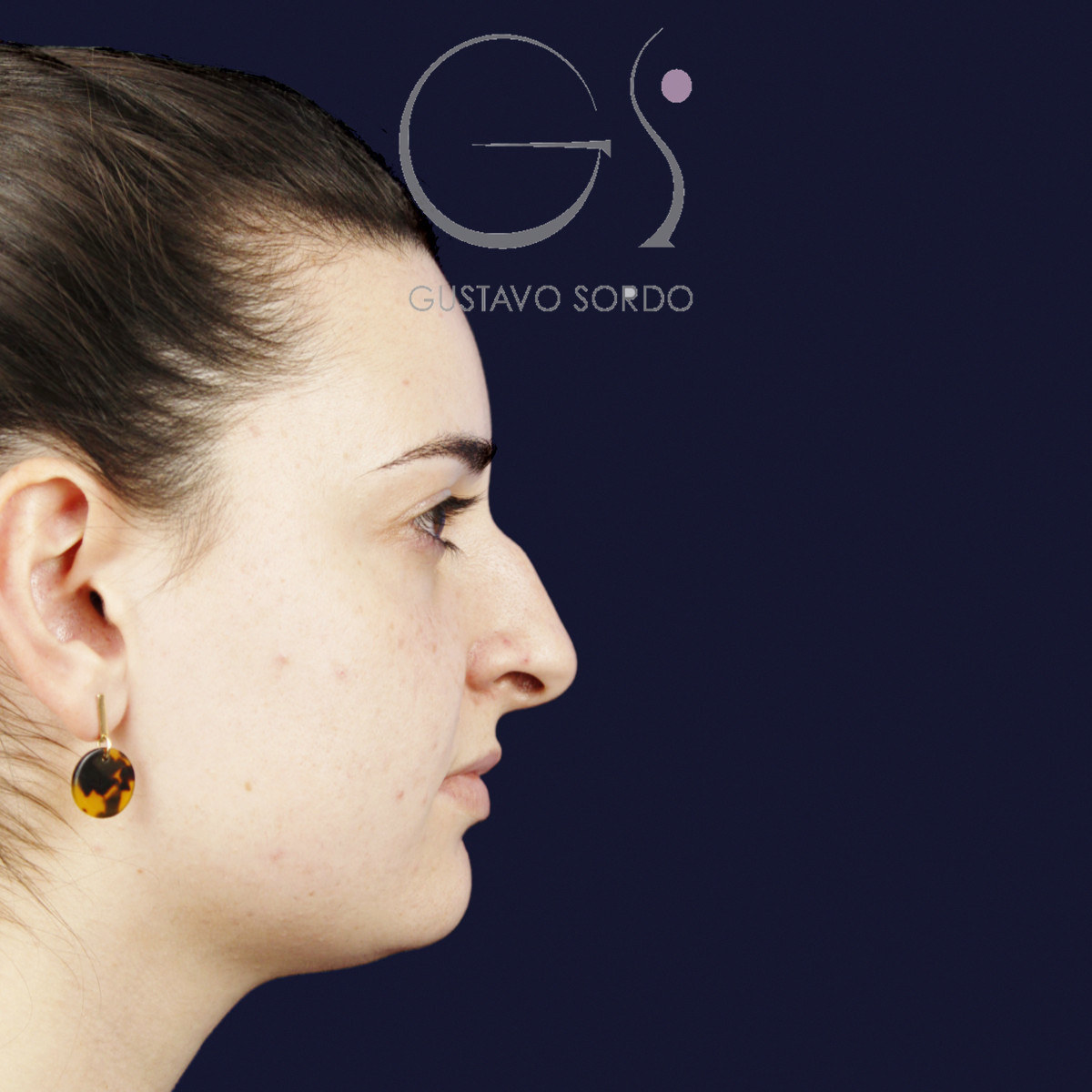
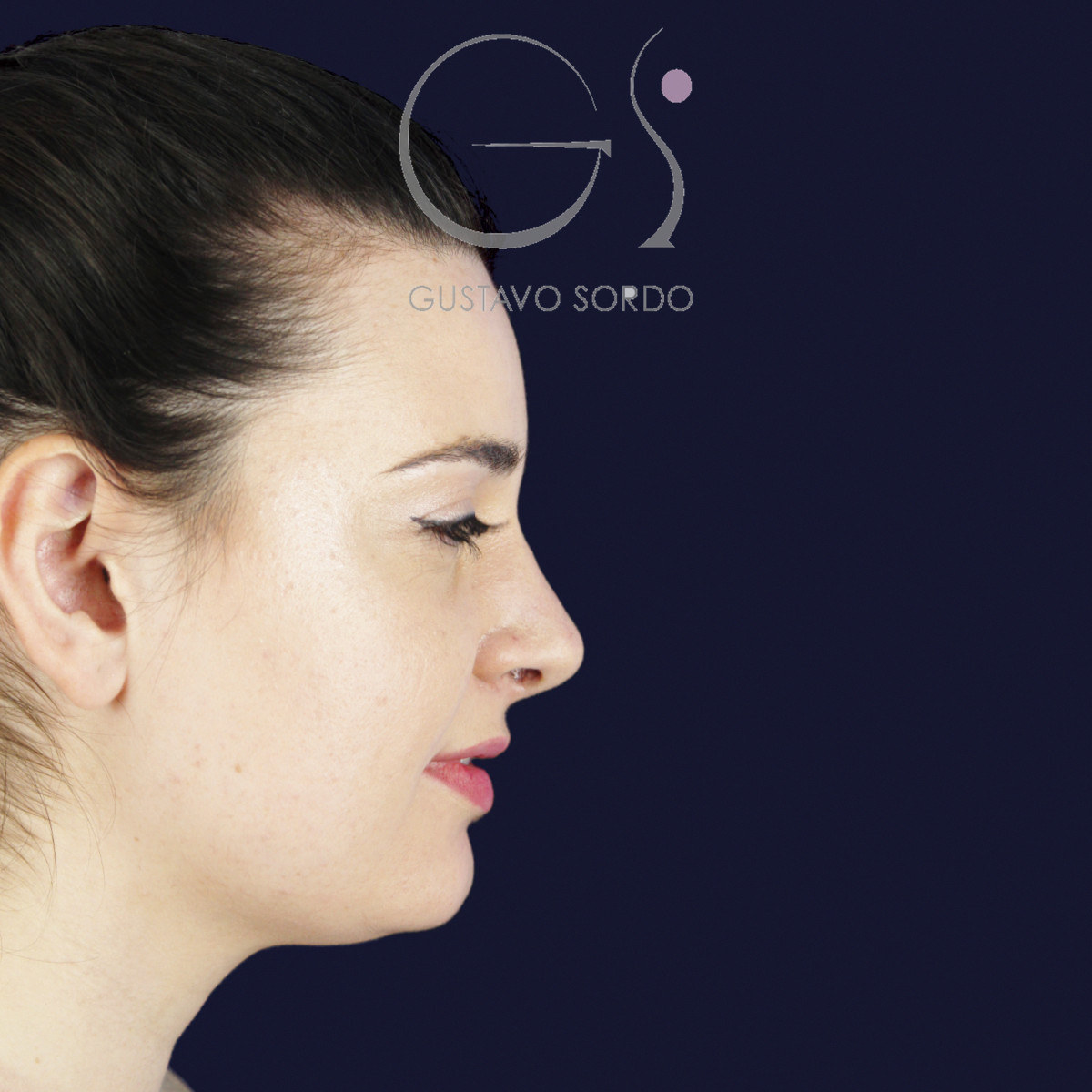
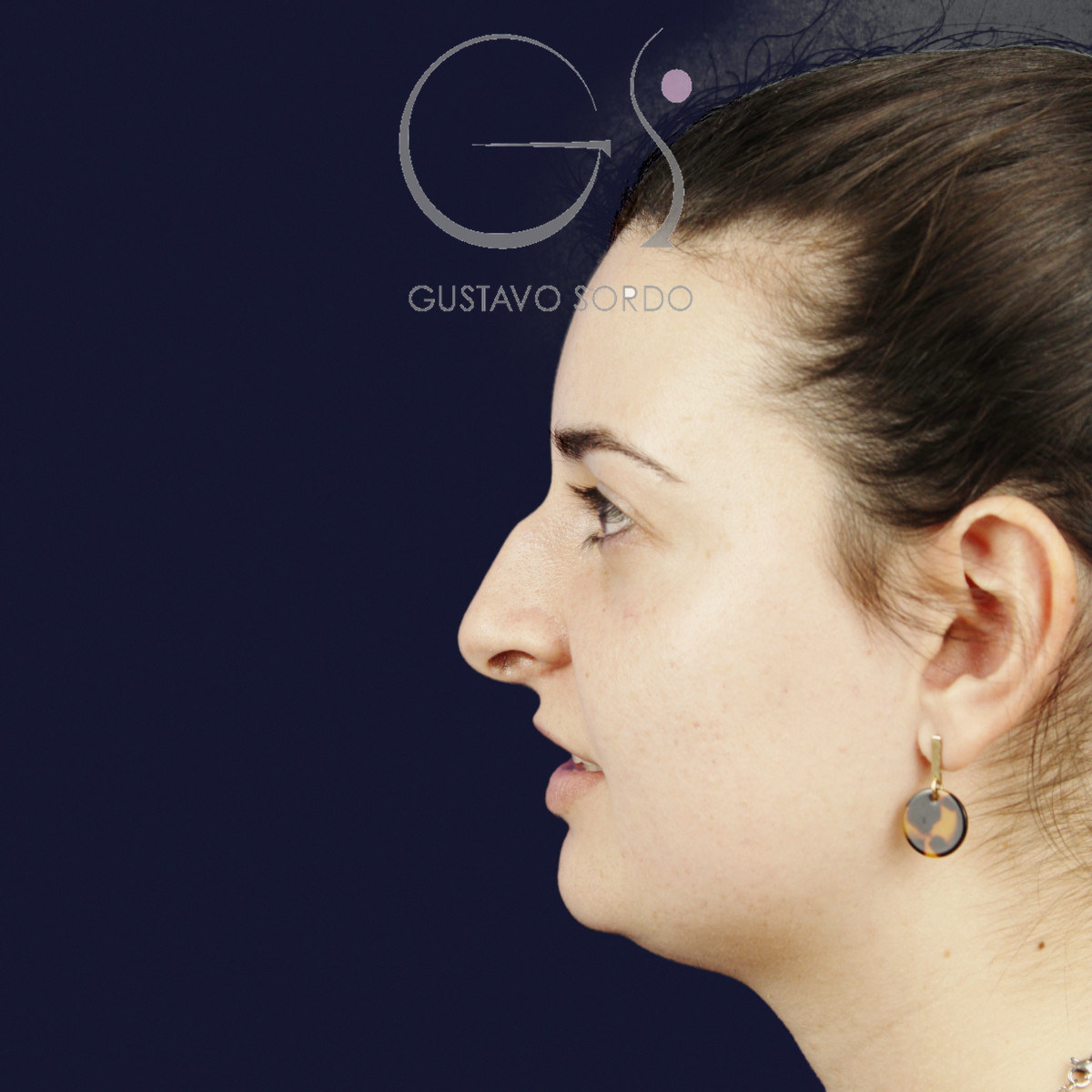
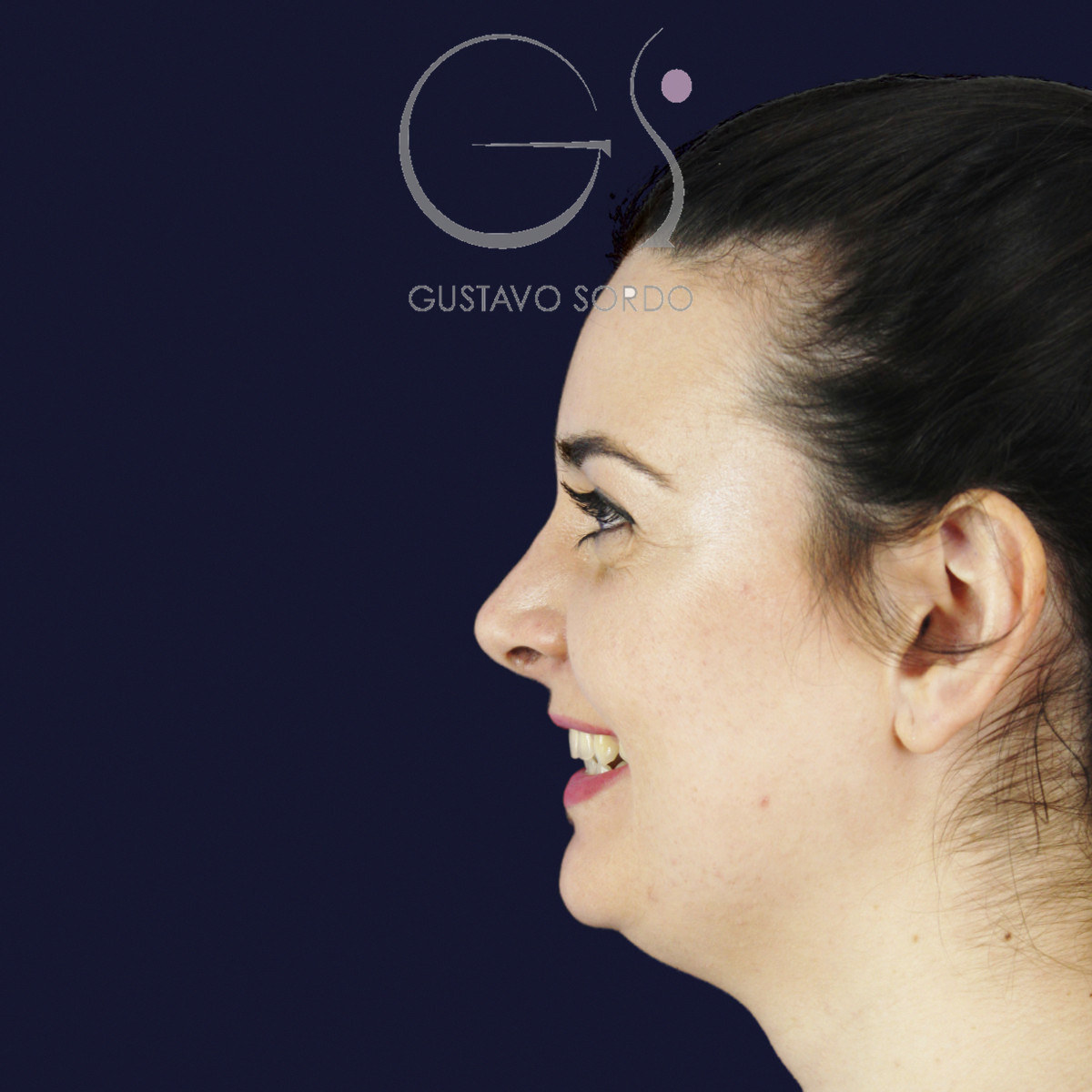
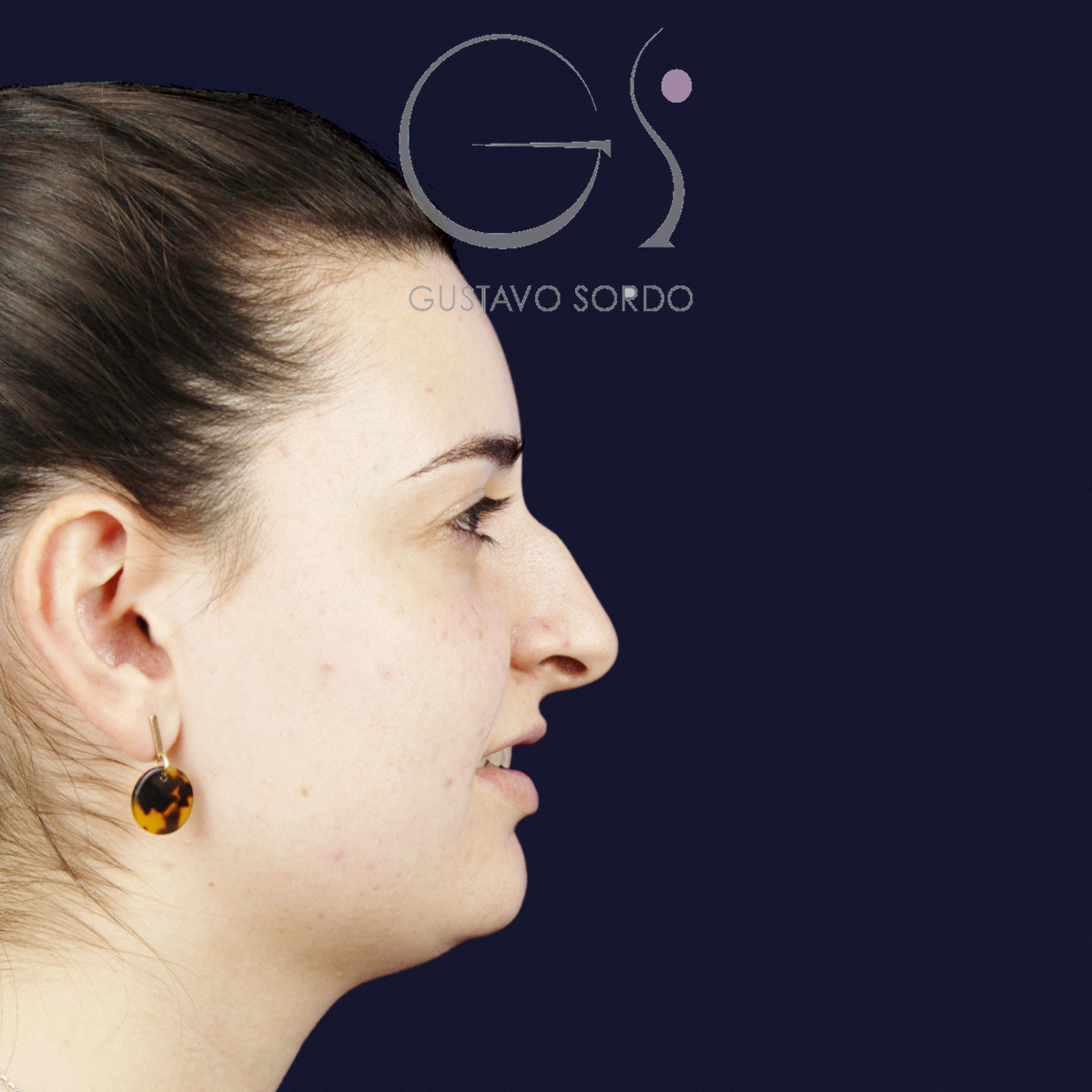
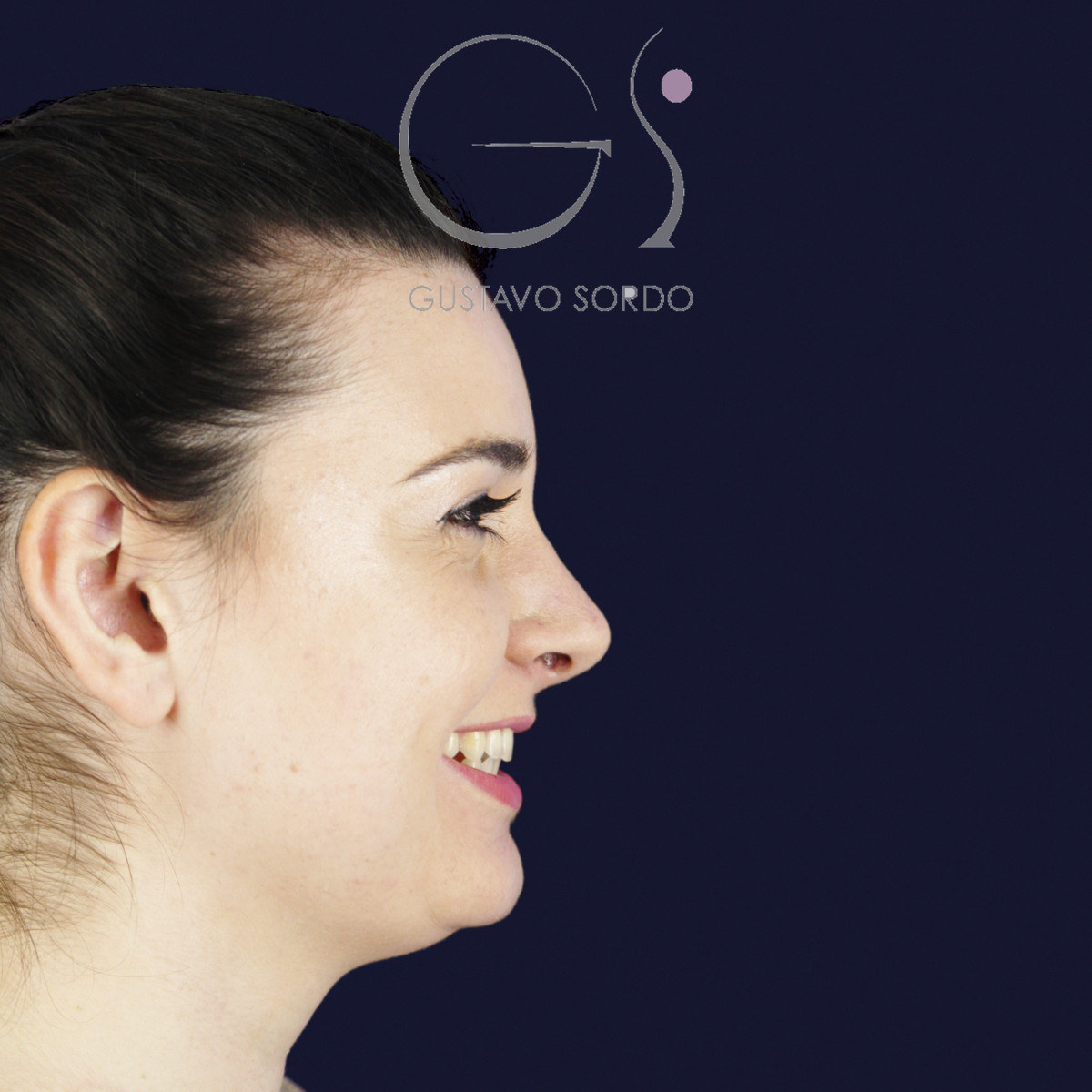
Comment by Dr. Gustavo Sordo
Reason for consultation
She wanted an aesthetic improvement to her nose.
What I observed when evaluating it
A very typical S-shaped back, with a very pronounced ridge on a thin skin, a projecting and poorly defined point, and large wings and holes.
What was important to preserve
A natural result.
My surgical approach
A structural ultrasonic rhinoplasty : lowering the bridge, reconstructing the dorsum with spacer grafts, reducing the tip projection with a septal extension graft, and performing an allotomy to reduce the alae.
Why I chose this technique
In an S-shaped dorsum on thin skin, the bridge must be reduced in a controlled manner to leave the dorsum smooth, and ultrasonic instrumentation allows for precise bone shaping. The septal extension graft controls the tip projection and the relationship between the alae and the columella, and the alotomy reduces the size of the alae and nostrils. All these maneuvers together result in a smaller nose.
What I did during surgery
I reduced the bridge of the nose, placed spreader grafts on the dorsum, and a septal extension graft to reduce tip projection and correct the alar-columellar relationship. I also performed an alar resection to reduce the alae. In the same surgery, I addressed the septum and turbinates.
What is observed in the result
A smaller nose: the profile without a bridge, the less projected and more defined tip and the reduced wings, which look great in the view from below.
More cases of prominent noses are included in this collection; the technique and the remaining cases can be found on the Madrid nose surgery page . Why not all prominent noses are operated on in the same way is explained on the blog: V-shaped and S-shaped dorsums.
Case operated on by Dr. Gustavo Sordo
Specialist in Plastic, Aesthetic and Reconstructive Surgery. Member No. 282858125.
Before you compare yourself to this photo
If you're comparing results to get an idea, keep in mind that the starting point is just as important as the technique. How is a nose studied before surgery, in rhinoplasty in Madrid.
Do you want to know if this can be done in your case?
The first consultation is with Dr. Sordo, either at the Chamberí clinic or via video consultation. You'll leave knowing if you're a candidate, which technique is right for you, and how much it costs.
Dr. Gustavo Sordo · Member No. 282858125 · Plastic, Aesthetic and Reconstructive Surgery · Madrid