Inverted T mastopexy after pregnancy: before and after
Case fact sheet
- Patient: 37 year old woman
- Technique: Inverted "T" mastopexy with "24h Recovery Laser" breast augmentation with 335 cc anatomical implants.
- Entry: 1 night
- Anesthesia: General type TIVA
- Duration: 2,5 hours long.
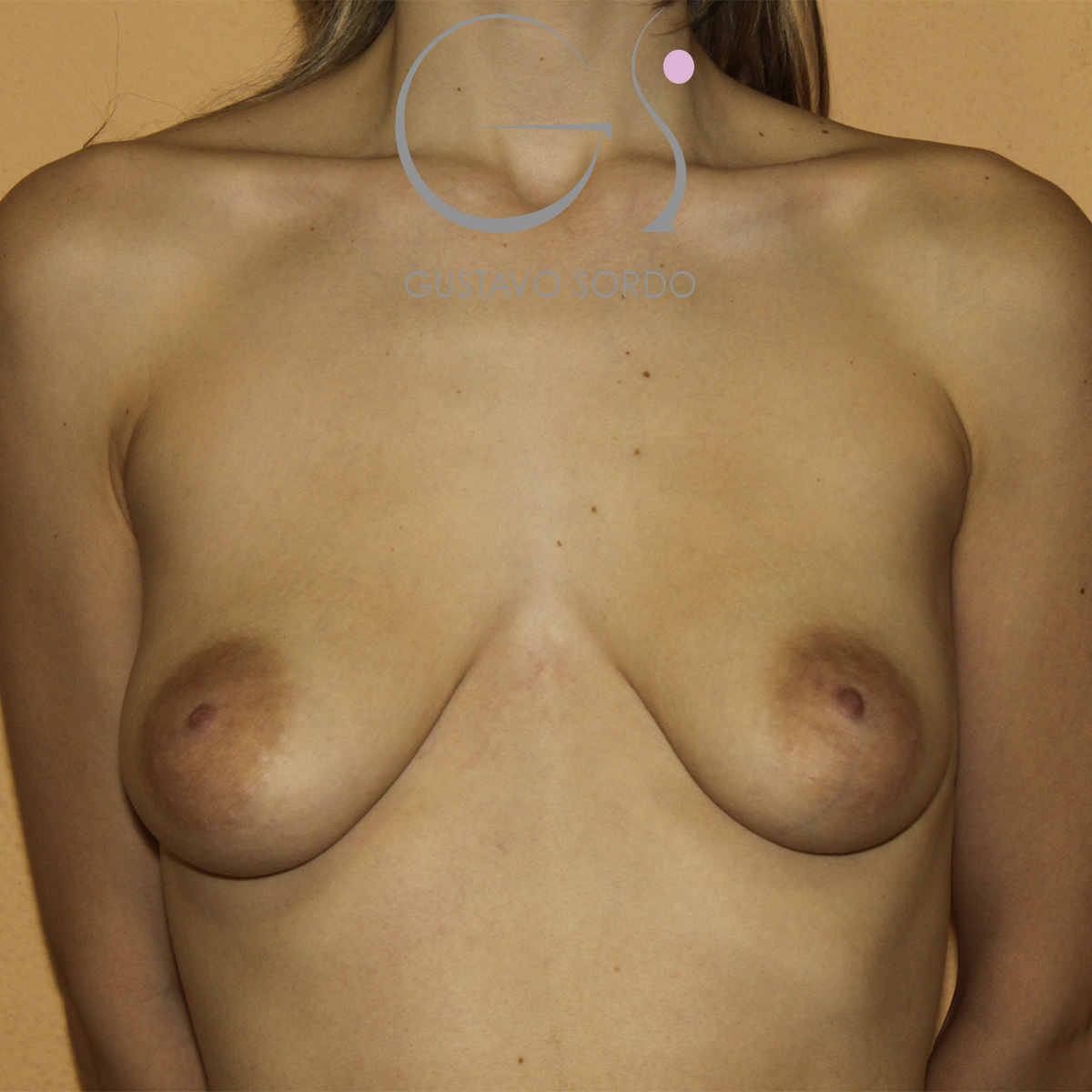
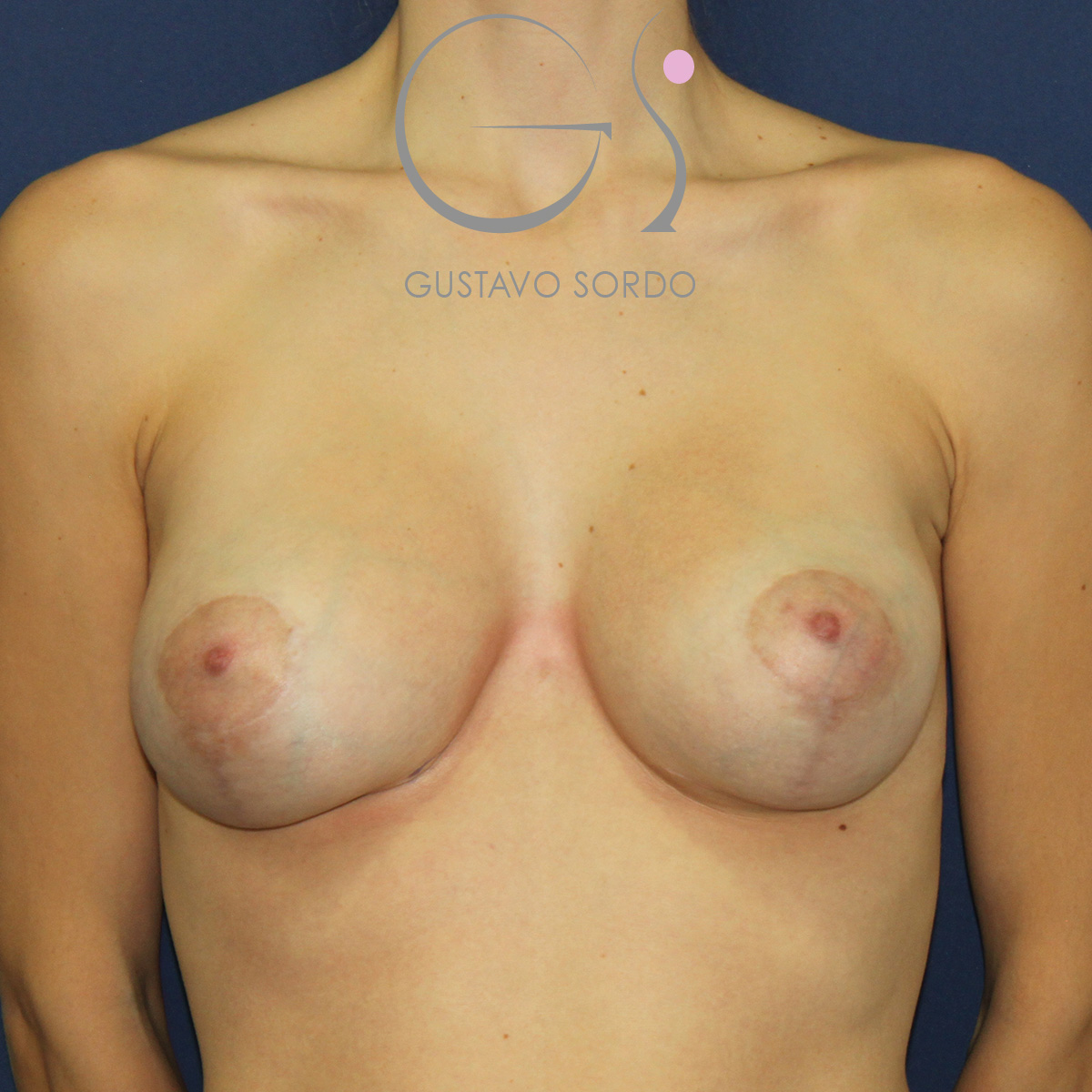

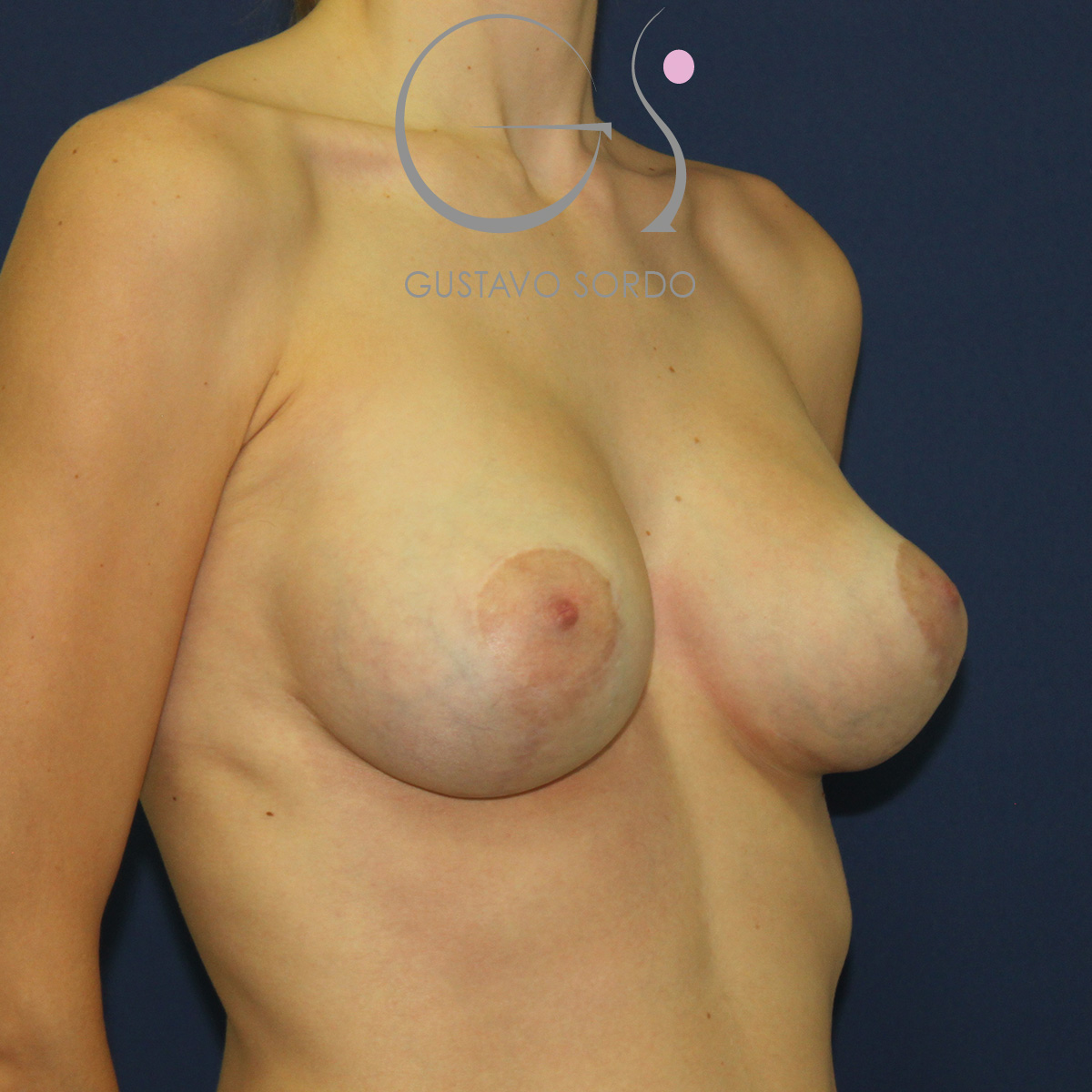
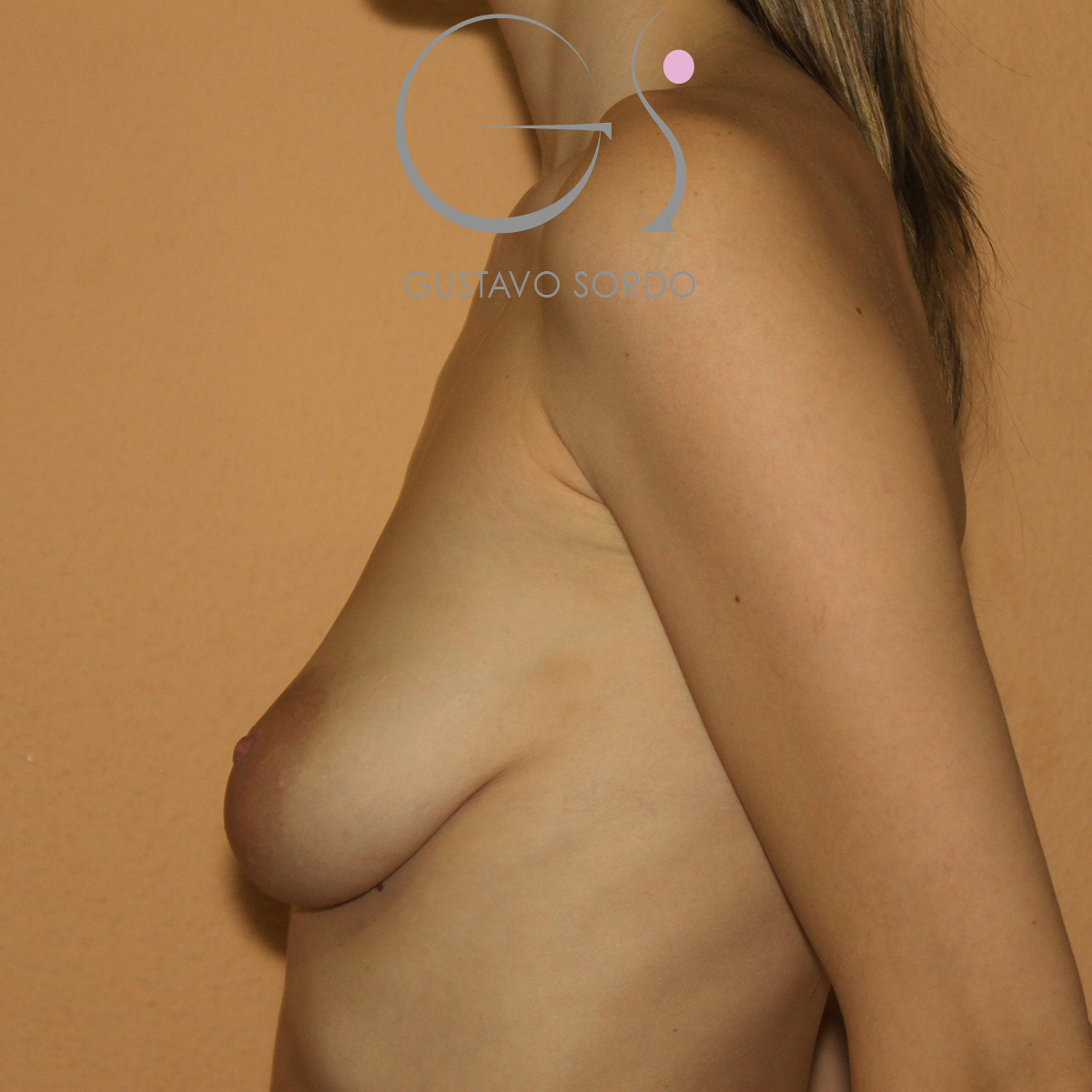
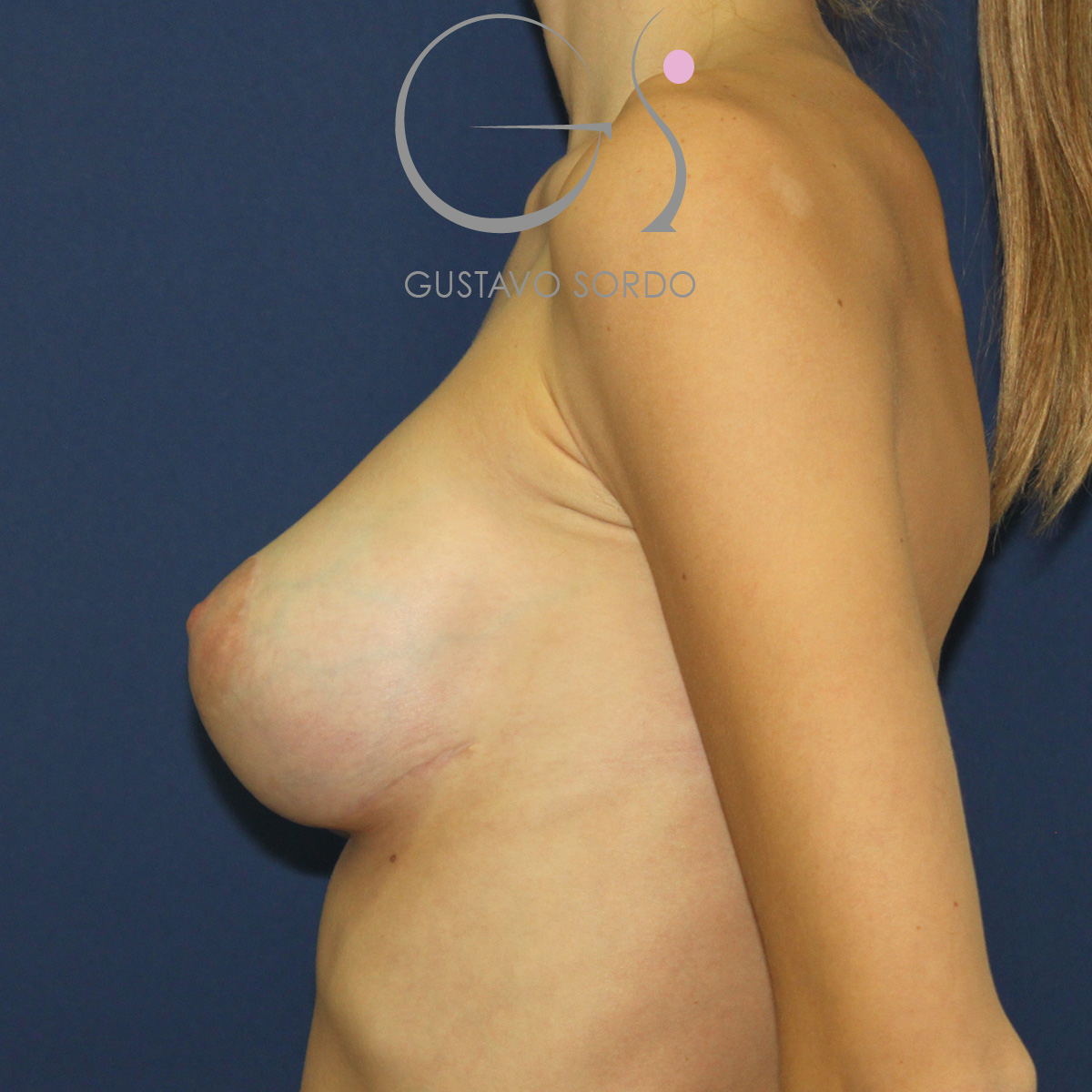
Pathology: Patient who wished to lift and symmetrize both breasts, as well as reduce both areolas. Her breasts had sagged as a result of pregnancy.
Procedure: We performed a mastopexy with an inverted-T incision, repositioning the areolas, reducing their size, and symmetry between the breasts. In addition to the mastopexy, we performed breast augmentation using a 335cc high-profile anatomical implant, placed subpectorally, resulting in fuller, more projected breasts.
What I found
A sagging breast after pregnancy, with large, asymmetrical areolas below the inframammary fold. They are actually grade 2 tuberous breasts. And there was enough skin.
What did I do?
Inverted T-shaped mastopexy: I lifted the areolas, reduced their size, and symmetricalized both breasts. I added a 335cc high-profile anatomical implant in a subpectoral position to fill and project the breasts.
Why T-shaped and not periareolar?
When the areola is already below the inframammary fold and there is excess skin, the periareolar incision falls short: it has to be raised too high, and all the tension falls on the scar surrounding the areola, which widens, and the areola itself becomes enlarged or deformed. In my experience, forcing a periareolar incision when it's not indicated is one of the most frequent causes of having to revise or retouch a mastopexy. The inverted T incision leaves a larger scar, but it distributes the tension and allows for shaping the lower pole.
what to watch
The position and size of the areolas, the symmetry between both breasts, and the lower pole, previously flat and now full.
Why the superomedial pedicle
All my inverted-T reductions and mastopexies involve placing the areola on a superomedial pedicle. This is the portion of tissue that keeps it alive as it is lifted, and this pedicle maintains its blood supply via two routes: the internal mammary artery and the intercostal perforating arteries. The largest published series show a favorable complication profile with this approach, even in large reductions. In periareolar mastopexy, a pedicle is not necessary because the areola is barely displaced.
Case operated on by Dr. Gustavo Sordo
Specialist in Plastic, Aesthetic and Reconstructive Surgery. Member No. 282858125.
Before you compare yourself to this photo
When there is both volume loss and sagging, an implant alone is not enough: the areola must be lifted and skin removed. That is a mastopexy.
Do you want to know if this can be done in your case?
The first consultation is with Dr. Sordo, either at the Chamberí clinic or via video consultation. You'll leave knowing if you're a candidate, which technique is right for you, and how much it costs.
Dr. Gustavo Sordo · Member No. 282858125 · Plastic, Aesthetic and Reconstructive Surgery · Madrid