Structural rhinoplasty on thin skin: bridge and tip, result after one year
Case fact sheet
- Patient: 28 year old woman
- Starting nose: thin leather and small easel
- Technique: structural rhinoplasty with ultrasonic instrumentation, spacer grafts (spreader grafts) and septal extensor
- Approach: to correct the bridge and tip without excessively reducing the size of the nose
- Result: one year after the operation
- Entry: 1 night
- Anesthesia: General type TIVA
- Duration: 2,5 hours long.
Thin-skinned nose with a small bridge. The bridge and tip were corrected with structural rhinoplasty, taking care not to excessively reduce the size of the nose so that it would still fit the face. Photos of the result one year later.
Photos one year after the operation
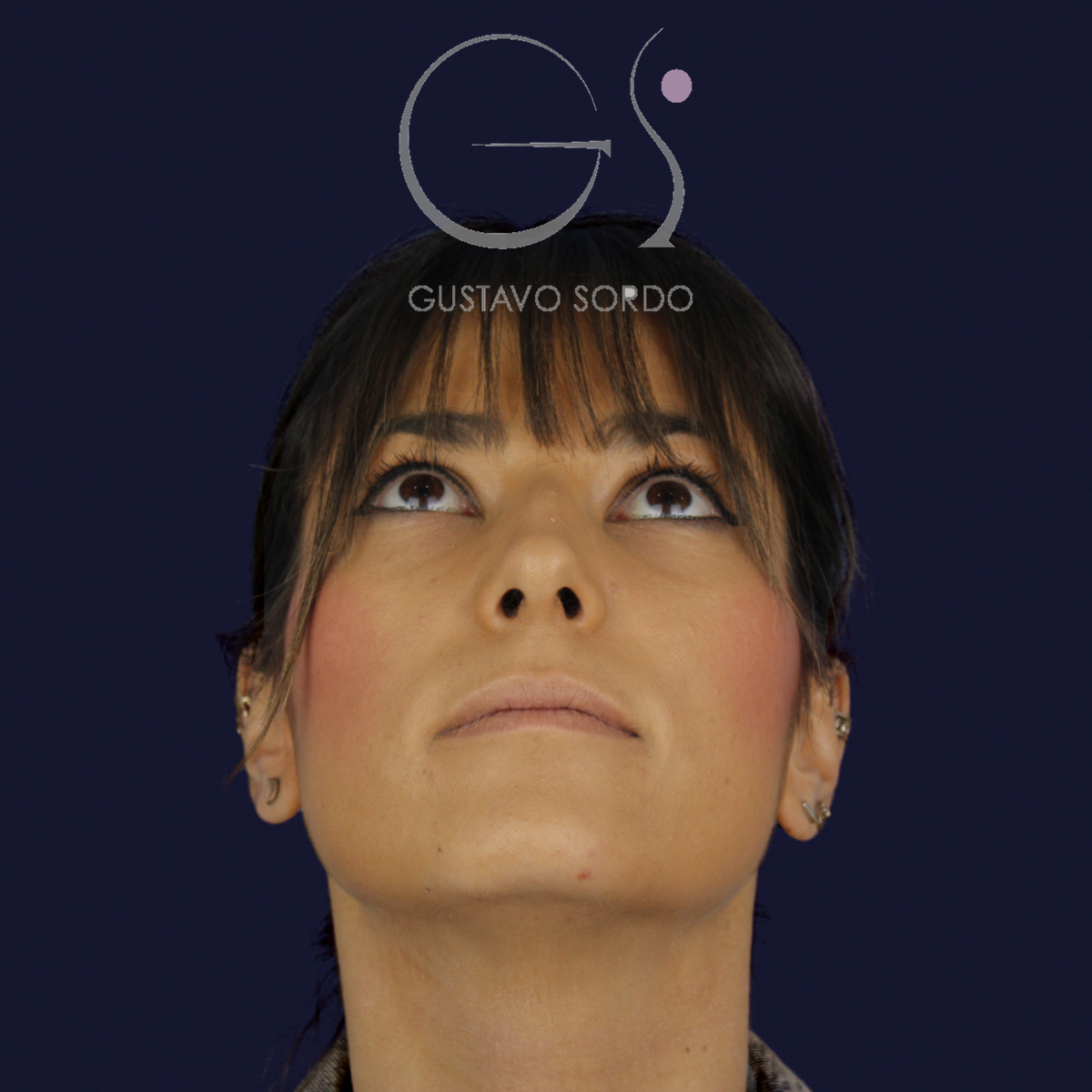
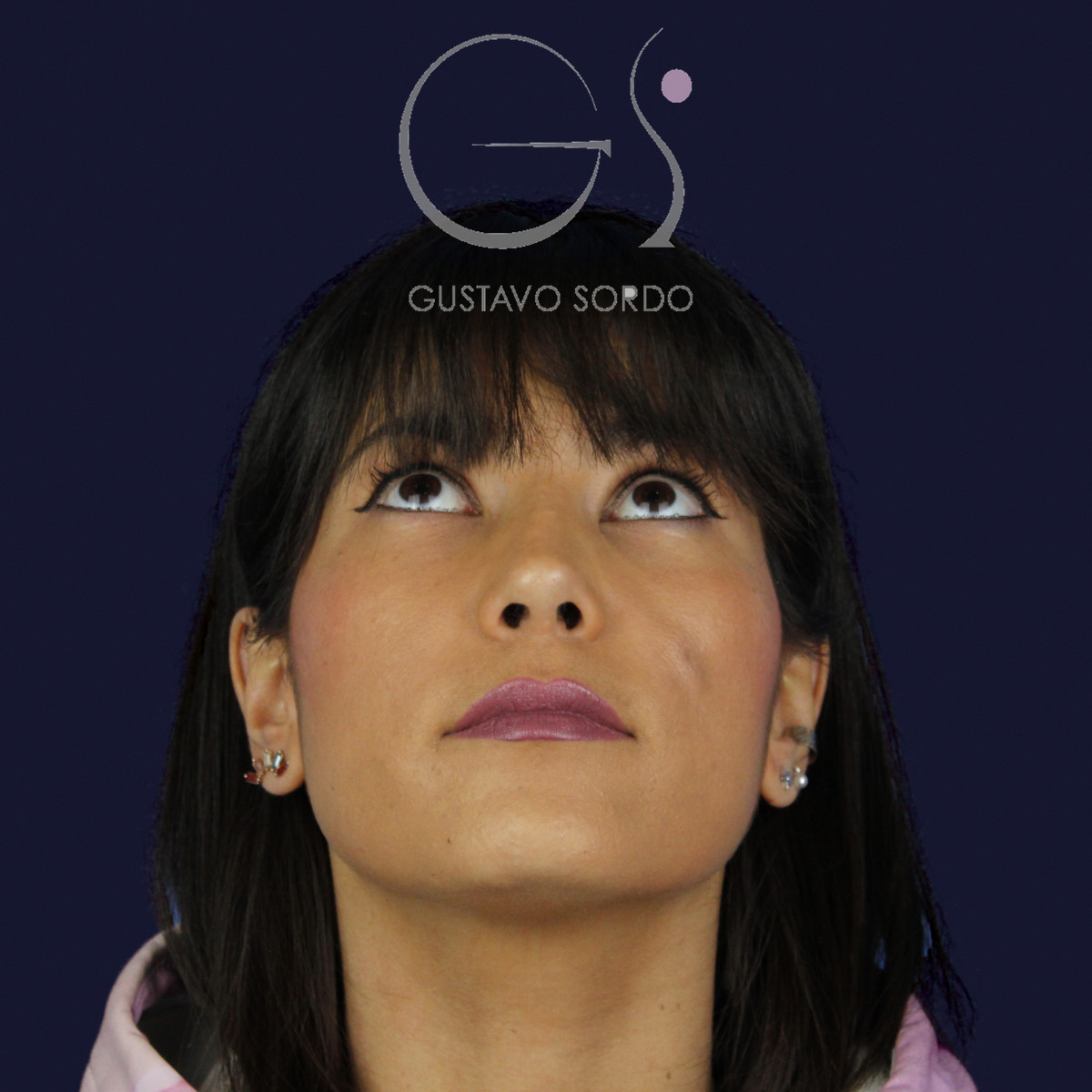
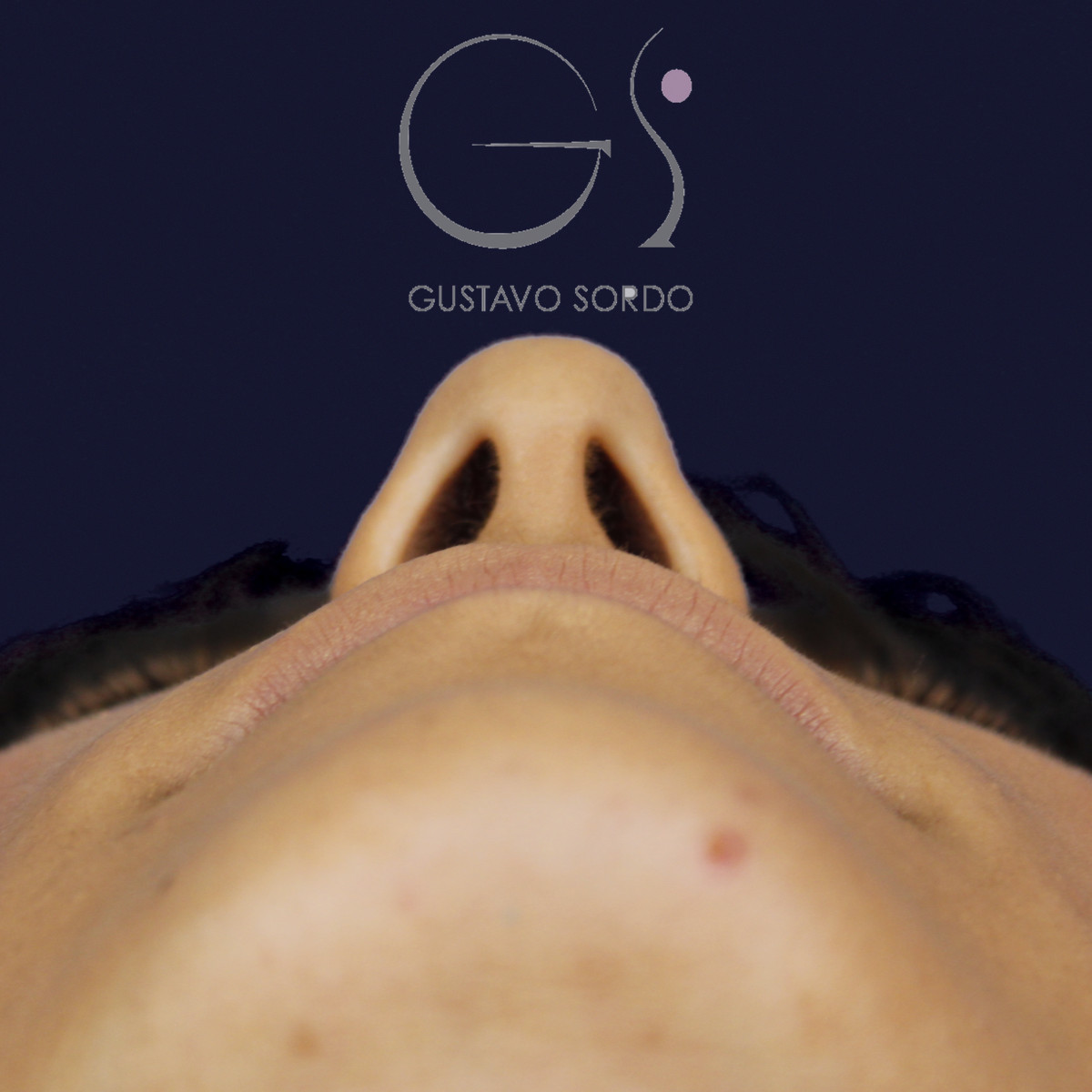
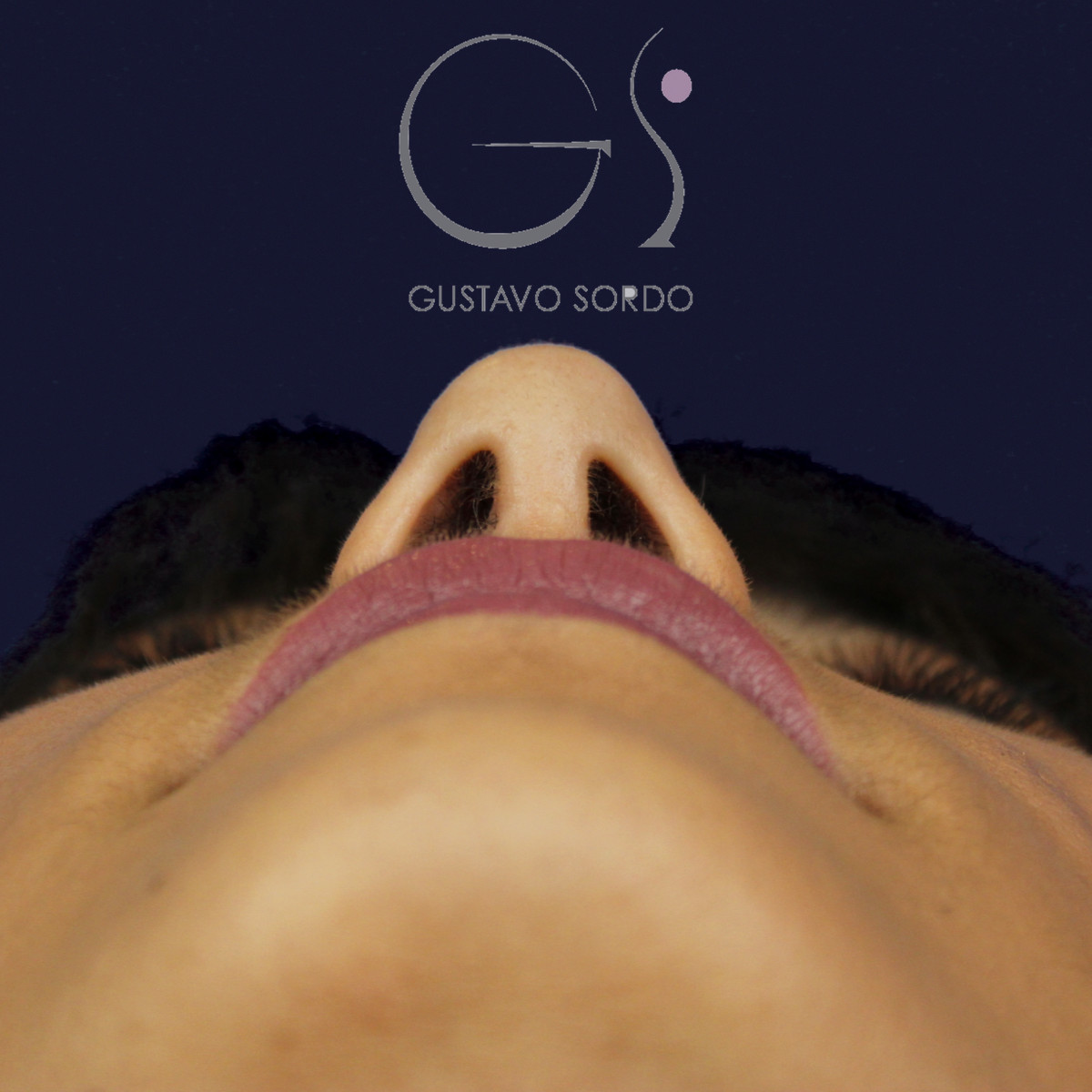
These are the one-year follow-up photos, taken twelve months after the surgery. With skin as thin as in this case, the one-year mark is the moment of truth: there's no more swelling to conceal anything, and any irregularity on the bridge of the nose would be visible. On the operating table or a few weeks later, a nose may appear finished when it isn't; that's why it's always advisable to request results at the one-year mark. Here, the photos are compared using the same views, the same lighting, and the same framing as before the surgery.
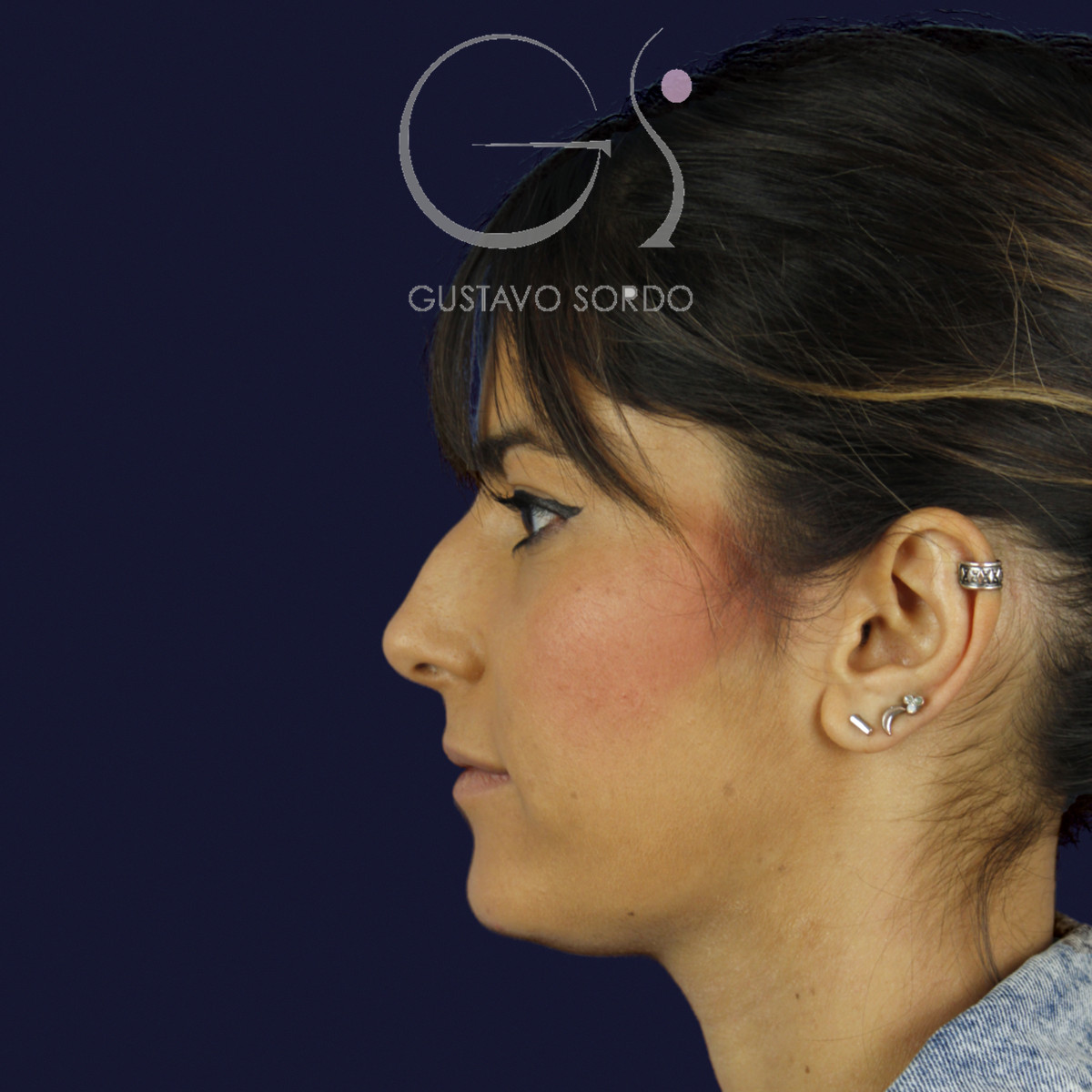
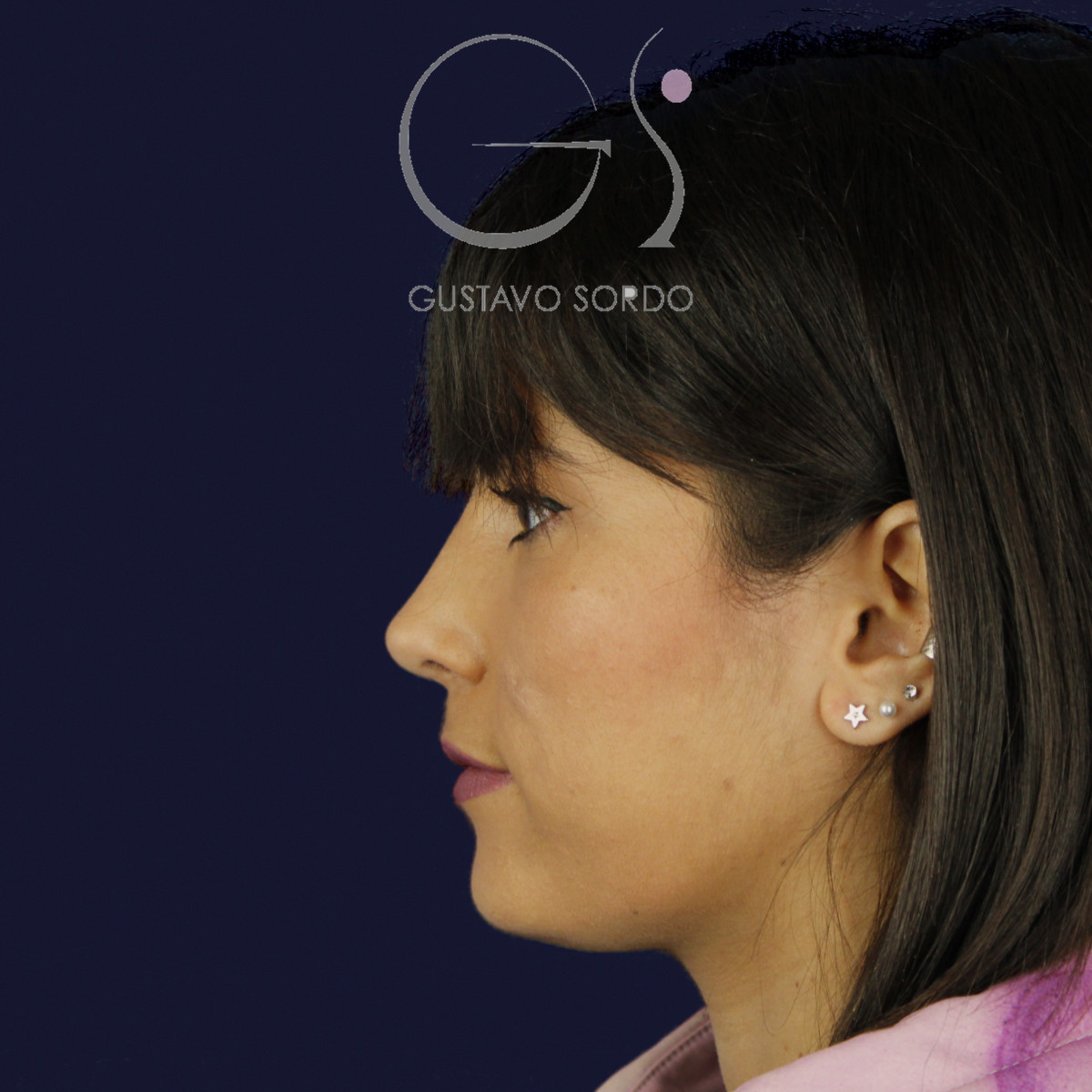
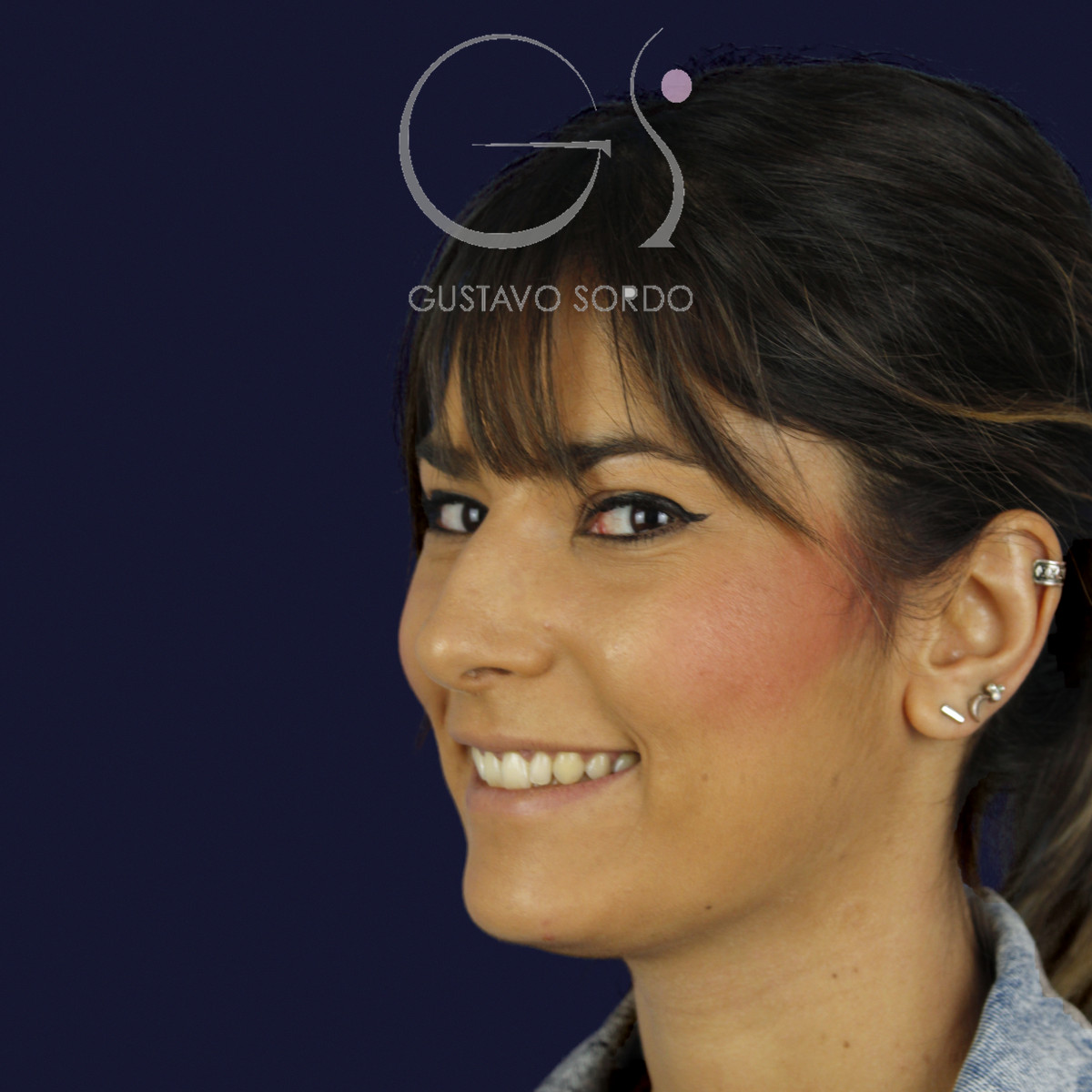
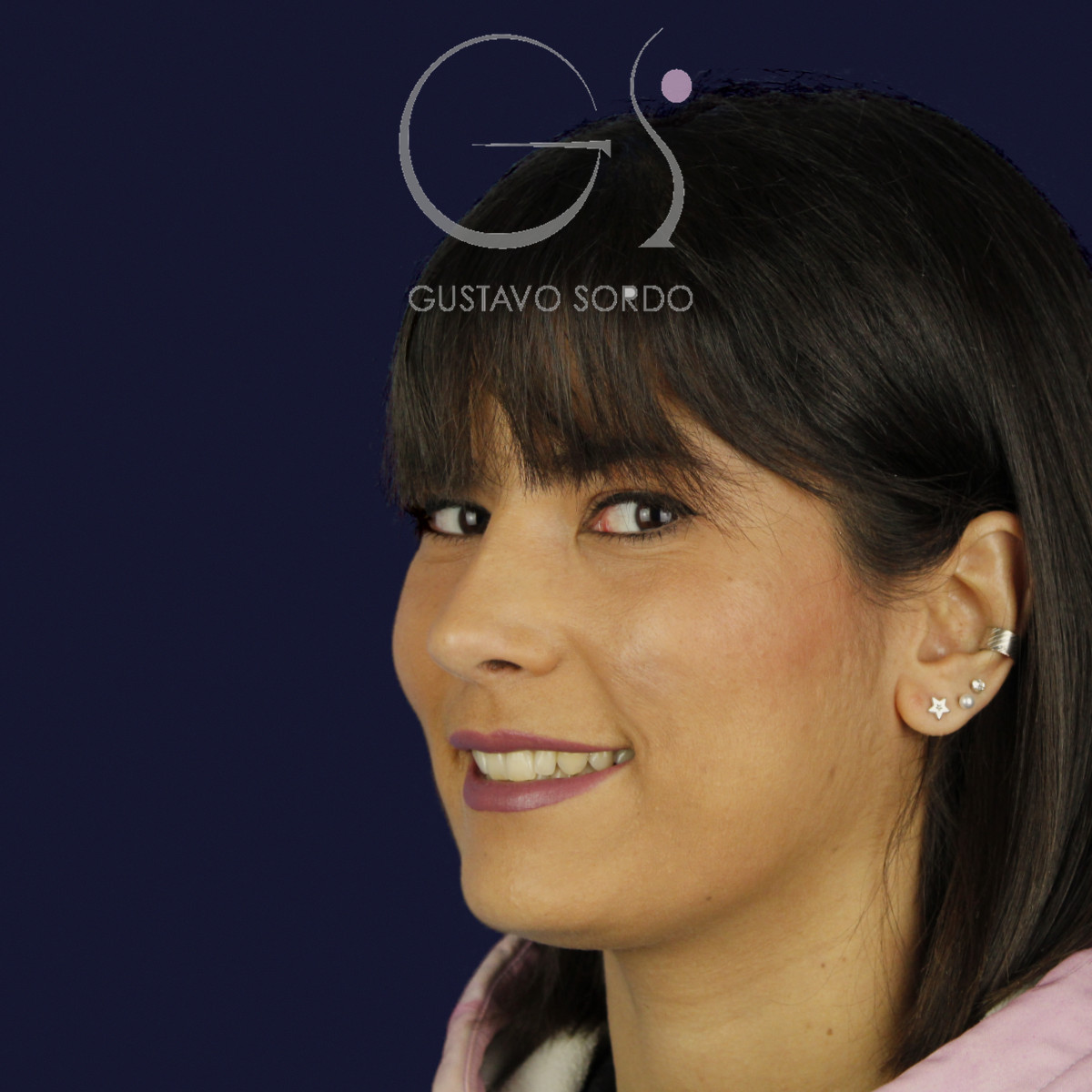
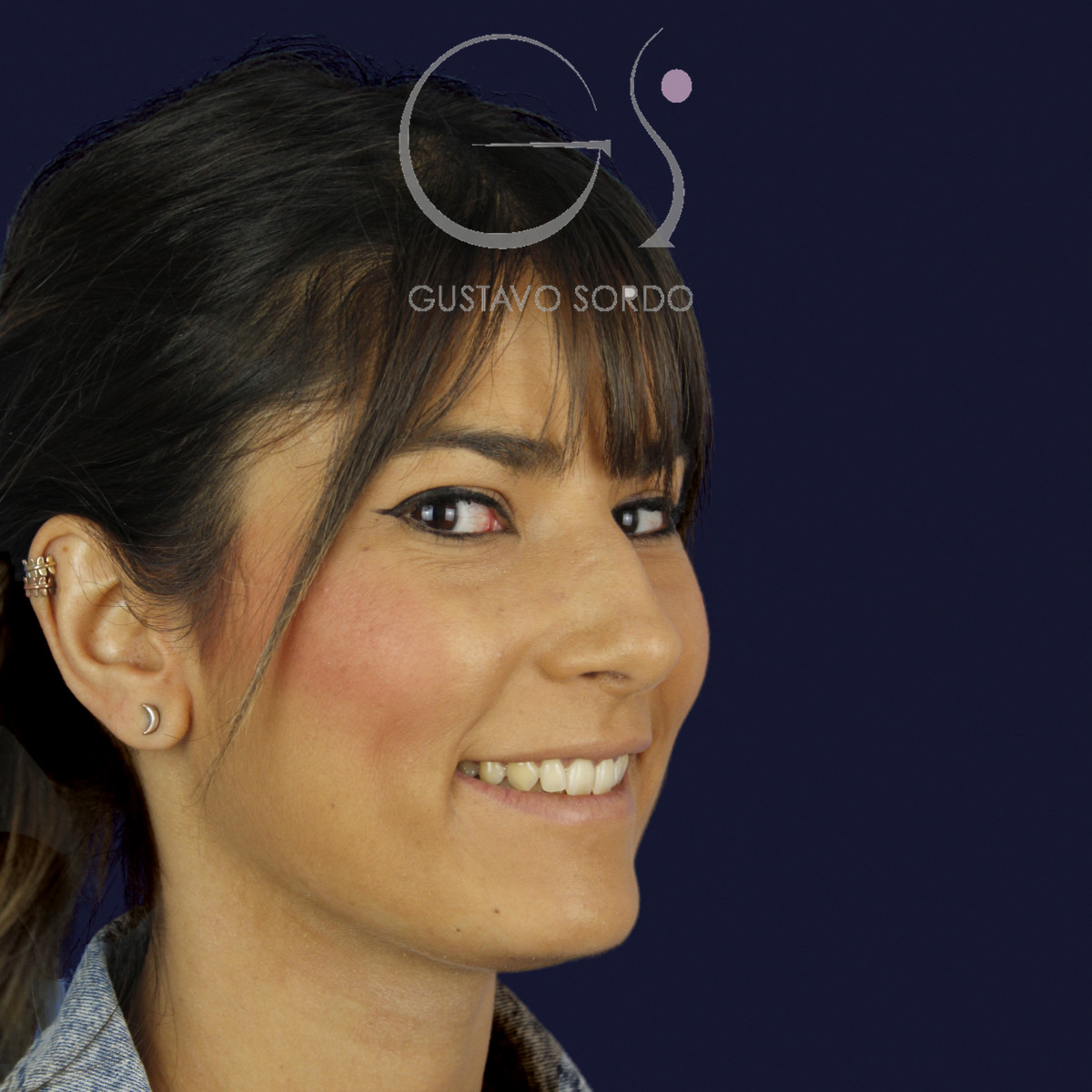
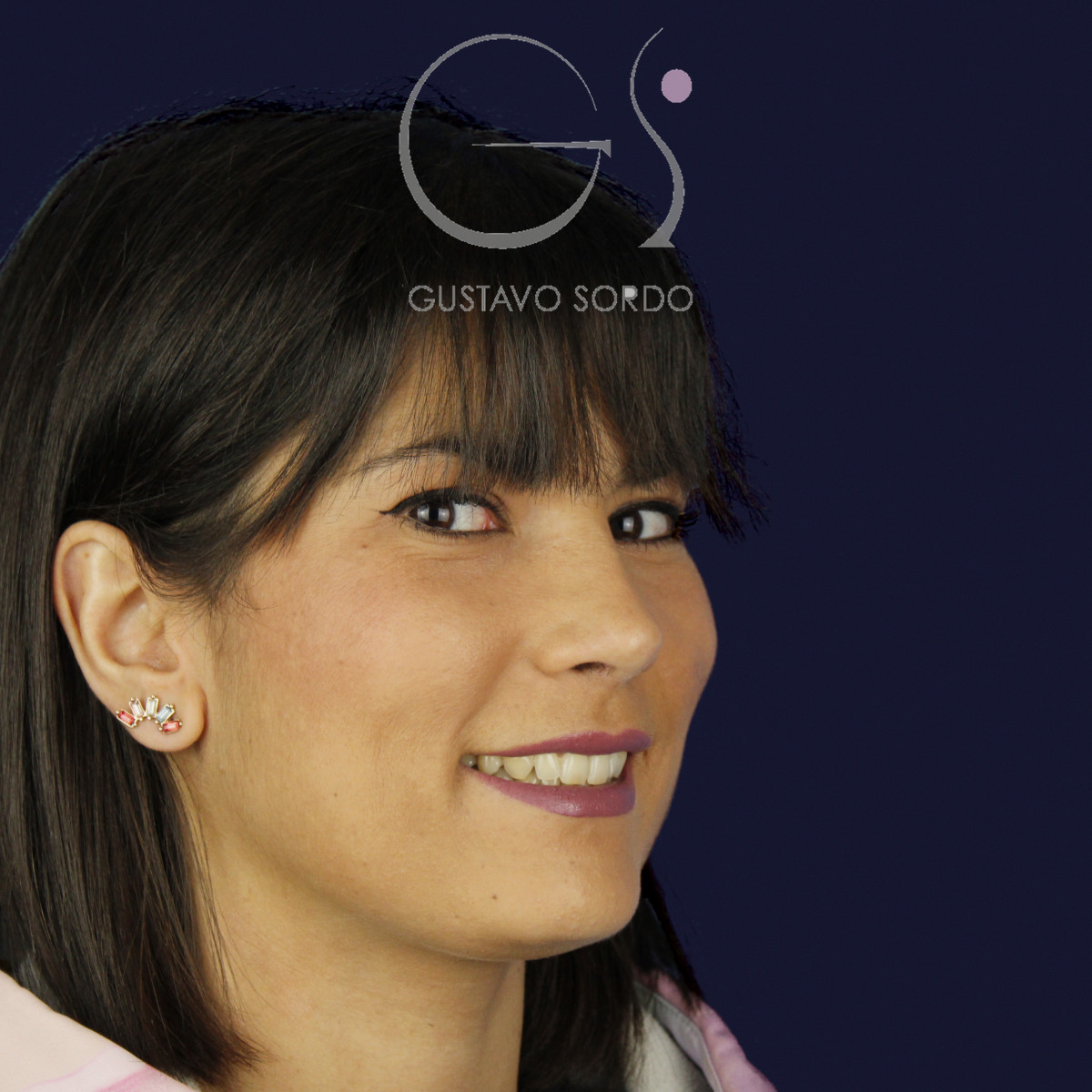
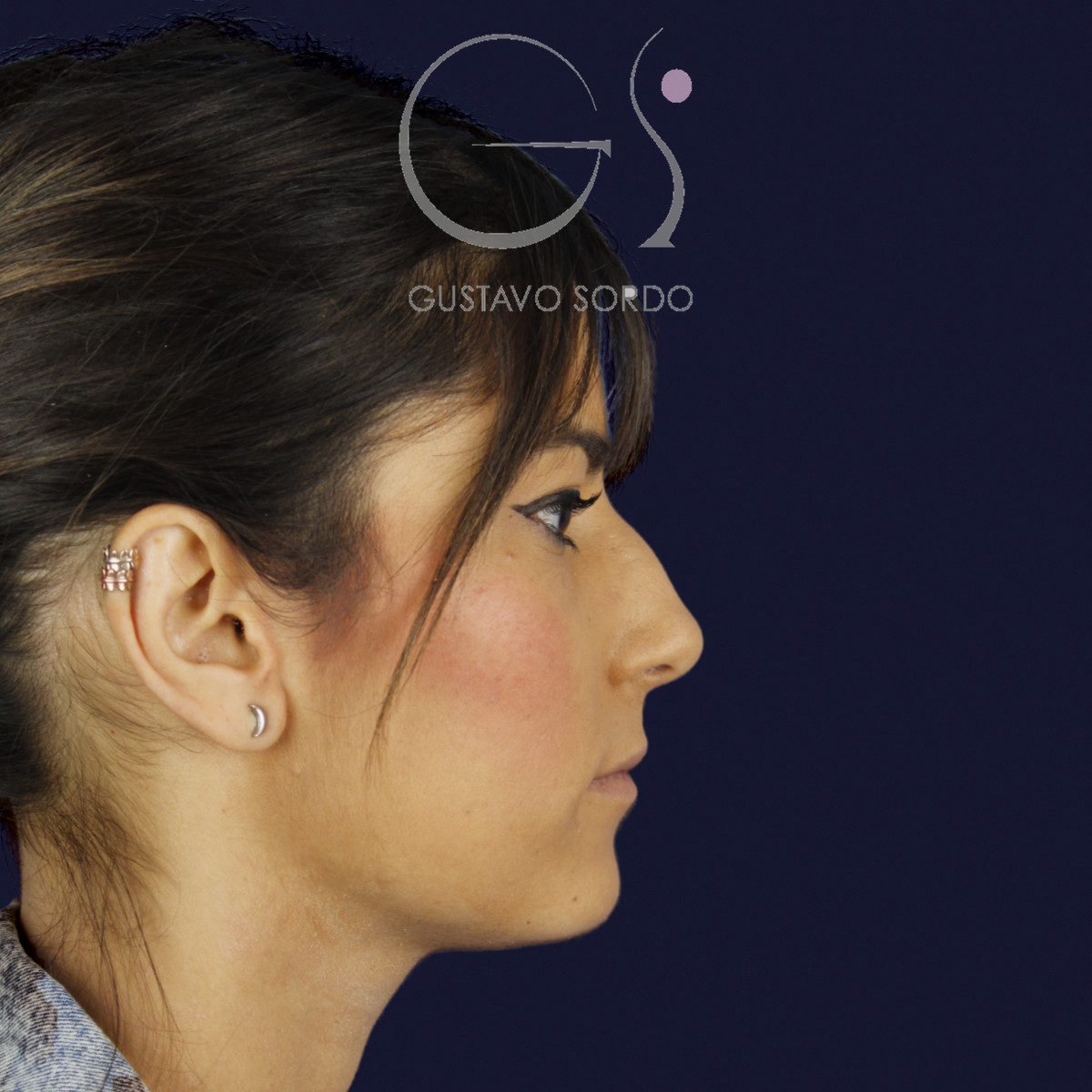
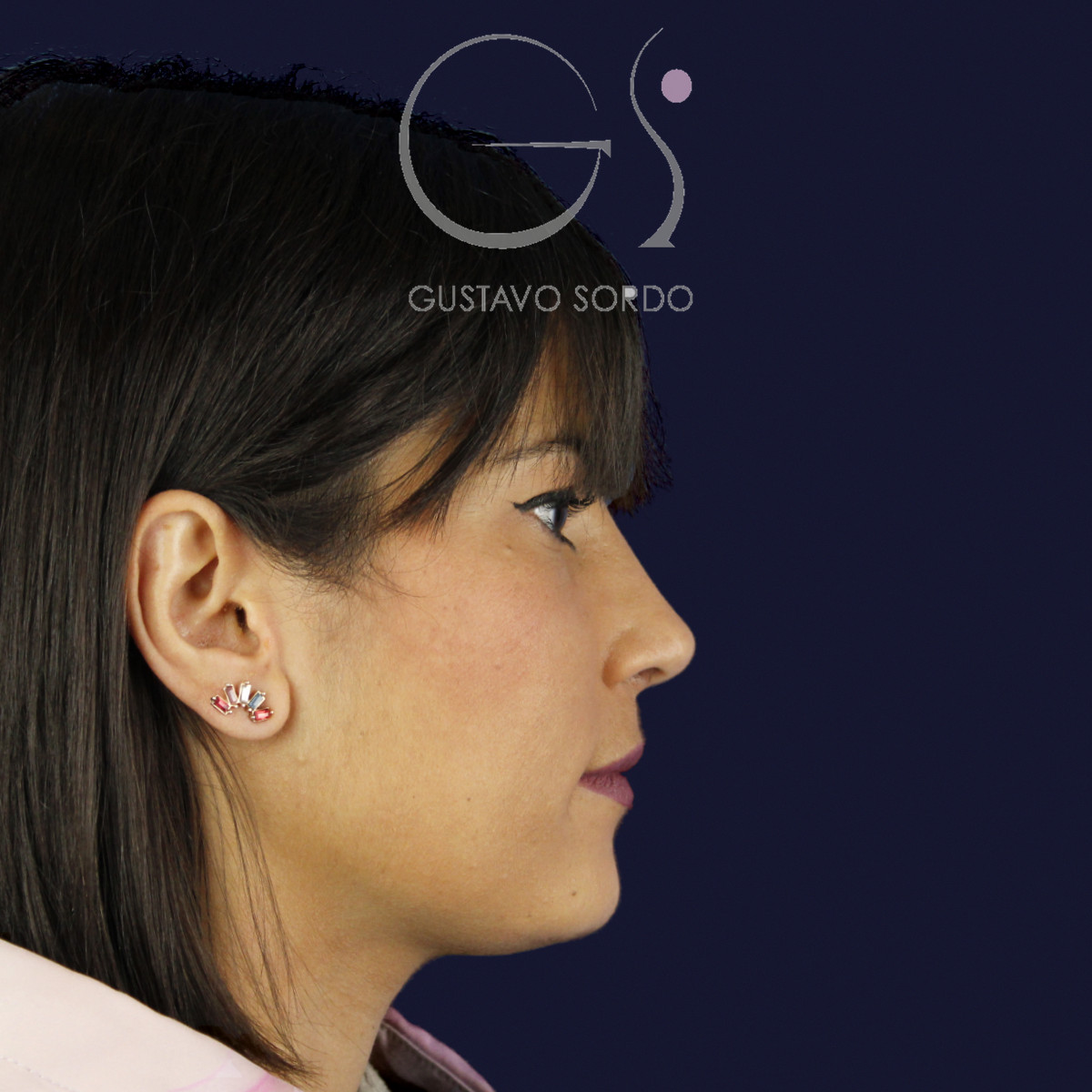
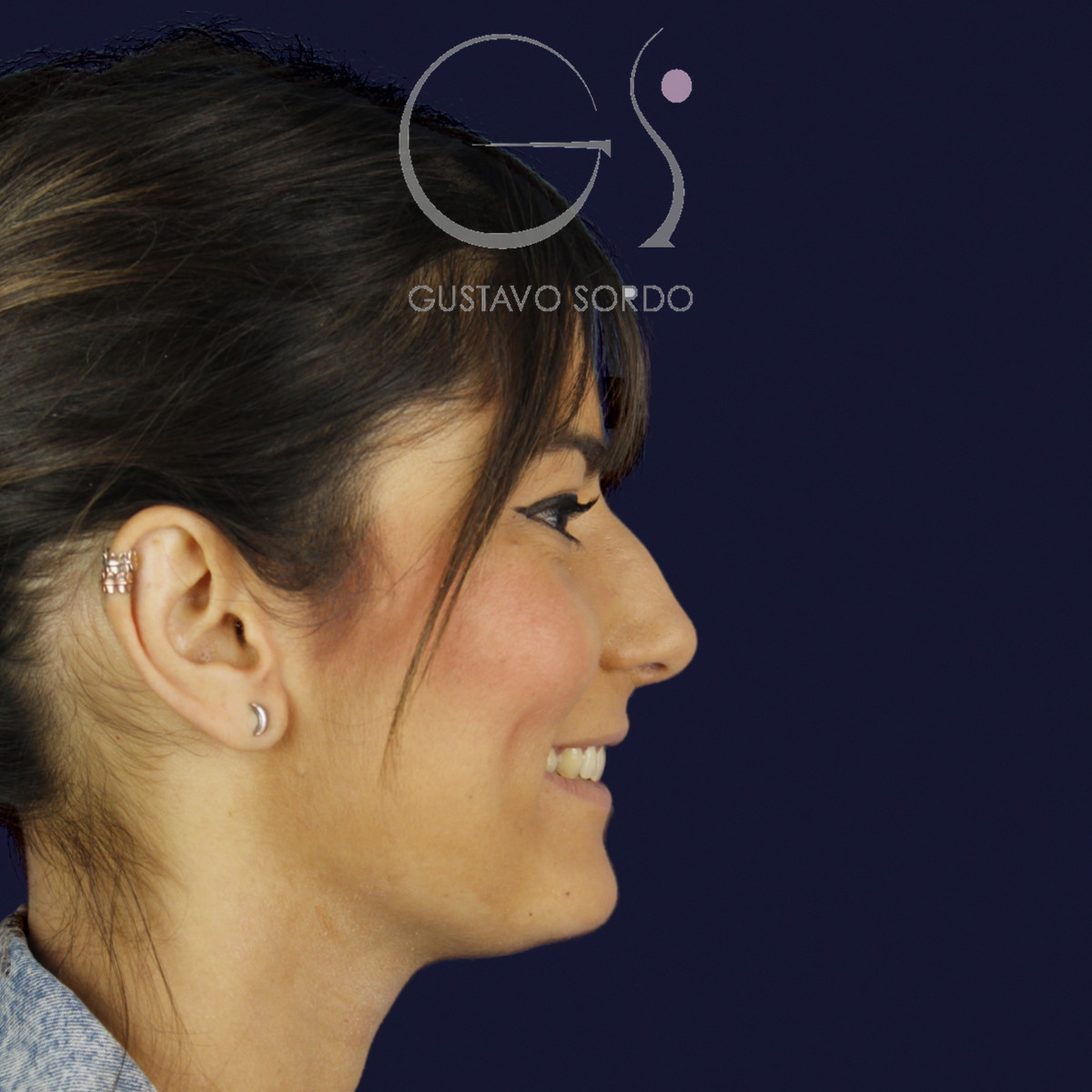
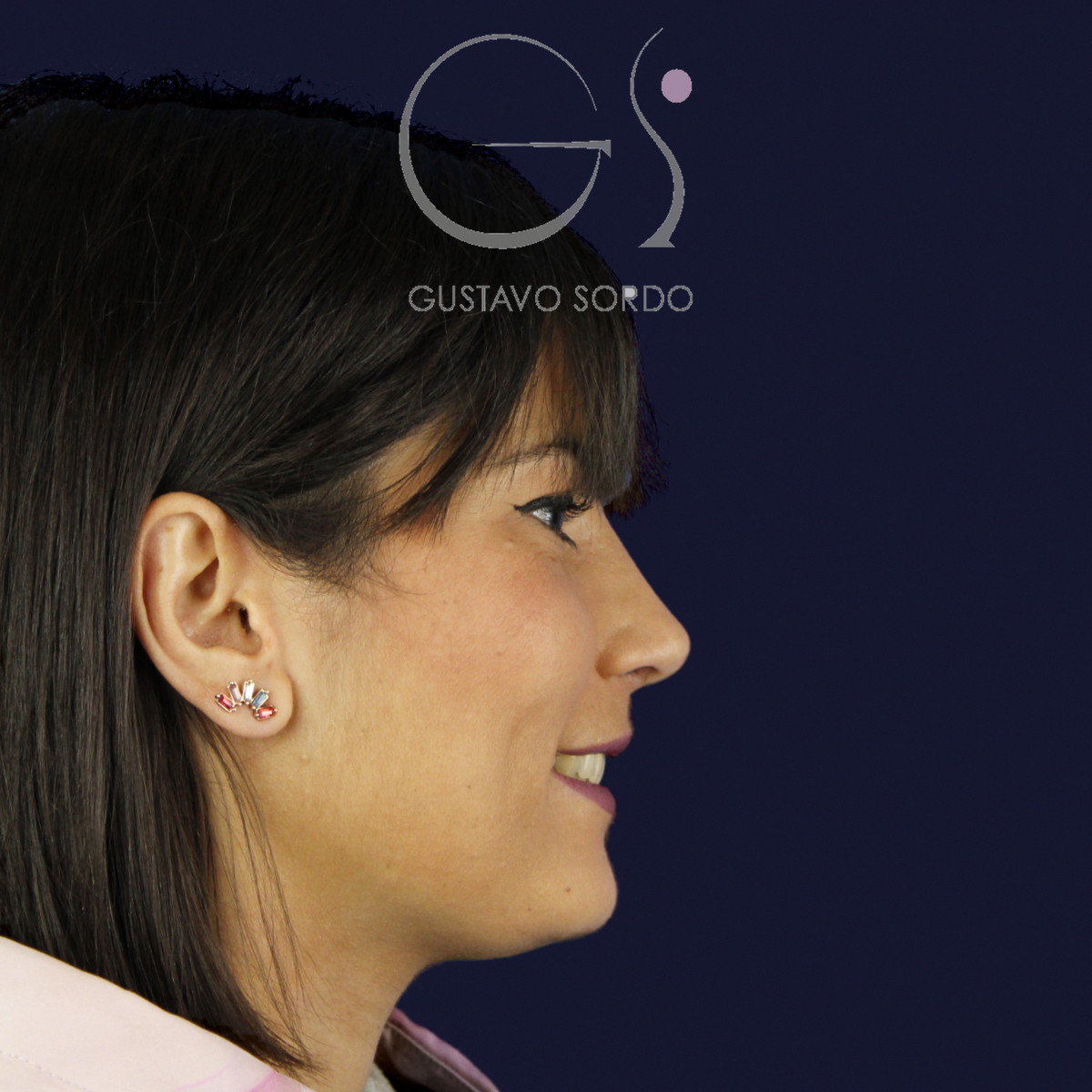
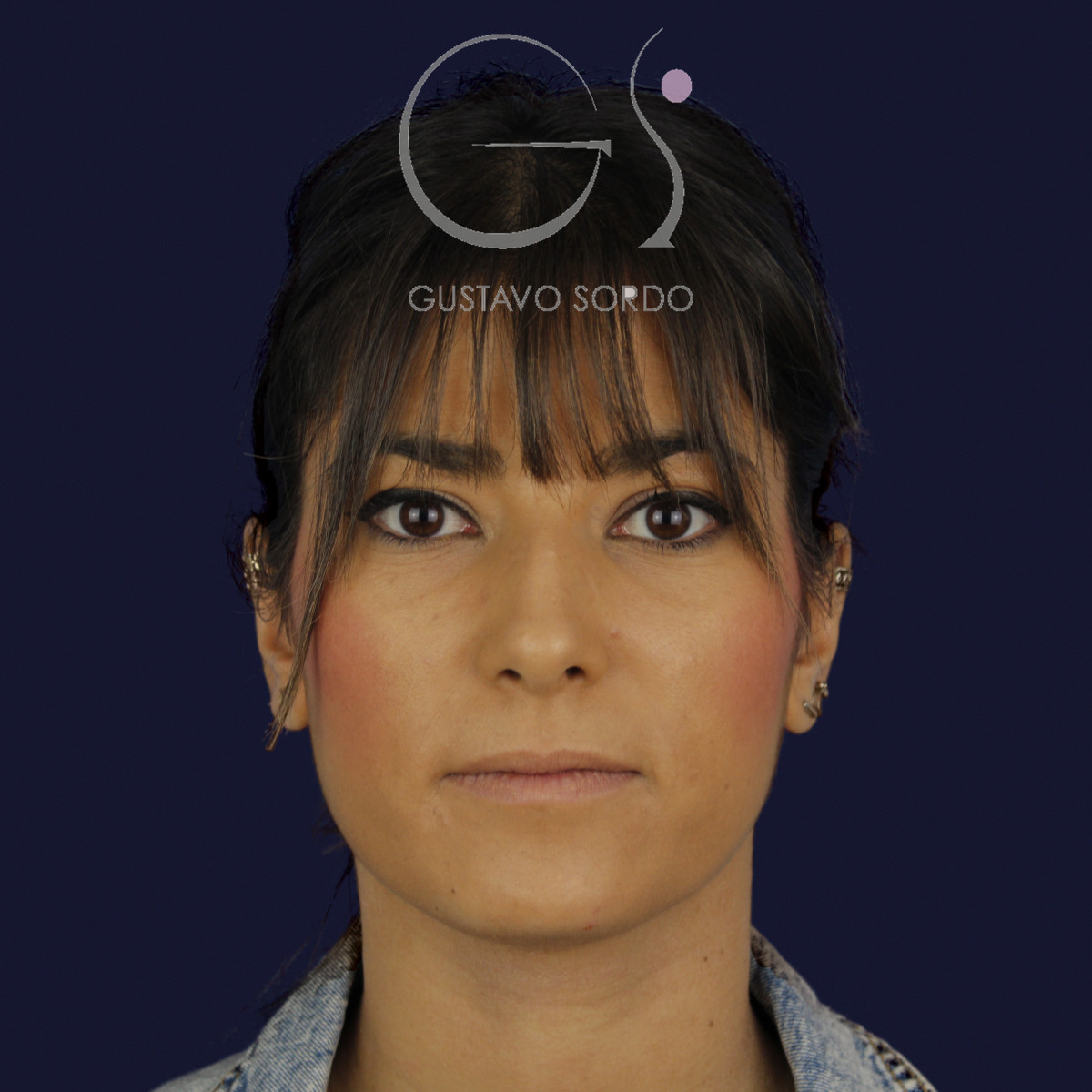
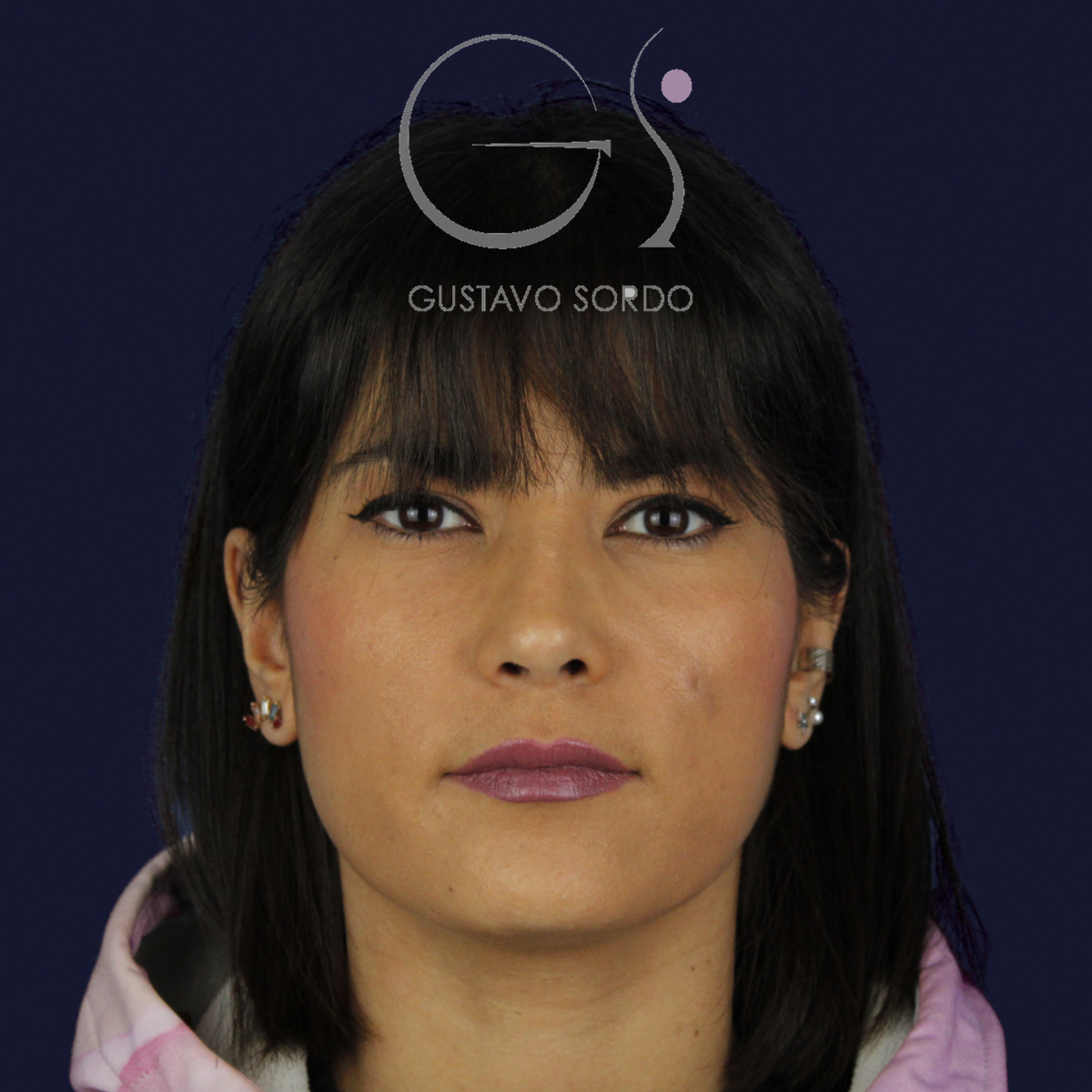
Comment by Dr. Gustavo Sordo
Reason for consultation
The bridge of her nose bothered her when she saw herself in profile, and she wanted a more defined tip, without ceasing to look like her own.
What I observed when evaluating it
Thin skin, a small bridge, and an indistinct tip that drooped slightly in profile. From the front, the nose was proportionate to her face.
What was important to preserve
The size of the nose: a nose too small for her face would have drawn more attention than the bridge. And, with such thin skin, a smooth bridge, because any step of the bone would have been noticeable through the skin.
My surgical approach
Remove only the necessary amount from the easel, rebuild the back so that it is straight and regular, and give the point a stable support to define it and place it in its position.
Why I chose this technique
In thin skin, the bone must be smoothed. With ultrasonic rhinoplasty, the dorsal hump is reduced by filing the bone in a controlled manner, resulting in a regular bridge. Spacer grafts reconstruct the mid-dorsum after removing the hump and help maintain airflow; the septal extender provides firm support to the tip.
What I did during surgery
I reduced the bridge of the nose using ultrasonic instruments, placed spacer grafts on both sides of the septum, and a septal extension graft to fix the position of the tip. The operation lasted two and a half hours, under TIVA general anesthesia, and the patient spent one night in the hospital.
What is observed in the result
At one year old, the profile is straight, without a bridge, and the tip is more defined and slightly higher. The nose remains in proportion to the face, and the thin skin does not reveal any irregularities on the bridge.
More cases and an explanation of the technique can be found on the Madrid nose surgery page.
Before, simulation and result
The simulation we saw in consultation versus the actual result after one year, with the same profile framework.
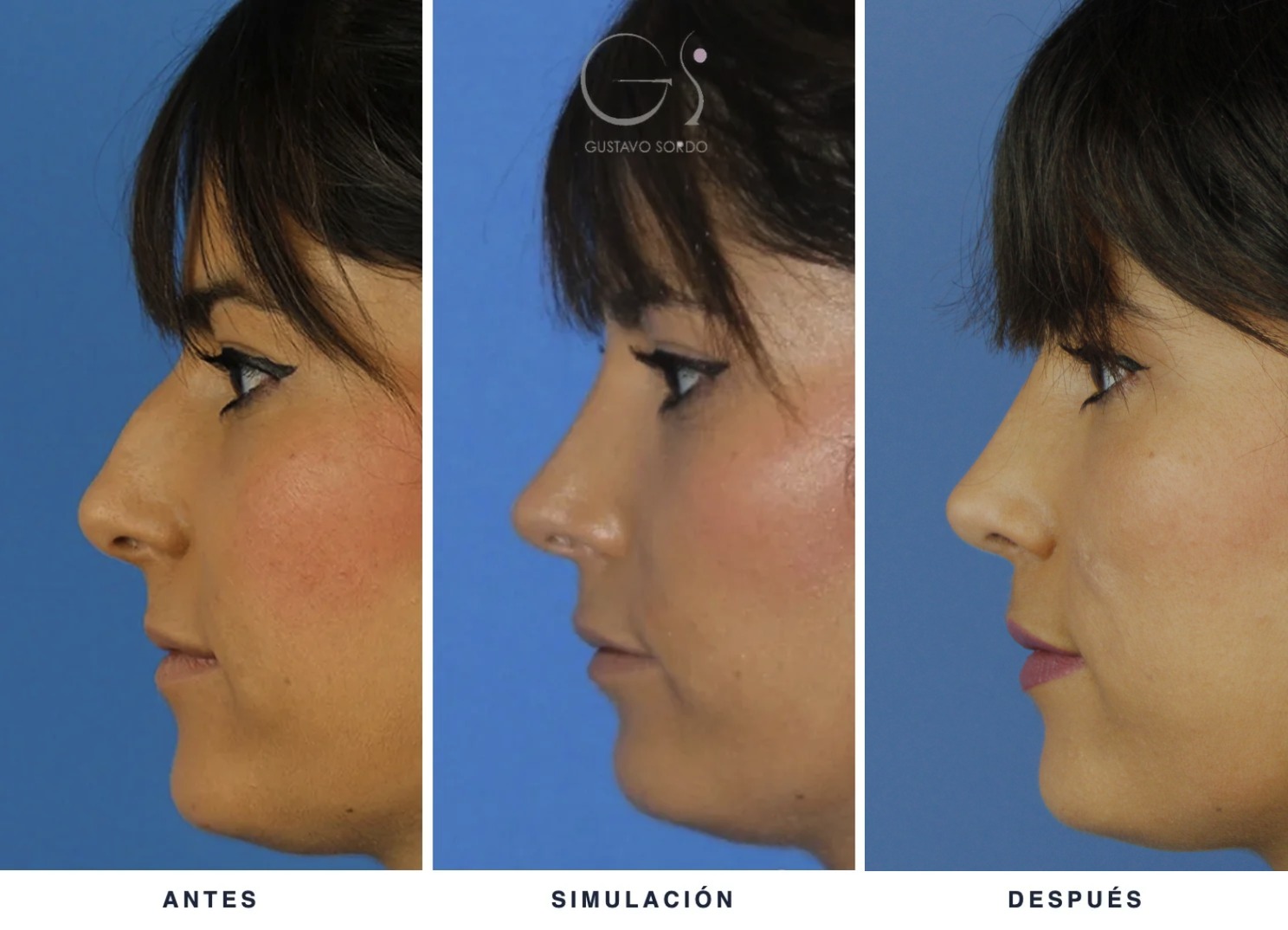
Case operated on by Dr. Gustavo Sordo
Specialist in Plastic, Aesthetic and Reconstructive Surgery. Member No. 282858125.
Regarding this intervention
The ultrasonic scalpel allows for more precise bone work and typically leaves less bruising. It truly makes a difference in ultrasonic rhinoplasty.
Do you want to know if this can be done in your case?
The first consultation is with Dr. Sordo, either at the Chamberí clinic or via video consultation. You'll leave knowing if you're a candidate, which technique is right for you, and how much it costs.
Dr. Gustavo Sordo · Member No. 282858125 · Plastic, Aesthetic and Reconstructive Surgery · Madrid