Rhinoplasty in a man with a hooked nose and thick skin: before and after
Case fact sheet
- Patient: Man, 26 years old
- Reason: breathing better and aesthetics: the nose looked big
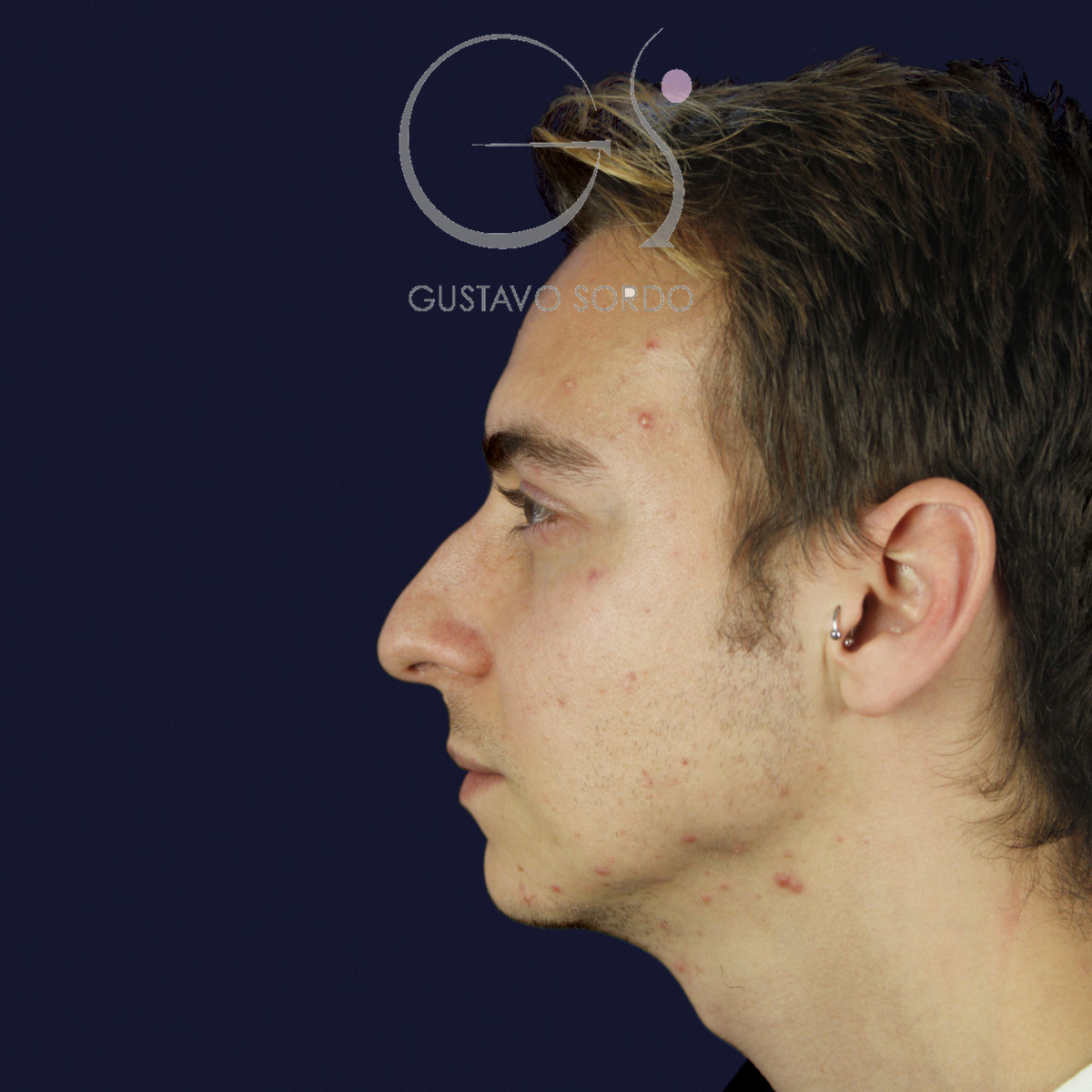
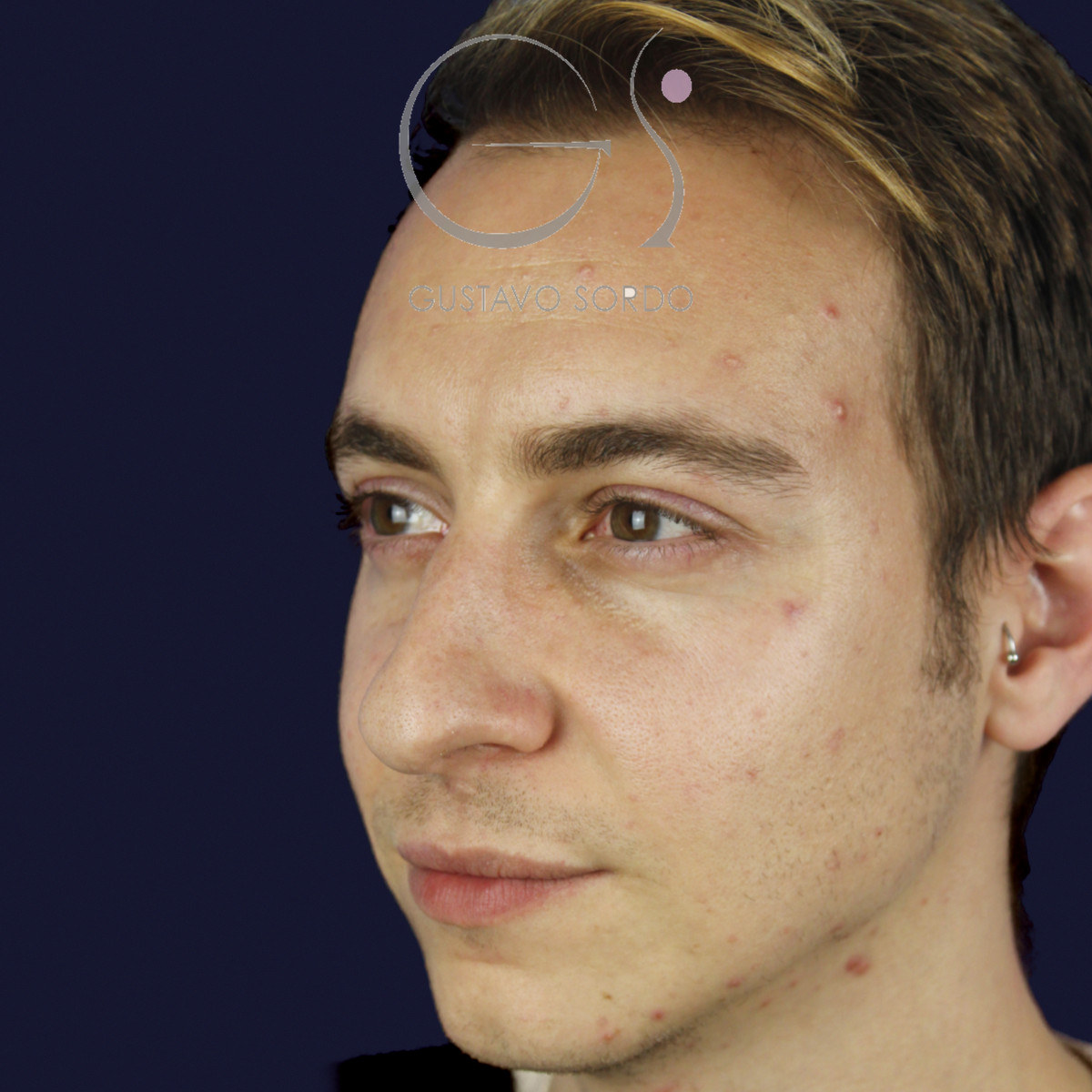
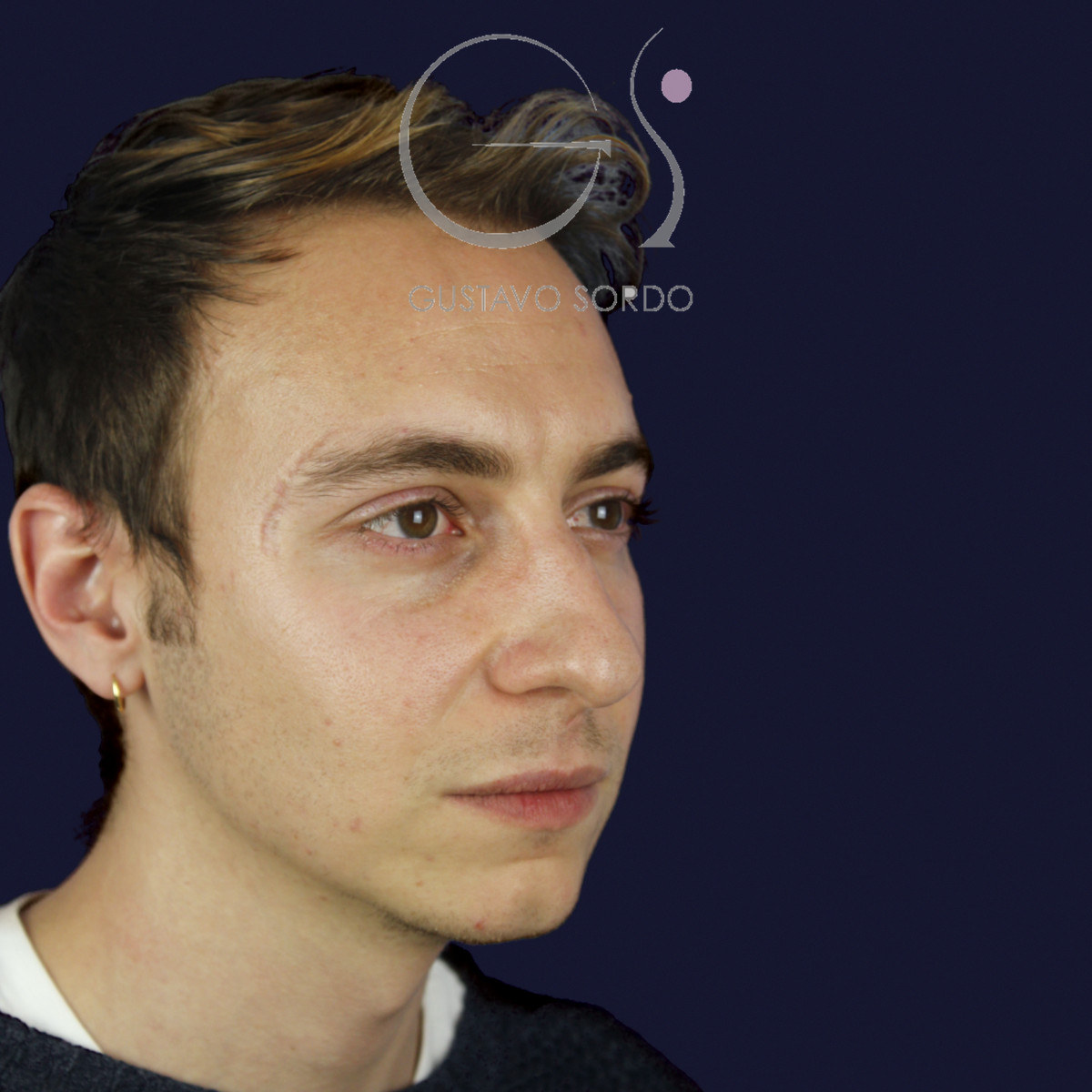
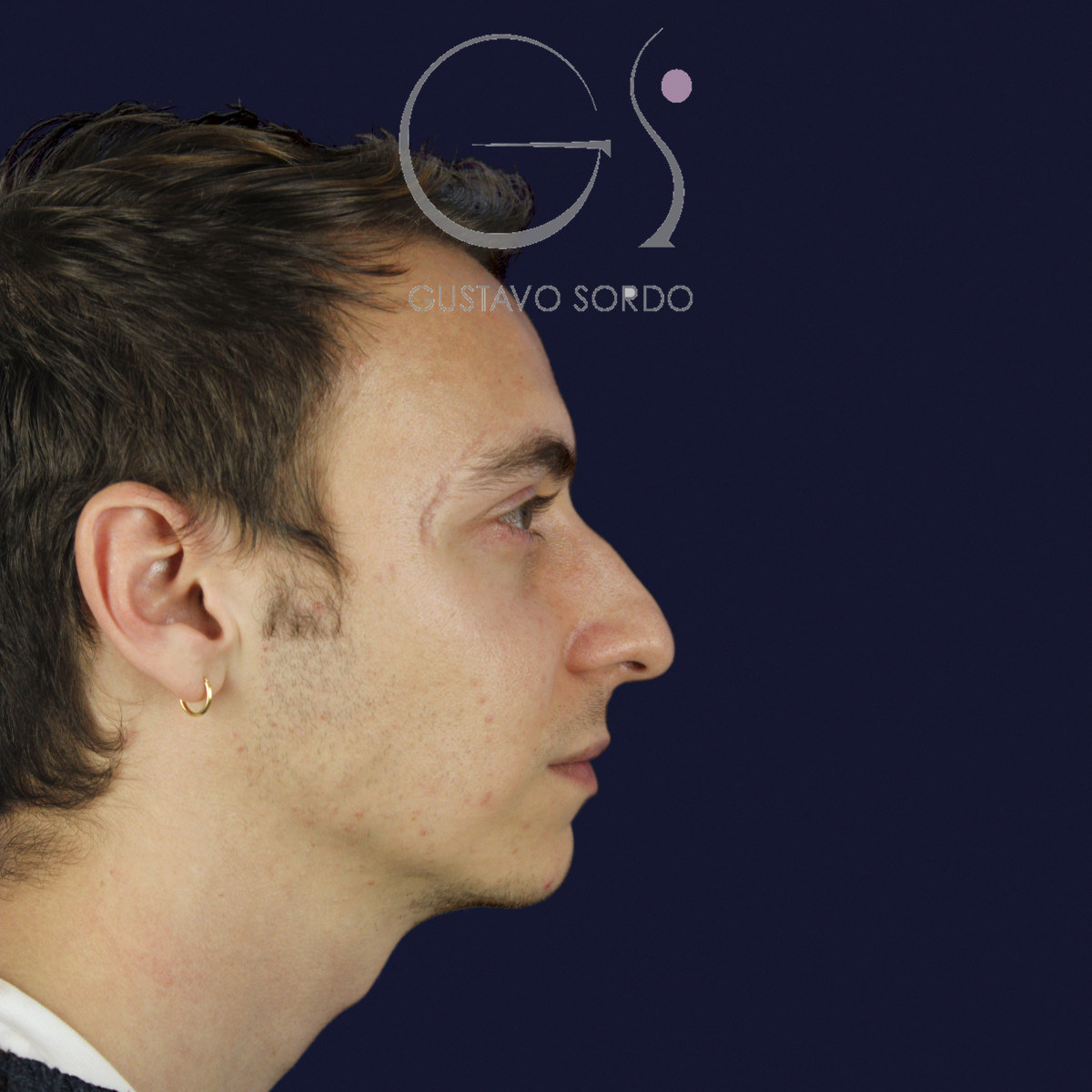
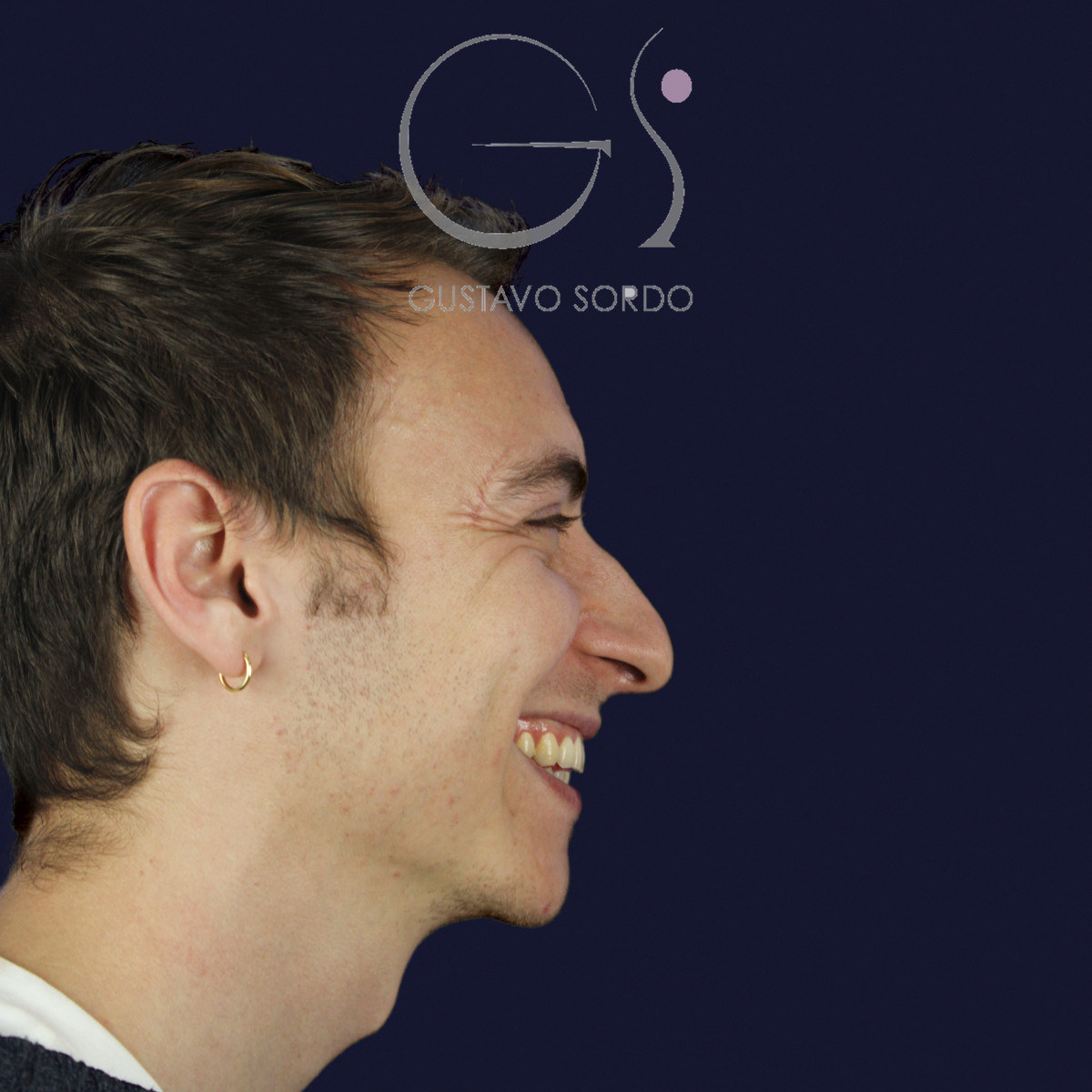
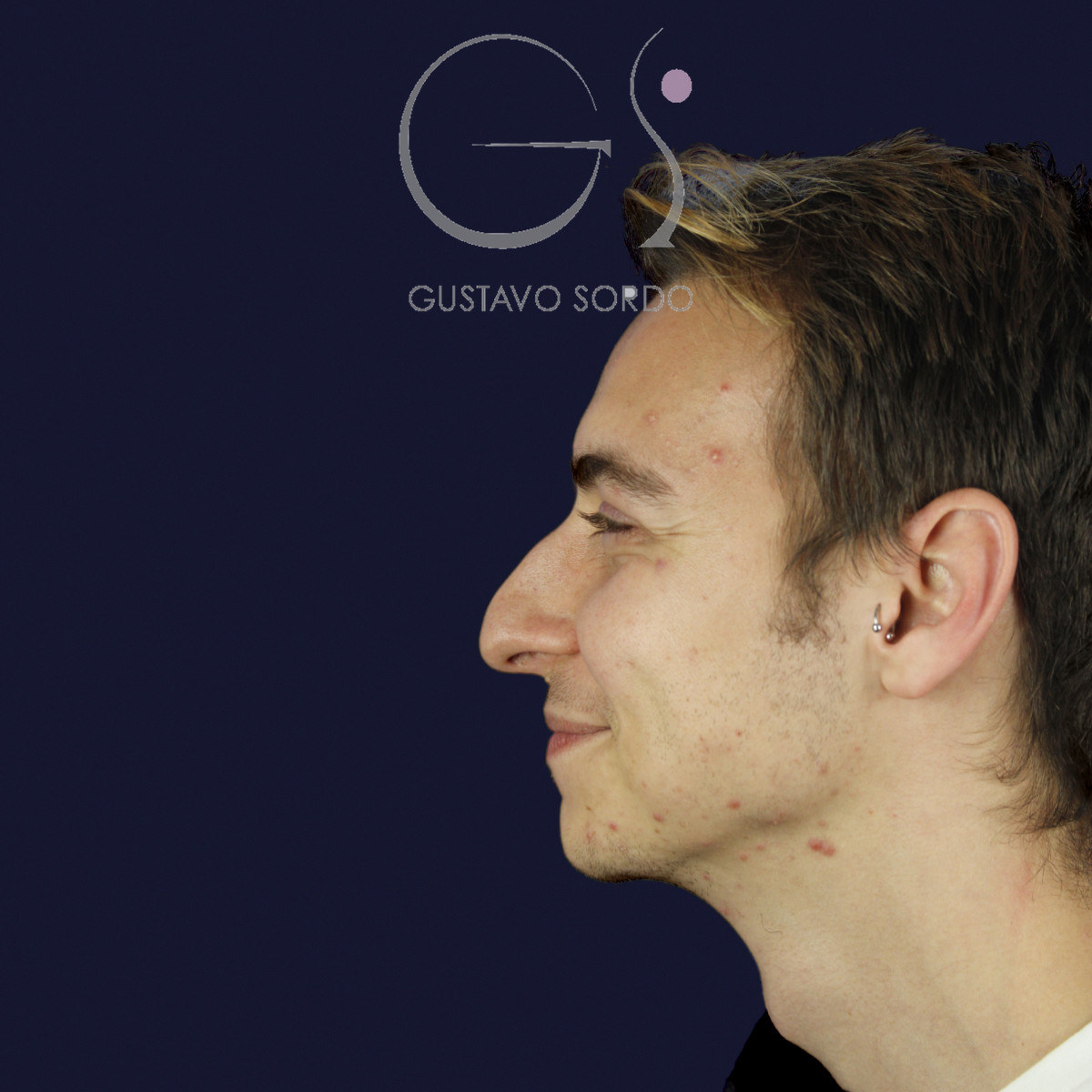
- Starting nose: Aquiline, with a hump and thick skin; bulbous tip with very convex alar cartilages; "hourglass" dorsum due to narrowness of the internal nasal valve
- Technique: ultrasonic rhinoplasty Structural: resection of the hump, lateral osteotomies with ultrasound, spacer grafts, septal extension graft and maneuvers to reduce the alar cartilages with a change in their resting angle
- Septum and turbinates: Septoplasty and turbinates in the same procedure
- Approach: open the internal valve so he could breathe better and reduce the size of his nose while maintaining masculine proportions
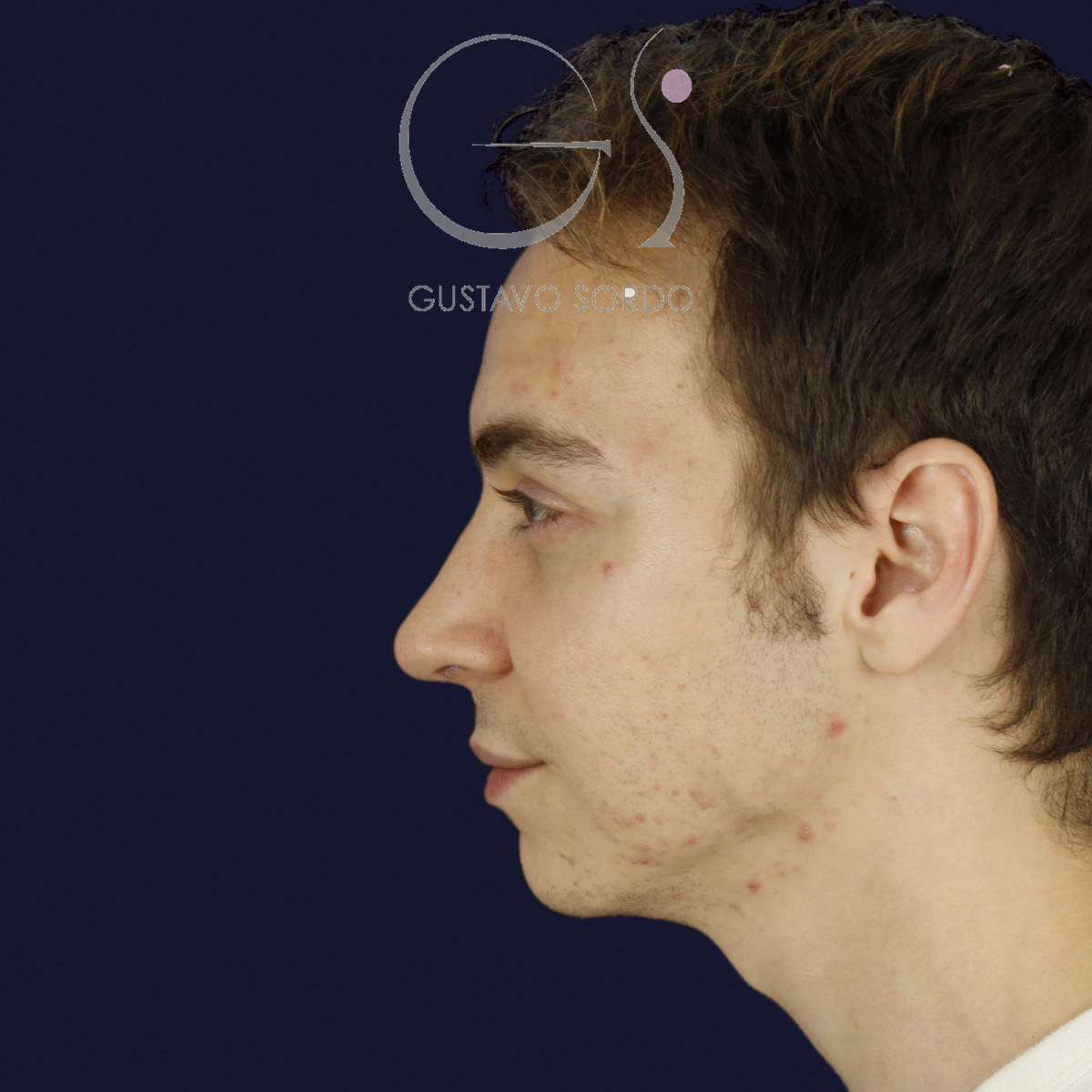
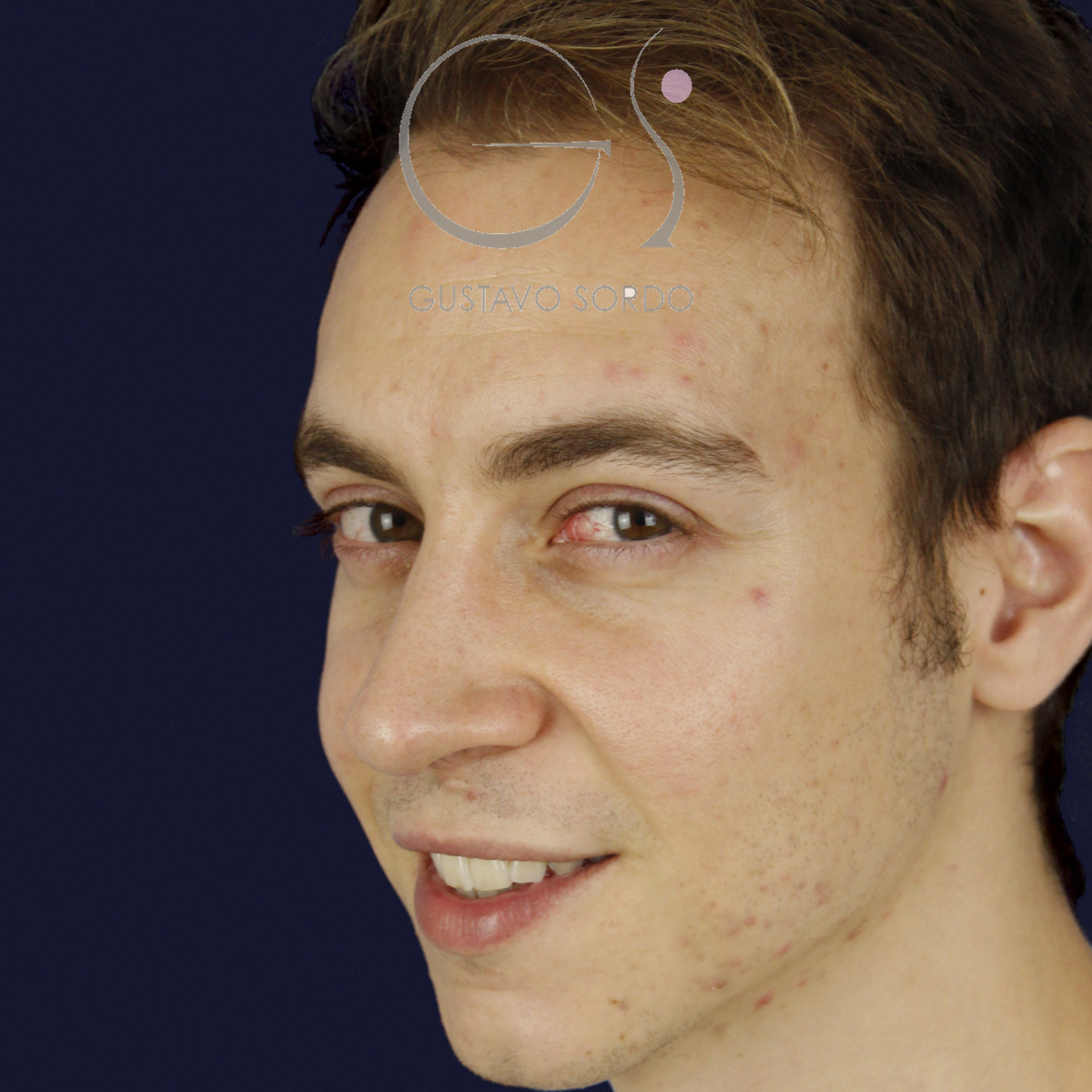
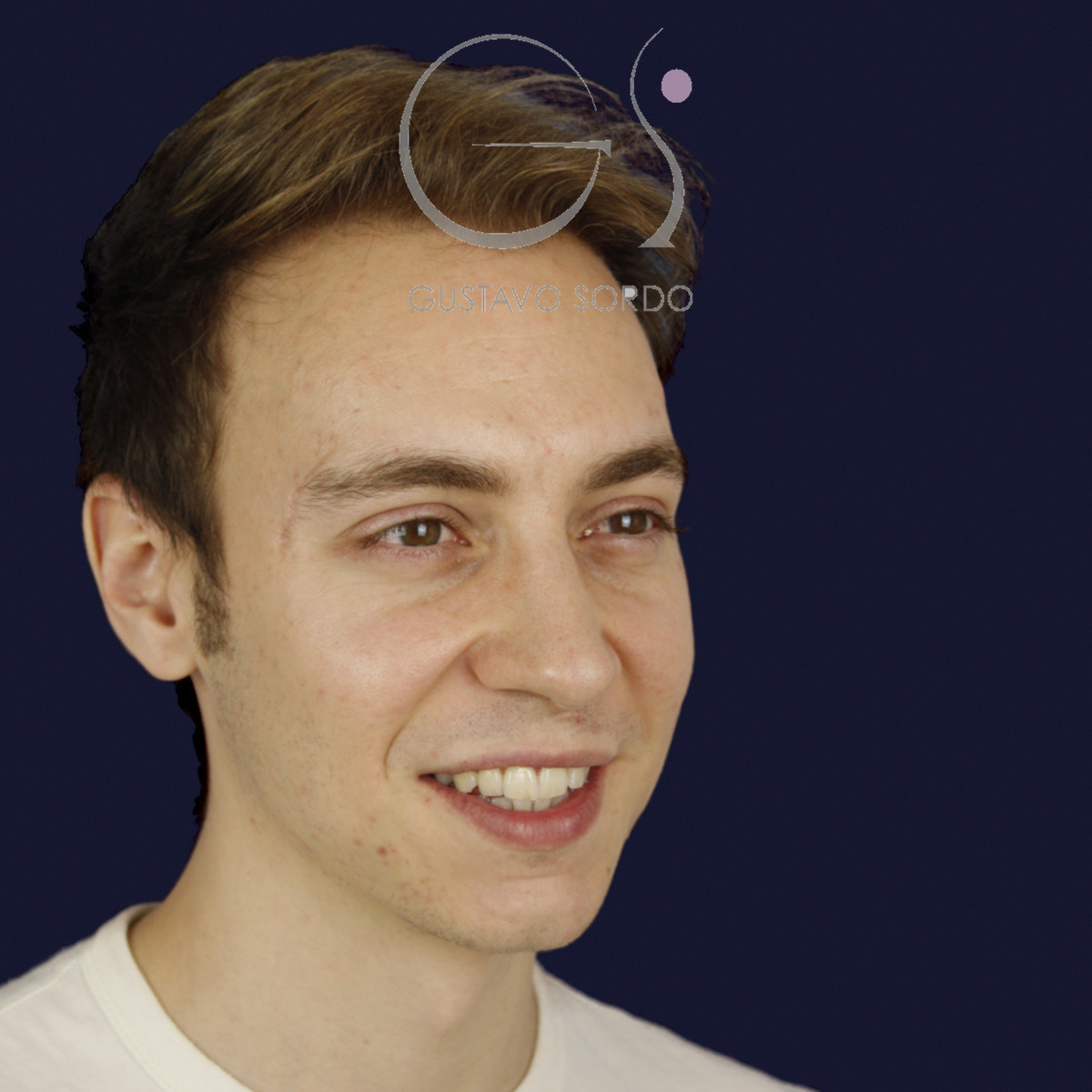
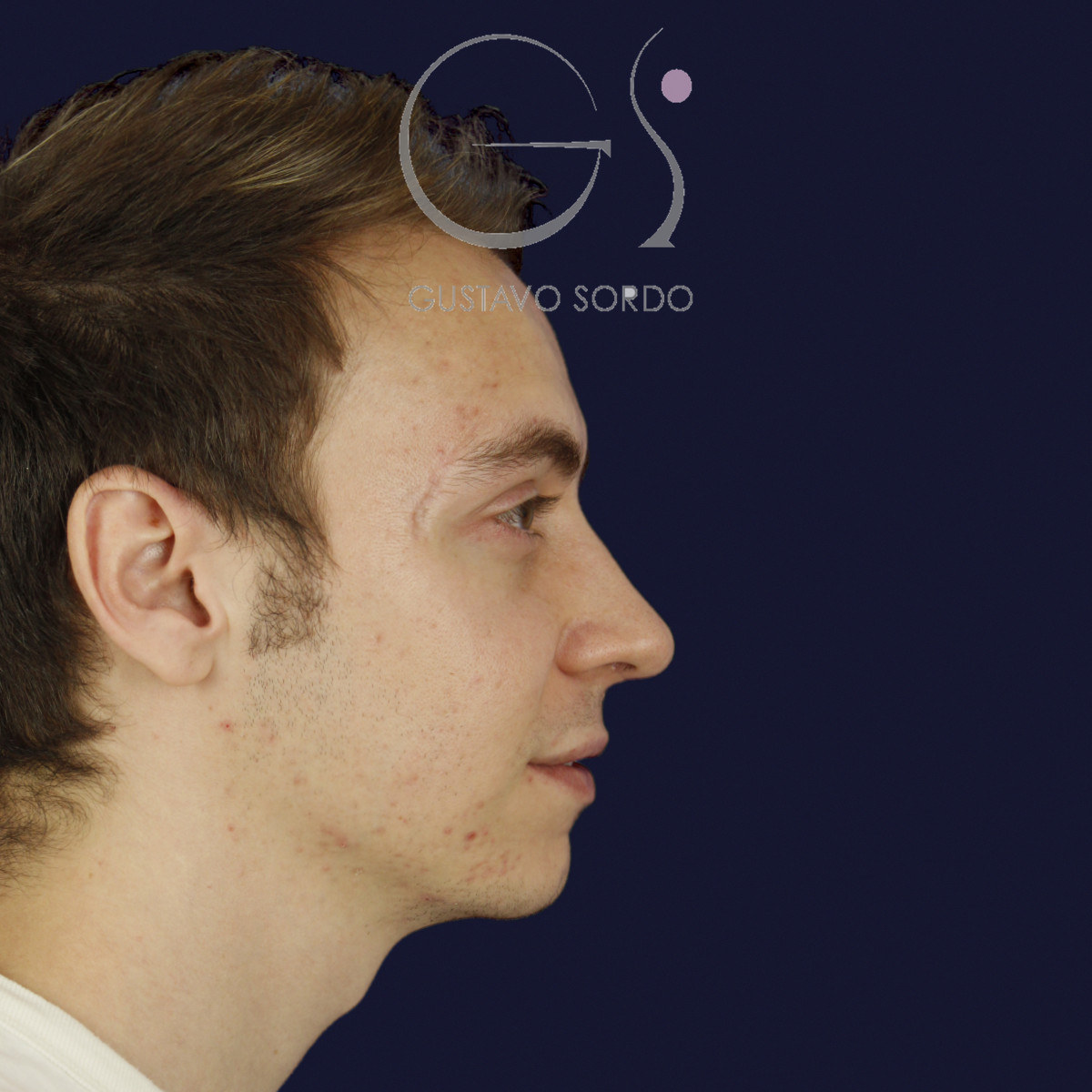
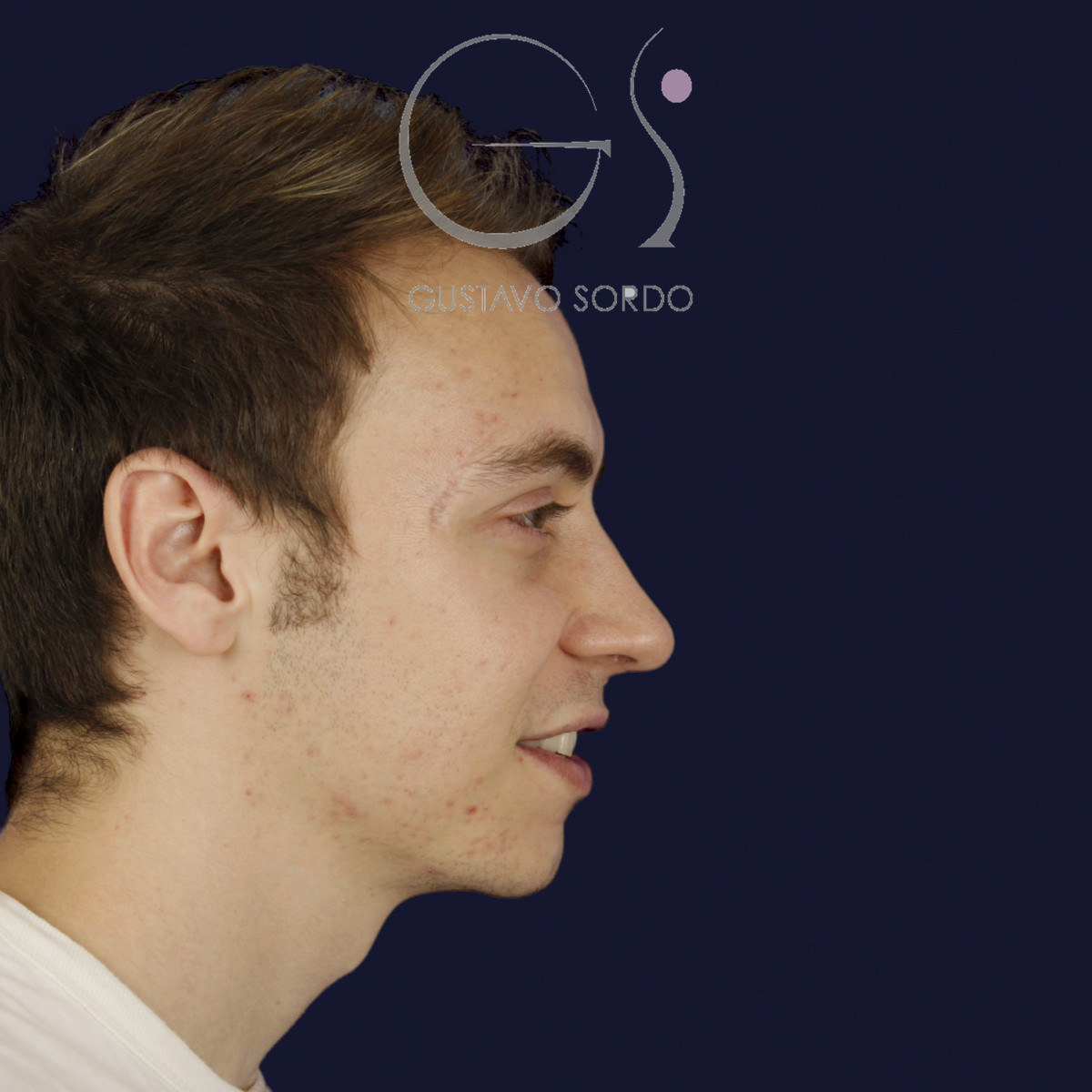
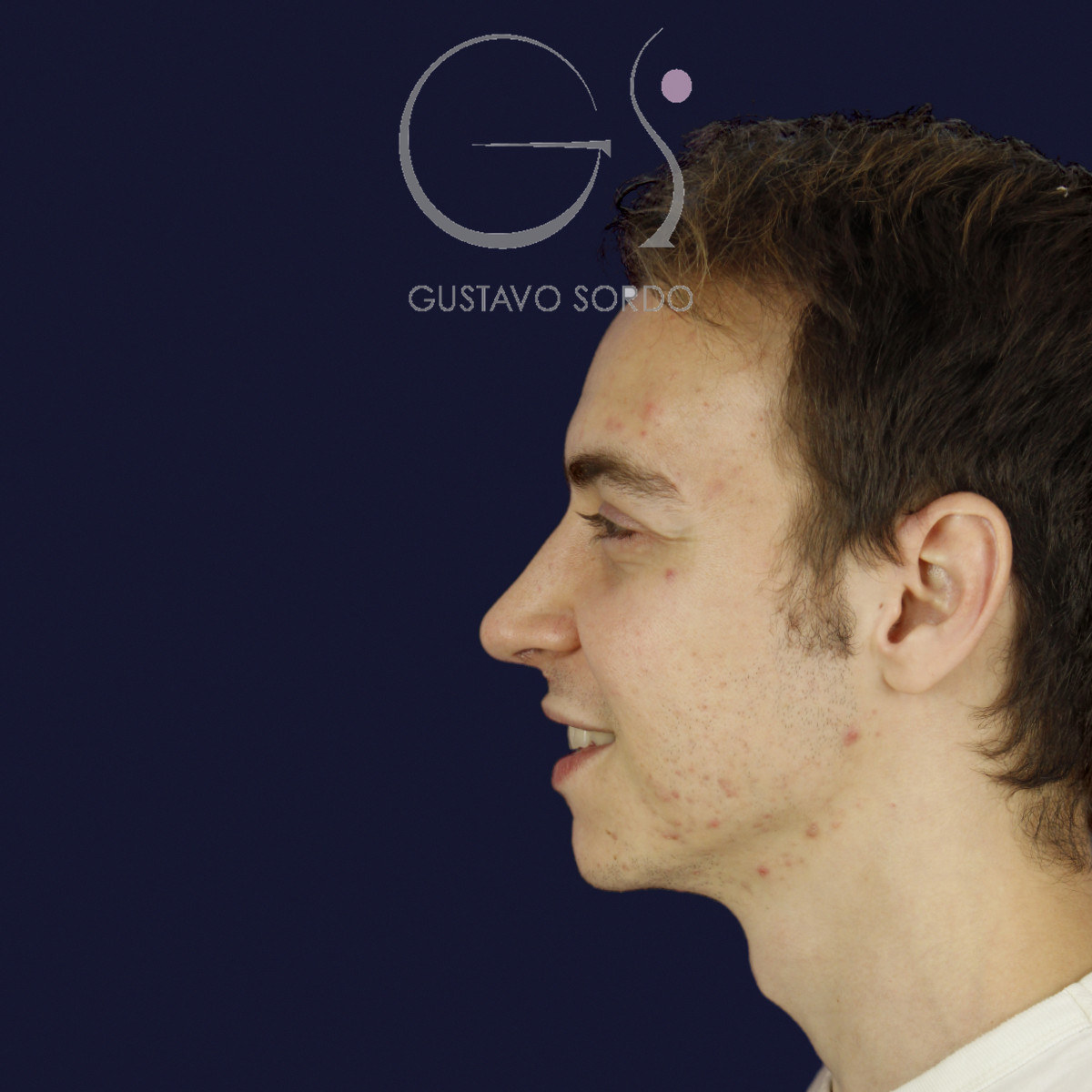
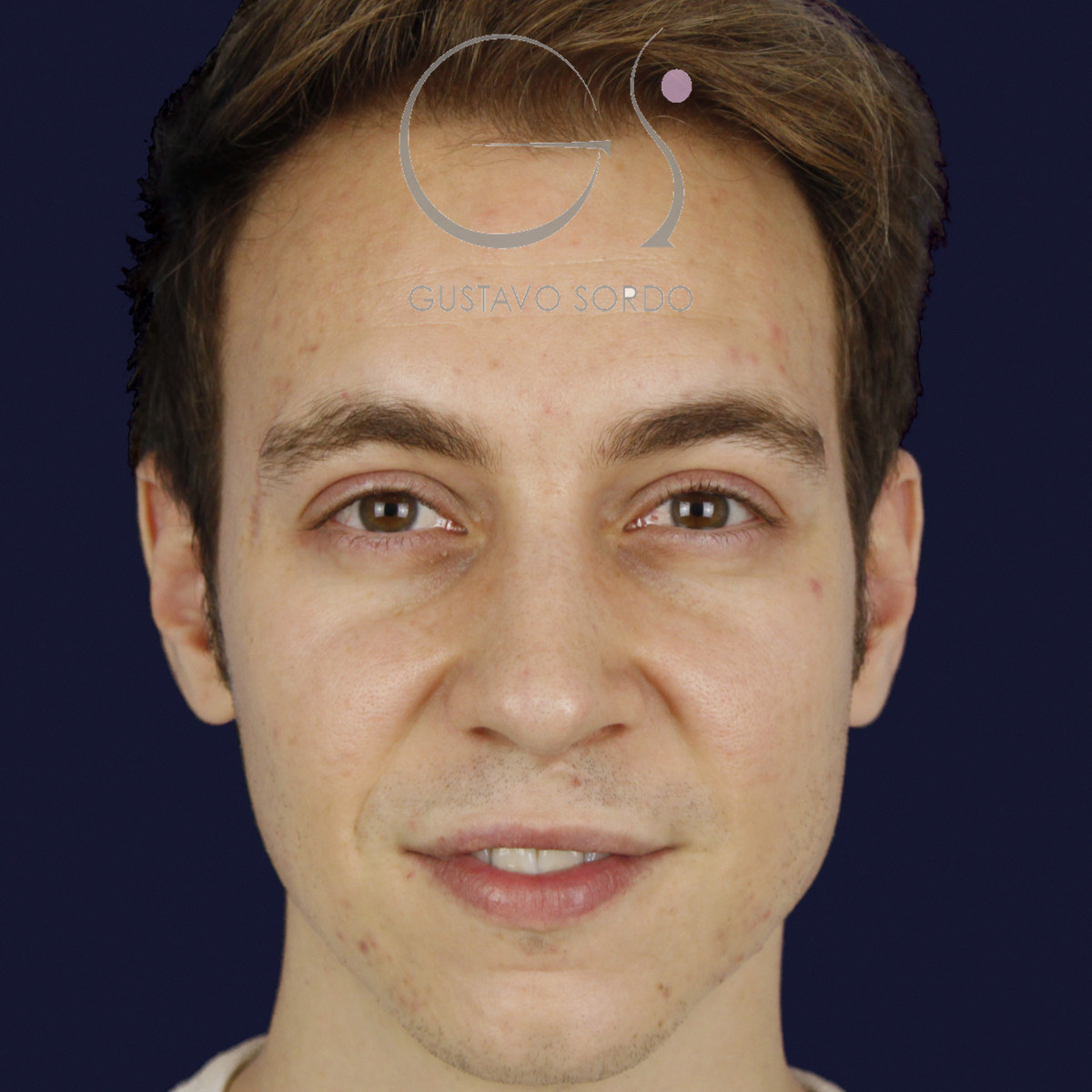
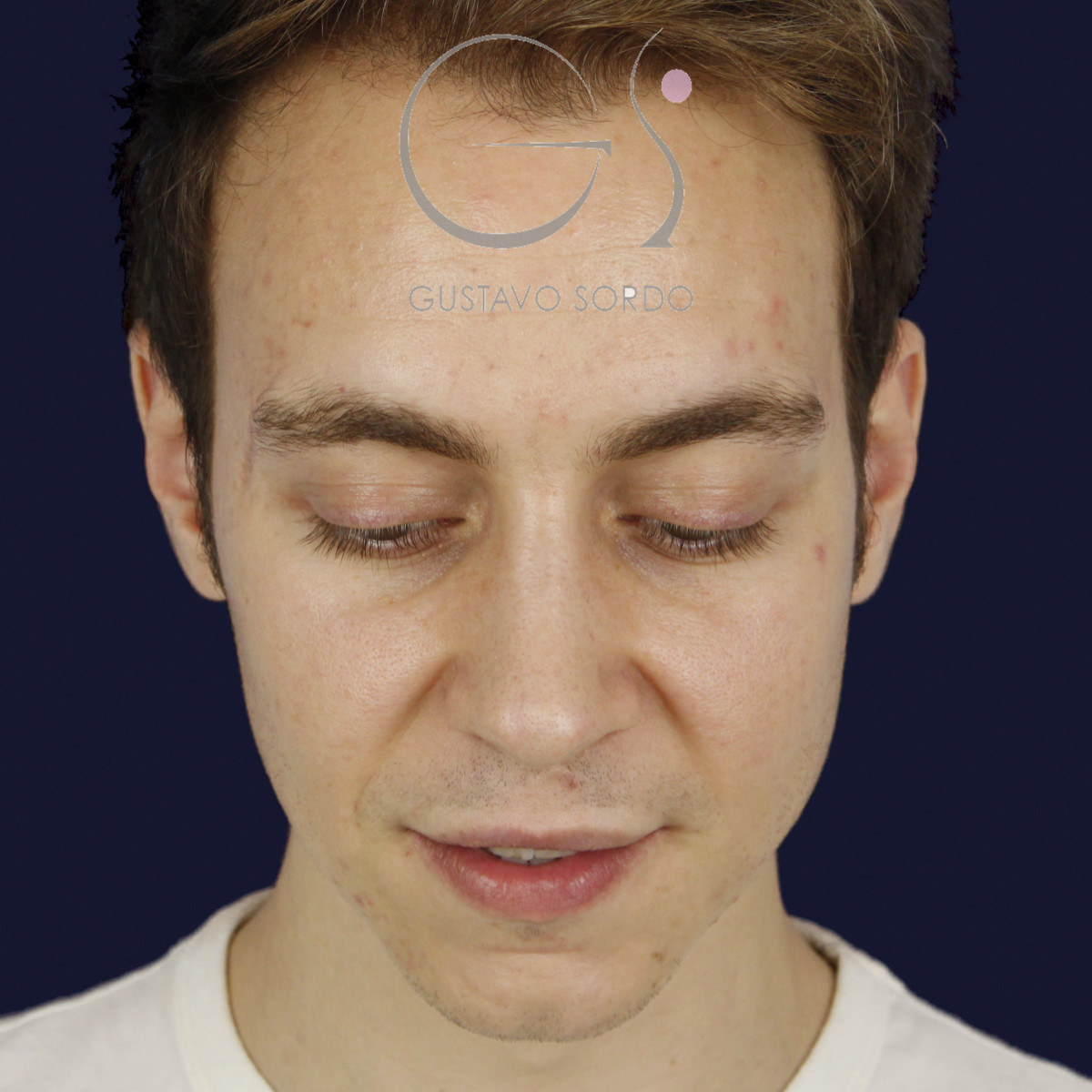
- Result: Seven months after the operation: a nose with masculine proportions, a straight bridge without the "hourglass" shape, and a more defined tip; it did not become feminized.
- Entry: 1 night
- Anesthesia: general type TIVA
- Duration: 3 hours long.
A 26-year-old man with a hooked nose, thick skin, and a narrow internal nasal valve came in wanting to breathe better and improve what appeared to be a large nose. I performed an ultrasonic structural rhinoplasty with spacer grafts and a septal extension graft. The result maintains masculine proportions; it did not become feminized.
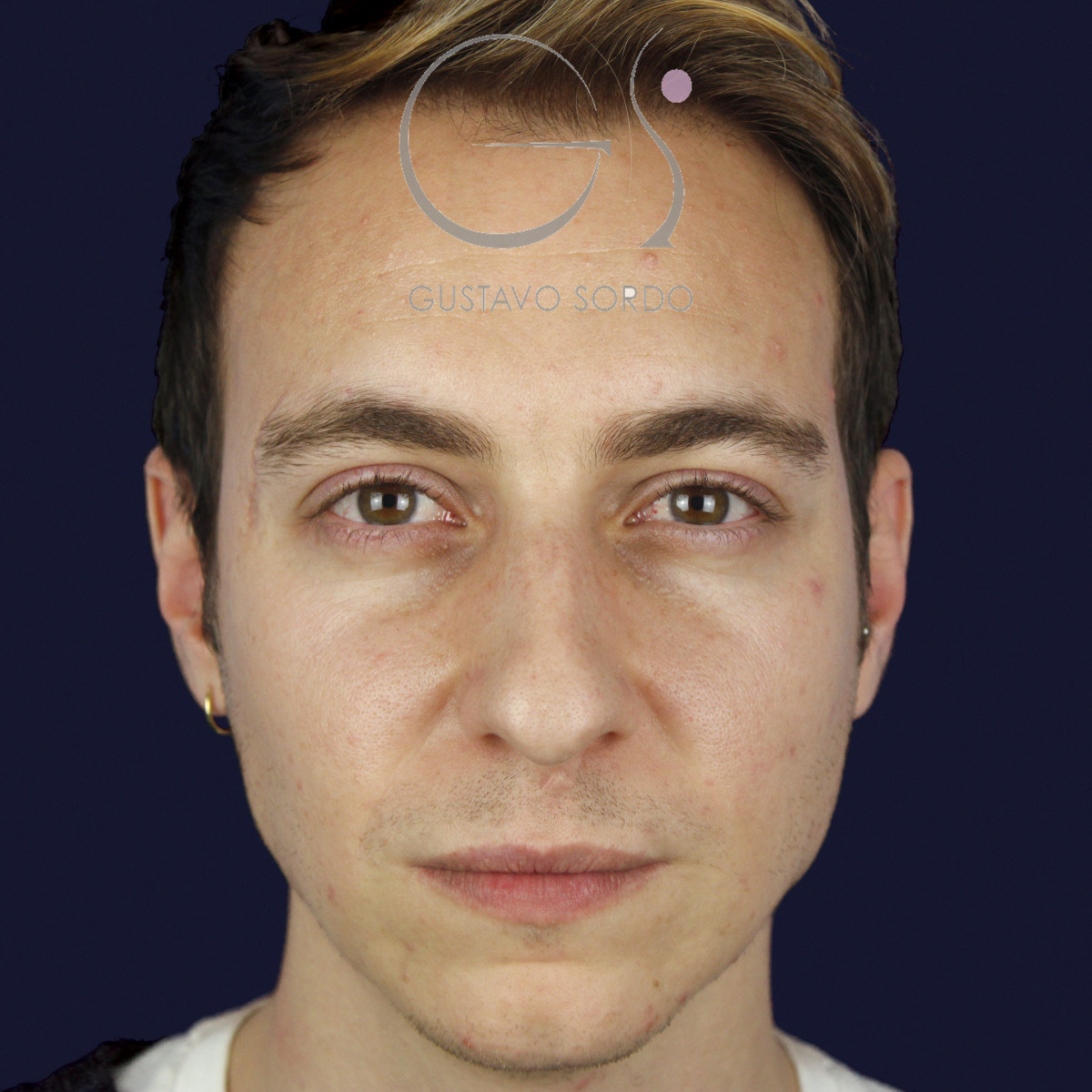
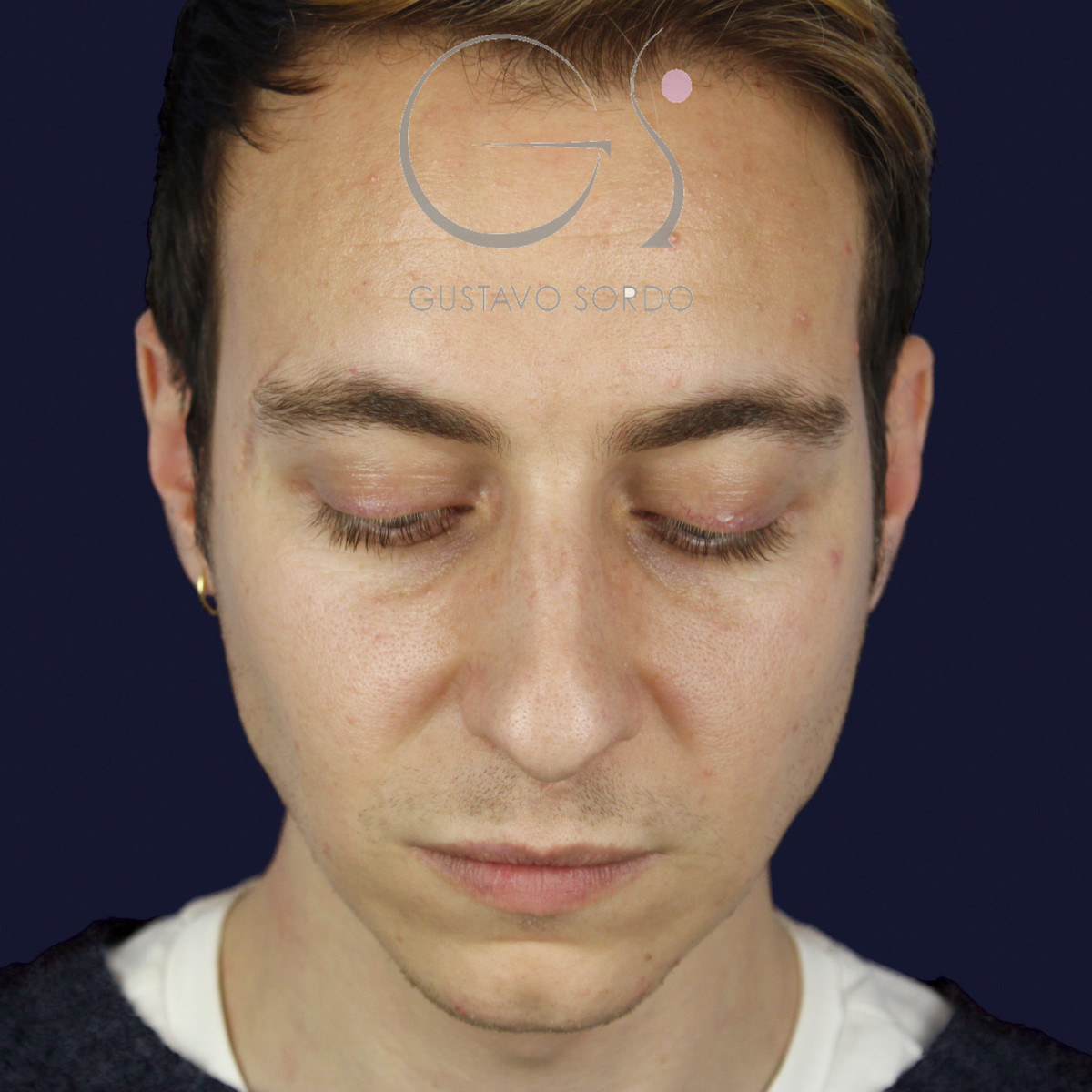
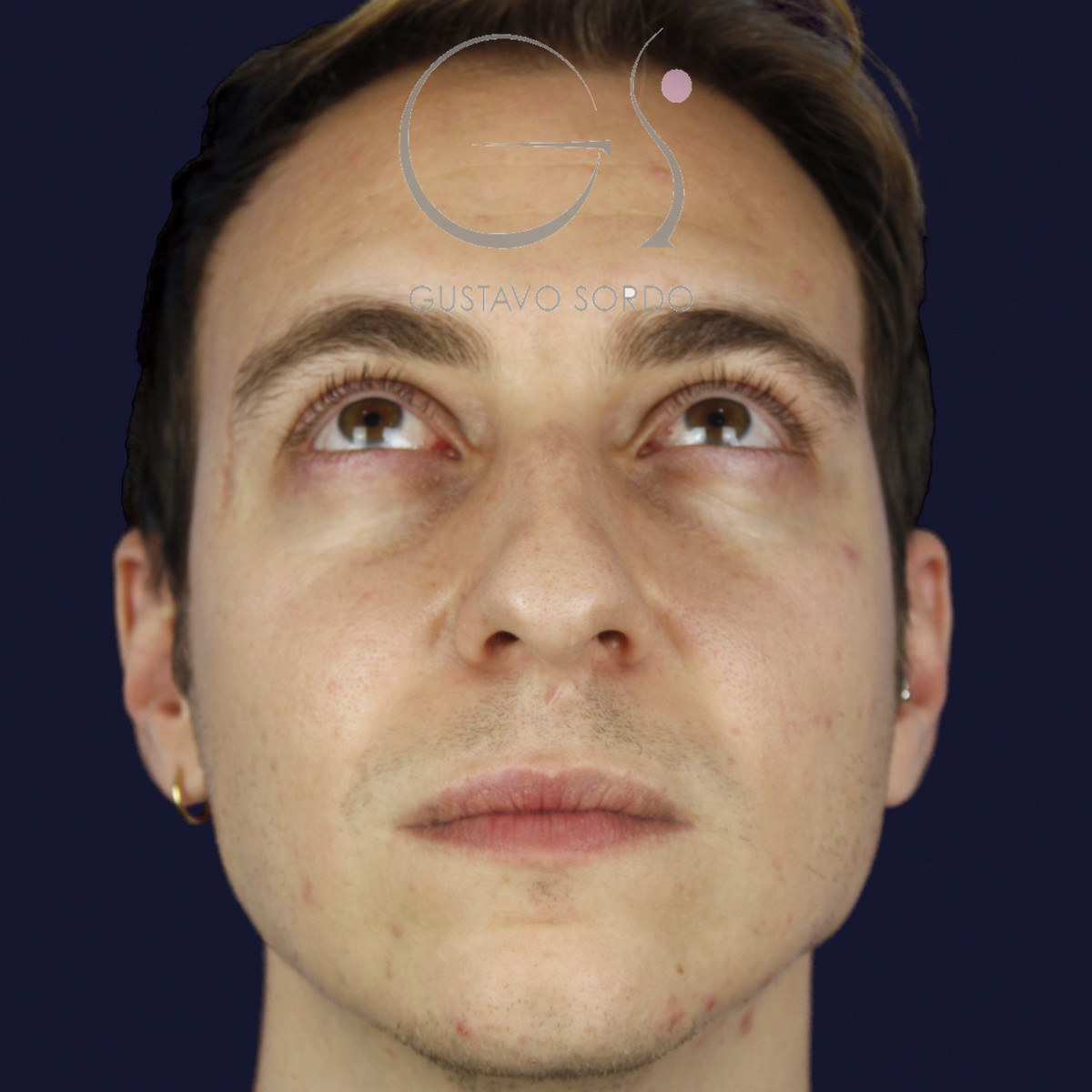
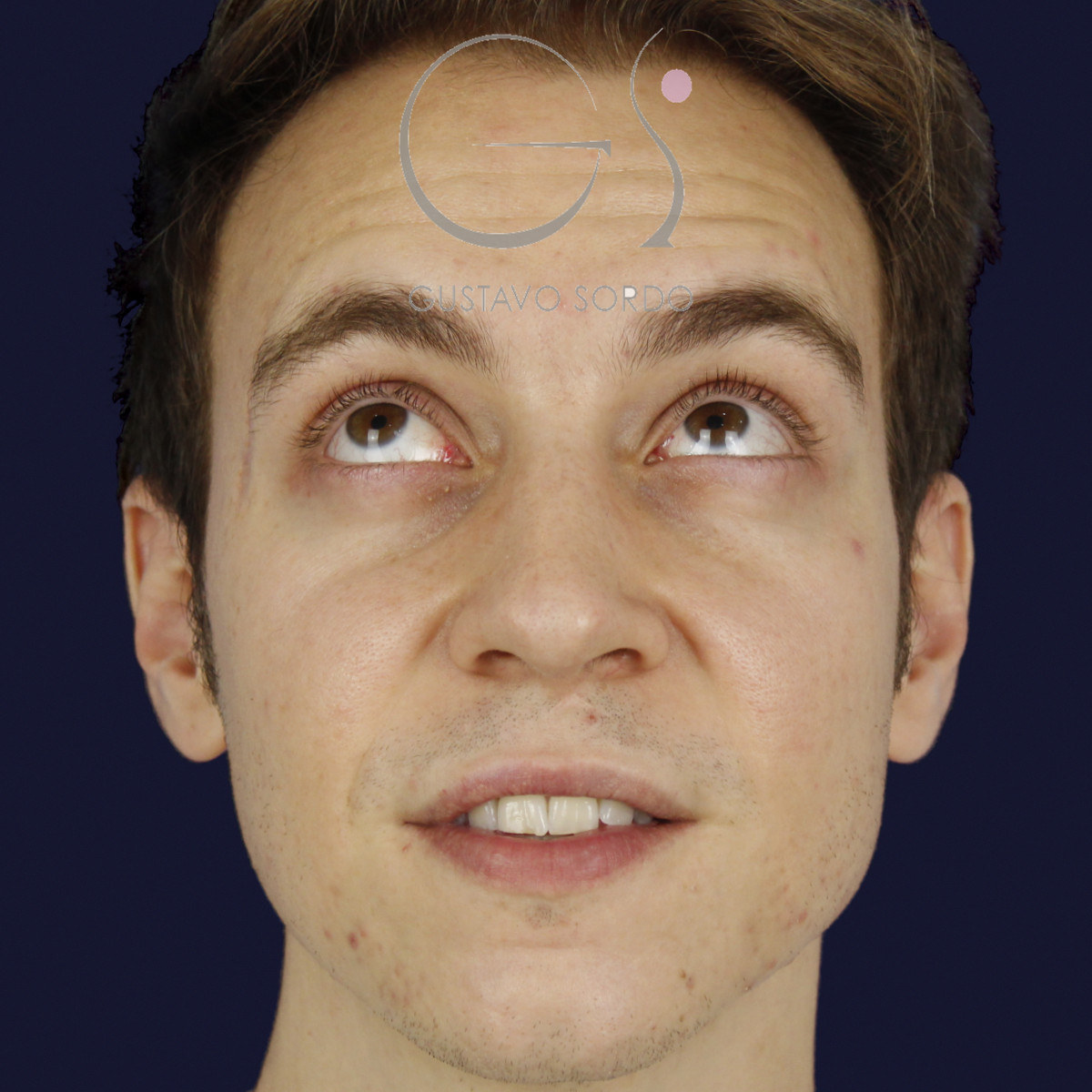
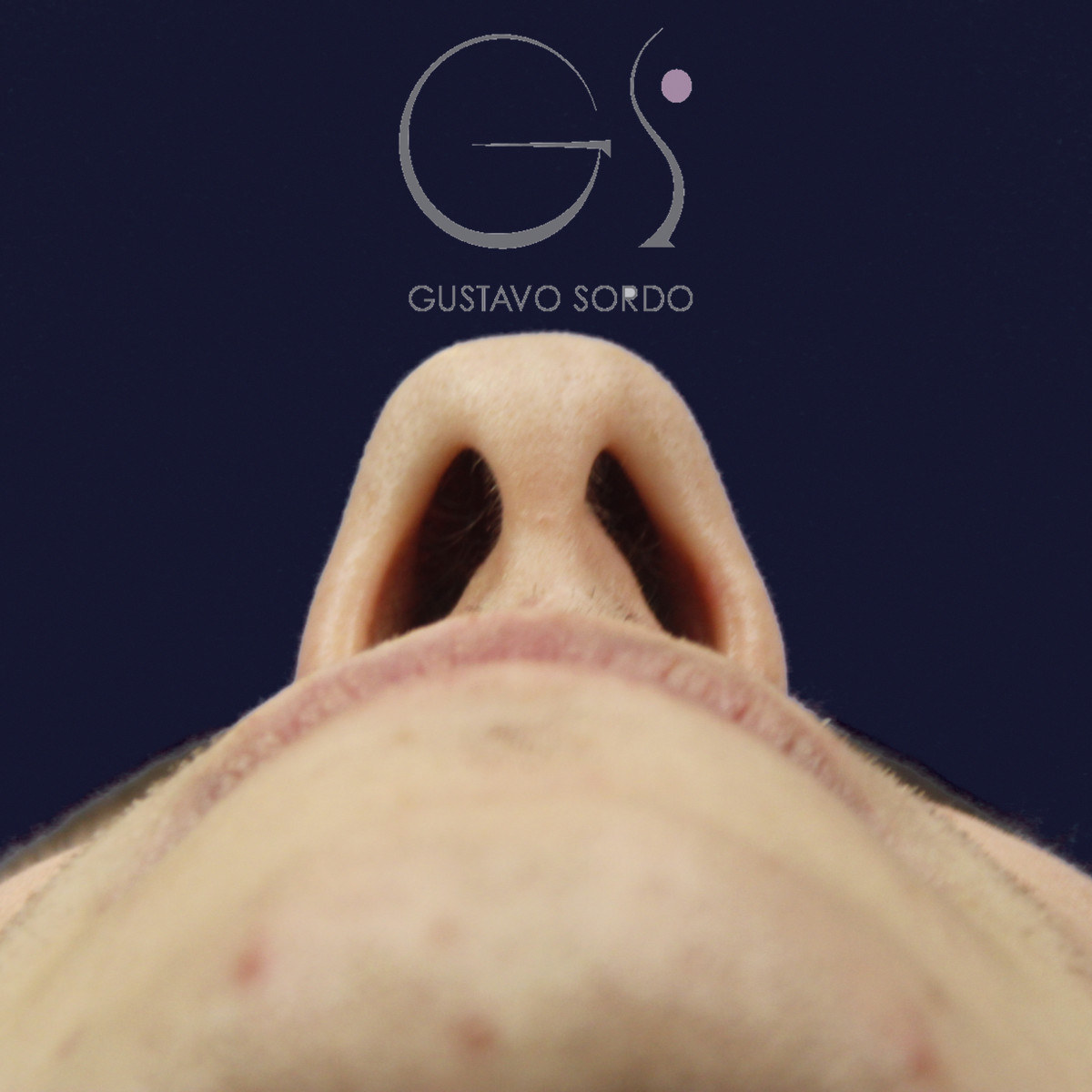
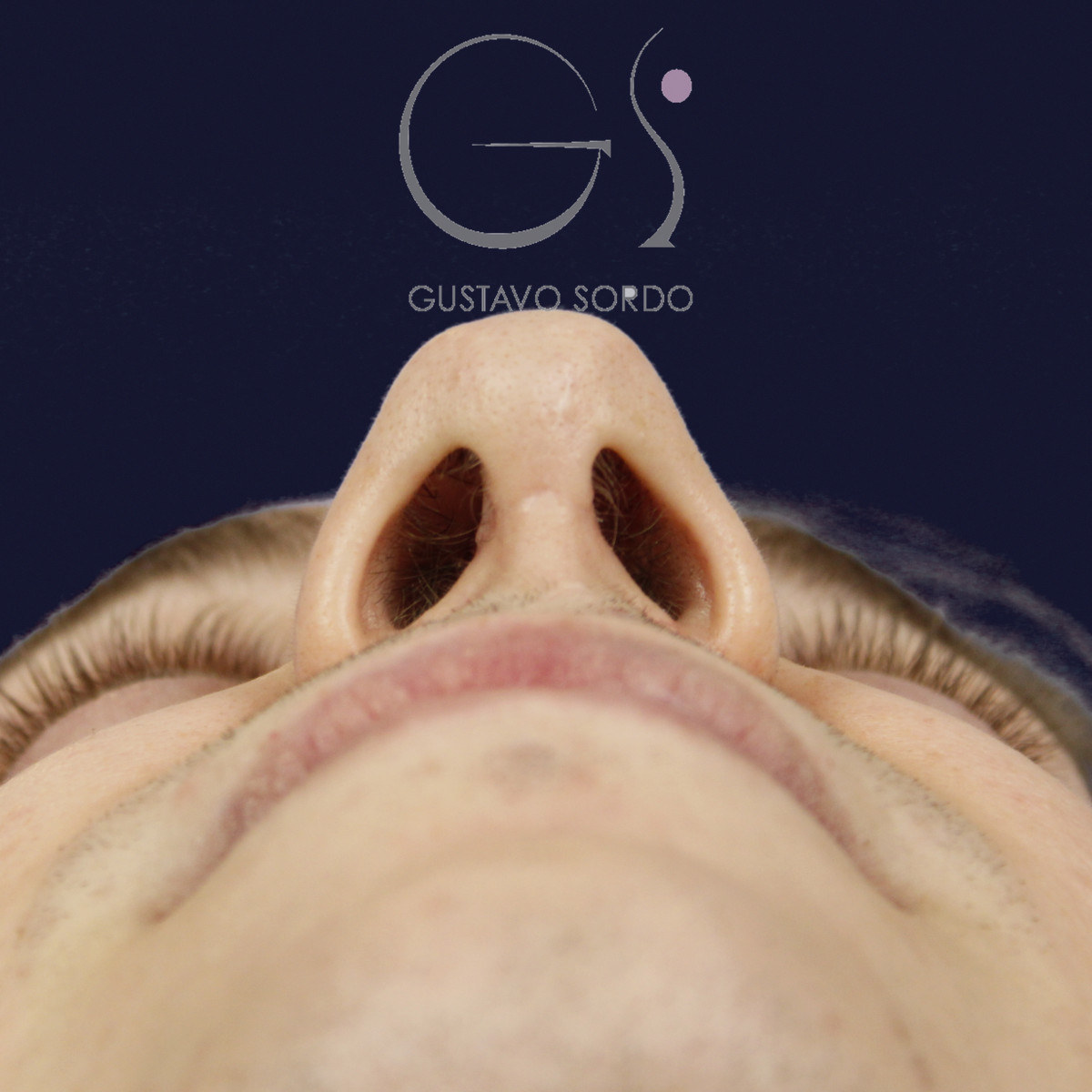
Photos taken seven months after the operation
The "after" photos are from his seven-month follow-up, the last one we have of him, in the same studio and with the same views as before. On thick skin, the tip continues to settle for longer, so its definition is still somewhat improved after this follow-up.
Comment by Dr. Gustavo Sordo
Reason for consultation
He came for both reasons: he was breathing poorly and his nose looked large.
What I observed when evaluating it
An aquiline nose, with a hump, and thick skin. The bridge was shaped like an "hourglass," indicating a narrow internal nasal valve, and the tip was bulbous, with very convex alar cartilages.
What was important to preserve
Masculine proportions. In a man, the nose must still be masculine.
My surgical approach
Reduce the size of the nose and improve breathing without feminizing it: open the internal valve and give structure to the tip.
Why I chose this technique
Spacer grafts open the internal valve and correct the hourglass shape, and the septal extension graft supports the tip. Thick skin limits how much the tip can be refined: definition is achieved with structure, not by removing cartilage.
What I did during surgery
I resected the hump and performed the lateral osteotomies using ultrasound. I placed spacer grafts to open the internal valve and a septal extension graft to support the tip. The alar cartilages required several reduction maneuvers and adjustment of their resting angle. In the same procedure, I performed the septoplasty and turbinate reconstruction.
What is observed in the result
A nose with masculine proportions: it was not feminized. In profile, the bridge is straight without a hump; in the frontal view, the bridge lacks the narrowing of the hourglass shape; at the base and on the chin above, a more defined tip.
More cases of rhinoplasty in men and aquiline noses . How I perform rhinoplasty in Madrid and the guide to rhinoplasty in men.
Case operated on by Dr. Gustavo Sordo
Specialist in Plastic, Aesthetic and Reconstructive Surgery. Member No. 282858125.
If you're looking at this case for a specific reason.
Not all noses need ultrasound, nor do they all benefit equally. In our ultrasonic rhinoplasty guide, we explain in which cases the outcome varies.
Do you want to know if this can be done in your case?
The first consultation is with Dr. Sordo, either at the Chamberí clinic or via video consultation. You'll leave knowing if you're a candidate, which technique is right for you, and how much it costs.
Dr. Gustavo Sordo · Member No. 282858125 · Plastic, Aesthetic and Reconstructive Surgery · Madrid