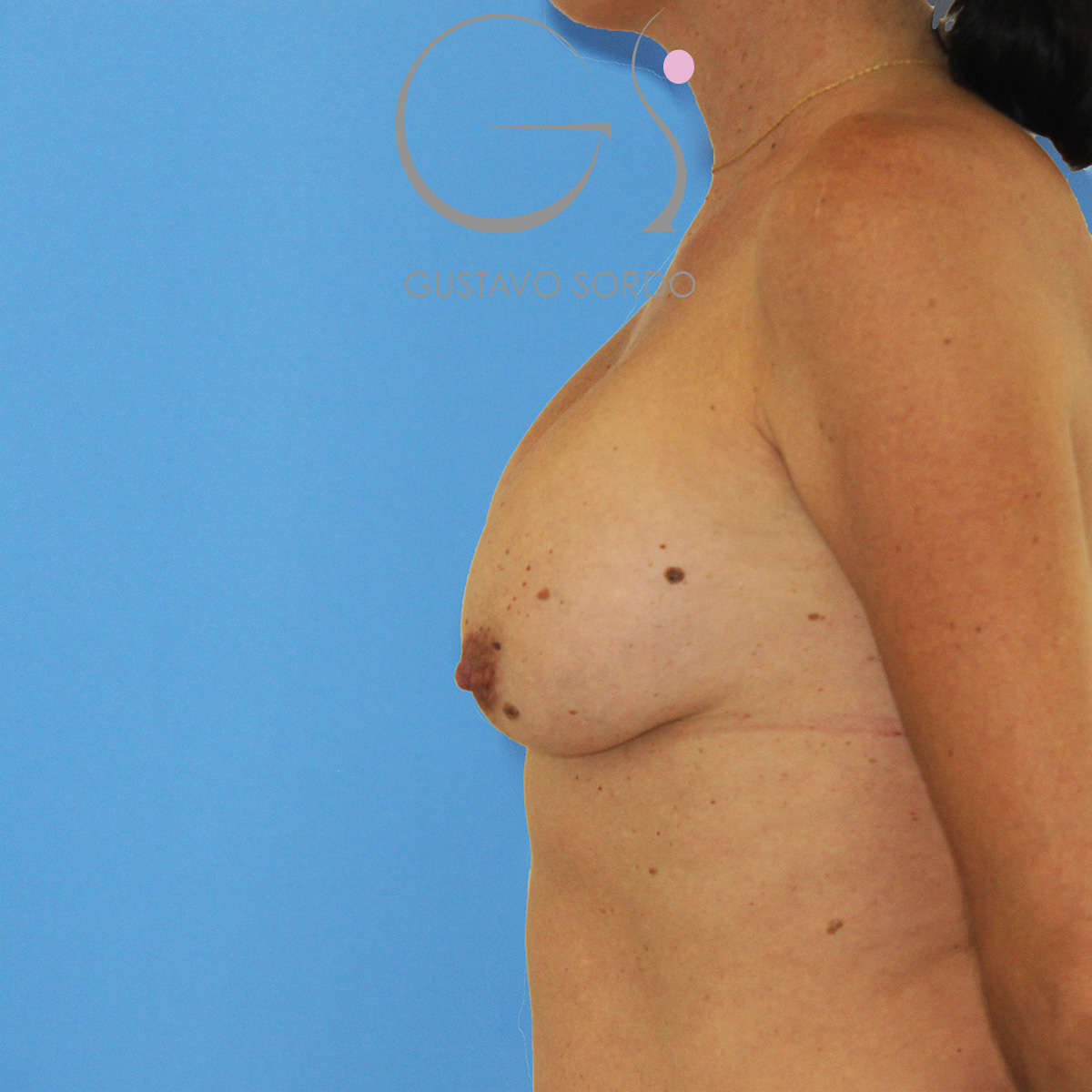
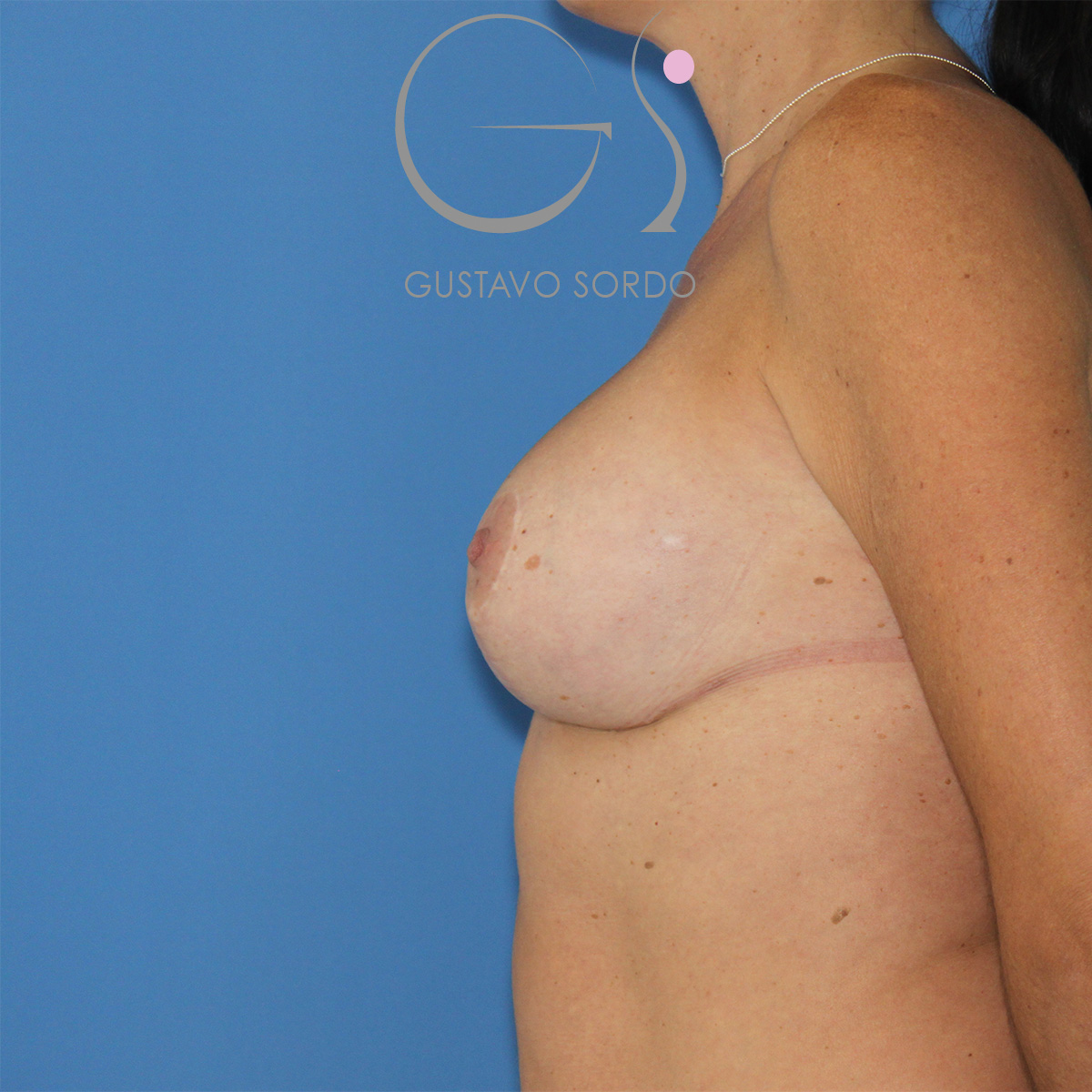
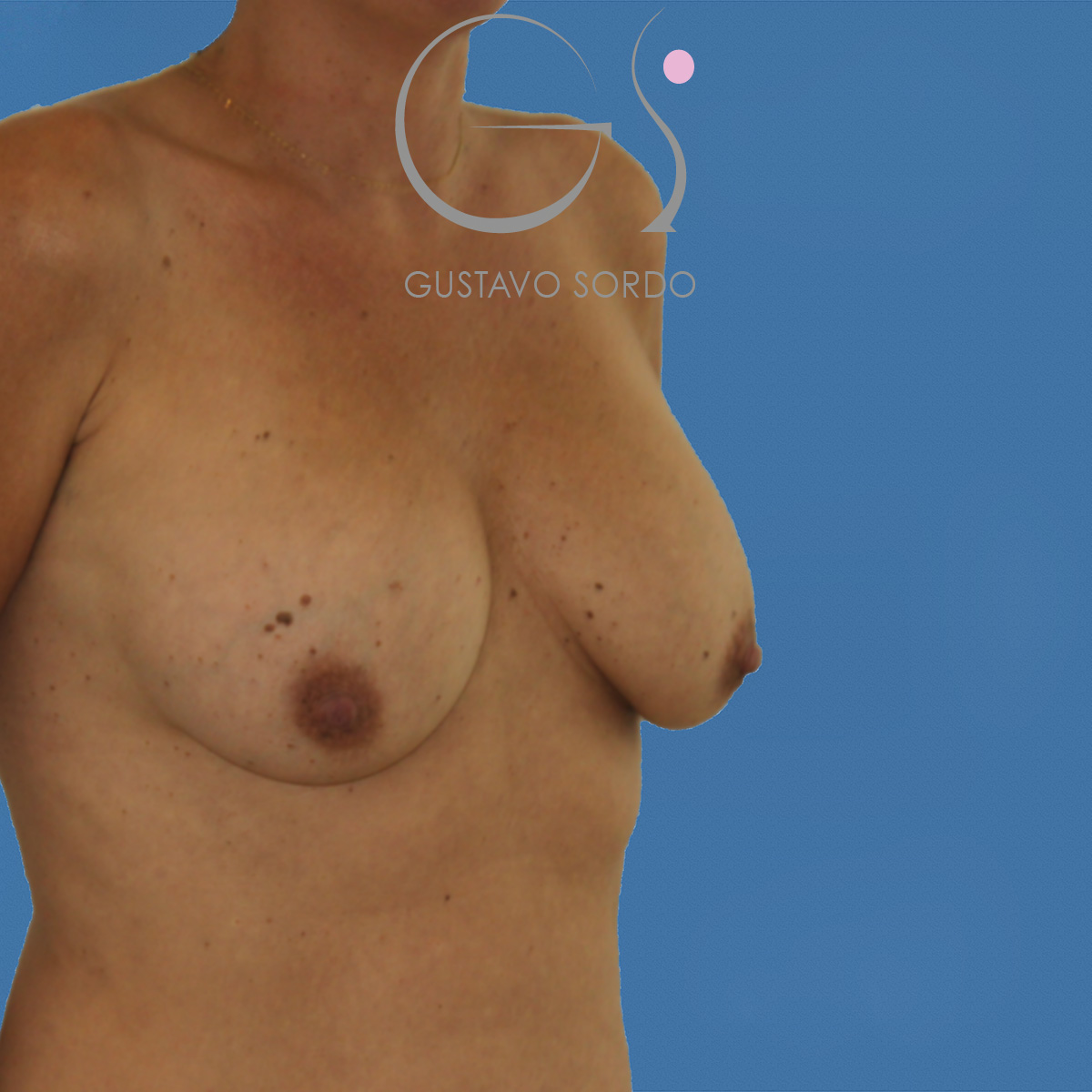
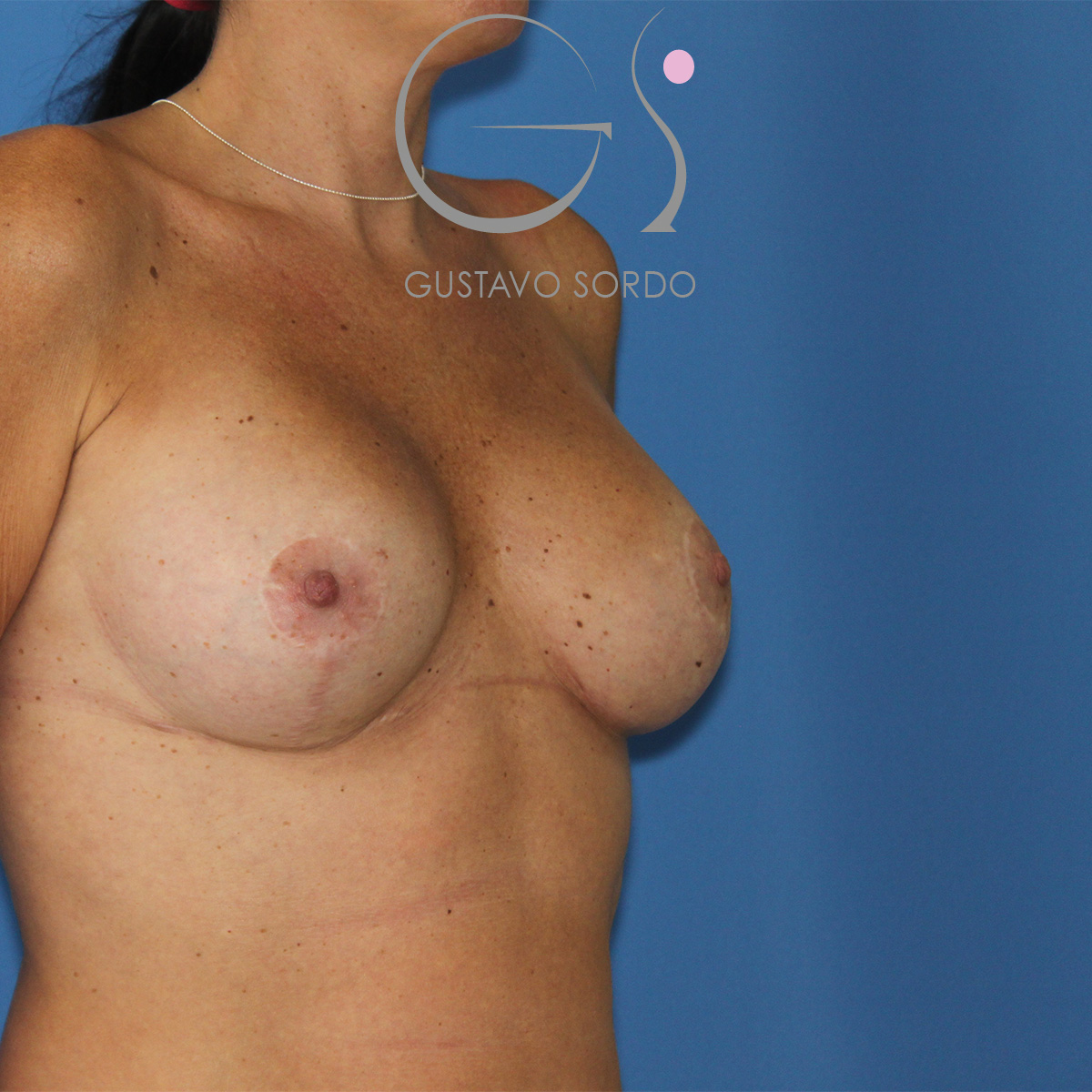
Have you ever been in this situation?
Every nose and every breast is different. The best way to find out what can be achieved in your case is through an evaluation with Dr. Sordo.
Why the superomedial pedicle
All my inverted-T reductions and mastopexies involve placing the areola on a superomedial pedicle. This is the portion of tissue that keeps it alive as it is lifted, and this pedicle maintains its blood supply via two routes: the internal mammary artery and the intercostal perforating arteries. The largest published series show a favorable complication profile with this approach, even in large reductions. In periareolar mastopexy, a pedicle is not necessary because the areola is barely displaced.
Case operated on by Dr. Gustavo Sordo
Specialist in Plastic, Aesthetic and Reconstructive Surgery. Member No. 282858125.
Popcorn capsulorrhaphy: closing the pocket without sutures
When an implant has shifted within its pocket—outward, downward, or toward the center—the problem is almost never the implant itself. It's the space that contains it, and that space needs to be closed where it's excess.
The classic methods involve capsular sutures, capsular flaps, or mesh. The technique I use is called popcorn surgery, developed by the Swedish surgeon Charles Randquist: instead of suturing, the capsule is coagulated in small, pointed sections using a protected forceps and an electrocautery knife. The capsule retracts upon itself—hence the name—and the pocket is closed where needed.
The practical advantage is significant: the pocket is adjusted without sutures, without traditional capsulorrhaphy, and without raising capsular flaps . This greatly simplifies revision surgery, which is why it is constantly used in implant replacements, displacement corrections, and explants.
Regarding its performance, there is a published series of 149 patients and 266 breasts. The indication was implant malposition in 61,3% of the breasts. Complications occurred in 14,7%, and 6% required some surgical revision. The authors conclude that the technique provides pocket control and stability with low complication and revision rates ( Calobrace MB et al. Aesthetic Surgery Journal. 2020;40(1):63-74 ).
It's not a straightforward technique, because no revision surgery is. It's a cost-control tool with reasonable costs for what's required.
If you're looking at this case for a specific reason.
This wasn't just one procedure: several interventions were planned simultaneously. You can find them explained separately in the section on second breast surgery , mastopexy.






 Clinic chat