Updated on • Reviewed by Dr. Gustavo Sordo, plastic surgeon
Breast augmentation in Madrid
- + 1.350breast surgeries
Data from the clinic's own surgical records and photographic archive. Updated to September 2026.
At Dr. Gustavo Sordo's Clinic, we perform breast augmentation using these techniques:
- 24h Laser Recovery: Dr. Sordo's own protocol, with recovery in 24 hours, without drains, without bandages and with full mobility from the first day.
- I PRESERVED (Motiva): A new, less invasive tissue preservation technique designed to preserve the natural structures of the breast, reduce swelling, and improve postoperative comfort. It can be performed under local anesthesia or light sedation, depending on the case.
Both procedures aim for a result that is proportionate to your anatomy, and each is better suited to a particular type of patient. During your consultation, Dr. Sordo, a plastic surgeon in Madrid , will assess your anatomy and recommend the most appropriate option for you.
- Own clinic at Alberto Aguilera 48, 1st floor left, Madrid
- Surgery at HLA Moncloa Hospital
- 20+ years of experience
- 3D simulation in the first consultation
If you're comparing quotes, here's an explanation of how much a breast augmentation costs and why there's such a difference from one place to another.
Price: Breast augmentation ranges from €6.400 to €7.800 depending on the technique: €6.400 with the 24h Recovery Laser protocol , €6.752 with polyurethane implants, and €7.600 with the PRESERVÉ technique (€7.800 with day hospital stay). You can find the full breakdown below.
Plastic surgeon specializing in breast augmentation in Madrid
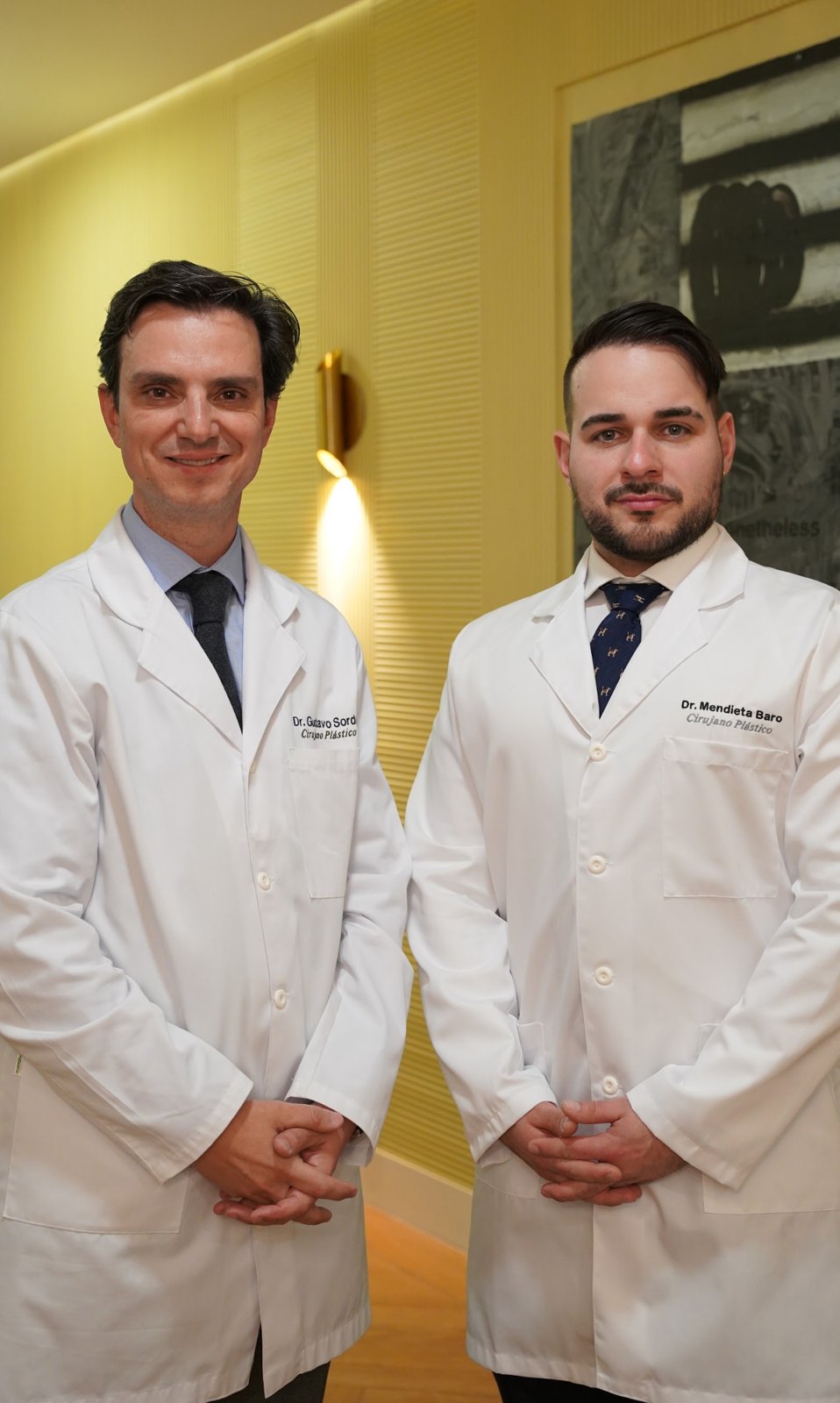
Who performs the surgery: the augmentation is performed by Dr. Gustavo Sordo (registration number 282858125) and Dr. Alejandro Mendieta (registration number 282880327); the PRESERVÉ procedure is performed by Dr. Mendieta. The first consultation is €100 with Dr. Sordo and €50 with Dr. Mendieta, including a 3D simulation which will be deducted from the total cost of the surgery.
What is breast augmentation?
Where does the 24h Recovery come from? It's not a brand name we invented: it's a protocol published by surgeon John B. Tebbetts in Plastic and Reconstructive Surgery in 2002, in two articles. In his prospective series of 627 patients, 96% returned to normal activity in less than 24 hours—raising their arms overhead, lifting heavy objects, and driving—without strong painkillers, drains, bandages, or special bras. What makes this possible isn't a device, but six requirements in the operating room: zero tolerance for bleeding, a no-touch technique on the periosteum, no blind dissection, all dissection performed under direct vision, specific instruments, and precise management of muscle relaxation. That's what we apply, and that's why the postoperative period is what it is.

Advantages of breast augmentation with Dr. Sordo
Both the "24h Recovery" technique and PRESERVÉ offer these advantages:
No need for drains or bandages
Thanks to the "24h Recovery" technique, the incision is much smaller, and the tissues are treated with extreme care and precision. This minimizes the likelihood of bruising. Furthermore, the entire surgery is performed using micro-dissection needles, proactively preventing any bleeding. As a result, your breasts will be less swollen, and you will feel better, without the need for drains. Drains are not necessary with Dr. Sordo's technique; we avoid them to reduce the risk of infection.
In the case of PRESERVÉ, being a less invasive technique that works within a specific anatomical space and respects the natural structures of the breast, the need for drains is also avoided and a particularly low inflammation is achieved.
Laser scar treatment
At the end of the surgery, once the incision is closed, I apply a 1210 nm laser session to the scar. In a randomized, double-blind trial of breast reduction, in which one breast was treated and the other served as a control, the treated scar was flatter and less rough after one year, and patients preferred it without knowing which one it was. It doesn't make the scar disappear; it just makes it less noticeable.
At PRESERVÉ , although the technique generates even smaller incisions due to its minimally invasive approach, you can also benefit from laser treatment if deemed appropriate, with the aim of making the scar as inconspicuous as possible.
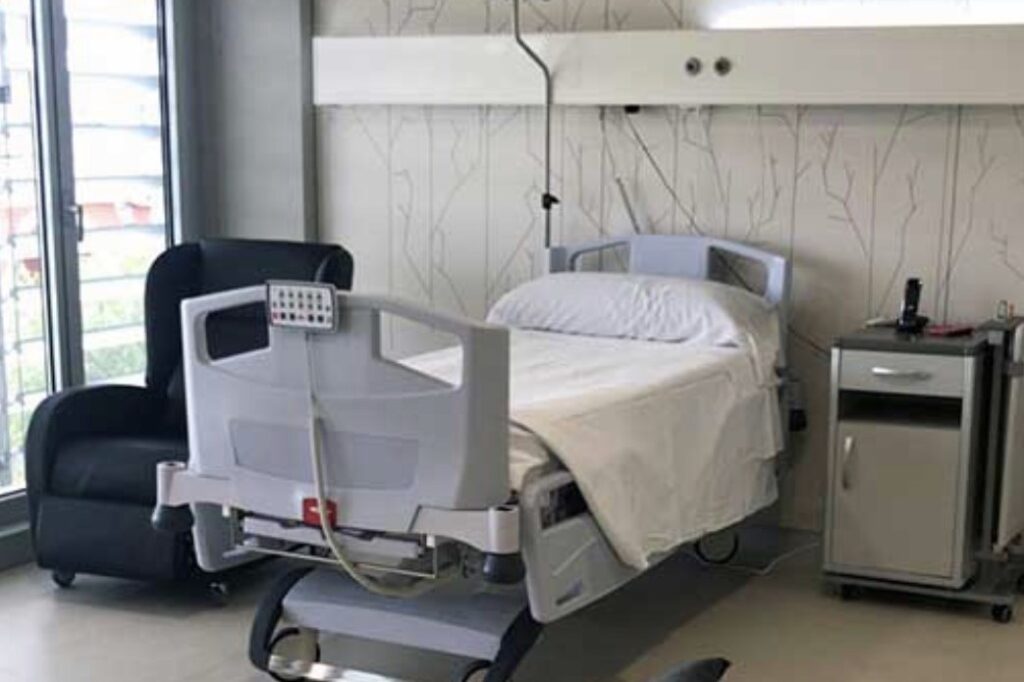
Overnight stay in a private room
For your comfort and safety, we include one night's stay in a private room. During this stay, we will administer intravenous antibiotics, which are more effective. In addition, Dr. Sordo will make a personal visit the next day to make sure everything is okay.
In the case of PRESERVÉ , the hospital stay is usually just as comfortable, but since local anesthesia or light sedation is used in many cases, the postoperative period can be even easier. The final decision regarding admission or earlier discharge will always depend on the doctor's assessment and each patient's response.
Rapid reintegration into social life
Thanks to the "24h Recovery" technique, you can return to your social life in just 24-48 hours after breast surgery. Furthermore, you'll enjoy full mobility in your arms from day one.
In the PRESERVE technique, by preserving more tissue, avoiding muscle dissection, and generating less inflammation, recovery is also very quick, and the postoperative period is usually particularly comfortable. Recovery can be even smoother in patients who undergo surgery under local anesthesia or light sedation.
Types of implants used in breast augmentation in Madrid
Whether it's the "24h Recovery Laser" or PRESERVÉ breast augmentation surgery, the choice of implants is crucial. I use cohesive gel implants with a manufacturer's warranty. These implants have a very low rupture rate, and the manufacturer offers a lifetime warranty.
Regarding their shape, implants can be round or anatomical . During your initial consultation, Dr. Sordo will create a 3D simulation so you can compare and choose between both options. We will also offer simulations of different sizes so you can visualize the final result. This simulation is included in the price of the initial consultation (€100), and this amount will be deducted from the final price. This way, you can review all the options from the comfort of your home and select the one you prefer.
Which implants are best for you? The choice will depend on the effect you want to achieve ( more natural or more revealing ), but above all, it's essential that they fit your anatomy perfectly. During your consultation, Dr. Sordo will analyze your body structure and advise you based on your individual characteristics.
Round or anatomical: what is seen in consultation
The implant shape isn't chosen from a catalog. Dr. Sordo decides it based on three measurements taken during the initial consultation, and the cases published on the website illustrate this process one by one. Many patients summarize it with the phrase: "filling a bra cup without padding." That's volume; the shape is a separate decision, also made using these three measurements.
- The upper pole requested by the patient. Those who want a full cleavage with defined midline lines opt for a high-profile round implant, as in This increase with 450cc roundsThose who request a smooth transition, without a step at the top, opt for an anatomical implant, which distributes the volume downwards: 375 cc o 280 cc.
- The distance from the nipple to the crease. The anatomical implant lengthens that distance. If it's already long and the crease is very pronounced, an anatomical implant would lengthen it even more, and the round implant fits better.400cc round). If it's short, the anatomical one does just what's missing (300 cc anatomical).
- The covering determines the layout, not the shape. In a thin patient, with little tissue in the pinch test, the implant goes under the muscle, whether round or anatomical (245 ccThe placement is determined by the tissue, not the size. In a very thin patient with prominent ribs, a large implant can be noticeable; in that case, the subpectoral placement provides the necessary coverage.
Anatomical implants have a drawback that's important to know beforehand: they can rotate. This can be reduced with a well-fitting pocket, the internal bra , and by respecting the lateral fascial triangle, but no maneuver completely eliminates the risk; we explain this in our article on the rotation of anatomical implants . And above approximately 330 cc, we no longer consider the PRESERVÉ technique: here are the five situations in which it's not recommended.

3D simulation of the result
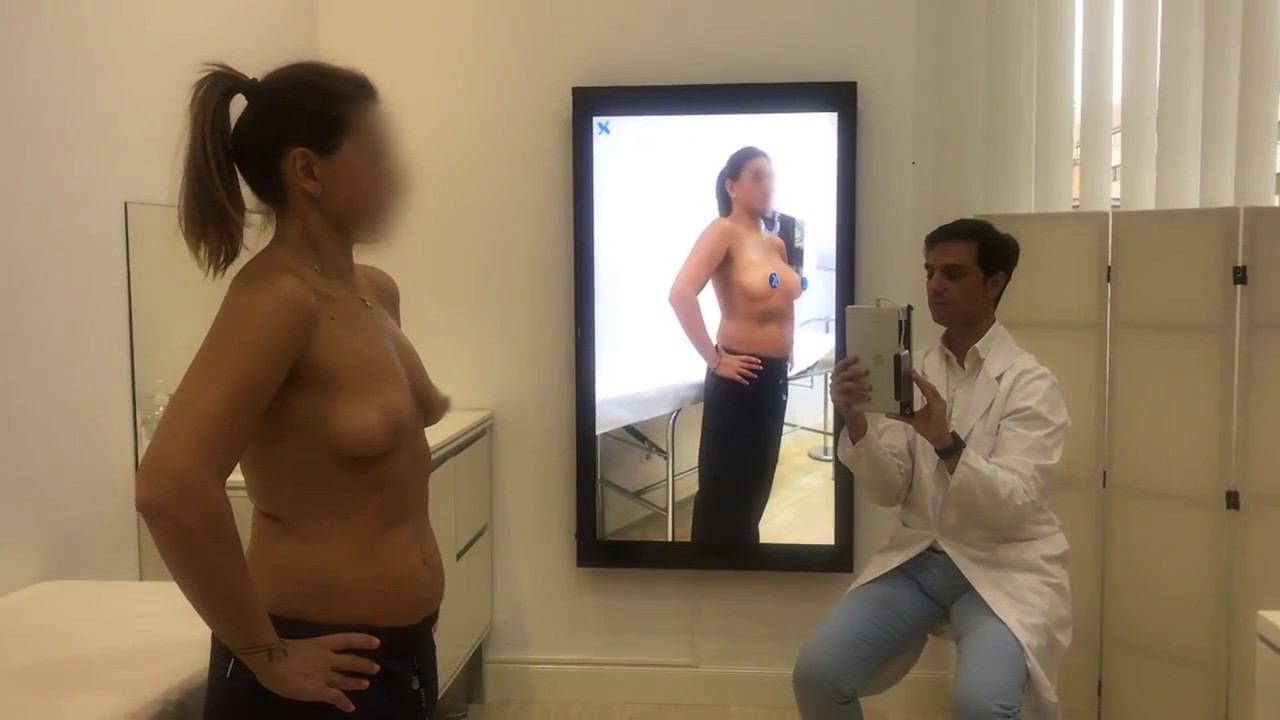
This is how 4D simulation works: you choose the volume and shape and see your result before entering the operating room.

Breast augmentation prices in Madrid
Before and after breast augmentation
Explore our cases organized by breast type to find the result that most closely matches what you're looking for.
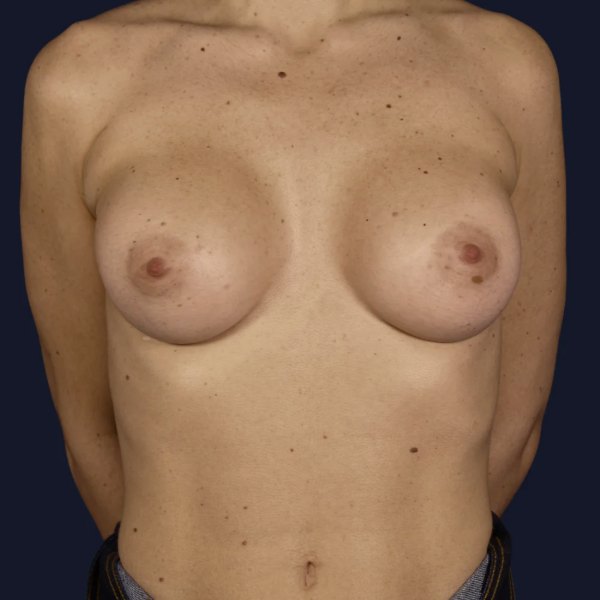
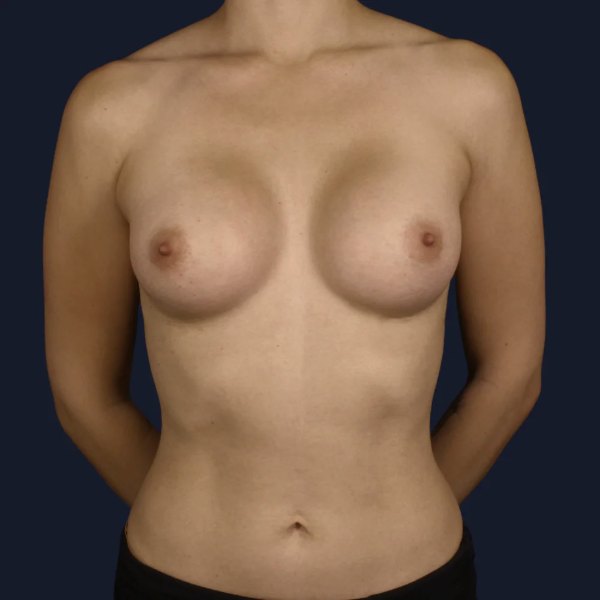
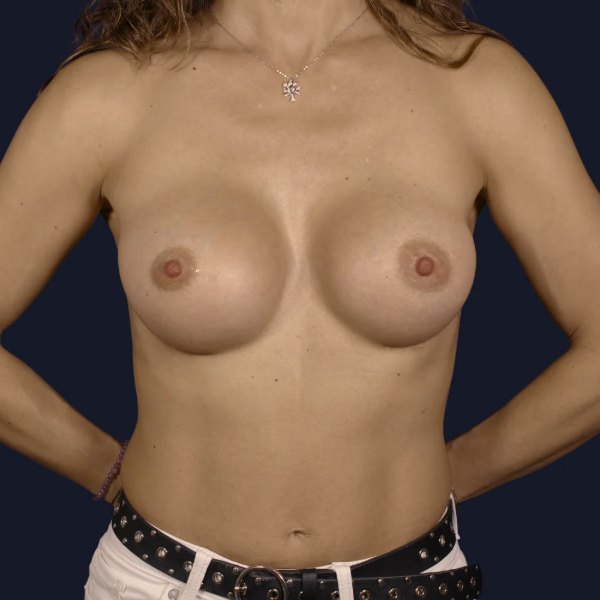
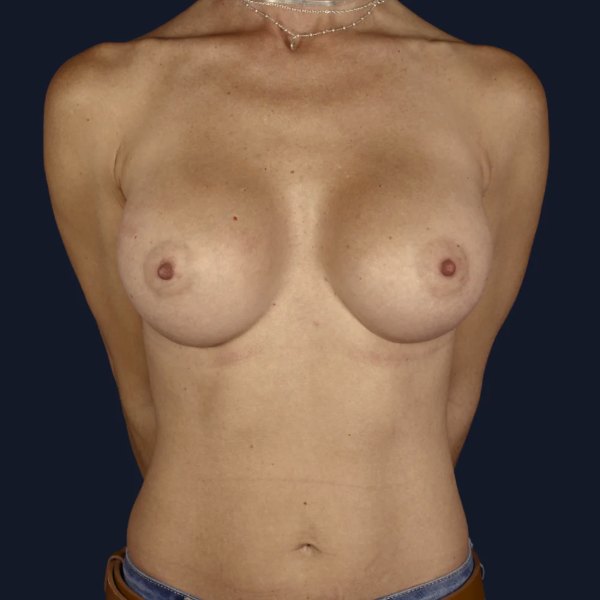
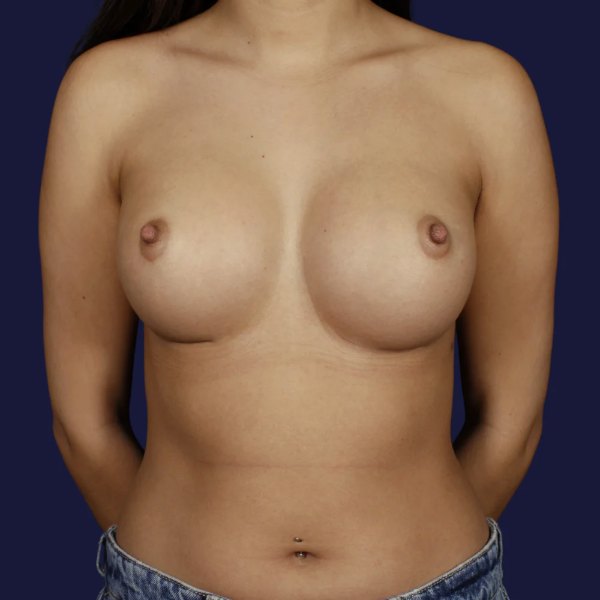
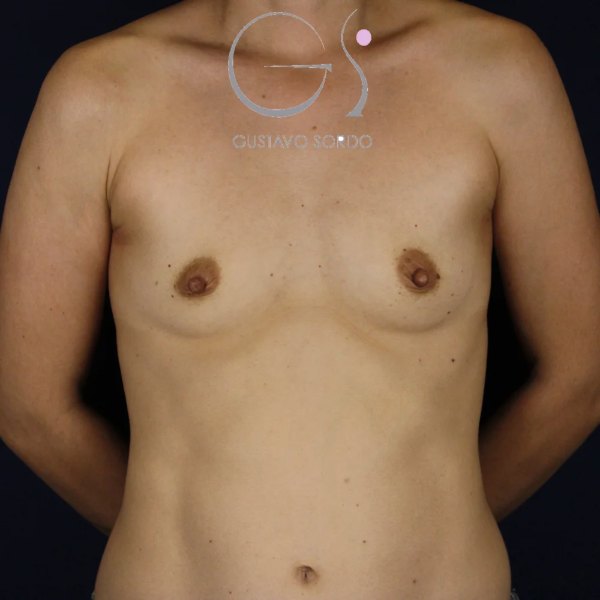
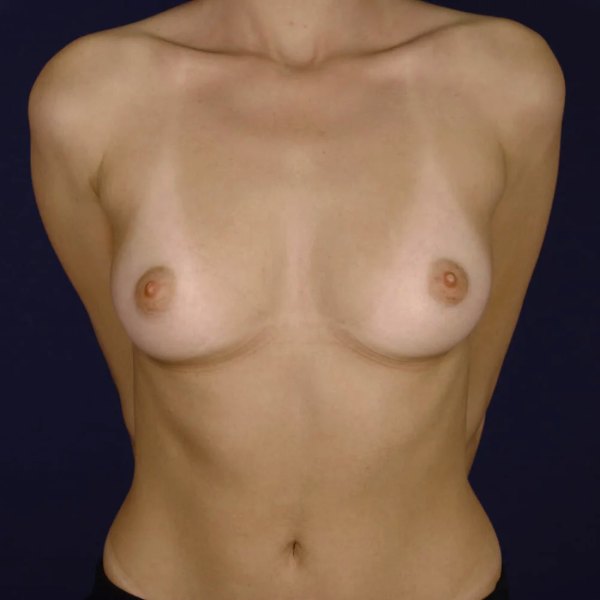
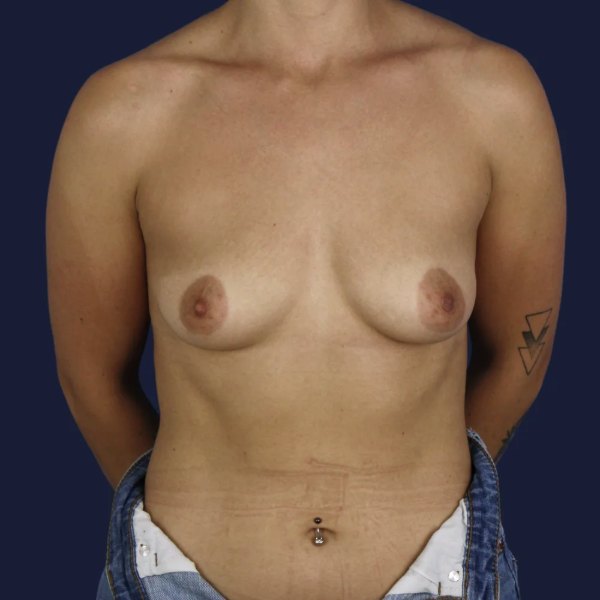
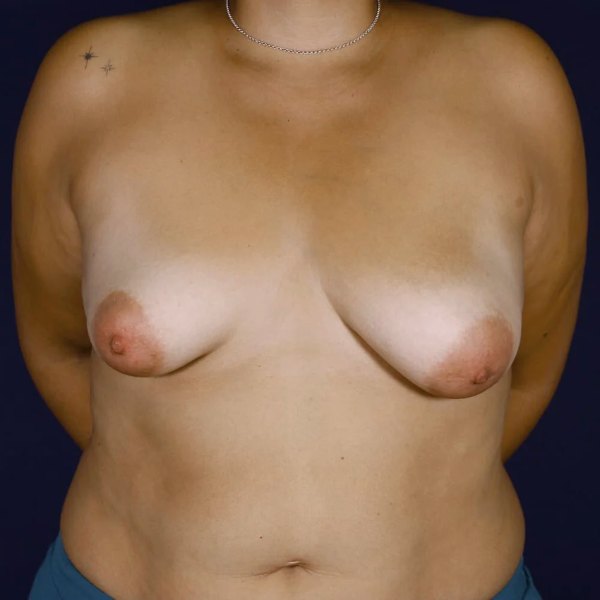
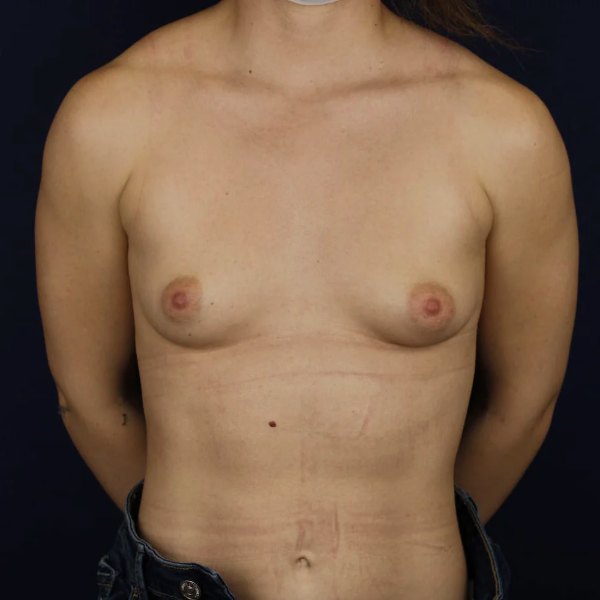
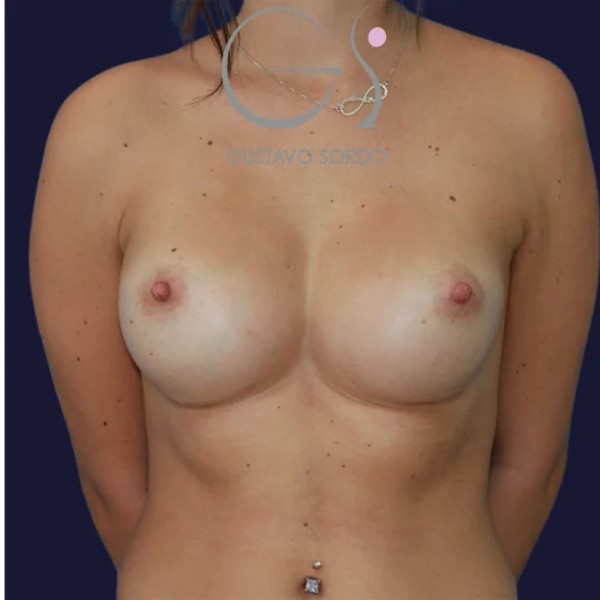
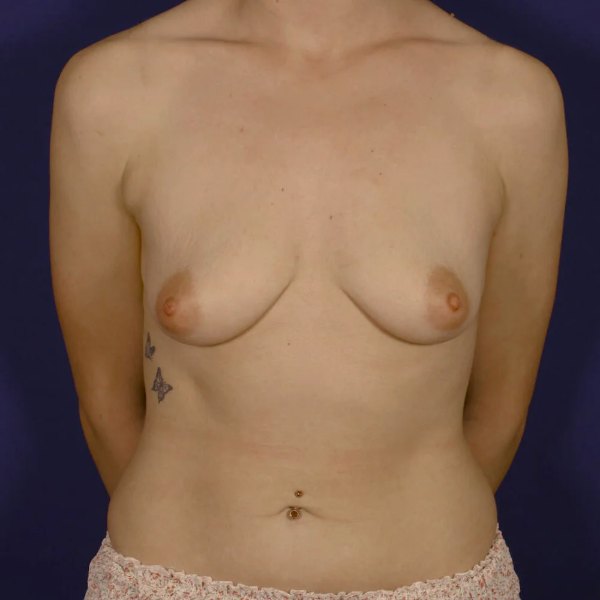
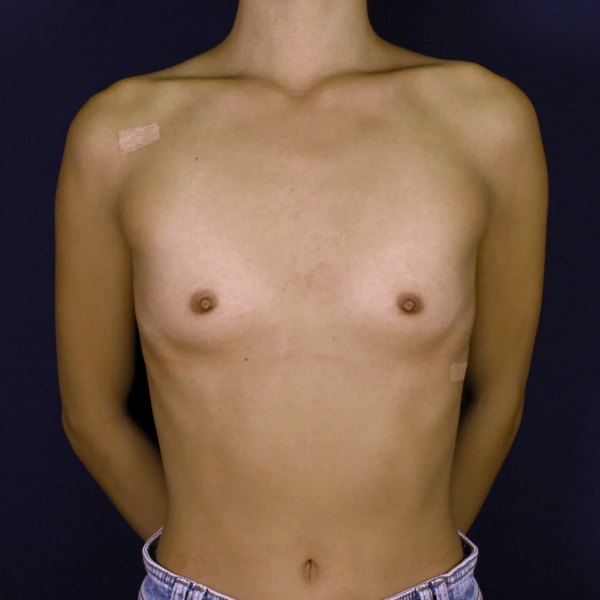
See more before and after cases of breast augmentation
Patient Reviews and Testimonials
Complete breast augmentation process in Madrid

First consultation and 3D simulation
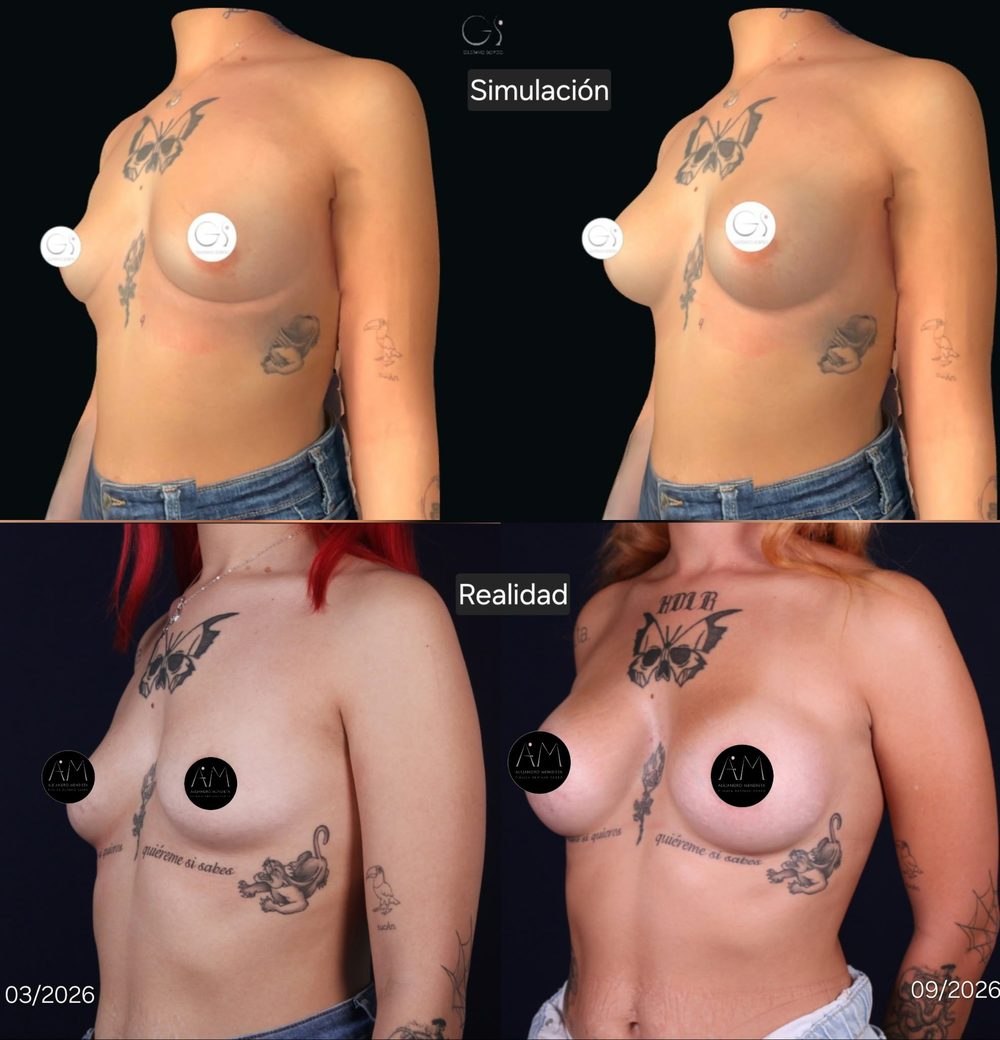

Preliminary simulation and actual result at six months
Preoperative breast augmentation
The day of the breast augmentation surgery
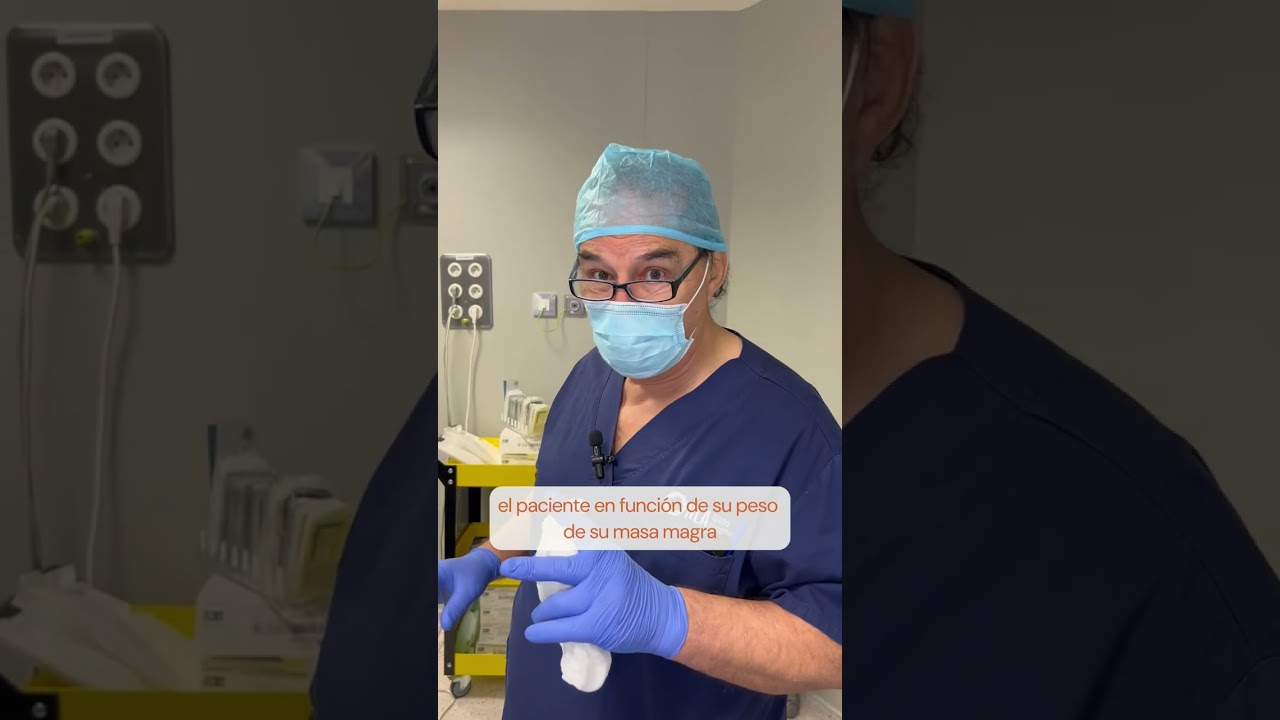
Local, sedation or general: what is used in breast augmentation and why.
Postoperative breast augmentation
The initial incision may be red and swollen, but it will fade over time. The stitches are absorbable, so they don't need to be removed, and the healing process is painless.
One week after the operation, you can start sleeping on your side, as long as you don't feel pain . You can move freely, use your arms, and perform everyday activities, avoiding lifting heavy objects directly with your arms.
For more information about breast augmentation scars, we recommend visiting our blog, where we cover this topic in greater detail.
Check-ups after breast augmentation

Other breast operations
Other breast surgeries we perform at the clinic:
⇒ Mastopexy or breast lift : This surgery is designed to lift and reshape sagging breasts, providing a more youthful and firm appearance to the breast.
⇒ Second breast surgery : In cases of prosthesis rupture or to improve the results of a previous surgery, we perform additional procedures to correct and improve the appearance of the breast.
⇒ Breast reduction : when the weight of the breast causes back or neck pain.
During the consultation, we assess which of these procedures fits your case and what you can expect from it.
Before and after our patients
“The truth is, I felt very comfortable, it didn't hurt at all. And the result is very good, very natural, nothing exaggerated. Gustavo knew right away what he wanted.”
"I wanted a more natural-looking breast; I knew I wanted something that suited my body, so I took his advice. And I'm thrilled with what Gustavo told me. The simulation looks similar to the final result, but the real thing is better."
“At first I was very nervous, but thanks to the whole team, it was great. They calmed me down, and then I thought the recovery was going to be harder, but nothing… After a week I felt great.”
Risks and limitations of breast augmentation
Breast augmentation is surgery and, like all surgery, it carries risks. We prefer that you be aware of these risks before making a decision, and that we discuss them during your consultation.
What can happen
In addition to the risks of any surgery under general anesthesia (bleeding, hematoma, infection, seroma, scarring problems), breast implants can cause asymmetry, changes in nipple sensitivity, capsular contracture, or implant rupture, and the possibility of a second surgery in the future. Implants are not for life: they require checkups and, over time, may need to be replaced. Scheduled checkups help detect any complications early. If a complication arises, we will address it with you from the very beginning and continue to support you until it is resolved.
What we cannot promise you
The final result is visible once the breast has settled and the swelling has subsided. An implant does not stop the effects of time, pregnancies, or weight fluctuations. The consultation simulation is for guidance only, not a guarantee of the final result.
Frequently asked questions about breast augmentation
How much does breast augmentation cost in Madrid?
From €6.400 (24h Recovery Laser) to €7.800 (PRESERVÉ with day hospital). With polyurethane implants, the price is €6.752. The price includes operating room, anesthesia, implants, and follow-up appointments.
Will the result of the increase be natural?
Yes. In a breast augmentation our goal is to improve the size and shape of the breast, so it is essential to seek proportion with the rest of your physiognomy. For this reason we carry out a prior study and three-dimensional simulation with testing of different types of prostheses, until we find the one that best fits your anatomy.
Can I lead a normal life after breast augmentation?
Yes. You will be able to resume your social life within 24 to 48 hours and with a minimum period of time off work (we recommend between 4 and 7 days, depending on your activity and how you feel).
Do you use general anesthesia? Is it safe?
Yes. We use “TIVA” (Total Intravenous Anesthesia), a new technique that does not use anesthetic gases and greatly reduces postoperative discomfort. We work with our own anesthesiologist (Dr. Bourgeois) who is fully dedicated to our clinic.
And it's very stable, because the infusion is continuous and runs at the same rate as the medication, so the level of sedation remains constant throughout the operation. Furthermore, it gives patients a greater sense of well-being and promotes restful sleep.
Are there different types of breast prostheses?
Yes. Breast implants can be round or anatomical. Depending on your preferences and your physique, we will use one or the other.
Does breast augmentation surgery require me to be admitted?
Yes. We do this for greater security because this way we can monitor you in the hours that follow. The next morning Dr. Sordo will visit you to check on your progress and, if everything is okay, he will discharge you from the hospital.
Will I be able to breastfeed after breast augmentation?
Yes. Breast augmentation surgery does not affect breastfeeding, the quality or quantity of milk produced by the breasts. The breast prosthesis is placed behind the pectoral muscle and does not come into contact with the mammary gland, so it will not affect breastfeeding.
Will I be able to have mammograms after breast augmentation?
Yes. It is important that you inform the radiologist that you have breast implants, so that the appropriate procedures can be performed.
Which implants are right for me?
These are the factors we consider when choosing one implant or another:
- If the patient is not thin and has a significant amount of skin and fat in the upper part of the breast, there will be no difference between the two prostheses. It will make no difference whether a round implant or an anatomical one, since they will look the same from the side.
- If the patient is thin, it will be noticeable from the side which type of implant she has chosen, since the round prosthesis will give a more marked transition at the beginning of the prosthesis, at the top.
- If the patient has an underlying abnormality in the shape of her breast (tuberous breasts, for example), it is recommended that she select an anatomical implant, with the aim of normalizing the shape of her breast as much as possible and giving it a more natural appearance.
- If the patient is looking for a natural result, it is advisable to opt for an anatomical implant, since the appearance will be more similar to that of a non-operated breast.
Of course, we take into account your personal preferences regarding size (without exceeding the maximum recommended) and a more natural or more pronounced neckline.
What is “TIVA” anesthesia?
“TIVA” (Total Intravenous Anesthesia) is a high-quality anesthesia. Its innovative technique avoids the use of anesthetic gases and the well-known headache, vomiting, nausea and discomfort that anesthetic gases can cause.
This is a type of anesthesia that requires more dedication from the professional than common anesthesia with gases, but it greatly increases the well-being and safety of the patient. In our clinic we have our own anesthesiologist and we take the utmost care of these types of details.
The patient is monitored throughout the intervention with the so-called "BIS" (Bi Spectral Index) which measures sleep in a constant way.
Even when it comes to general anesthesia, our patients' experience with TIVA anesthesia has been excellent thanks to Dr. Bourgeois, a highly experienced professional who has mastered the technique perfectly.
Should breast implants be replaced every 10 years?
No, no implant needs to be replaced unless it is broken, which can easily be checked with an annual ultrasound. The average lifespan of the highest-end implants (the ones we use) is around 20 years. There is no need to replace anything that has not broken. Remember to have your ultrasound every year and keep in touch with us for your check-up.
Where are breast implants inserted?
In most cases, the approach to inserting breast implants will be through the inframammary fold (below the breast crease), with an incision size of 2,5 to 3 cm. It can also be done through the areola. In either case, we will treat your scar with laser treatment and reduce it by 30% so that no one will notice it.
What does the scar look like after a breast augmentation?
At Dr. Sordo's clinic, we treat scars to minimize their appearance, regardless of the incision site. Once your breast augmentation surgery is complete, and while you are still under general anesthesia, we will apply our laser scar treatment. It is a 1210 nm operating room laser applied to the already closed incision. In a randomized, double-blind trial of breast reduction, in which one breast was treated and the other served as a control, the treated scar was flatter and less rough after one year. It doesn't make the scar disappear; the goal is to make it as inconspicuous as possible.
Where are breast implants placed?
With a few exceptions, the implant will be placed under the pectoral muscle. This is the safest and most comfortable option for the implant and the patient.
When can I play sports after breast augmentation?
For the first month, you don't do any exercise, but that doesn't mean being inactive: after 24 hours, you can raise your arms overhead and retract your shoulder blades for 30 seconds, once an hour, and walk for 30 minutes a day. From day 7 onwards , the weight limit is increased by 1 kg, and you have free movement: you can move your arms whenever you want, without repeating the exercise every hour. After a month, you resume gentle and progressive cardio—running, swimming, cycling—and isometric exercises that don't involve the pectoral muscles. Only heavy isometric pectoral exercises are postponed for six months ; when the implant is placed in the subfascial plane, they can begin as early as a month later.
Will I be able to hold my children after surgery?
Although recovery is the fastest of all those described and patient discomfort can be very controlled or limited, it is advisable to avoid lifting excessive weight in the arms during the first week. This will prevent overloading the pectoral muscles that were affected during the procedure.
Once the first week has passed, we can gradually increase the loads and start lifting weights higher than 1kg , which is the maximum weight that can be lifted during the first week.
We can start considering picking up our children, provided they don't weigh more than 11 kg. To pick them up, we should do so without overusing our pectoral muscles. That is, we should lower our entire body as a unit, bending our knees and hips, pick up the child, and gently lift upwards, bearing the weight with our lower body, or in other words, with our legs, which will extend, instead of using our upper body.
Another option for being able to hug and hold our children after the first week of post-operative care is to sit in an armchair and let the child come to us and climb or crawl . Another person can also help by placing the child on our lap, so we don't have to lift them from the floor or into our arms.
Round or anatomical?
Your anatomy decides it, not the catalog. What I look at in consultations is the upper pole, the distance from the nipple to the inframammary fold, and the tissue coverage: with little coverage and an empty upper breast, the anatomical implant provides a smoother transition; when the upper pole needs to be volumized, the round implant works better.
When did I book and when did I get 24h Laser Recovery?
PRESERVÉ is designed for volumes of 150 to 330 cc and is performed by Dr. Mendieta. Above that size, or when the pinch test indicates insufficient tissue to cover the implant in front of the muscle, we proceed with a subpectoral augmentation using the 24h Recovery Laser protocol.
Does it leave a scar?
The incision is made in the inframammary fold, which is where it's best hidden, and after the surgery we treat it with a laser. It remains a scar: it matures over months and we see it during follow-up appointments.
"Best breast augmentation in Madrid": what's behind that search
When a patient searches for "best breast augmentation Madrid" , she is almost always looking for the same thing: a natural, proportionate, beautiful result... and above all, a safe one.
The choice of implant, the plane, the technique and the postoperative follow-up are key to a stable and harmonious result.
 If you want to find out about breast augmentation in Madrid, request your first consultation.
Dr. Gustavo Sordo
Specialist in Plastic, Aesthetic and Reconstructive Surgery. Member No. 282858125.
Content clinically reviewed by Dr. Gustavo Sordo. Last review: October 2, 2026.
How we perform the "24h Recovery Laser" augmentation: five steps that are repeated in all cases
The name appears on all our breast augmentation information sheets, but until now we haven't explained what's behind it. It's the same technique for all patients, regardless of the implant they choose. What changes from case to case is the implant and the type of dual plane; what doesn't change are these five steps.
- Incision in the inframammary fold. This approach allows for more precise preparation of the pocket and placement of the implant without penetrating the gland. The scar is hidden in the crease under the breast.
- Subpectoral plane, in dual plane. The implant is placed beneath the pectoral muscle at the top and beneath the gland at the bottom: the muscle covers the upper pole, where the implant's edge would be most noticeable, and the gland adapts to the implant at the lower pole. There are three types of dual-plane implants, described by Tebbetts (I, II, and III), depending on the degree of muscle release; in most of our patients, we use type I, and in some, type II (Tebbetts JB). Plast Reconstr Surg. 2001, DOI).
- Internal bra: the groove reconstructed from within. A 3/0 polydioxanone suture anchors Scarpa's fascia to the anterior rectus fascia and reconstructs the inframammary fold, acting as an internal support. The goal is twofold: to prevent the implant from descending over time and to ensure that the scar, anchored to the fold, does not shift.
- The lateral fascial triangle, intact. Between the serratus anterior, the border of the rectus abdominis, and the lateral border of the pectoralis major, there is a triangle of fascia that remains untouched. Preserving this triangle is what creates the push-up effect: the breasts are held in the center instead of sagging to the sides.
- UrgoTouch laser on the incision, at the end. It's the "Laser" in the name. Before leaving the operating room, with the wound already closed, a laser is applied to the suture line to modulate healing from the very beginning. The technique is known as LASH (laser-assisted skin healing) and has been described since 2001; in the comparative trial that evaluated it, the treated half of each incision was flatter and better rated at one year than the untreated half, in a small series and with a dose that must be carefully adjusted (Capon A et al. Aesthetic Plast Surg. 2010, DOIIt doesn't make the scar disappear: it helps to make it more discreet.
From that point on, the postoperative period follows the clinic's protocol. And the implant, round or anatomical, is chosen by each patient during a consultation, comparing the two options in a 3D simulation.
Real cases operated on in the clinic
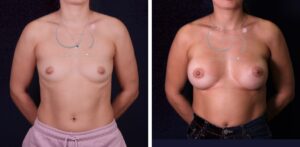 Breast augmentation with 250cc round implants, case operated by Dr. Gustavo Sordo in Madrid
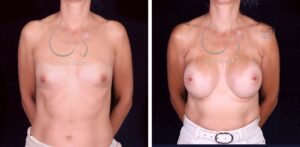 Breast augmentation with 335cc round implants, case operated by Dr. Gustavo Sordo in Madrid
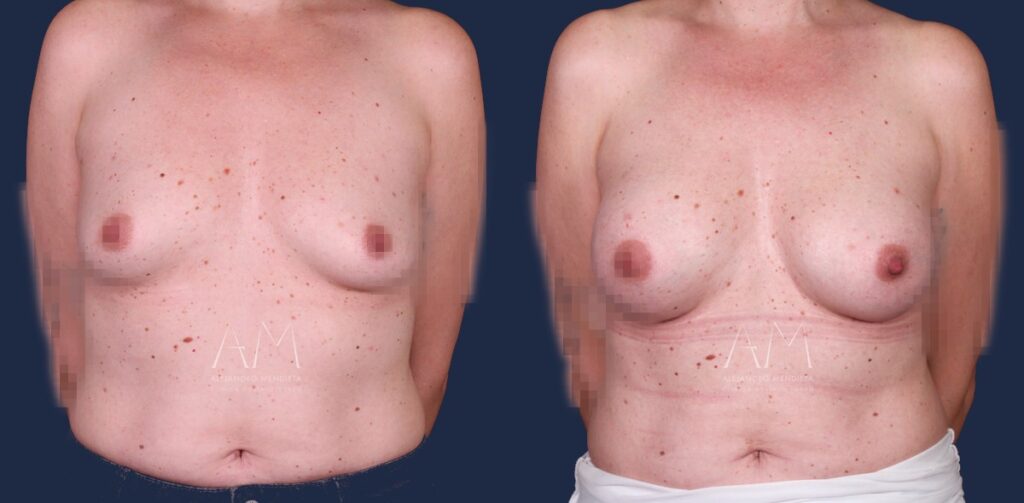 PRESERVE breast augmentation with 275cc implants and a natural result
See all before and after cases
Before choosing a volume, you can see yourself: during the consultation, we create a 3D simulation of your own body, and here we explain how closely it resembles the actual result. What does the simulation look like?
Looking for the fine print? What happens if a revision is needed, what gets reviewed more often, and where to read opinions we don't control: we'll tell you here.
Who operates
The clinic employs two plastic surgeons: Dr. Gustavo Sordo and Dr. Alejandro Mendieta. Both see patients and perform surgeries here.
Dr. Gustavo Sordo is a specialist in Plastic, Aesthetic and Reconstructive Surgery, registered number 282858125. Dr. Alejandro Mendieta is a specialist in Plastic, Aesthetic and Reconstructive Surgery from the Ramón y Cajal University Hospital, registered number 282880327.
Dr. Sordo's Curriculum Vitae · Dr. Mendieta's Curriculum Vitae
Dr. Gustavo Sordo and Dr. Alejandro Mendieta in the clinic's consultation room.