Post-operative period following ultrasonic rhinoplasty: day by day
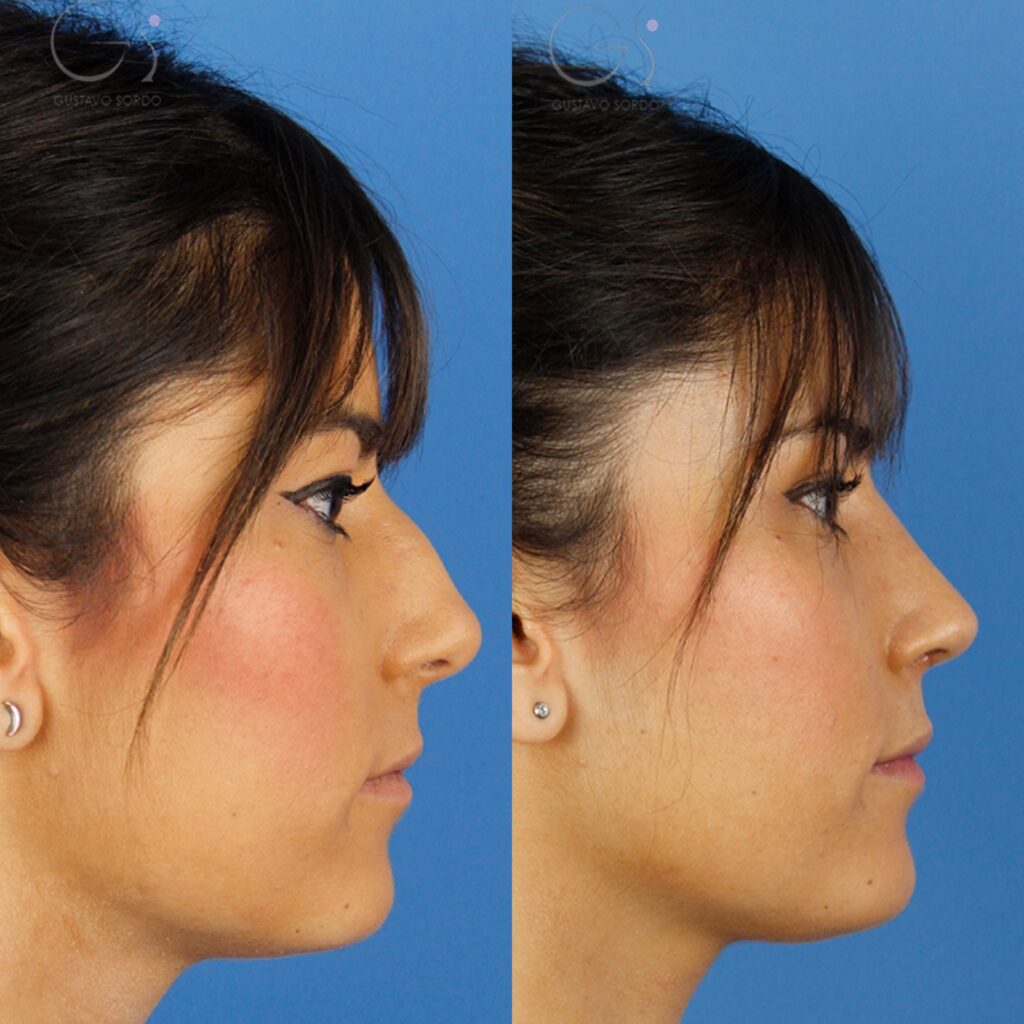
Updated on • Reviewed by Dr. Gustavo Sordo, plastic surgeon
What is ultrasonic rhinoplasty (in two sentences)
Ultrasonic rhinoplasty isn't a technique; it's the technology—a piezoelectric scalpel and rhinomotor—that I use to cut the bone within any rhinoplasty procedure. If you want to understand how it works, what the scientific evidence says, and what questions to ask your surgeon, you'll find it explained in detail on the ultrasonic rhinoplasty page in Madrid.
Once the ultrasonic rhinoplasty , or nose surgery, is complete, the postoperative and recovery period begins. How long does this period last? What is the postoperative period like after ultrasonic rhinoplasty? What are the recommendations for optimal recovery? We answer all your questions.
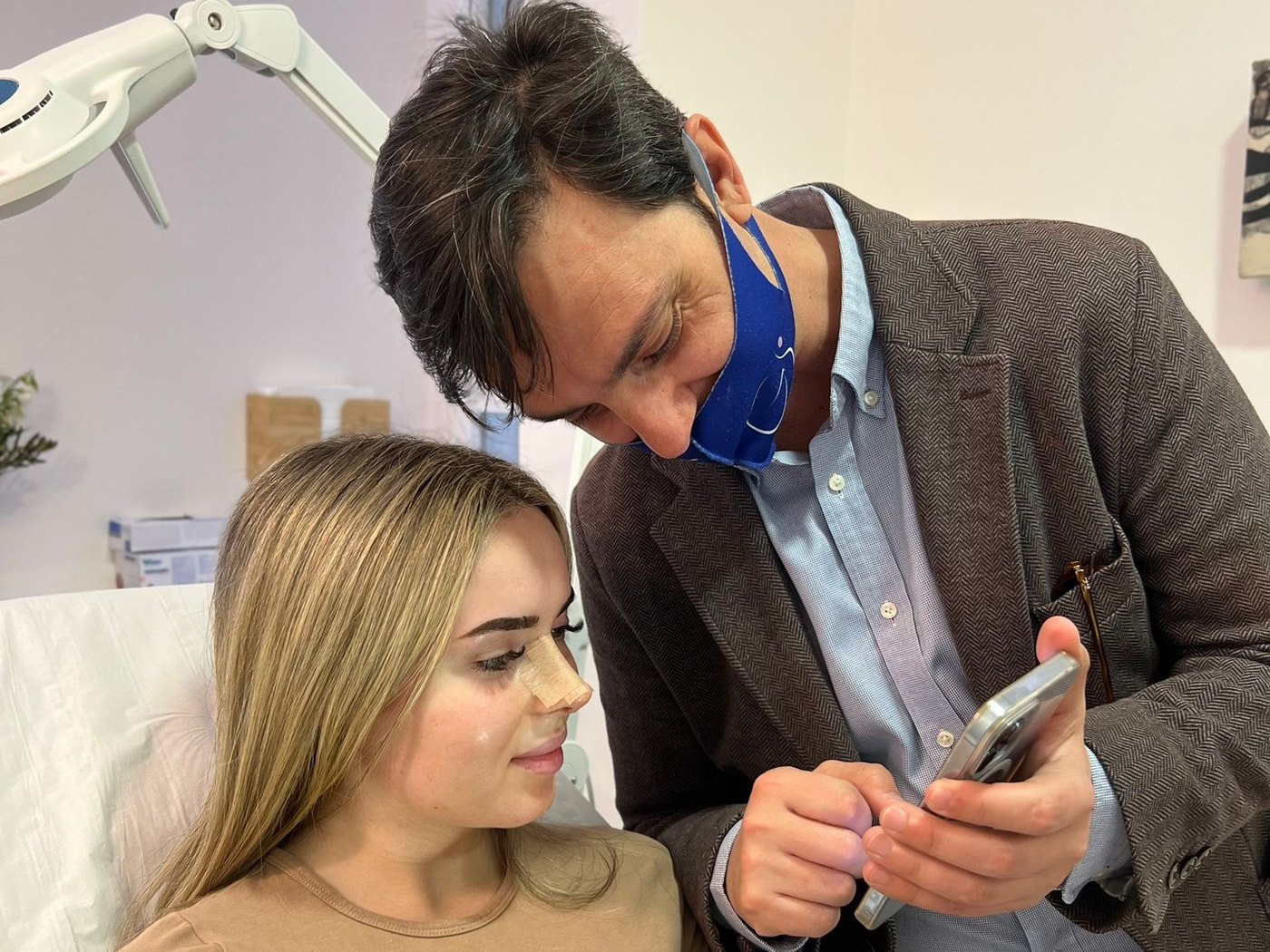
How long does the postoperative period of ultrasonic rhinoplasty last?

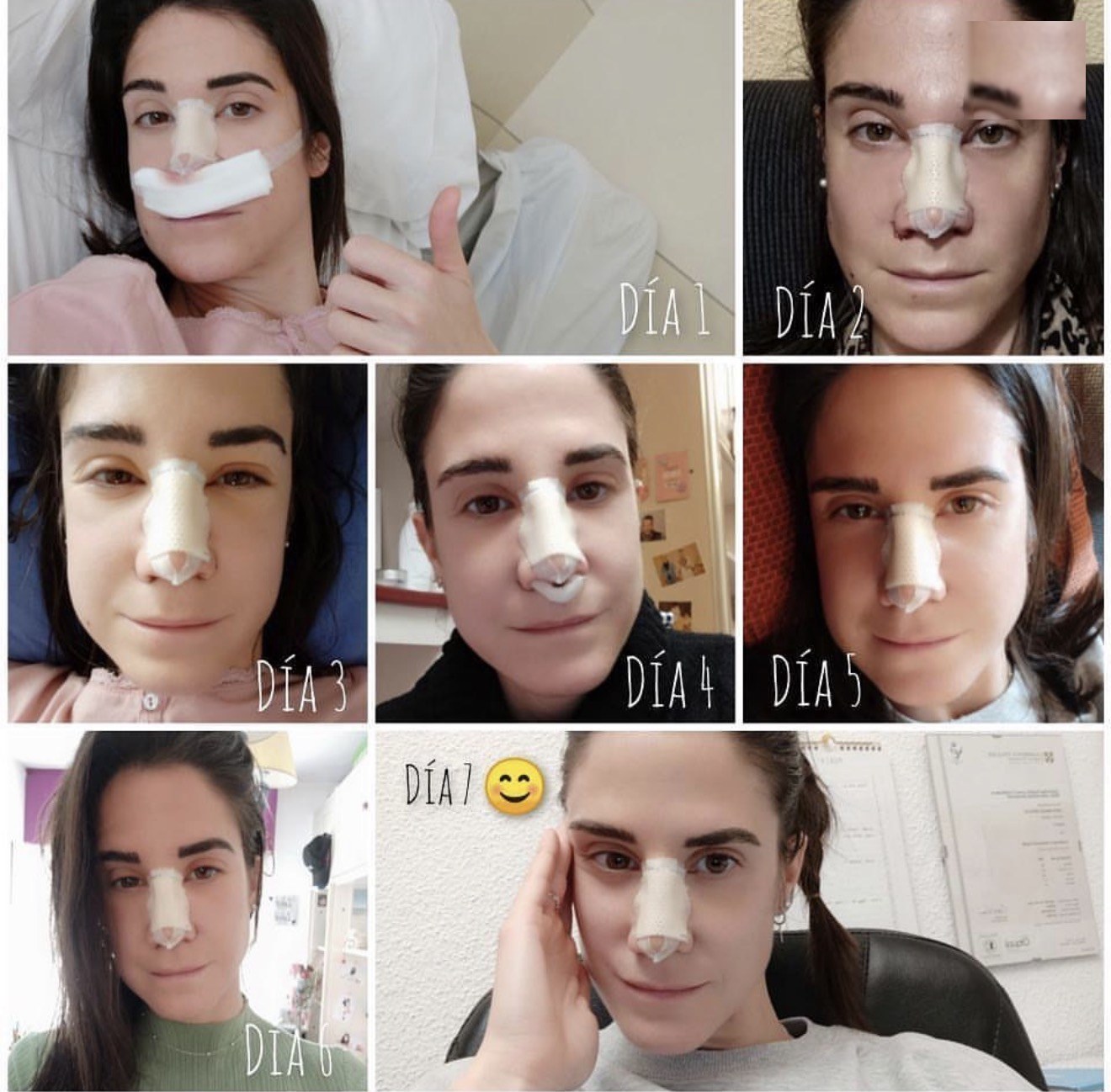
The day the splint is removed: this is what the nose looks like seven days later. No filters.
We can say that the postoperative period for ultrasonic rhinoplasty lasts around two weeks. This period includes the time you leave the operating room until the day we permanently remove the splint, around the second week.
However, the entire recovery process can take up to a year. At that time we will get the final result of rhinoplastyThis doesn't mean that people appreciate the small changes that occur on your nose.
Recommendations for the postoperative period of ultrasonic rhinoplasty
It is essential to follow the Recommendations from your plastic surgeon in the postoperative period of any plastic surgery (Rhinoplasty, breast augmentation, blepharoplasty, etc.). If you want a faster rhinoplasty recovery with better results, follow all of your surgeon's instructions.
Not all patients experience the symptoms described below.
Furthermore, the intensity of these symptoms also varies from one patient to another.
There are patients who do not experience any swelling or bruising after rhinoplasty.
What is the postoperative period like after ultrasonic rhinoplasty surgery?
Leaving the operating room
Once you leave the operating room, you will need to rest for the hours following your nose surgery, sleep with your head elevated, and apply ice. You will leave the operating room with a laminated metal splint placed on the bridge of your nose, which applies the precise pressure needed, and Doyle retainers inside your nose that allow you to breathe normally from the very beginning. You will also have small drainage tubes that remove any blood that may accumulate, as this buildup, if not removed promptly, could compromise the outcome of the rhinoplasty. Although this surgery does not require hospitalization, all our rhinoplasty patients stay overnight at Hospital Moncloa. This way, they will be under the supervision of our medical team. Hospitalization is included in the price of the rhinoplasty.
First day postoperatively
The day after your nose surgery, Dr. Sordo himself will come to the hospital to remove the drains and discharge you. These drains are thin, barely visible tubes. They are nothing like the uncomfortable nasal packing that was used in the past for this surgery. Once home, you should apply ice, keep the head of your bed elevated, and take the pain medication prescribed by your doctor to alleviate any minor discomfort. During the first week, you will clean your nose with Rhinodouche and take the prescribed antibiotic; the Doyle area will also be cleaned with a little hydrogen peroxide.
Second day of post-op
From the second day onward, the swelling gradually begins to subside, and the discomfort tends to disappear. As mentioned previously, these symptoms vary from patient to patient. Some patients experience hardly any swelling at all. To prevent possible nasal congestion, in addition to the Rhinodouche rinses you're already using, a mild corticosteroid, such as Darcotin, may be helpful. Your plastic surgeon will always assess the personalized medication that best suits your health condition.
Seventh day postoperatively
This is undoubtedly one of the crucial days for our rhinoplasty patients. During your follow-up appointment with the plastic surgeon, the Doyle retainers, the three or four sutures, and the first metal splint are removed. We replace the splint with a second, identical one—the same laminated splint, applying the same pressure to the same points—but without the Doyle retainers inside your nose. At this point, you will appreciate the substantial change your nose has undergone, even though it may still be slightly swollen. After the second week, we will also remove this second splint. From then on, you will only need to wear a small amount of tape (taping) for the remainder of the first month, along with nostril retainers. Following this, we will begin your follow-up appointments at one month, three months, six months, and one year. Additionally, if you experience any unusual discomfort, you can visit our clinic.
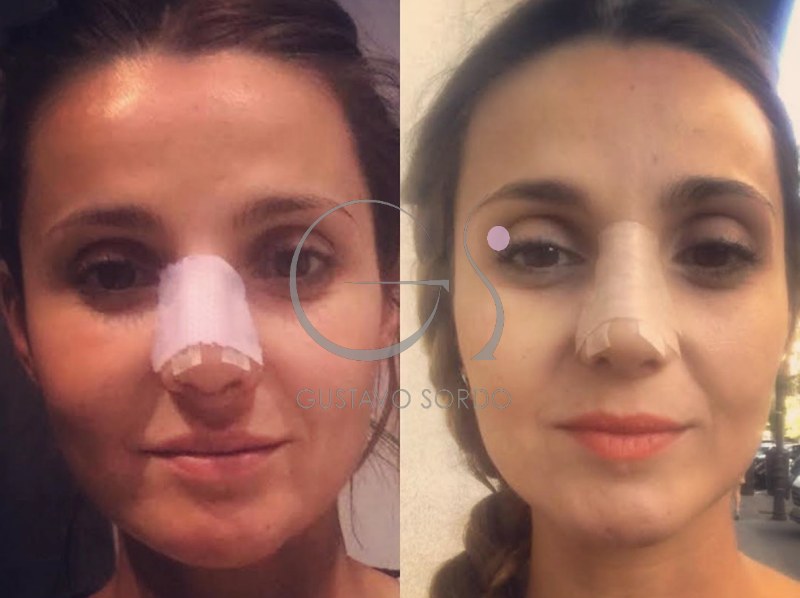
We recommend you take a look at all our rhinoplasty before and after cases.
Common symptoms in the postoperative period of ultrasonic rhinoplasty
Ultrasonic rhinoplasty is characterized by a reduction in postoperative time and symptoms associated with traditional rhinoplasty. The symptoms we list may not occur in all patients and their intensity also varies from one patient to another. These are the most common symptoms:
Bruises
Although bruising is very unlikely with ultrasonic rhinoplasty, the appearance of swelling or bruising also depends on the individual patient. The skin is primarily treated after the operation: with isotretinoin for fat grafts, and in secondary rhinoplasties with a massage and nanofat injection protocol. If bruising does appear, it will have almost completely disappeared within 6 or 7 days.
Swelling
With the ultrasound technique, the swelling will also be less. From the second day after surgery, the swelling will begin to subside. As with bruises, there are patients who do not experience any swelling after the operation.
Nasal congestion
Nasal congestion is one of the symptoms that most concerns rhinoplasty patients. It can be more severe during the first week, but once the splint is removed 6 or 7 days after surgery, and by following the recommendations for preventing a stuffy nose after rhinoplasty , you will be able to relieve it satisfactorily.
Numbness of the tip of the nose
You may notice slight numbness in the tip of your nose, upper teeth, and even the roof of your mouth. This is because rhinoplasty causes a temporary interruption of the nerves in that area. Normally, you will gradually regain sensitivity in the weeks following your nose job.
Ultrasonic Rhinoplasty Recovery Care
- Now that you know all the symptoms that can appear after rhinoplasty, we want you to know the care and recommendations that will help you during your rhinoplasty recovery.
- Rest is essential for recovery from any surgery. In the case of nose surgery, when you rest you should do so with your head elevated relative to the rest of your body and avoid putting pressure on your nose.
- Stay hydrated and use a humidifier to moisten the air.
- Apply cold locally to the cheekbones during the first two or three days to reduce inflammation.
- Do not wear glasses after rhinoplasty for the first 4 weeks. Those who need them should wear contact lenses or glasses without a nose pad.
- Avoid any contact sports or strenuous activities.
Other care for recovery from ultrasonic rhinoplasty
- Avoid lifting heavy objects for the first two weeks.
- Wear clothing that doesn't have to be pulled over your head, such as shirts with buttons or zippers.
- Avoid chewing hard foods for the first two weeks.
- To clean your nose, perform nasal washes with sterile sea water.
- For dental cleaning use a soft toothbrush
How does the nose evolve after ultrasonic rhinoplasty?
Nose surgery is one of the surgeries that takes the longest to show the final result. After ultrasonic rhinoplasty, the nose goes through the following stages:
- First day postoperatively: the nose experiences maximum inflammation.
- Sixth-seventh day postoperatively: the moment when the splint and the 3 or 4 fine stitches are removed. The shape of the new nose can now be seen, although it is still swollen.
- One month after the operation: The nose will have lost around 50% of the swelling; there is still room for improvement, but the result we are going to achieve is already clearly visible.
- One year after the operation: The nose shows the final result of the rhinoplasty performed, except in very oily skin that needs isotretinoin (Dercutan) to finish maturing, in which the final result may take a little longer.
When you leave the clinic where you had your rhinoplasty, you will like to come home and have a number of things at hand. Providing yourself with supplies before the procedure makes recovery much easier. Let's take a look:
Recommendations for the postoperative period
- MedicationIt's more convenient to have it pre-stocked and avoid going to the pharmacy. It generally consists of paracetamol, Nolotil, and an antibiotic. We'll give you the prescription in advance so you can have your medication at home. We'll also add a probiotic to protect your flora from the antibiotic.
- Lip balm (cocoa): Important: Keep in mind that congestion during the first few days will cause you to breathe through your mouth. It's important to avoid dryness.
- Too much to drink: Mineral water, isotonic drinks, juices, etc. It's very important to stay well hydrated to prevent dryness from recurring.
- Neck pillow: The "U" shaped ones, for travel. It's great for keeping your head in position when you're sleeping or resting.
- Local ice or cold: To apply to your cheekbones to reduce inflammation, a pack of frozen peas can be helpful.
- Books / magazines / movies / series: The first week in the cast can be a bit boring since you won't feel like leaving the house much. Having plenty of entertainment on hand is a good idea.
- Humidifier: again to avoid dryness, especially in winter and at night.
- Keep everything organized at shoulder or hip height so you don't have to bend over or stoop excessively.
- Arnica: A good arnica gel, which you'll start using 10 days before surgery and continue using afterward. It's anti-bruising, and if it also contains sunscreen, moisturizer, and vitamin K, even better. The one from Martiderm ("Arnika") is excellent.
- Disposable wet wipes: Keep in mind that you won't be able to wash your face while wearing the cast. They're very useful.
I hope it helps you!
Happy recovery!
For any questions about the post-operative period and recovery from ultrasonic rhinoplasty, contact Dr. Sordo, a plastic surgeon in Madrid , specializing in rhinoplasty techniques and ultrasonic rhinoplasty in Madrid for over 20 years.
Continue reading
Dr. Gustavo Sordo
Specialist in Plastic, Aesthetic and Reconstructive Surgery. Member No. 282858125.
Content clinically reviewed by Dr. Gustavo Sordo. Last review: September 28, 2026.