Difference between plastic and cosmetic surgeon

Updated on • Reviewed by Dr. Gustavo Sordo, plastic surgeon
It's one of the first questions we're asked in consultations: what's the difference between a plastic surgeon and a cosmetic surgeon? The short answer is that "cosmetic surgeon" is not a medical specialty. In Spain, there is only one specialty for performing cosmetic surgery: Plastic, Aesthetic, and Reconstructive Surgery , which is obtained through the MIR residency program. Everything else is just a name.
If you want to see in practice what this article says, here is the qualification, registration number and career of a surgeon specializing in rhinoplasty.
Since 2024, this is no longer just a matter of qualifications: it's a regulation. The so-called "Sara Law" establishes, for the first time, who can perform cosmetic surgery in Spain, and in 2026 it was supplemented with a new obligation for clinics. In this article, we'll tell you what the law says, what it means for you as a patient, and, above all, how to verify the qualifications of the person who will be operating on you in just five minutes.
What is a plastic surgeon
A plastic surgeon is a physician who, after six years of medical school, has passed the MIR exam and completed five years of hospital residency specializing in Plastic, Aesthetic, and Reconstructive Surgery. Upon completion, they receive the official specialist title, which is registered with their Medical Association.
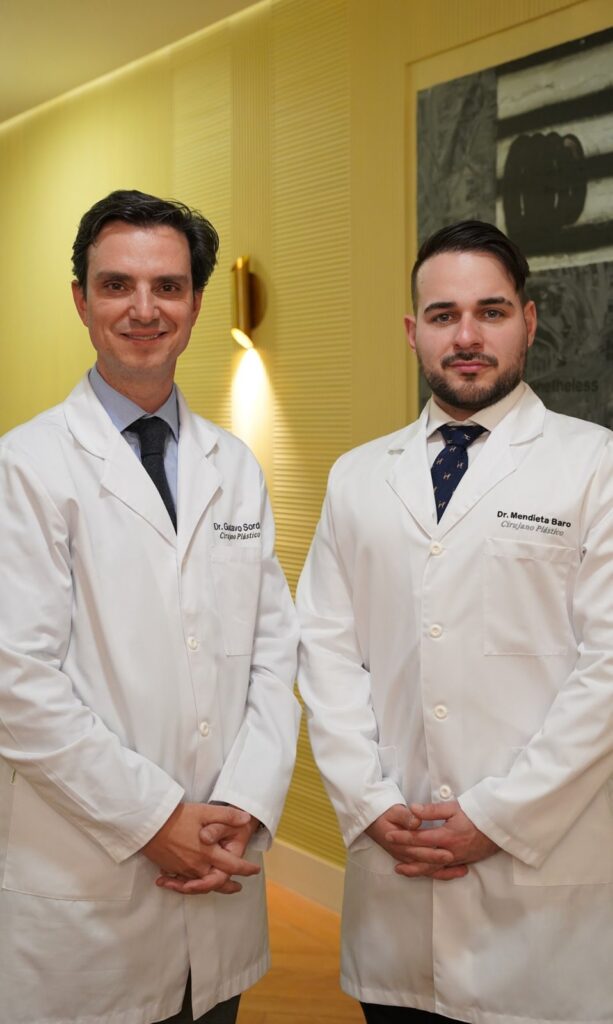
The full name of the specialty matters. The "reconstructive" part is the foundation: during residency, plastic surgeons reconstruct breasts after cancer, treat burns, repair complex wounds, and perform microsurgery. Cosmetic surgery is learned on top of this foundation, within the same official program, which is why it's the only specialty whose training program covers all aspects of cosmetic surgery, from the face to the body . At our clinic, both surgeons, Dr. Gustavo Sordo (registration number 282858125) and Dr. Alejandro Mendieta (registration number 282880327), are specialists in Plastic, Cosmetic, and Reconstructive Surgery. You can verify this yourself with these two numbers, as explained below.
So what exactly is a "cosmetic surgeon"?
It's nothing, in the official sense: there's no specialty or title called that . Nor are "cosmetic surgeon" or "facial plastic surgeon" considered specialties. They're labels that each person chooses to use on their website or plaque. Behind the same label, there might be a specialist with actual expertise in a specific area of the body, or a doctor with no surgical specialty at all. From the outside, it's indistinguishable. That's why the name on the website is meaningless: what matters is the specialty registered with the Medical Association.
Something similar happens with "cosmetic doctors," although in a different field. Cosmetic medicine isn't a residency specialty either, but it is a recognized and regulated healthcare activity dedicated to non-surgical treatments: botulinum toxin, fillers, lasers, and peels. A cosmetic doctor can perform these procedures well. What they cannot do—and this is the key difference that protects the patient—is perform surgery.
The "Sara Law": what it is and what changed
Sara Gómez was 39 years old. She died from complications following liposuction she underwent in December 2021 in Cartagena, performed by a doctor who was not a specialist in Plastic, Aesthetic, and Reconstructive Surgery. Her family turned the case into a public complaint, which was taken up by Congress in 2022, and the Ministry of Health's response bears her name, although it actually consists of two separate regulations.
2024: Who can have cosmetic surgery
Order SND/1002/2024, of September 18 , published in the Official State Gazette (BOE) on September 21, 2024, and in force from the following day, redefines the healthcare unit for cosmetic surgery that any operating center must have authorized. The new definition states that, within this unit, "a physician specializing in plastic, aesthetic, and reconstructive surgery, or another surgical or medical-surgical specialty, within the scope and competencies indicated in the official program of their specialty, is responsible for performing surgical treatments for the purpose of aesthetic improvement of the body, face, or hair." The preamble itself explains the reason: "to prevent unauthorized practice and ensure that all healthcare activities are carried out by professionals with officially recognized qualifications."
Translated: To perform cosmetic surgery, one must be a specialist , and the specialty must correspond to the procedure. A specialist in Plastic, Aesthetic, and Reconstructive Surgery is qualified for all cosmetic surgery; another surgical specialist is only qualified within the scope of their official specialty's curriculum. A doctor without a surgical specialty, or with a specialty unrelated to the area they will be operating on, is not qualified. This is precisely what was lacking in Sara's case.
2026: the obligation of the centers
The second piece of legislation is Royal Decree 239/2026, of March 25 , approved by the Council of Ministers and published in the Official State Gazette (BOE) on March 26, 2026. It enters into force on July 1, 2026, and requires all healthcare facilities to ensure that care is provided by professionals with the official qualifications and appropriate competencies, and to maintain an up-to-date file for each professional with their qualifications. Facilities have six months to update this documentation, and the autonomous communities have one year to adapt their records. Its preamble refers to "serious adverse events linked to healthcare practices performed by individuals lacking the official qualifications or appropriate professional competencies."
For you, this means the clinic must be able to show you the qualifications of the surgeon performing your operation , and the regional government can request them. It no longer depends solely on the professional's good faith.
How to check your surgeon's qualifications in five minutes
It's the most awkward question to ask during a first consultation, and in our opinion, the most important: even more so than price, technique, or before-and-after photos. There's no need to ask it out loud. This is enough:
- Ask for the professional registration number. Every doctor has one, and it's usually on their website, in their email signature, or on their office sign. In Madrid, it starts with 28.
- Look it up in the Medical Association's registry. The Madrid Medical Association's registry is public and can be accessed online using the registration number or name; the General Council of Medical Associations has a national search engine. The official specialty listed on the profile indicates the doctor's recognized specialty. If it says "Plastic, Aesthetic, and Reconstructive Surgery," they are a plastic surgeon. If no specialty is listed, or if it lists a different one, you know who you're dealing with, regardless of the name of their website.
- Check if he belongs to a scientific society that requires the degree. The SECPRE (Spanish Society of Plastic, Reconstructive and Aesthetic Surgery) and the AECEP (Spanish Association of Aesthetic Plastic Surgery) only admit specialists. Their directories are public.
- Ask where you will have the surgery and who will administer the anesthesia. Cosmetic surgery should be performed in an authorized center with an operating room and a specialist anesthesiologist. An operation performed under general anesthesia or sedation in a clinic without an authorized operating room is a red flag in itself.
What the degree guarantees and what it doesn't
Let's be clear. A specialist title guarantees that the surgeon has spent five years training in a hospital to do exactly that, that they know how to recognize and treat complications, and that they are accountable to their professional association. It doesn't guarantee a specific result : that depends on the indication, the technique, your anatomy, and the surgeon's experience with the particular procedure you're having. A plastic surgeon might perform a lot of rhinoplasty and very little breast augmentation, or vice versa.
That's why the surgeon's qualifications are the first filter, not the last. Once you've passed that, the next step is to ask how often they perform that procedure, look at their before-and-after photos, and, if you have any doubts, get a second opinion. No reputable surgeon bothers about that.
Botton line
"Cosmetic surgeon" is not a specialty. The only specialty trained for all cosmetic surgery is Plastic, Aesthetic, and Reconstructive Surgery, and since 2024 the law requires that anyone performing surgery be a specialist in their field. Verifying this takes five minutes with a professional registration number, and it's the first thing you should do before discussing prices.
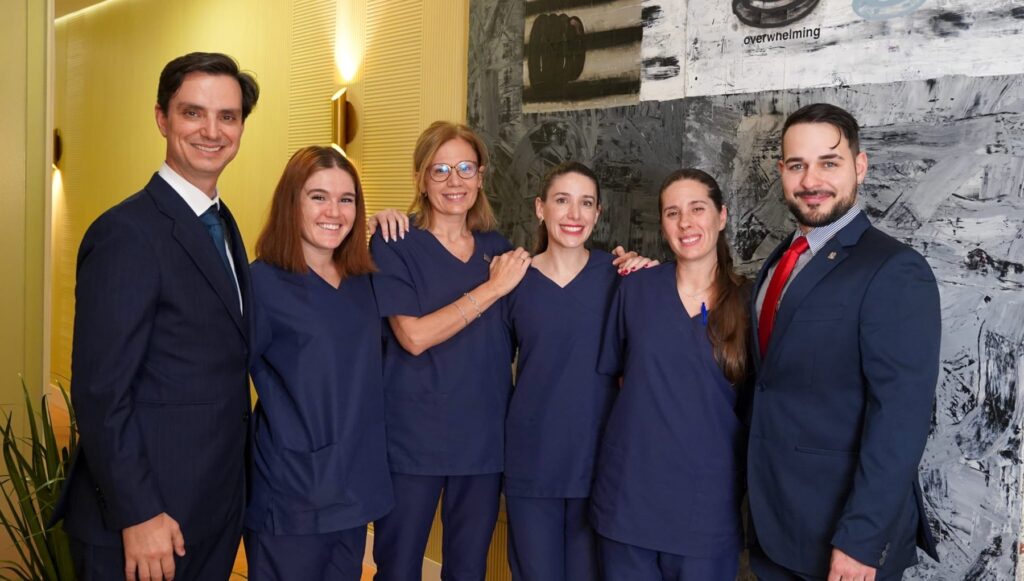
At our cosmetic surgery clinic in Madrid, we perform the most sought-after facial and body plastic surgery procedures, including rhinoplasty , ultrasonic rhinoplasty , mentoplasty , and breast augmentation . If you come for a consultation, the first thing we show you is the qualifications of the surgeon performing your procedure.
Sources. Order SND/1002/2024, of September 18, amending Annex II of Royal Decree 1277/2003 ( BOE-A-2024-18934 ). Royal Decree 239/2026, of March 25, amending Royal Decree 1277/2003 ( BOE-A-2026-6975 ). Ministry of Health, press releases of September 21, 2024 and March 24, 2026.
Continue reading
Do you want to know if this can be done in your case?
The first consultation is with Dr. Sordo, either at the Chamberí clinic or via video consultation. You'll leave knowing if you're a candidate, which technique is right for you, and how much it costs.
Dr. Gustavo Sordo · Member No. 282858125 · Plastic, Aesthetic and Reconstructive Surgery · Madrid