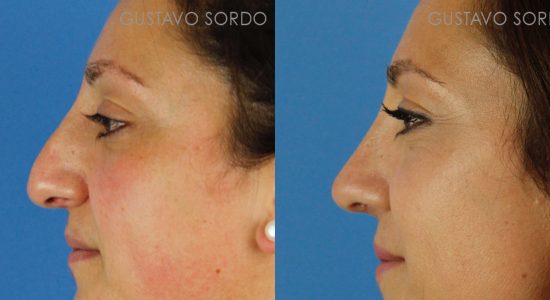
The nose is one of the facial features that most impacts the aesthetic perception of the face and, in many cases, is a source of dissatisfaction for many people. There is often a misconception that only certain types of noses are attractive, when in reality this perception is highly subjective and varies according to culture, region, and even fashion.
With my 20+ years of experience as a surgeon, I have seen numerous types of noses, and in this article we will explore them in depth, addressing their characteristics and the most notable differences between each of them.
While every person has a unique nose, they can be grouped into different categories based on the similarities they share. Here are the most common classifications:
Male nose
In consultations with male noses, I focus primarily on maintaining the size and proportions inherent to the feature: I don't aim to feminize it, but rather to balance it. I always strive for a nasolabial angle of around 100°, which provides a natural and masculine result without creating an excessively rotated tip—although this varies depending on each patient's goals; it's not an absolute rule. You can see real before-and-after examples of rhinoplasty in men.
The male nose generally has a more pronounced and defined structure than the female nose. It is usually wider at the base, with a more prominent and straight nasal bridge. The tip of a male nose tends to be less refined and wider, contributing to a robust and strong appearance. This characteristic can reflect greater masculinity, although in many cases, cosmetic procedures are used to soften these lines and achieve a more harmonious and balanced profile. Here you can see: Male Rhinoplasty Before and After.
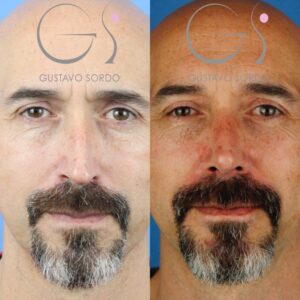
You may also be interested in: male rhinoplasty.
greek nose
It's a type of nose with a very high radix (the root, between the eyes), and that's the key technique: it must be lowered without disrupting the balance of the rest of the bridge. For this, I use the rhinomotor and the ultrasonic scalpel, which allow for much more controlled drilling of the radix than traditional instruments. In many cases, I also use "low-strip" preservation techniques, in which a specific osteotomy of the radix lowers it directly, resolving the problem without having to reconstruct the entire bridge. More information about this technology in ultrasonic rhinoplasty.
The Greek nose , also known as the Greco-Roman nose, is characterized by its high profile. Indeed, its root is situated very high, almost in line with the forehead. It is so named because it frequently appears in classical sculptures and works of art, representing a symbol of perfection and harmonious beauty in antiquity. In these cases, it is essential for the surgeon to reduce the root of the nose and lower its starting point to harmonize it with the rest of the face. For this, the use of a rhinomotor with a diamond bur is indispensable.
Roman nose
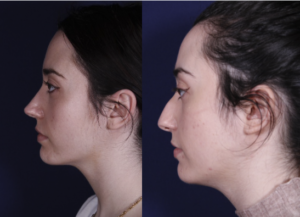
Here, the dominant feature is a prominent dorsal hump, and this is a case where preservation techniques yield excellent results: they allow for the reduction and smoothing of the hump without the need to open the bony roof of the nose with traditional osteotomies, resulting in less swelling and a more manageable recovery. You can see the complete approach in preservation rhinoplasty.
The Roman nose is characterized by a prominent, slightly curved nasal bridge that projects forward, giving it a pronounced hump. This structure lends it a powerful and dominant appearance, a trait frequently associated with influential historical figures such as military leaders and emperors. It is a type of nose that tends to stand out for its strong presence, and in some cases, people choose to soften its shape through cosmetic surgery to achieve a more subtle profile.
Boxer nose
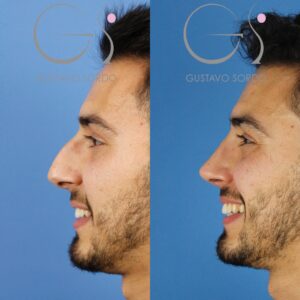
There is usually an underlying traumatic component: deviation of the bone and septum, sometimes with the dorsum flattened from previous blows. Before considering any cosmetic procedure, I always assess respiratory function, because in these cases it is often compromised and must be corrected along with the shape. See rhinoplasty for a deviated septum.
A boxer's nose is distinguished by its flattened or deviated appearance, often resulting from repeated blows or trauma sustained in contact sports. In these cases, the bridge of the nose may be sunken or displaced, and a deviated septum is common, affecting both breathing function and aesthetics. Although this nose shape is frequent among athletes, it can be corrected surgically to restore its structure and function. A rib graft is sometimes necessary. Saddle nose before and after rhinoplasty.
Turned up nose
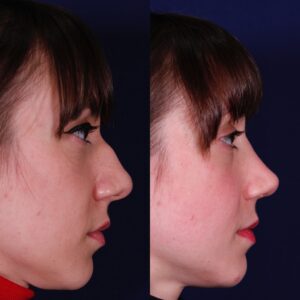
When the nose is naturally upturned, I work carefully, making sure not to rotate the tip more than necessary, so the result doesn't look artificial. When it's the result of a poorly planned previous rhinoplasty, it falls under what we call secondary rhinoplasty.
The upturned nose , also known as a "retroussé" nose, has a slightly raised tip, giving it a youthful and delicate appearance. It is generally shorter and projects a soft and harmonious image. This type of nose is one of the most requested results in rhinoplasty procedures, especially among those seeking a subtle yet noticeable change in their facial profile. Its popularity stems from the fact that, visually, it tends to be associated with youth and attractiveness.
Hooked nose
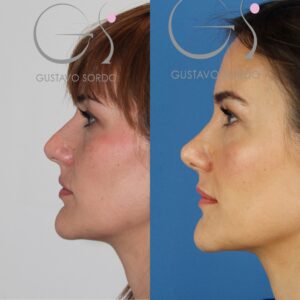
In addition to reducing the bridge, the essential aspect of a hooked nose is controlling the tip: it often droops, and to correct this permanently, I use a septal extension graft, which provides the necessary support to lift and fix the tip in the correct position. Real cases of rhinoplasty for hooked noses.
The aquiline nose is easily recognizable by its curved shape and prominent bridge. Historically, this type of nose was seen as a sign of authority and power, and while many people perceive it as a distinctive feature, others opt for surgery to soften the profile. This nose type has been portrayed on royalty and influential leaders, solidifying its association with strength of character.
Straight nose
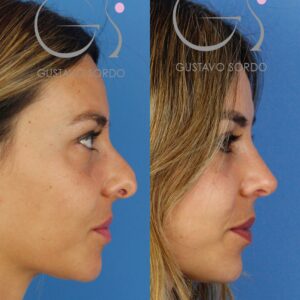
The straight nose is one of the most sought-after shapes in the field of facial aesthetics. Its completely aligned bridge, without curves or irregularities, is highly valued for its ability to adapt to almost any face shape, creating visual balance and facial harmony. Many people, especially in the entertainment world, seek this type of nose to highlight their other facial features without clashing.
Nose with thick skin
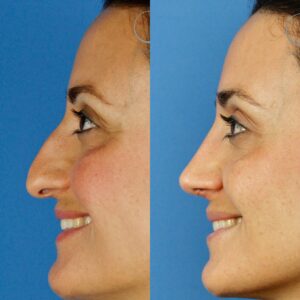
Thick skin makes it harder to conceal the tip definition work, so in addition to cartilage reshaping, I use controlled subdermal fat removal and a rhinomotor for very precise bone polishing, which is what allows the change to be noticeable despite the skin thickness. See rhinoplasty on thick skin.
This type of nose is characterized by thicker, oilier skin, particularly in the area of the nasal tip. This can give a rounder, less defined appearance in profile, prompting some people to seek cosmetic procedures to refine its shape. Thick skin can also hinder healing in rhinoplasty cases, so surgeons must take a careful, personalized approach in these cases.
Long nose
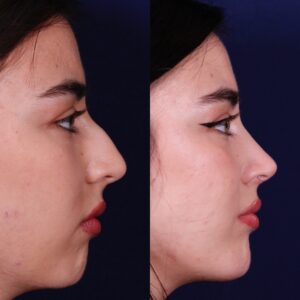
The work here focuses on the rotation and projection of the tip, usually through a controlled resection of the caudal septum, taking care not to shorten it excessively because that compromises function. Examples in rhinoplasty for long noses.
A long nose stands out noticeably on the face, extending beyond typical proportions. This type of nose may include a high bridge or a prominent tip, leading some people to seek rhinoplasty to balance its length with the rest of their facial features. Often, correcting a long nose can transform facial balance, creating a more harmonious appearance. Rhinoplasty for a Long Nose: Before and After.
Saddle nose
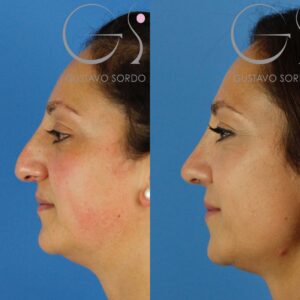
This nose needs reconstructive support, not just filling: I'm using dorsal rib cartilage grafts with high radix projection, following our hyperbaric chamber protocol to improve graft integration and viability—the same protocol we use for secondary and ethnic rhinoplasty. See saddle rhinoplasty.
This type of nose features a depression on the bridge, giving it a concave shape. The cause of this deformity may be related to previous nasal trauma, infections, or congenital conditions. People with this type of nose often opt for rhinoplasty to correct both form and function, restoring the profile and improving breathing capacity.
Snub nose
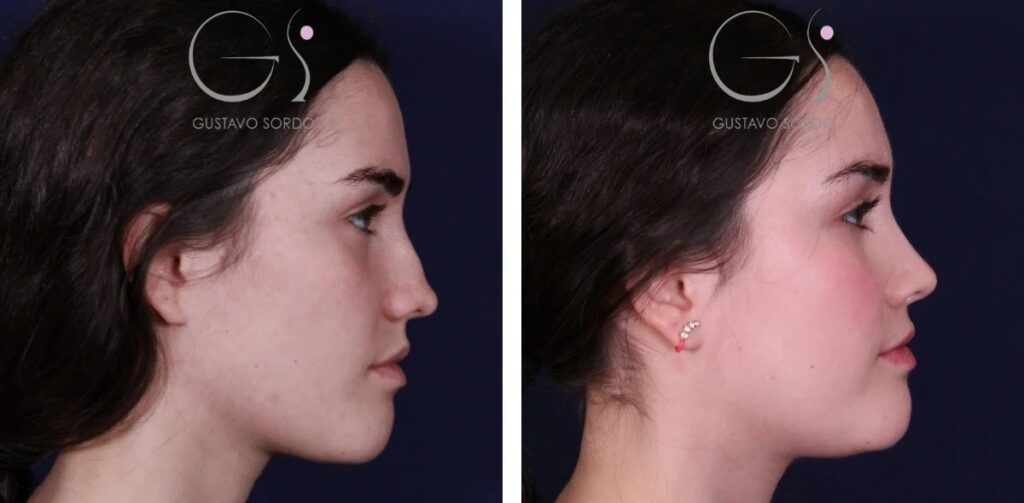
It is a low-profile nose that almost always requires augmentation rhinoplasty rather than reduction: costal cartilage graft to give projection and height to the dorsum, within our protocol with hyperbaric chamber.
The flat nose is characterized by a low nasal bridge and a flat structure. It is most common among people of African and Asian descent, although it can be found in any ethnicity. Its wide base and low frontal projection make some people seek rhinoplasty to achieve a more refined and structured appearance, although it is also important to consider that its beauty lies in the cultural uniqueness it represents.
Wide nose
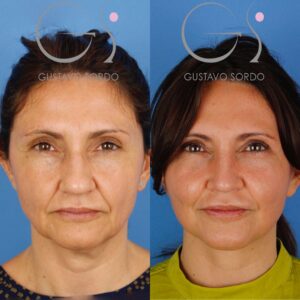
The first step is to differentiate the cause. When I opt for preservation, I use the dorsal split preservation technique described by Robotti: by not preserving the central segment, I can choose the final width of the dorsum and address the excess of upper lateral cartilages that often gives that wide appearance. When the problem is more at the tip, I work with the Armadillo Tip technique (Froilán Páez), which reshapes and narrows the dome complex in a very controlled manner. And there's a nuance worth explaining: some noses appear wide because they have lost profile height, not because they are actually too wide—in these cases, the treatment isn't about "narrowing," but rather increasing the projection of the dorsum with high radix spreader grafts, which visually rebalances the width without hardly touching the sides. See rhinoplasty for a wide nose.
A broad nose has a wider than normal base and a visible separation between the nostrils. The width of the nose can vary depending on the bone structure and cartilage. In many cultures, a wide nose is considered a sign of beauty and strength, although some people choose to reduce the width through surgery to achieve a more slender appearance.
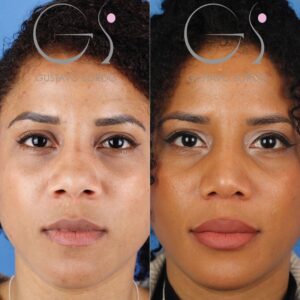
You might be interested in: Rhinoplasty Before and After Wide Nose
Round nose
The lack of definition at the tip is addressed with sutures of the domes and a conservative resection of the subcutaneous fat of the tip, always taking care not to leave a tip that is too sharp or artificial.
The round nose is characterized by a soft, rounded nasal tip. It is often associated with a youthful and delicate appearance, and its softness gives it a less angular appearance than other nose shapes. Those looking to further define their facial profile often turn to procedures that help refine the nasal tip, creating a more defined and less “soft” image.
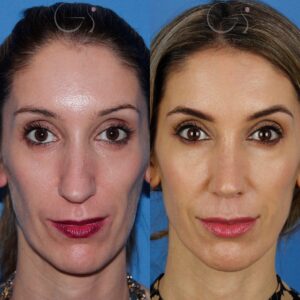
Button nose
It's a type of nose I frequently see that's been over-operated on in previous, careless rhinoplasties: the tip is too small and rotated. In primary procedures, I work with very conservative resections precisely to avoid that result.
The button nose is small and rounded, often associated with delicate facial features. Its compact appearance makes it look refined and youthful, and many people consider this type of nose to be one of the most attractive due to its ideal proportion with the rest of the face. Like the upturned nose, it is highly sought after in aesthetic procedures.
barbie nose
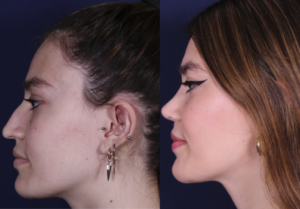
It's the most requested cosmetic procedure in my practice, and the one that requires the most care: an excessively narrow and rotated tip, disregarding the rest of the face, ages poorly and looks surgically altered over time. I prefer a result that harmonizes with the rest of the face rather than pursuing that extreme aesthetic. See the before and after photos of a Barbie nose.
The Barbie nose is a modern aesthetic trend that seeks to achieve a small and highly stylized nose. It is characterized by its elevated tip and a fine structure that gives a delicate and ultra-feminine profile. Many people seek this idealized appearance through rhinoplasty, inspired by the features of Barbie dolls, which project an image of aesthetic perfection.
Rhinoplasty: Barbie Nose Before and After.
Nose with bridge
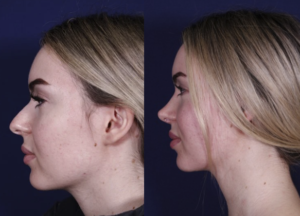
As with the Roman nose, here preservation techniques allow the bridge to be lowered without the need to open the bony roof, resulting in a smoother postoperative period.
A bridge nose is distinguished by a bony bump on the bridge, usually just above the middle of the nose. This trait can be hereditary or the result of an injury, and many people opt for rhinoplasty to soften the bump and create a straighter, more symmetrical profile.
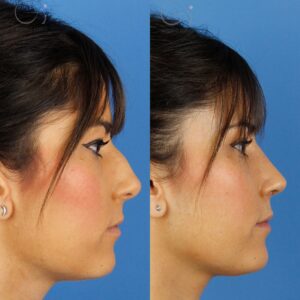
Nose with deviated septum
When a deviated septum compromises breathing, septoplasty is always linked to aesthetic considerations; there's no point in correcting the form without correcting the function. See septoplasty before and after.
A deviated septum means that the internal structure of the nose is misaligned, which not only affects the external appearance, but also the respiratory function. People with this problem often have difficulty breathing, and corrective surgery, known as septoplasty, is the ideal solution to improve both the functionality and aesthetics of the nose.
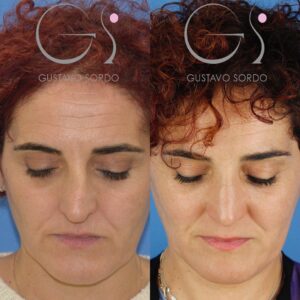
You might be interested in: Before and After Rhinoplasty for Deviated Septum
Bulbous nose
It improves significantly by removing excess tissue from the dome and lifting the tip with the Armadillo Tip technique (Froilán Páez), which provides definition without leaving the tip "pinched" or artificial. See rhinoplasty for bulbous noses.
This type of nose has a wide, rounded tip, which gives it a bulbous appearance. It is common in people with thick skin or with a very developed nasal cartilage. Often, people with this type of nose opt for rhinoplasty to reduce the volume and refine the nasal tip, thus improving their aesthetic profile.
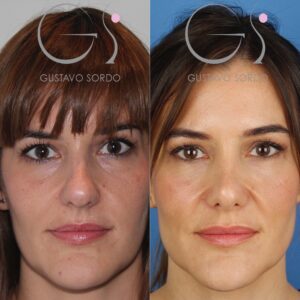
You might be interested in: Before and After Rhinoplasty for a Bulbous Nose
Drooping nose
As with a hooked nose, the stable solution involves a septal extension graft that provides real support to the tip, not just a tissue removal that will droop again over time. See rhinoplasty for a droopy nose.
A drooping nose is characterized by a downward-pointing nasal tip, which can make the face appear more serious, tired, or aged. This feature can be present from birth or develop over time due to the loss of support in the nasal cartilages and the natural aging of the tissues. In some cases, even a straight or harmonious nose can appear less aesthetically pleasing simply because it has a drooping tip. Rhinoplasty allows for the repositioning of the nasal tip and improves facial balance, resulting in a fresher, more youthful, and natural appearance.
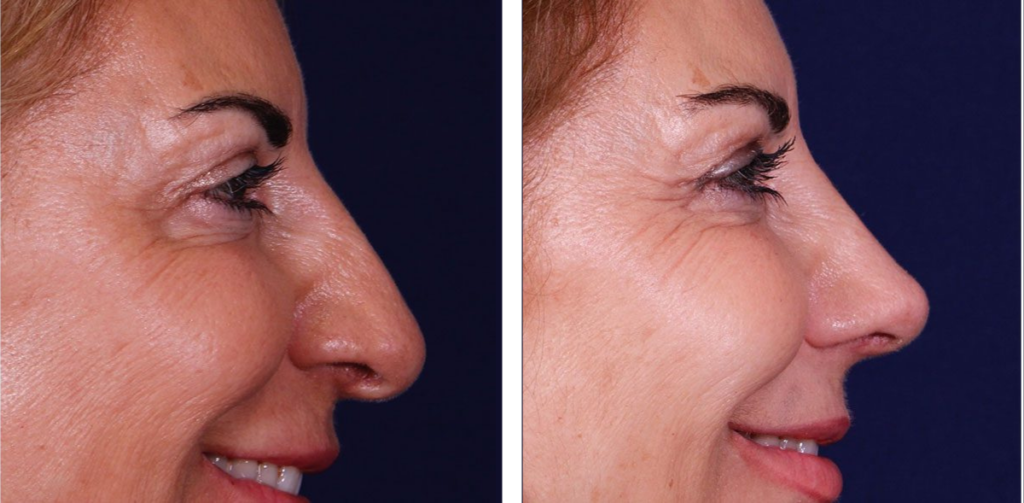
Crooked nose
It requires working on the bone (osteotomies) and the septum at the same time, and often camouflage grafts to compensate for small residual asymmetries that are not corrected just by straightening the structure.
A crooked nose is characterized by a visible deviation from the midline of the face. This alteration can affect only the external appearance or be associated with functional problems such as difficulty breathing. In many cases, the cause is a previous trauma, although it can also be due to developmental abnormalities in the nasal bones and cartilage. People with a crooked nose often perceive a facial asymmetry that affects the overall harmony of their features. Structural rhinoplasty can correct both the aesthetic deviation and the associated breathing problems.
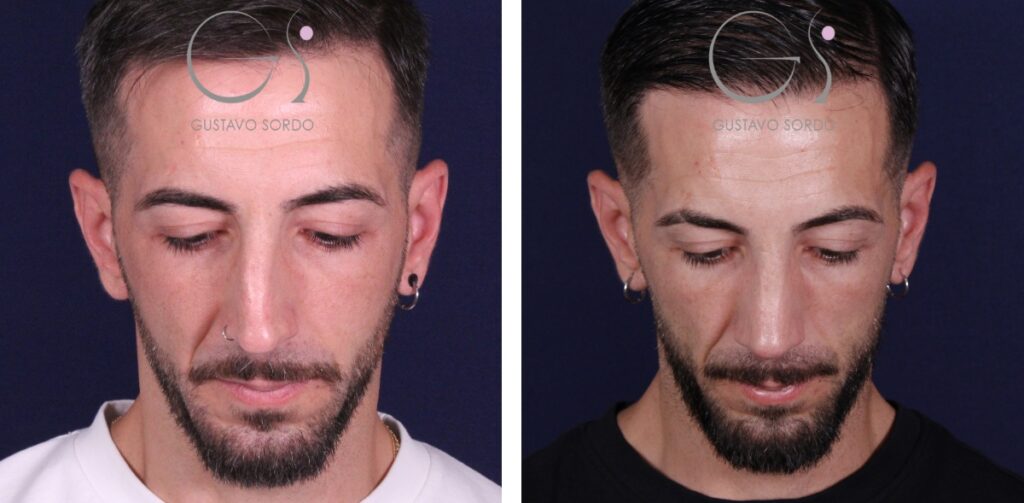
Traumatized noses
The first step is always to assess respiratory function, which is almost always impaired after trauma, before considering the aesthetic outcome. Reconstruction usually requires combined work on bone, septum, and sometimes grafts.
Nasal trauma can cause fractures, septal deviations, and loss of cartilage support. These cases require both functional and aesthetic reconstruction, and the timing of the procedure is crucial. Some injuries can be treated immediately, while others require waiting for the inflammation to resolve.

African nose
It's usually a low-profile nose that requires augmentation rhinoplasty: I combine high radix spreader grafts with Armadillo Tip work (Froilán Páez) and, in some cases, alloplastic material. The goal is never to "Europeanize" the feature but to harmonize it while maintaining the nose's ethnic character, and this type of case requires mastering several techniques simultaneously because there's no single solution. See ethnic rhinoplasty.
The African nose is typically characterized by a wider nasal base, larger nostrils, and a less prominent bridge. This is a completely normal anatomical variation that is part of the ethnic and genetic diversity of certain populations. When a patient wishes to modify aspects of this type of nose, the goal should not be to eliminate its characteristic features, but rather to maintain their facial identity by respecting its natural proportions. Modern ethnic rhinoplasty seeks precisely to improve facial harmony without losing the features that make each person unique.
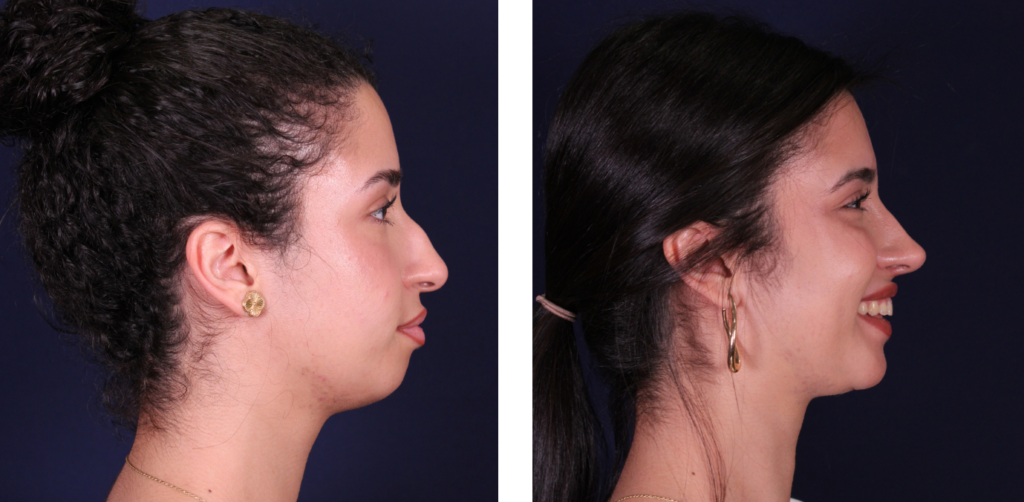
Noses with congenital malformations
These are the most individualized cases: each malformation has its own underlying anatomy and sometimes requires joint assessment with otolaryngology before considering surgery.
Conditions such as cleft lip and palate, bifid nose, or vascular malformations require multidisciplinary approaches and often multiple surgeries. The goal is to achieve both function and form, always prioritizing respiratory capacity.
In all of these special cases, the surgeon's experience, a thorough preoperative evaluation, and realistic expectations are key to the success of the procedure. Honest communication about limitations and potential complications is essential for patient satisfaction.

Asian nose
It is a nose with little projection and a low dorsum, very similar in approach to the Latin nose: it almost always needs augmentation rhinoplasty, with rib graft to give projection and height, within our protocol with hyperbaric chamber.
Asian noses typically feature a lower nasal bridge, less tip projection, and thicker skin compared to other nose types. These characteristics are part of the common anatomy of many Asian populations and require a specific approach when considering rhinoplasty. Instead of reducing existing structures, in many cases it is necessary to provide support through grafts to enhance nasal definition and projection. The goal should always be to achieve a more harmonious nose while maintaining a natural appearance and respecting the patient's ethnic characteristics.
Nubian nose
It shares the same approach as the African and Asian nose: a low profile that benefits from augmentation rhinoplasty, always taking care to maintain the identity of the feature and not imposing a pattern that does not fit with the rest of the face.
The Nubian nose is a type of nose that typically features a long bridge, a wide base, and a slightly downturned tip. It is traditionally associated with certain populations in North Africa and the Middle East, although it can be found in people of very diverse origins. Its elongated shape and distinctive character make it an easily recognizable feature. In the field of cosmetic surgery, any modification must be performed respecting facial proportions and avoiding artificial results that alter the patient's identity.
Celtic nose
It usually comes with very fine nasal bones and fair skin, which requires especially delicate osteotomies to avoid visible irregularities under skin that barely conceals anything.
The Celtic nose is characterized by a high bridge, a slight curve in the profile, and a tip that gently curves downward. This type of nose is most commonly found in populations from northern and western Europe. Its appearance combines features of both straight and aquiline noses, creating an elegant and distinctive profile. While many people value this type of nose for its personality and character, others seek to soften some of its features through rhinoplasty to achieve a more balanced appearance.
What is the least common nose?
When we talk about nose types, some shapes are more common than others. One example is the Greek nose. It's a rare type of nose, and its rarity makes it a distinctive feature. However, this type of nose doesn't necessarily fit the beauty standards of all cultures, since, for example, many regions more frequently see more prominent noses, such as aquiline or wide noses , which tend to be more prevalent in certain ethnic groups and geographic areas.
In this sense, although the Greek nose may seem rare or exceptional in some parts of the world, genetic variability and ethnic differences play a fundamental role in what type of nose is more common or rare in each region. The most important thing to remember is that the beauty of any facial feature, including the nose, is subjective and there is no type of nose that is inherently better than another.
5 Myths and Facts About Noses
Over the years, numerous myths and popular beliefs about noses have emerged that are important to debunk, especially when people are looking for alternatives to surgery or have unrealistic expectations about the procedures.
Myth 1: Nasal exercises can change the shape of your nose
Fact : The nose is composed primarily of bone and cartilage, structures that cannot be modified through exercise. No amount of massage or exercise can reduce a nasal hump, refine a bulbous tip, or straighten a deviated septum. These exercises may, at best, slightly improve circulation, but they do not alter the nasal structure.
Myth 2: Pinching your baby's nose will make it more upturned.
Fact: This is not only ineffective, but potentially dangerous. The shape of the nose is genetically determined and fully develops during adolescence. Manipulating a baby's nose can cause injury without any benefit.
Myth 3: The nose never stops growing
Fact: The nose reaches its adult size around age 16-18 and does not continue to grow. However, with aging, changes in the skin and supporting cartilage can make it appear larger or droopier.
Myth 4: Rhinoplasties are always noticeable
Fact: A well-executed rhinoplasty should look natural. "Artificial" results are often the result of inadequate techniques or unrealistic expectations. Modern rhinoplasty seeks to create facial harmony while respecting individual characteristics.
Myth 5: Home remedies can reduce the size of your nose
Fact: No home remedy, cream, oil, or topical treatment can alter nasal structure. Only surgery can make significant changes to the shape and size of the nose.
The key is to have realistic expectations and consult with qualified professionals who can provide accurate information about the real possibilities for improvement.
How do you know when a nose is attractive? Is mine?
Beauty is subjective, and what is attractive to one person may not be so to another. However, over the years, science and aesthetic studies have attempted to define some common elements that tend to be perceived as attractive when we talk about the nose.
- Symmetry: One of the most important factors in a nose being perceived as attractive is symmetry. Noses that are symmetrical, meaning that they are balanced on both sides of the face, tend to be viewed more favorably. This doesn't mean that a nose with small asymmetries is unattractive, but symmetry is often a pattern that people find aesthetically favorable.
- Proportion with the face: Beyond the shape or size of the nose itself, what often determines its attractiveness is how it blends into the face. A nose that is in proportion to other facial features, such as the eyes, mouth, and forehead, tends to be considered more aesthetically pleasing. That is, it doesn't dominate the face too much, but it also doesn't feel too small in relation to the rest of the face.
- Tip inclinationThe inclination of the tip of the nose also influences how it is perceived. For example, a nose with a slight upward tilt (known as a snub nose) tends to be associated with youth and femininity in many cultures. In women, a nasofacial angle of around 120° is considered ideal. In men, it's slightly smaller, around 100°.
- Profile line: The profile of the nose also plays a role in its attractiveness. A nose with a straight or slightly concave line is considered more aesthetically pleasing compared to noses with a visible protuberance or a pronounced curve. In general, bridges are considered unsightly and are a very common reason for consultation.
The nose and breathing
The respiratory function of the nose goes far beyond simply inhaling and exhaling air. The shape and structure of the nose have a direct impact on the quality of breathing, and often, what we perceive as a purely aesthetic problem also affects functionality.
The internal anatomy of the nose includes structures such as the nasal septum, turbinates, and nasal valves, all crucial for proper airflow. When any of these structures are altered, whether due to genetics, trauma, or deviations, it can lead to nasal obstruction, snoring, dry mouth, and even sleep problems.
Some nose types are more prone to breathing problems. Very narrow noses may have compromised nasal valves, while those with very low bridges may have difficulty with airflow. Noses with deviated septums, regardless of their external appearance, often cause significant obstruction.
Functional rhinoplasty focuses precisely on correcting these breathing problems. Unlike purely cosmetic rhinoplasty, this procedure prioritizes restoring nasal function, although it often also improves appearance. Techniques such as septoplasty, turbinate reduction, and nasal valve repair can dramatically transform patients' quality of life.
It's important for anyone considering rhinoplasty to also evaluate their respiratory function, as it's possible to address both aspects in a single procedure, resulting in a nose that not only looks better but also functions optimally.
Evolution of the nose with age
The aging process significantly affects the nasal structure, causing changes that often go unnoticed until they become more evident. As we age, the nose undergoes changes in both its internal support and its external appearance.
The loss of skin elasticity and weakening of the nasal cartilage cause the tip of the nose to droop downward, creating an older appearance. Furthermore, gradual bone resorption can make the nasal bridge appear less defined, while the skin becomes thicker and less adherent to the underlying structures.
Different nose types age differently. Aquiline noses may become more prominent with age, while upturned noses tend to lose their characteristic elevation. Wide noses may expand even further due to the loss of cartilage support.
Fortunately, there are nasal rejuvenation options that can address these age-related changes. Modern rhinoplasty techniques can restore tip projection, refine the nasal bridge, and improve overall definition, giving the nose a more youthful appearance that blends seamlessly with the rest of the aging face.
Rhinoplasty according to the shape of the nose
There are different types of nose surgery depending on the shape of the nose . To determine the most suitable procedure for each type of nose, the first thing we do in our consultation is a detailed study, analyzing the different possible results to achieve the most natural appearance.
To determine a patient's ideal nose , Dr. Gustavo Sordo conducts a preliminary study of their face . This personalized approach takes facial harmony into account . To achieve this, the doctor uses an advanced 3D simulation program . After inputting parameters such as anatomy , skin thickness, and the client's desired features, the program provides a rendering of the results they would achieve after making the selected modifications.
Although the procedure is personalized, we could say that there is a type of nose surgery or rhinoplasty for every nose shape. The most common are:
Big noses
In these cases, patients typically request reduction rhinoplasty. Its main objective is to balance the size of the nose with the rest of the facial features. The procedure usually modifies the nostrils when they are too wide, the tips of the nose are too prominent or thick, and the bridges are crooked.
Noses out of proportion
For these occasions , augmentation rhinoplasty is performed . This procedure aims to achieve better definition of the nose as a whole or in some of its parts. It usually involves cartilage and sometimes grafts; therefore, a specific study of the area is necessary, including data on the type and thickness of the skin.
In any case, this classification is very general and is further subdivided based on qualitative and quantitative aspects. The most frequent are: variations in length and width, the shape of the nose, and/or its position.
It's not just about "removing" elements, but about "adding" where necessary to provide strength and build new support for the new nose . This goal is achieved through strategically placed grafts and sutures , avoiding unnatural results. Furthermore, thanks to the ultrasonic scalpel, we can reshape with great precision, which subsequently reduces the patient's recovery time.
When the surgeon uses other techniques and merely removes cartilage and nasal bone, both from the tip and the back of the nose, this is when artificial results and the sensation of an “operated nose” appear. This option often results in a smaller nose, which tends to get worse over time, leaving the tip very sharp (“pinch”) or retracted upwards and the nasal bridge in the shape of a slide.
Special cases in rhinoplasty
Rhinoplasty presents unique challenges in certain situations that require specialized expertise and adaptive approaches. These special cases require more careful evaluation and specific techniques to achieve satisfactory results.
Revision rhinoplasties (previously operated noses)
Revision surgeries are significantly more complex than primary surgeries. Scar tissue, the potential loss of structural support, and the patient's high expectations create a challenging scenario. It is essential to perform a thorough analysis of the previous surgery, identify what went wrong, and carefully plan the correction. They frequently require rib or ear cartilage grafts to reconstruct lost nasal support.
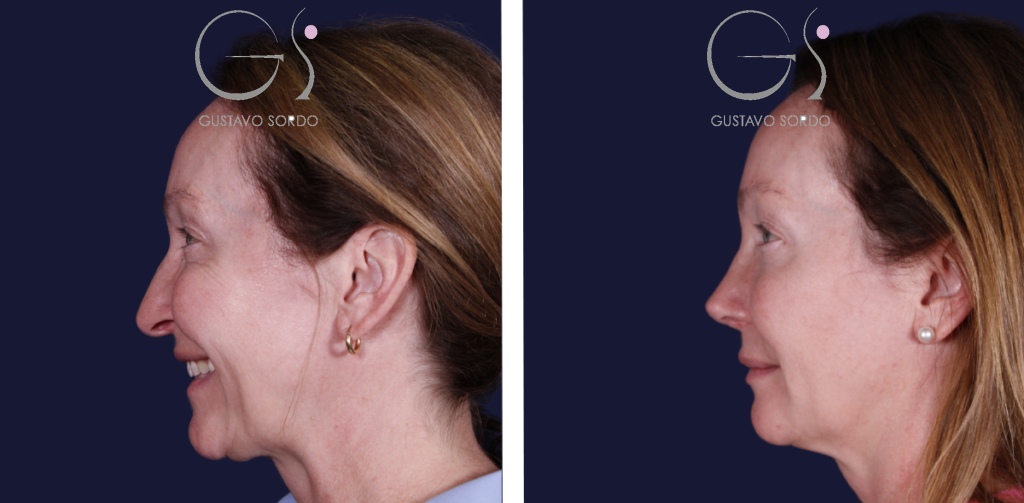
Considerations in adolescent patients
Rhinoplasty in adolescents requires special evaluation of completed nasal development, typically after the age of 16-17 in women and 17-18 in men. It is crucial to assess the patient's emotional maturity and ensure that the decision is not influenced by social pressure or temporal trends. Parental consent and clear communication about realistic expectations are essential.
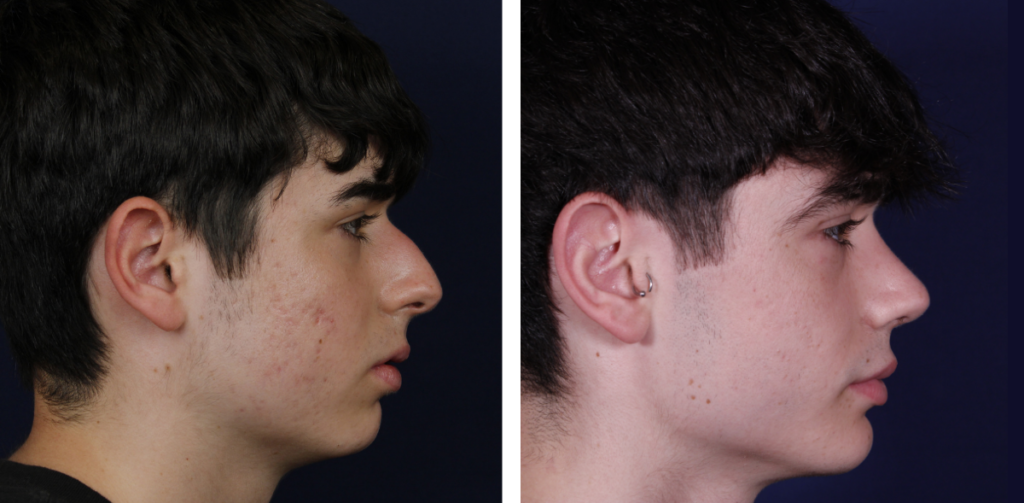
Patients with specific medical conditions
Certain medical conditions require adaptations in surgical technique:
- Patients with coagulation disorders require prior hematological evaluation.
- Those with autoimmune diseases may have compromised healing.
- Patients with sleep apnea require special attention to maintain or improve respiratory function.
- People with body dysmorphophobia need a prior psychological evaluation
What can I do if I don't like my nose?
If you're not happy with the way your nose looks, the first thing you need to remember is that the uniqueness of each nose is what gives your face its character. All noses, whether big, small, straight or curved, are part of what makes us unique. Accepting our differences can be the first step to feeling good about yourself. However, we understand that for some people, discomfort with their nose can go beyond aesthetics and affect their self-confidence.
The most important thing is to make sure that your nose is functioning properly on a respiratory level. If you have difficulty breathing, suffer from problems such as a deviated septum or experience discomfort, it is advisable to consult a specialist to assess whether there is a medical condition that requires attention. In these cases, a surgical intervention can not only improve the aesthetics of the nose, but also its function.
On the other hand, if after reflecting on accepting your features you still feel dissatisfied with the appearance of your nose, rhinoplasty is a viable option. Currently, there are advanced techniques such as ultrasonic rhinoplasty , which allows for precise and natural-looking results with a less invasive approach. This technique uses ultrasound to reshape the nasal bones in a controlled manner, minimizing trauma to the surrounding tissues, resulting in a faster and less painful recovery compared to traditional techniques.
At Dr. Gustavo Sordo's Plastic Surgery Clinic in Madrid , we are experts in rhinoplasty procedures.
- Rhinoplasty in Madrid to improve facial harmony and nasal function.
- Ultrasonic rhinoplasty in Madrid using advanced high-precision techniques.
Dr. Sordo, a plastic surgeon in Madrid specializing in rhinoplasty , has over 20 years of experience in this field. He is dedicated to providing personalized solutions for each patient, with both an aesthetic and functional focus. We understand that every nose is unique, and we work with you to create facial harmony that makes you feel more comfortable and confident. We encourage you to view his before-and-after rhinoplasty cases.

Conclusion
If you're unhappy with the appearance of your nose and feel it's affecting your well-being or confidence, you have options. The most important thing is to be well-informed, know the available alternatives, and work with an expert surgeon who understands your needs and can help you make the best decision. It's not just about aesthetics, but about how you feel about yourself. A consultation with a specialist can be the first step toward positive change, both in the appearance of your nose and in how you perceive yourself.
Continue reading
Dr. Gustavo Sordo
Specialist in Plastic, Aesthetic and Reconstructive Surgery. Member No. 282858125.
Content clinically reviewed by Dr. Gustavo Sordo. Last review: September 7, 2026.







 Clinic chat