Advantages of Structural Rhinoplasty vs. Conventional Nose Surgery

Updated on • Reviewed by Dr. Gustavo Sordo, plastic surgeon
Rhinoplasty ( the name of the cosmetic surgery operation that modifies the appearance of the nose) can be performed in two ways: conventionally, or using a structural technique.
Each case is assessed in consultation; the complete process, cases and price (from €10.040) are available at rhinoplasty in Madrid.
In both cases, the intervention may affect the hard part of the nose (bone and cartilage) and/or the soft covering of the nose (the skin that covers this organ).
If you want to see how your nose would look , here are real cases sorted by nose type and a simulation of the consultation next to the result.
Conventional nose surgery: characteristics
Generally, rhinoplasty operations have, as their main objective , to reduce the size of this part of the face.
In order to carry out this surgical intervention, an incision is made in the nasal mucosa. The skin is then peeled off, excess bone and cartilage are removed from the back of the nose, and the cartilages at the tip of the nose are reshaped.
Sometimes, if the bones have separated when redefining the nasal dorsum, they must be broken and brought together to achieve better nasal functionality. All this, in addition, will ensure that the final appearance is as harmonious as possible.
However, this work does not always achieve the results obtained, as the skin tissues in this area contract over time, making the nose look different than it did when the operation was completed.
There is a third approach worth considering before making a decision, as it's the one we follow in most cases: hybrid preservation . It's not about choosing between "structural" and "conventional," but rather combining the best of both worlds: preserving the dorsum—lowering the bridge as a single unit through impaction, without opening the nasal roof or disrupting the aesthetic lines—and applying the structural philosophy to the tip, which is where support is truly lost over time.
The practical advantage is twofold. First, by not reconstructing a roof we haven't opened, we don't waste septal cartilage on spreader grafts, leaving much more material for the tip. Second, the internal nasal valve , which regulates breathing, is better preserved. All the bone work is done with ultrasound , without a hammer or chisel: less bruising, less swelling, and a much more manageable recovery.
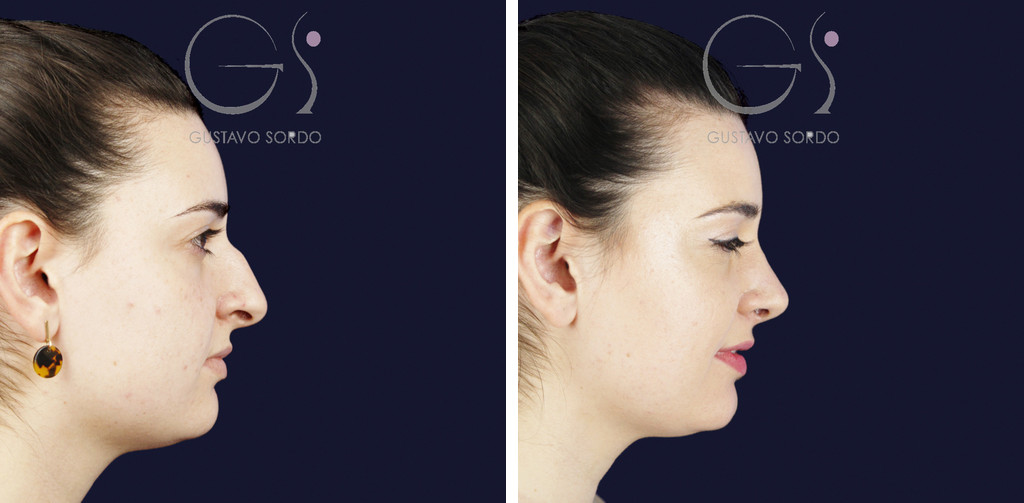
Structural rhinoplasty: features and advantages
Structural rhinoplasty is a surgical procedure whose main purpose is to improve the shape and function of a person's nose. It is therefore an upgrade to conventional rhinoplasty.
To achieve this, structural rhinoplasty preserves the nasal tissues and addresses the nasal septum, allowing work to be done on this organ of the respiratory system in its entirety, not just its external appearance. In other words, it allows for reshaping the tip of the nose , removing a dorsal hump , narrowing wide noses, correcting septal deviations, and eliminating potential breathing problems, among other things.
The main advantages of the structural ultrasonic rhinoplasty performed by Dr. Gustavo Sordo at his plastic surgery clinic in Madrid are the following:
- During the operation, a hard frame is created on which the skin will contract and adapt from the first minute after the operation, making the final shape desired by the patient appear. This prevents the skin of the nose, which contracts and adapts over time, from taking on the appearance of a pointed nose with a sloping back and an upward-turned tip, a typical result of traditional rhinoplasty procedures.
- The incisions made in structural rhinoplasty are small They are located in the column of skin and cartilage (the columella). Therefore, the scars are barely visible once they have matured.
- It is a operation that lasts about two hours and general anesthesia is used, so it is performed with total comfort for the patient.
In short, structural rhinoplasty is an improvement over the surgical operations that have traditionally been carried out in this area of the face.
If you are interested in having a traditional rhinoplasty in Madrid or an ultrasonic rhinoplasty in Madrid , schedule your appointment with Dr. Sordo, a plastic surgeon in Madrid , specializing in rhinoplasty.
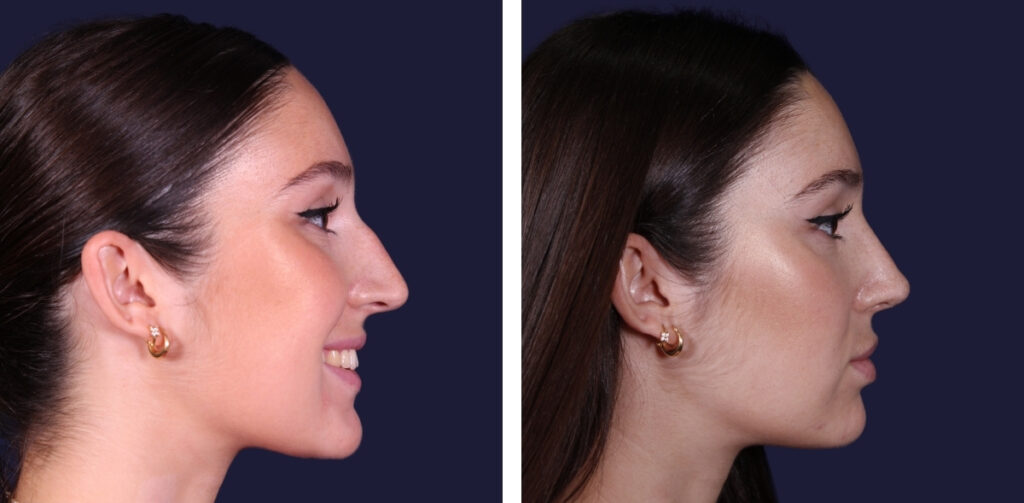
We recommend you take a look at all our before and after rhinoplasty cases.
Dr. Gustavo Sordo
Specialist in Plastic, Aesthetic and Reconstructive Surgery. Member No. 282858125.
Content clinically reviewed by Dr. Gustavo Sordo. Last review: October 7, 2026.